
Preferment formulas: poolish, biga, pâte fermentée and levain percentages
A formula-first, bench-ready guide to the four preferments professional bread relies on — poolish, biga, pâte fermentée and levain — written entirely in baker's percentage with worked examples at real bakery batch sizes. The organising number is the prefermented-flour percentage (PFF): the share of the total formula flour that sits in the preferment. The article gives the master method for converting any straight dough to a preferment formula by moving flour and water across while keeping totals constant, then six tested formula cards: the PFF conversion method; a 30% poolish baguette at 70% hydration; a 35% biga ciabatta at 80% hydration; a pâte fermentée French bread at 20% prefermented flour (the only preferment that carries its own salt); a liquid and stiff levain build with an inoculation-vs-time ladder; a Tartine-style country sourdough at 20% levain / ~9% PFF; and a one-step O-tentic Durum shortcut at 4% on flour. Every percentage is arithmetic-checked (hydration = water ÷ flour, totals reconcile), with PFF ranges, a yeast-format conversion table, a formula fault-finder, and Domson catalogue flours, yeasts, salt and sourdough components to buy and bake them. Numbers are drawn first from first-party supplier spec sheets (Domson/GoodMills Type 550, Windrush Strong White, Lesaffre Benevia, Fermipan Red, The Salt Company sea salt, Puratos O-tentic Durum, Zeelandia Superkwas) and cross-checked against professional baking references.
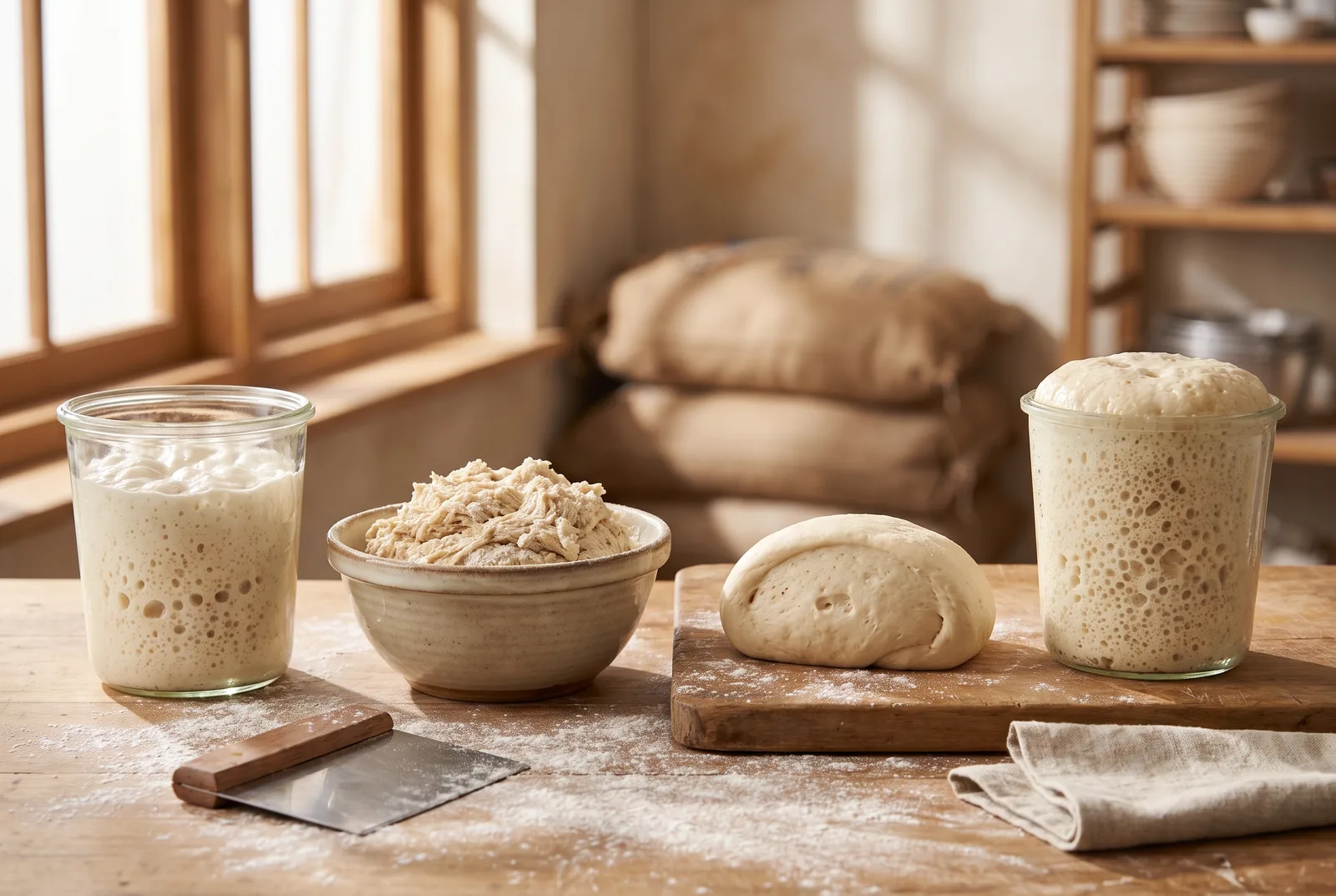
Preferment formulas: poolish, biga, pâte fermentée and levain percentages
A preferment is just part of tomorrow's flour, water and leavening fermented ahead of the final mix. Bakers reach for them because hours of slow fermentation buy flavour, dough strength, crust colour and shelf life that a fast straight dough cannot match. This article is the formula companion to the concept guide (A2 Preferments): it gives you the numbers — in baker's percentage, with worked examples at bakery scale — for the four preferments worth knowing by heart, plus a one-step shortcut for the days there is no time to build one.
The one number that runs everything: prefermented-flour percentage (PFF)
Forget grams for a moment. The number that controls a preferment formula — independent of batch size — is the prefermented-flour percentage: the share of the total formula flour that you ferment ahead of time.
PFF = (flour in the preferment ÷ total formula flour) × 100
Raise PFF and you get more fermentation flavour, more dough strength and tang, faster final proof and a deeper crust. Lower it for a milder, quicker bake. The practical ceiling is set by acidity, not taste: yeasted preferments live happily at 25–40% PFF (commonly 30–33%), levains at 10–25%, and past about 35% PFF the dough can become acidic enough to fissure during proof and bake (a single-source caution worth respecting). See the PFF-ranges table below for the family-by-family guidance.
Two housekeeping rules make the maths behave:
- Flour always equals 100%. Each ingredient percentage = (its weight ÷ flour weight) × 100; the formula total is the sum of all the percentages.
- Use overall baker's percent when a preferment is involved — sum all the flour and all the water (preferment + final dough) and base your percentages on the totals. Quote percentages against only the final-dough flour and your hydration line lies to you (it reads "40% water" when the dough is really at 70%).
The master method: turn any straight dough into a preferment formula
Every formula below is built the same way, so learn the move once. Pick a PFF, lift that share of flour out of the recipe, give it matching water for the preferment's hydration and a pinch of yeast, then subtract those same amounts from the final dough so the total flour, water and salt never change. Because the preferment ferments for hours and carries leavening forward, you also halve the total yeast.
The conversion-method formula card below works a full example: a straight baguette (100% flour, 68% water, 2% salt, 1.0% fresh yeast) becomes a 30% poolish version where the poolish takes 300 g of flour + 300 g water + 1 g yeast (per 1,000 g flour), and the final dough keeps the remaining 700 g flour, 380 g water, all the salt and a 4 g yeast top-up. Totals reconcile exactly — only the route changed, and total yeast drops from 1.0% to 0.5%.
Poolish — the extensible all-rounder
Poolish is equal weights of flour and water (100% hydration) with no salt and a whisper of yeast — about 0.08–0.1% on the poolish flour for a 12–18 hour build. Its high water content favours enzyme activity, so it leans lactic and mild and makes dough notably extensible: ideal for baguettes, white rolls, pizza and laminated doughs.
The poolish-baguette formula card below is a 30% poolish at 70% total hydration. Read as overall baker's percent: poolish flour 30% + water 30% + fresh yeast 0.10%; final dough flour 70% + water 40% + salt 2% + fresh yeast 0.30%. The 20 kg-flour worked example scales it to a real batch (poolish 6 kg flour / 6 kg water / 20 g yeast; final dough 14 kg flour / 8 kg water / 400 g salt / 60 g yeast) — water 6 + 8 = 14 kg = 70%, yeast 80 g = 0.40%. Build the flour from a T550 or a UK strong white (Domson Type 550, Komplexmłyn Type 550, or Windrush/Coniston strong white) and leaven with Benevia fresh yeast (or Fermipan Red instant at one-third the dose).
If timing is tight you can drive a poolish in ~4 hours with much more yeast (~1.5% fresh on poolish flour), but you trade away flavour; the time-versus-yeast ladder is in the yeast-conversion table's sibling guidance and the Weekend Bakery dosing in the data file.
Biga — strength and an open, irregular crumb
Biga is the Italian stiff preferment: 50–60% hydration, no salt, fermented cooler (16–18°C) for 8–16 hours. Being drier it turns more acetic — sharper, more complex — and builds elasticity and strength, which is exactly what an open ciabatta or focaccia crumb needs.
The biga-ciabatta formula card below is a 35% biga at 80% total hydration. Biga flour 35% + water 19.25% (that's 55% hydration on the biga flour) + fresh yeast 0.10%; final dough flour 65% + water 60.75% + salt 2% + fresh yeast 0.20%. At 10 kg flour: biga 3.5 kg flour / 1.925 kg water / 10 g yeast; final dough 6.5 kg flour / 6.075 kg water / 200 g salt / 20 g yeast — water 1.925 + 6.075 = 8.0 kg = 80%. Use a stronger flour here (≥12% protein: Windrush Strong White at 12.0–12.5%, or Italian Tipo 00 / Belle Or T65 for character) to carry the high hydration.
Pâte fermentée — yesterday's dough, and the only one with salt
Pâte fermentée ("old dough") is simply a piece of fully mixed bread dough — flour, water, yeast and salt — pinched off before bulk proof and kept for the next batch. It is the only yeasted preferment that contains salt, which changes the arithmetic: the salt and water it carries must be subtracted from the fresh additions so the loaf still finishes at 2% salt and your target hydration.
The pâte-fermentée formula card below uses 20% prefermented flour. The old dough (per its own flour) is ~100% flour / 65% water / 1.9% salt / 0.5% yeast; expressed overall it contributes flour 20% + water 13% + salt 0.38% + yeast 0.10%, and the fresh additions make up flour 80% + water 52% + salt 1.62% (reduced) + yeast 0.50%. At 10 kg flour the old dough is ~3.35 kg and the loaf still lands at 65% hydration and 2% salt. Keep old dough up to 2 weeks refrigerated (quality is best in the first 6–24 h as acidity builds gradually; do not exceed 2 weeks); freeze for longer-term storage (~3 months, general professional practice). It is usually "spiked" with a little fresh yeast because the carried-over yeast alone tends to under-leaven.
Levain — the sourdough preferment
A levain is an offshoot of your sourdough starter: fresh flour, water and a little ripe starter, built to be used whole in one bake. Two dials set its behaviour — hydration and seed (inoculation) percentage.
- Hydration: a liquid levain is ~100%; a stiff levain is 50–75% (Andrew Janjigian builds stiff levains at 70% for white flour, 75% for whole-grain). Liquid ripens faster and milder; stiff ripens slower, leans acetic, and tolerates a wider window.
- Seed %: less seed = slower, sharper. At ~21°C: 5–10% seed → 16+ h; 20% → 12–14 h; 50% → 5–6 h; 100% (a 1:1:1 build) → 3–4 h at 25–26°C (see the levain-inoculation table below).
The levain-build formula card below gives both versions; the worked liquid build (250 g flour + 250 g water + 50 g ripe starter → ~550 g levain, ripe in ~12 h at 21°C) feeds the country loaf below. Start or maintain the culture from a pure sourdough starter (Böcker Reinzucht-Sauerteig, Lesaffre Saf-Levain LV1 / Livendo LV-2) or a ready wheat sourdough (Puratos Sapore Fidelio).
The country-sourdough-levain formula card below is the canonical Tartine-style loaf: 90% white + 10% whole wheat flour, 75% water, 20% liquid levain and 2% salt. Bakers quote the levain at 20% of the recipe flour by convention; counting the levain's own flour and water in, the true hydration is ~77% and the PFF is ~9%. One key food-safety/handling note: a young levain (just doubled) needs roughly 30% more prefermented flour than a mature one to proof at the same rate.
When there's no time to build: the one-step shortcut
The O-tentic shortcut formula card below uses Puratos O-tentic Durum, an active dried sourdough component that both acidifies and leavens, at the manufacturer's 4% on flour with added water and salt — no separate preferment, no overnight wait. It will not match a mature levain's depth, but it is repeatable and fast. For pure flavour without leavening, Zeelandia "Sourdough Dry" (Superkwas) is a dried wheat-rye acidifier dosed around 1.3% on flour alongside your normal yeast.
Allergen and food-safety flags: every wheat and rye flour here contains gluten; Domson Type 550 also carries a trace soy/lupine/mustard risk; Windrush carries a soya-contamination risk. Benevia declares no allergens, but sulphites are present in the molasses used in its production (below the labelling threshold — actual ppm undisclosed; request quantified data from Lesaffre before use with allergen-sensitive customers). O-tentic Durum contains gluten (wheat), with possible mustard cross-contamination and is made on a line that also handles tartrazine (E102) — confirm with Puratos whether cross-contamination levels require an E102 declaration and the children's attention advisory under Regulation 1333/2008 Annex V. Superkwas contains gluten (wheat, rye) and may contain barley/oat/spelt, egg, soya, milk and sesame — the spec on file is dated January 2019; sesame became a mandatory EU allergen (Regulation 2021/571) from February 2023, so a current post-2023 Superkwas spec is required before including the sesame 'may contain' statement in customer allergen declarations. Fermipan Red is declared gluten-free; confirm against the current delivery certificate before use in a certified gluten-free production environment. Flour must be heat-treated — never tasted raw. Confirm all allergen statements against the current delivery documentation before use.
Choosing and converting yeast
All formulas quote fresh compressed yeast. To switch format: fresh = instant dry × 3 (so instant = fresh ÷ 3), and active dry needs ~20% more than instant and must be rehydrated in warm water (35–40°C) first (see the yeast-conversion table below). Benevia keeps 35 days at 1–10°C; Fermipan Red instant keeps up to two years at ambient and goes straight into the mix.
Fixing a formula that fights you
Most preferment problems are number problems, not technique problems — too much or too little leavening for the time, the wrong PFF, salt double-counted in old dough, or percentages quoted against the wrong flour base. The fault table below maps the common symptoms (flat sour loaf, bland dense loaf, dough that fissures, a sourdough that crawls) to the formula cause and the fix.
Buy the ingredients
- Poolish / pâte fermentée flour (T550, ~11.5–12.5% protein): Domson Wheat Flour Type 550, Komplexmłyn Type 550, Domson Bread Flour Type 750.
- Biga / strong-crumb flour (≥12% protein): Windrush Strong White, Coniston Strong White, Italian Tipo 00, Belle Or T65.
- Yeast: Benevia / NG & SF / DCL Craftbake (fresh); Fermipan Red / DCL Levure Premium (instant); Pakmaya (active dry).
- Salt: Sea Salt Extra Fine, Polish Fine Iodised Salt.
- Sourdough cultures & components: Böcker Reinzucht-Sauerteig and Lesaffre Saf-Levain / Livendo starters; Puratos Sapore Fidelio; Puratos O-tentic Durum (one-step) and Zeelandia Superkwas (flavour acidifier).
Figures
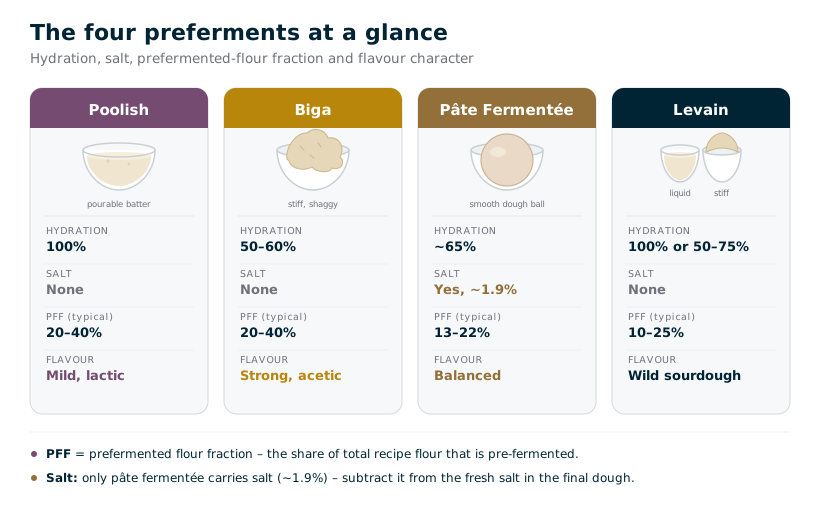 Comparison chart of poolish, biga, pâte fermentée and levain showing hydration, salt, prefermented-flour percentage and flavour character for each
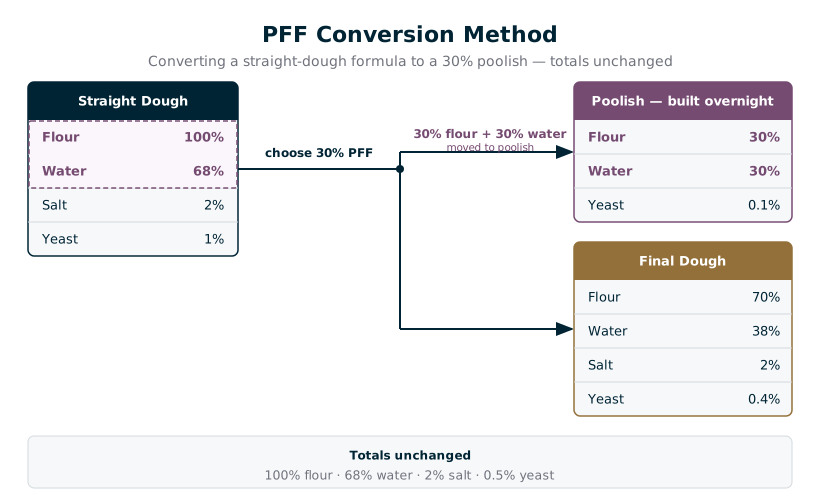 Diagram showing how a straight bread formula is converted to a 30% poolish formula by moving flour and water into the preferment while keeping totals unchanged
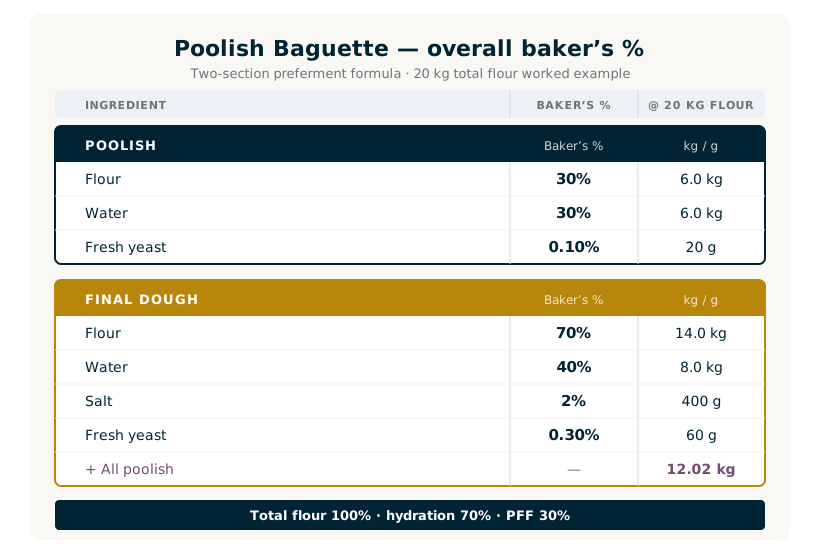 Formula card for a 30% poolish baguette in baker's percentages with a 20 kilogram worked example
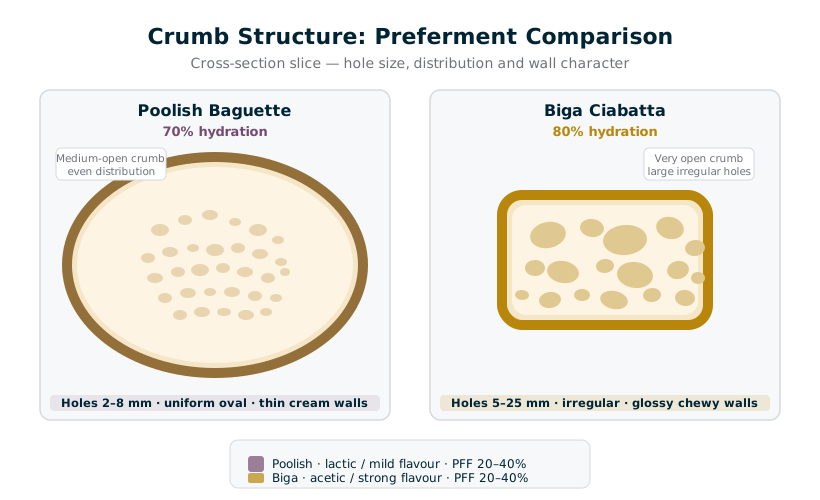 Side-by-side crumb comparison of a poolish baguette with a uniform medium-open crumb and a biga ciabatta with a very open irregular crumb
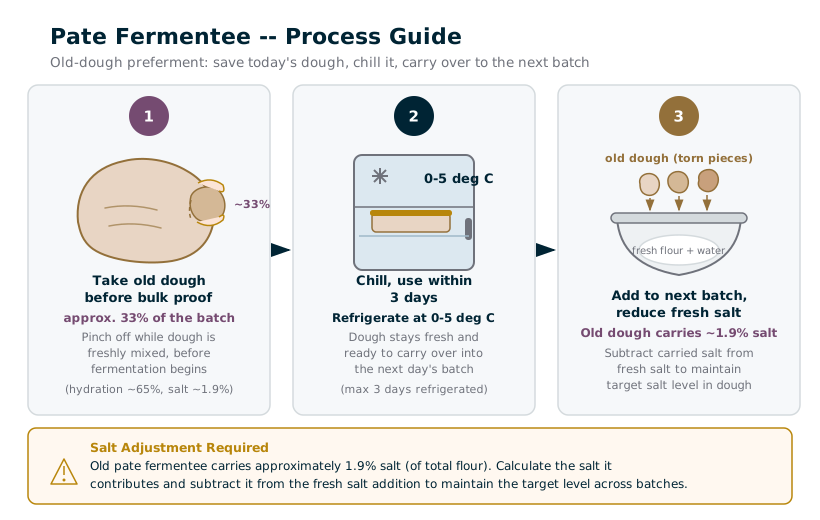 Three-step diagram of pâte fermentée: pinching off old dough, refrigerating it, then adding it to the next batch with a note to reduce the fresh salt
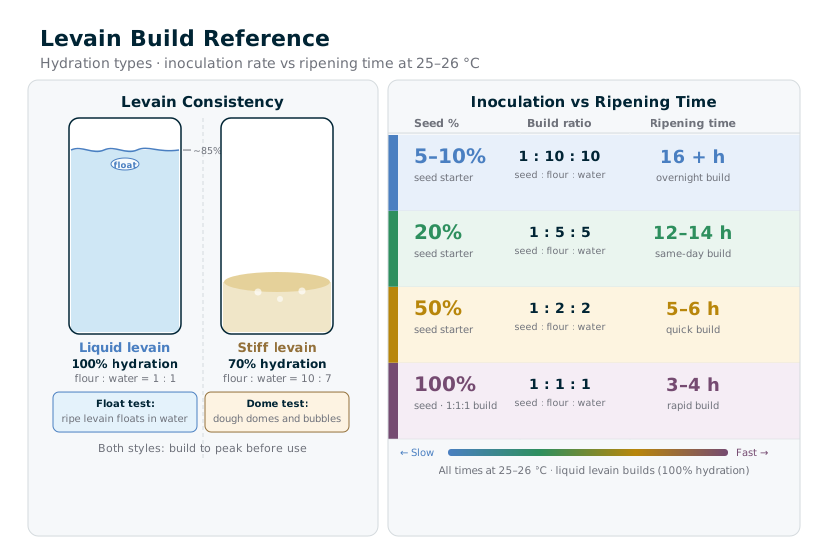 Levain reference showing liquid versus stiff levain consistency and a ladder of seed percentages against ripening times from sixteen hours down to three to four hours
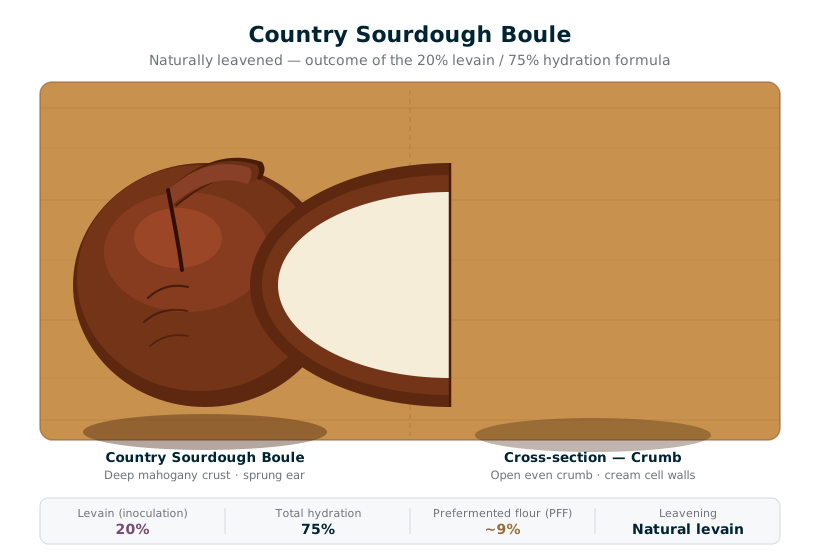 Finished country sourdough loaf with a scored sprung crust and an open even crumb made from a twenty percent levain at seventy-five percent hydration
Method: convert any straight dough to a preferment formula (the PFF method)
The master technique for the whole article. Pick a prefermented-flour percentage (PFF), move that share of the flour — plus matching water for the preferment's hydration and a tiny dose of yeast — into the preferment, then SUBTRACT those amounts from the final dough so the total flour, water, salt and yeast stay the same. PFF = (flour in preferment ÷ total flour) × 100.
- pff-conversion
Worked example
| Batch basis | 1,000 g total flour |
| Poolish | Flour (g): 300 · Water (g): 300 · Salt (g): 0 · Fresh yeast (g): 1 · Note: Mix to a batter; ferment ~12 h at 18–21°C |
| Final dough | Flour (g): 700 · Water (g): 380 · Salt (g): 20 · Fresh yeast (g): 4 · Note: Plus all 601 g of ripe poolish |
| TOTAL | Flour (g): 1000 · Water (g): 680 · Salt (g): 20 · Fresh yeast (g): 5 · Note: Flour 100% · hydration 68% · salt 2% · yeast 0.5% |
| Checks | Flour 300+700 = 1000 g (100%). Water 300+380 = 680 g (68%). Yeast 1+4 = 5 g (0.5%). Totals match the straight formula — only the route changed. |
Poolish baguette / lean white bread — 30% poolish, 70% hydration
A workhorse overnight-poolish formula for baguettes, white rolls and pizza. All percentages are OVERALL baker's percent (total flour = 100%, including the flour in the poolish), so the hydration line reads as true dough hydration. Flour: a T550 or UK strong white of ~11.5–12.5% protein.
- poolish
Worked example
| Batch basis | 20 kg total flour (≈ 34.5 kg dough, ~57 × 600 g pieces) |
| Poolish | Flour (g): 6000 · Water (g): 6000 · Salt (g): 0 · Fresh yeast (g): 20 · Note: Smooth batter; 12–16 h at 18–21°C until domed and bubbled |
| Final dough | Flour (g): 14000 · Water (g): 8000 · Salt (g): 400 · Fresh yeast (g): 60 · Note: Plus all 12.02 kg ripe poolish |
| TOTAL | Flour (g): 20000 · Water (g): 14000 · Salt (g): 400 · Fresh yeast (g): 80 · Note: Hydration 70% · salt 2% · yeast 0.40% |
| Checks | Water 6+8 = 14 kg = 70% of 20 kg flour. Yeast 20+60 = 80 g = 0.40%. PFF = 6/20 = 30%. |
Biga ciabatta / focaccia — 35% biga, 80% hydration
A stiff-biga formula for the open, irregular crumb of ciabatta and focaccia. Overall baker's percent (total flour = 100%). Use a higher-protein strong flour (≥12% protein, e.g. Windrush Strong White, Italian Tipo 00) for the open structure.
- biga
Worked example
| Batch basis | 10 kg total flour (≈ 18.2 kg dough) |
| Biga | Flour (g): 3500 · Water (g): 1925 · Salt (g): 0 · Fresh yeast (g): 10 · Note: Rough shaggy ball; 12–16 h at 16–18°C |
| Final dough | Flour (g): 6500 · Water (g): 6075 · Salt (g): 200 · Fresh yeast (g): 20 · Note: Plus all 5.435 kg ripe biga; olive oil optional |
| TOTAL | Flour (g): 10000 · Water (g): 8000 · Salt (g): 200 · Fresh yeast (g): 30 · Note: Hydration 80% · salt 2% · yeast 0.30% |
| Checks | Water 1.925+6.075 = 8.0 kg = 80% of 10 kg. Yeast 10+20 = 30 g = 0.30%. PFF = 3.5/10 = 35%. |
Pâte fermentée (old dough) French bread — 20% prefermented flour
Keep a piece of today's dough as tomorrow's preferment — the only yeasted preferment that already contains salt. Overall baker's percent (total flour = 100%). The salt and water in the old dough are subtracted from the fresh additions so the loaf still finishes at 2% salt and 65% hydration.
- pate-fermentee
Worked example
| Batch basis | 10 kg total flour (≈ 16.8 kg dough) |
| Pâte fermentée | Flour (g): 2000 · Water (g): 1300 · Salt (g): 38 · Fresh yeast (g): 10 · Note: Ferment 1–2 h at room temp then refrigerate; use within 2 weeks (best in first 6–24 h). Or pinch ~3.35 kg from yesterday's dough. |
| Final dough | Flour (g): 8000 · Water (g): 5200 · Salt (g): 162 · Fresh yeast (g): 50 · Note: Plus all 3.348 kg old dough |
| TOTAL | Flour (g): 10000 · Water (g): 6500 · Salt (g): 200 · Fresh yeast (g): 60 · Note: Hydration 65% · salt 2% · yeast 0.60% |
| Checks | Flour 2+8 = 10 kg. Water 1.3+5.2 = 6.5 kg = 65%. Salt 38+162 = 200 g = 2.0%. Yeast 10+50 = 60 g = 0.60%. |
Levain build — liquid (100%) and stiff (70%) versions
The levain is the preferment itself: ripe sourdough starter + fresh flour + water, built to be used whole in one bake. Percentages here are on the BUILD flour (= 100%), not the final loaf. Choose hydration and seed (inoculation) to set timing and flavour: less seed and stiffer build = slower, more acetic; more seed and liquid build = faster, milder.
- levain
Worked example
| Batch basis | Liquid levain to yield ~550 g (enough for one ~1 kg-flour country loaf, see next card) |
| Liquid levain | Flour (g): 250 · Water (g): 250 · Starter (g): 50 · Note: Mix; ferment ~12 h at 21°C until tripled and a piece floats (float test) |
| TOTAL | Flour (g): 250 · Water (g): 250 · Starter (g): 50 · Note: ≈ 550 g levain; build flour 100% · water 100% · seed 20% |
| Checks | Build flour 250 g = 100%. Water 250 g = 100% hydration. Seed 50 g = 20% of build flour. |
Country sourdough with levain — 20% levain, 75% hydration (Tartine-style)
A canonical naturally-leavened country loaf built on the levain from the previous card. Percentages are on the recipe flour (100%), with the liquid levain quoted at 20% of that flour weight as bakers conventionally do; true hydration including the levain's flour and water is ~77%, and the prefermented-flour percentage is ~9–10%.
- levain
Worked example
| Batch basis | 1,000 g recipe flour (2 loaves ≈ 900 g) |
| Flour | White (g): 900 · Wholewheat (g): 100 · Note: Total recipe flour 1,000 g |
| Dough water | Water (g): 750 · Note: Hold back 50 g to add with the salt |
| Liquid levain | Flour (g): 100 · Water (g): 100 · Note: 200 g total at 100% hydration |
| Salt | Salt (g): 20 · Note: 2% of recipe flour |
| TOTAL (incl. levain) | Flour (g): 1100 · Water (g): 850 · Salt (g): 20 · Note: True hydration 850/1100 = 77.3% · PFF 100/1100 = 9.1% |
| Checks | Recipe flour 900+100 = 1,000 g. Levain 200 g = 20% of recipe flour. Salt 20 g = 2%. Scale ×5 for 5 kg flour: white 4.5 kg, whole wheat 0.5 kg, water 3.75 kg, levain 1.0 kg, salt 100 g. |
Shortcut: one-step sourdough loaf with O-tentic Durum (no overnight build)
When there is no time to build a levain, a dried active sourdough component delivers sourdough character plus leavening in a single mix. Puratos O-tentic Durum is dosed at 4% on flour weight, added with water and salt — no separate preferment. Percentages are baker's percent (flour = 100%).
- dried-sourdough
Worked example
| Batch basis | 10 kg flour |
| Dough | Flour (g): 10000 · Water (g): 6400 · Otentic (g): 400 · Salt (g): 200 · Note: Mix to development; bulk, divide, proof, bake with steam |
| TOTAL | Flour (g): 10000 · Water (g): 6400 · Otentic (g): 400 · Salt (g): 200 · Note: O-tentic 4% · hydration 64% · salt 2% |
| Checks | O-tentic 400 g = 4% of 10 kg flour (manufacturer usage rate). Not a substitute for a true levain's flavour depth, but a reliable shortcut. |
Formula parameters for the four classic preferments named in this article. PFF = prefermented-flour percentage (the share of the TOTAL formula flour that sits in the preferment). Hydration is water as a percentage of the preferment's own flour. Yeast doses are fresh compressed yeast as a percentage of the preferment's own flour (divide by ~3 for instant dry yeast). Levain figures use a sourdough starter as the leavening rather than commercial yeast.
| Preferment | Typical PFF (% of total flour) | Hydration (water on its own flour) | Salt in the preferment? | Leavening dose (on its own flour) | Ferment time | Temperature | Acid / flavour character | Typical breads |
|---|---|---|---|---|---|---|---|---|
| Poolish | 20–40% (commonly 30%) | 100% (equal flour and water) | No | Fresh yeast ~0.08–0.1% for 12–18 h; up to ~1.5% for a fast 4 h build | 12–18 h (shorter with more yeast) | 18–21°C; refrigerate if warmer | Lactic-dominant — mild, creamy, sweet; high extensibility | Baguettes, ciabatta, pizza, white rolls, croissants |
| Biga | 20–40% (30–40% for ciabatta/focaccia) | 50–60% (stiff, shaggy) | No | Fresh yeast ~0.08–1% depending on time/temperature (~0.25% for 12–16 h) | 8–16 h (up to 24 h cold) | 16–18°C, cooler than poolish | More acetic — sharper, complex; adds elasticity and strength | Ciabatta, focaccia, pizza bianca, Italian hearth breads |
| Pâte fermentée (old dough) | 13–22% (i.e. 20–35% old dough by weight) | Mirrors the bread (~60–68%, commonly 65%) | Yes — the only yeasted preferment with salt (~1.9%) | Carried over from the previous batch, or ~0.5% fresh yeast | Min 6 h at room temp; or refrigerate 1–3 days | Room temp, then 3–5°C cold store | Mild, balanced tang; convenient, easy-handling dough | Baguettes, mixed-grain loaves, rustic rolls |
| Levain — liquid | 10–25% (beginner formulas ~7.5%) | 100% (equal flour and water) | No | Ripe sourdough starter as seed, ~5–20% of build flour | 8–14 h at 20–21°C, or 3–4 h warm at 25–26°C (1:1:1) | 20–26°C depending on inoculation | Wild yeast + lactic/acetic bacteria; rounded sour, long keeping | Country sourdough, pain au levain, open-crumb hearth loaves |
| Levain — stiff | 10–25% | 50–75% (Janjigian: 70% white, 75% whole-grain) | No | Ripe sourdough starter as seed, ~2–20% of build flour | Slower than liquid; wider usable window | Cool room temp ~21°C until doubled | More acetic / milder lactic; sturdier, more tolerant | Panettone-style and enriched sweet doughs, sturdier sourdoughs |
Prefermented-flour percentage (PFF) is the single most useful number when scaling preferment formulas: it controls how much fermentation flavour, dough strength and acidity carry into the final loaf, independent of batch size. Raise PFF for more flavour and tang; lower it for a milder, faster bake. The upper limit is set by acidity, not preference.
| Preferment family | Recommended PFF | What more PFF does | Practical limit / note |
|---|---|---|---|
| Yeasted — poolish / biga / sponge | 25–40% (commonly 30–33%) | More flavour, more dough strength/extensibility, faster final proof, deeper crust colour | Above ~35% PFF the dough pH can drop low enough to make it fissure (tear) during proof and bake; back off if you see splitting. |
| Pâte fermentée (old dough) | 13–22% (20–35% old dough by weight) | Mild tang and easier handling with almost no extra work; remember it already carries salt | Often 'spiked' with a little fresh yeast because the carried-over yeast alone may under-leaven. Use old dough within 2 weeks (fridge, best in first 6–24 h) or freeze for longer storage (~3 months). |
| Levain (sourdough) | 10–25% (beginner ~7.5%) | More sourness, stronger dough, but slower fermentation — a 100% sourdough loaf relies entirely on the levain for leavening | Lower PFF and/or a younger levain for a milder loaf; a young levain needs ~30% more prefermented flour than a mature one to proof at the same rate. |
When you build a levain, the amount of ripe starter you seed it with — as a percentage of the build's flour — sets how fast it ripens at a given temperature. Less seed = slower ripening = more acetic, sharper character and a wider window before it over-ferments. Times are approximate at ~21°C and depend on starter vigour and flour. Build ratio is written as ripe starter: flour: water.
| Inoculation (seed % of build flour) | Approx. build ratio (starter: flour: water, 100% hydration) | Ripening time | Notes |
|---|---|---|---|
| 5–10% | ≈ 1: 10: 10 to 1: 20: 20 | 16+ hours (overnight, cool) | Slowest, most acetic; good for an evening build used next morning |
| 20% | ≈ 1: 5: 5 | 12–14 hours | Standard overnight levain; balanced flavour |
| 50% | ≈ 1: 2: 2 | 5–6 hours | Same-day build; milder, more lactic |
| 100% | 1: 1: 1 | 3–4 hours at 25–26°C | Fast intermediate build; use when timing is tight |
The Domson catalogue carries fresh compressed, instant dried and active dried yeast. Preferment formulas in this article quote fresh compressed yeast; convert as below. Ratios are approximate — strain, age and water temperature shift them, so verify with a test bake.
| Start from | → Fresh compressed | → Instant dry (IDY) | → Active dry (ADY) | Note |
|---|---|---|---|---|
| Fresh compressed (Benevia, NG & SF, DCL Craftbake) | × 1 | ÷ 3 | ÷ 2.5 | Benevia dry matter >29%; shelf life 35 days at 1–10°C (spec sheet) |
| Instant dry (Fermipan Red, DCL Levure Premium) | × 3 | × 1 | × 1.2 | Fermipan Red dry matter 93–98%; 2 yr ambient shelf life; add directly, no rehydration (spec sheet) |
| Active dry (Pakmaya) | × 2.5 | ÷ 1.2 | × 1 | Rehydrate in warm water (35–40°C) before adding to the preferment |
Troubleshooting focused on the numbers in a preferment formula (PFF, hydration, yeast/seed dose, salt placement) and on preferment ripeness, rather than on general dough handling.
| Fault | Likely formula cause | Sign | Fix |
|---|---|---|---|
| Loaf flat / poor oven spring with a sour, sharp smell | Preferment over-fermented — too much yeast/seed for the time and temperature, or built too far ahead | Preferment collapsed and wrinkled before use; vinegary/alcoholic aroma | Cut the yeast (or seed %) or shorten the build, or ferment cooler; for poolish target ~0.1% fresh yeast for 12–18 h. Use an over-ripe preferment only at reduced quantity as a flavour add-in. |
| Bland loaf, low volume, no tang | PFF too low, or preferment under-ripe | Preferment barely moved; flour-like smell; loaf like a straight dough | Raise PFF toward 30% (yeasted) or 15–25% (levain); give the preferment full ripeness; warm the build slightly next time. |
| Dough tears / fissures during proof and bake | PFF too high — acidity has dropped the dough pH too far | Surface splits while proofing; weak, slack, sticky dough that won't hold shape | Drop PFF below ~35%; for very acidic levains reduce levain percentage or use a younger/stiffer levain. |
| Final loaf too salty or strangely under-salted | Pâte fermentée salt double-counted or ignored | Salt tastes off vs the recipe target | Remember pâte fermentée already carries ~1.9% salt on its own flour; subtract that from the fresh salt so the whole formula finishes at ~2%. |
| Hydration looks wrong on paper (e.g. 'only 40% water') | Percentages quoted against final-dough flour instead of overall (total) flour | The water line in the final dough reads far below the real hydration | Use OVERALL baker's percent — sum all flour and all water (preferment + final dough) and base percentages on the totals. |
| Sourdough loaf proofs far too slowly | Levain too young, seed % too low, or build too stiff for the time given | Bulk drags on; little rise; dense crumb | Use a fully mature levain (or add ~30% more prefermented flour if using it young); raise seed % or warm the build; a liquid levain ripens faster than a stiff one. |
| Instant dry yeast version over- or under-proofs vs the fresh-yeast formula | Yeast format not converted | Timing drifts from the written schedule | Convert: fresh = IDY × 3 (so IDY = fresh ÷ 3); active dry needs ~20% more than IDY and must be rehydrated first. |
- Protein pct:
- 11.5–12.5 (wet gluten 28–32%)
- Gluten index:
- 75–99
- Falling number s:
- ≥220
- Ash pct dm:
- 0.51–0.58
- Moisture pct:
- max 15
- Best for:
- Poolish, baguette, lean white bread, pâte fermentée
- Allergens:
- Gluten; trace soy/lupine/mustard risk
- Shelf life:
- 5 months
- Protein pct:
- 12.0–12.5 (target 12.2)
- Falling number s:
- 250–400 (target 350)
- Water absorption pct:
- 55–61 (target 58)
- Moisture pct:
- 13.5–15.0
- Best for:
- Biga/ciabatta, poolish, country sourdough (stronger crumb)
- Additives:
- Statutory UK: calcium carbonate, iron, niacin, thiamin; added vital wheat gluten <1.5%
- Allergens:
- Gluten (wheat); soya contamination risk — not coeliac
- Shelf life:
- 9 months (16 kg)
- Note:
- Catalogue 'White Strong Wheat Flour'; attached spec is a Type 550 sheet
- Wet gluten pct:
- 28–32
- Falling number s:
- ≥220
- Gluten index:
- 75–99
- Allergens:
- Gluten; trace soy/lupine/mustard
- Type:
- Fresh compressed (Saccharomyces cerevisiae)
- Dry matter pct:
- >29
- Fermentative activity:
- 125 ±10 ml CO2 (risograph)
- Storage:
- 1–10°C (optimum 4°C)
- Shelf life days:
- 35
- Dosage in preferments:
- ~0.1% on poolish flour for 12–18 h; up to ~1.5% for a 4 h build
- Allergens:
- None of 14 EU allergens present; sulphites present in molasses during production (below 10 mg/kg threshold).
- Type:
- Instant dry yeast for lean dough (0–10% sugar)
- Dry matter pct:
- 93–98
- Emulsifier:
- 1% sorbitan mono-stearate (E491)
- Conversion:
- Fresh yeast ÷ 3 = IDY; add directly, no rehydration
- Shelf life:
- Up to 2 years unopened, ambient
- Allergens:
- No egg/soya/dairy/animal/colours/preservatives/MSG; gluten-free
- Nacl pct:
- 99.5–99.9 (typical 99.8)
- Anti caking:
- E535 + E551 (trace)
- Use in formulas:
- 2% on total flour (final dough); pâte fermentée carries ~1.9% on its own flour
- Allergens:
- None — flag confirmed allergen-free; vegan/kosher/halal/coeliac-suitable
- Shelf life:
- Effectively indefinite (advise 12 months)
- Type:
- Active bakery component based on sourdough (dried durum wheat sourdough + yeast + E300 + enzymes)
- Dosage pct on flour:
- 4 (with added water and salt; one-step, no build)
- Total acidity:
- 45–65 ml/10 g
- Dry matter pct:
- 94–100
- Allergens:
- CONTAINS gluten (wheat); mustard cross-contamination possible; tartrazine on line.
- Shelf life months:
- 12
- Type:
- Dried wheat-rye acidifier / improver (NOT a live preferment)
- Composition:
- Rye flour ~79% + acidity regulators E330/E270/E327 ~20%
- Dosage pct on flour:
- ~1.3 (per manufacturer application recipe)
- Use:
- Adds sourdough-like acidity/flavour to a yeasted dough without a live build
- Allergens:
- CONTAINS gluten (wheat, rye); may contain barley/oat/spelt, EGG, SOYA, MILK, SESAME.
- Shelf life days:
- 180
Buy the ingredients
Catalogue products and brands referenced in this article.
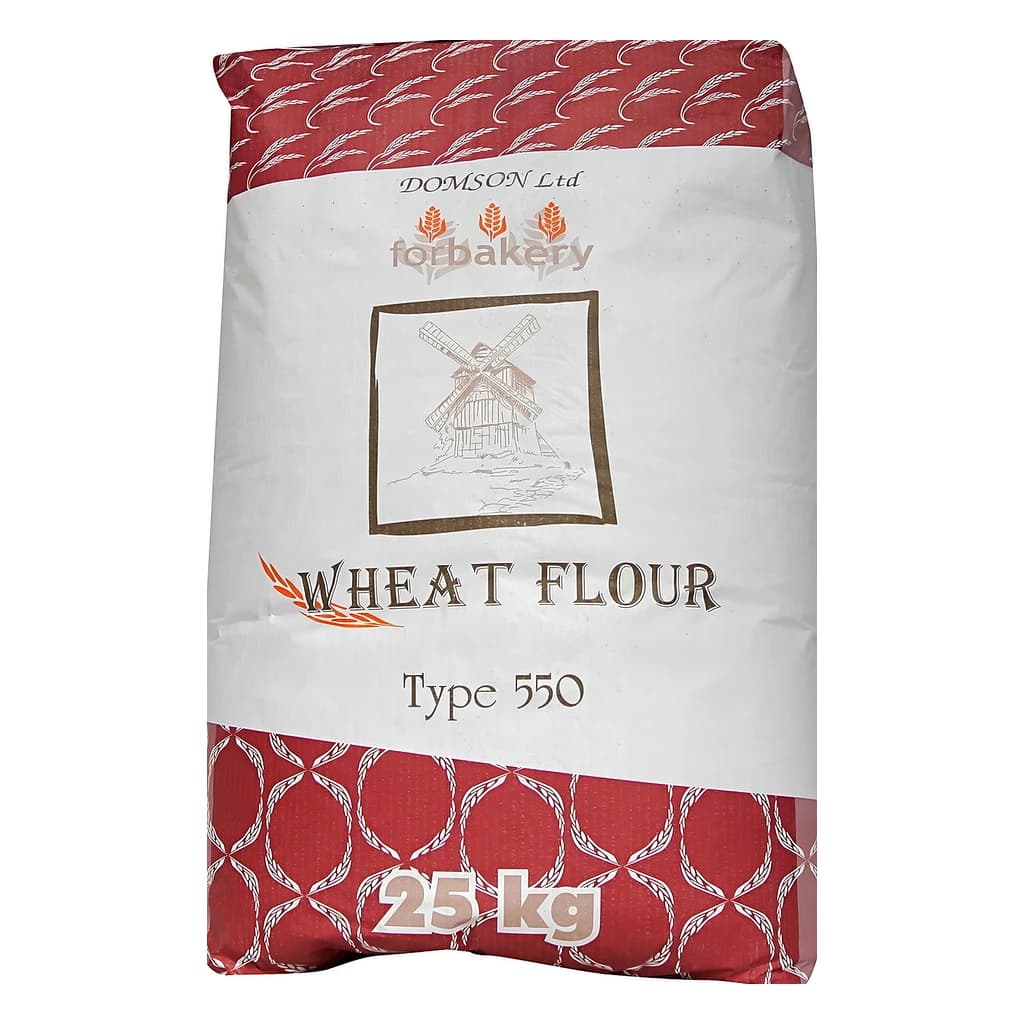
Wheat Flour Type G 550 25 kg
Superkwas Dry Sourdough 25 kg
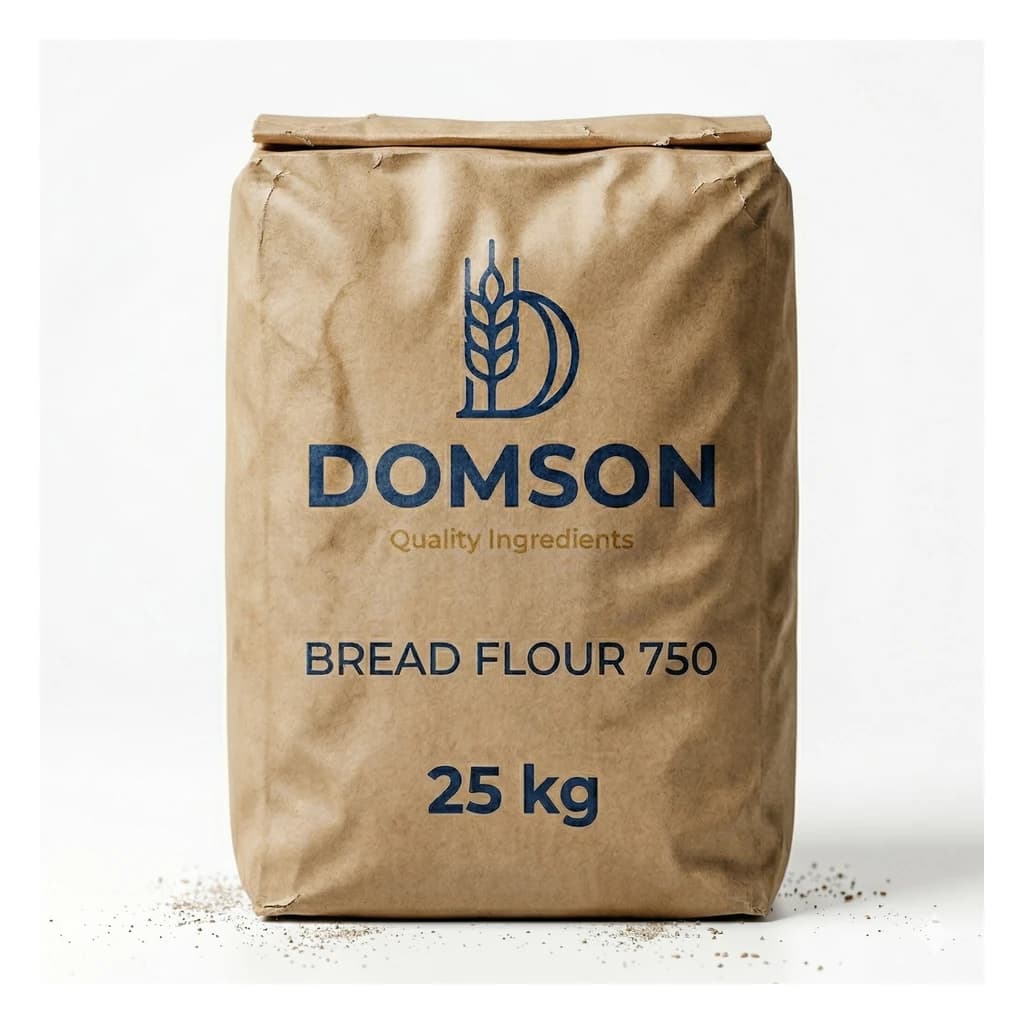
Domson Bread Flour Type 750 25 kg
Komplexmłyn Wheat Flour Type 550 25 kg
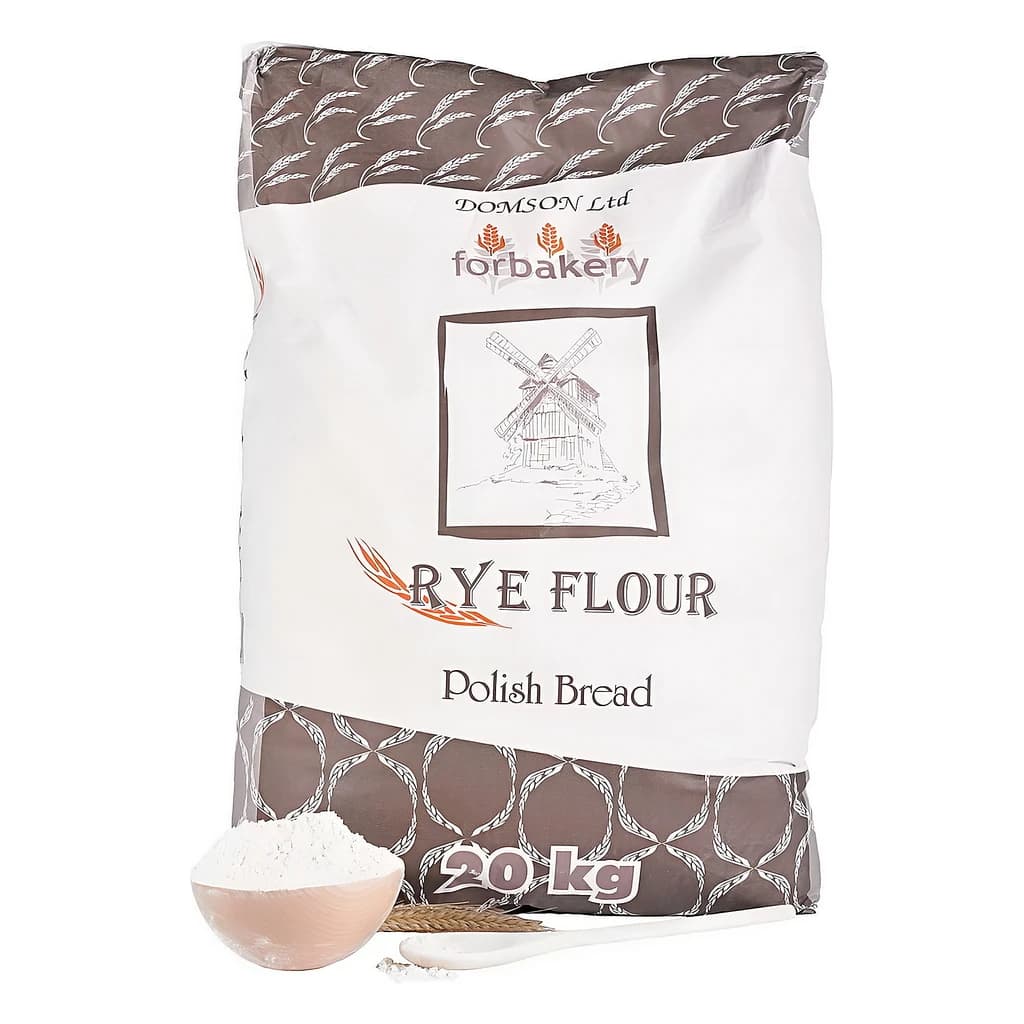
Rye Flour Type 720 25 kg
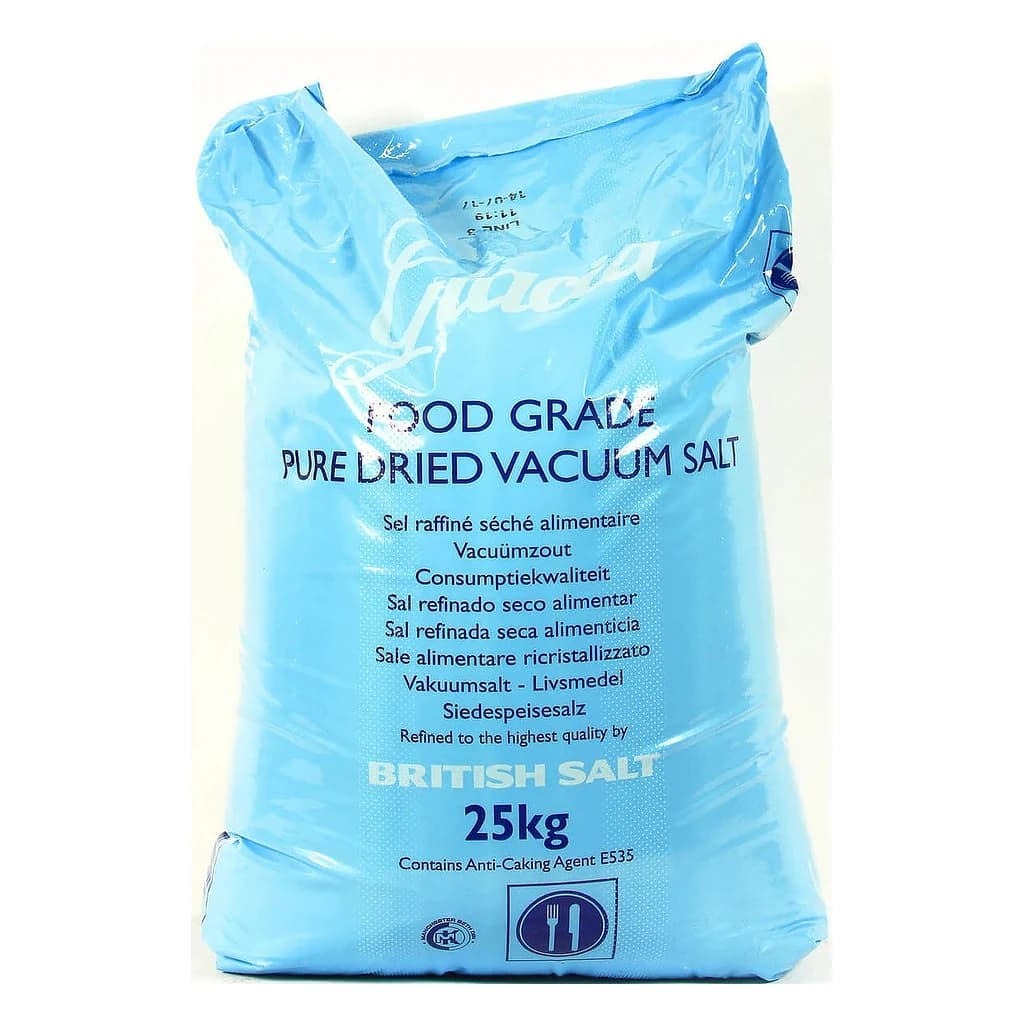
Polish Fine Iodized Salt 25 kg
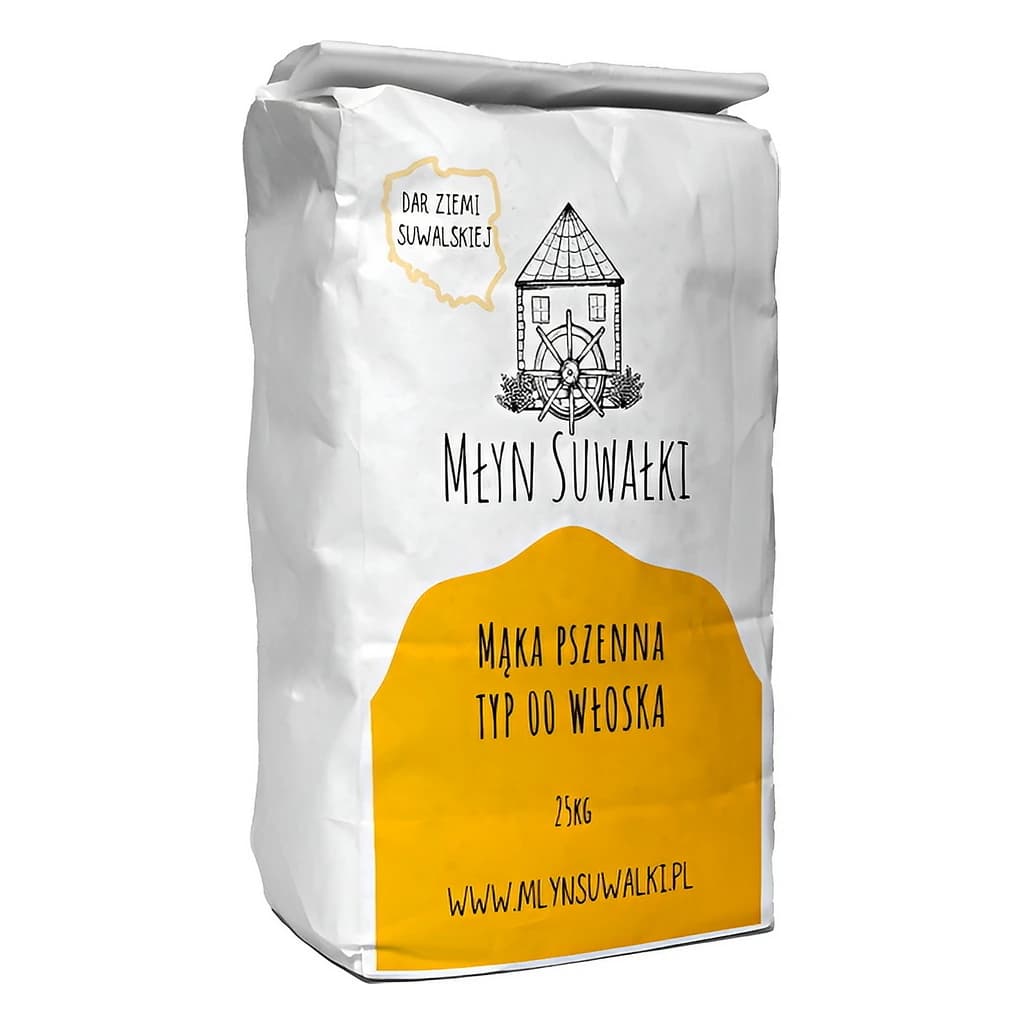
Italian Tipo 00 Pizza Flour 25 kg
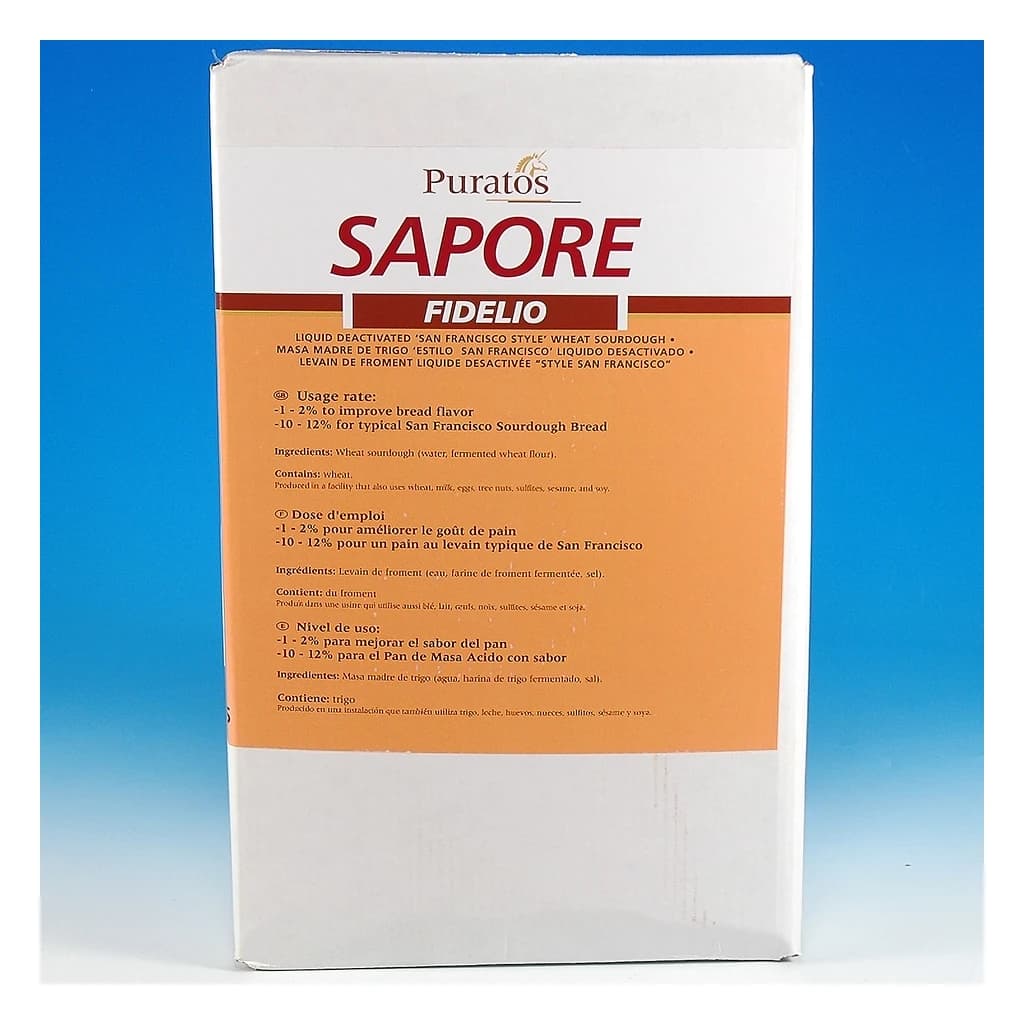
Puratos Sapore Fidelio Sourdough 10 kg

Fresh Yeast Benevia 10 kg
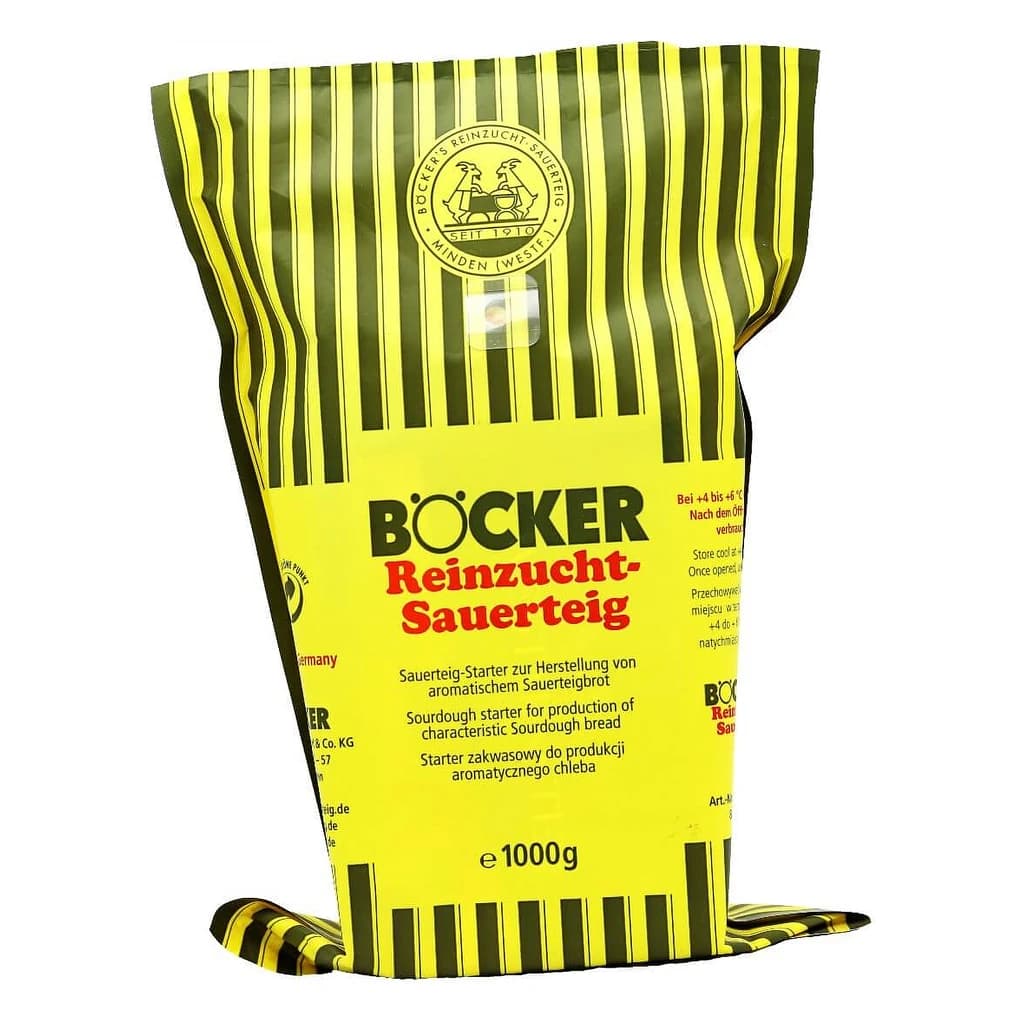
Böcker Reinzucht-Sauerteig Pure Sourdough Starter 1 kg
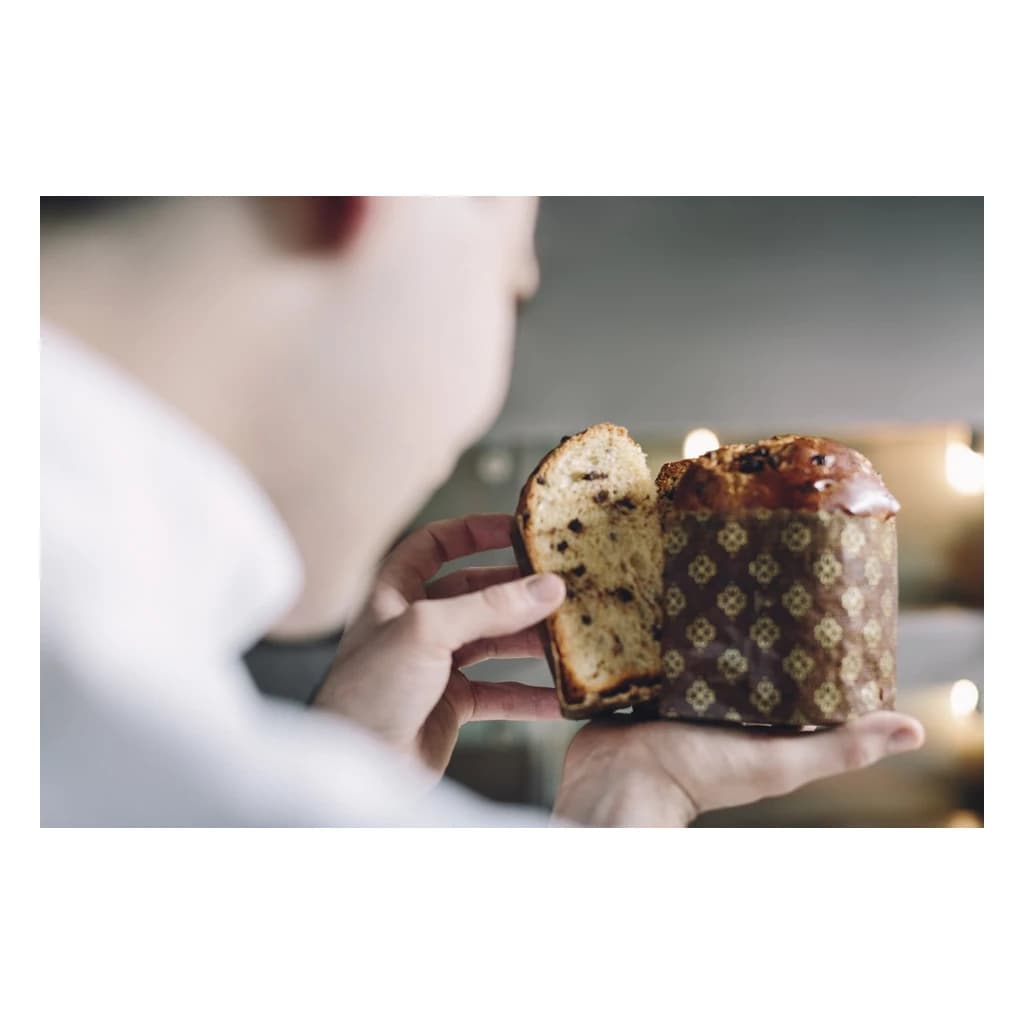
Lesaffre Saf-Levain LV1 Sourdough Starter (S)
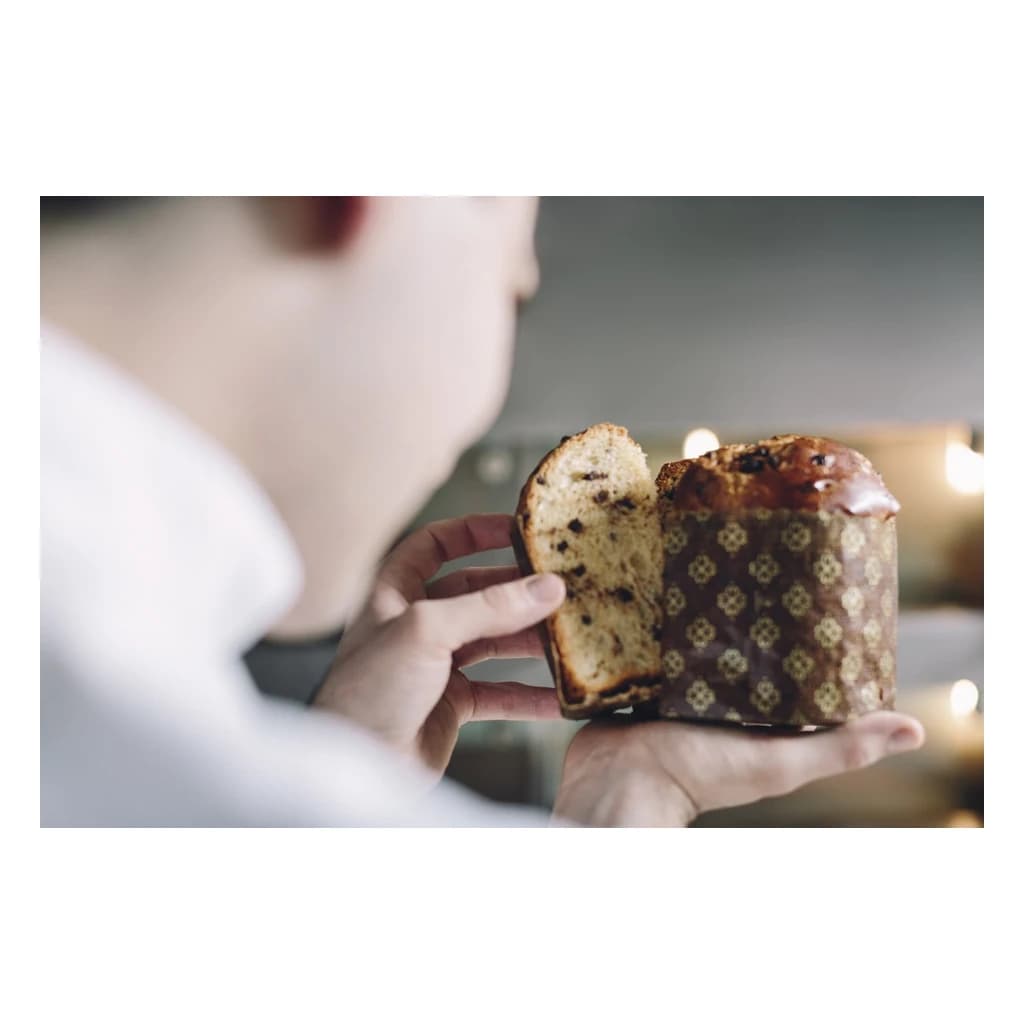
Lesaffre Livendo Starter LV-2 Sourdough Culture
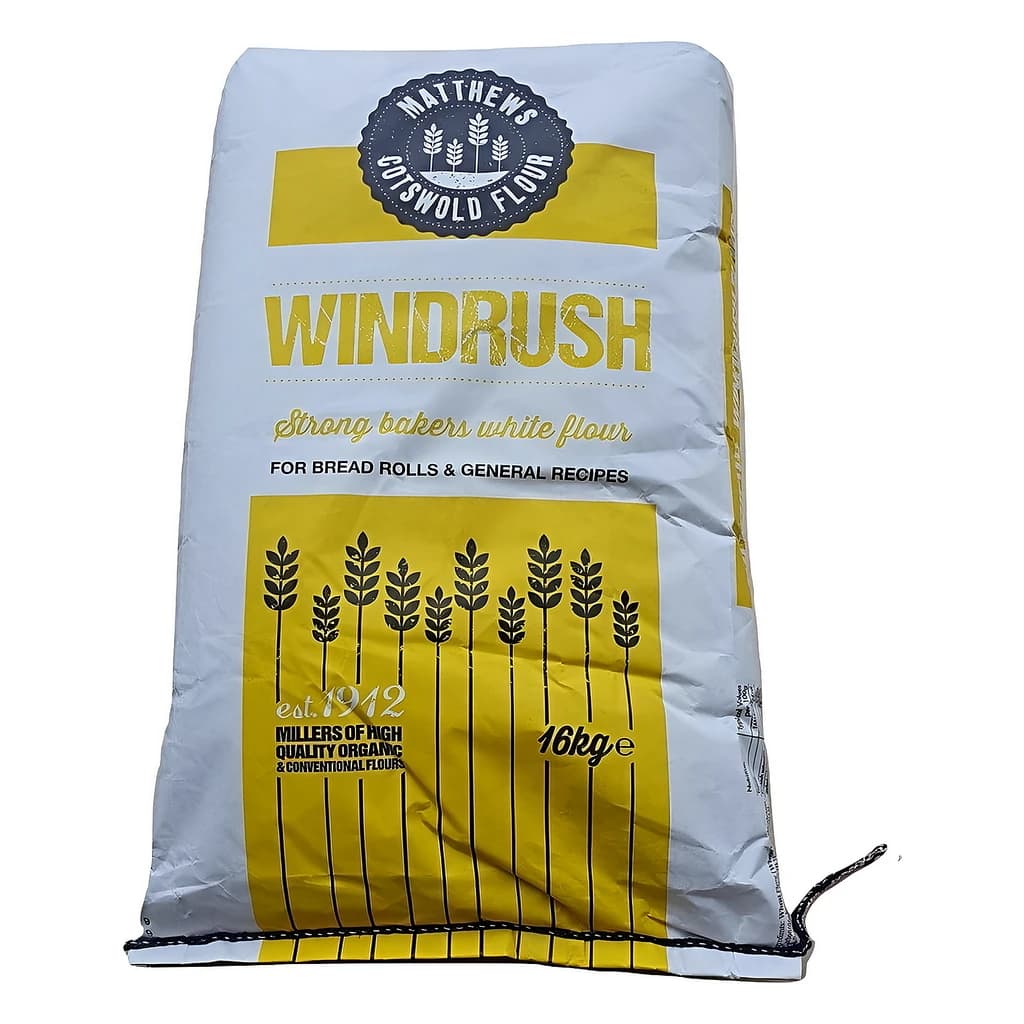
Windrush Strong White Bread Flour 16 kg
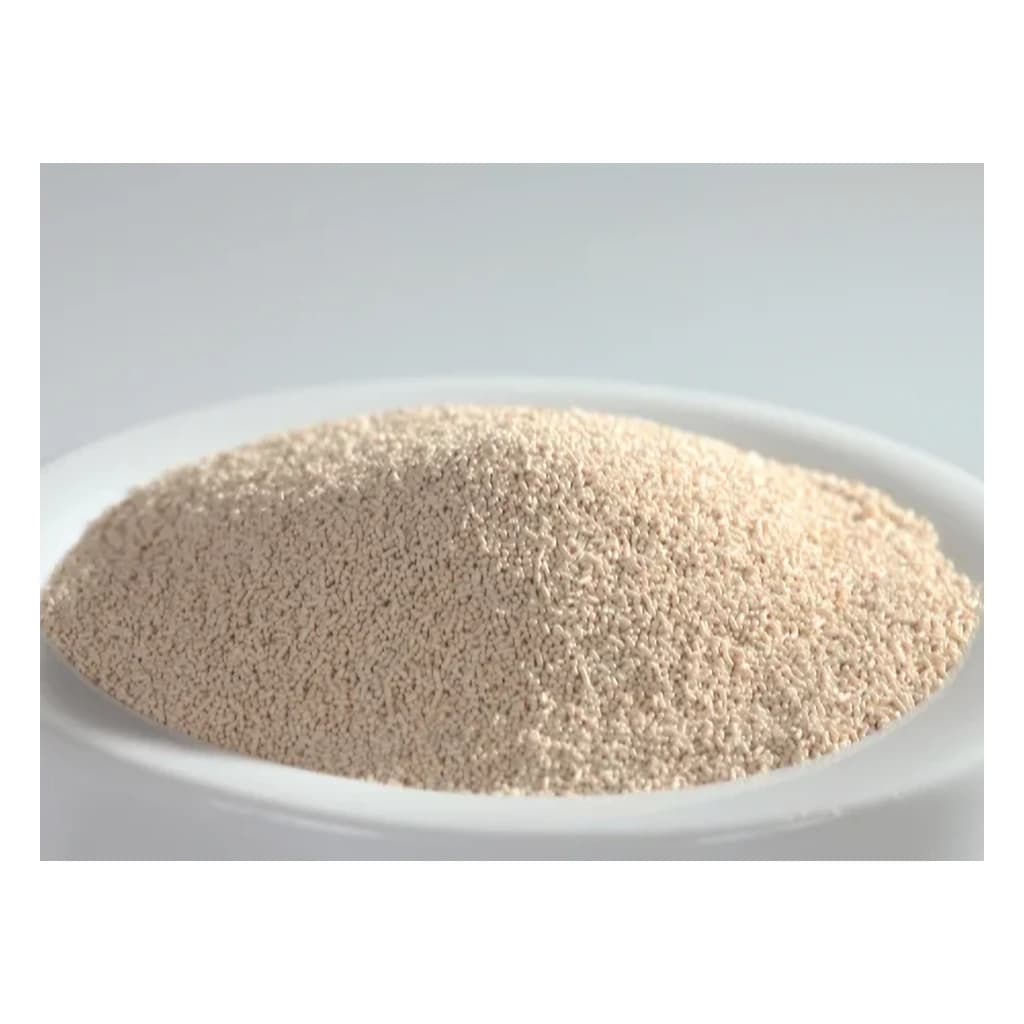
Dried Yeast Pakmaya 20 × 500 g (10 kg)
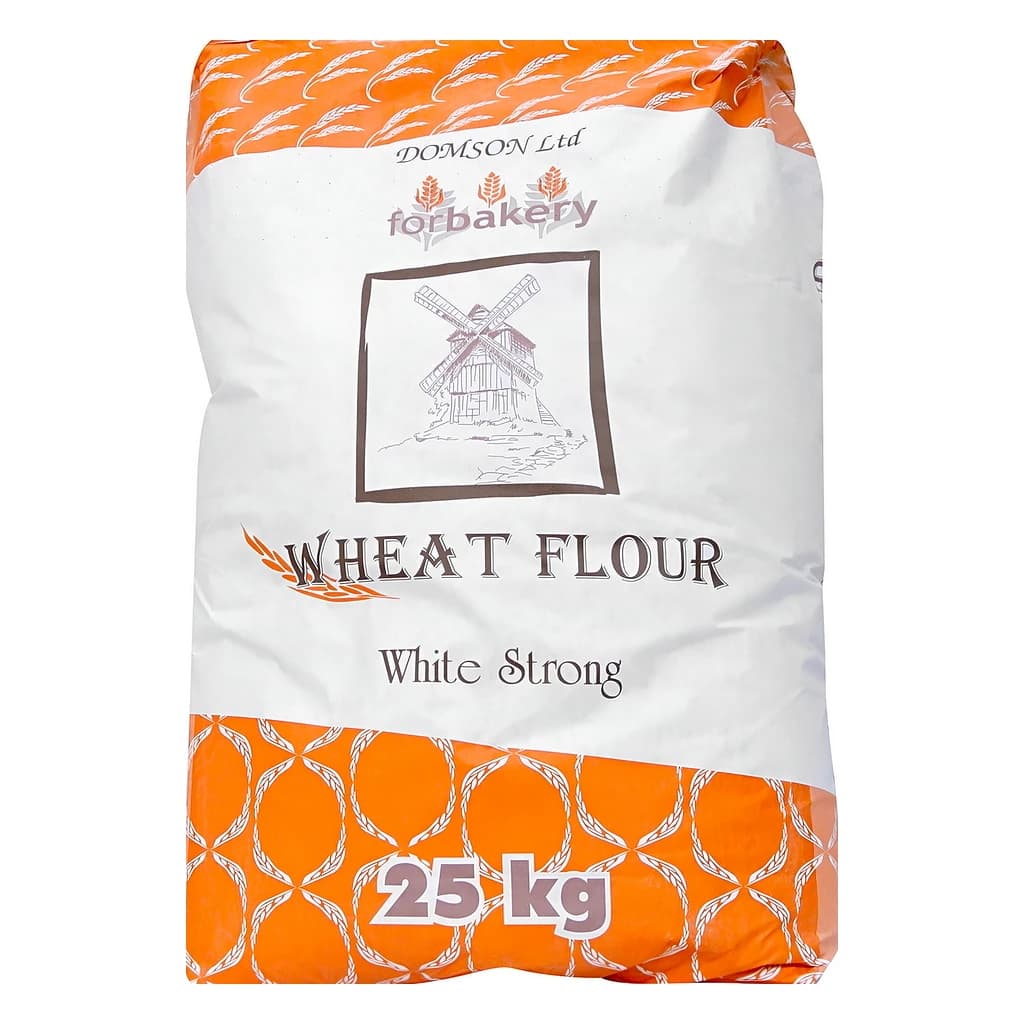
Domson White Strong Wheat Flour 25 kg
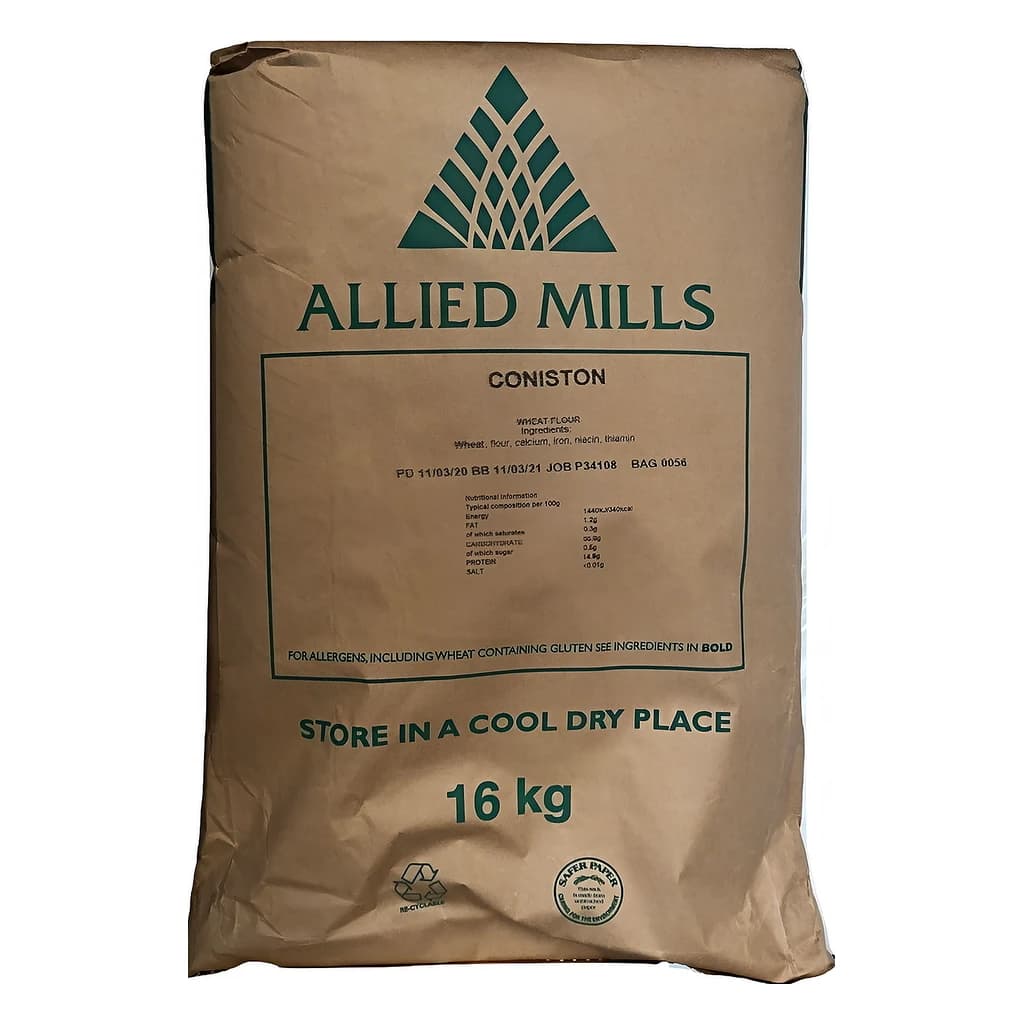
Coniston Strong White Flour 16 kg
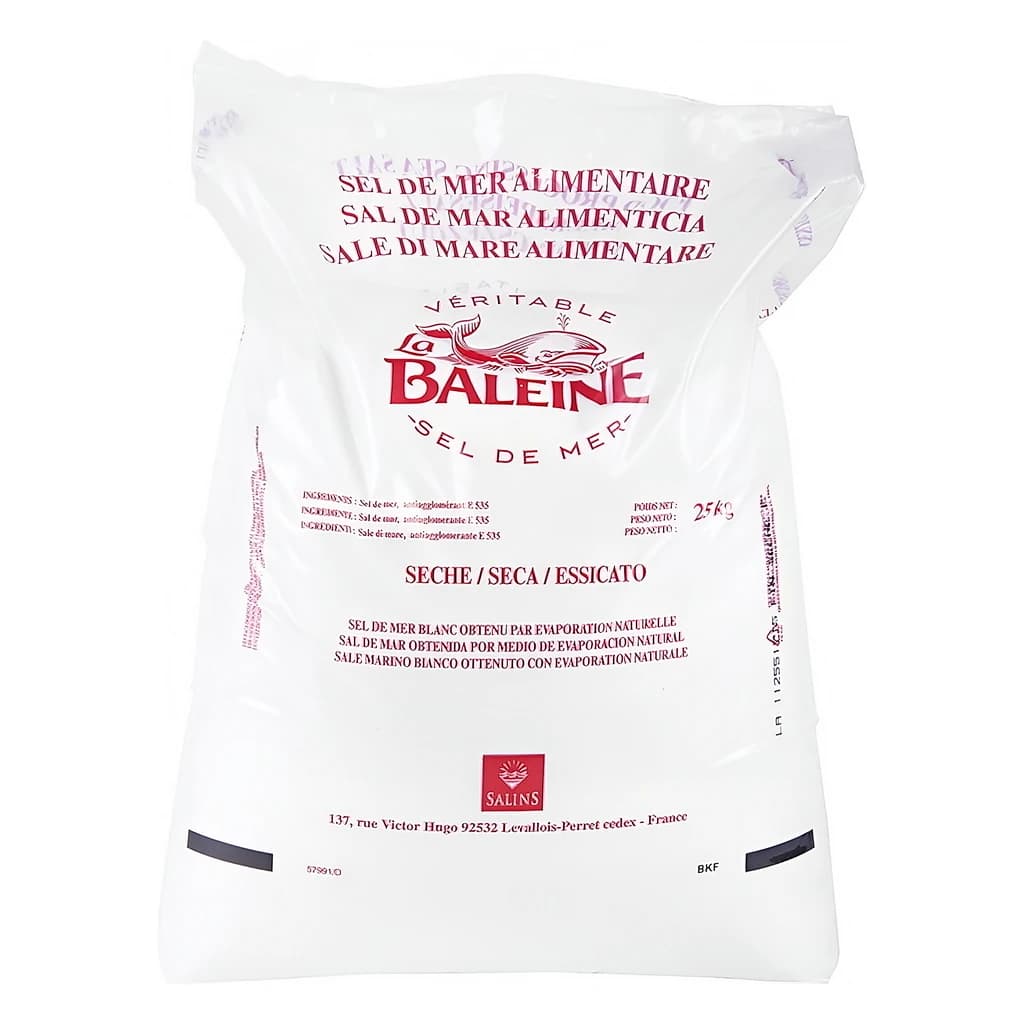
La Baleine Fine Sea Salt 25 kg
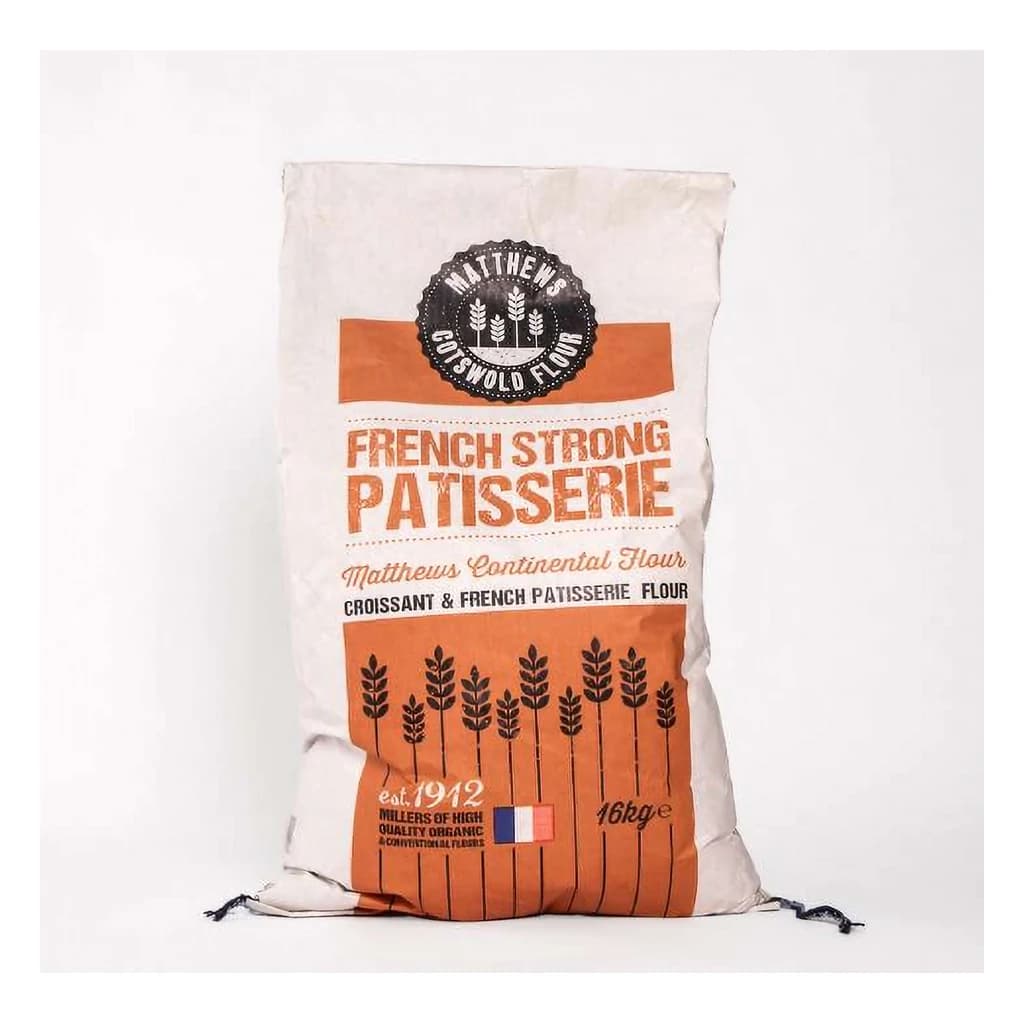
Belle Or T65 French Flour 25 kg
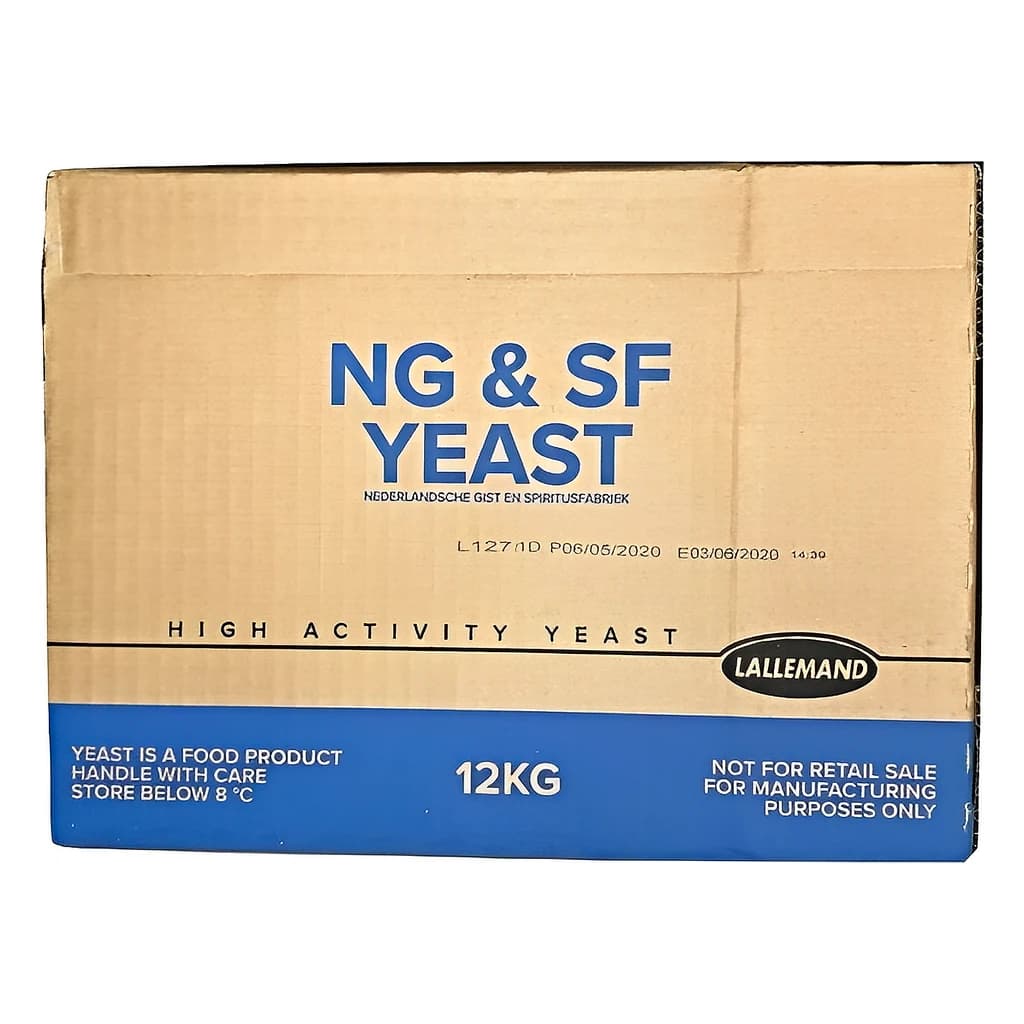
Fresh Yeast NG & SF Fast Active 12 kg
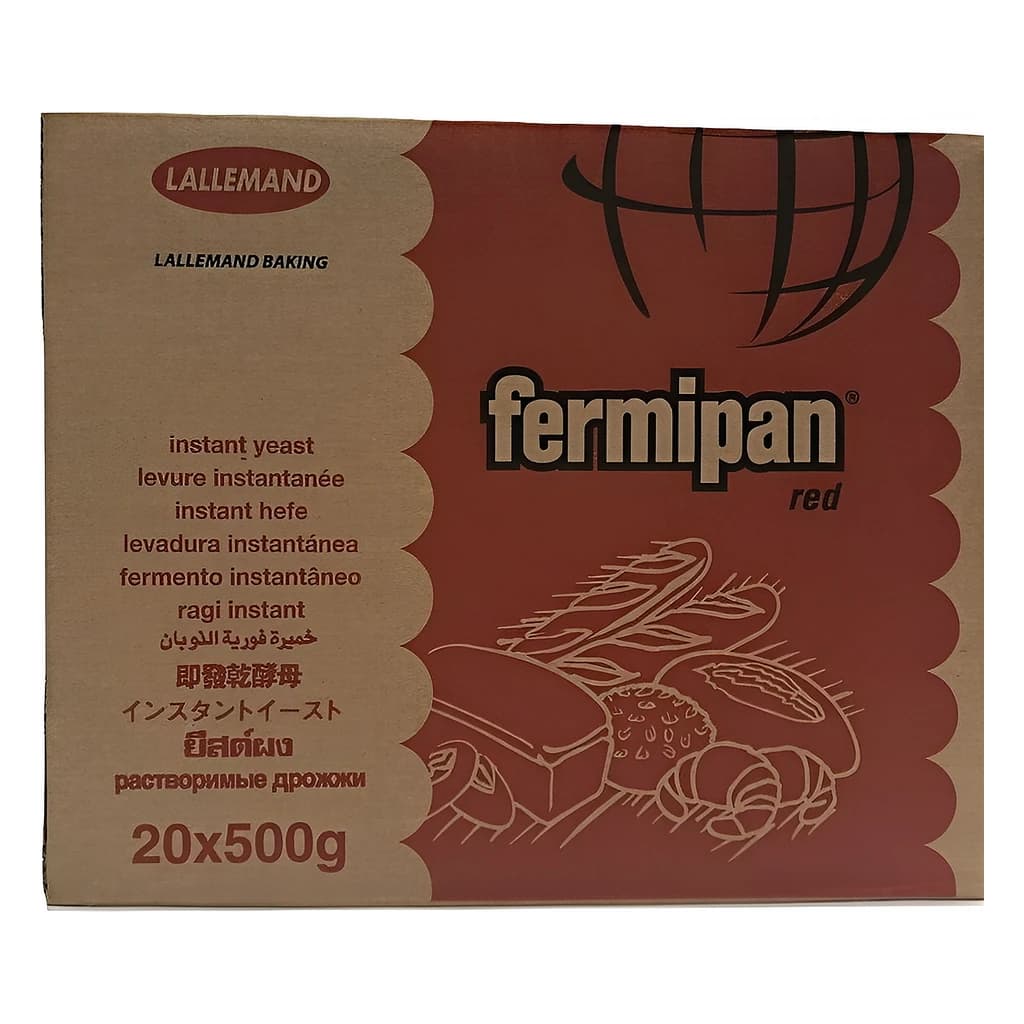
Dried Yeast Fermipan Red 10 kg

Puratos O-tentic Durum Sourdough Concentrate 10 × 1 kg
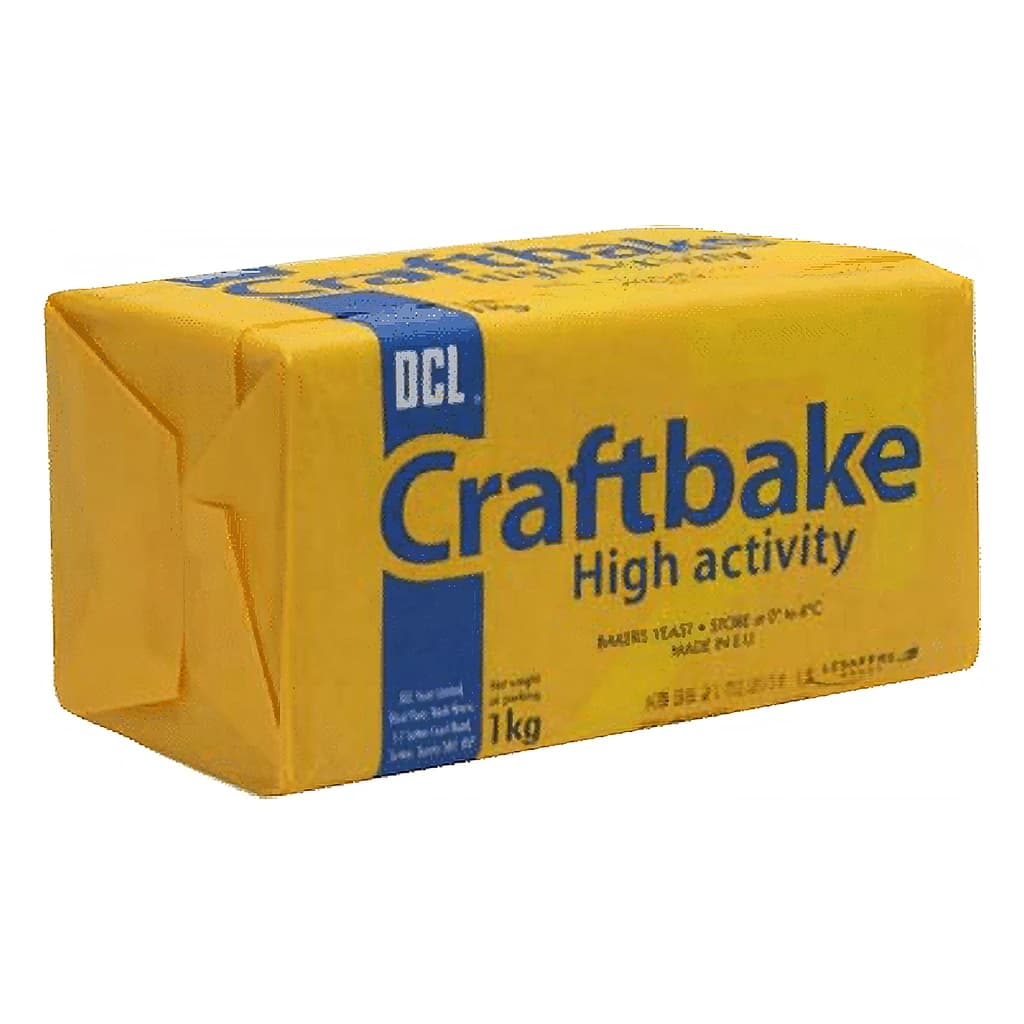
Fresh Yeast DCL Craftbake High Activity 10 kg

Dried Yeast DCL Levure Premium 10 kg