
Recipes & Formulas
Tested formulas with baker's percentages
10 articles · 70 diagrams · avg 10 min read
Articles in this section
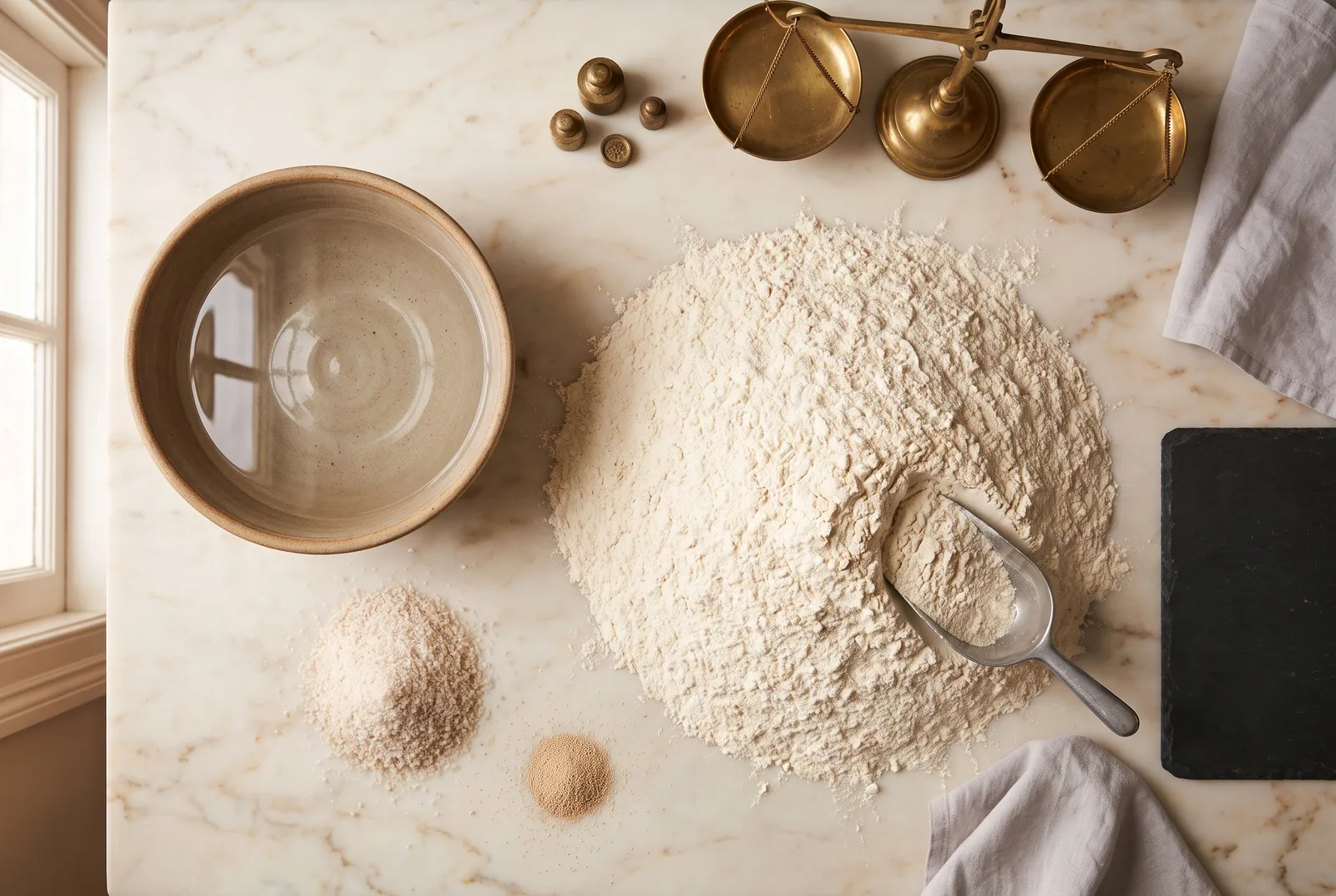
Baker's percentage: the universal language of professional formulas
Baker's percentage is the notation every professional formula in this library is written in: flour is always 100%, and every other ingredient is expressed as a percentage of the flour weight. This dossier teaches the whole language from one lean dough, then shows how the same idea reads an enriched brioche (where eggs and butter hide most of the water), a cake (a "modified" baker's percentage governed by balance rules), a ganache (where chocolate, not flour, is the 100% base) and a complete mix. It includes five worked formula cards in baker's percentage with arithmetic-checked totals, hydration and yields, a hydration ladder, a yeast-conversion table, a fault table, and the catalogue products a baker buys to execute each one. Numbers are cross-checked against Callebaut, trade references and pastry educators, and anchored to eight first-party supplier spec sheets (Domson/GoodMills flour, Lallemand yeast, Polmlek butter, Zeelandia improver & couverture, Barbara Luijckx couverture).
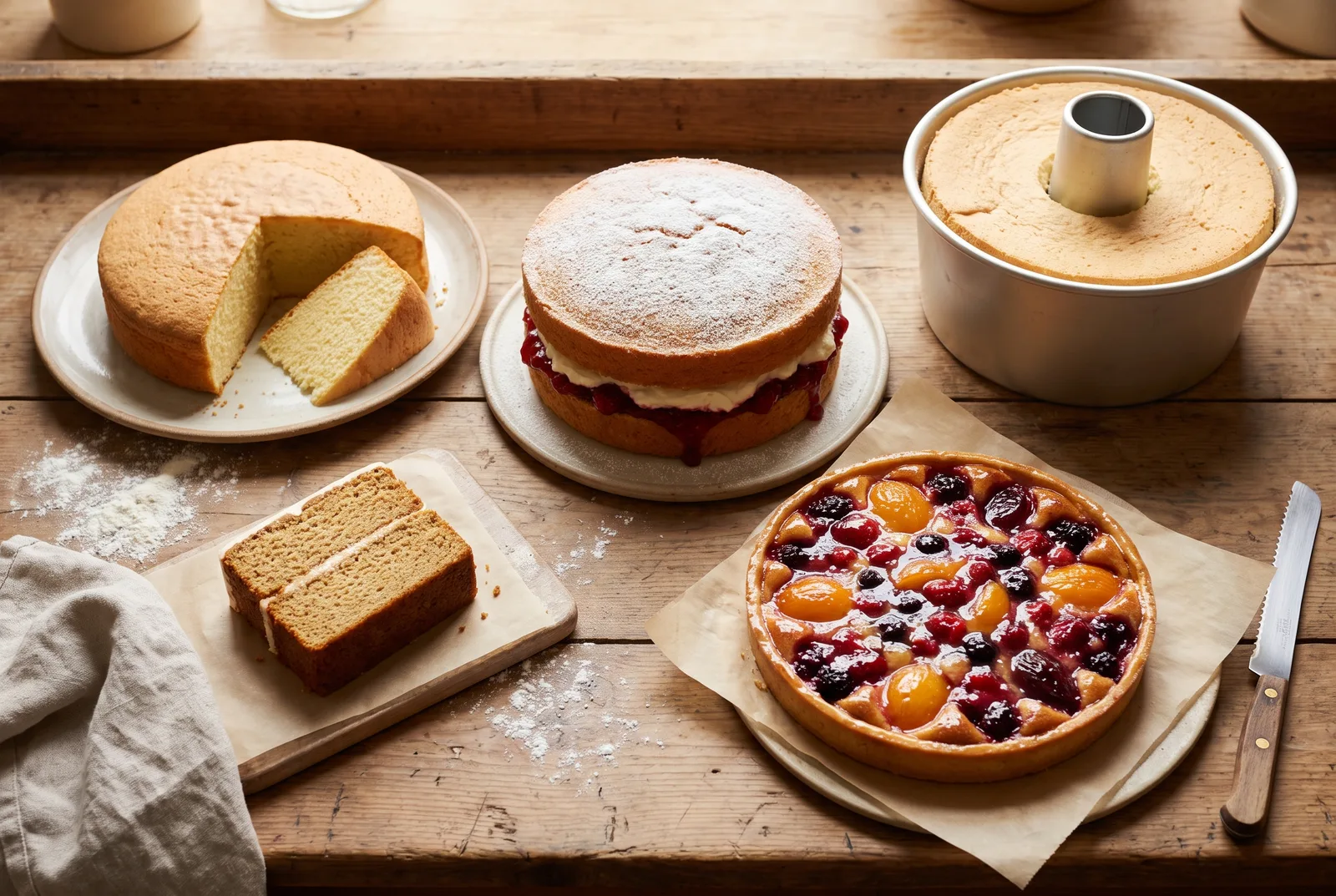
Cake formulas by baker's percentage: sponge, butter, chiffon and shortcrust ratios
Unlike bread, cakes use a modified baker's percentage — sugar, fat, egg and liquid all measured against flour = 100% — and they obey balance rules that predict a batter's behaviour before you bake. This dossier teaches the four cake families (foam sponge, creamed butter cake, high-ratio layer, chiffon) plus the shortcrust pastry family, with six arithmetic-checked formula cards in baker's percentage: a classic genoise, a 1:1:1:1 pound cake / Victoria sponge, a high-ratio layer cake, a chiffon, a pâte sucrée (with brisée and sablée ratios), and two first-party complete-mix application recipes. Each card has ingredient rows with percentages, a verified total, a worked example at a real batch size, process steps with temperatures and times, and the catalogue products a baker buys to execute it. Numbers are cross-checked against King Arthur, BAKERpedia, Baking Sense, The Bake School and ThermoWorks, and anchored to nine first-party supplier spec sheets (Whitworth cake flour, Kent caster sugar, Polmlek butter, Cardowan high-ratio shortening, JAR Dutch cocoa, Bowika/Domson baking powder and three Zeelandia mixes).
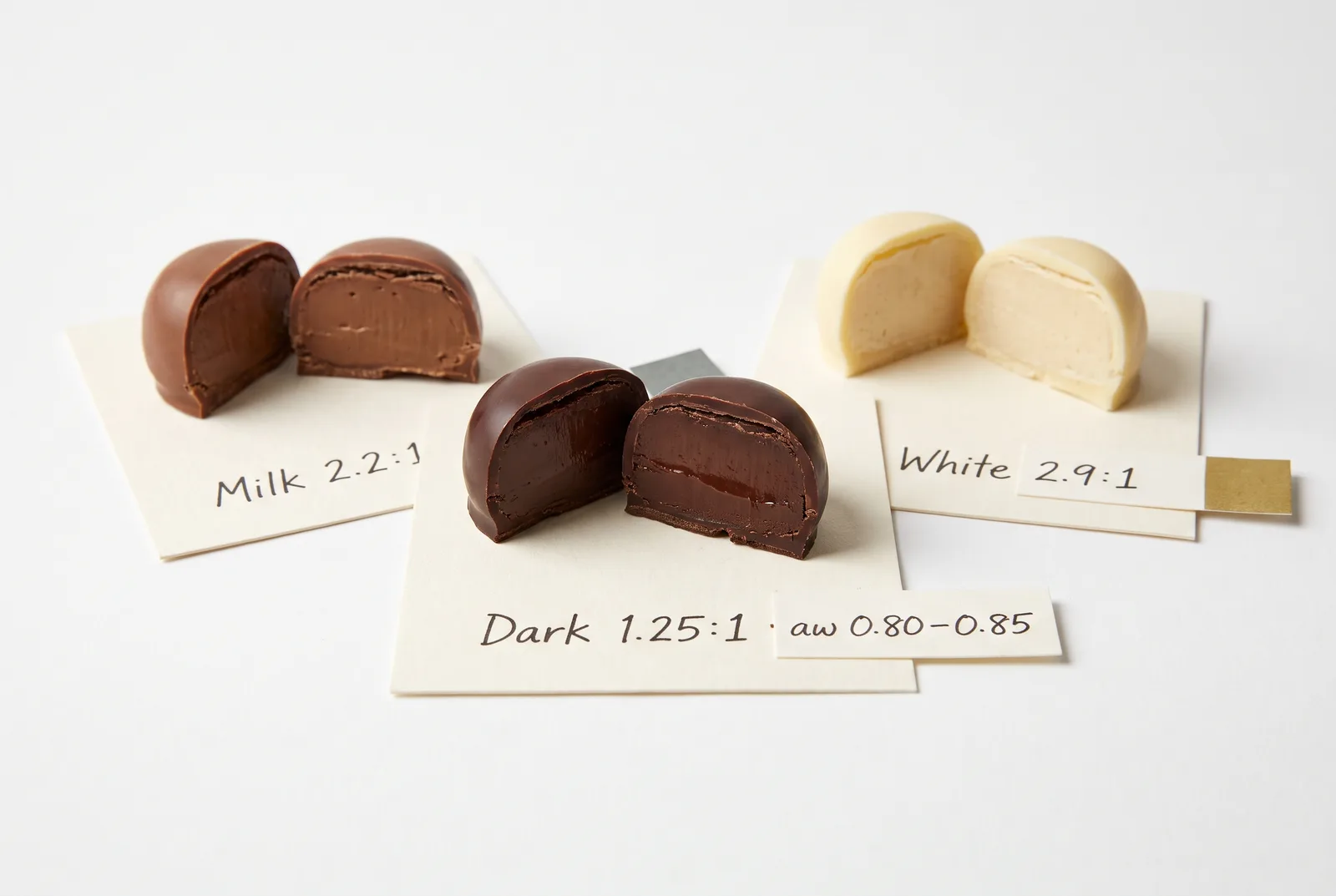
Chocolate and confectionery formulas: ganache ratios, water activity and shelf-life balancing
The confectionery formula book: complete, worked formulas for dark, milk and white chocolate ganache, whipped ganache (ganache montée), a gelatin-set chocolate mirror glaze and gianduja — every one written in baker's percentage with the chocolate (or nut paste) as the 100% base, a worked example at a real batch size, and the arithmetic checked. It pins down the numbers that decide whether a filling lasts two weeks or two months: the chocolate:cream ratio (dark 1:1–2:1, milk 1.5–2.5:1, white 2.5–3:1, whipped 1:3), the water-activity target (aw 0.75–0.85 for a shelf-stable centre) and how glucose, invert sugar, sorbitol and a touch of potassium sorbate get you there. Composition, cocoa-butter content, allergens and tempering temperatures for the catalogue couvertures are taken directly from eleven Domson-catalogue spec sheets (Zeelandia Arabesque Noir 58/72, Lait 34, Blanc 29; OSM Bieruń cream; Ratos Natura glucose & invert; Martin Braun Nuss Plus; Kluman & Balter gelatine; Zeelandia Paletta cold glaze; Helios glaze; a Belcolade milk chocolate) and cross-checked against Callebaut, King Arthur Baking, Valrhona, Greweling's Chocolates and Confections and the tinepreferschocolate water-activity work.
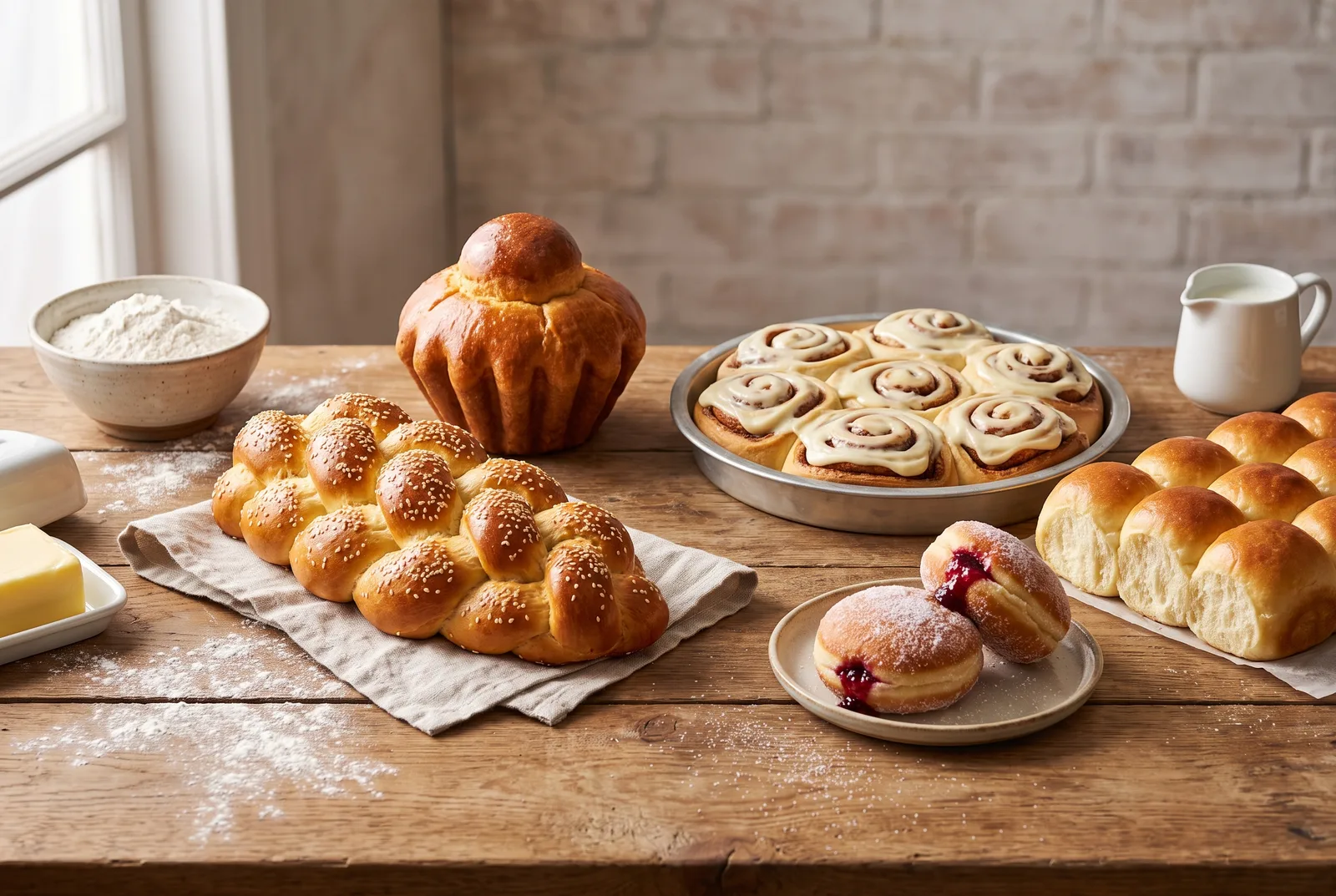
Enriched dough formulas: brioche, challah, cinnamon rolls and sweet buns by baker's percentage
Five production-ready enriched formulas — rich brioche, challah, cinnamon rolls, tangzhong milk/sweet buns and a spec-sourced Berliner doughnut — every one written in baker's percentage with a worked bench batch, process steps and temperatures. The dossier teaches the one calculation that decides success in enriched dough: effective (true) hydration, which counts the water hidden inside eggs (~75%), milk (~87%) and butter (~16%), not just the water you pour in. It also covers the enrichment spectrum from lean to brioche, why high sugar needs osmotolerant yeast, yeast conversions, and a faults-and-fixes table. Built on eight first-party supplier spec sheets (GoodMills/Domson flour, Lesaffre yeast, Polmlek butter, Polski Cukier sugar, PGD cinnamon, two Zeelandia Berliner doughnut systems and a Zeelandia cream-cheese filling) cross-checked against King Arthur professional formulas, BAKERpedia and food-scientist recipes.
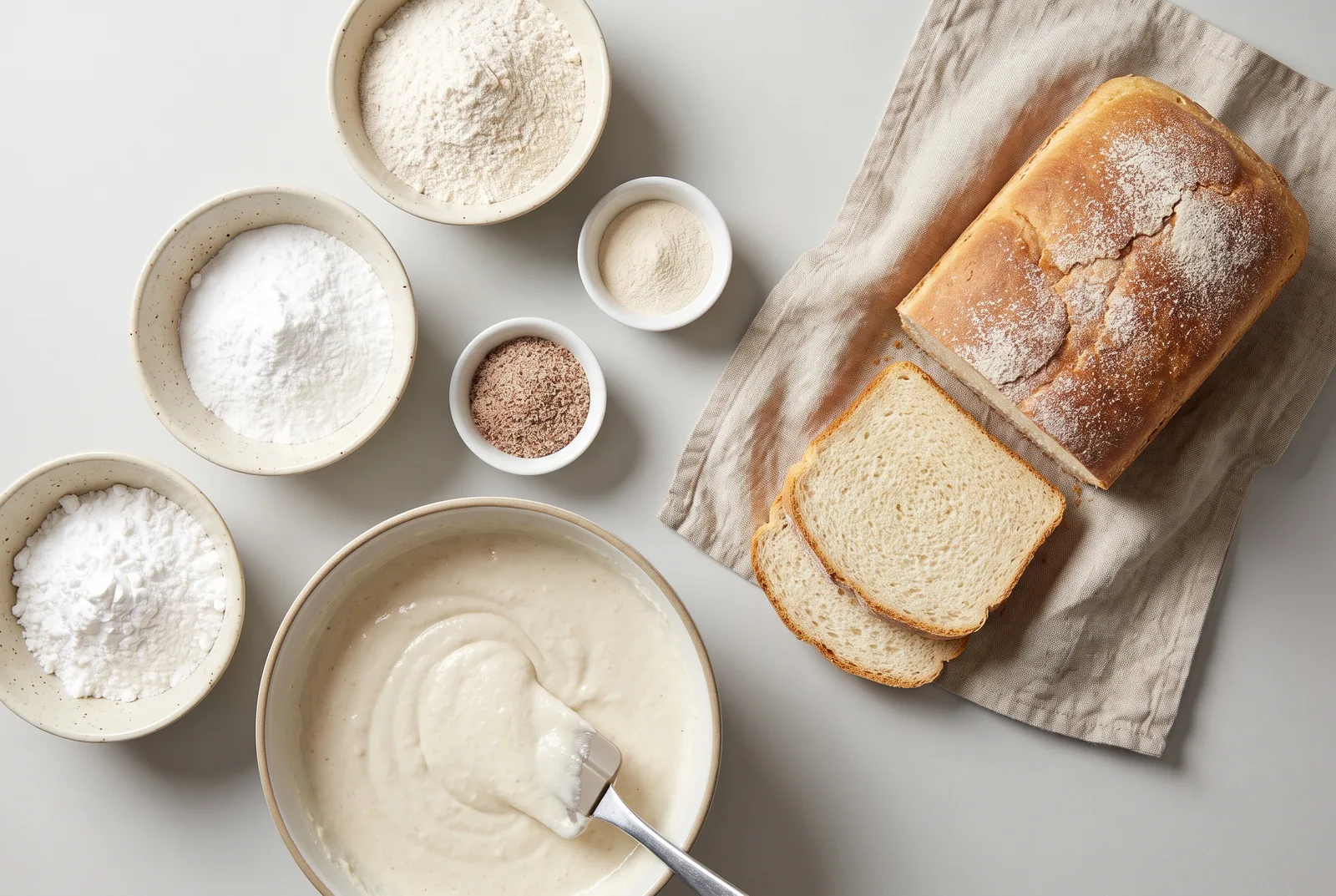
Gluten-free formula adaptation: hydration, gum dosage and starch blending in baker's percentage
The formula companion to gluten-free flour science: how to rebuild a wheat recipe as a gluten-free one — and how to write GF formulas from scratch — entirely in baker's percentage. Every formula card here uses the GF flour/blend as 100%, carries a worked example at a real batch size, and has had its arithmetic checked. It pins the three numbers that decide a gluten-free bake: hydration (GF runs ~80–110% water on flour, roughly 1.5× wheat, and the dough becomes a pourable batter), binder dosage (xanthan 0.2–0.5%, guar 0.5–1.0%, HPMC 0.5–3.0%, psyllium 2–5%), and the starch blend (a neutral rice base plus tapioca for chew and potato/maize starch for lightness). Six formula cards cover the wheat→GF conversion, a from-scratch white loaf, a fibre brown loaf on a ready blend, a complete-mix loaf, dinner rolls and chemical-leavened muffins. Numeric specs come directly from eight Domson-catalogue spec sheets (Doves Farm GF White/Plain/Brown blends and Xanthan Gum, IREKS SINGLUPLUS and Muffin-Mix, Agrol Oat Flour, Bronisław Potato Starch) and are cross-checked against King Arthur Baking, BAKERpedia and peer-reviewed hydration/hydrocolloid studies.
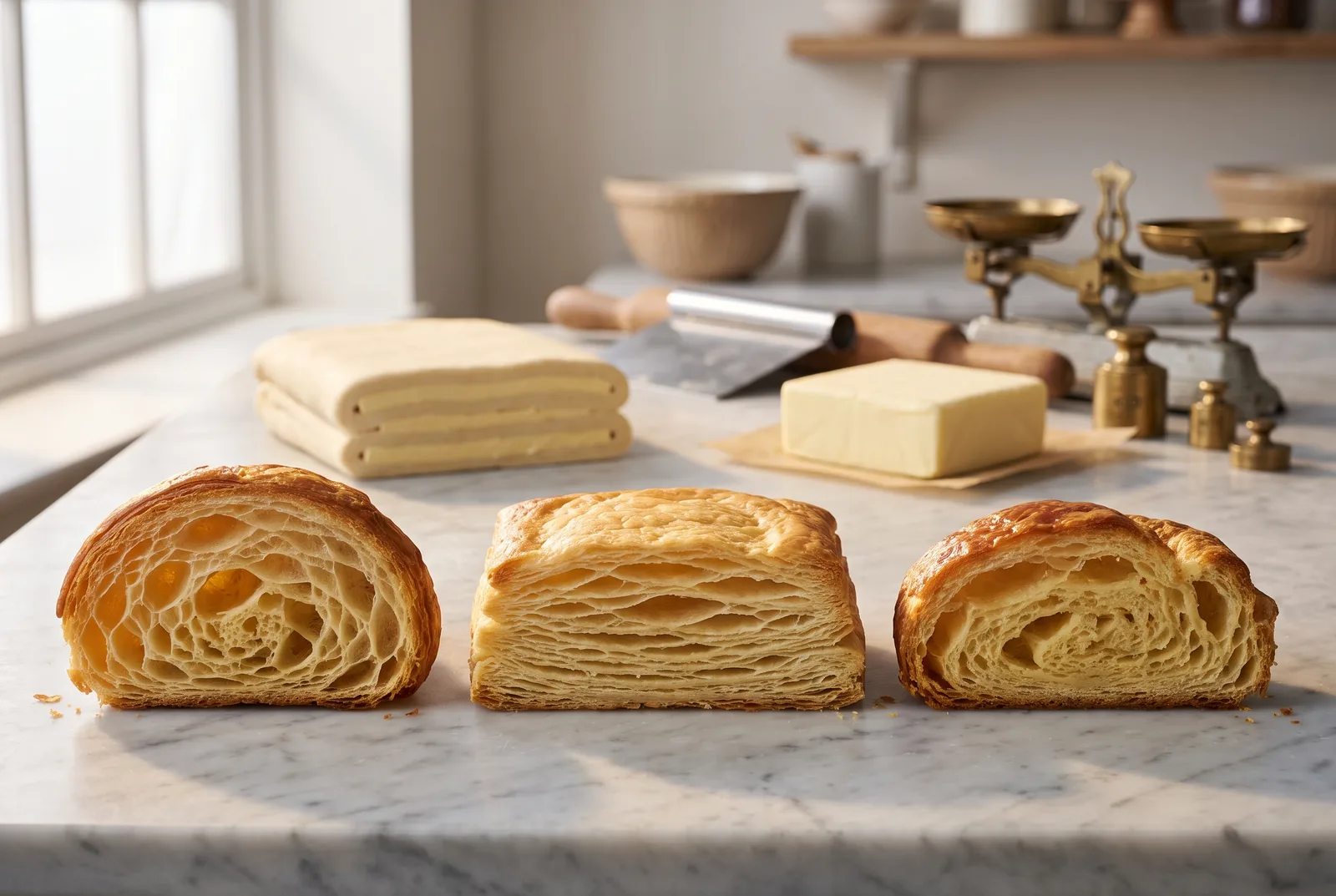
Laminated dough formulas: croissant, Danish and puff pastry beurrage ratios and layer counts
The formula companion to the lamination craft: complete, tested recipes for croissant, Danish, classic puff, rough/blitz puff and pain au chocolat, every one written in baker's percentage with flour = 100%, a worked example at a real batch size, and the arithmetic checked. It pins down the numbers that matter — the beurrage (roll-in fat) ratio expressed both as a percentage of flour and of the total package, détrempe hydration, yeast dosage, fold scheme and the layer-count maths (single fold ×3, book fold ×4, dough layers = 2×fat+1) — and shows how to scale any of them with a conversion factor. Numeric specs for the flours, butter, margarines and yeast are taken directly from seven Domson-catalogue spec sheets (Polmlek Butter 82%, Kruszwica Maestra, Cardowan Crown NHAV, FWP Matthews Windrush, GoodMills T750, Komplexmłyn T550, Lesaffre Benevia) and cross-checked against King Arthur Baking, BAKERpedia, BakeInfo (NZ Baking Industry Research Trust), Weekend Bakery and Pastry Arts Magazine.
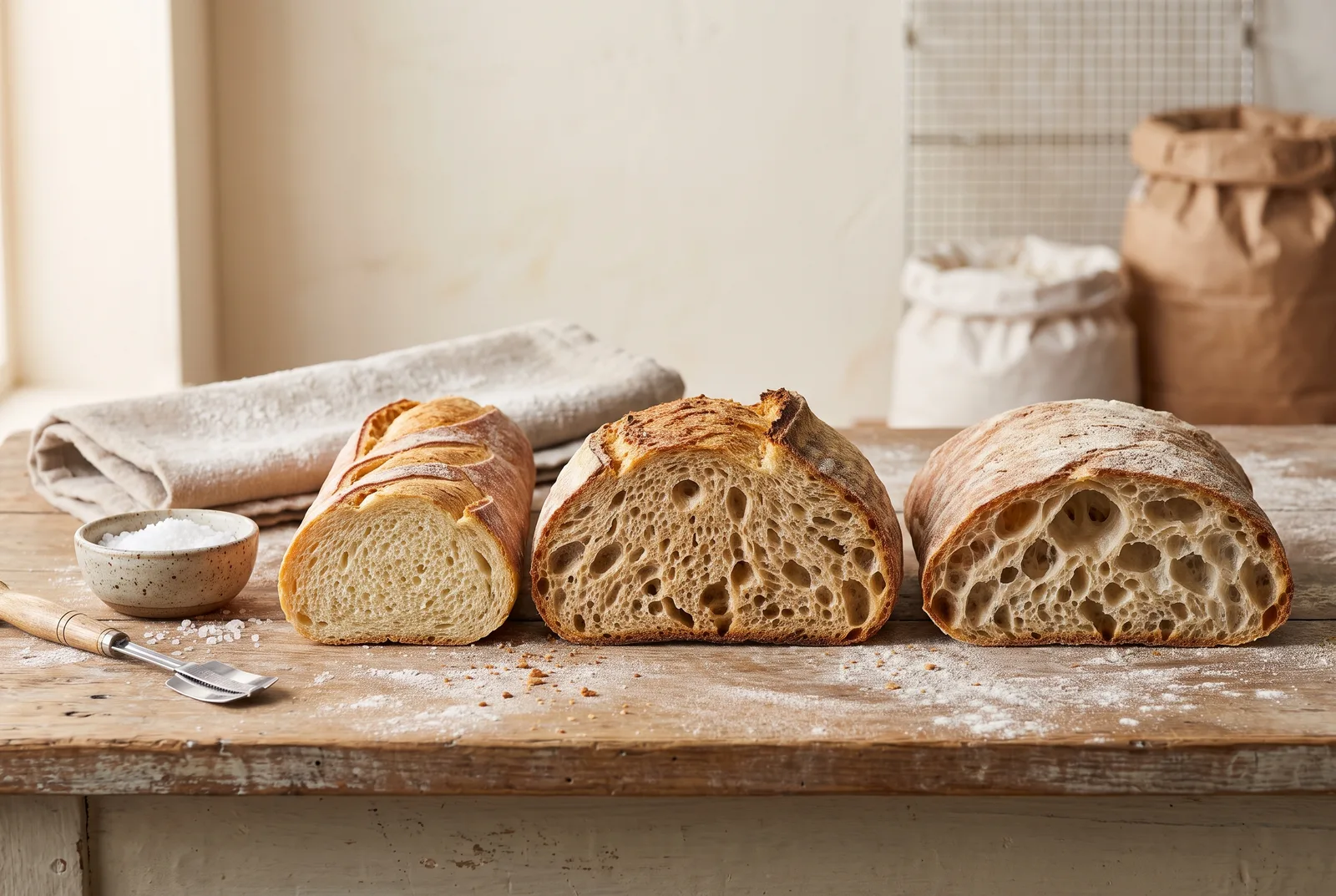
Lean bread formulas: baguette, ciabatta and sourdough by baker's percentage
Working formulas for the three pillars of lean baking - baguette, ciabatta and sourdough - written in baker's percentage with flour = 100%. Each formula gives ingredient rows in baker's %, a worked example at a real batch size, and a full process with dough temperatures, times and baking parameters. The dossier covers the direct method, poolish and biga preferments, wheat pain au levain, a higher-hydration country sourdough and a catalogue shortcut using Puratos O-tentic Durum. Headline percentages are drawn from King Arthur's professional formulas, The Perfect Loaf, ChainBaker and BAKERpedia, and the ingredient choices are wired to real Domson catalogue products with first-party spec data for flour, yeast, salt, semolina, malt and the O-tentic sourdough component.
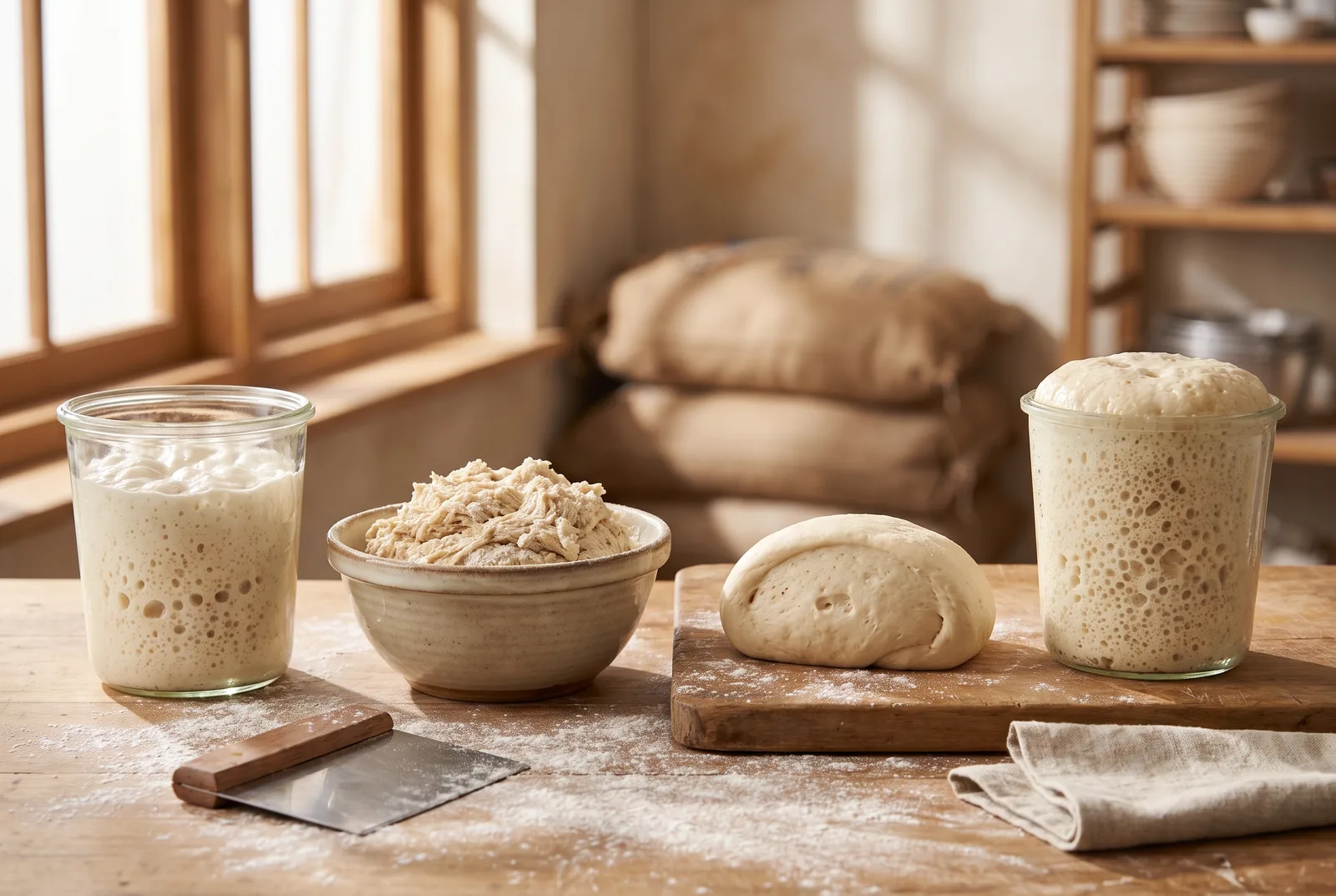
Preferment formulas: poolish, biga, pâte fermentée and levain percentages
A formula-first, bench-ready guide to the four preferments professional bread relies on — poolish, biga, pâte fermentée and levain — written entirely in baker's percentage with worked examples at real bakery batch sizes. The organising number is the prefermented-flour percentage (PFF): the share of the total formula flour that sits in the preferment. The article gives the master method for converting any straight dough to a preferment formula by moving flour and water across while keeping totals constant, then six tested formula cards: the PFF conversion method; a 30% poolish baguette at 70% hydration; a 35% biga ciabatta at 80% hydration; a pâte fermentée French bread at 20% prefermented flour (the only preferment that carries its own salt); a liquid and stiff levain build with an inoculation-vs-time ladder; a Tartine-style country sourdough at 20% levain / ~9% PFF; and a one-step O-tentic Durum shortcut at 4% on flour. Every percentage is arithmetic-checked (hydration = water ÷ flour, totals reconcile), with PFF ranges, a yeast-format conversion table, a formula fault-finder, and Domson catalogue flours, yeasts, salt and sourdough components to buy and bake them. Numbers are drawn first from first-party supplier spec sheets (Domson/GoodMills Type 550, Windrush Strong White, Lesaffre Benevia, Fermipan Red, The Salt Company sea salt, Puratos O-tentic Durum, Zeelandia Superkwas) and cross-checked against professional baking references.
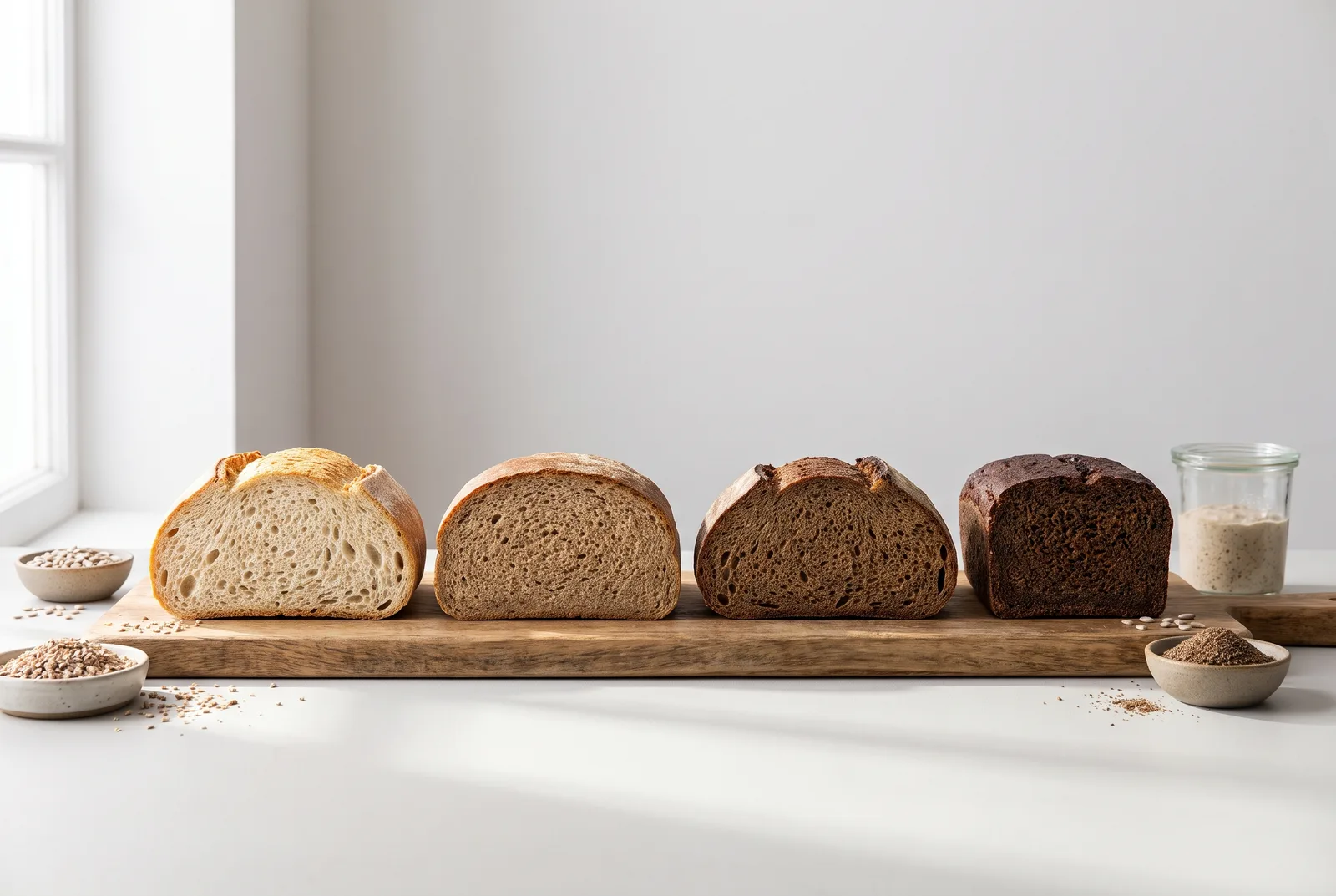
Rye and wholegrain bread formulas: sourdough percentages, hydration and crumb density
Working rye and wholegrain formulas written in baker's percentage with flour = 100%. Eight tested formulas span the whole rye ladder - a light deli sponge rye, a Roggenmischbrot, a two-thirds rye levain with an old-bread soaker, dark pumpernickel, a 90% rye sourdough, a 100% wholegrain Vollkornbrot with a rye-chop soaker, a soft 100% wholemeal wheat pan loaf, and a catalogue shortcut using ready rye sourdough concentrates and complete mixes. Each formula gives ingredient rows in baker's %, a worked example at a real batch size, pre-fermented-flour and hydration figures, and a full process with temperatures and times. Headline percentages are drawn from King Arthur professional formulas, BAKERpedia, The Perfect Loaf, My German Recipes and Hamelman, with rye science from the IREKS Compendium. Ingredient choices are wired to real Domson catalogue products, with first-party spec data for rye and wholemeal flours, cracked rye, rye sourdough concentrates, a complete rye mix, vital wheat gluten, salt, yeast, malt and seeds.
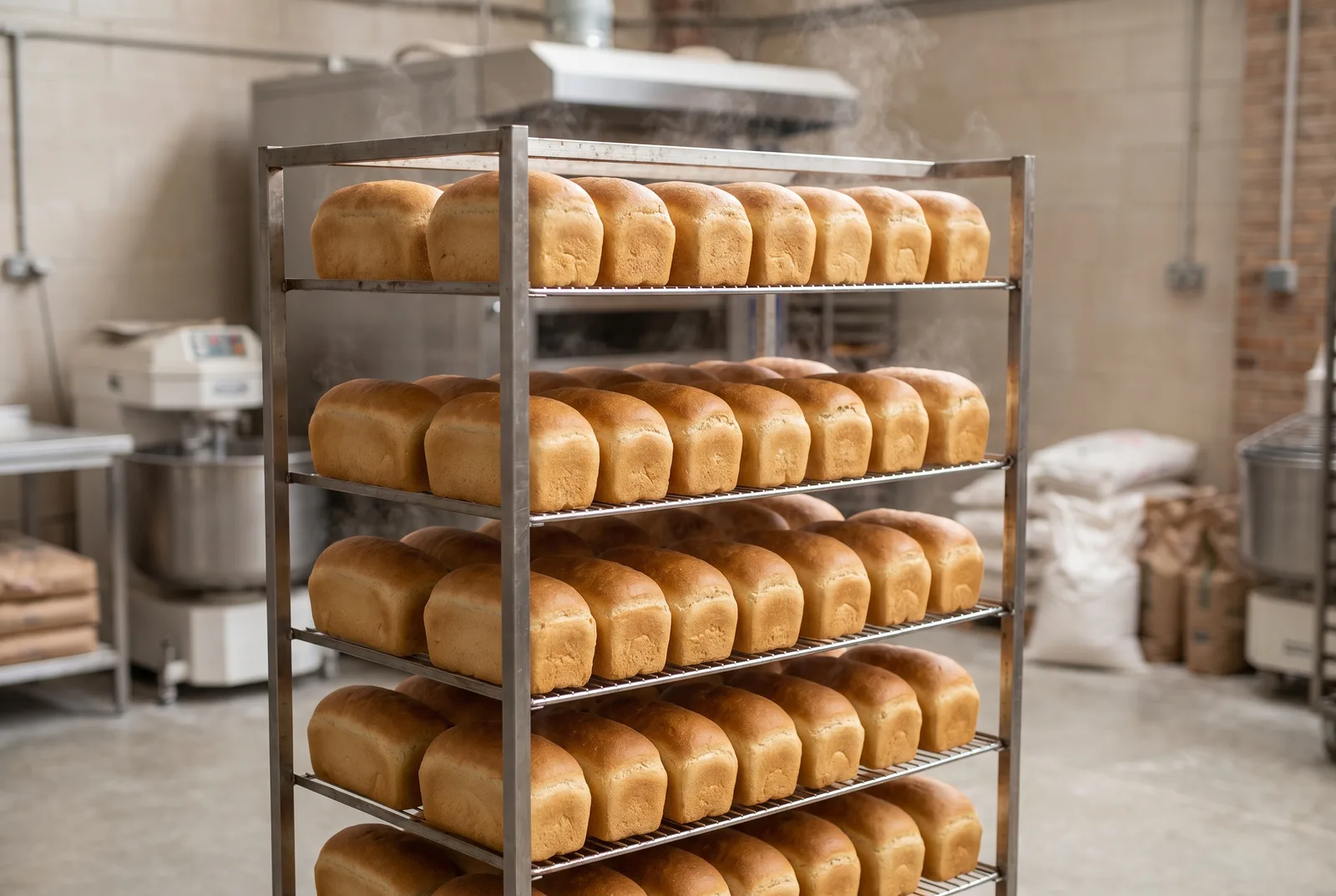
Scaling formulas up and down: yield conversion, batch costing and non-linear adjustments
The working baker's guide to recalculating a formula for any batch size without failures. It builds the scaling maths from baker's percentage (Formula Conversion Factor, total %, hydration), then adds the two things percentages alone never tell you: yield - how much DOUGH to make for a target number of FINISHED units once baking and fermentation losses are counted - and the non-linear adjustments that trip people up at scale (dough temperature and friction, mixing/bake time, yeast-form substitution and chemical leaveners in deeper tins). Five worked formula cards (a pan loaf scaled two ways, a lean baguette with a desired-dough-temperature calculation, a catalogue rye bread from a supplier spec, a balanced butter cake, and a non-flour dark-ganache by chocolate=100%) anchor the method, all arithmetic verified. Built on five first-party Domson supplier spec sheets (Type 550 flour, sea salt, IREKS Soft Roll 7, Zeelandia Optimax Free, Lesaffre Benevia yeast) cross-checked against King Arthur Baking, BAKERpedia, the IREKS Compendium and EU regulation.