
Chocolate and confectionery formulas: ganache ratios, water activity and shelf-life balancing
The confectionery formula book: complete, worked formulas for dark, milk and white chocolate ganache, whipped ganache (ganache montée), a gelatin-set chocolate mirror glaze and gianduja — every one written in baker's percentage with the chocolate (or nut paste) as the 100% base, a worked example at a real batch size, and the arithmetic checked. It pins down the numbers that decide whether a filling lasts two weeks or two months: the chocolate:cream ratio (dark 1:1–2:1, milk 1.5–2.5:1, white 2.5–3:1, whipped 1:3), the water-activity target (aw 0.75–0.85 for a shelf-stable centre) and how glucose, invert sugar, sorbitol and a touch of potassium sorbate get you there. Composition, cocoa-butter content, allergens and tempering temperatures for the catalogue couvertures are taken directly from eleven Domson-catalogue spec sheets (Zeelandia Arabesque Noir 58/72, Lait 34, Blanc 29; OSM Bieruń cream; Ratos Natura glucose & invert; Martin Braun Nuss Plus; Kluman & Balter gelatine; Zeelandia Paletta cold glaze; Helios glaze; a Belcolade milk chocolate) and cross-checked against Callebaut, King Arthur Baking, Valrhona, Greweling's Chocolates and Confections and the tinepreferschocolate water-activity work.
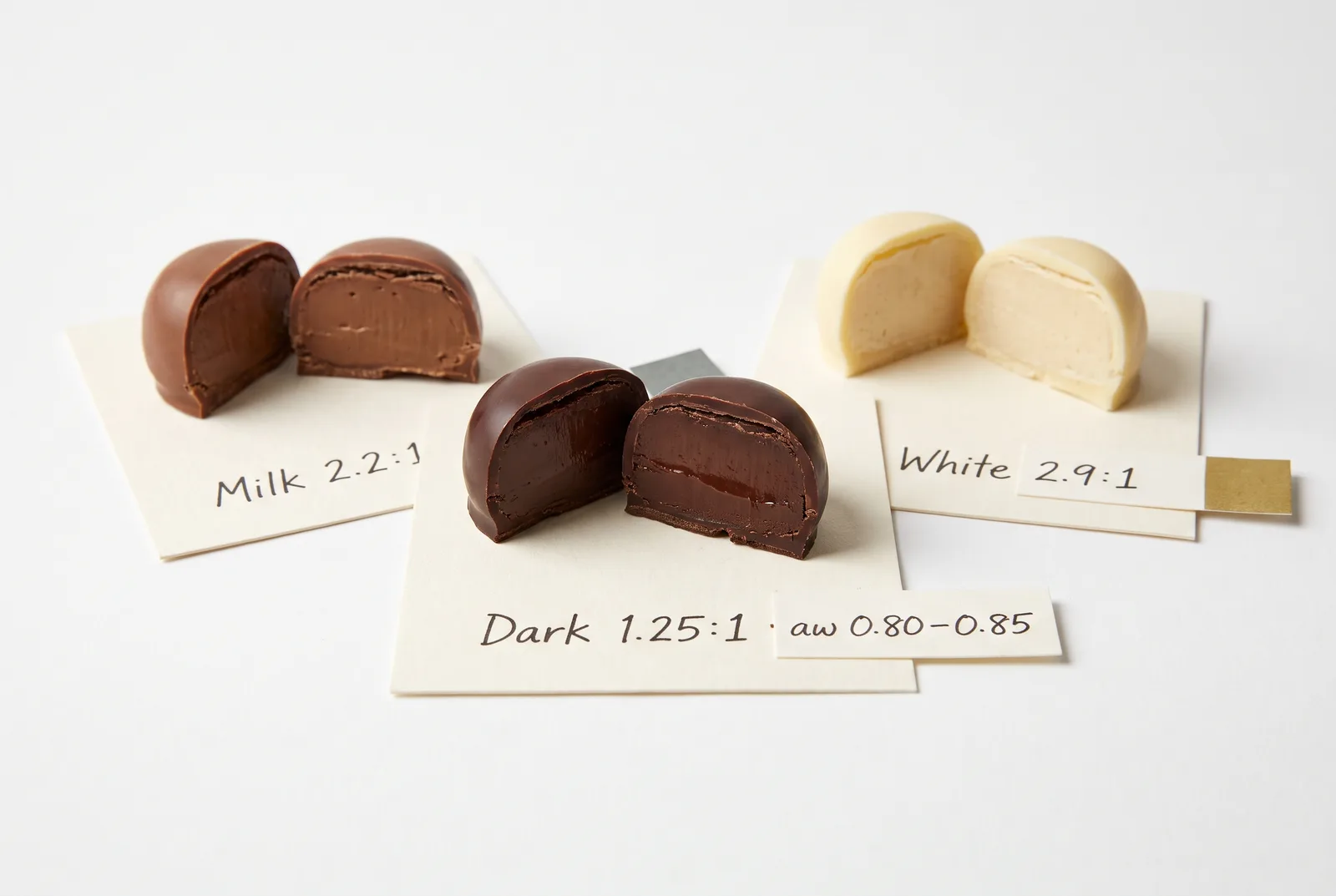
Two numbers run the confectionery bench
A ganache looks improvised — melt chocolate, pour on hot cream, stir. It is not. Behind every reliable filling sit two numbers, and once you control them you can put a tray on the bench tomorrow that eats well and keeps:
- The chocolate:cream ratio — how much water phase (cream) the chocolate (fat phase) carries. It sets the texture, from pourable glaze to cut-and-rolled truffle.
- The water activity (aw) — the free water available to micro-organisms. It sets the shelf life.
Everything in this article is written in baker's percentage, but for non-flour confectionery the base is not flour — it is the chocolate (or, for gianduja, the nut paste) at 100%. Every other ingredient is a percentage of that base: ingredient % = (ingredient weight ÷ chocolate weight) × 100. The pay-off is the same as in bread: one formula serves a 200 g test bowl and a 20 kg production batch — only the base weight changes. See the companion A8-bakers-percentage-fundamentals and A8-scaling-and-yield-conversion.
Quote a ganache two ways and you will never be confused: as a ratio (chocolate:cream, the way chocolatiers talk) and as a % of chocolate (the way the formula card is written). A dark truffle at 2:1 is the same thing as "cream 50% of chocolate".
The ratio: why dark, milk and white are not interchangeable
<!-- image: img-a8cc-02 -->The full grid is in the table below. The headline:
| Use | Dark | Milk | White |
|---|---|---|---|
| Pourable glaze / dip | 1:1.5–1:2 | 1:1–1.5:1 | 1.5:1–2:1 |
| Soft filling / piping | 1:1–1.5:1 | 1.5:1–2:1 | 2:1–2.5:1 |
| Truffle / firm filling | 2:1 | 2.5:1 | 3:1 (up to 4:1) |
| Whipped (montée) | 1:3 | 1:2.5 | 1:2.4 |
Why does the same job need different ratios? Because the three chocolates are different formulas themselves. Read it off the catalogue spec sheets:
- Dark carries the most dry cocoa solids — the hydrophilic cocoa particles that bind the cream's water phase and let the ganache set firm even when it is holding a lot of cream. (Noir 58 lists 15% added cocoa butter with 40.8 g sugar; Noir 72 lists 44% total cocoa fat with only 25.8 g sugar — note these are two different measures, added butter vs total fat, so they are not directly comparable.) The high cocoa-solids load, plus less sugar, is what lets dark soak up the most cream and still set — so it takes the most cream per unit chocolate.
- Milk (Arabesque Lait 34) is 25% cocoa butter but 50.5 g sugar plus milk solids. The milk solids and sugar already do part of the "setting" job, so it needs less cream than dark.
- White (Arabesque Blanc 29) has no cocoa solids at all — it sets on 30% cocoa butter plus 55.1 g sugar and milk powder. It actually carries more cocoa butter than dark 58's 15% added butter, yet it needs the least cream of the three — proof that it is the dry cocoa solids, not the cocoa butter, that govern how much cream a chocolate can absorb. Push past ~3:1 the other way and it stays soup.
That single insight — the chocolate's dry-solids and sugar load, not its cocoa butter alone, decide the ratio — is why you cannot swap dark cream quantities into a white recipe and expect it to set.
The dark bonbon ganache (the water-activity centrepiece)
<!-- image: img-a8cc-04 -->This is the formula that turns "fresh ganache" into "shelf-stable filling". Base = dark 58% couverture = 100% (formula card below):
| Ingredient | % of chocolate | Grams |
|---|---|---|
| Dark couverture 58% | 100% | 500 g |
| Cream (~35% fat) | 80% | 400 g |
| Glucose syrup (DE ~40) | 16% | 80 g |
| Invert sugar / artificial honey | 6% | 30 g |
| Sorbitol (optional) | 4% | 20 g |
| Unsalted butter 82% (soft) | 16% | 80 g |
| Potassium sorbate (E202) | 0.2% | 1 g |
| Total | 222.2% | 1111 g |
Chocolate:cream is 1.25:1; invert works out to 2.7% of the total batch and sorbate to 0.09%. Why all the extra sugars? Because a ganache of nothing but cream and chocolate sits at aw > 0.90 and is gone in under two weeks. The glucose (aw 0.68–0.72), invert and sorbitol bind free water and pull the centre into the 0.75–0.85 target band, where it keeps for up to two months. Below ~0.75 you would have to add so much sugar the piece turns cloying — so the trick is several humectants in combination, not a mountain of one.
Method: near-boil the cream with the glucose, invert and sorbitol; pour over the part-melted couverture in two or three additions and emulsify to a glossy, elastic core (a hand blender gives the smoothest result); cool below 35°C before adding the soft butter — butter is ~16% water at aw > 0.97, so it does not lower aw and it will split the emulsion if added hot. Frame at 8–10 mm or pipe at 28–30°C, let it crystallise 12–24 h at 16–18°C, then cut and enrobe in tempered couverture to seal the surface around the aw-controlled centre.
One more chocolate property matters when the same ganache is thinned into a coating or glaze: fluidity (Casson viscosity). A more fluid couverture pours thinner; the Belcolade milk chocolate datasheet in the catalogue, for instance, lists Casson 700–900 mPa·s and 32.5% cocoa butter. (Data-quality note: that datasheet is attached to the "Callebaut SICAO Milk 32.1%" item but is actually a Belcolade caramel milk sheet — verify the delivered product before relying on its numbers.)
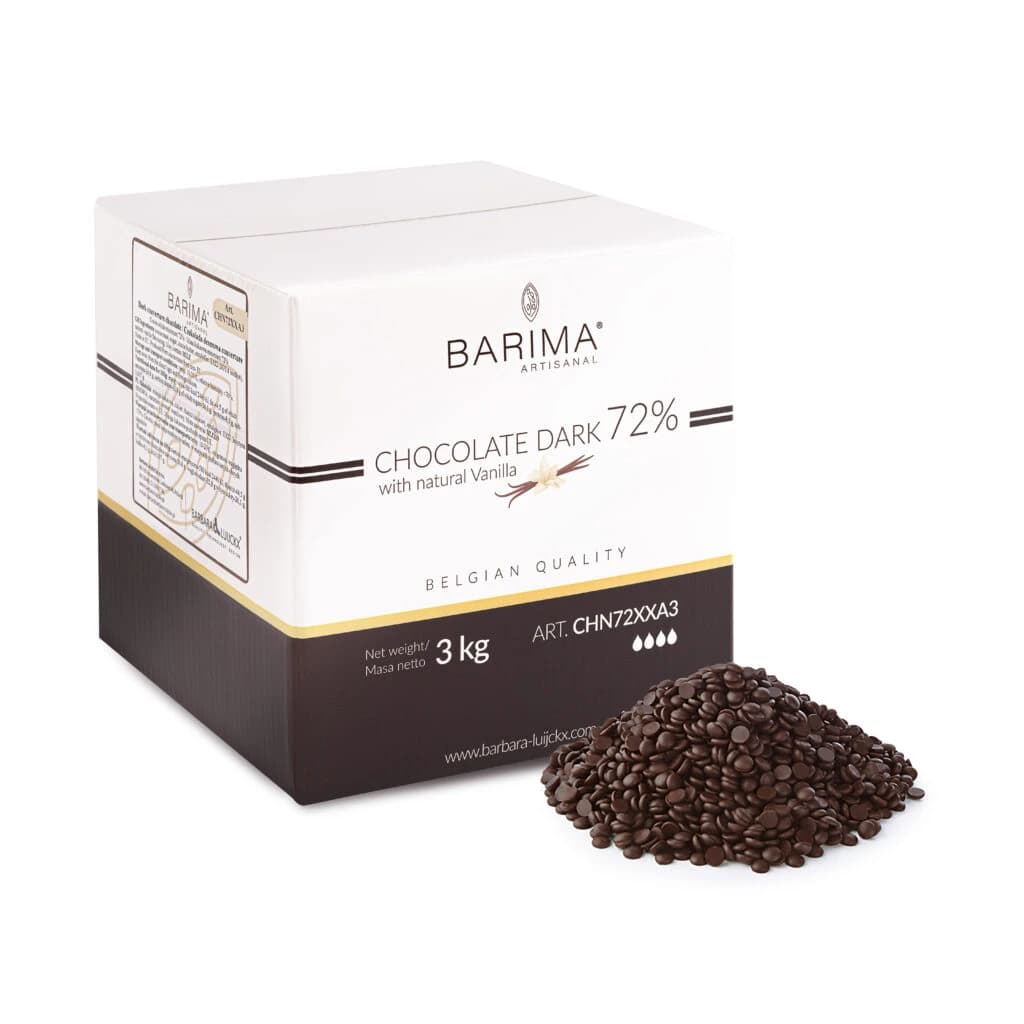
Buy it: Arabesque Noir 58 or a deeper Barima 72%/Callebaut Callets for the base; Ratos Natura Glucose Syrup and Artificial Honey for the humectants; Polmlek Unsalted Butter 82%; Potassium Sorbate for the optional preservative.
Milk and white: less cream, same method
The milk and white cards below are the same emulsion with the ratio dialled for the chocolate:
| Ingredient | Milk % | Milk g | White % | White g |
|---|---|---|---|---|
| Couverture | 100% | 500 g | 100% | 500 g |
| Cream (~35% fat) | 45% | 225 g | 35% | 175 g |
| Glucose syrup | 12% | 60 g | 10% | 50 g |
| Invert sugar | 5% | 25 g | 4% | 20 g |
| Unsalted butter | 12% | 60 g | 10% | 50 g |
| Total | 174% | 870 g | 159% | 795 g |
Milk lands at chocolate:cream ≈ 2.2:1, white at ≈ 2.9:1. Both couvertures are already very sweet (milk 50.5 g sugar, white 55.1 g) — taste before adding any extra sugar, and lean on glucose for anti-crystallisation rather than more sucrose, especially in white, which grains most readily. Temper to work: dark ~31°C, milk ~29–30°C, white ~29°C.
Whipped ganache (ganache montée): the cream-rich exception
<!-- image: img-a8cc-06 -->Flip the ratio on its head and you get a light, pipeable cream (formula card below), base dark 58% = 100% = 200 g:
| Ingredient | % of chocolate | Grams |
|---|---|---|
| Dark couverture 58% | 100% | 200 g |
| Cream — HOT portion | 100% | 200 g |
| Glucose syrup | 10% | 20 g |
| Bronze leaf gelatine (140 Bloom) | 2% | 4 g (~2 leaves) |
| Cream — COLD portion | 200% | 400 g |
| Total | 412% | 824 g |
Total cream is 600 g = 1:3 chocolate:cream. Bloom the bronze gelatine, dissolve it in the hot cream portion and emulsify into the chocolate, add the cold cream, then rest 6 h–overnight and whip to a soft peak. One warning: a whipped ganache is cream-rich and aerated, so its aw stays around 0.90 — it is a refrigerated, 3–4-day cream, not a shelf-stable filling. Use it for entremets layers and last-minute piping, not for boxed bonbons.
Chocolate mirror glaze: shelf life from solids, not chilling
<!-- image: img-a8cc-07 -->A mirror glaze (formula card below) is a gelatin-set, high-solids coating for frozen entremets. Base dark couverture = 100% = 300 g:
| Ingredient | % of chocolate | Grams |
|---|---|---|
| Dark couverture | 100% | 300 g |
| Caster sugar | 100% | 300 g |
| Glucose syrup | 100% | 300 g |
| Sweetened condensed milk | 66.7% | 200 g |
| Water (for syrup) | 50% | 150 g |
| Bronze gelatine (140 Bloom) | 6.7% | 20 g (+120 g bloom water) |
| Total (excl. bloom water) | 423.4% | 1270 g |
Boil the water + sugar + glucose to 103°C, blend over the condensed milk, chocolate and bloomed gelatine without whipping in air, then pour at 30–35°C over a frozen, fully set surface in one pass. Its keeping quality comes from the very high sugar/glucose/condensed-milk load (low aw) plus the gelatin set — the same principle as the ready-made Zeelandia Paletta Cold Jel Choco, a no-cook bucket glaze at dry matter min 60%, pH 5.0–5.3, with E202, that keeps 360 days sealed (14 days once opened). For a warm-kitchen, no-temper finish there is also the Helios compound chocolate glaze — but note it is a palm-fat coating, not real couverture, so it sets dull rather than mirror-bright. Other catalogue options: Master Martini Mirall, Dawn Decorgel.
Gianduja and praline: the low-water keepers
<!-- image: img-a8cc-08 -->Gianduja is the opposite end of the water spectrum from a fresh ganache: a fat system of finely milled roasted nuts, sugar and chocolate, with almost no free water — so it keeps for months. The formula card below uses base nut paste = 100% = 300 g, Greweling's classic 1:1:1:
| Ingredient | % of nut paste | Grams |
|---|---|---|
| Hazelnut (or almond) paste, 100% nuts | 100% | 300 g |
| Dark couverture | 100% | 300 g |
| Icing sugar | 100% | 300 g |
| Cocoa butter (optional, firmer set) | 10% | 30 g |
| Total (1:1:1) | 300% (+10%) | 900 g |
Use 1.25:1:1 for a milk-chocolate gianduja.
Regulatory note: under EU Directive 2000/36/EC a product called "gianduja (gianduia) nut chocolate" must contain 20–40% nuts — the legal minimum is 20%, not the one-third you will often hear. Greweling's 1:1:1 gives 33% nuts, comfortably inside that band but stricter than the law; the commonly quoted "30–50% sugar" is an artisan guide, not a legal limit. Confirm the legal naming rules for your market before you label a product "gianduja".
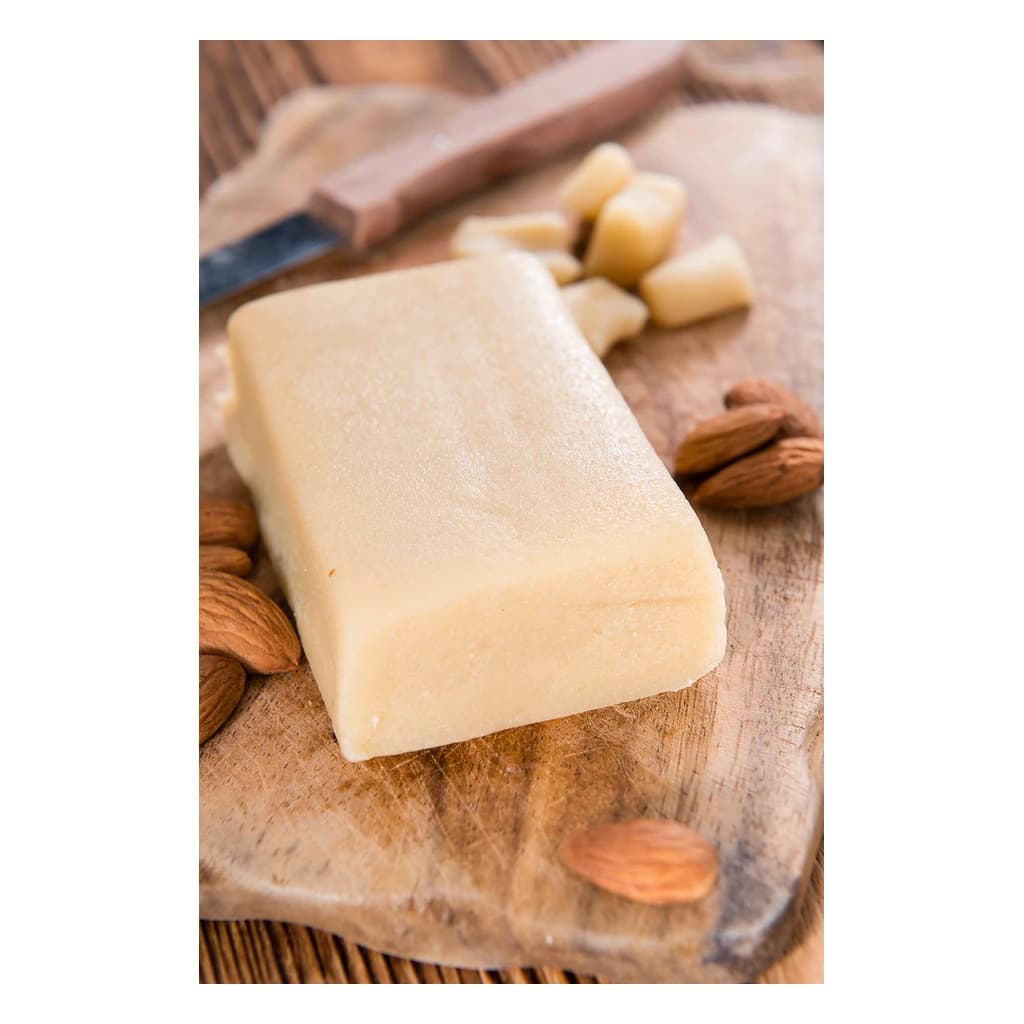
If you reach for a ready-sweetened nut cream such as Martin Braun Nuss Plus (sugar 40–50% + 20% hazelnut, best-before 720 days) you can skip the icing sugar and simply blend it ~1:1 with couverture. The same long-life logic applies to marzipan (a ~1:1 almond:sugar paste) and to pistachio/praline fillings such as IRCA Chococream Pistachio — high sugar and fat, very little water, naturally low aw. (Note: the catalogue Marzipan 50% item is linked for purchase, but its attached datasheet is actually a poppy-seed filling spec, so no marzipan numbers are cited here — verify the delivered product.)
Emulsion and shelf-life troubleshooting
<!-- image: img-a8cc-05 -->The full grid is in the fault table below. The four that cost the most trays:
- Split / oily / grainy ganache — an emulsion failure (too little water phase for the fat, worked too hot, or cold liquid shocked in). Rescue it by blending in a little warm cream with a hand blender to re-form the emulsion.
- Centre too soft to cut — ratio too low (too much cream) or butter added warm. Raise the chocolate ratio and add butter only below 35°C.
- Mould within days — aw too high. A plain ganache treated as shelf-stable will spoil; reformulate to aw 0.75–0.85 with glucose/invert/sorbitol (and ≤0.1% sorbate) or keep it refrigerated and sell it fast.
- Sugar bloom / graininess on storage — sucrose re-crystallising; always carry some glucose/invert to suppress it.
Food-safety and allergen note (read before you scale or sell)
<!-- image: img-a8cc-03 -->Every shelf-life figure here is food-safety data — and the specific "<14 days" / "up to ~2 months" / "3–4 days" numbers come from professional and educational sources, not from FSA/EFSA/Codex documents. The aw → shelf-life relationship is robust in principle, but the exact keeping time depends on your recipe, hygiene and storage, so validate it on the real product (ideally with an aw meter) and run an HACCP shelf-life study (EU Reg 852/2004) before you put a date on a box.
And the allergen load is real: all the couvertures contain SOYA (as E322 lecithin), the milk and white also contain MILK (the milk one lists LACTOSE); Nuss Plus carries HAZELNUT and MILK; the [Helios] compound glaze is labelled "may contain milk, nuts and PEANUTS"; and the catalogue "Double Cream 33%" is a vegetable-fat cream blend, not pure dairy cream.
Allergen: the bronze gelatine is PORCINE (not vegetarian, vegan, halal or kosher) and carries sulphites (SO₂) up to 50 mg/kg at the ingredient level. At the dilution used in these formulas, though, the finished-product SO₂ works out well below the EU 10 mg/kg sulphite-declaration threshold (≈0.2 mg/kg in the whipped ganache, ≈0.7 mg/kg in the mirror glaze), so a sulphite declaration is not normally triggered — but verify your own batch before deciding.
Regulatory note: potassium sorbate (E202) is bounded by EU Regulation 1333/2008 Annex II maximum levels per food category. The figure you will often see, 2000 mg/kg, is the fine-bakery-wares limit (category 7.2) and does NOT apply to a chocolate or sugar-confectionery filling, which falls under category 5 with a lower ceiling (typically ≤1500 mg/kg, some sub-categories lower); the dark bonbon at 0.2% of chocolate is ≈900 mg/kg of the batch — confirm the exact category and limit for your product before labelling. Separately, sorbitol is a polyol (E420): any product in which polyols contribute significantly must carry the advisory "excessive consumption may produce a laxative effect" under EU Reg 1169/2011.
Figures
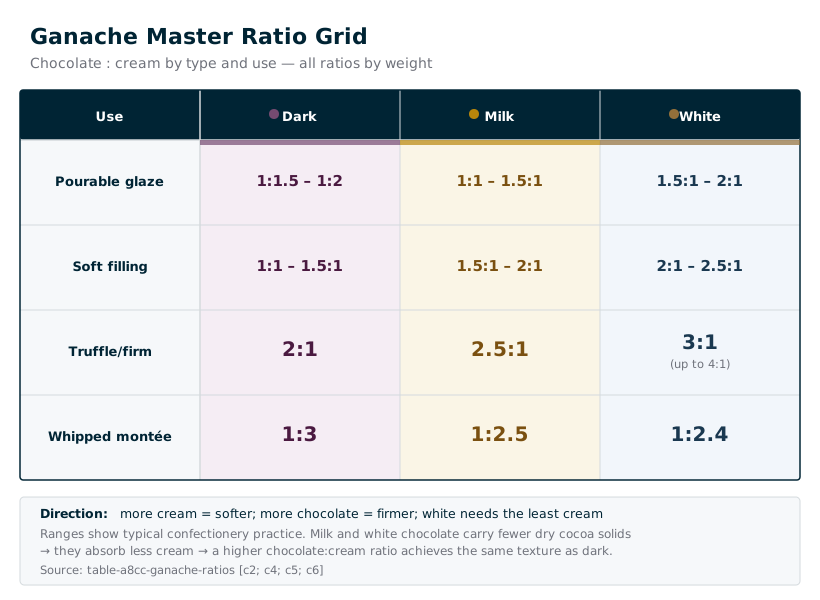 Grid showing chocolate-to-cream ratios for dark, milk and white chocolate across four uses: glaze, soft filling, truffle and whipped ganache
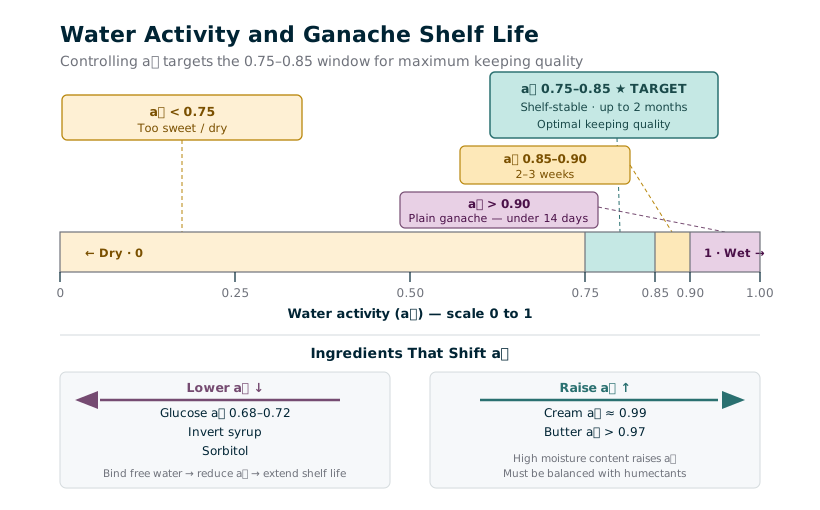 Horizontal water-activity scale from 0 to 1 marking the >0.90 (under 14 days), 0.75–0.85 (up to 2 months) and below-0.75 zones, with arrows for glucose, invert and sorbitol lowering aw and cream and butter raising it
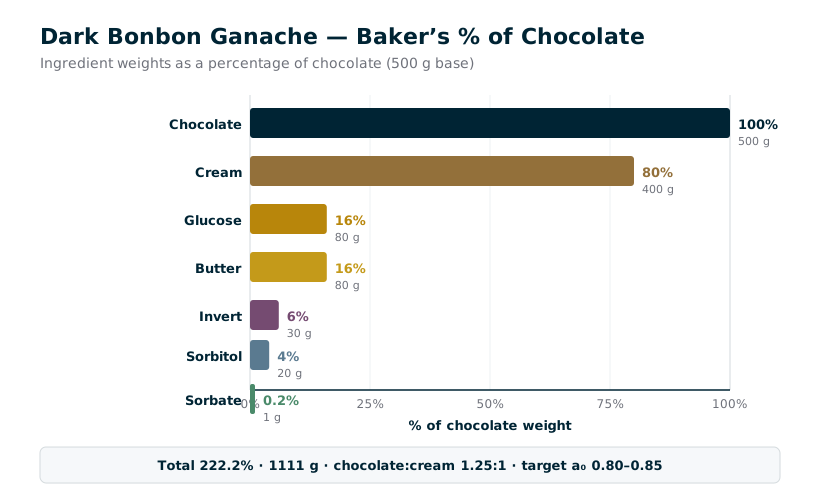 Bar chart of the dark bonbon ganache in percent of chocolate: chocolate 100%, cream 80%, glucose 16%, butter 16%, invert 6%, sorbitol 4%, sorbate 0.2%, totalling 222.2%
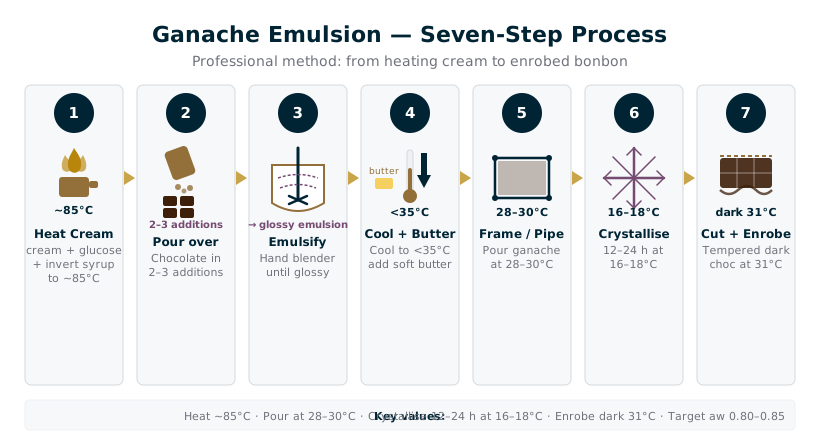 Numbered process strip for making ganache: heating cream with glucose and invert, pouring over chocolate in additions, emulsifying to a glossy core, cooling below 35 degrees to add butter, framing, crystallising, cutting and enrobing
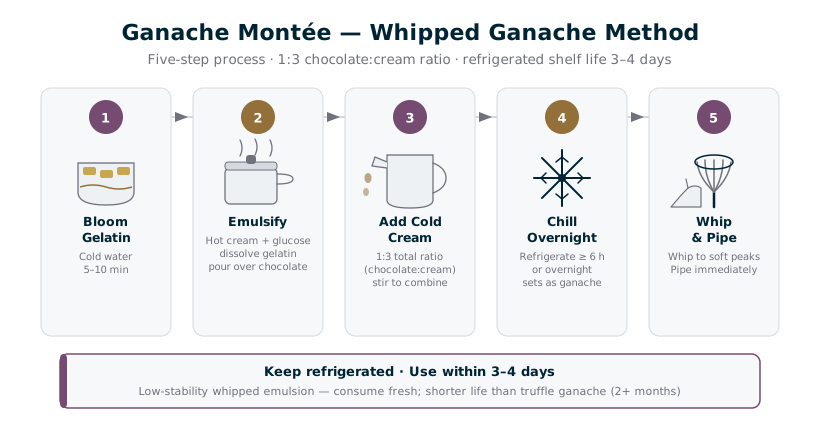 Five-step diagram of ganache montée: blooming gelatin, emulsifying hot cream into chocolate, adding cold cream, an overnight chill, then whipping to peaks and piping
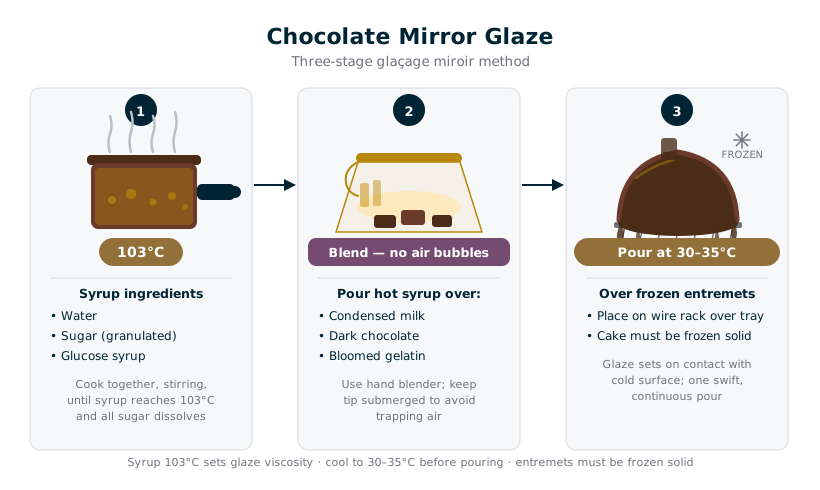 Diagram of mirror glaze: a sugar-glucose-water syrup cooked to 103 degrees poured over condensed milk, chocolate and bloomed gelatin, blended, then poured at 32 degrees over a frozen cake
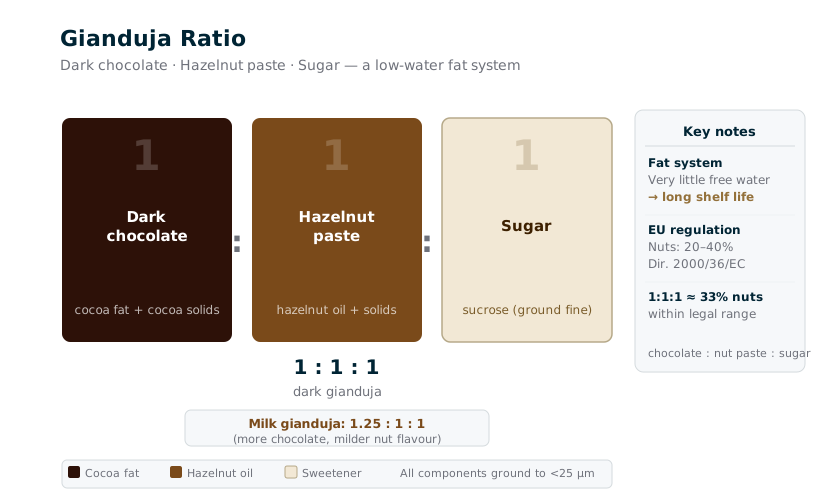 Diagram of gianduja showing equal blocks of dark chocolate, hazelnut paste and sugar in a 1:1:1 ratio, with a note that the low water content gives a long shelf life
Dark chocolate bonbon ganache (shelf-balanced) — full formula in % of chocolate (worked example)
| Ingredient | Baker's % | Weight |
|---|---|---|
| Dark couverture 58% (chopped/callets) — Base = 100%; e.g. Arabesque Noir 58 (cocoa butter 15%, sugar 40.8 g) | 100% | 500 g |
| Whipping / double cream (~35% fat) — Chocolate:cream = 1.25:1; the catalogue 'Double Cream 33%' is a vegetable-fat cream blend | 80% | 400 g |
| Glucose syrup (DE ~40) — Boiled with the cream; anti-crystallisation + lowers aw (aw ~0.70) | 16% | 80 g |
| Invert sugar / artificial honey — = 2.7% of total batch; humectant, keeps the centre soft | 6% | 30 g |
| Sorbitol (polyol) — Optional; works with invert to drop aw further | 4% | 20 g |
| Unsalted butter 82% (soft) — Added below 35°C only; gloss + softer set; does NOT lower aw | 16% | 80 g |
| Potassium sorbate (E202) — = 0.09% of total batch (≈900 mg/kg); optional, for room-temp stability; EU limits are category-specific — use the chocolate/sugar-confectionery limit (cat 5), NOT the 2000 mg/kg fine-bakery figure | 0.2% | 1 g |
| TOTAL — Target aw 0.80–0.85 → up to ~2 months | 222.2% | 1111 g |
- Warm the cream with the glucose, invert and sorbitol to a near-boil (~85–90°C); do not reduce it.
- Pour over the part-melted couverture in two or three additions, stirring from the centre to build a glossy, elastic emulsion (hand blender for the smoothest core).
- Cool to below 35°C, then blend in the soft butter (and the dissolved sorbate, if used).
- Frame to ~8–10 mm or pipe at ~28–30°C; let crystallise 12–24 h at 16–18°C.
- Cut, then dip or cap in tempered couverture (dark work temp ~31°C) to seal the surface and protect the aw-controlled centre.
Yield: The water-activity centrepiece. Base = dark 58% couverture = 100%. Glucose, invert and sorbitol replace part of the cream/sucrose to pull aw to the 0.80–0.85 target band, so a framed/moulded filling keeps for up to ~2 months instead of <2 weeks. Worked at 500 g chocolate: percentages sum to 222.2% and grams to 1111 g (1111 ÷ 500 = 2.222) — arithmetic verified. Chocolate:cream = 500:400 = 1.25:1; invert = 30 ÷ 1111 = 2.7% of total; potassium sorbate = 1 ÷ 1111 = 0.09% of total. The aw target and preservative level are food-safety claims — validate before sale.
Milk chocolate ganache filling — full formula in % of chocolate (worked example)
| Ingredient | Baker's % | Weight |
|---|---|---|
| Milk couverture 34% — e.g. Arabesque Lait 34 (cocoa butter 25%, sugar 50.5 g) | 100% | 500 g |
| Whipping / double cream (~35% fat) — Chocolate:cream ≈ 2.2:1 — less than dark because of the milk solids/sugar | 45% | 225 g |
| Glucose syrup — Boiled with the cream | 12% | 60 g |
| Invert sugar — Humectant; keep total added sugar modest as the couverture is already sweet | 5% | 25 g |
| Unsalted butter 82% (soft) — Below 35°C | 12% | 60 g |
| TOTAL — Frame/pipe, then enrobe (milk work temp ~29–30°C) | 174% | 870 g |
- Near-boil the cream with glucose and invert; pour over the part-melted milk couverture in additions and emulsify.
- Cool below 35°C; blend in the soft butter.
- Pipe/frame at ~28–30°C; crystallise; cut and enrobe in tempered milk couverture (~29–30°C).
Yield: Milk couverture already carries ~50% sugar plus milk solids, so it needs far less cream than dark. Base = milk 34% couverture = 100%. Worked at 500 g: percentages sum to 174% and grams to 870 g (870 ÷ 500 = 1.74) — verified. Chocolate:cream = 500:225 = 2.22:1.
White chocolate ganache filling — full formula in % of chocolate (worked example)
| Ingredient | Baker's % | Weight |
|---|---|---|
| White couverture 29% — e.g. Arabesque Blanc 29 (cocoa butter 30%, sugar 55.1 g, no cocoa solids) | 100% | 500 g |
| Whipping / double cream (~35% fat) — Chocolate:cream ≈ 2.9:1 — the firmest set of the three | 35% | 175 g |
| Glucose syrup — Anti-crystallisation; white is the most prone to graining | 10% | 50 g |
| Invert sugar — Humectant | 4% | 20 g |
| Unsalted butter 82% (soft) — Below 35°C | 10% | 50 g |
| TOTAL — White is very sweet already — taste before adding any extra sugar | 159% | 795 g |
- Near-boil the cream with glucose and invert; pour over the part-melted white couverture and emulsify (white seizes easily — blend gently, do not overheat).
- Cool below 35°C; blend in the soft butter.
- Pipe/frame at ~26–28°C; crystallise; cut and enrobe in tempered white couverture (~29°C).
Yield: White chocolate has no cocoa solids and sets on cocoa butter alone, so it takes the least cream of the three. Base = white 29% couverture = 100%. Worked at 500 g: percentages sum to 159% and grams to 795 g (795 ÷ 500 = 1.59) — verified. Chocolate:cream = 500:175 = 2.9:1 (≈ 3:1).
Whipped dark ganache (ganache montée) — full formula in % of chocolate (worked example)
| Ingredient | Baker's % | Weight |
|---|---|---|
| Dark couverture 58% — Base; works for milk (1:2.5) or white (1:2.4) by adjusting cream | 100% | 200 g |
| Cream — HOT portion (~35% fat) — Heated to dissolve the gelatin and emulsify | 100% | 200 g |
| Glucose syrup — Gloss and smoothness | 10% | 20 g |
| Bronze leaf gelatine (140 Bloom) — ≈ 2 leaves; bloomed in cold water; stabilises the whip | 2% | 4 g |
| Cream — COLD portion — Added cold to drop the temperature for the overnight set | 200% | 400 g |
| TOTAL — Total cream 600 g = 1:3 chocolate:cream | 412% | 824 g |
- Bloom the gelatine in cold water; heat the hot cream portion with the glucose and dissolve the drained gelatine in it.
- Pour over the part-melted couverture and emulsify; blend in the cold cream portion.
- Refrigerate at least 6 hours, ideally overnight.
- Whip to a soft/medium peak and pipe immediately — keep refrigerated and use within ~3–4 days.
Yield: The cream-rich, aerated cousin: a light piping/filling cream. Base = dark 58% couverture = 100%. The cream is split — a hot portion to make the emulsion and dissolve gelatin, then a cold portion to chill fast. Worked at 200 g chocolate: percentages sum to 412% and grams to 824 g (824 ÷ 200 = 4.12) — verified. Total cream = 600 g = 300% of chocolate (1:3). Its aw is high (~0.90) so it is a refrigerated, short-life cream, not a shelf-stable filling.
Chocolate mirror glaze (glaçage miroir) — full formula in % of chocolate (worked example)
| Ingredient | Baker's % | Weight |
|---|---|---|
| Dark couverture — Base; white or milk also work | 100% | 300 g |
| Caster sugar — Cooked to 103°C with water + glucose | 100% | 300 g |
| Glucose syrup — Gloss + anti-crystallisation; lowers aw | 100% | 300 g |
| Sweetened condensed milk — aw ~0.77–0.85; body and shine | 66.7% | 200 g |
| Water (for the syrup) | 50% | 150 g |
| Bronze leaf gelatine (140 Bloom) — Bloomed in 120 g (40%) cold water; sets the glaze | 6.7% | 20 g |
| TOTAL (excl. bloom water) — +120 g bloom water = ~1390 g batch | 423.4% | 1270 g |
- Bloom the gelatine in the cold water.
- Boil the water + sugar + glucose to 103°C.
- Pour the syrup over the condensed milk, chopped chocolate and bloomed gelatine; blend smooth without incorporating air.
- Cool to 30–35°C and pour over a frozen, fully set entremets in one pass; let the excess drip.
- Shortcut: the Zeelandia Paletta Cold Jel Choco (dry matter min 60%, pH 5.0–5.3, E202) is applied cold straight from the bucket — 360-day sealed shelf life, 14 days once opened.
Yield: A gelatin-set, high-solids glaze for frozen entremets. Its keeping quality comes from the very high sugar/glucose/condensed-milk load (low aw) plus gelatin. Base = dark couverture = 100%. Worked at 300 g chocolate: percentages (excluding the bloom water) sum to 423.4% and grams to 1270 g (1270 ÷ 300 = 4.234) — verified; with the 120 g bloom water the batch is ~1390 g. Cook the syrup to 103°C; pour at 30–35°C over a frozen surface. The ready-made Zeelandia Paletta Cold Jel Choco is the no-cook catalogue alternative.
Gianduja / praline filling — ratio card (worked example)
| Ingredient | Baker's % | Weight |
|---|---|---|
| Pure hazelnut (or almond) paste, 100% nuts — Base; EU legal gianduja = 20–40% nuts (Dir. 2000/36/EC); this 1:1:1 gives 33% | 100% | 300 g |
| Dark couverture (melted, tempered) — Use 125% (375 g) for a milk-chocolate gianduja | 100% | 300 g |
| Icing sugar — Greweling 1:1:1; omit if using a pre-sweetened nut cream | 100% | 300 g |
| Cocoa butter (optional) — For a firmer set / cut pieces | 10% | 30 g |
| TOTAL (1:1:1) — Roll into the chocolate, mill smooth, set, then cut/cap | 300% (+10%) | 900 g |
- Roast and mill the nuts with the sugar to a smooth paste (or use a ready paste/cream).
- Blend in the melted, tempered couverture (and cocoa butter) to a homogeneous, fluid mass at ~26–28°C.
- Frame or mould, let crystallise, then cut and enrobe; the low water content gives a long, stable shelf life.
Yield: A fat-system confection: finely milled roasted nuts, sugar and chocolate, with very little water — so it keeps for months. Greweling's classic ratio is 1:1:1 (dark chocolate: nut paste: sugar), or 1.25:1:1 for milk. Legally, EU Directive 2000/36/EC defines 'gianduja nut chocolate' as 20–40% nuts — the legal minimum is 20%, NOT one-third; the 1:1:1 ratio gives 33% nuts (inside that band but stricter than the law), and the '30–50% sugar' figure is an artisan guide, not a legal limit. Base = nut paste = 100%. Worked at 300 g nut paste: 1:1:1 sums to 300% / 900 g — verified. A ready-made sweetened nut cream (e.g. Nuss Plus, sugar 40–50% + 20% hazelnut) already contains the sugar, so blend it ~1:1 with couverture instead.
The defining number of any ganache is the chocolate:cream ratio. It changes with the chocolate (dark carries the most dry cocoa solids and needs the most cream; white carries none and needs the least) and with the use (more cream = softer/pourable; more chocolate = firmer/pipeable). Ratios compiled from King Arthur, Embassy Chocolate, Matt Adlard and the Callebaut ganache fundamentals; note the baseline (King Arthur), dark use-case (Embassy) and whipped-montée (Matt Adlard) ratios each rest on a single educator/recipe source and are not independently cross-checked. Always weigh, never measure by volume.
| Use | Dark (choc:cream) | Milk (choc:cream) | White (choc:cream) | Texture / note |
|---|---|---|---|---|
| Pourable glaze / dip | 1:1.5 to 1:2 | 1:1 to 1.5:1 | 1.5:1 to 2:1 | Thin, glossy, pours and self-levels; for dipping fruit or glazing cakes |
| Soft filling / piping | 1:1 to 1.5:1 | 1.5:1 to 2:1 | 2:1 to 2.5:1 | Holds a soft shape; for cakes, tarts, macarons |
| Truffle / firm framed filling | 2:1 | 2.5:1 | 3:1 (up to 4:1) | Fudge-like, cuts and rolls; for moulded bonbons and rolled truffles |
| Whipped (ganache montée) | 1:3 | 1:2.5 | 1:2.4 | Cream-rich, aerated after a ≥6 h rest; gelatin-stabilised; refrigerated, short life |
Water activity — the free water available to microbes, on a 0–1 scale — not total moisture, decides how long a ganache or filling keeps. Lower the aw and you lengthen the shelf life, but below ~0.75 the piece becomes too sweet/dry. Figures from Callebaut, the tinepreferschocolate aw explainer and Greweling; the specific ingredient aw values are single-source (Callebaut) and the <14-day / ~2-month shelf-life figures come from professional/educational sources (tinepreferschocolate), not lab or regulatory data. All shelf-life figures are food-safety data — validate on your own recipe and storage (aw meter + HACCP study) before relying on them.
| aw band | Typical product | Indicative shelf life | How to get there |
|---|---|---|---|
| > 0.90 | Plain cream + chocolate ganache, whipped ganache | < 14 days, refrigerated | No added sugars/humectants; treat as fresh-cream perishable |
| 0.85–0.90 | Basic dark ganache with some glucose | ~2–3 weeks, refrigerated | Modest glucose/invert; still chill |
| 0.75–0.85 (target) | Balanced bonbon filling | up to ~2 months | Glucose + invert + sorbitol replacing part of the cream/sucrose; aw <0.85 inhibits most yeasts |
| < 0.75 | Very sweet/firm filling | longer, but quality suffers | Not recommended — needs so much sugar it harms taste and texture |
| Reference ingredients | Glucose syrup 0.68–0.72 · condensed milk 0.77–0.85 · butter >0.97 · milk 0.99 | — | Glucose/invert/sorbitol pull aw down; butter and cream push it up |
The chocolate sets the ganache ratio: its dry cocoa-SOLIDS content and added sugar — not cocoa butter alone (white has the most cocoa butter of the three entry-level couvertures yet needs the LEAST cream) — decide how much cream the chocolate can carry and still set. First-party Zeelandia Arabesque spec-sheet values; note 'cocoa butter' is ADDED cocoa butter for Noir 58 but TOTAL cocoa fat for Noir 72, so those two figures are not directly comparable. Allergen rows are food-safety data — verify against current batch documentation before labelling.
| Couverture | Cocoa solids | Cocoa butter | Sugar (per 100 g) | Total fat | Temper / work temp | Allergens |
|---|---|---|---|---|---|---|
| Arabesque Noir 58 (dark) | 58% (cocoa mass 45%) | 15% | 40.8 g | 39.0 g | 47 / 27 / work 30°C | SOYA; MILK cross-contam |
| Arabesque Noir 72 (dark) | min 72% (defatted 28.9%) | 44% | 25.8 g | 44.7 g | 47 / 28 / work 31°C ±1 | SOYA; MILK may contain |
| Arabesque Lait 34 (milk) | 34% (cocoa mass 10%) | 25% | 50.5 g | 36.7 g | 47 / 27 / work 30°C | SOYA, MILK, LACTOSE |
| Arabesque Blanc 29 (white) | 0% (cocoa butter only) | 30% | 55.1 g | 36.3 g | 47 / 26 / work 29°C | SOYA, MILK |
Replacing part of the cream and sucrose with humectant sugars is how a fresh ganache becomes a shelf-stable filling: they bind free water (lowering aw), control crystallisation and keep the piece soft. Cross-checked against Ecole Chocolat, Pastry Depot and the Callebaut water-activity table; spec values from the catalogue products. Preservative dosages and allergen rows are food-safety data.
| Ingredient | Role in a filling | Effect on aw | Catalogue product |
|---|---|---|---|
| Sucrose (caster sugar) | Sweetness, bulk | Modest aw reduction; can re-crystallise (graininess) | Sugar (various) |
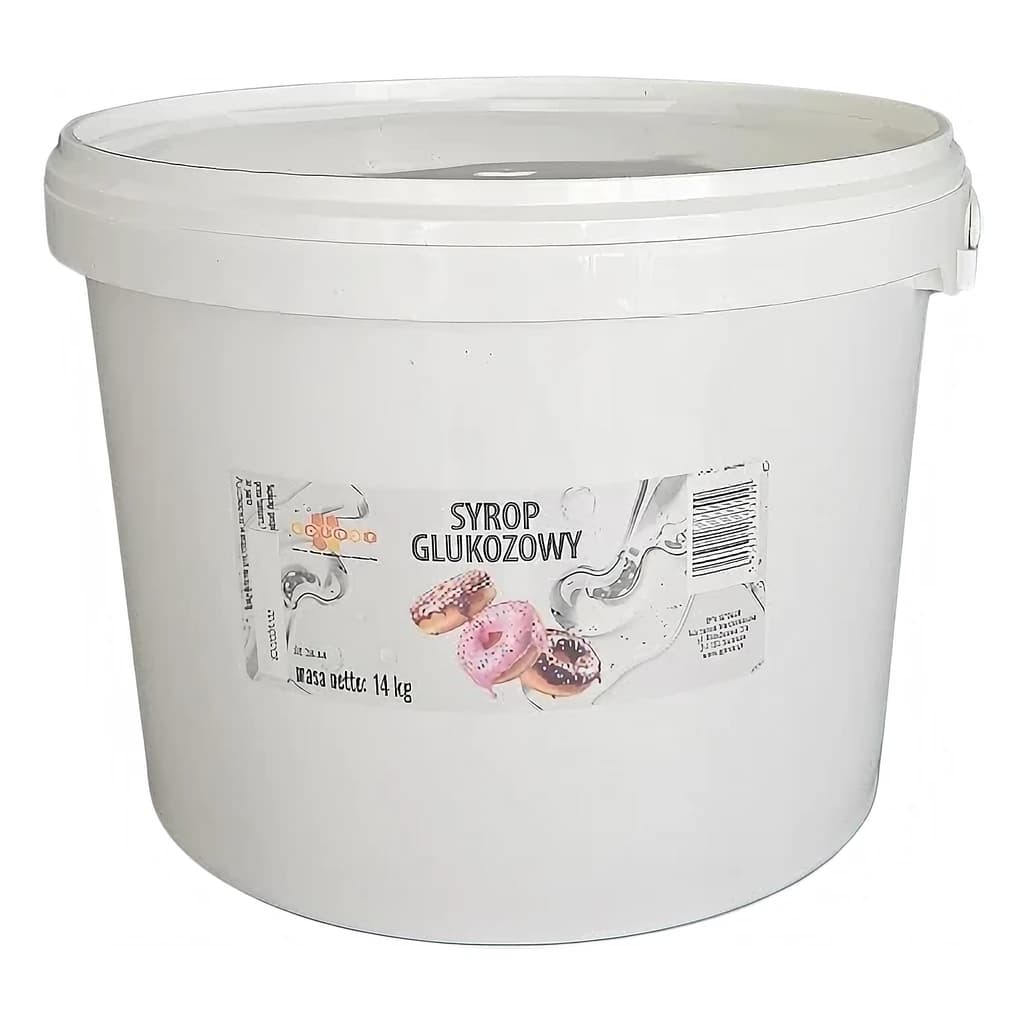
| Glucose syrup (DE ~38–42) | Anti-crystallisation, gloss, body | aw ~0.68–0.72; pulls filling aw down | Glucose Syrup 14 kg (Ratos Natura) |
| Invert sugar / artificial honey | Humectant, softness, longer eat | Strong aw reduction; ~2–3% of total | Artificial Honey 14 kg (Ratos Natura) — dry mass 83–87% |
| Sorbitol (E420 polyol) | Humectant, works with invert/glucose | Lowers aw; combine for best balance. As a polyol, significant use triggers the EU 1169/2011 advisory 'excessive consumption may produce a laxative effect' | (speciality polyol — source separately) |
| Potassium sorbate (E202) | Preservative vs yeasts/moulds | Does not change aw; ~0.1%. EU limit is category-specific — chocolate/sugar-confectionery fillings sit in cat 5 (typ. ≤1500 mg/kg or lower), NOT the 2000 mg/kg fine-bakery (cat 7.2) figure | Potassium Sorbate Granular 25 kg (Kilo Ltd) |
| Unsalted butter (82%) | Richness, gloss, softer set | aw >0.97 — does NOT lower aw; add <35°C | Unsalted Butter 82% 10 kg (Polmlek) |
Faults that trace back to the formula (ratio, water phase, humectants) or the emulsion technique. Cross-checked against the Callebaut ganache fundamentals, the water-activity sources and the couverture specs. Mould/spoilage rows are food-safety issues.
| Fault | Likely cause | Remedy |
|---|---|---|
| Ganache splits — grainy, oily, broken | Emulsion failure: too little water phase for the fat, worked too hot, or cold liquid added | Blend in a little warm cream (or a few drops of warm milk) with a hand blender to re-form the emulsion; work below ~40°C |
| Centre too soft, won't hold a cut/shape | Too much cream for the chocolate (ratio too low), or butter added while too warm | Raise the chocolate ratio (dark toward 2:1, white toward 3:1); add butter only below 35°C |
| Centre too firm / short, crumbly | Too much chocolate or not enough humectant/cream | Lower the chocolate ratio slightly and/or add glucose/invert for softness and a longer eat |
| Sugar bloom / graininess on storage | Sucrose re-crystallising; no anti-crystallisation sugar present | Include glucose syrup and/or invert sugar; keep storage temperature stable |
| Mould or off-flavours within days | aw too high (>0.90) — plain cream/chocolate ganache treated as shelf-stable | Refrigerate and use quickly, or reformulate with glucose/invert/sorbitol to aw 0.75–0.85 (±0.1% sorbate) |
| Enrobed shell cracks or filling leaks | Filling not crystallised, or capped/dipped chocolate out of temper | Let the centre set 12–24 h at 16–18°C; cap/dip in correctly tempered couverture (dark ~31°C, milk/white ~29°C) |
| Whipped ganache won't whip / collapses | Not enough rest, or no gelatin, or over-whipped | Rest ≥6 h/overnight, use ~2% gelatin of chocolate, whip only to soft-medium peak |
| Mirror glaze dull, streaky or running off | Wrong pouring temperature or surface not frozen | Cook syrup to 103°C, pour at 30–35°C over a frozen, fully set surface in one pass |
Buy the ingredients
Catalogue products and brands referenced in this article.
Glucose Syrup 14 kg
Marzipan 50%
Barbara Luijckx Dark Chocolate 56% Discs 3 kg
Barima Dark Couverture Drops 72% 3 kg
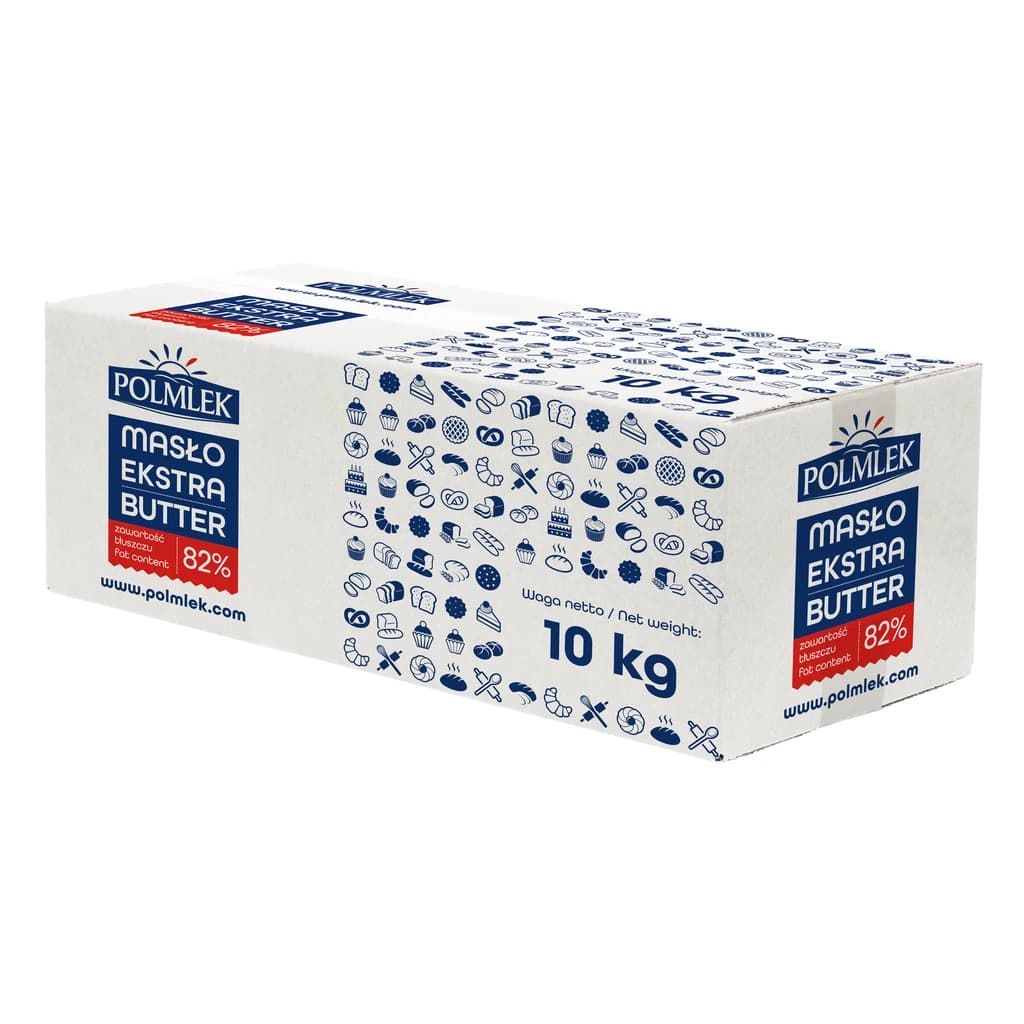
Unsalted Butter 82% 10 kg
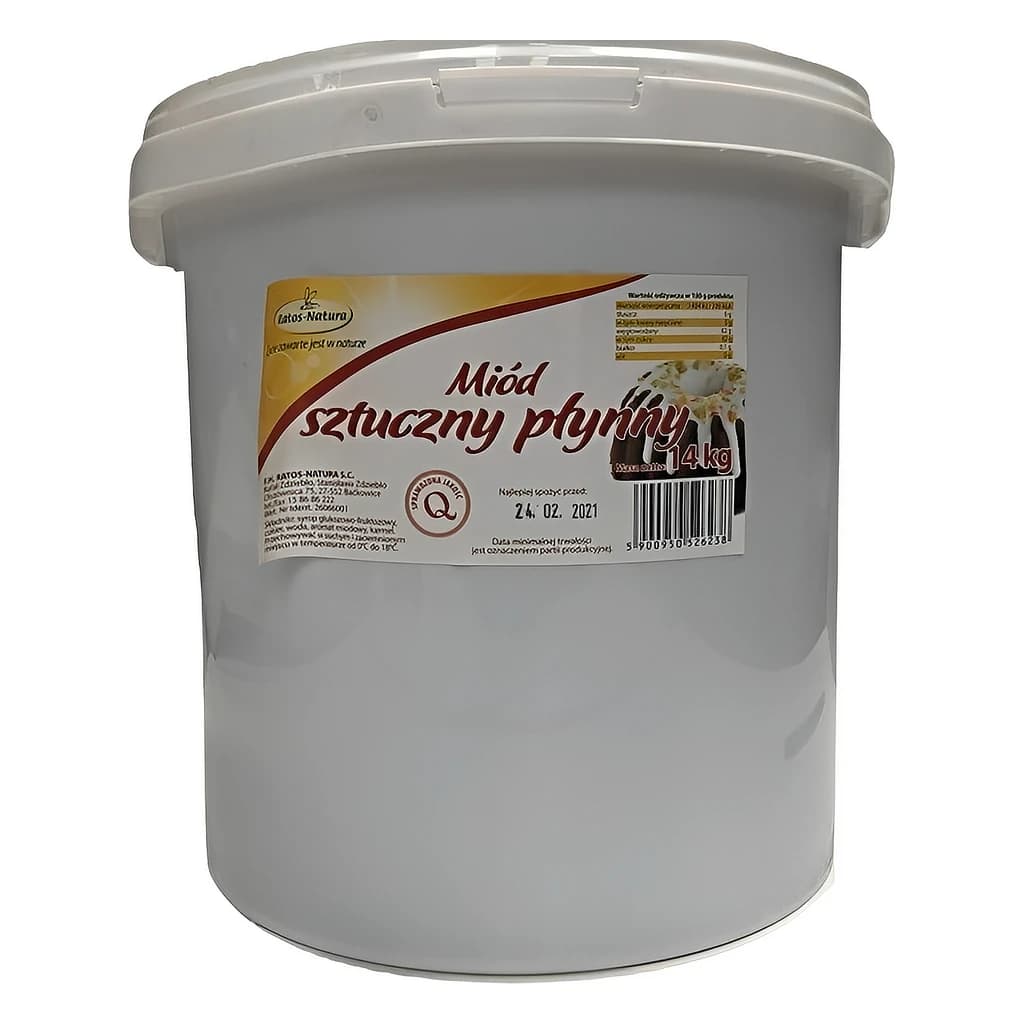
Artificial Honey 14 kg
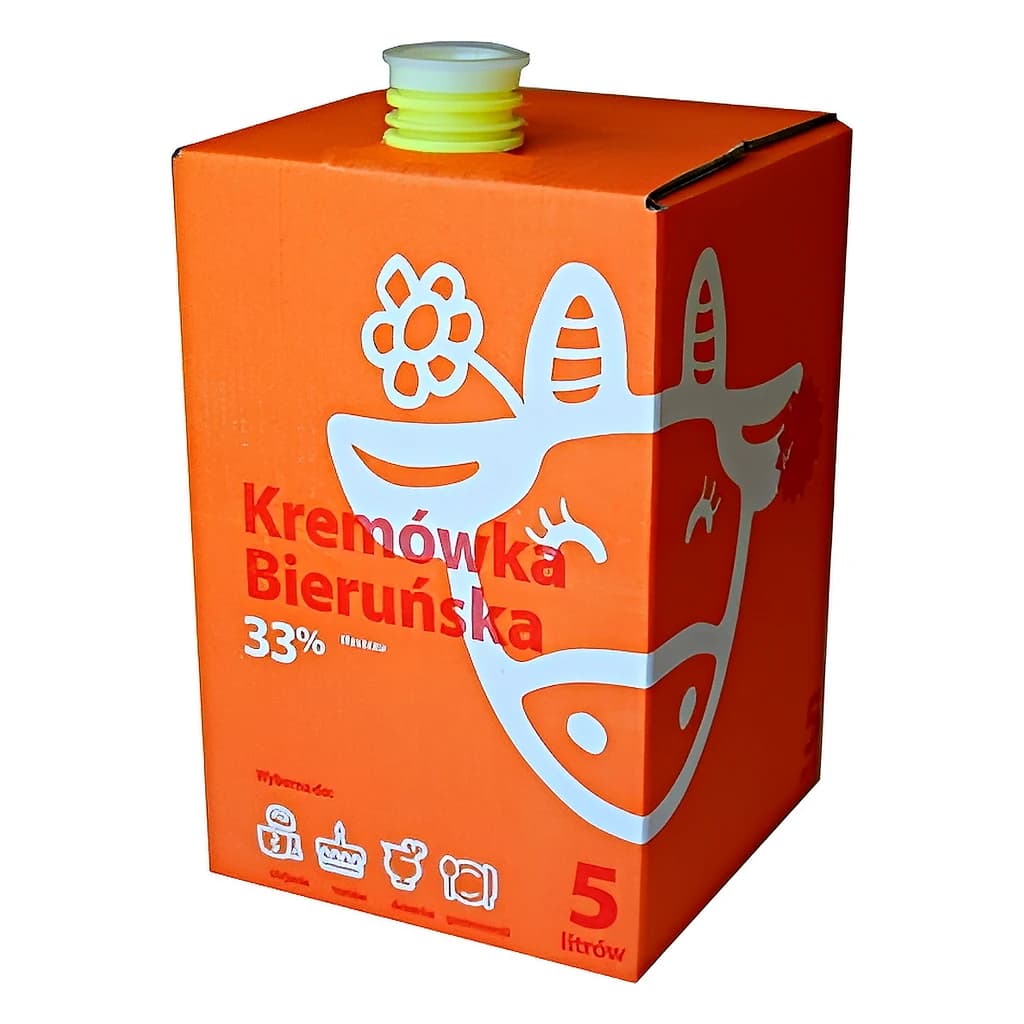
Double Cream Bieruńska UHT 33% 5 L
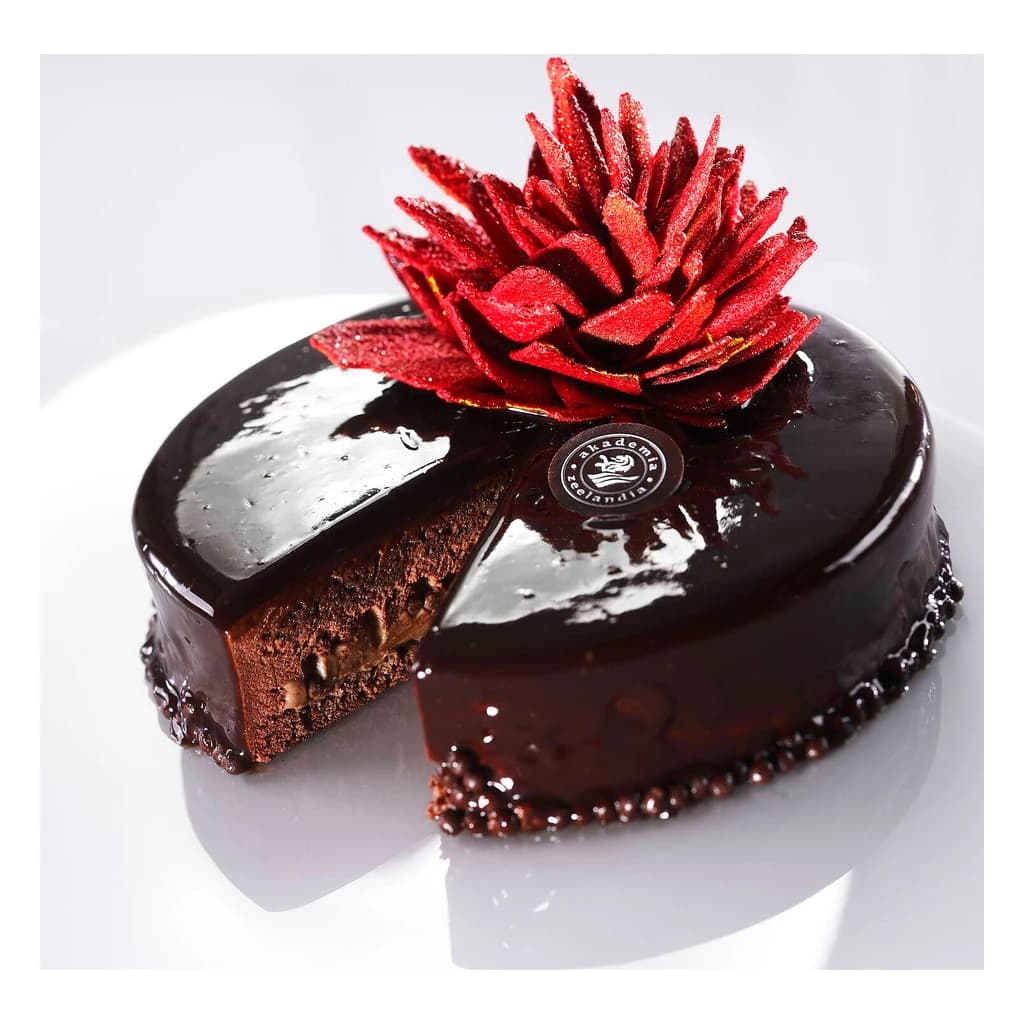
Paletta Choco Cold Mirror Glaze 6 kg – Zeelandia
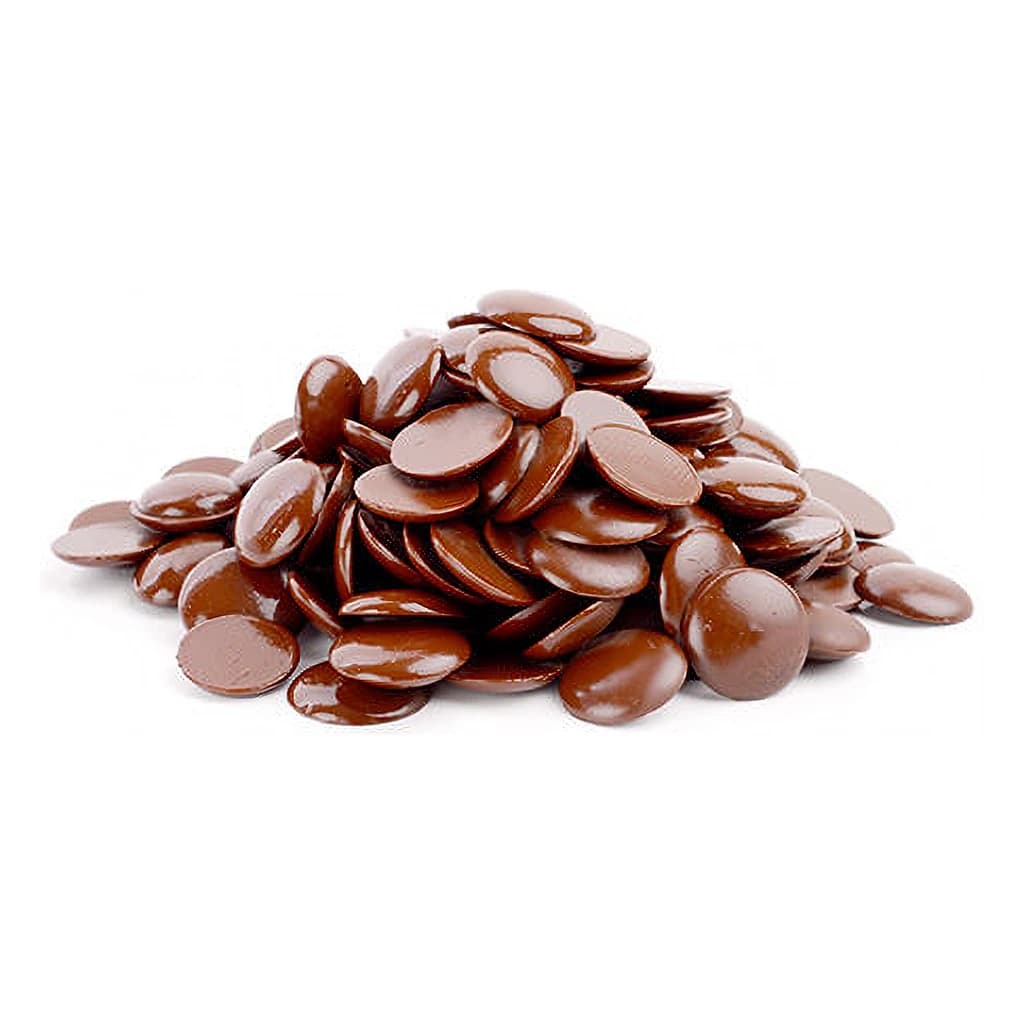
Zeelandia Arabesque Milk Couverture 34% 5 kg
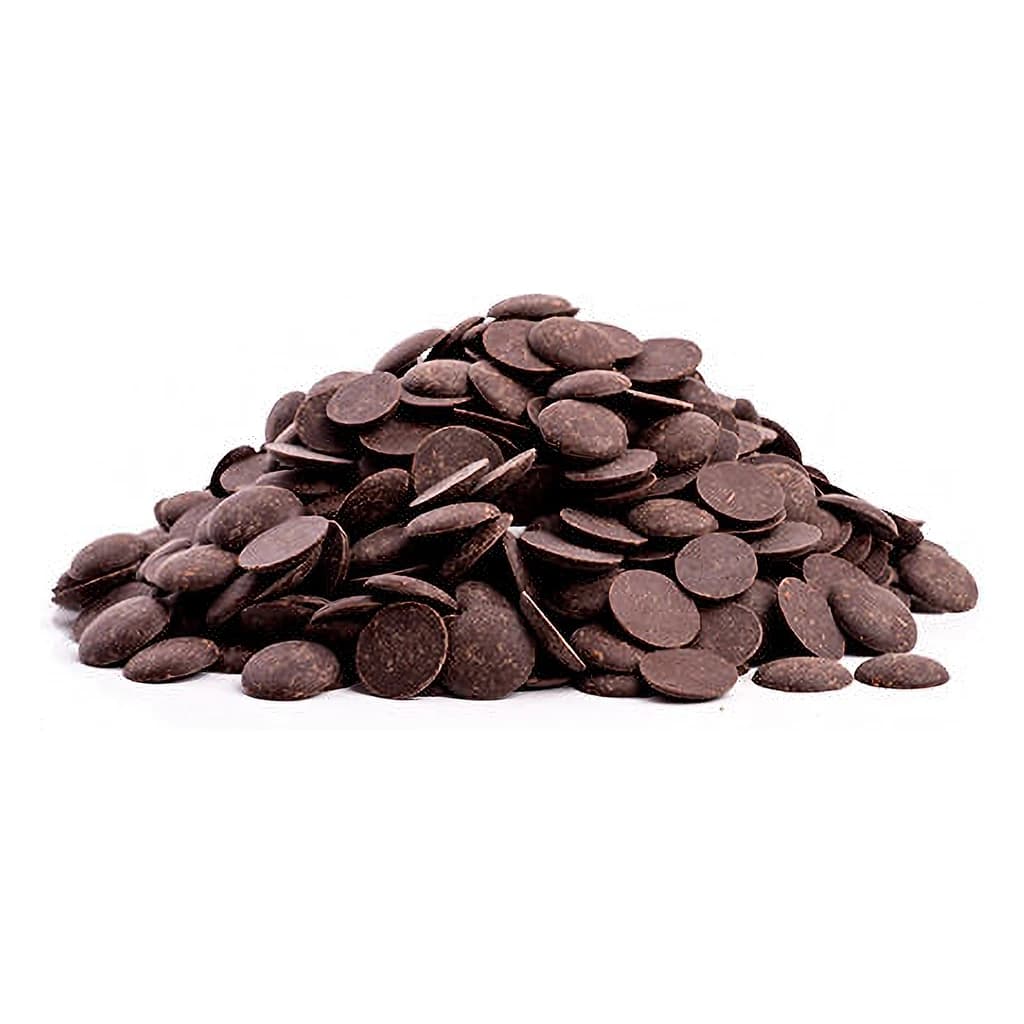
Zeelandia Arabesque Dark Couverture 72% 5 kg
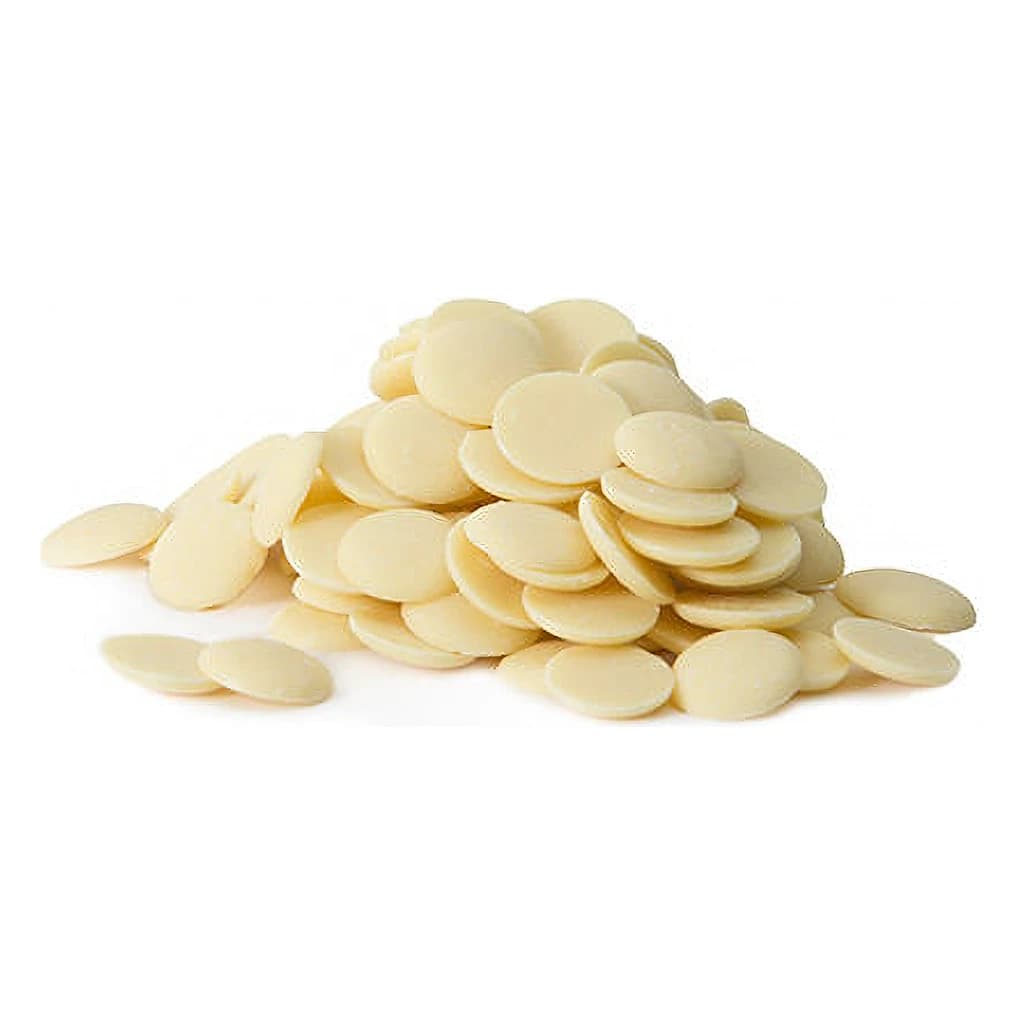
Zeelandia Arabesque White Couverture 29% 5 kg
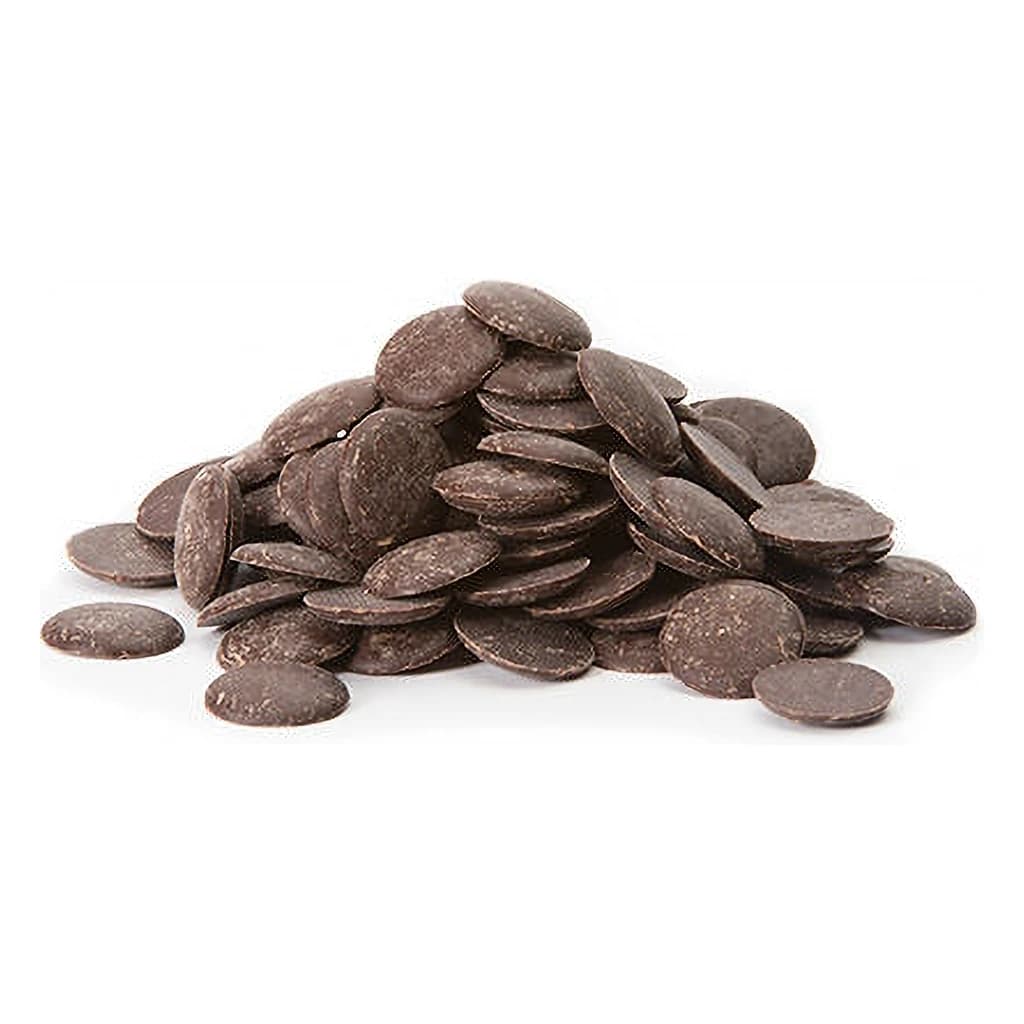
Zeelandia Arabesque Dark Couverture 58% 5 kg

Callebaut SICAO Milk Chocolate Callets 32.1% 10 kg
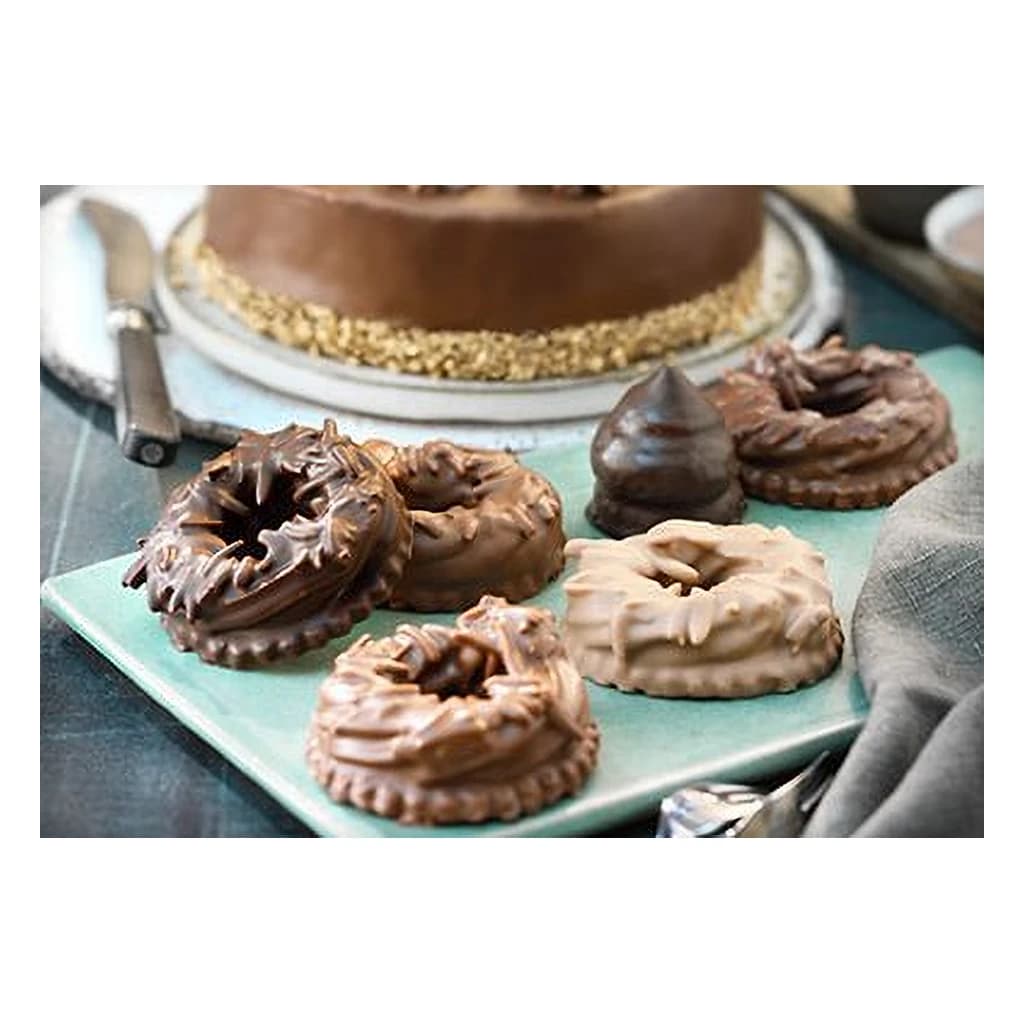
Nuss-Plus Hazelnut Cream 12 kg
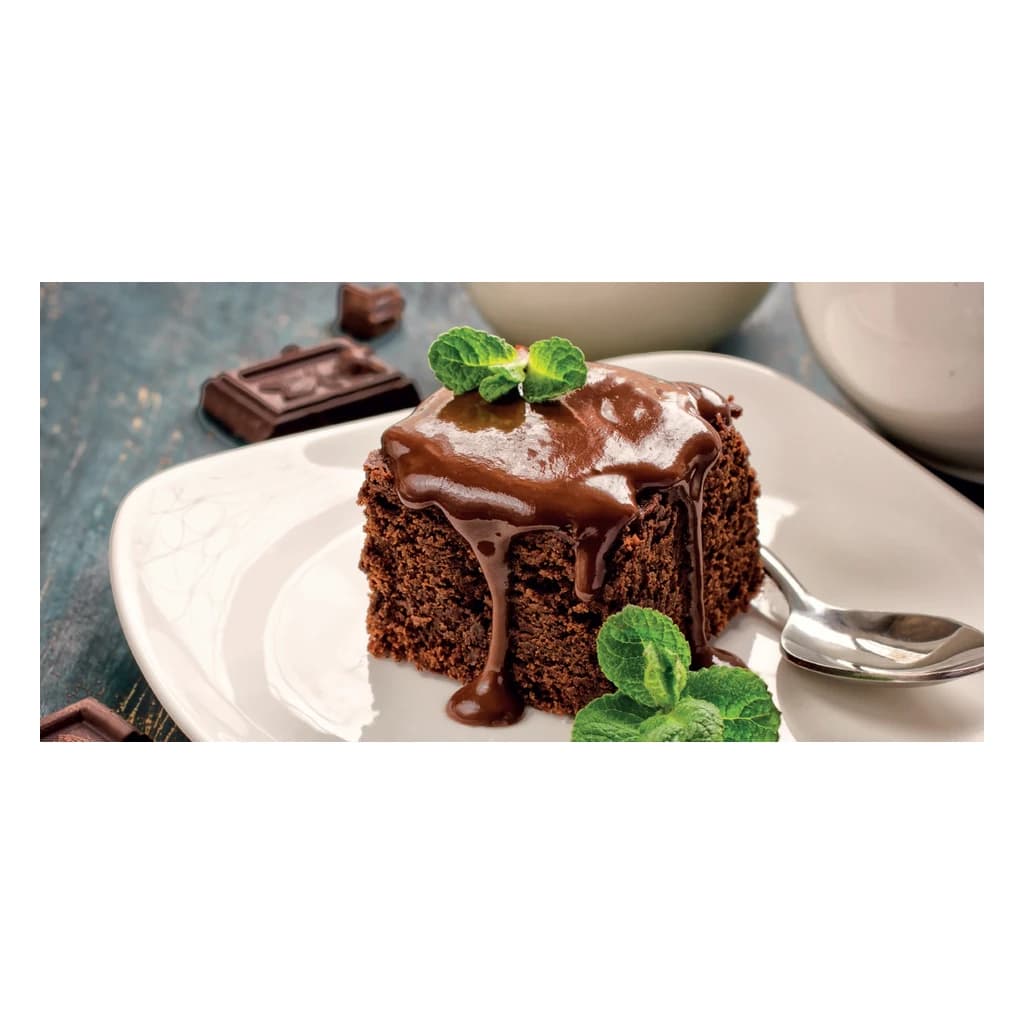
Helios Premium Dark Chocolate Glaze 10 kg
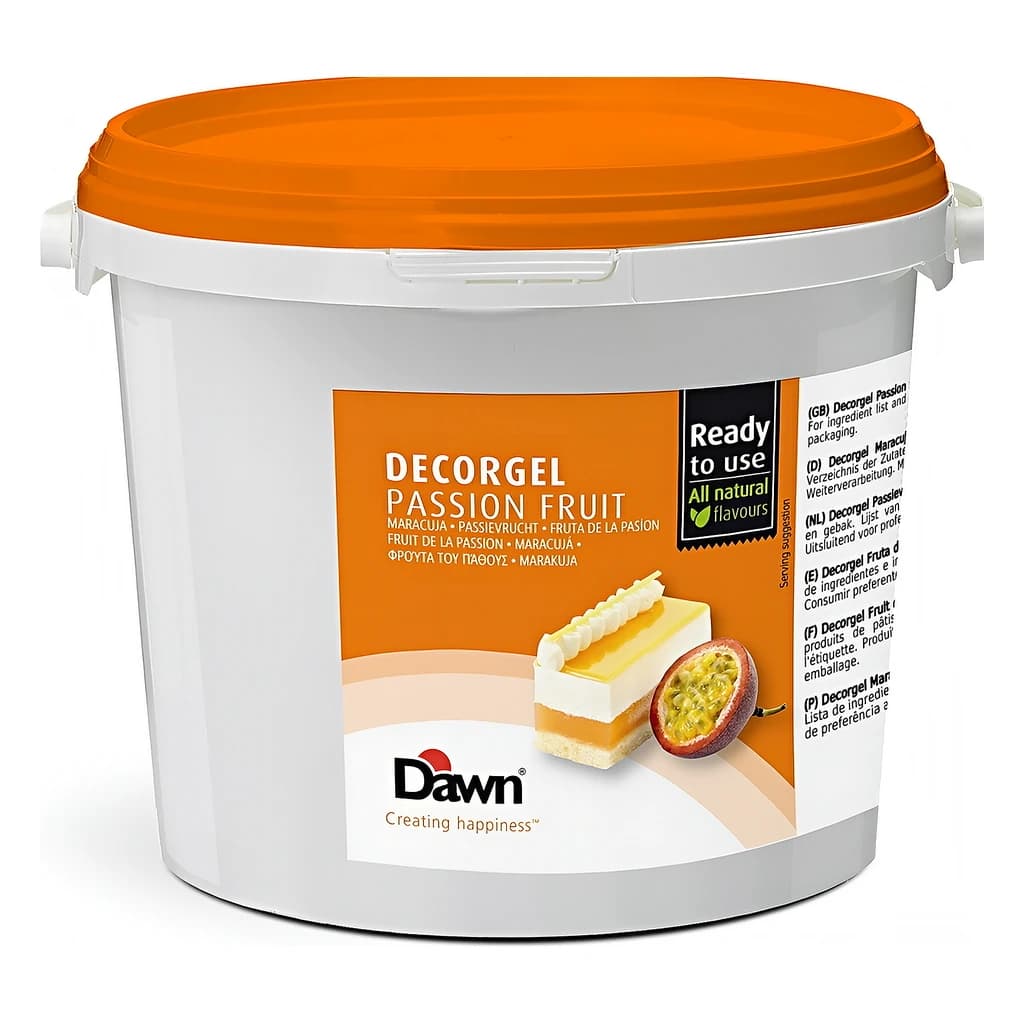
Dawn Decorgel Mirror Glaze
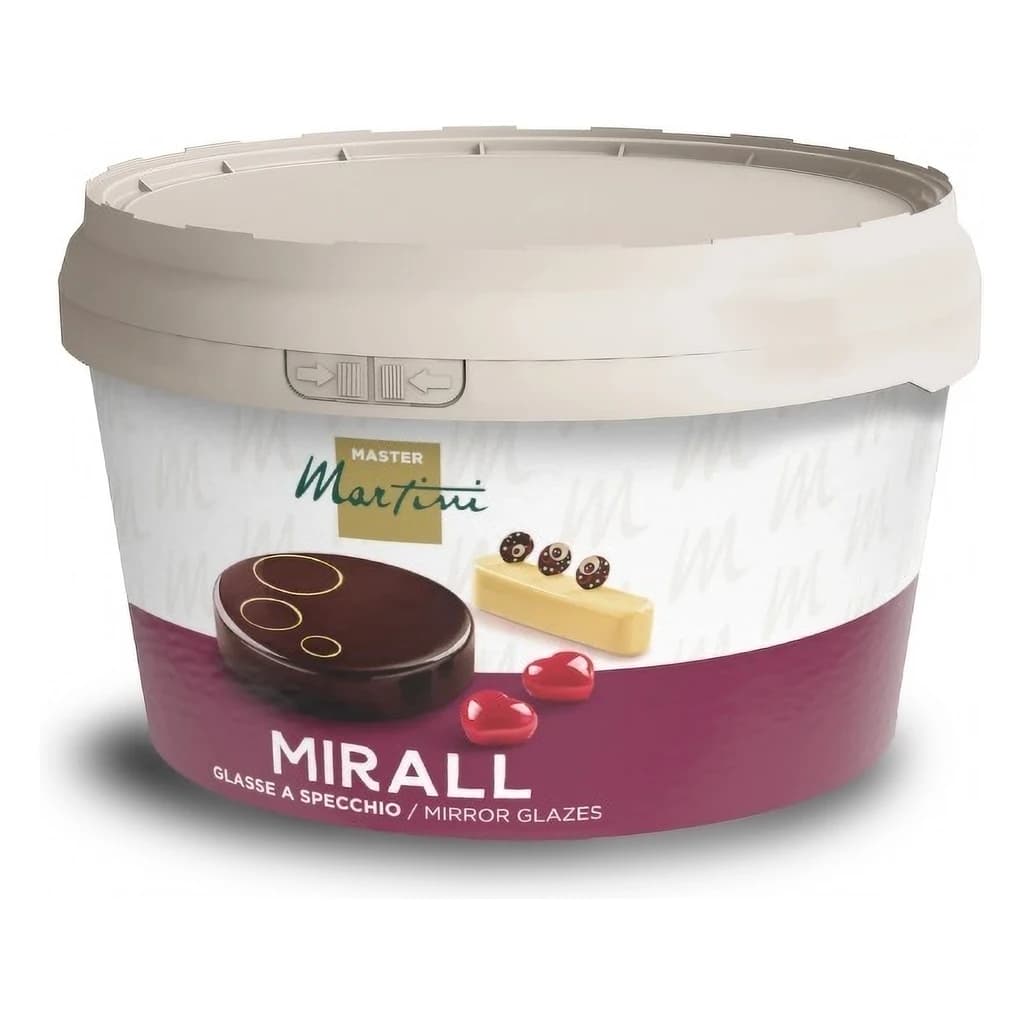
Mirall Mirror Glaze (Master Martini)