
Chocolate defects — fat bloom & sugar bloom: causes, prevention and corrective action
The working bakery's guide to the two white-film defects that generate the most chocolate complaints. Explains what fat bloom and sugar bloom actually are, how to tell them apart in seconds, why one is reversible and the other is not, the crystal and moisture mechanisms behind them (including filling-oil migration in pralines), and a practical prevention and rescue protocol — cross-referenced to the Domson couverture and compound range with first-party spec-sheet storage numbers.
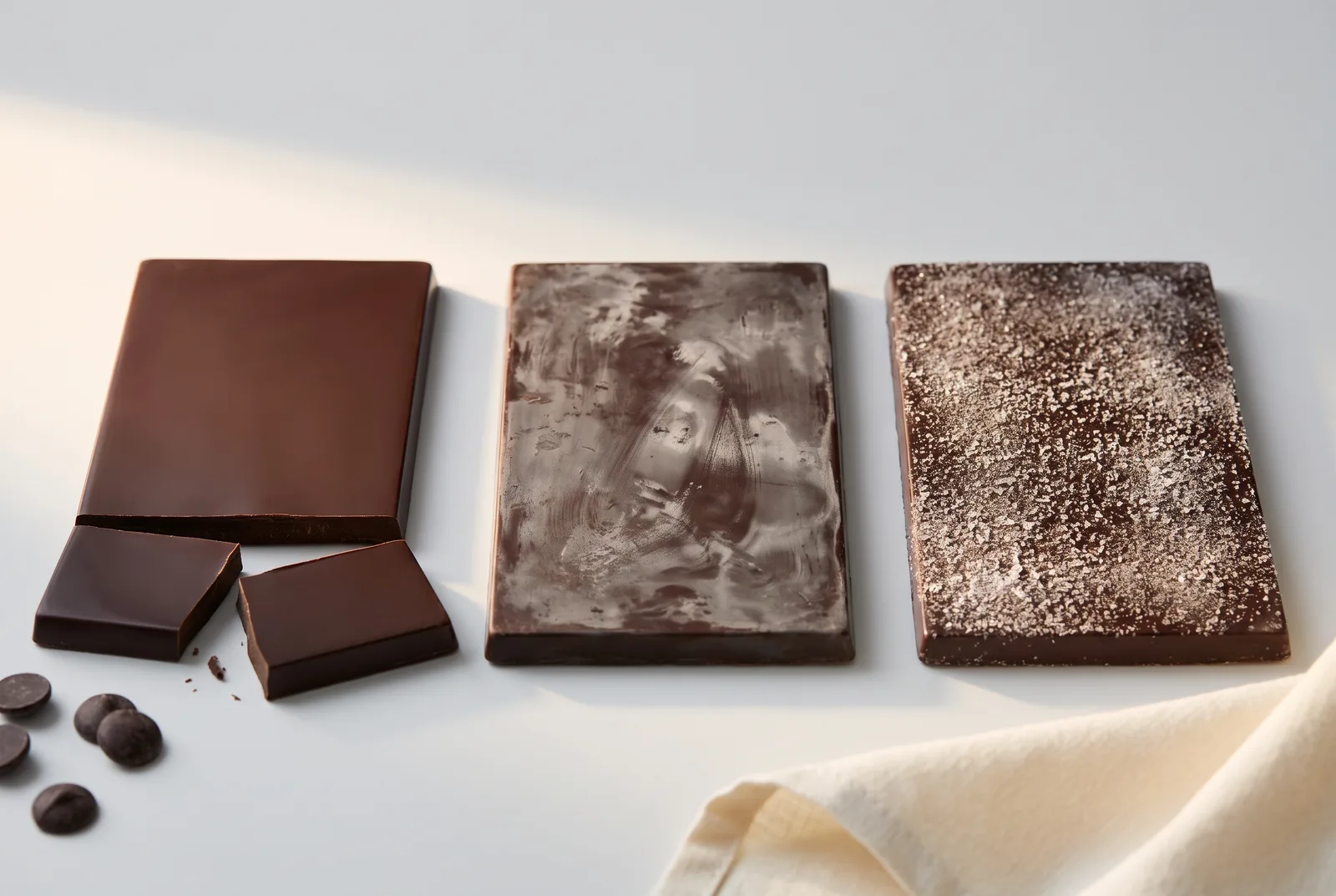
The two white films — and why the difference is your whole diagnosis
A grey-white film on chocolate is the single most common quality complaint a bakery hears, and it is almost always one of two completely different problems wearing the same disguise. Fat bloom is a cocoa-butter problem — a crystal defect driven by heat. Sugar bloom is a sugar problem — a surface defect driven by moisture. They look similar at a glance, but they have opposite causes, opposite feels, and — crucially — opposite cures: fat bloom you can melt away and re-temper, sugar bloom you cannot \ .
So before you change anything, diagnose. The full side-by-side is in the comparison table below; the three-test version is below in section 4. Get this right and you know immediately whether to look at your tempering and storage temperature (fat) or your humidity and condensation (sugar).
Good news first: both are harmless. Bloomed chocolate is an aesthetic and textural defect, not a food-safety hazard — it is still perfectly safe to eat \ . The problem is purely that customers reject it on sight, and that it signals your process or storage has drifted.
1. Fat bloom — a crystal problem driven by heat
1.1 The crystal background (the short version)
Cocoa butter is polymorphic: the same fat can set into six different crystal forms (I–VI), numbered in order of increasing melting point and stability \ . Only Form V (~33.8–34°C) gives gloss, snap and a clean melt; that is the whole point of tempering (see the sister article A6-chocolate-tempering-crystallisation). Form VI is the most stable form — but it sits at a higher melting point (~36.3°C) and only develops slowly out of Form V over weeks to months \ . That conversion of Form V to Form VI at the surface is fat bloom. The full ladder is in the table below.
<!-- IMAGE: img-a6bloom-04 — Mechanism: Form V → VI transition + liquid-fat migration over time -->1.2 Two roads to fat bloom
Road 1 — you under-tempered. If too few stable Form V seeds were built during tempering, a liquid (lower-melting, more mobile) fat fraction is left in the set chocolate. Over hours to days it migrates to the surface and recrystallises into coarse, dull crystals — bloom within days of a fresh batch \ . This is the bloom you make yourself, and it is the most common cause.
Road 2 — you stored it badly. Even perfectly tempered chocolate will bloom if it is stored warm or, worse, cycled up and down in temperature. Heat partly melts the lower-melting crystals; on re-cooling they reset as the higher-melting Form VI, and migrated fat recrystallises at the surface as a grey haze. Laboratory storage trials make the point sharply: in one Journal of Food Engineering study, under cycling temperatures the Form V→VI transformation ran rapidly within about 60 days, while identical chocolate held at a constant 20°C resisted bloom for roughly a year \ — figures from a single study; the qualitative principle (cycling accelerates bloom far more than a single warm spell) is well-supported across sources. The lesson for a bakery is not "keep it cool" so much as "keep it stable" — the swing is the enemy.
<!-- IMAGE: img-a6bloom-07 — Bloom vs storage time: constant 20°C vs temperature cycling -->When analysts have scraped real bloom off chocolate and run it through NMR and HPLC–MS, the white layer turns out to be the chocolate's own cocoa-butter triglycerides that migrated up and recrystallised — dominated by POS, with SOS and POP also prominent \ (one 2024 study; the relative SOS/POP proportions varied between samples and their ranking is not definitive). Fat bloom is literally cocoa butter that ended up in the wrong place, in the wrong crystal form.
1.3 The special case: filled chocolates and pralines
The hardest bloom to beat is on filled bonbons — and here the fat comes from the filling, not the shell. A soft, unsaturated filling oil (hazelnut praline, gianduja, nougat) sits against the shell at a different fat composition; the concentration gradient drives the oil to diffuse through the shell. As it travels it dissolves the metastable cocoa-butter crystals in the shell, which then recrystallise at the surface as stable Form VI \ . This is why a praline can bloom in weeks even though the shell was tempered correctly — and why re-tempering the surface only fixes it temporarily. The counter-measures (milk fat, anti-bloom TAGs, barrier layers, pre-crystallised filling) are in the formula card below and in section 5.
<!-- IMAGE: img-a6bloom-05 — Filled praline: filling-oil migration → surface bloom + barrier-layer fix -->Allergen note (nut fillings — flagged for review): Any finished product where the chocolate shell contacts a hazelnut, gianduja or other tree-nut filling must carry a declared HAZELNUTS / TREE NUTS allergen statement under EU Regulation 1169/2011 Annex II and UK FIR 2014 — in addition to the shell's own MILK and SOYA declarations. Update your recipe specification and allergen matrix before production.
2. Sugar bloom — a surface problem driven by moisture
Sugar bloom has nothing to do with crystals or tempering. It is caused by water. When the chocolate surface meets moisture — humid air, or condensation from a temperature shock — the sugar at the surface dissolves. When that water then evaporates, the sugar is left recrystallised into larger, rough crystals that scatter light and look dull and white \ . Sugar is hygroscopic (it pulls water from the air), so humid storage alone can do it over time .
The classic trigger is the fridge. Take cold chocolate out into a warm, humid kitchen and the cold surface sits below the dew point of the surrounding air; water condenses on it instantly, dissolves the surface sugar, and dries to a gritty crust \ . The same physics ruins production lines: if a cooling tunnel's air drops below the factory dew point, a microscopic film of moisture forms on the product at the exit and blooms in storage .
<!-- IMAGE: img-a6bloom-03 — Real sugar bloom: gritty sparkly white crust -->The cruel asymmetry. Sugar bloom is, for practical purposes, permanent — you cannot polish or wipe it off, and warming does nothing because there is no fat to melt back in. Only fully re-melting the chocolate redistributes the sugar, which is rarely worth it for finished goods \ . Sugar bloom is a defect you prevent, not one you fix.
3. Why couverture blooms and compound (mostly) does not
Fat bloom is a cocoa-butter phenomenon. Couverture is, by definition, loaded with it: legally ≥35% total dry cocoa solids of which ≥31% cocoa butter \ \ \ — which is exactly why it must be tempered and stored carefully. Compound coatings replace the cocoa butter with non-polymorphic vegetable fat, so they have no Form V/VI drama and are far more tolerant of temperature swings and far less prone to fat bloom . The Domson Satina compounds are simply melted and used (Satina Dark/White to max 55°C; Satina PRO RSPO to 35–40°C) with no tempering \ \ .
But compound is not a free pass: it still contains sugar, so it is still vulnerable to sugar bloom if you let it get damp or hit it with condensation. Humidity discipline applies to everything. Full comparison in the table below.
<!-- IMAGE: img-a6bloom-12 — Zeelandia Satina compound: the bloom-tolerant, no-temper alternative -->4. Diagnose it in 30 seconds — the three field tests
Never change your process before you know which bloom you have. Use any one (ideally all three) of these on a spare piece \ :
- Rub it. Fat bloom feels slick/greasy and smears under a warm finger; sugar bloom feels dry and sandy and does not move.
- One drop of water. On fat bloom the drop beads up (fat is hydrophobic); on sugar bloom the drop flattens and spreads, dissolving the sugar.
- Warm it gently. Fat bloom melts and vanishes; sugar bloom is unchanged.
Then read off the cure: fat → check temper and storage temperature (reversible); sugar → check humidity and condensation (not reversible). The decision tree is shown in the figure below; the full fault matrix — including under-temper bloom, filled-praline bloom, fridge condensation and cooling-tunnel bloom — is in the table below.
<!-- IMAGE: img-a6bloom-06 — Field diagnostic decision tree: rub / water-drop / heat -->5. Prevention — the parts you control
5.1 Temper correctly (kills under-temper fat bloom)
The first defence against fat bloom is simply building a proper Form V seed network and temper-testing before you commit a batch — a dipped knife or paper strip should set glossy with a clean snap in 3–5 minutes at 18–20°C. Full method, curves and the four tempering techniques are in A6-chocolate-tempering-crystallisation. Cool finished pieces gently at ~10–15°C — never blast-freeze fresh chocolate.
5.2 Store stable, cool and dry (kills storage fat bloom AND sugar bloom)
The single highest-leverage habit. Aim for a stable 15–20°C (ideal ~18°C) at relative humidity below ~50–55%, away from strong odours and direct light, in airtight packaging \ . By type, the humidity guidance tightens for the more sensitive chocolates: dark ~40–50%, milk ~40–45%, white <45% RH \ — indicative best practice from one professional-guidance source; first-party datasheets state product-level ceilings of 60–75% RH for sealed stock, not per-type finished-work targets. The first-party datasheets for the catalogue agree on the cool-and-dry principle and give the unopened-stock ceilings — see the table below:
- Barima / Barbara Luijckx couvertures: store 10–20°C, max 70% RH, away from odours and sunlight \ \ \ .
- Belcolade Milk (catalogued as SICAO 32.1%): the tightest RH spec in the range — 16–20°C, RH max 60% .
- Zeelandia Arabesque (Noir 72 / Lait 34 / Blanc 29): cool, dry, optimal 10–20°C \ \ .
- Satina compounds: Satina Dark 12–18°C, Satina White max 25°C, Satina PRO RSPO below 20°C — all in a dry place \ \ .
<!-- IMAGE: img-a6bloom-09 — Storage best-practice card: 15–20°C, <50–55% RH, no fridge, acclimatise -->The 70–75% RH on some datasheets is a stability ceiling for sealed stock, not an anti-bloom optimum. For glossy moulded and enrobed finished work, hold the tighter <50–55% RH target.
5.3 Beat condensation — the dew-point rules (kills sugar bloom)
- Do not refrigerate finished chocolate. If cold storage is unavoidable, acclimatise it in its sealed packaging for a few hours (professional conditioning ~18–20°C / ~50% RH, 2–4 h) so the surface warms above the dew point before you unwrap it \ .
- Dry moulds and tools. A water droplet in a mould becomes sugar bloom later — moulds must be clean and perfectly dry .
- In production, manage the cooling tunnel. Use a gentle three-zone gradient (warm loading ~18–21°C → cooler middle ~13–16°C → warmed exit ~18–20°C) so product leaves with its surface above the factory dew point, and dehumidify the tunnel air to approximately 45% RH (overcool, then reheat) \ \ — these zone temperatures and the 45% RH target are from medium-reliability sources; cross-reference with your cooling-equipment supplier before commissioning.
5.4 Formulate against migration bloom (filled & industrial products)
For filled chocolates, the shell recipe and the filling fat matter as much as your temper (see the formula card below):
- Add milk fat to the shell. Milk fat slows the cocoa-butter liquid-to-solid transition, retarding bloom. In trials 2.5% hydrogenated milk fat kept dark chocolate bloom-free 2–4× longer than the same amount of unhydrogenated milk fat, susceptibility fell as hydrogenated milk fat rose to ~3%, and ~5% is a recognised compromise between flavour and temperature-cycling robustness \ \ (research-literature figures from sources with limited public accessibility — validate on your own product).
Allergen labelling change (flagged for review): Adding milk fat or skim-milk powder to a dark chocolate shell converts it from a 'may contain MILK' precautionary statement to a product that intentionally contains MILK (declared top-14 allergen under EU Regulation 1169/2011 / UK FIR 2014). The same applies to barrier layers containing milk-fat fractions or skim-milk powder. Re-run your allergen risk assessment and update labels, recipe cards and allergen matrices before production.
- Use anti-bloom fats / specific TAGs (e.g. BOB, StOSt-type high-melting symmetric triglycerides) or milk-fat fractions in the shell .
- Interpose a barrier layer between filling and shell — a technofunctional layer of palm-kernel oil (alone or with milk fat) plus micro-milled sugar or skim-milk powder significantly cuts fat bloom in pralines .
- Pre-crystallise / seed the filling with cocoa-butter crystals to stabilise its fat phase before it can migrate .
6. Corrective action — what you can and cannot salvage
- Fat bloom → reversible. Melt the affected chocolate fully (erasing Form VI), re-temper to Form V, and the gloss and snap return. The worked rescue (with seeding) is in the formula card below. For filled products, re-tempering the shell only buys time — fix the filling fat and add a barrier, or the migration bloom returns.
- Sugar bloom → not reversible. You cannot polish, wipe or warm it out; the only true reset is full re-melting, which is rarely worth it. Prevent it with the dew-point rules above \ .
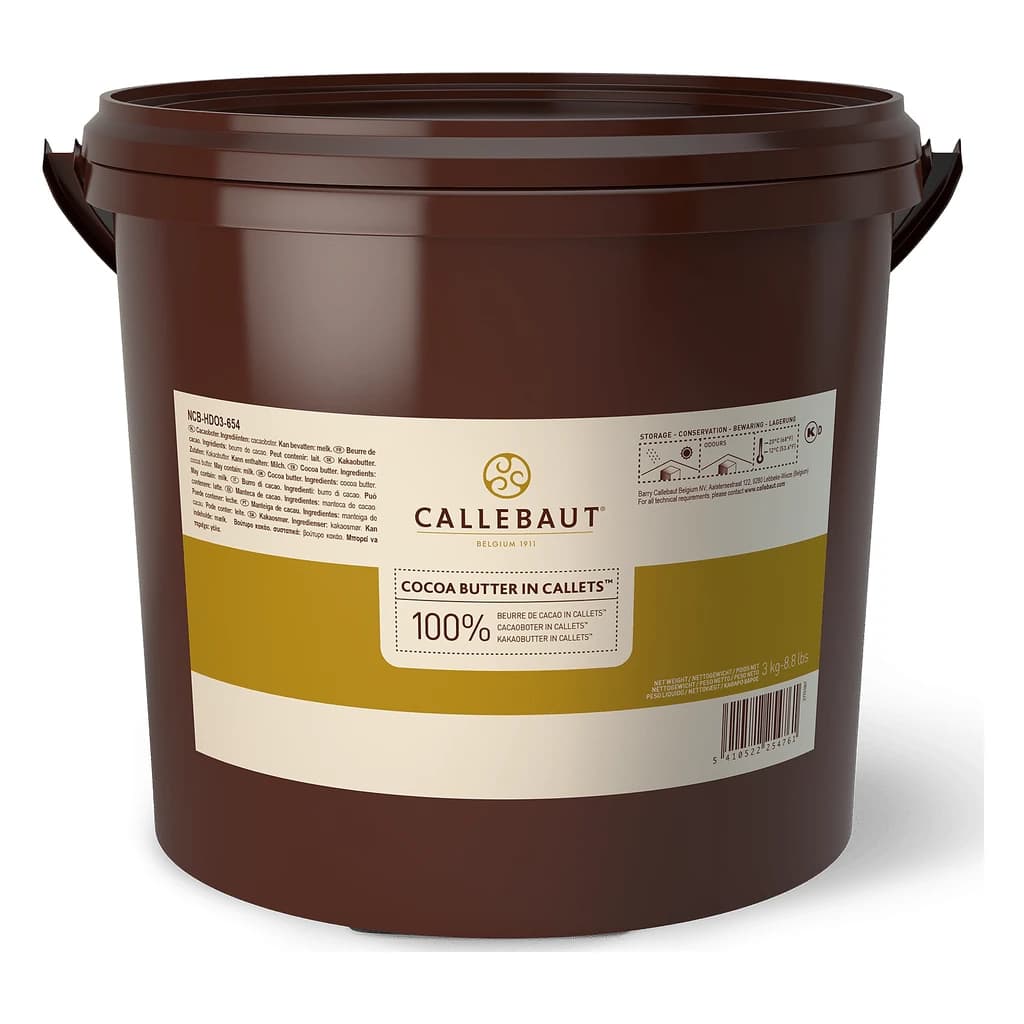
For re-tempering and seeding you will want pure cocoa butter on hand — the catalogue stocks Callebaut Cocoa Butter in Callets 100% and Barbara Luijckx Cocoa Butter 1 kg.
7. Buy the chocolate for this — catalogue guide
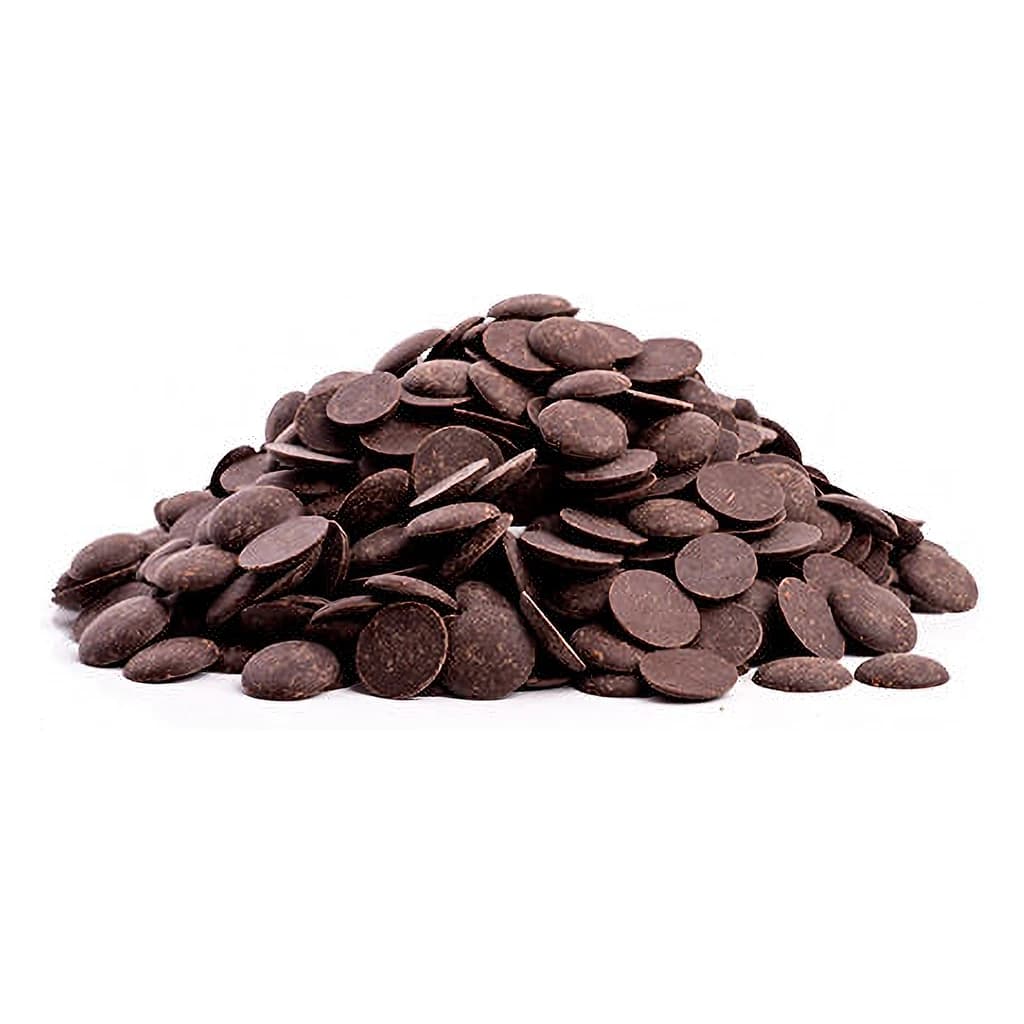
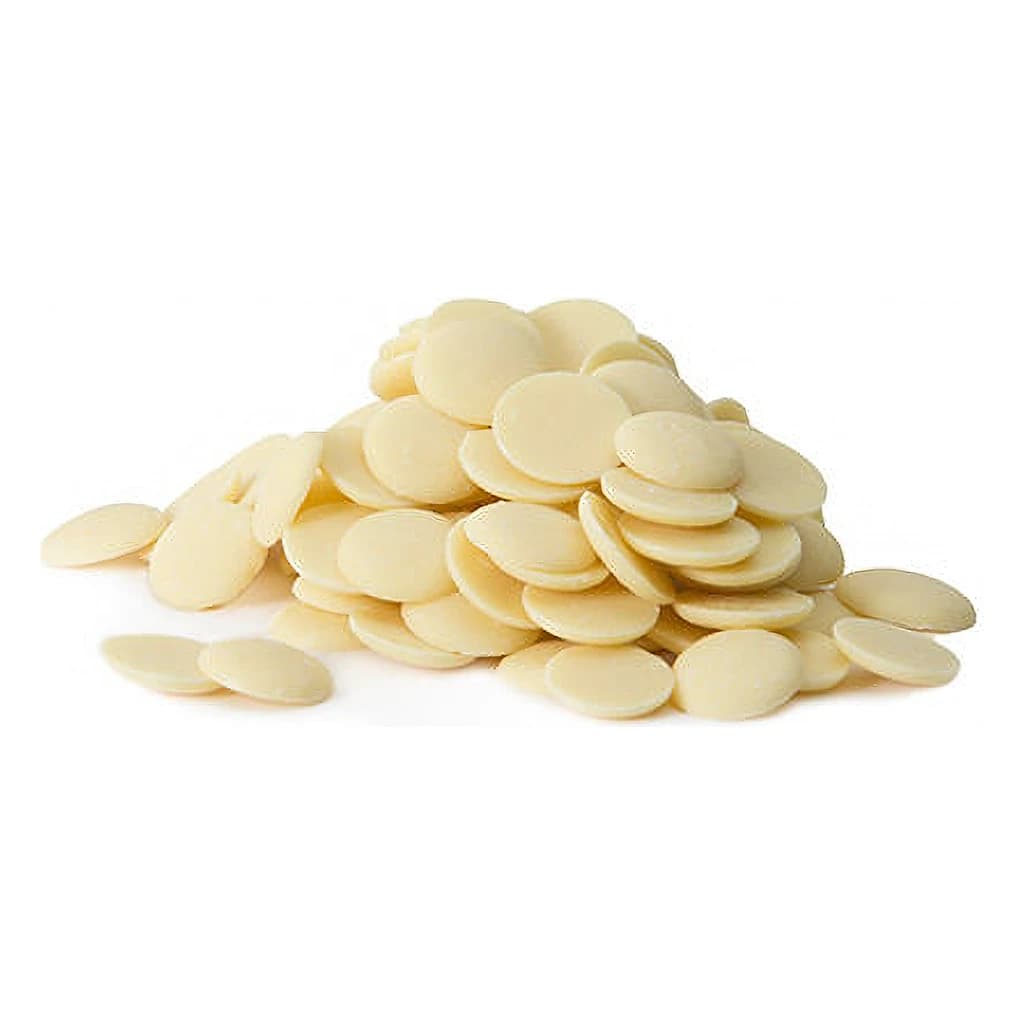
<!-- IMAGE: img-a6bloom-10 — Callebaut 811 dark callets (temper & store carefully) --> <!-- IMAGE: img-a6bloom-11 — Barima Dark Couverture Drops 72% (first-party 10–20°C / max 70% RH) -->Couverture (real chocolate — temper and store carefully to avoid fat bloom): Callebaut 811 Dark / 823 Milk / W2 White; Barima Dark 72% / Milk 34% / White 29% and Barbara Luijckx Dark 56%; Zeelandia Arabesque Noir 72 / Lait 34 / Blanc 29. All carry first-party storage specs, summarised in the storage-targets table below.
Seeding & re-temper agents:Callebaut Cocoa Butter in Callets 100%, Barbara Luijckx Cocoa Butter 1 kg — for re-tempering bloomed stock and for anti-bloom seeding.
Bloom-tolerant, no-temper alternative (compound):Zeelandia Satina / Satina White / Satina PRO RSPO Dark — melt and coat, far less prone to fat bloom (still keep dry to avoid sugar bloom).
Allergen & food-safety notes (flagged for review)
- Allergens (flagged for review). Most couvertures in the range use soya lecithin (E322), a declarable top-14 allergen; milk and white couvertures contain MILK, while dark couvertures carry "may contain MILK" \ \ . Exception: Barima Milk (CHL35XXC3) uses SUNFLOWER lecithin (E322), not soya \ — for that product, SOYA appears only as a 'may contain' PAL statement; do not declare intentional soya for Barima Milk. The compound coatings carry broader precautionary statements: Satina Dark "may contain PEANUTS, MILK" , Satina White "may contain SESAME, SOYA, PEANUTS and other NUTS" , and Satina PRO RSPO Dark "may contain MILK, HAZELNUTS" . Always work from the current datasheet for each SKU.
- Catalogue/spec mismatch. The item titled "Callebaut SICAO Milk Chocolate Callets 32.1%" is supplied with a Belcolade milk-chocolate "Lait Caramel" datasheet (Kent Foods, Material 4001617). Verify the actual product before quoting composition or storage on an order .
- Trans fat (flagged for review). Both Satina Dark (2020 datasheet) and Satina White list 'partly hydrogenated' fats (palm fat / palm and rape oil respectively) \ \ — sources of industrial trans-fatty acids. EU Regulation 2019/649 limits industrial trans fat to 2 g per 100 g of fat (in force since 1 April 2021; same limit retained in UK law). The newer Satina PRO RSPO Dark instead uses fully hydrogenated palm-kernel oil (negligible trans fat) . Confirm the current formulation and nutrition label for both Satina Dark and Satina White with Zeelandia before quoting compliance .
- Bloom is not spoilage. Both fat and sugar bloom are aesthetic defects, not food-safety hazards — bloomed chocolate remains edible . Treat it as a quality/saleability issue, not a contamination issue.
- Water is still the enemy. A single drop of water or steam will seize melted chocolate during any re-temper. Keep bowls, spatulas and steam well clear; if it seizes, convert it to ganache rather than chasing the temper.
All numeric, dosage, allergen and food-safety claims in this article are itemised in _claims.json for independent verification. Anti-bloom milk-fat dosages and barrier measures are research-literature ranges, and storage limits are formulation- and SKU-dependent — validate against your own product, your specific datasheet and your local food-law obligations.
Figures
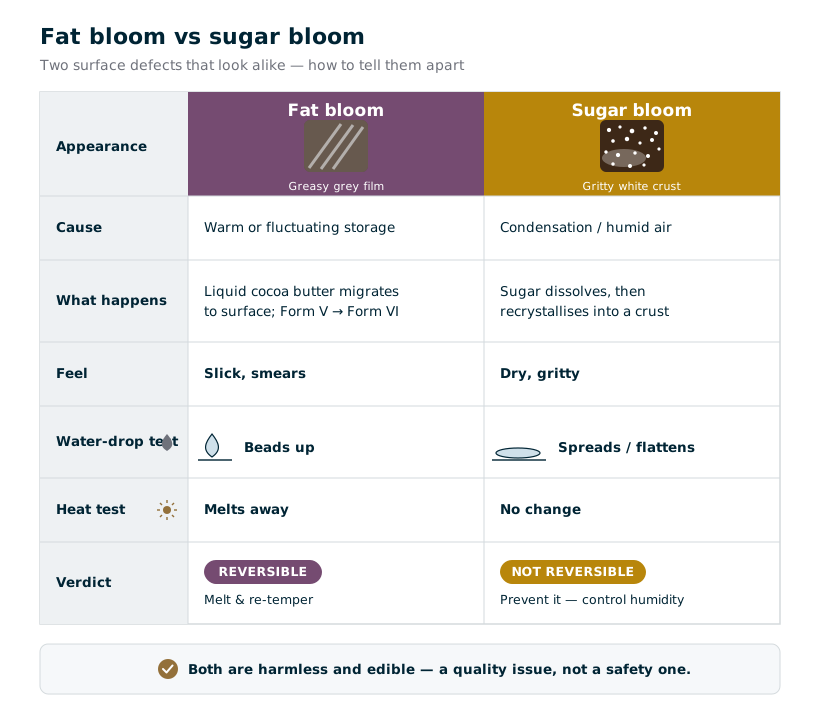 Side-by-side comparison of fat bloom and sugar bloom on chocolate showing fat bloom as a greasy grey film from cocoa butter and sugar bloom as a gritty white crust from moisture, with their different causes and whether each can be fixed
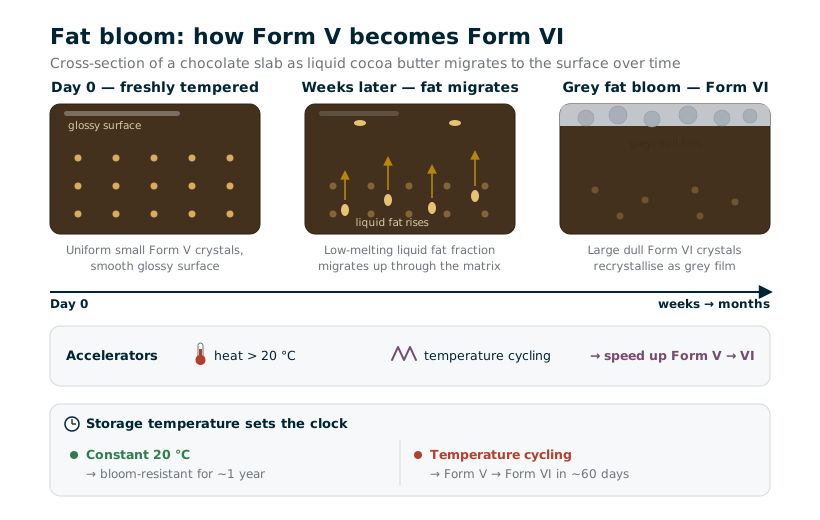 Diagram showing how stable Form V cocoa-butter crystals slowly convert to Form VI at the surface as liquid fat migrates upward over weeks, producing fat bloom, with arrows showing heat and temperature cycling speeding it up
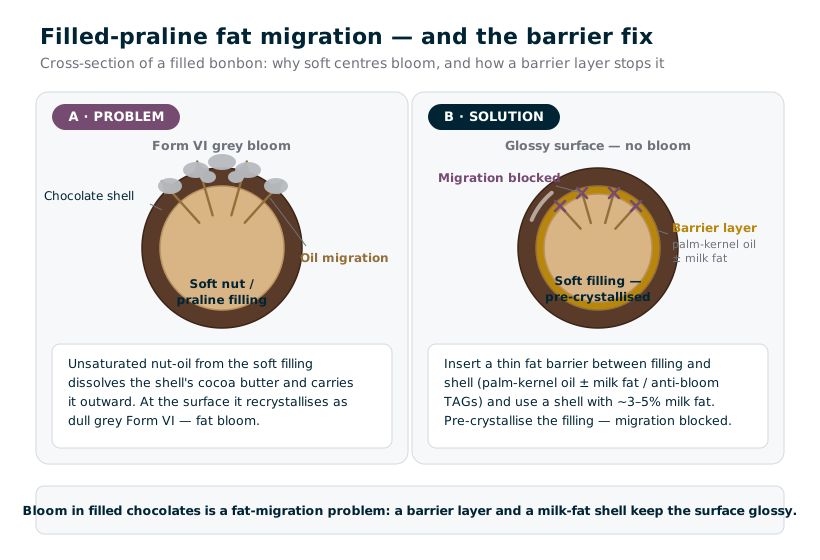 Cross-section of a filled praline showing nut-oil from the soft filling migrating outward through the chocolate shell and recrystallising as fat bloom on the surface, and a barrier layer that blocks the migration
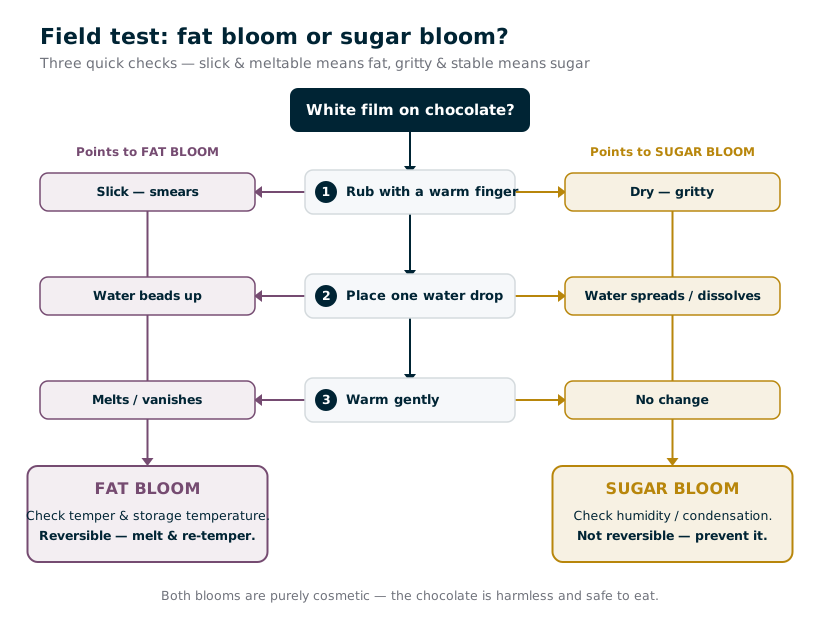 Flowchart for diagnosing chocolate bloom: rub it (slick equals fat, gritty equals sugar), place a water drop (beads equals fat, spreads equals sugar), warm it gently (melts equals fat, unchanged equals sugar)
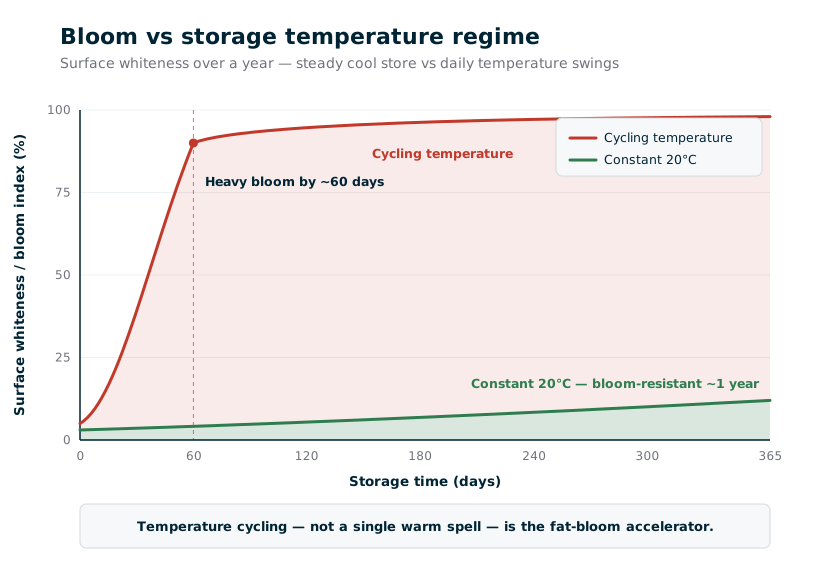 Line chart showing little or no bloom over a year at constant 20 degrees Celsius storage but rapid bloom within about 60 days when the storage temperature is cycled up and down
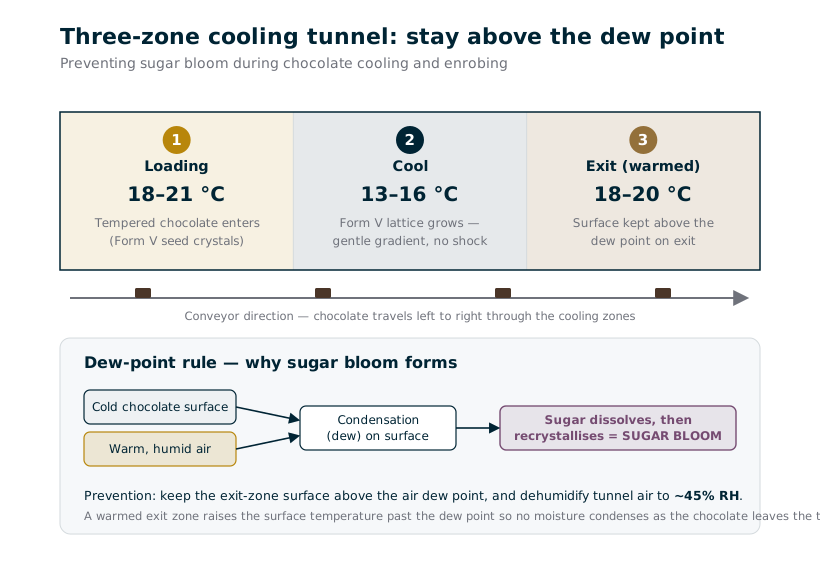 Schematic of a three-zone chocolate cooling tunnel with a warm loading zone, a cool middle zone and a warmed exit zone, plus a dew-point note explaining condensation causes sugar bloom
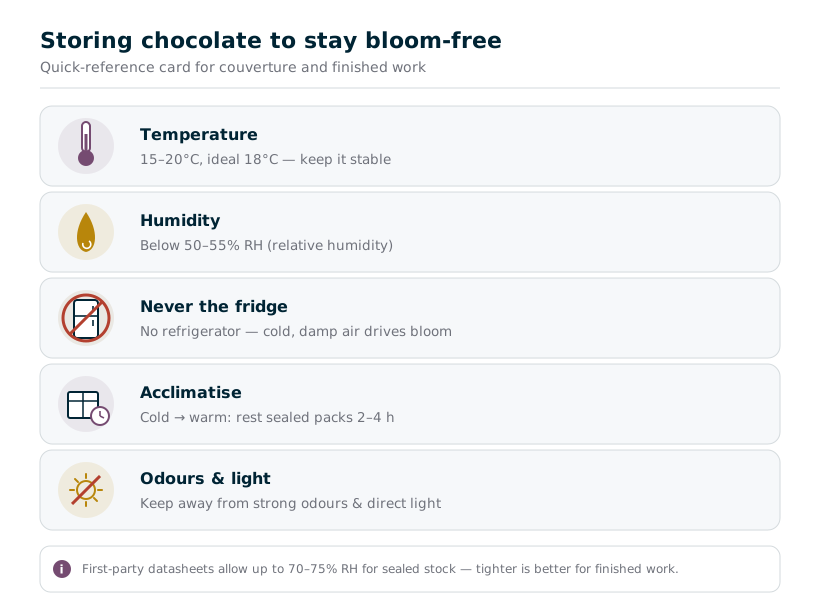 Quick-reference card showing store chocolate at 15 to 20 degrees Celsius and below 50 to 55 percent humidity, never in the fridge, acclimatise sealed packs for a few hours, keep away from odours and light
Corrective action — rescuing fat-bloomed chocolate (worked method)
Fat bloom is reversible. For solid (unfilled) chocolate or bulk callets, melt and re-temper to Form V; the gloss and snap return.
| Ingredient | Baker's % | Weight |
|---|---|---|
| Fat-bloomed couverture to melt | 0.80 kg | |
| Untempered/extra couverture reserved as Form-V seed | 0.20 kg (~20%) |
- 1. Melt the 0.80 kg fully to 45-50°C (dark) so every existing crystal, including the bloomed Form VI, is erased.
- 2. Off the heat, stir in the 0.20 kg seed callets to cool the mass and donate Form V crystals.
- 3. Bring to the working band for the type (dark 31-32°C, milk 29-30°C, white 28-29°C).
- 4. Run a temper test (knife/paper tip): it should set glossy with a clean snap in 3-5 minutes at 18-20°C.
- 5. Mould/enrobe, cool gently at ~10-15°C (never a freezer), then store at 15-20°C, RH <50-55%.
- Note: for FILLED chocolates whose bloom comes from filling-oil migration, re-tempering the surface is only a temporary fix — address the filling fat and add a barrier (see fc-antibloom-filled).
Yield: ~1 kg re-tempered couverture restored to Form V gloss and snap.
Anti-bloom toolkit for filled chocolates & pralines
Filled pralines bloom because soft, unsaturated filling oil migrates through the shell and recrystallises cocoa butter as Form VI at the surface. These are the proven counter-measures (industrial/literature ranges, not single-SKU spec figures).
| Ingredient | Baker's % | Weight |
|---|---|---|
| Milk fat / milk-fat fraction added to the SHELL chocolate | ~3-5% of shell fat (anti-bloom) | |
| Anti-bloom TAGs (e.g. BOB / StOSt-type high-melting symmetric fats) | per supplier dosage | |
| Barrier layer between filling and shell (palm-kernel oil +/- milk fat, micro-milled sugar/skim-milk powder) | thin technofunctional layer | |
| Pre-crystallise / seed the FILLING with cocoa-butter crystals | per filling recipe |
- 1. Temper the shell correctly to Form V — under-tempering is still the number-one bloom cause.
- 2. Add ~3-5% milk fat to the shell: it slows the cocoa-butter liquid-to-solid transition and delays bloom (2.5% hydrogenated milk fat gave 2-4x longer bloom-free life in trials).
- 3. Where the filling is nut-oil rich, interpose a barrier layer or use a more saturated/pre-crystallised filling fat to cut oil migration.
- 4. Pre-crystallise (seed) the filling with cocoa-butter crystals to stabilise its fat phase.
- 5. Store and ship at a STABLE 15-18°C — temperature cycling is what propels migration.
Yield: A layered defence: correct temper + milk fat/TAGs + barrier + stable storage. No single measure is sufficient alone.
The two blooms look superficially similar (a dull white film) but have opposite causes, opposite feels and opposite cures. Getting the diagnosis right tells you whether to look at your tempering/storage temperature (fat) or your humidity/condensation (sugar).
| Property | Fat bloom | Sugar bloom |
|---|---|---|
| Root cause | Cocoa-butter crystals: under-tempering and/or warm/fluctuating storage shifting Form V to Form VI; liquid fat migrating to the surface | Moisture: condensation or humid air dissolves surface sugar which then recrystallises as it dries |
| Appearance | Soft, greyish-white film or streaks, sometimes blotchy; can look 'misty' | Rough, gritty, dull white crust; sparkly sugar crystals |
| Feel | Slick/greasy; smears and disappears under a warm finger | Dry and sandy; does not smear or melt |
| Water-drop test | Drop beads up (fat is hydrophobic) | Drop flattens and spreads, dissolving the sugar |
| Gentle-heat test | Melts and vanishes with light warming | Unchanged by warming |
| Trigger | Heat: storage above ~20°C, temperature cycling, poor temper, fat migration from a filling | Damp/cold: fridge condensation, cold chocolate into warm humid air, wet moulds, cooling below dew point |
| Reversible? | Yes — melt and re-temper to Form V | No — cannot be polished out; only full re-melting redistributes the sugar |
| Food safety | Harmless, still edible (aesthetic defect) | Harmless, still edible (aesthetic defect) |
Both defects are aesthetic, not safety hazards (claims c5, c12). The fastest field test is touch + a single water drop. See claims c10, c13, c14.
Fat bloom is fundamentally a crystal problem. Of the six forms, only Form V is what we want; Forms I-IV are under-cooled mistakes that bloom fast, and Form VI is the slow, stable end-point that is fat bloom itself.
| Form | Approx. melting point | Stability | Relevance to bloom |
|---|---|---|---|
| I | ~17.3°C | Very unstable | Forms on fast/over-chilling; blooms almost immediately |
| II | ~23.3°C | Unstable | Soft, dull, fast bloom |
| III | ~25.5°C | Unstable | Dull, blooms |
| IV | ~27.5°C | Unstable (the form you over-make if you cool too far) | Poor release, blooms in days — classic under-temper bloom |
| V | ~33.8-34°C | Stable at room temperature — the TARGET | Correctly tempered: glossy, snaps, bloom-resistant if stored well |
| VI | ~36.3°C | Most stable; forms slowly from V over weeks-months | This IS fat bloom: dull grey film, waxy, melts too high |
Melting points are approximate (Wille & Lutton JAOCS; cross-checked vs cocoterra in °F and Nature Communications 2021). Fat bloom = the surface conversion of Form V to Form VI, accelerated by heat and temperature cycling. The specific timeline (V->VI within ~60 days under cycling vs ~1 year at constant 20°C) is from a single study — treat as indicative. See claims c1-c4, c7.
Bloom prevention is mostly a storage problem. The generic professional window plus the first-party numbers from the Domson catalogue datasheets.
| Source / product | Temperature | Relative humidity | Notes |
|---|---|---|---|
| Generic professional target | 15-20°C, ideal ~18°C, stable | <50-55% | Away from odours and light; airtight; never the fridge |
| By type (Zucchero guide) | ~15-18°C | Dark 40-50%, milk 40-45%, white <45% | White/milk most heat- and humidity-sensitive |
| Barima / Barbara Luijckx couvertures (first-party) | 10-20°C | max 70% | Dark 72, Milk 34, White 29, Dark 56; away from odours & sunlight |
| Belcolade Milk — 'SICAO 32.1%' (first-party) | 16-20°C | max 60% | Tighter RH spec; verify naming before ordering |
| Zeelandia Arabesque (first-party) | 10-20°C | dry place | Noir 72 / Lait 34 / Blanc 29 |
| Satina Dark compound (first-party) | 12-18°C | up to 75% | Compound is bloom-tolerant; still keep dry |
| Satina White compound (first-party) | max 25°C | up to 75% | Compound; widest temperature tolerance |
| Satina PRO RSPO Dark / Scaldis (first-party) | below 20°C | dry place | Fully hydrogenated palm-kernel fat; bloom-tolerant |
Where datasheets allow up to 70-75% RH that is a product-stability ceiling for unopened stock, not an anti-bloom optimum — for glossy moulded/enrobed work aim for the tighter <50-55% generic target. See claims c15-c20.
Fat bloom is a cocoa-butter phenomenon. Replace the cocoa butter with non-polymorphic vegetable fat and the fat-bloom problem largely goes away — which is why compound coatings are the forgiving choice for hot kitchens and untempered work.
| Property | Couverture (real chocolate) | Compound coating |
|---|---|---|
| Fat base | Cocoa butter (couverture: >=31%) | Vegetable fat (palm / palm-kernel), little or no cocoa butter |
| Polymorphic? | Yes — six forms, must hit Form V | No troublesome polymorphism |
| Tempering needed? | Yes | No — just melt and use |
| Fat-bloom risk | High if mistempered or stored warm/cycling | Low — tolerant of temperature swings |
| Sugar-bloom risk | Yes — both contain sugar, both bloom with moisture | Yes — still sugar-based, so humidity still matters |
| Handling temp | Melt then hold a narrow band (28-32°C) | Satina Dark/White max 55°C; Satina PRO RSPO 35-40°C |
| Catalogue examples | Callebaut 811/823/W2; Barima 72/34/29; Zeelandia Arabesque | Zeelandia Satina; Satina White; Satina PRO RSPO Dark |
Compound resists FAT bloom but is NOT immune to SUGAR bloom — humidity/condensation control still applies. See claims c25, c26 and sister article A6-chocolate-selection-couverture.
| Fault | Appearance / feel | Likely cause | Fix / prevention |
|---|---|---|---|
| Fat bloom (storage) | Dull grey/white film, greasy, smears under a warm finger | Warm or fluctuating storage shifting Form V to Form VI; fat migrating to surface (claims c4, c7) | Re-melt and re-temper; store STABLE 15-20°C, RH <50-55%, no temperature cycling |
| Fat bloom (under-temper) | Dull, soft, blooms within hours-days of setting | Too few Form V crystals seeded; liquid fat fraction migrates and recrystallises (claim c6) | Temper correctly to Form V and temper-test before moulding |
| Fat bloom (filled praline) | Bloom on shell over a soft filling, often within weeks | Unsaturated filling/nut oil migrates through the shell -> surface Form VI (claim c9) | Milk fat/anti-bloom TAGs in shell, barrier layer, pre-crystallise filling, stable storage (claim c24) |
| Sugar bloom | Rough, gritty, sparkly white crust; dry to the touch | Condensation/humidity dissolves surface sugar then it recrystallises (claims c10, c11) | Cannot be polished out; control humidity, dry moulds, acclimatise cold stock, warm gradually |
| Condensation after the fridge | Wet/then sugar-bloomed surface after taking chocolate from cold | Cold surface below the dew point of warm humid air (claim c11) | Don't refrigerate; if you must, acclimatise SEALED for a few hours before unwrapping (claim c21) |
| Cooling-tunnel bloom (production) | Sugar/fat bloom appearing at line exit | Tunnel air below factory dew point; too-fast or too-cold cooling (claim c22) | Three-zone gradient, warmed exit zone above dew point, dehumidify air to ~45% RH |
| White streaks / no gloss (not bloom) | Streaky, matt set straight off the line | Edge-of-temper, cold moulds, cooled too fast | Re-establish temper, moulds at ~room temp, cool at ~10-15°C |
Buy the ingredients
Catalogue products and brands referenced in this article.
Zeelandia Satina White Compound Coating
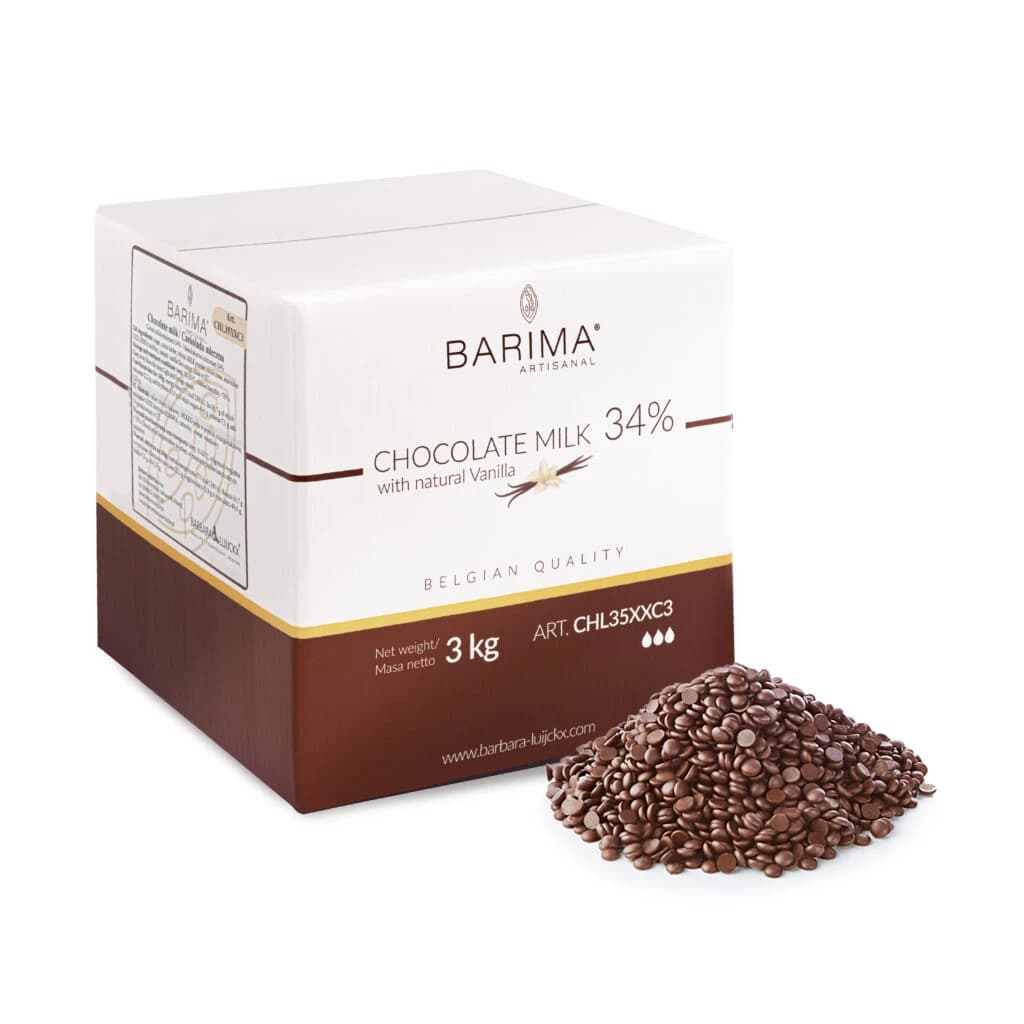
Barima Milk Chocolate 35% Callets 3 kg
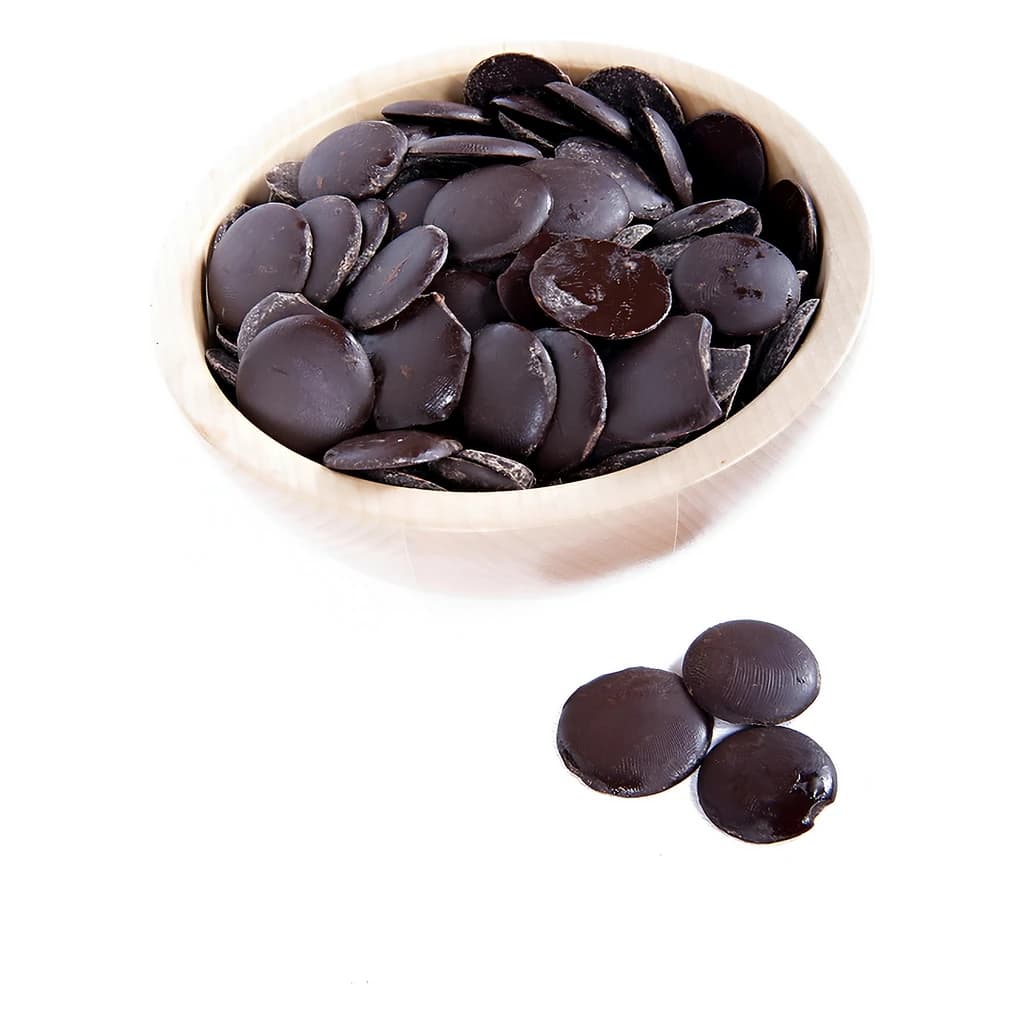
Barbara Luijckx Dark Chocolate 56% Discs 3 kg
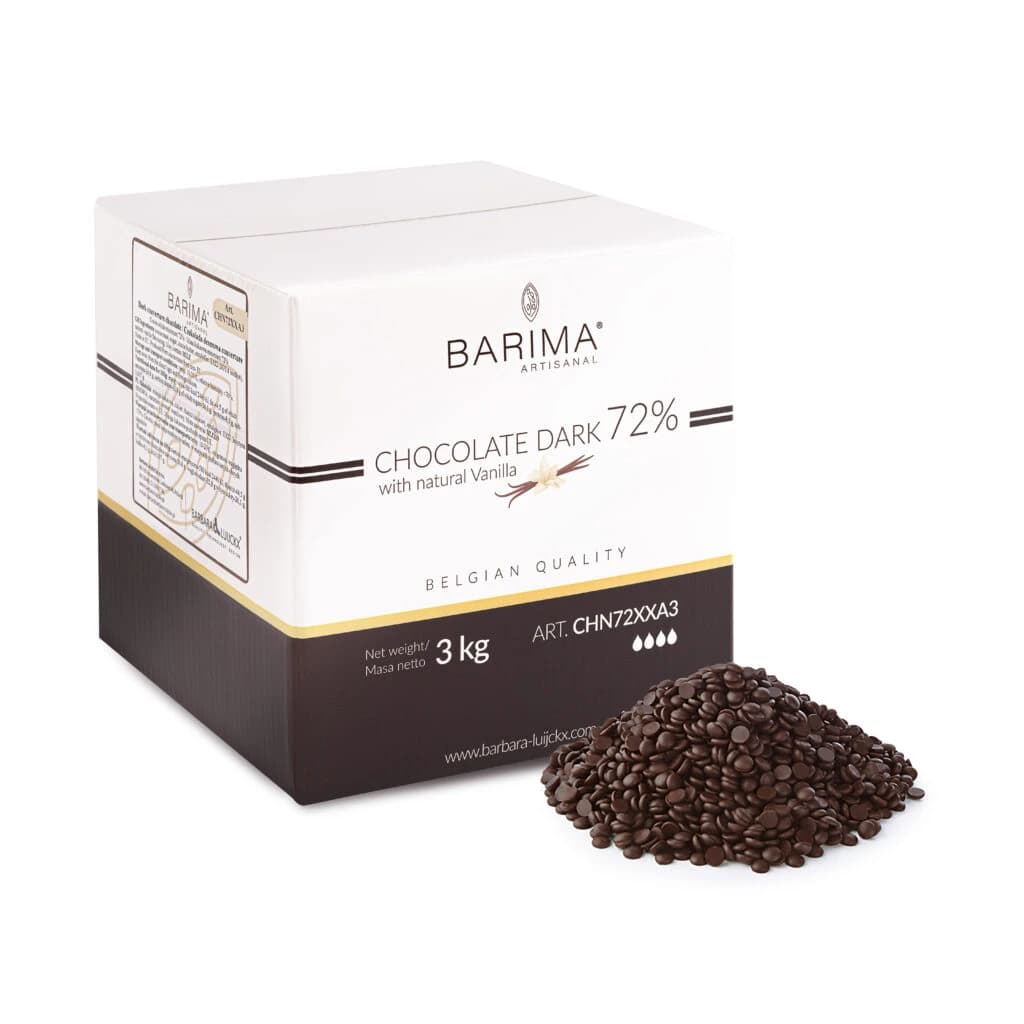
Barima Dark Couverture Drops 72% 3 kg
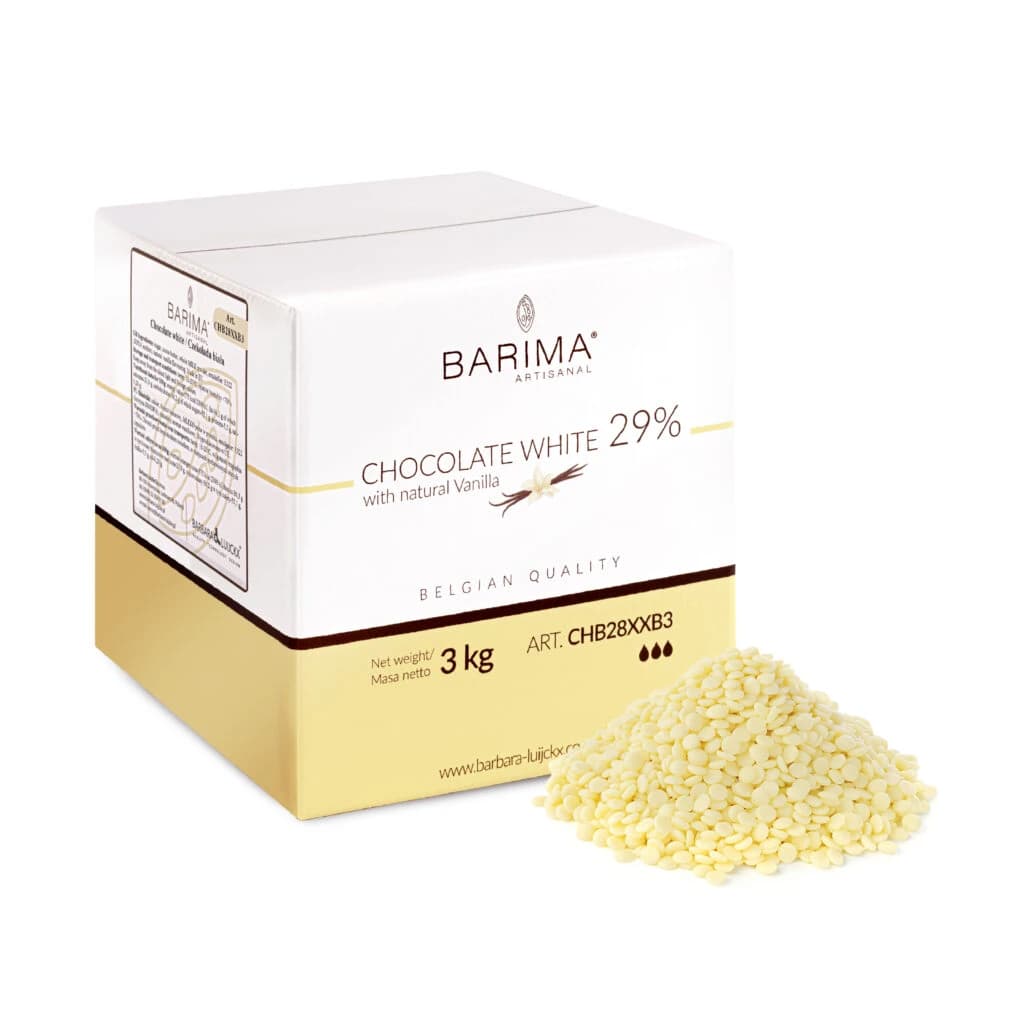
Barima White Chocolate 28% Callets 3 kg
Satina Pro Compound Coating
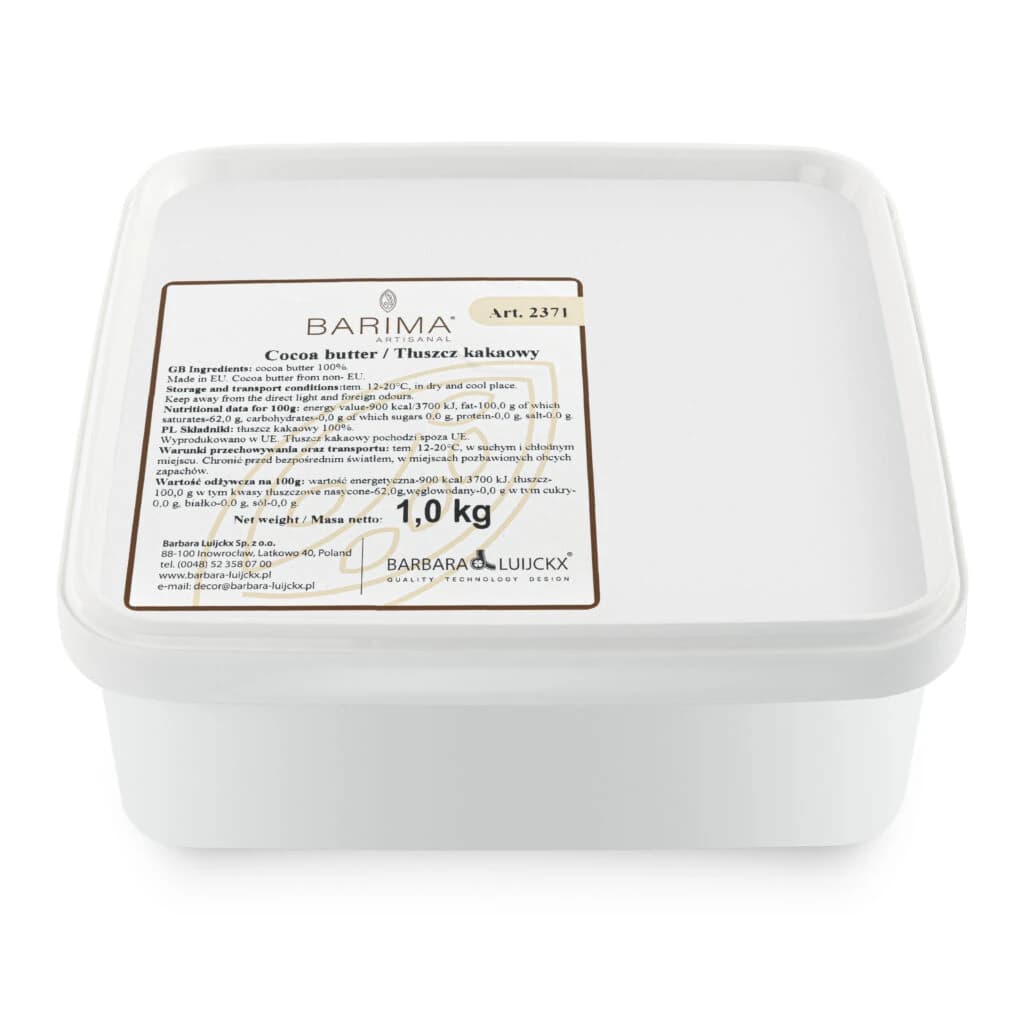
Barbara Luijckx Cocoa Butter 1 kg
Satina PRO RSPO Dark Compound Coating 20 kg
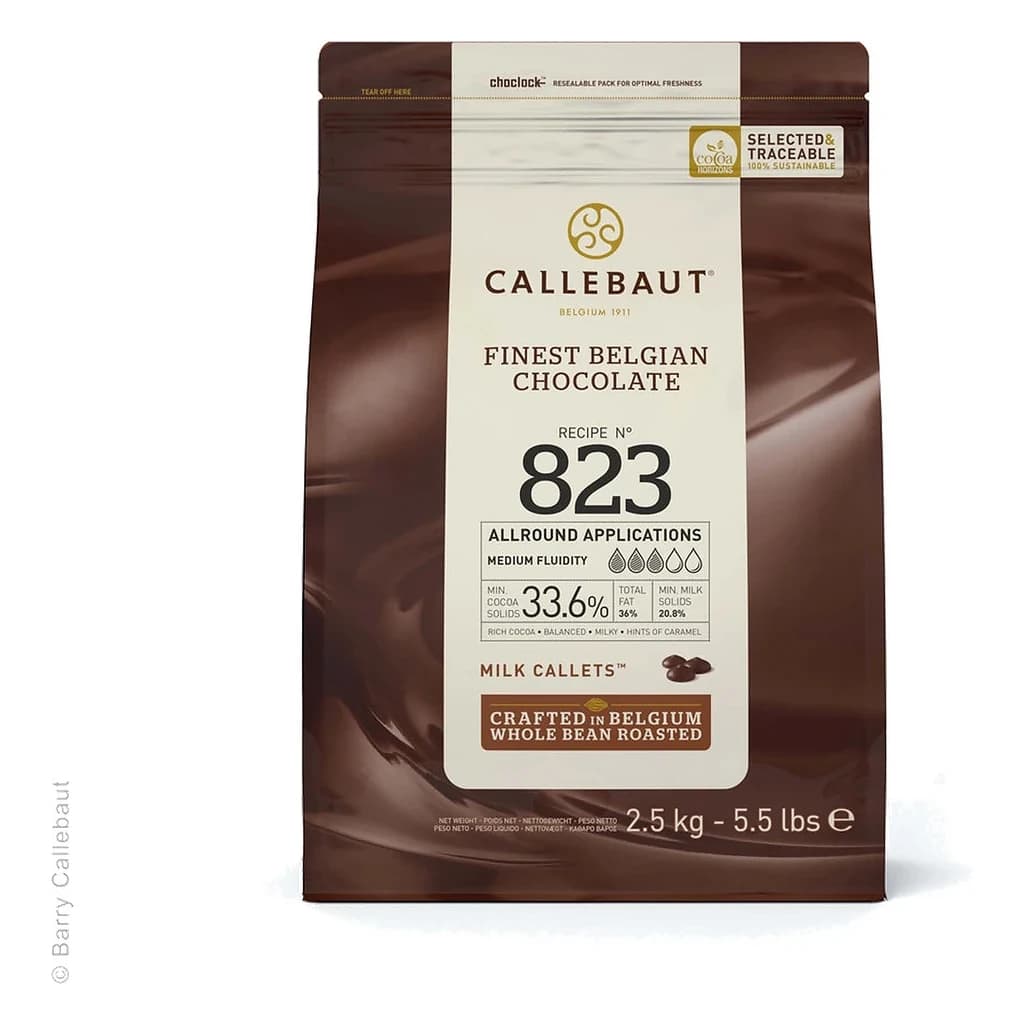
Callebaut 823 Milk Chocolate Callets 33.6% 2.5 kg
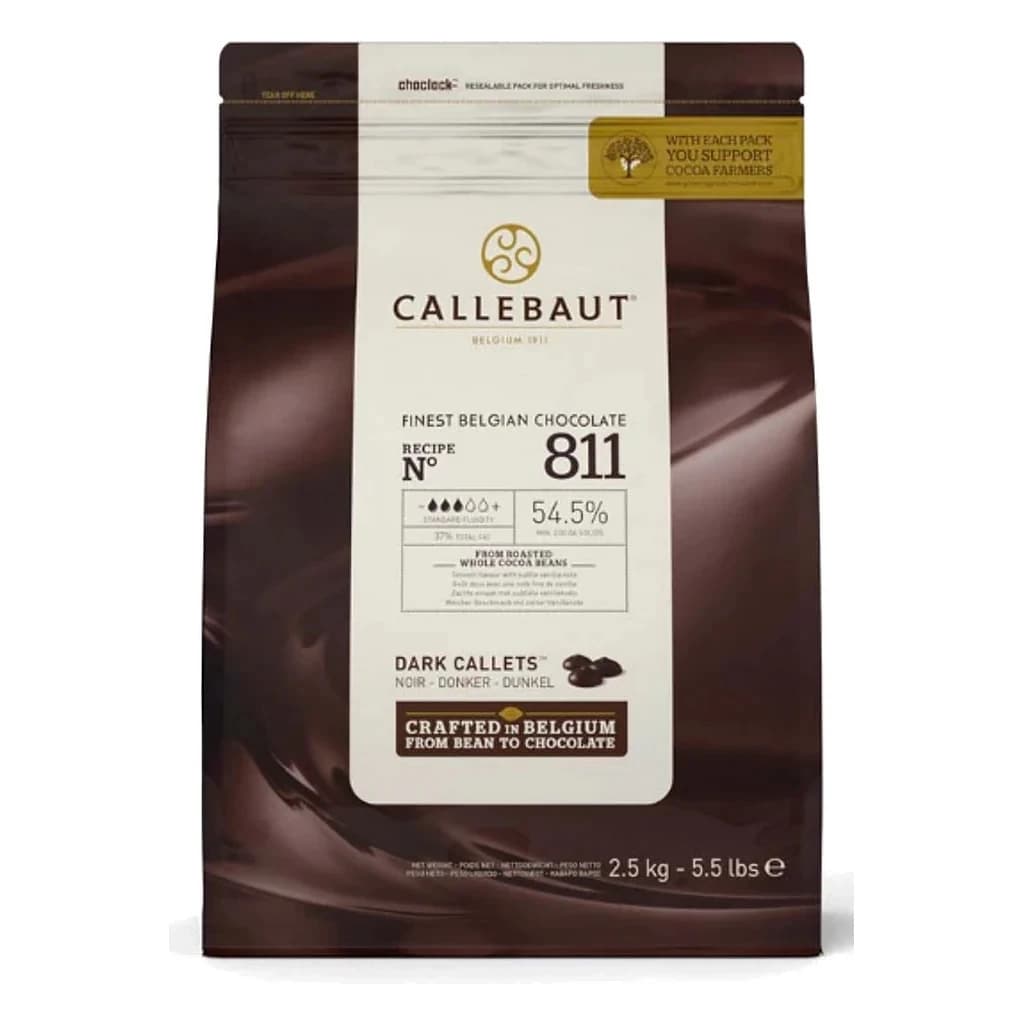
Callebaut 811 Dark Couverture Callets 54.5%
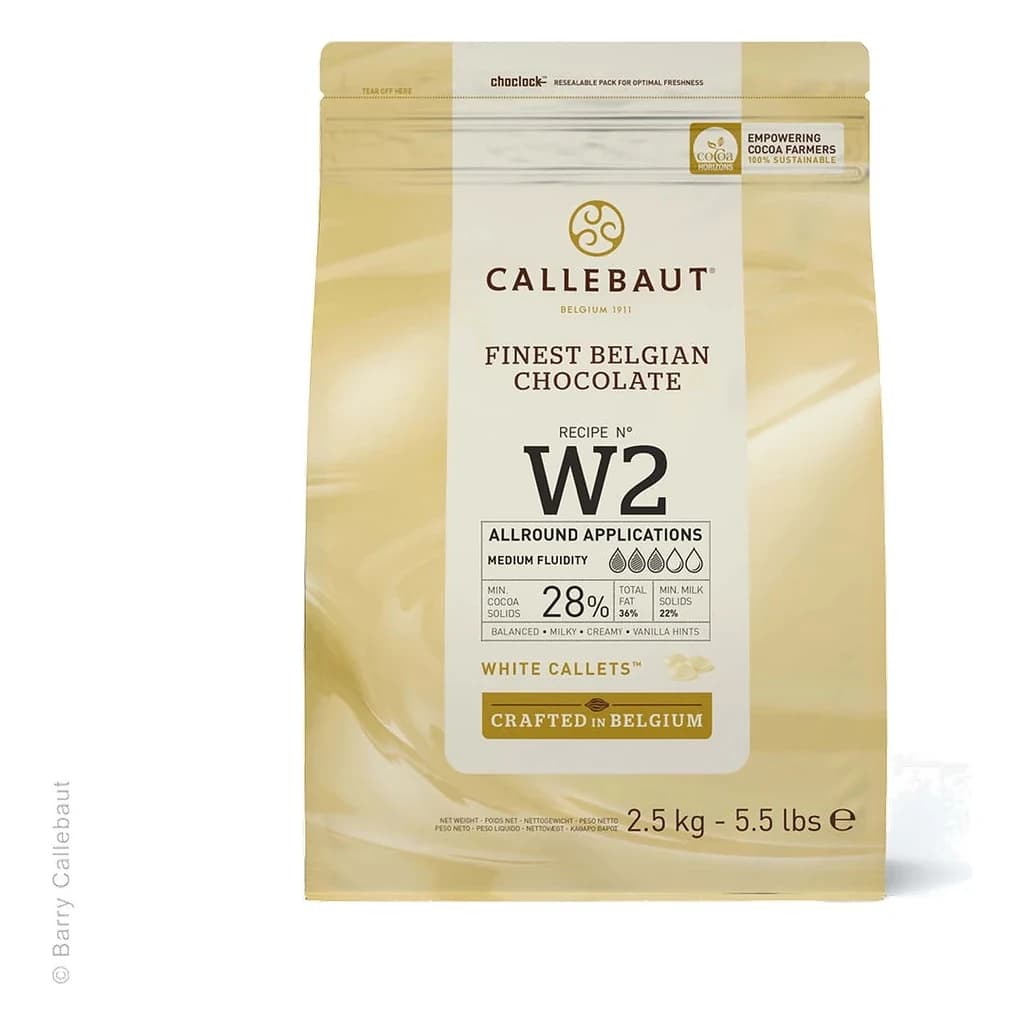
Callebaut SICAO White Chocolate Callets 28% 2.5 kg
Zeelandia Arabesque Milk Couverture 34% 5 kg
Zeelandia Arabesque Dark Couverture 72% 5 kg
Zeelandia Arabesque White Couverture 29% 5 kg

Callebaut SICAO Milk Chocolate Callets 32.1% 10 kg
Callebaut Cocoa Butter in Callets 100% 3 kg