
Bulgaria's Ottoman-heritage sweets: baklava, lokum (rose delight), tulumbi and kadaif — ingredients, syrup work and regional flavour signatures
Five centuries of Ottoman rule (1396–1878) left Bulgaria a whole shelf of syrup-and-sugar sweets that are still central to the festive table — baklava (baklava), rahat lokum (rahat lokum / Turkish delight), kadaif (kadayıf) and tulumbi (tolumbichki). This dossier gives a UK baker or distributor serving Bulgarian customers the authentic picture, mined from Bulgarian-language sources (SofiaMel, Lukeria of Targovishte, the Etar open-air museum's shekerdzhiynitsa, the Kazanlak Rose Valley rose producers and Bulgarian recipe authorities) and cross-checked against the platform's own supplier specifications. It covers the four core sweets — how each is built, the all-important syrup work and the hot/cold soaking rule, the sugar-inversion chemistry that keeps lokum smooth and syrups from crystallising — plus the genuinely Bulgarian regional signatures: the Bratsigovo Bethlehem-star Christmas baklava, Targovishte as a modern lokum town, and Rose Valley rose water. Every recipe is wired to the Domson catalogue a Bulgarian patisserie actually orders (walnuts, pistachios, ground almonds, honey, sugar, maize/potato/wheat starch, citric acid, sunflower oil, 82% butter, semolina, sesame), with the honest sourcing gaps flagged (no rose water, no tahini/halva paste, no kadaif/filo sheets, no ready lokum). Cross-linked to the Pillar A craft behind each family (A6-sugar-work-techniques, A6-choux-eclair-technology, A6-laminated-dough-fundamentals, A6-glazes-finishes, A7-seeds-nuts-toppings, A4-frying-fats-and-oils, A8-chocolate-confectionery-formulas, A1-wheat-flour-types-by-application) and to its sister Bulgarian and Ottoman articles.
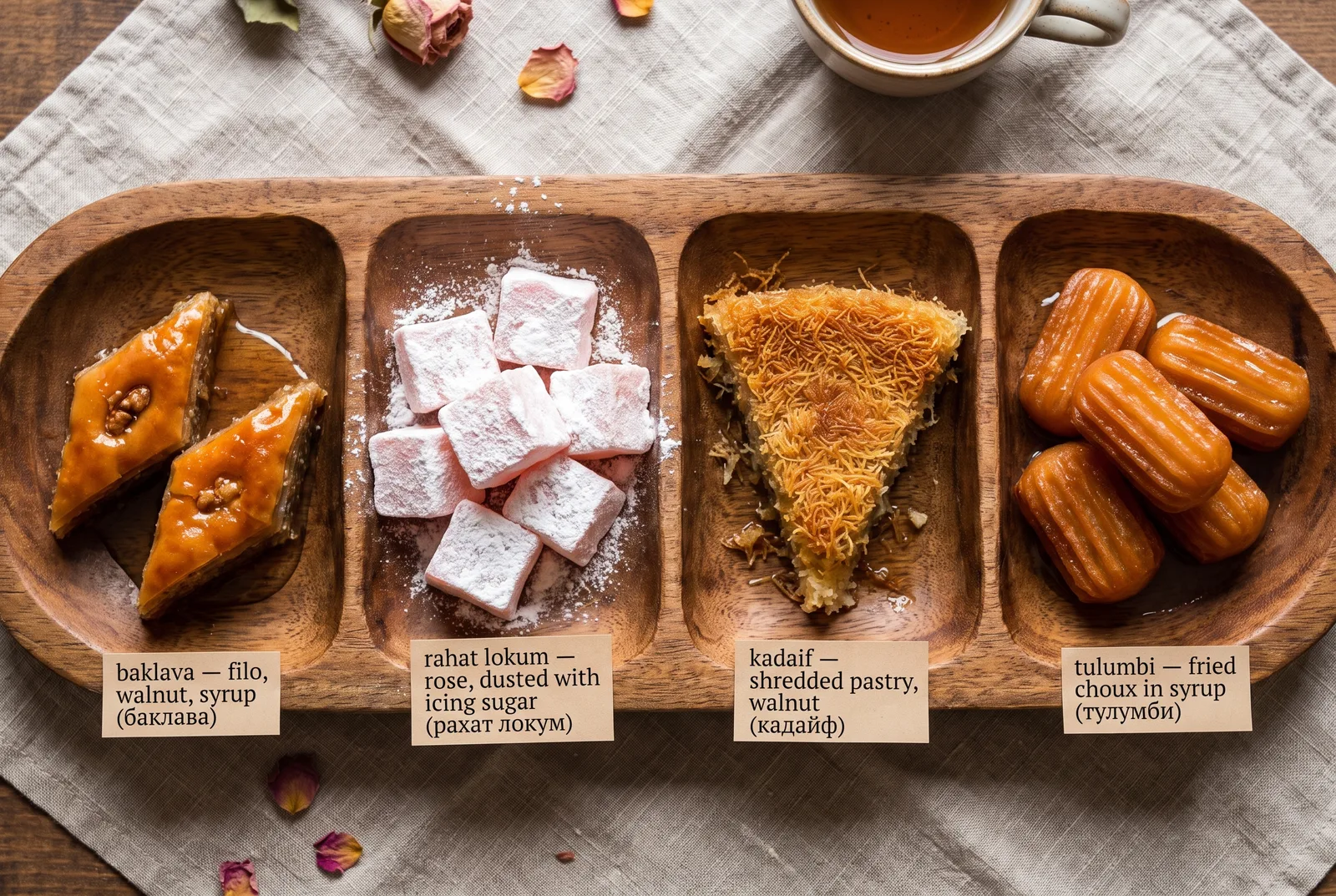
Five centuries of sweetness on the Bulgarian table
Look into the window of a Bulgarian sweet shop or onto a festive table and much of what glistens there is Ottoman inheritance (see the figure below). Diamonds of baklava (баклава) heavy with walnut and syrup; cubes of rahat lokum (рахат локум — Turkish delight) dusted with icing sugar; a tray of golden kadaif (кадаиф) built from pastry as fine as thread; and ridged, syrup-soaked tulumbi (тулумби / тулумбички). These came into the Bulgarian lands during roughly five centuries of Ottoman rule (1396–1878) and never left: baklava alone is a fixture of Christmas, New Year, Easter, engagements and weddings, a symbol of abundance and hospitality passed down grandmother to mother to daughter.
This is the practical map of that inheritance for a UK baker or distributor serving Bulgarian customers: what each sweet is, how it is built, the syrup work that makes or breaks it, and exactly what to buy for it on the Domson platform — including the honest gaps in the range. These are shared Ottoman sweets (baklava, lokum, kadaif, halva, tulumbi are common to Turkey, the Arab world, Greece and the Balkans), not uniquely Bulgarian ones like banitsa or kozunak — but Bulgaria has grown its own regional signatures around them, and this dossier keeps those front and centre. The deeper craft sits in Pillar A: sugar and syrup work in A6-sugar-work-techniques, the fried-choux family in A6-choux-eclair-technology, filo layering in A6-laminated-dough-fundamentals, glazing/soaking control in A6-glazes-finishes, the nut craft in A7-seeds-nuts-toppings, and frying fats in A4-frying-fats-and-oils.
1. The four sweets at a glance
The family divides cleanly by technique (see the figure and table below):
- Baklava — layered filo/kori leaves, ground nut, butter and syrup; baked then soaked.
- Kadaif — the same idea with shredded pastry (kadayıf threads) instead of sheet filo; baked then soaked.
- Tulumbi — fried choux paste piped through a fluted nozzle, then soaked.
- Lokum — a cooked starch-and-sugar gel, set, cut and dusted (no baking, no filo, no nuts required).
Three of the four are syrup pastries; lokum is a sugar-starch confection. All four live or die on the same two skills a Bulgarian shekerdzhiya (sugar-confectioner) has always owned: cooking sugar to the right point, and controlling the syrup's temperature against the pastry's. Historically these sweets were imported into Bulgaria from Romania (Bucharest) and Constantinople (Tsarigrad) before a local confectioner's trade — shekerdzhiystvo — took root in Gabrovo in the second half of the 19th century; the Etar open-air museum still runs a working shekerdzhiynitsa making rahat lokum, kafyava halva (brown halva), susamki (sesame brittle), balsudzhuk and nebetsheker (rock sugar) by period methods.
2. Baklava: filo, walnut and the hot/cold rule
Baklava is the benchmark, and a Bulgarian baker knows it in the hands (see the figure, formula card and fault table below). Its earliest records are 15th-century, from the sultans' court at Topkapı Sarayı in Istanbul (a palace kitchen register of 1473 records baklava being made there). Bulgarian popular histories add that until the 18th century it was made only by specially trained masters who could stretch the dough into leaves "thin as rose petals" — reported here as gastro-history rather than documented fact, because the primary Bulgarian source could not be re-verified. Layer counts vary widely by tradition and should be treated as illustrative: the documented Topkapı baklava ran to about 40 layers, while other accounts speak of "close to a hundred" — so a single layer figure is folklore, not a standard. The Bulgarian build is faithful to that idea:
- Many tissue-thin filo/kori leaves, each brushed with melted butter, are stacked around a thick band of ground walnut — in Bulgaria the walnut is the nut of choice — mixed with cinnamon and a little sugar. (The nut is often cut with a spoon of semolina, which soaks up excess fat and spreads the filling evenly.)
- Score into diamonds BEFORE baking, not after — cutting a baked, syruped tray shatters it.
- Bake to an even deep gold (a home tray runs about 170°C for 60–70 minutes).
- Flood with syrup using a temperature contrast: cool syrup onto hot pastry, or hot syrup onto cooled pastry. This is the single most important rule — get the two the same temperature and the layers go soggy instead of crisp. Well-made baklava is juicy in the lower layers, crisp on top, with no free syrup left in the tray.
The syrup itself is a roughly 1:1 sugar-to-water cook (the SofiaMel professional recipe uses 1 kg sugar to 1 L water), simmered about 10 minutes with lemon juice added, and the tray is then left overnight to drink it in. Honey may replace part of the sugar for a rounder, more traditional flavour. The layering craft is A6-laminated-dough-fundamentals; the syrup and its lemon are A6-sugar-work-techniques and A6-glazes-finishes; nut toasting, rancidity and aflatoxin control are A7-seeds-nuts-toppings. The filo itself — hand-stretched teglени кори vs machine-sheeted — is the subject of the sister article B6-filo-dough-kori.
The Bulgarian regional signature: Bratsigovo's Bethlehem-star baklava
Where Turkish and Arab baklava lean pistachio and are year-round, the most distinctly Bulgarian baklava is a Christmas one. In Bratsigovo and Peshtera, the tray is cut so that the diamonds radiate from a Bethlehem star (Vitleemska zvezda) in the centre — a Christian regional tradition, made a few days before the holiday so the syrup can penetrate every layer (see the figure below). The cutting is done in stages — halve, quarter, into eighths, then diagonally — to open the star. Because it is a high-sugar syrup bake, it keeps for over a week in a cool room with no refrigeration, which is exactly why it suits a holiday production run.
3. Lokum (rahat lokum): the starch-and-sugar gel
Lokum is the one sweet here with no filo, no baking and no nuts required — a cooked gel of starch and sugar (see the figure and formula card below). The name rahat lokum comes from Arabic (rahat ul-hulkum, roughly "ease/sweetness for the throat"); it has been made since the Ottoman period, first with honey and grape molasses before refined sugar and starch became the base. (The romantic origin stories — a 15th-century sultan's confectioner, Richard the Lionheart, a Slavic harem tale — are legends, not history.)
A representative Bulgarian home formula is about 750 g sugar: 1.5 L water: 150 g starch (roughly a 5:1 sugar-to-starch ratio) plus the juice of half a lemon, with cornstarch (maize starch) as the gelling agent. The method is patient:
- Slake the maize starch in cold water; combine with the sugar syrup.
- Cook with constant stirring — about 30–40 minutes in the traditional method (as little as 15 in a quick version) — until it is a thick, translucent paste that pulls away from the spoon.
- Off the heat, add rose water (розова вода — the classic aromatic), or lemon, mint or bergamot, and fold in nuts (walnut, pistachio, hazelnut) if wanted.
- Set in an oiled tray; when firm, cut with a knife dipped in hot water and dust with icing sugar (or roll in starch, which absorbs surface moisture).
Why the lemon matters (the chemistry to get right): the citric acid / lemon juice inverts sucrose into glucose and fructose — sugar inversion — which prevents crystallisation and gives lokum its smooth, clear body. The platform's first-party citric acid E330 datasheet says as much in industrial language: it is an acidity regulator that "facilitates gelling". Too little acid and the slab turns grainy; too much and it stays sticky and will not set. The water-activity and shelf-life logic of a sugar-starch gel is the same one covered for confections in A8-chocolate-confectionery-formulas.
How the factories do it. A Bulgarian patent for industrial lokum is instructive for anyone scaling up: it specifies (parts by weight) sugar 55–67, wheat starch 12–16, glucose 8–12, water 18–22 and tartaric acid 0.06–0.08 — note the wheat starch, the glucose (a second guard against crystallisation) and the tartaric acid (the acid in cream of tartar) — cooked under pressure (0.17–0.20 MPa) at 130–140°C for 40–45 minutes, cast into starch-dusted trays, cooled to 45–50°C, pressed to 4–6 mm and cut. The platform stocks all three of those workhorses — wheat starch, glucose syrup and a cream-of-tartar substitute — as well as the home baker's maize starch and citric acid.
The rose connection is genuinely Bulgarian. Rose water is a by-product of Rosa Damascena rose-oil distillation in the Rose Valley around Kazanlak and Karlovo: about 3,000 kg of rose petals yield 1 kg of rose oil, while 1 kg of petals yields about 1 kg of rose water (0.2–1.1% essential oil), and it is that fragrant distillate — not an essence — that flavours the classic rose lokum (see the figure below; see the sister article B6-rose-water-culinary-use). A modern Bulgarian benchmark is Lukeria of Targovishte, which makes lokum, pishmanie, halva and dzhezerie, including a rose pistachio lokum.
4. Kadaif (kadayıf): baklava's shredded cousin
Kadaif swaps sheet filo for shredded pastry that looks like fine threads — the same kadayıf dough used across Turkey, the Arab world, Greece and the Balkans (see the figure and formula card below). The build is baklava's logic in a different texture: butter the tray, press in half the shredded pastry, spread ground walnut or pistachio with cinnamon, cover with the rest, bake and soak. Representative trays run about 400–500 g kadaif, 150–200 g butter and ~200 g nuts, baked to a golden-honey colour (≈180°C, roughly 25–40 minutes), then soaked with a cooled syrup (roughly 500–600 ml water to 450–800 g sugar plus lemon). As with baklava the principle is a temperature contrast, though some Bulgarian recipes soak a fully cooled kadaif with cool syrup rather than cool syrup on a hot bake. The rolled version studded with pistachio is sometimes sold as burma. Kadaif is the one syrup pastry whose base a baker usually buys ready (raw shredded kadaif is sold vacuum-packed) rather than making — worth noting because the Domson range does not currently stock it (see §6).
5. Tulumbi (tolumbichki): fried choux in syrup
Tulumbi are the fried member of the family and the one that surprises people: the dough is choux paste (pareno testo, "scalded dough"), the very same A6-choux-eclair-technology paste used for éclairs (see the figure and formula card below). Boil water, oil (or butter) and salt, add flour all at once and beat to a smooth ball, then beat in eggs one at a time after the paste cools slightly; the paste must be soft enough to pipe but hold its shape. It is piped through a ridged/fluted nozzle (shprits s nazuben nakrainik) into short lengths — the flutes are what let the syrup grip — and deep-fried.
Frying is where they are won or lost: ≈170–180°C is the window. Too hot and the outside burns before the inside cooks; too cool and they drink oil and turn greasy. As with every sweet here, the syrup goes on by contrast — cooled syrup over slightly-warm tulumbi — so they swell and stay juicy without losing crispness. Fry them in a clean, stable oil: the platform's sunflower oil spec is a fully liquid oil, no hydrogenated fat, with free fatty acids max 0.1% and peroxide value max 1.0 — a sound frying medium; the frying-fat theory (smoke point, oil turnover, when to change the oil) is in A4-frying-fats-and-oils.
6. What to buy — the ingredients, the specs and the gaps
The oriental-sweets shopping list maps largely onto the Domson catalogue, and several first-party datasheets give you hard numbers to build and label against (see the figures, tables and products at the end of this article):
In range, spec-backed:
- Native maize starch for the lokum gel — moisture ≤14%, slurry pH 4–6, protein ≤0.4%, viscosity ≥550 BU (50°C) / ≥330 BU (95°C), no declarable allergens (naturally gluten-free). Potato and wheat starches are also stocked (wheat starch is not gluten-free — it is a wheat derivative).
- Citric acid E330 — 99.5–101.0%, the acidulant that inverts the sugar and "facilitates gelling"; a cream-of-tartar substitute is also stocked as an alternative acid/anti-crystalliser.
- White granulated sugar — sucrose min 99.7%, 400 kcal/100 g, SO2 ≤10 mg/kg, no allergens; plus icing sugar for dusting.
- Multifloral honey for a traditional baklava syrup — water ≤20%, reducing sugars ≥60%, diastase ≥8, HMF ≤4 mg/100 g, no allergens; and glucose syrup to keep syrups from crystallising.
- Ground and shelled almonds — 612 kcal, aflatoxin B1 max 8 ppb, FFA max 1%, PV max 4, tree-nut allergen, halal/kosher/vegan/coeliac; walnuts (the Bulgarian baklava nut) and roasted pistachios.
- Hulled sesame seeds — 631 kcal, EtO <0.05 ppm, sesame allergen — for finishing and the halva overlap (see B6-halva-confectionery).
- Sunflower oil for frying tulumbi — 900 kcal, no HVO, FFA ≤0.1%, PV ≤1.0, no allergens.
- Unsalted butter 82% for brushing baklava and kadaif — min 82% fat, 16% water, MILK allergen, store 0–10°C ≤60 days; and wheat semolina for the nut layer / revani-type sweets. The right sheet-dough flour is covered in B6-flour-types-milling and A1-wheat-flour-types-by-application.
Four range gaps to flag for the buyer: there is no rose water (the signature lokum aromatic and a Bulgarian export product in its own right); no tahini or ready halva paste; no shredded kadaif/filo (kori) sheets — the very base baklava and kadaif are built from; and no ready lokum. All four are core to an authentic Bulgarian oriental-sweets programme, and the first three matter to the wider repertoire too (rose water to confectionery generally; tahini/halva to B6-halva-confectionery; kori to B6-filo-dough-kori).
7. Allergens and food safety
A finished sweet from any of these families will typically need to declare, under UK/EU FIC (Reg (EU) 1169/2011) (see the figure below): cereals containing gluten (filo/kori sheets and the wheat flour in tulumbi), tree nuts (walnut, pistachio, almond, hazelnut), milk (butter) and eggs (tulumbi choux); sesame must be declared whenever it is present (there is no minimum threshold). One useful point of difference: plain lokum is gluten-free and vegan only when it is built on a non-gluten starch (maize or potato) with sugar and rose water — but note that commercial lokum is frequently made with wheat starch (see the industrial patent in §3), which makes it a gluten product, and it stops being vegan/nut-free the moment nuts are folded in. Two further labelling points that are easy to miss. First, coconut used to dust or set lokum is not an Annex II tree-nut allergen under EU/UK law (unlike US practice, where coconut is treated as a tree nut), so it need not be declared as a nut. Second, added colour matters: the six "Southampton" azo dyes commonly used to tint rose lokum and Turkish delight — E102 (tartrazine), E104, E110, E122, E124 and E129 — trigger the mandatory warning "may have an adverse effect on activity and attention in children" under Reg (EC) 1333/2008 Annex V. Map all of this to your own recipe before labelling.
On food safety, the good news is that this whole family is shelf-stable: high sugar and low water activity keep syrup pastries and lokum stable at ambient (Bratsigovo baklava holds for over a week in a cool room without refrigeration). The watch-point is the nut load — nuts go rancid and can carry mycotoxins — so buy fresh, low-aflatoxin stock (the ground-almond spec pins aflatoxin B1 max 8 ppb, FFA max 1%, peroxide value max 4 meq O2/kg) and store cool and dry. Set the exact shelf life and storage from your own HACCP plan.
The formulas, comparison tables, fault guide and full spec table for all four sweets are below; the underlying craft language lives in A6-sugar-work-techniques, A6-choux-eclair-technology, A6-laminated-dough-fundamentals and A7-seeds-nuts-toppings, and the shared Ottoman versions in B2-baklava-production, B2-lokum-production, B2-syrup-sweets-ottomans, B3-baklava-and-phyllo-pastries and B3-attar-sugar-syrup-science. For the Romanian angle on the very same sweets (baclava, rahat, cataif) see B4-confectionery-ottoman-central-european.
Figures
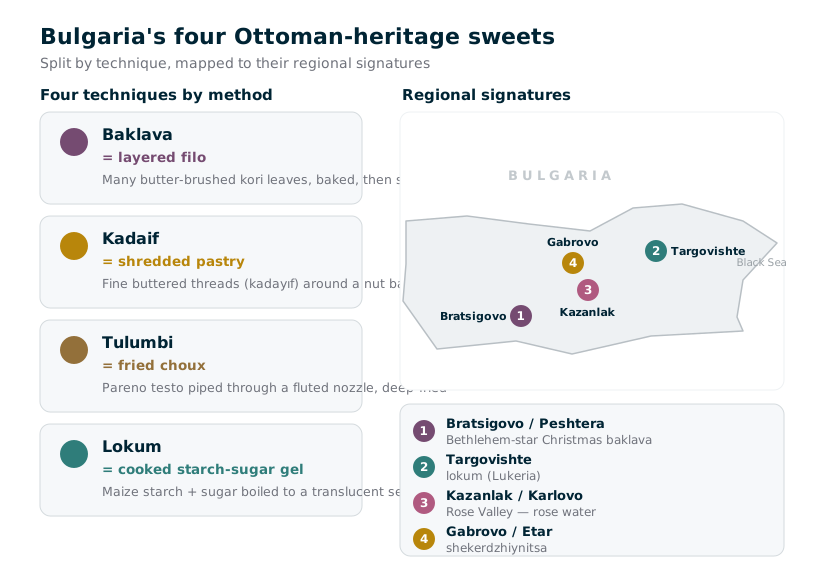 Diagram splitting baklava, kadaif, tulumbi and lokum by technique beside a Bulgaria map marking Bratsigovo, Targovishte, the Kazanlak Rose Valley and Gabrovo
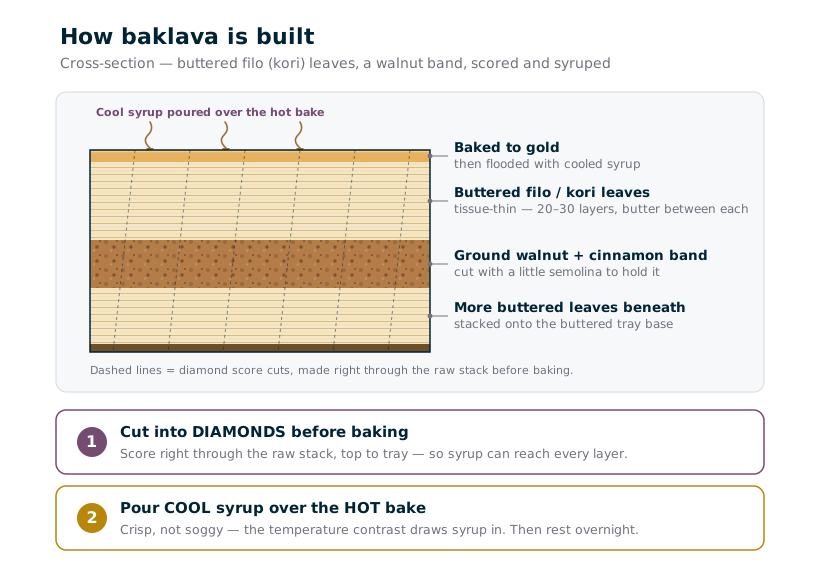 Cross-section of baklava showing stacked buttered filo leaves with a ground-walnut band, scored into diamonds and soaked in syrup
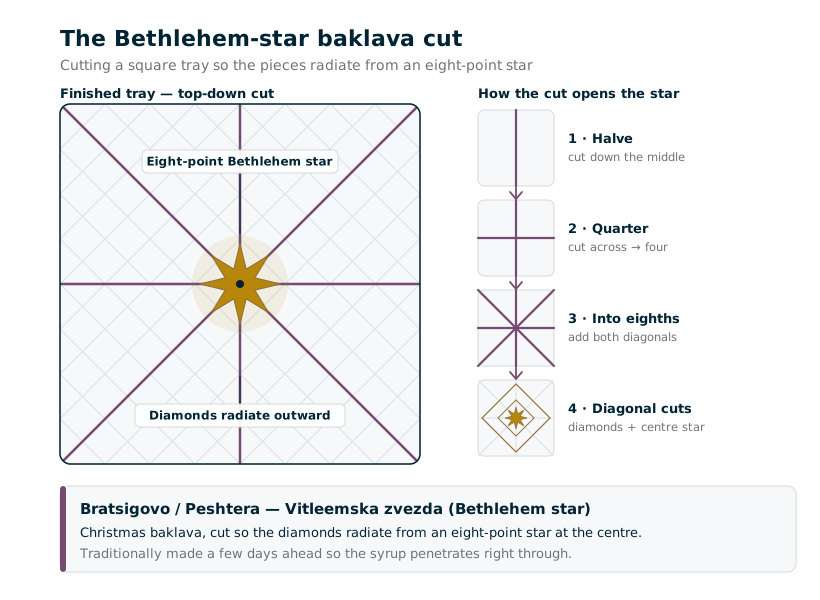 Top-down diagram of a baklava tray cut so diamond pieces radiate from a Bethlehem star in the centre
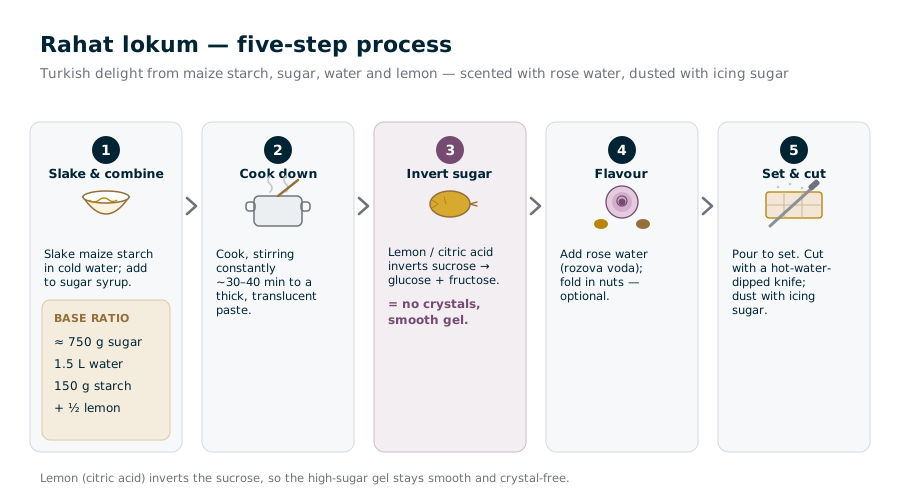 Five-step process diagram for making Turkish delight from maize starch, sugar, water and lemon, flavoured with rose water and dusted with icing sugar
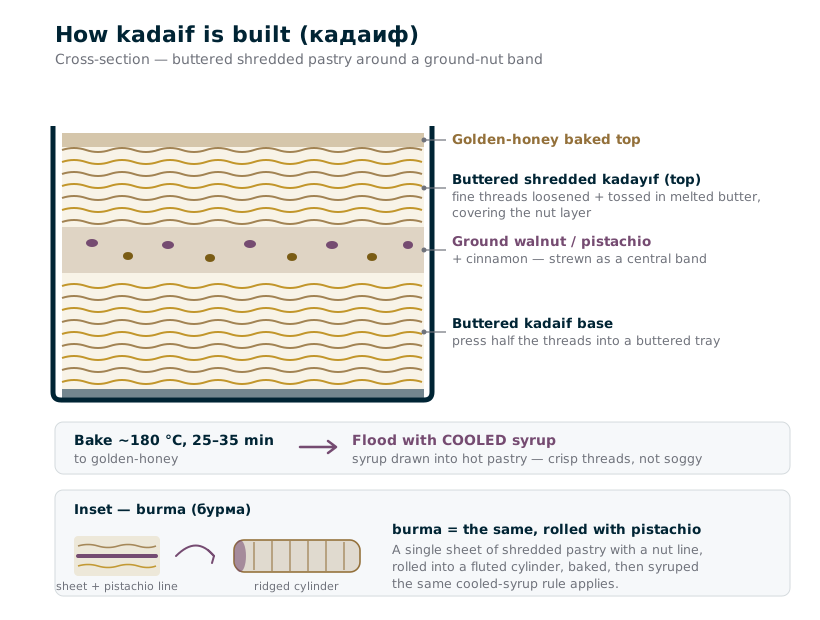 Cross-section of kadaif showing buttered shredded pastry around a walnut layer, with a rolled pistachio burma inset
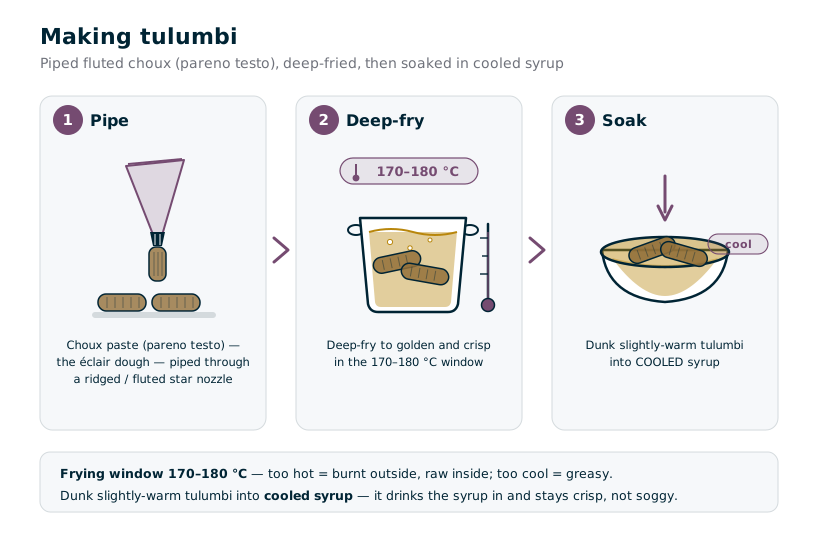 Process diagram of tulumbi: choux paste piped through a fluted nozzle, deep-fried at 170–180°C, then soaked in cooled syrup
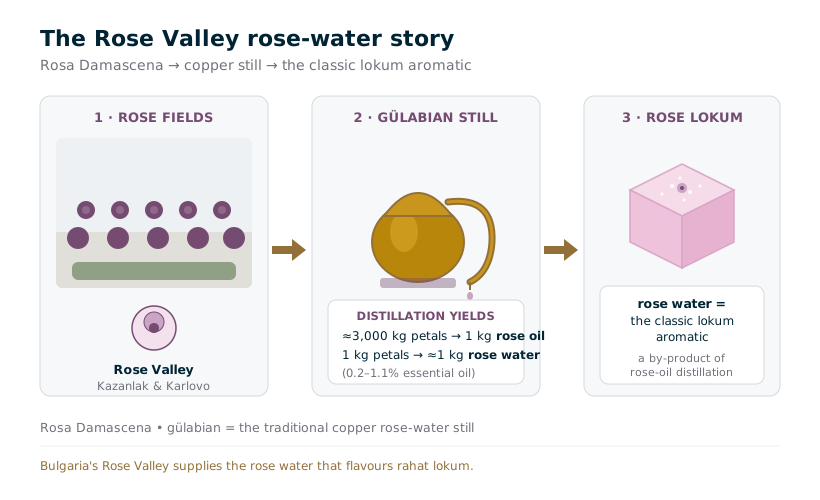 Graphic of Rosa Damascena rose fields and a copper still with ratios linking rose petals to rose oil and rose water, and an arrow to a rose Turkish delight cube
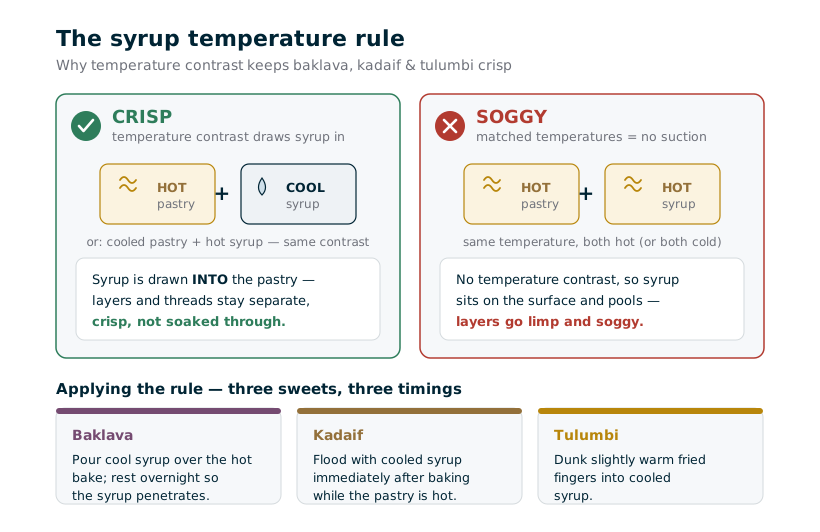 Infographic contrasting hot-pastry-plus-cool-syrup (crisp) against matched temperatures (soggy) for baklava, kadaif and tulumbi
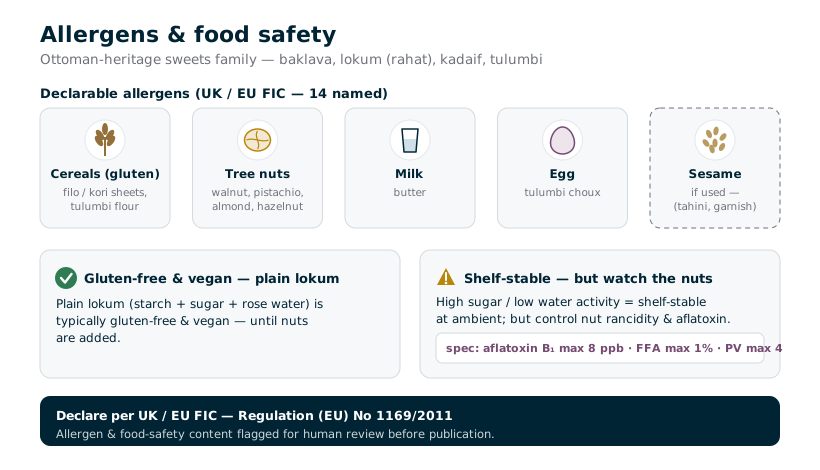 Allergen and food-safety panel: gluten, tree nut, milk, egg and sesame icons with a plain-lokum gluten-free note, a shelf-stable-but-watch-nuts note and a FIC declaration flag
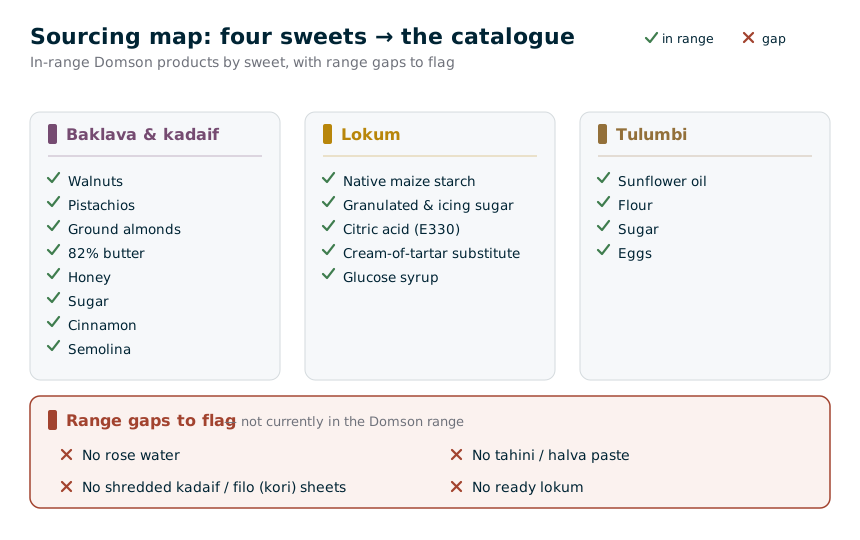 Panel mapping baklava, kadaif, tulumbi and lokum ingredients to Domson catalogue products, flagging gaps for rose water, tahini/halva, kadaif/filo and ready lokum
Baklava — representative Bulgarian build
Presented as a representative Bulgarian method, cross-checked across recipe sources; walnut is the Bulgarian nut of choice. The regional Bratsigovo version cuts the diamonds around a central Bethlehem star for Christmas. Syrup work = A6-sugar-work-techniques / A6-glazes-finishes; layering = A6-laminated-dough-fundamentals; nut craft = A7-seeds-nuts-toppings. RANGE NOTE: buy filo/kori separately — not stocked.
| Ingredient | Baker's % | Weight |
|---|---|---|
| Tissue-thin filo/kori leaves | ~50% of the tray (GAP — not in range) | |
| Ground walnut (+ cinnamon, sugar, semolina) | ~50% of the tray | |
| Melted unsalted butter 82% | brushed between all leaves | |
| Syrup: sugar: water | ~1:1 (e.g. 1 kg: 1 L) + lemon | |
| Honey (optional, part of syrup) | to taste | |
| Total | n/a (a layered assembly, then syrup-soaked) |
Worked example
Brush tissue-thin filo/kori leaves with melted 82% butter, stacking about half of them in a buttered straight-sided tray. Strew a thick, even band of ground walnut mixed with cinnamon, a little sugar and a spoon of semolina (to soak up fat). Stack the rest of the buttered leaves on top. SCORE INTO DIAMONDS BEFORE BAKING. Bake ~170°C for 60–70 min to an even deep gold. Make a ~1:1 syrup (e.g. 1 kg sugar: 1 L water) simmered ~10 min with lemon juice (honey may replace part of the sugar). Flood COOL syrup onto the HOT bake (or hot syrup onto a cooled bake) and rest OVERNIGHT. Result: juicy lower layers, crisp top, no free syrup in the tray.
Yield: one tray
Rahat lokum — representative starch-and-sugar gel
A representative home formula (~5:1 sugar:starch), not a canonical industrial standard. Rose water is the classic aromatic — a by-product of Rosa Damascena distillation in the Rose Valley. The anti-crystallisation / water-activity logic mirrors A8-chocolate-confectionery-formulas. RANGE NOTE: maize starch, sugar, citric acid, cream-of-tartar substitute, icing sugar and nuts are stocked; rose water and ready lokum are NOT.
| Ingredient | Baker's % | Weight |
|---|---|---|
| Granulated sugar | ~750 g | |
| Water | ~1.5 L | |
| Native maize starch | ~150 g (~5:1 sugar:starch) | |
| Lemon juice / citric acid E330 | juice of ½ lemon (sugar inversion) | |
| Rose water (or lemon/mint/bergamot) | to flavour | |
| Nuts (walnut/pistachio/hazelnut), optional | to fold in | |
| Icing sugar / starch (to dust) | to coat | |
| Total | n/a (a cooked confection) |
Worked example
Representative ratio ~750 g sugar: 1.5 L water: 150 g maize (corn) starch + juice of ½ lemon (or a pinch of citric acid). Slake the maize starch in part of the cold water; dissolve the sugar in the rest and bring to a syrup. Combine and COOK WITH CONSTANT STIRRING ~30–40 min (15 min in quick home versions) to a thick, translucent paste that pulls from the spoon. The lemon/citric acid INVERTS the sucrose (→ glucose + fructose), preventing crystallisation and keeping the gel smooth. Off the heat add ROSE WATER (or lemon/mint/bergamot) and fold in nuts if wanted. Set in an oiled tray several hours; cut with a knife dipped in HOT WATER; dust with icing sugar or roll in starch.
Yield: one set tray
Kadaif — representative shredded-pastry build
Kadaif is baklava's logic with shredded pastry instead of sheet filo. The base is usually bought (raw kadaif is sold vacuum-packed), which matters because the Domson range does not stock it. Syrup work = A6-sugar-work-techniques; nut craft = A7-seeds-nuts-toppings; the shredded/kori dough is B6-filo-dough-kori.
| Ingredient | Baker's % | Weight |
|---|---|---|
| Shredded kadaif pastry | ~400 g (GAP — not in range) | |
| Melted unsalted butter 82% | ~150–180 g | |
| Ground walnut / pistachio | ~200 g | |
| Syrup: water: sugar | ~500–600 ml: 450–800 g + lemon | |
| Cinnamon / vanilla sugar | pinch | |
| Total | n/a (assembled and soaked) |
Worked example
Representative range (across Bulgarian recipes): ~400–500 g shredded kadaif, 150–200 g melted butter, ~200 g ground walnut or pistachio, a pinch of cinnamon/vanilla sugar; syrup ~500–600 ml water: 450–800 g sugar + lemon. Loosen the shredded pastry and toss with the melted butter. Press half into a buttered tray, spread the nuts evenly, cover with the rest and press. Bake ~180°C for roughly 25–40 min to a golden-honey colour. Soak with COOLED syrup (some recipes soak a fully-cooled kadaif with cool syrup; either way avoid matched temperatures). The rolled, pistachio-studded version is sometimes called burma.
Yield: one tray
Tulumbi — fried choux in syrup
Tulumbi are fried pâte à choux — the éclair paste — so the craft is A6-choux-eclair-technology; the frying medium and turnover are A4-frying-fats-and-oils; the syrup is A6-sugar-work-techniques. Flour, sugar, eggs and sunflower oil are all in range (buy separately).
| Ingredient | Baker's % | Weight |
|---|---|---|
| Water + oil/butter + salt (choux base) | boiled together | |
| Wheat flour | added all at once | |
| Eggs | beaten in one at a time | |
| Frying oil (sunflower) | deep-fry 170–180°C | |
| Syrup: sugar: water + lemon | cooled, to soak | |
| Total | n/a (fried, then soaked) |
Worked example
Make a choux paste: boil water + oil (or butter) + a pinch of salt, add flour ALL AT ONCE, beat to a smooth ball, cook 2–3 min to dry slightly, cool a little, then beat in eggs ONE AT A TIME to a pipeable-but-firm paste. Pipe through a RIDGED/FLUTED nozzle into short lengths of even size (the flutes grip the syrup). Deep-fry at ~170–180°C to golden and crisp — too hot burns the outside raw inside; too cool leaves them greasy. Dunk the slightly-warm tulumbi in COOLED syrup (sugar:water simmered with lemon) until swollen and glossy; drain.
Yield: a batch of fluted fingers
Baklava, kadaif and tulumbi are syrup pastries; lokum is a cooked sugar-starch gel. All four share the same two skills: cooking sugar correctly, and controlling syrup temperature against the pastry. These are shared Ottoman sweets (also Turkish, Arab, Greek, Balkan) — Bulgaria's contribution is regional signatures around them.
| Sweet (Bulgarian) | Base technique | Key ingredients | Syrup / finish | Sourcing note |
|---|---|---|---|---|
| Baklava (баклава) | Layered tissue-thin filo/kori leaves, baked then soaked | Filo/kori, ground walnut (BG choice), butter, cinnamon, sugar/honey syrup | ~1:1 sugar:water syrup + lemon; cool-syrup-on-hot-pastry rule; rest overnight | GAP: no filo/kori sheets in range; walnuts, butter, sugar, honey, cinnamon, semolina ARE stocked |
| Kadaif (кадаиф) | Shredded kadayıf pastry, baked then soaked | Shredded kadaif, butter, walnut/pistachio, cinnamon, syrup | ~500–600 ml water: 450–800 g sugar + lemon; cooled syrup, soak after baking | GAP: no shredded kadaif in range; nuts, butter, sugar stocked |
| Tulumbi (тулумби / толумбички) | Fried choux paste (pareno testo), piped and deep-fried, then soaked | Flour, water/oil, eggs (choux); frying oil; sugar syrup + lemon | Cooled syrup on slightly-warm tulumbi; fry 170–180°C | IN RANGE: sunflower oil, flour, sugar, eggs (buy separately) |
| Lokum / rahat lokum (рахат локум) | Cooked starch-and-sugar gel, set, cut and dusted (no bake, no filo) | Maize starch, sugar, water, citric acid/lemon, rose water/flavour, optional nuts | Set slab, cut with hot-water-dipped knife, dust with icing sugar / starch | GAP: no ready lokum, no rose water; maize starch, sugar, citric acid, icing sugar, nuts stocked |
These sweets are common across the former Ottoman world. What is distinctly Bulgarian is how the tradition localised — a Christian festive baklava, a lokum town, and rose water from the Rose Valley.
| Signature | Where | What makes it Bulgarian | Reference |
|---|---|---|---|
| Bratsigovo Bethlehem-star baklava (брациговска баклава) | Bratsigovo, Peshtera (Rhodope foothills) | Cut so the diamonds radiate from a Bethlehem star (Vitleemska zvezda) in the tray centre; a CHRISTMAS baklava made a few days ahead so syrup penetrates | |
| Targovishte as a lokum town | Targovishte (NE Bulgaria) | Home of Lukeria, a present-day producer of lokum, pishmanie, halva and dzhezerie incl. rose pistachio lokum | |
| Rose Valley rose water | Kazanlak, Karlovo (Rozovata dolina) | Rose water as a by-product of Rosa Damascena rose-oil distillation — the authentic aromatic for rose lokum; a Bulgarian export in its own right | |
| Etar shekerdzhiynitsa | Gabrovo (Etar open-air museum) | A working Revival-era sugar-confectioner's workshop making rahat lokum, kafyava halva, susamki, balsudzhuk and nebetsheker by period methods |
Every syrup sweet here relies on a temperature contrast between the hot pastry and its syrup, so the syrup is drawn in but the layers/threads stay crisp. Get the two the same temperature and it goes soggy.
| Sweet | Pastry state | Syrup state | Why | Rest |
|---|---|---|---|---|
| Baklava | Hot from the oven (or fully cooled) | Cool syrup on hot bake (or hot syrup on cooled bake) | Contrast pulls syrup in; layers stay crisp, not soggy | Rest overnight for full absorption |
| Kadaif | Hot from the oven | Cooled syrup | Same contrast; threads stay separate and crisp | Soak immediately after baking |
| Tulumbi | Slightly warm after frying | Cooled syrup | Warm-but-not-hot fried choux drinks cool syrup evenly | Short dunk until swollen and glossy |
| Lokum | n/a (not soaked) | n/a — the sugar is cooked into the gel | Lemon/citric acid inverts sugar so the set gel stays smooth, not grainy | Set several hours, then cut and dust |
What a Bulgarian patisserie needs, mapped to catalogue products — and the gaps a buyer should note.
| Need | In the Domson range? | Product / note |
|---|---|---|
| Shredded kadaif / filo (kori) sheets | NO — range gap | Not stocked; the base for baklava and kadaif; source separately |
| Rose water (rose lokum aromatic) | NO — range gap | Not stocked; the signature lokum flavouring and a Bulgarian export product |
| Tahini / ready halva paste | NO — range gap | Not stocked; sesame seeds and semolina ARE (see B6-halva-confectionery) |
| Ready lokum (rahat lokum) | NO — range gap | Not stocked; make from maize starch + sugar + citric acid + rose water |
| Native maize starch (lokum gel) | Yes | AGRANA Maisita Native Maize Starch 25 kg — gluten-free gelling starch |
| Potato / wheat starch | Yes | Bronisław Potato Starch; Foodcom Native Wheat Starch (NOT gluten-free) |
| Citric acid E330 (sugar inversion) | Yes | Citric Acid 5 kg (Bowika) — acidulant that facilitates gelling |
| Cream of tartar (anti-crystalliser) | Yes | Cream of Tartar Substitute (Dawn Skylark) 25 kg |
| Granulated sugar (syrup + lokum) | Yes | Granulated Sugar 25 kg — sucrose min 99.7% |
| Icing sugar (lokum dusting) | Yes | Icing Sugar 10 kg; Icing Sugar CP 25 kg |
| Honey (traditional baklava syrup) | Yes | Multifloral Honey 14 kg (Ratos Natura) |
| Glucose syrup (non-crystallising) | Yes | Glucose Syrup 14 kg (Ratos Natura) |
| Walnuts (the BG baklava nut) | Yes | Walnuts Light Amber Halves 12.5 kg |
| Pistachios / almonds | Yes | Roasted Diced Pistachios; Almonds Ground/Shelled (aflatoxin B1 max 8 ppb) |
| Sesame (halva / finishing) | Yes | Sesame Seeds 25 kg (Global Grains) — hulled, sesame allergen |
| Frying oil (tulumbi) | Yes | Sunflower Oil 15 L (Olympic Oils) — no HVO, FFA ≤0.1% |
| Butter for brushing (baklava/kadaif) | Yes | Unsalted Butter 82% 10 kg (Polmlek) — min 82% fat, MILK |
| Semolina (nut layer / revani) | Yes | Wheat Semolina (Manna) 25 kg; Extra Coarse Semolina 25 kg |
| Cinnamon | Yes | Cinnamon Ground (PGD) |
| Fault | Likely cause | Remedy |
|---|---|---|
| Baklava/kadaif goes soggy, not crisp | Hot syrup on hot pastry, or too much syrup | Use the temperature CONTRAST — cool syrup on hot bake (or vice-versa); measure the syrup; drain any excess |
| Baklava tray shatters when cutting | Cut after baking/soaking | Score into diamonds BEFORE baking; never cut a syruped tray |
| Nut filling tastes stale/bitter | Rancid or high-aflatoxin nuts | Buy fresh, low-aflatoxin stock (ground-almond spec: aflatoxin B1 max 8 ppb, FFA max 1%, PV max 4); store cool and dry |
| Baklava filling too greasy | Too much butter, none absorbed | Mix a little semolina into the nut layer to soak up fat; brush butter thinly |
| Lokum turns grainy / crystallises | Too little acid; sugar not inverted | Add lemon juice / citric acid so sucrose inverts to glucose+fructose; the acid also 'facilitates gelling' |
| Lokum stays sticky / will not set | Under-cooked; too much acid or water | Cook the starch gel longer with constant stirring (~30–40 min) to a thick translucent paste; balance the acid |
| Lokum sticks / dissolves its coating | Dusted with plain icing sugar in humidity | Dust/roll in a starch–icing-sugar mix; the starch absorbs surface moisture; store dry |
| Tulumbi burnt outside, raw inside | Frying oil too hot | Drop to ~170–180°C; fry to even gold; too-cool oil makes them greasy instead |
| Tulumbi greasy / oil-soaked | Frying oil too cool, or old/degraded oil | Hold 170–180°C; use fresh, stable oil (FFA ≤0.1%, PV ≤1.0); change oil on turnover |
| Tulumbi won't hold their fluted shape | Choux paste too slack; eggs over-added | Beat eggs in one at a time to a pipeable-but-firm paste; pipe through a ridged nozzle |
| Syrup crystallises in the pan | Pure sucrose, no invert/acid | Add lemon or a little glucose syrup; do not stir once boiling |