Baklava and Arab nut pastries: pistachio, walnut and almond fillings, samneh layering and floral finishing
For an Arab or Levantine patisserie, baklawa (بقلاوة) is a family, not a single sweet — and it is read differently from the Turkish original. This dossier gives a UK baker the authentic Arab picture, built from Arabic-language recipe, brand and encyclopaedia sources and cross-checked against the platform's supplier specifications: the mixed-nut fillings (Aleppo pistachio / fustuq halabi, walnut / jawz, cashew / kaju and almond / lawz) that set the Levant apart from Gaziantep's single-nut purity; the barely-sweetened filling (about 4:1 nuts:sugar, because the sweetness lives in the syrup); layering with samneh (clarified butter / ghee) rather than whole butter; the cut-forms — flat baklawa, asabe' fingers, borma/mabroumeh, ballorieh and warbat; and the make-or-break finish: attar (قطر) perfumed with rose water and orange-blossom water, poured cooled onto hot pastry. Every technique is wired to the Domson catalogue an Arab kitchen actually orders — almonds, walnuts, pistachio, kataifi, unsalted butter to clarify, sugar, glucose and citric acid — and cross-linked to the Pillar A craft concepts behind it (A7-seeds-nuts-toppings, A6-laminated-dough-fundamentals, A4-butter-grades-and-specialist-types, A6-sugar-work-techniques and A6-pastry-creams-fillings) and to its sister Arab and Turkish articles (B3-phyllo-kataifi-production, B3-attar-sugar-syrup-science, B3-ghee-and-baking-fats-in-arab-baking, B3-aromatic-flavourings-rosewater-orange-blossom-mastic, B3-knafeh-kunafa-production and B2-baklava-production).
Baklawa is a family, and the Levant reads it differently
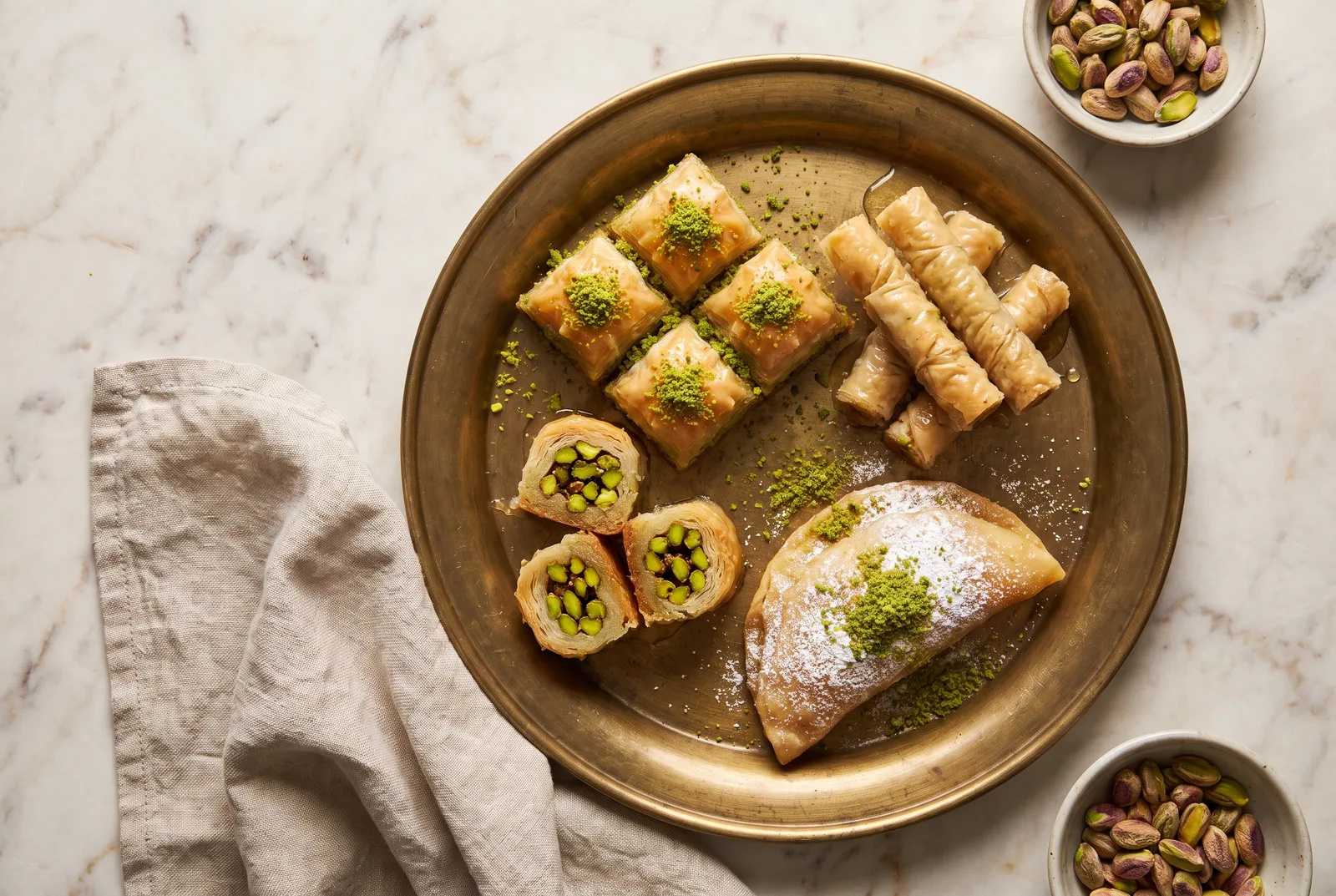
For an Arab or Levantine patisserie, baklawa (بقلاوة) is not one sweet but a whole counter of them — flat diamonds, finger rolls, kataifi cylinders and cream pockets — and the way the region builds and finishes them differs from the Turkish original in three specific, recognisable ways: mixed nuts, samneh (ghee), and above all a floral syrup. Get those right and you are making something a Damascene or Lebanese customer will recognise as authentic; miss them and you have made competent Turkish-style baklava under an Arabic name. The figures below show a typical Levantine assortment and the regional map.
The pastry's history is genuinely contested. Layered nut-pastry precursors trace back to the ancient Assyrian world (unleavened flatbreads layered with chopped nuts, roughly the 8th century BCE); the technique of rolling dough as thin as a leaf — phyllo — is generally credited to the Greeks; and the syrup-soaked layered form was refined in Ottoman palace kitchens. Today baklava is claimed with equal pride by Turkey, Greece, Lebanon, Syria and Iraq. The food historian Charles Perry traces it chiefly to Turkic Central-Asian layered breads — which in their early form did not yet include nuts — rather than to a Byzantine invention, and he downplays the Persian lauzinaj pastry as a direct ancestor. One point matters for authenticity: across the Levant, walnut is the more prevalent baklava nut, not the single-nut pistachio of Gaziantep. (A widely repeated confectioners' account — the Güllüoğlu family's own origin story — has a Damascus and Aleppo recipe carried to Gaziantep in 1871 by Hacı Mehmet Çelebi; treat it as trade lore, not documented history.)
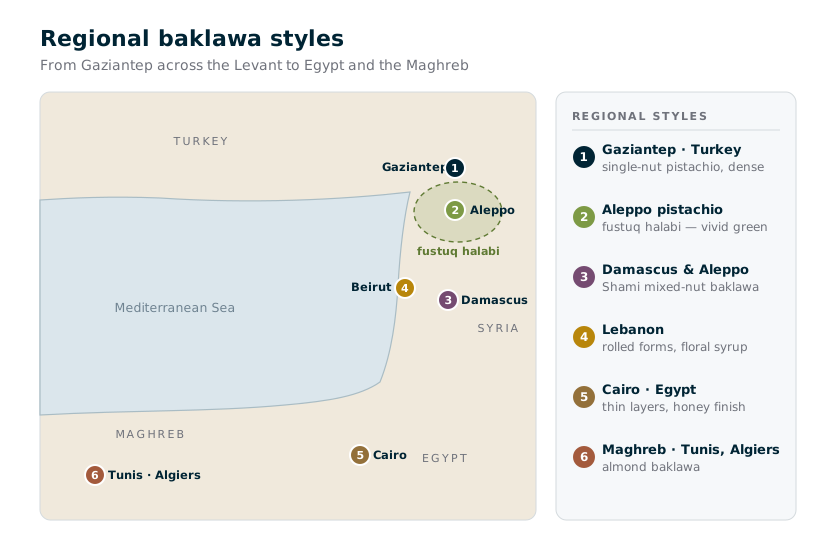
1. The regional map: Shami, Lebanese, Egyptian, Maghrebi
Arab baklawa styles vary by region in cut, nut mix and finish:
- Syrian / Shami (Damascus and Aleppo) — smaller, elegant square and finger pieces; rich mixed fillings of Aleppo pistachio, walnut and cashew; layered with samneh; finished with rose- and orange-blossom syrup.
- Lebanese — more rolled and cylindrical forms and small assorted pieces; mixed nuts; a heavier floral syrup.
- Egyptian — rectangular/square, thin layers, mixed nuts, a lighter finish; some accounts also describe a honey finish, though this is weakly documented for Egypt specifically — honey glazes are most firmly associated with Greek (and older Gaziantep) baklava.
- Maghrebi (Tunisia, Algeria) — almond-forward baklawa, sometimes honeyed.
- Turkish (Gaziantep) — the cousin: large, dense, single-nut Antep pistachio, finished with a lemon syrup and no floral water. The full Turkish treatment is in B2-baklava-production.
The single sharpest dividing line is the syrup: the floral aromatics are what make it Arab, not Turkish — see the comparison table below.
2. The fillings: fustuq halabi, jawz, kaju, lawz
Nut choice, colour and grind are the biggest quality levers in the whole product (the same craft as A7-seeds-nuts-toppings — read it for freshness, grind and rancidity control). See the figure below (nut comparison) and the table below.
- Aleppo pistachio — fustuq halabi (فستق حلبي). Named after the Syrian city of Aleppo (Halab), historically famous for pistachio cultivation (nicknamed "the golden tree"); its intense green is the prestige marker of Levantine pastry — used finely ground in the filling and, above all, as the vivid-green garnish and in borma.
- Walnut — jawz (جوز). The Levantine staple, coarsely chopped, very often seasoned with cinnamon and cardamom.
- Cashew — kaju (كاجو). A rich, soft premium filling, common in Gulf and Levant lines.
- Almond — lawz (لوز). The Maghrebi lead and a Syrian option; whole shelled almonds run about 629 kcal, 21.1 g protein and 55.8 g fat per 100 g.
The filling is only lightly sweetened. This is the recurring mistake made by bakers coming from a Western praline background: the Levantine nut mix is roughly 4:1 nuts to sugar by weight (about 3:1 to 5:1), with 2-3 tablespoons of orange-blossom or rose water per kilo of nuts to bind and perfume — because the sweetness comes from the syrup, not the filling. Keep the mix coarse so it crunches; over-processing turns it to paste (see the formula card below).
A note on catalogue "fillings". The platform's Kranfil's Pistachio is a manufactured filling cream — only about 12% roasted pistachio, with sugar at 30-40%, biscuit pieces and soy oil, coloured with E141 — a convenience flavour paste, not the authentic whole-nut fill, and it carries its own gluten/milk/soya declarations. For real baklawa, buy whole nuts and grind them yourself; see the linked pistachio, walnut and almond lines among the products at the end of this article.
3. The cut-forms: baklawa, asabe', borma, ballorieh, warbat
One dough system yields a whole counter of shapes (see the figure below):
- Baklawa — the classic layered jullash (phyllo) tray cut into diamonds.
- Asabe' (أصابع, "fingers") — phyllo rolled into tubes around the nut filling.
- Borma / mabroumeh (برمة / مبرومة) — kataifi (shredded pastry) rolled tightly around chopped Aleppo pistachio, pine nuts and cashew, cut into cylinders whose ends are trimmed to show the bright green nut (see the figure below, the rolling step).
- Ballorieh (بلورية) — two thin layers of kataifi sandwiching an Aleppo-pistachio filling.
- Warbat / shaabiyat (وربات / شعيبيات) — phyllo pockets, frequently filled with ashta (clotted-cream) rather than nuts (see A6-pastry-creams-fillings and, for semolina-set ashta, the linked durum semolina).
Sheet phyllo is called jullash (جلاش) (or raqaqat) in Egypt and the Levant; the shredded form is kataifi. Both doughs — their production, storage and professional handling — are the subject of B3-phyllo-kataifi-production; the layering logic itself is the same stacking principle covered in A6-laminated-dough-fundamentals (see the table below).
4. Assembly: samneh between every leaf, and cut before you bake
The build is straightforward but unforgiving (see the figure and formula card below): brush the tray with melted samneh, layer about half of the phyllo sheets buttering between each, spread the lightly-sweetened nut filling, layer the rest, pour more samneh over the top, and — critically — cut the tray into diamonds or fingers BEFORE baking so the syrup can reach every piece. A domestic bake is about 180 C to a golden colour — a thin jullash tray can colour in ~30 minutes, though many recipes bake longer (roughly 40-60 min), so judge by colour rather than the clock; professional deck ovens run hotter and faster.
5. The fat: samneh (ghee), never whole butter
Authentic baklawa is layered with clarified butter / ghee — samn / samneh (سمن) — not whole butter. Whole butter carries ~16% water and milk solids: the water softens the pastry and the milk solids scorch in the oven. Samn baladi / baqari (animal ghee) has had that water and those solids removed, so it tolerates high heat without burning and delivers the crisp separate layers and rich flavour Levantine pastry is judged on; samn nabati (vegetable ghee) is a plant-based, dairy-free option but does not give the traditional taste — and because it is usually palm/vegetable-oil based it may carry its own allergens (e.g. soya), so check the label before making any "vegan/dairy-free/allergen-free" claim (see the figure and table below; the fat is treated in depth in B3-ghee-and-baking-fats-in-arab-baking and A4-butter-grades-and-specialist-types).
Sourcing on the platform. There is currently no ready samneh/ghee in the Domson range, so clarify it yourself from Unsalted Butter 82% (min 82% fat, ~16% water, 744 kcal/100 g) — melt, skim the foam, decant the clear fat off the milky sediment. Important: clarifying does not remove the milk allergen — samneh still declares milk.
6. The finish: attar (قطر) with rose and orange-blossom water
This is the step that makes it Arab. Attar / qatr / sheera (قطر / شيرة) is a controlled sucrose syrup, cooked at roughly 2:1 sugar:water for baklava (some Levantine recipes go thicker, up to ~3:1; about 1:1 for lighter sweets), with ~1 teaspoon of lemon juice added during the boil to guard against crystallisation. Then — off the heat — stir in 1 teaspoon of rose water (ماء الورد) and 1 teaspoon of orange-blossom water (ماء الزهر, mazaher) . Add them while the syrup is still boiling and the aroma simply boils away — the single most common mistake.
Two rules decide success (see the figure and formula card below, and the deep dive in B3-attar-sugar-syrup-science):
- Density — cook to a light thread; too thin and it soaks in soggy, too dense and it sits on top.
- Temperature differential — pour cooled syrup over hot-from-the-oven pastry (or hot syrup over cooled pastry). Both hot = a soggy, unlayered slab. Cool cooked syrup at room temperature before chilling.
The sugar itself is essentially pure sucrose (min 99.7%, ~400 kcal/100 g); glucose syrup is a cleaner-flavoured anti-crystalliser for shelf-stable trays and citric acid stands in for lemon (both among the products at the end of this article). The floral aromatics — and mastic (miskeh / mistika, مستكة), which perfumes some ashta creams and Levantine sweets — are the subject of B3-aromatic-flavourings-rosewater-orange-blossom-mastic. Finish every tray with a scatter of finely ground vivid-green Aleppo pistachio.
7. Allergens, food safety and sourcing
A finished Arab nut pastry will typically need to declare, under UK/EU FIC (Reg (EU) 1169/2011): tree nuts (pistachio, walnut, almond and/or cashew), milk (from samneh/butter and any ashta cream), cereals containing gluten (wheat phyllo and kataifi) and often sesame. Map these to your own recipe before labelling. Two extra cautions: hot syrup at ~100 C+ is a scald hazard, and shelled almonds carry regulated aflatoxin limits for ready-to-eat nuts (B1 max 8 ppb, total max 10 ppb under Commission Regulation (EU) 2023/915, which from 25 April 2023 replaced the older Reg (EC) 1881/2006 and is assimilated in GB law — confirm the current instrument before labelling), so buy from a reputable supplier and store cool and dry (see the figure below).
Sourcing gap to flag for the buyer: the Domson catalogue currently stocks whole nuts, kataifi, unsalted butter (to clarify), sugar, glucose and citric acid, but no rose water, orange-blossom water, ready samneh/ghee or mastic — the very ingredients that define authentic Arab baklawa. That is a clear range opportunity for a distributor serving Arab and Levantine bakers. Everything an Arab kitchen can buy today is listed among the products at the end of this article.
Figures
 Map of the Middle East and North Africa showing regional baklawa styles from Gaziantep, Damascus, Aleppo, Lebanon, Egypt and the Maghreb
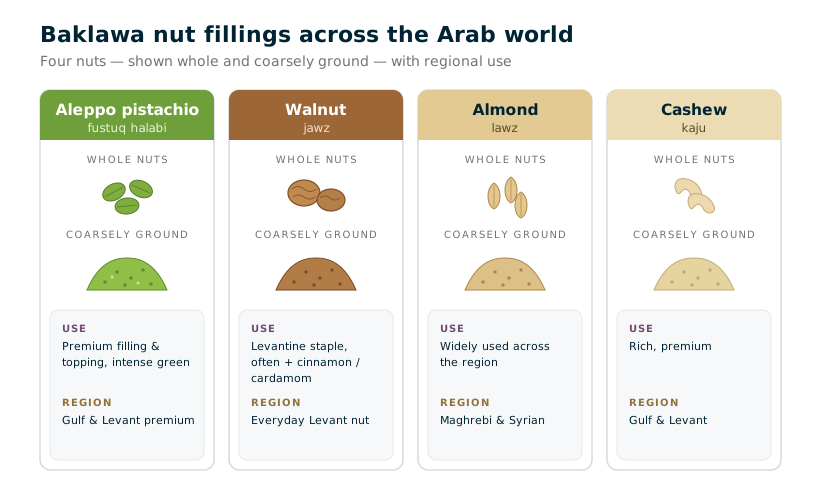 Chart comparing baklawa nut fillings — Aleppo pistachio, walnut, almond and cashew — whole and ground with regional use
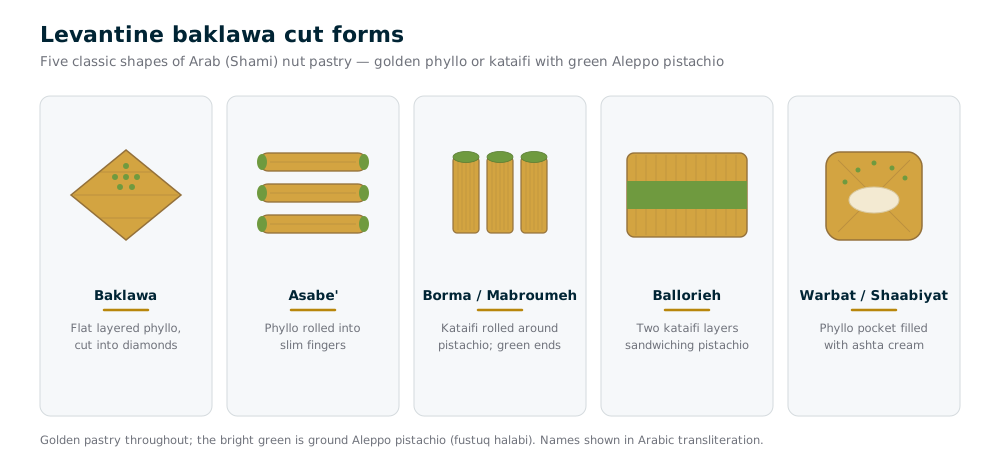 Labelled display of Arab baklawa cut forms — diamond, asabe' finger, borma cylinder, ballorieh and warbat cream pocket
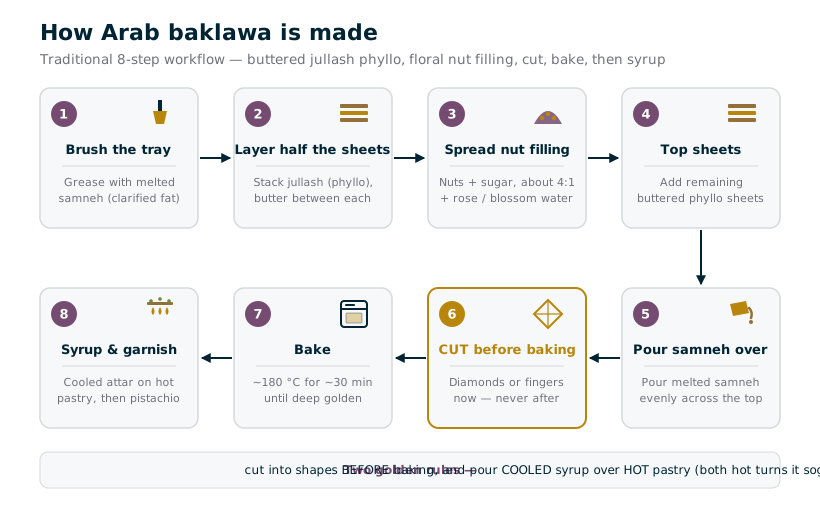 Step-by-step flow diagram of Arab baklawa from buttering the tray through layering, filling, cutting, baking and syruping
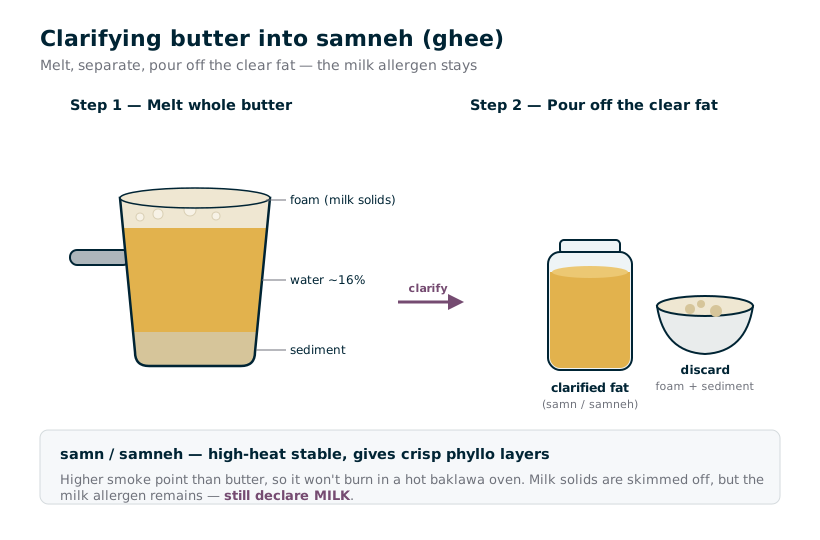 Before/after diagram of clarifying butter into samneh: melting butter with foam and sediment, then clear golden ghee poured off
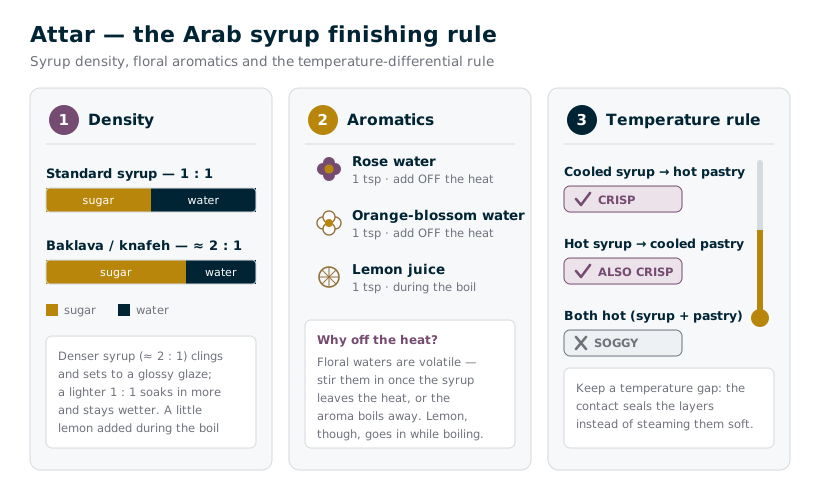 Infographic of Arab baklawa syrup rules: 1:1 vs 2:1 sugar-water, floral waters added off the heat, cooled-syrup-on-hot-pastry rule
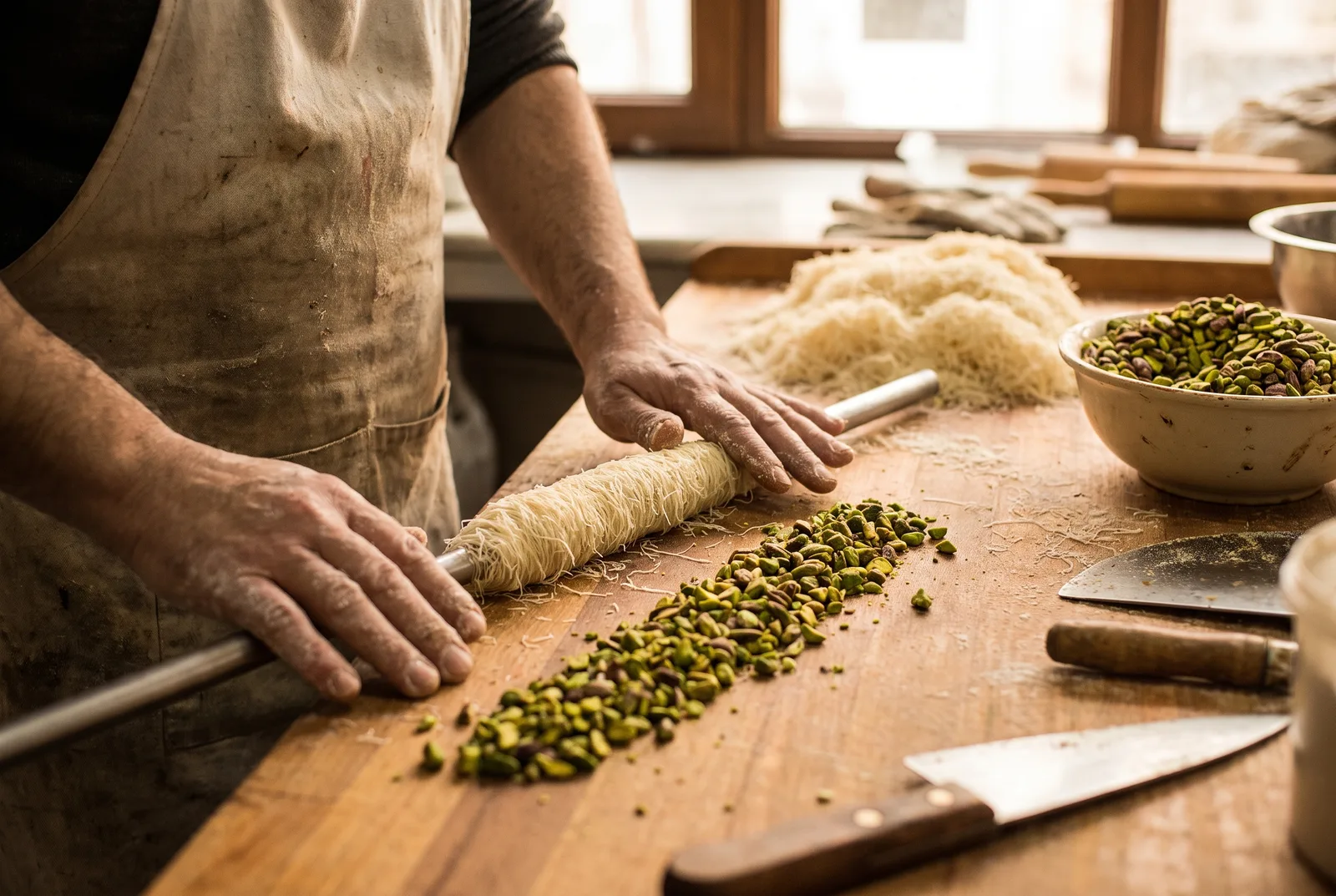 Hands rolling shredded kataifi around a line of green pistachio on a metal rod to form borma cylinders
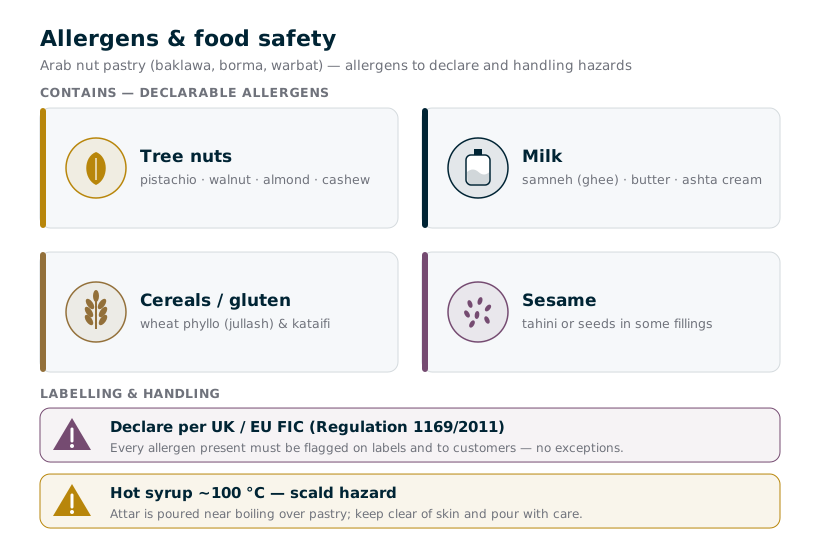 Allergen panel for Arab nut pastry: tree nuts, milk, gluten and sesame icons with FIC declaration and hot-syrup scald warning
Levantine baklawa nut filling — lightly sweetened
The single biggest difference from a Western nut praline: the filling is barely sweetened because the syrup carries the sugar. Grind matters — fine for classic baklawa, coarse whole nuts for borma. See A7-seeds-nuts-toppings for nut freshness, grind and rancidity control, and A6-pastry-creams-fillings for the ashta cream used in warbat.
| Ingredient | Baker's % | Weight |
|---|---|---|
| Nuts (walnut / Aleppo pistachio / cashew / almond) | 100% | |
| Sugar | ~20-33% (3:1 to 5:1 nuts:sugar) | |
| Orange-blossom and/or rose water | 2-3 tbsp per kg nuts | |
| Cinnamon + cardamom (walnut fills) | trace | |
| Total | ~+25% sugar (i.e. ~4:1 nuts:sugar by weight) + floral water to bind |
Worked example
Per 1 kg coarsely chopped nuts (walnut, and/or Aleppo pistachio / cashew): ~200-330 g sugar (about 3:1 to 5:1 nuts:sugar), 2-3 tbsp orange-blossom and/or rose water; for walnut fills add ~1 tsp each ground cinnamon and cardamom. Keep the mix coarse — it should crunch, not turn to paste.
Yield: fills one standard tray
Arab baklawa (jullash / phyllo) — tray build
Cutting before baking is non-negotiable — it lets the syrup reach every piece. The layering logic is the same stacking principle as European lamination (see A6-laminated-dough-fundamentals) but built from individually buttered leaves. Dough production/handling is in B3-phyllo-kataifi-production.
| Ingredient | Baker's % | Weight |
|---|---|---|
| Jullash (phyllo) sheets | ~500 g | |
| Melted samneh (clarified butter/ghee) | as needed to butter every sheet + top | |
| Levantine nut filling (above) | one tray's worth | |
| Cooled attar syrup (below) | enough to soak the tray | |
| Ground Aleppo pistachio (garnish) | to finish | |
| Total | n/a (assembly) |
Worked example
Brush a tray with melted samneh. Layer about half of ~500 g jullash (phyllo) sheets, brushing samneh between each. Spread the lightly-sweetened nut filling. Layer the remaining sheets, buttering between. Pour more melted samneh over the top. CUT into diamonds/fingers before baking. Bake ~180 C for ~30 min to golden. Pour cooled attar over the hot pastry; garnish with ground green pistachio.
Yield: one tray, cut into diamonds or fingers
Attar / qatr — Arab floral sugar syrup
The floral waters are what make it Arab, not Turkish — always add them OFF the heat or the aroma boils away. Lemon inverts a little sucrose to guard against crystallisation (glucose syrup does the same for shelf-stable trays). Deeper syrup science and the hot/cold rule are in B3-attar-sugar-syrup-science; see also A6-sugar-work-techniques.
| Ingredient | Baker's % | Weight |
|---|---|---|
| Granulated / caster sugar | 100% | |
| Water | ~50% (baklava, 2:1) up to ~100% (lighter sweets, 1:1) | |
| Lemon juice | ~1 tsp, during the boil | |
| Rose water + orange-blossom water | ~1 tsp each, OFF the heat | |
| Glucose syrup (optional anti-crystalliser) | small addition | |
| Total | sugar: water ~2:1 for baklava (1:1 for lighter sweets) |
Worked example
e.g. 2 cups sugar: 1 cup water for baklava. Heat, stirring only until dissolved; once boiling, stop stirring. Simmer ~5 min; add ~1 tsp lemon juice, cook ~2 min more. Off the heat, stir in 1 tsp rose water + 1 tsp orange-blossom water. COOL before use, then pour cooled syrup over hot-from-oven pastry (temperature-differential rule).
Yield: enough to soak one tray
Baklava is claimed across the region; the Arab (Levantine) reading differs from the Turkish one mainly in nut mix, cut size and — decisively — the floral syrup. Use this to place a product before choosing a build.
| Style | Cut / format | Typical nuts | Fat | Syrup / finish |
|---|---|---|---|---|
| Syrian / Shami (Damascus, Aleppo) | Small, elegant diamonds, fingers, rolled forms | Aleppo pistachio (fustuq halabi), walnut, cashew | Samneh (clarified butter / ghee) | Attar with rose + orange-blossom water |
| Lebanese | Rolled/cylindrical + small assorted | Mixed nuts (walnut, pistachio, cashew) | Samneh / ghee | Heavier floral syrup (orange-blossom, rose) |
| Egyptian | Rectangular/square, thin layers | Mixed nuts | Ghee/butter | Lighter syrup, sometimes honey |
| Maghrebi (Tunisia, Algeria) | Small diamonds/squares | Almond-forward | Butter/ghee | Honey and/or floral syrup |
| Turkish (Gaziantep) — cousin | Large, dense diamonds/forms | Single-nut Antep pistachio | Sade yag (clarified butter) | Lemon/citric syrup, NO floral water |
Nut choice, colour and grind are the biggest quality levers. The filling is only lightly sweetened — the sweetness comes from the syrup.
| Nut (Arabic) | Best use | Grind | Notes |
|---|---|---|---|
| Aleppo pistachio — fustuq halabi (فستق حلبي) | Premium filling AND green topping/garnish | Finely ground for fill; coarse/whole for borma & garnish | Named after Aleppo (Halab); intense green is the prestige marker |
| Walnut — jawz (جوز) | The Levantine staple filling | Coarsely chopped | Often mixed with cinnamon + cardamom; the most prevalent Levant nut |
| Cashew — kaju (كاجو) | Premium filling, borma | Coarsely chopped | Rich, soft texture; Gulf/Levant premium lines |
| Almond — lawz (لوز) | Maghrebi and some Syrian fills | Ground or slivered | Whole shelled almonds ~629 kcal, 55.8 g fat, 21.1 g protein /100 g |
| Pine nuts — snawbar (صنوبر) | Borma, accents | Whole | Used in borma alongside pistachio/cashew |
Almost every Arab nut pastry is either sheet phyllo (jullash) or shredded kataifi. Full production and handling are covered in B3-phyllo-kataifi-production.
| Dough | Arabic name | Form | Pastries |
|---|---|---|---|
| Sheet phyllo | Jullash (جلاش) / raqaqat (رقاقات) | Paper-thin stacked leaves | Baklawa diamonds, asabe' fingers, warbat/shaabiyat |
| Shredded pastry (kataifi) | Kataifi / knafeh strands | Fine vermicelli-like threads | Borma/mabroumeh, ballorieh, knafeh |
Authentic Arab baklawa is layered with clarified butter / ghee, not whole butter.
| Fat | What it is | Behaviour in the oven | Verdict |
|---|---|---|---|
| Whole unsalted butter (as bought) | ~82% fat, ~16% water, milk solids present | Water softens pastry; milk solids scorch and taste bitter | Clarify into samneh first — do not use as-is |
| Samn baladi / baqari (animal ghee) | Butterfat with water + milk solids removed | Tolerates high heat without burning; crisp layers, rich flavour | The authentic choice; still declares MILK |
| Samn nabati (vegetable ghee) | Hydrogenated/refined plant fats | High-heat stable; neutral flavour | Dairy-free/cholesterol-free option; lacks traditional flavour |
| Fault | Likely cause | Remedy |
|---|---|---|
| Soggy, no distinct layers | Pastry and syrup both hot when combined; or syrup too thin; or whole butter used | Pour cooled syrup on hot pastry; cook syrup to ~2:1; layer with samneh, not whole butter |
| Syrup sits on top, not absorbed | Tray not cut before baking; or syrup over-cooked/too dense | Always cut into pieces BEFORE baking; stop syrup at a light thread |
| No floral aroma | Rose/orange-blossom water added while syrup still boiling | Add floral waters only AFTER the syrup is off the heat |
| Black specks, bitter/burnt taste | Whole butter used — milk solids scorched | Clarify into samneh (remove water + milk solids) before layering |
| Dull, greyish pistachio garnish | Pistachio over-roasted or stale; low-grade nut | Use fresh, vivid-green Aleppo pistachio (fustuq halabi); grind just before use |
| Filling pasty, not crunchy | Nuts ground too fine / over-processed | Chop coarsely; keep the filling dry and lightly sweetened |
| Syrup crystallises on storage | No acid/invert in a syrup that will be stored | Add lemon late in the boil, or a little glucose syrup |