
Turkish delight (lokum): starch gelatinisation, sugar cooking, flavour varieties and cutting
Lokum (Turkish delight) is a soft, elastic confection built from just four things — sugar, starch, water and an acid — yet it is one of the hardest sweets to get right, because its whole character lives in a gelatinised-starch gel that carries a concentrated, partly-inverted sugar syrup. This dossier gives a UK Turkish confectioner the authentic picture, built from the Turkish Food Codex Lokum Communiqué, the Safranbolu geographical-indication production spec, a peer-reviewed Turkish food-science study and the Hacı Bekir heritage: the name from Ottoman "rahat-ül hulküm" (comfort of the throat) and the 1777 Hacı Bekir shift to a starch-and-refined- sugar sweet; the Codex definition and limits (moisture ≤16%, total sugar ≥80% on dry basis, four groups sade/sultan/sucuk/çeşnili); the make-or-break gel — ~12% starch on a dry basis (8% too soft, 20% rubbery); the long, constant-stirred copper-kettle cook to about 110–120°C where the citric/tartaric acid inverts some sucrose to stop crystallisation (şekerlenme); the Safranbolu ratio (about 10 L water: 50 kg sugar: 5.5–6.5 kg corn starch: 50–65 g citric acid); resting, cutting into cubes and coating in an icing-sugar-and-starch mix; the flavour and regional varieties (gül, limon, nane, sakızlı, kaymaklı, fıstıklı, çifte kavrulmuş, sultan, Safranbolu, Afyon, Osmaneli ayva); and the food-safety essentials (allergens, and the titanium-dioxide E171 UK/EU divergence). Every step is wired to the Domson catalogue a lokum kitchen actually orders — native maize starch (NOT corn flour), sugar, citric acid (NOT the phosphate "cream of tartar substitute"), icing sugar, colours, coconut and nuts — and cross-linked to the Pillar A craft behind it (see A6-sugar-work-techniques, A5-baking-oven-science, A5-shelf-life-and-staling, A7-seeds-nuts-toppings, A7-food-colour-and-metallic-effects) and the sister Turkish and Arab traditions (B2-baklava-production, B2-helva-sesame-tahini, B2-syrup-sweets-ottomans, B3-aromatic-flavourings-rosewater-orange-blossom-mastic).
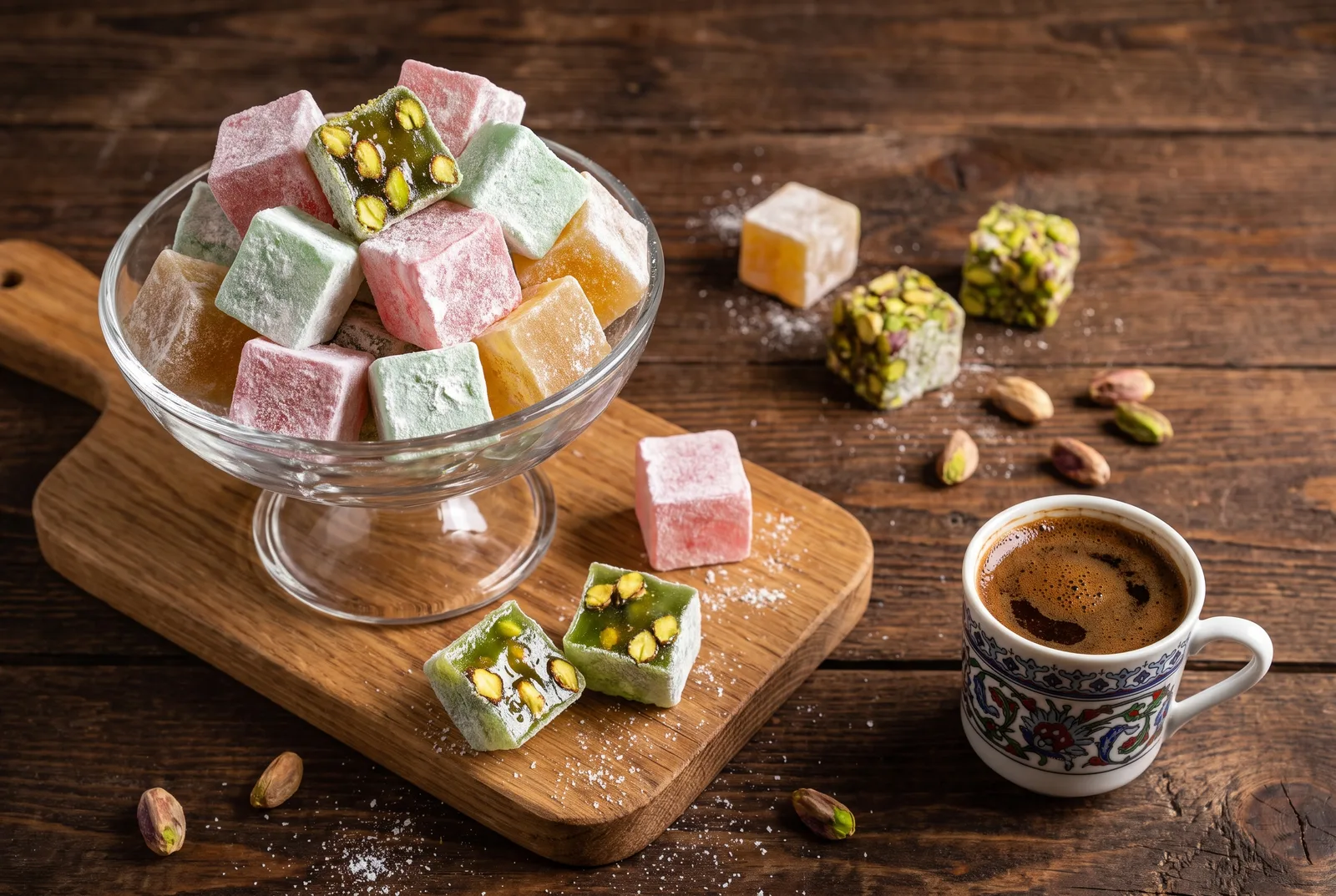
Why lokum is deceptively hard
Lokum looks like the simplest sweet in the shop — a dusted, jewel-coloured cube that wobbles when you press it. It is made from only four things: sugar, starch, water and an acid. Yet it is one of the hardest confections to make well, because everything you taste — the soft, elastic bite, the glossy translucent cut face, the way it does not stick to your teeth and leaves no raw taste — comes from getting a gelatinised-starch gel to hold a concentrated, partly-inverted sugar syrup in exactly the right balance. Get the starch, the cook and the acid right and you have a bright, springy, non-grainy lokum; get any one wrong and you get a slack weepy slab, a rubbery block, or a cube that sugars up in the box. The figure below shows finished assorted lokum.
The English name is a 19th-century import. By its traditional (popular) etymology, lokum takes its name from Ottoman Turkish "rahat-ül hulküm" (from Arabic rāḥat al-ḥulqūm, "comfort/ease of the throat"), shortened over time through rahat lokum to simply lokum. It has been known in Anatolia since at least the 14th–15th century, where it was first made from flour (un), honey (bal) and grape molasses (pekmez), and spread through the Ottoman Empire in the 17th century. The sweet we know today only appeared at the end of the 18th century, once refined sugar and pure starch became available — and it is tied to one shop: in 1777 the confectioner Hacı Bekir Efendi — whose grandson Ali Muhiddin Hacı Bekir later gave the firm its lasting name — opened in Bahçekapı, İstanbul, and Hacı Bekir is credited with replacing flour with pure starch to create the modern sugar-and-starch lokum. By tradition (a popular story rather than documented fact), a 19th-century English visitor who took samples home is said to have coined the name "Turkish delight," and the English name spread through the 19th century. The figures below show the heritage map and traditional shop reference.
1. What the law says lokum is (and the numbers that matter)
The Turkish Food Codex Lokum Communiqué (Lokum Tebliği) is a useful north star even outside Turkey, because it tells you what "the real thing" is. It defines lokum as a mass of sugar, starch, drinking water and citric acid or tartaric acid or potassium bitartrate, to which flavourings (mastic, cocoa, sesame, poppy, grated coconut), nut kernels (hazelnut, pistachio), dried fruits, fruit confits and lokum kaymağı (clotted cream) may be added. It sorts lokum into four groups — sade (plain), sultan, sucuk and çeşnili (flavoured).
Two numbers are the legal backbone: moisture at most 16% by mass, and total sugar (as sucrose) at least 80% on a dry-matter basis. The product must be elastic, soft and smooth with no raw-starch taste. Keep those two limits in mind — they explain why the cook is long (to drive off water below 16%) and why the sugar load is so high (a high-solids, low-water sweet is also self-preserving).
2. The gel: starch is the whole game
Lokum's body is a starch gel. During the cook the starch gelatinises — the granules swell and burst, the amylose/amylopectin chains hydrate and, as a macromolecule, hydrogen-bond and physically entrap water, setting into the soft, elastic network that then carries the sugar syrup . That gelatinisation is the same universal process covered in A5-baking-oven-science; here it happens in a sugar solution rather than a dough, so it is slower and needs a higher temperature.
How much starch is the single biggest lever. A peer-reviewed Turkish study made plain lokum at 8%, 12% and 20% starch on a dry-matter basis and found 12% was clearly the best — the panel-preferred texture — while 8% was too soft and 20% was rubbery and tasted unlike proper lokum; commercial practice sits at roughly 12–15% starch on a dry basis. More starch also means more bound water and a lower density (the 20% lokum held ~20% water versus ~12% at the lower levels). In instrument terms the best-liked 12% lokum measured hardness ~139 N, springiness 0.83, cohesiveness 0.73, chewiness 84 with a pH of 3.9–5.1. The figure below shows the gel and the 8/12/20% comparison.
Use the right starch — this is a catalogue trap. For a clear, elastic gel you need pure native corn/maize starch (mısır nişastası). On the platform that is the native maize starch (AGRANA Maisita / C*Gel): pure maize starch, protein ≤0.4%, moisture ≤14%, pH 4–6, with a proper gelatinising hot-paste viscosity (≥330 Brabender Units at 95°C). Do not reach for the platform's Agrol "Corn Flour" for the gel — despite the name it is milled steamed corn grain (6 g protein, 82 g carbohydrate, 7.5 g fibre per 100 g), i.e. a corn flour, not pure starch, and it would give a cloudy, off-flavour body. (In UK trade usage "cornflour" usually means corn starch, but this product is not that.)
3. The production sequence
The workflow is the same at bench and factory scale — only the cook time and vessel change:
- Make the starch slurry (nişasta sütü): whisk the corn/maize starch and the acid into the cold water so there are no lumps.
- Dissolve the sugar: the bulk of the batch is sugar (~100% sucrose).
- Combine and cook, stirring constantly, in a copper or stainless kettle. In the peer-reviewed bench method you add half the sugar and cook ~10 minutes, then the rest and cook ~40 minutes; the Safranbolu professional cook runs 3–3.5 hours; an English-language review reports an overall cook of roughly two hours or more (open-kettle or pressure cooking — this figure is single-source, and another citation of the same work gives a longer ~2–5 h, so treat it as indicative). Constant stirring over moderate heat is non-negotiable — high heat caramelises the sugar and scorches the starch.
- Pour the glossy mass onto starch-dusted trays (traditionally wooden boards or steel trays) .
- Rest and cool ~24 hours at ~25°C so the gel sets fully.
- Cut into cubes (e.g. 3×3×3 cm) with a starched or lightly oiled knife.
- Coat so the cubes do not stick (see §5).
The figures below show the full process flow and a copper-kettle reference.
4. Sugar cooking and the acid — stopping crystallisation
This is where the confectioner's craft shows, and it is the same discipline as A6-sugar-work-techniques. The sugar–starch mass is cooked to a target of about 110–120°C (the Safranbolu GI boils standard lokum to about 115°C in summer / 110°C in winter, with the saffron variety cooked a little higher at ~120°C summer / ~115°C winter). As the water boils off, the sugar concentrates and the boiling point rises; you are cooking to a consistency, not a colour — glossy, elastic, and free of any raw-starch taste.
The acid is what keeps it from going grainy. Cooked above 100°C in the presence of citric acid, tartaric acid or cream of tartar (potassium bitartrate), some of the sucrose inverts into glucose and fructose. That invert sugar suppresses crystallisation (şekerlenme) and keeps the finished lokum soft, glossy and non-grainy on the shelf — exactly the anti-crystalliser role that lemon/citric acid and glucose syrup play across the region's syrup sweets (see B2-baklava-production and B3-aromatic-flavourings-rosewater-orange-blossom-mastic for the shared syrup science). The figure below shows cook temperature and inversion.
Two catalogue traps around the acid:
- Use citric acid, not the "Cream of Tartar Substitute." The platform's Dawn Skylark "Cream of Tartar Substitute" is, despite its name, a fast-acting baking powder — its composition is disodium diphosphate (E450i) + wheat flour + salt — a raising agent, not potassium bitartrate and not an acid for inverting sugar. It would do nothing useful in lokum and it contains wheat (gluten). Reach instead for the platform citric acid (E330, 99.5–101% purity, "facilitates gelling") or true cream of tartar / fresh lemon.
- A little glucose syrup is an optional, cleaner-flavoured extra anti-crystalliser/humectant for a softer, longer-keeping gel.
5. Cutting and coating (kaplama)
Cut lokum is sticky on every face, so it must be coated. The traditional dusting is a mix of icing sugar and starch (pudra şekeri ve nişasta) — never icing sugar alone, which dissolves into the moist surface and turns tacky. Blend the platform icing sugar (99.2% sugars, with tricalcium phosphate E341(iii) as a free-flow agent) roughly half-and-half with maize starch and toss the cubes to coat all faces. For hindistan cevizli (coconut) lokum, roll the cubes in desiccated coconut; for fıstıklı, press the cut faces into chopped pistachio. The nut-handling, toasting and allergen craft is in A7-seeds-nuts-toppings. The figure below shows cutting and coating.
6. Varieties — from sade to sultan to Safranbolu
One gel system carries the whole range. By Codex group and flavour:
- Sade (plain): just sugar, starch, water and acid — naturally gluten-free, dairy-free and vegan-suitable (but see allergens below).
- Sultan lokum: the plain mass aerated with whipped soapwort (çöven — usually Gypsophila spp., a soapwort) extract. The saponins foam, giving a lighter, paler, lower-density lokum; the extract is set to about 5° Brix (versus ~12° Brix for helva), and the Codex caps saponin at 0.1%. The same soapwort is the aerator behind tahin helvası — see B2-helva-sesame-tahini. Regulatory note: çöven (Gypsophila/Saponaria) saponin extract is not on the UK/EU list of authorised food additives — the only permitted saponin-based foaming agents are Quillaja extract (E999) and Yucca extract — so using çöven to foam/aerate sultan lokum (or tahin helvası) sold in Great Britain or the EU may require Novel Food authorisation or otherwise be non-compliant; take food-law advice before producing it for sale . The figure below shows sultan aeration.
- Sucuk (sucuk-tipi lokum): nut kernels (walnut, pistachio) strung and repeatedly dipped in a thickened lokum/molasses, then sliced. (Do not confuse it with cezerye, a separate carrot-and-nut confection from Mersin — not a lokum.)
- Çeşnili (flavoured):gül (rose), limon (lemon), nane (mint), damla sakızı (mastic), kaymaklı (clotted cream — a milk allergen; the Afyon style), fıstıklı (pistachio), cevizli (walnut), fındıklı (hazelnut), hindistan cevizli (coconut), narlı (pomegranate), çikolatalı (chocolate-coated), plus spiced and layered forms and the premium, firmer, nut-packed çifte kavrulmuş ("double-roasted"). The figure below shows a varieties chart.
Regional geographical-indication lokums: Safranbolu Lokumu (Karabük) — the most codified, made only from sugar, water, corn starch and citric acid, boiled in copper kettles by masters with ≥5 years' experience, to the ratio ~10 L water: 50 kg powdered sugar: 5.5–6.5 kg corn starch: 50–65 g citric acid (sugar-to-starch ~8:1), and prized for its glossy cross-section, elastic bite and clean, non-sticky finish; Afyon Lokumu (a rich kaymaklı/clotted-cream style); and Osmaneli Ayva Lokumu (a quince fruit lokum). The Safranbolu batch is the authentic professional starting ratio used in the formula card below.
7. Shelf life and the box problem
Because lokum is high-solids and low-moisture (≤16%), it keeps well — but its texture drifts as the starch–sugar gel ages, which is starch retrogradation and moisture migration (the same staling science as A5-shelf-life-and-staling). In the peer-reviewed study, over 30 days a low-starch (8%) lokum hardened markedly (chewiness rose about tenfold) while the 12% lokum softened — so your formulation, not just your storage, decides how the sweet eats a month later . Aim for ~12% starch, an acid-inverted syrup to stay non-grainy, and cool, airtight storage.
8. Colour, allergens and food safety (do this before you sell)
Lokum is a coloured confection — rose = pink, mint = green, lemon = yellow — so use permitted food colours (the platform stocks liquid, gel and powder colours) within UK/EU limits, and see A7-food-colour-and-metallic-effects. One regulatory point matters for a UK Turkish producer: lokum has historically sometimes been whitened/opacified with titanium dioxide (E171), which has been banned in EU food since 7 August 2022 (Regulation (EU) 2022/63, following EFSA's genotoxicity concern) but remains permitted in Great Britain — so if you sell into the EU you must reformulate without E171.
Allergens. Plain lokum is naturally gluten-free, dairy-free and vegan, but most varieties are not. Among the 14 UK/EU regulated allergens, the ones that appear in lokum are tree nuts (pistachio, hazelnut, walnut, almond), sesame, and milk (in kaymaklı) — these must be declared as allergens. Note that mastic, poppy seed and coconut are NOT among the 14 UK/EU regulated allergens (coconut is treated as a tree nut in the US but not in the UK/EU): list them in the ingredients, but do not emphasise them as allergens. Even the base ingredients can carry cross-contamination risk — the platform citric-acid sheet flags gluten, tree-nut and sesame contact — so run a full allergen assessment and declare every regulated allergen present.
Food-safety / regulatory notes: (1) The sultan-lokum çöven (soapwort) saponin extract is not on the UK/EU authorised food-additives list (only Quillaja E999 and Yucca extract are) — it may require Novel Food authorisation before you make or sell sultan lokum in Great Britain or the EU; take food-law advice. (2) Confirm the allergen declaration on your own recipe (tree nuts, sesame and milk are the regulated allergens; mastic, poppy and coconut are not UK/EU regulated allergens) and the titanium-dioxide/E171 colour position against current UK/EU labelling before publishing. (3) Double-check the two catalogue accuracy notes on the live product — the Agrol "Corn Flour" is a milled corn flour, not pure starch; and the "Cream of Tartar Substitute" is a phosphate baking powder containing wheat, not an inverting acid. Non-safety single-source figures (the Safranbolu batch ratio, cook temperatures and times, the TPA texture and pH numbers, and the first-party supplier specs) should likewise be confirmed against a producer's own process and the live product before you rely on the exact values.
Buy the ingredients for this
See the products at the end of this article for the full mapping. In short, a UK lokum kitchen orders from Domson: native maize starch (mısır nişastası — the structural gel, not the Agrol corn flour); granulated/caster sugar; citric acid (the inverting acid — not the phosphate "cream of tartar substitute"); optional glucose syrup; icing sugar to blend with starch for the coating; food colours and flavourings/essences (source rose water and mastic separately for authentic gül and sakızlı lokum — see B3-aromatic-flavourings-rosewater-orange-blossom-mastic); desiccated coconut for hindistan cevizli; pistachio, walnut and hazelnut for the nut varieties; and dark couverture for chocolate-coated lokum.
Figures
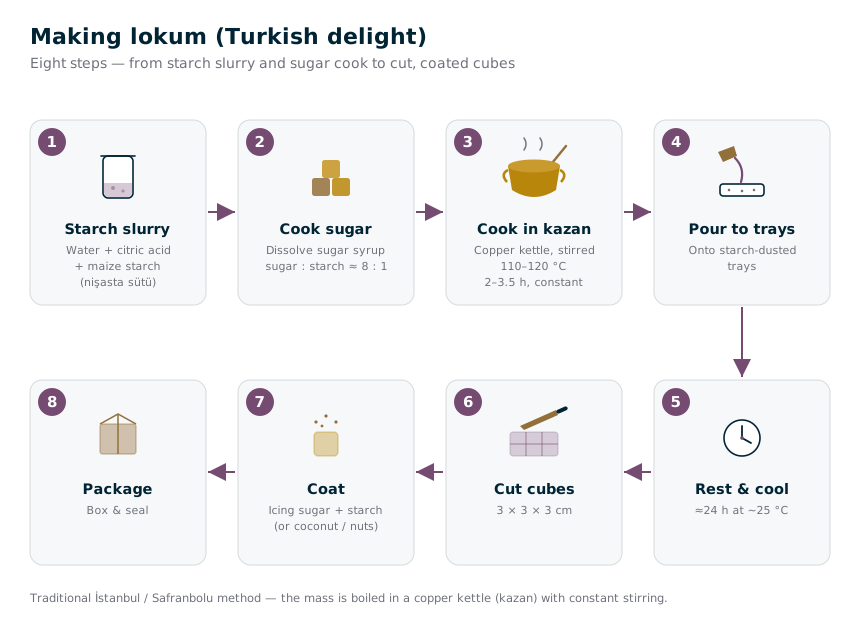 Eight-step flow diagram of Turkish delight production from starch slurry and sugar cook through kettle-boiling, pouring, resting, cutting and coating
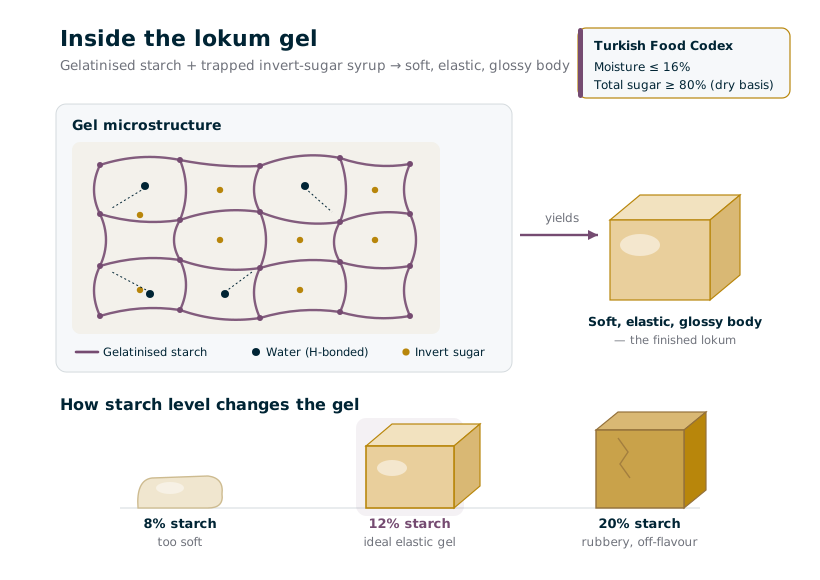 Diagram of the gelatinised-starch network holding sugar syrup in lokum, with a comparison of 8%, 12% and 20% starch and the Codex moisture and sugar limits
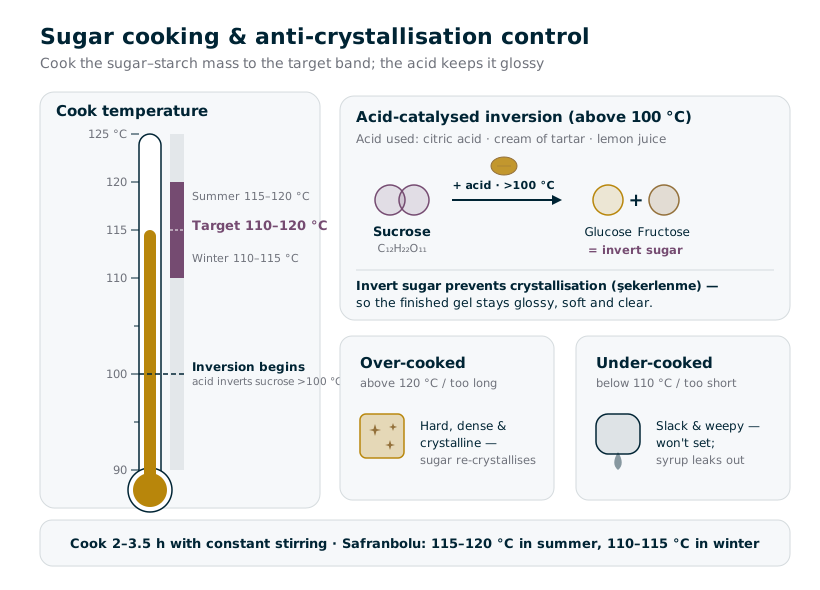 Infographic of lokum sugar cooking: target 110–120°C, the acid inverting sucrose to stop crystallisation, and over- vs under-cooked faults
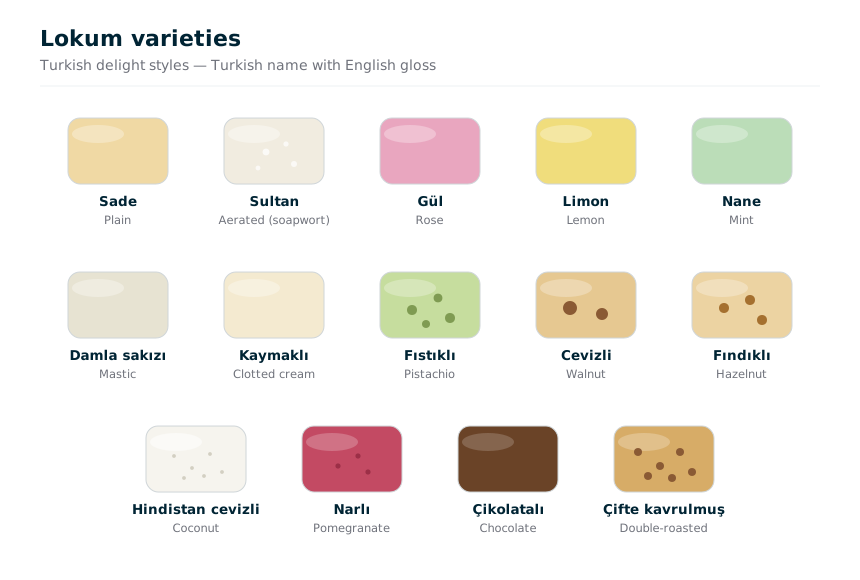 Chart of Turkish delight varieties with Turkish names — plain, sultan, rose, lemon, mint, mastic, clotted cream, pistachio, walnut, hazelnut, coconut, pomegranate, chocolate and double-roasted
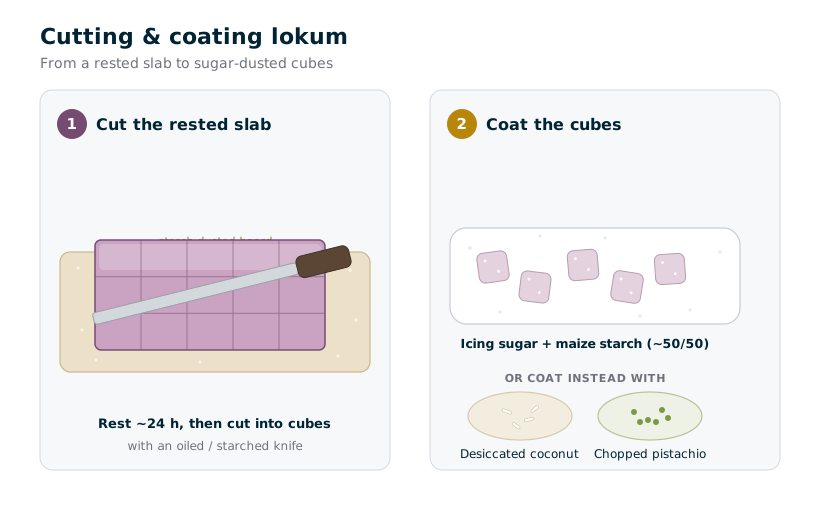 Diagram of cutting rested lokum into cubes and tossing them in an icing-sugar-and-starch coating, with coconut and pistachio coating alternatives
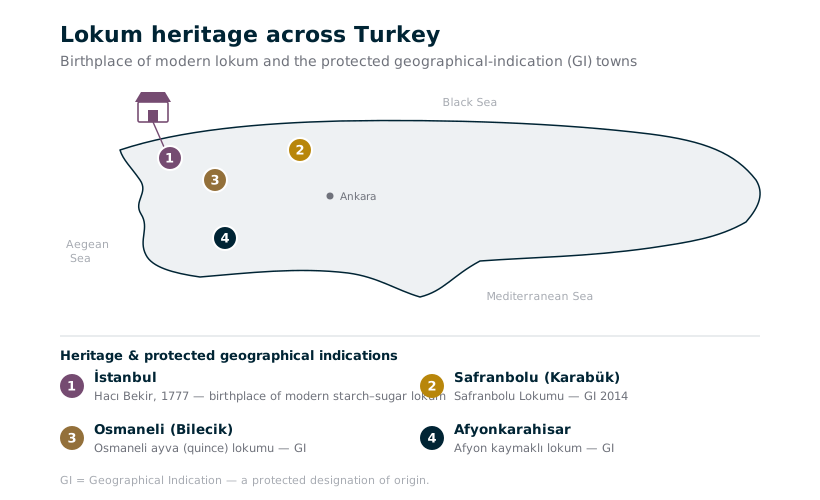 Map of Turkey highlighting lokum heritage: İstanbul (Hacı Bekir 1777), Safranbolu, Afyon and Osmaneli geographical-indication lokums
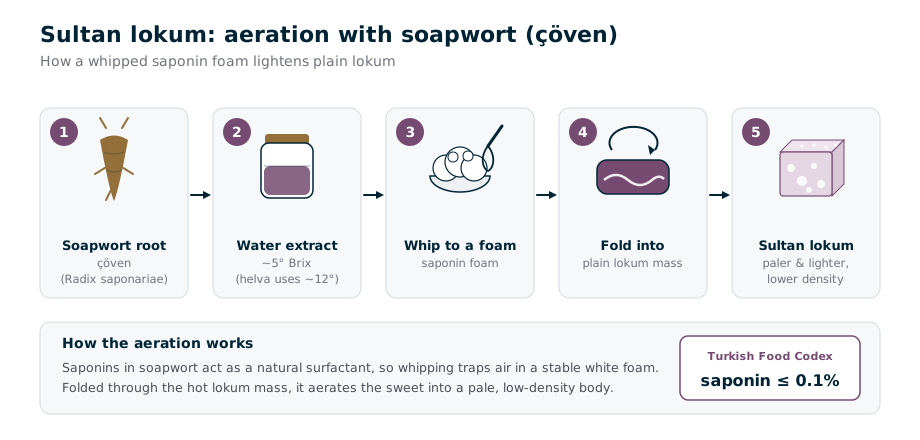 Diagram showing soapwort (çöven) extract whipped to a foam and folded into lokum to make the lighter, paler sultan lokum
Safranbolu-style plain lokum (GI batch proportions)
The authentic professional ratio. Corn/maize STARCH (not corn flour) is the structural gel; citric acid inverts some sucrose to stop crystallisation. See A6-sugar-work-techniques for the sugar-cooking side and A5-baking-oven-science for starch gelatinisation.
| Ingredient | Baker's % | Weight |
|---|---|---|
| Powdered/granulated sugar (sucrose) | 100% | |
| Water | ~20% (10 L per 50 kg sugar) | |
| Corn / native maize starch | ~11–13% (5.5–6.5 kg per 50 kg sugar) | |
| Citric acid (E330) | ~0.1–0.13% (50–65 g per 50 kg sugar) | |
| Total | sugar 100%: water ~20%: corn starch ~11–13%: citric acid ~0.1–0.13% |
Worked example
Registered Safranbolu GI batch: 50 kg powdered sugar, 10 L water, 5.5–6.5 kg corn starch, 50–65 g citric acid (sugar:starch ≈ 8:1). Mix water + citric acid + starch into a slurry; add sugar; boil in a copper kettle to about 115°C in summer / 110°C in winter (the saffron variety a little higher, ~120°C / ~115°C), stirring constantly for ~3–3.5 h until glossy and elastic with no raw-starch taste; pour onto starch-dusted trays; rest ~24 h; cut and coat.
Yield: one large kettle batch (scales from the registered 50 kg-sugar batch)
Plain lokum — starch-optimised bench formula
The peer-reviewed reference formula. 12% starch gave the best texture (hardness ~139 N, springiness 0.83); 8% was too soft and 20% rubbery and off-flavour. Use it to understand the levers; scale up on the Safranbolu ratio for production.
| Ingredient | Baker's % | Weight |
|---|---|---|
| Sugar (sucrose) | 2500 g (100%) | |
| Water | 1800 mL | |
| Maize starch | 342 g (12% dry basis) | |
| Citric acid | 3.73 g | |
| Starch for tray-dusting & coating | as needed | |
| Total | 12% starch on a dry-matter basis is the sensory optimum |
Worked example
1800 mL water + 3.73 g citric acid + 342 g starch (for 12% dry basis) mixed; add half the sugar (1250 g), cook stirring 10 min; add the remaining 1250 g sugar, cook stirring 40 min; pour into trays; rest 24 h at ~25°C; cut 3×3×3 cm; coat in starch. Total sugar 2500 g → sugar:starch ≈ 7.3:1.
Yield: ~ one tray, cut into 3×3×3 cm cubes
Anti-stick coating (kaplama) for cut lokum
Icing sugar alone dissolves into the moist lokum surface and goes sticky; the starch keeps the coating dry and matte. Platform icing sugar is 99.2% sugars with tricalcium phosphate as free-flow agent.
| Ingredient | Baker's % | Weight |
|---|---|---|
| Icing sugar | 50% | |
| Maize / corn starch | 50% | |
| Desiccated coconut / chopped nuts (alternative coatings) | as the variety requires | |
| Total | icing sugar: maize starch ≈ 1: 1 |
Worked example
Blend roughly equal parts icing sugar and maize starch; toss the cut cubes to coat all faces so they do not stick or weep. For hindistan cevizli, roll in desiccated coconut instead; for fıstıklı, press cut faces into chopped pistachio.
Yield: enough to toss one tray of cubes
The Turkish Food Codex sorts lokum into four groups. Everything else (flavour, colour, coating) sits on top of these.
| Group | Turkish | What it is | Notes |
|---|---|---|---|
| Plain | Sade lokum | Sugar + starch + water + acid only, no flavour/colour | The base product; naturally gluten-free, dairy-free, vegan |
| Sultan | Sultan lokum | Plain lokum aerated with whipped soapwort (çöven) extract | Lighter, paler, lower density; Codex caps saponin at 0.1% |
| Sausage/string | Sucuk (sucuk-tipi lokum) | Nut kernels (walnut, pistachio) strung and repeatedly dipped in thickened lokum/molasses | Cut into rounds; a chewier, nut-dense form. Distinct from cezerye, a separate carrot-and-nut confection (not a lokum) |
| Flavoured | Çeşnili lokum | Lokum mass + flavour/colour/inclusions | Rose, lemon, mint, mastic, pistachio, coconut, chocolate etc. |
The classic çeşnili range. Match the colour and inclusion to the flavour; all inclusions carry allergen duties.
| Variety (Turkish) | English | Flavour / inclusion | Typical colour / coating |
|---|---|---|---|
| Güllü lokum | Rose | Rose water / rose essence | Soft pink, icing-sugar dusted |
| Limonlu lokum | Lemon | Lemon flavour + citric acid | Pale yellow, icing-sugar dusted |
| Naneli lokum | Mint | Mint essence | Pale green |
| Sakızlı lokum | Mastic | Damla sakızı (mastic gum) | Off-white; often with kaymak |
| Kaymaklı lokum | Clotted cream | Layer/fold of kaymak (clotted cream) | Milk allergen; the Afyon style |
| Fıstıklı lokum | Pistachio | Whole/chopped pistachio | Green; tree-nut allergen |
| Cevizli lokum | Walnut | Whole/chopped walnut | Amber; tree-nut allergen |
| Fındıklı lokum | Hazelnut | Roasted hazelnut | Tree-nut allergen |
| Hindistan cevizli | Coconut | Coated / studded with coconut | Rolled in desiccated coconut |
| Çikolatalı lokum | Chocolate-coated | Enrobed in couverture | Adds milk/soy per chocolate |
| Çifte kavrulmuş | Double-roasted | Firmer, nut-packed, longer/harder cook | The premium, denser style |
Turkey protects several regional lokums by geographical indication (GI). Safranbolu is the most codified.
| Lokum | Region | Distinctive feature | GI |
|---|---|---|---|
| Safranbolu Lokumu | Safranbolu / Karabük | Sugar, water, corn starch, citric acid only; copper-kettle cook; glossy, elastic, no raw-starch taste | Registered 2014, no. 183; masters ≥5 yr |
| Afyon Lokumu | Afyonkarahisar | Clotted-cream (kaymaklı) style, rich and soft | GI regional style |
| Osmaneli Ayva Lokumu | Bilecik / Osmaneli | Quince (ayva) fruit lokum | GI regional fruit lokum |
Lokum's body is a gelatinised-starch gel. The starch you buy must be a pure native starch, not a corn flour or a phosphate 'cream of tartar substitute'.
| Product | What it actually is | Fit for lokum? | Note |
|---|---|---|---|
| Native maize starch (AGRANA Maisita / C*Gel) | Pure native maize starch, protein ≤0.4%, gelatinising (≥330 BU @95°C) | Yes — the correct structural starch (mısır nişastası) | Clear, elastic gel; the Safranbolu GI uses corn starch |
| Corn Flour (Agrol) | Milled steamed corn grain — 6% protein, 7.5% fibre | No — it is a corn FLOUR, not pure starch | Would give a cloudy, off-flavour gel; use corn/maize STARCH instead |
| 'Cream of Tartar Substitute' (Dawn Skylark) | Fast-acting BAKING POWDER: E450i + wheat flour + salt | No — it is a raising agent, not an acid | Contains wheat (gluten); use citric acid / lemon as the inverting acid |
| Citric acid (E330) / lemon / true cream of tartar | Food acid / potassium bitartrate | Yes — the anti-crystallising, inverting acid | Inverts sucrose, stops crystallisation (şekerlenme) |
| Fault | Likely cause | Remedy |
|---|---|---|
| Grainy / crystallised (şekerlenme), sugars up on storage | Too little acid, or acid added too late — sucrose not inverted | Add citric acid / lemon / cream of tartar so the cook inverts some sucrose; cook long enough above 100°C |
| Slack, sticky, weepy, won't set | Under-cooked / not enough starch / too much water | Cook to the target consistency (~110–120°C, glossy elastic); use ~12% starch on dry basis |
| Hard, rubbery, tough | Over-cooked, or too much starch (e.g. 20%) | Stop the cook earlier; keep starch near 12%; 20% starch tests as rubbery and off-flavour |
| Raw-starch taste | Starch not fully gelatinised / cook too short | Cook longer with constant stirring until the starch is fully cooked and the mass is glossy |
| Caramelised / brown / burnt notes | Heat too high, insufficient stirring | Cook over moderate heat, stir constantly, use a heavy copper/stainless kettle |
| Cloudy, dull cross-section, off-flavour | Corn FLOUR used instead of corn/maize STARCH | Use pure native maize/corn starch (mısır nişastası), not corn flour |
| Coating goes sticky / dissolves | Coated in icing sugar alone | Coat in ~50/50 icing sugar + maize starch (or coconut) |
| Hardens or softens too much in the box over weeks | Formulation-dependent starch retrogradation & moisture migration | Balance starch/moisture to target; store cool and airtight; see A5-shelf-life-and-staling |