
Laminated dough formulas: croissant, Danish and puff pastry beurrage ratios and layer counts
The formula companion to the lamination craft: complete, tested recipes for croissant, Danish, classic puff, rough/blitz puff and pain au chocolat, every one written in baker's percentage with flour = 100%, a worked example at a real batch size, and the arithmetic checked. It pins down the numbers that matter — the beurrage (roll-in fat) ratio expressed both as a percentage of flour and of the total package, détrempe hydration, yeast dosage, fold scheme and the layer-count maths (single fold ×3, book fold ×4, dough layers = 2×fat+1) — and shows how to scale any of them with a conversion factor. Numeric specs for the flours, butter, margarines and yeast are taken directly from seven Domson-catalogue spec sheets (Polmlek Butter 82%, Kruszwica Maestra, Cardowan Crown NHAV, FWP Matthews Windrush, GoodMills T750, Komplexmłyn T550, Lesaffre Benevia) and cross-checked against King Arthur Baking, BAKERpedia, BakeInfo (NZ Baking Industry Research Trust), Weekend Bakery and Pastry Arts Magazine.
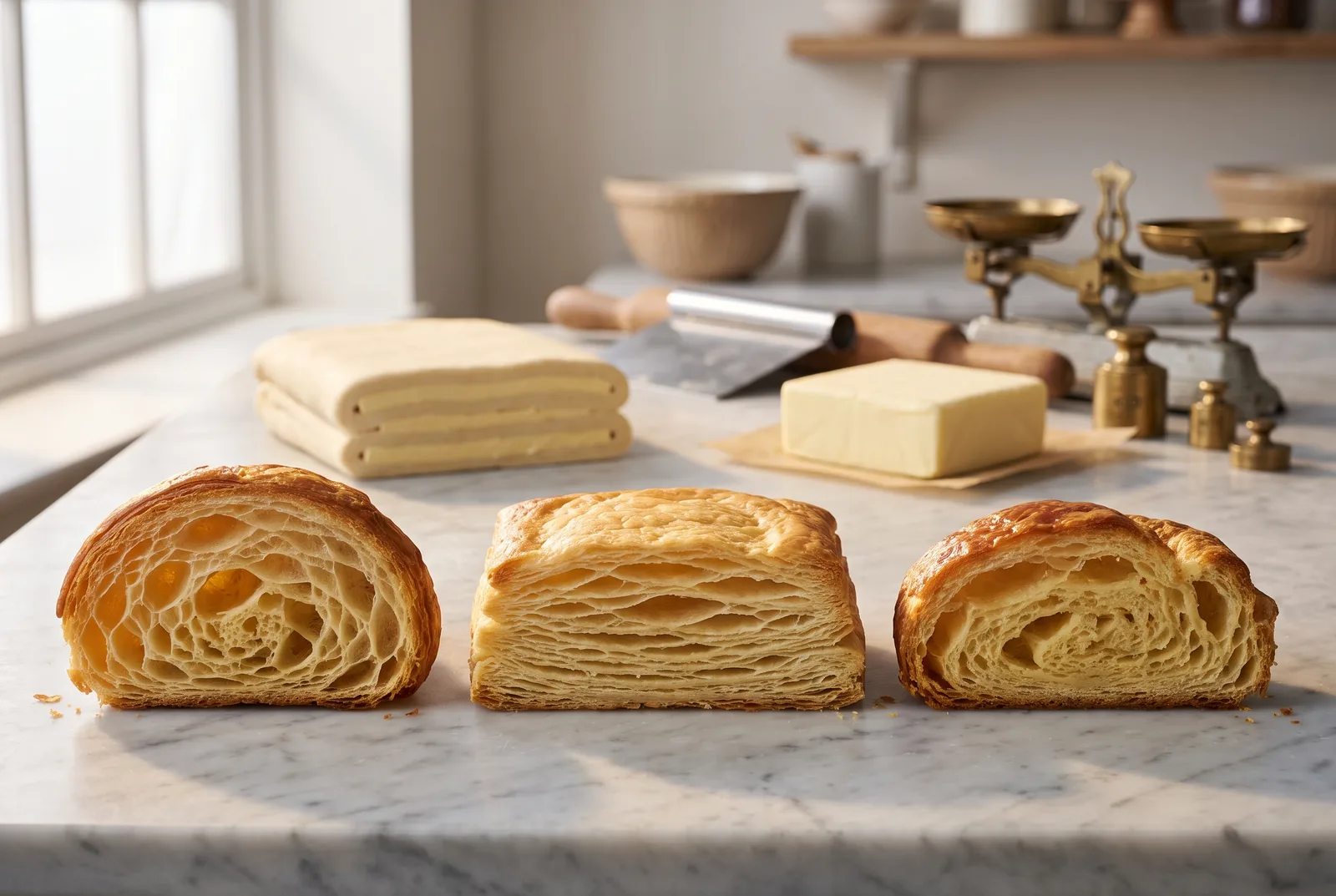
Formulas, not just technique
The companion article A6-laminated-dough-fundamentals explains why lamination works — alternating sheets of dough and fat, steam pushing them apart, the melting fat frying and sealing each layer so they cannot stick back together. This article is the recipe book: complete, tested formulas you can scale and put on the bench tomorrow.
Every formula here is written in baker's percentage, the universal language of professional formulas. Flour is always 100%, and every other ingredient is expressed as a percentage of the flour weight: ingredient % = (ingredient weight ÷ flour weight) × 100. Hydration is just the liquid expressed the same way. The pay-off is that one formula serves a 500 g test bake and a 100 kg plant run — only the flour weight changes.
The one number that defines a laminated dough is the beurrage ratio — how much roll-in fat you carry relative to flour. Quote it two ways and you will never be confused: as a % of flour (the formula figure) and as a % of the total package (what you weigh on the bench). A croissant at 56% of flour is only ~24% of the finished dough.
Three doughs by the numbers
<!-- image: img-a8ld-03 -->The technique is shared; the formula is what separates the three classics. See the comparison table below for the full grid.
| Dough | Roll-in fat (% flour) | Roll-in fat (% total) | Folds | Fat layers |
|---|---|---|---|---|
| Croissant (yeasted) | 50–60% (56%) | ~24–28% | lock-in + 3 single | 27 |
| Danish (yeasted + egg) | 40–60% (50%) | ~20–25% | 3 single | 27 |
| Full puff (unleavened) | 100% (1:1) | ~38% | 6 single | 729 |
| Three-quarter puff | 75% | ~33% | 6 single | 729 |
| Half puff | 50% | ~25% | 6 single | 729 |
| Rough/blitz puff | 70–75% | ~30% | 4 single | 81 |
The puff family is classified purely by fat: full puff uses equal weights of fat and flour (1:1), three-quarter puff 75%, half puff 50%. The hard floor is half — go below ~50% of flour and the layers fuse, the dough cannot rise, and you have made a brick.
The croissant formula
<!-- image: img-a8ld-02 -->A croissant is a moderately enriched yeasted dough laminated with a butter block. The worked example below is the Weekend Bakery classic French croissant converted to baker's %:
| Ingredient | Baker's % | Grams |
|---|---|---|
| Medium-strong flour (~11–12.5% protein) | 100% | 500 g |
| Water | 28% | 140 g |
| Whole milk | 28% | 140 g |
| Sugar | 11% | 55 g |
| Soft butter (in dough) | 8% | 40 g |
| Instant yeast | 2.2% | 11 g |
| Salt | 2.4% | 12 g |
| Détrempe subtotal | 179.6% | 898 g |
| Roll-in butter (beurrage) | 56% of flour | 280 g |
| Total laminated dough | 235.6% | 1178 g |
Hydration (water + milk) is 56%; the beurrage is 56% of flour = 23.8% of the total package; yield is ~15 croissants at ~78 g each pre-bake. Mix to a smooth, not fully developed dough (22–25°C), retard overnight, lock in the butter at matched plasticity, then 3 single folds with 30-minute chills, sheet to 3–4 mm, shape, proof at 24–26.5°C for ~2 h and bake convection 195°C→165°C or conventional ~220°C.
For a richer, more open crumb, swap the three single folds for one letter + one book fold (~25 layers) — King Arthur showed that fewer folds keep the butter thick enough to make separating steam, giving a defined honeycomb instead of a tight, cell-like crumb. King Arthur's own bakery formula scales the same idea to 24 croissants from ~1.8 kg dough with a 425 g butter block.
Flour is the quiet decision. You want a medium-strong, extensible flour — strong enough to hold the layers, not so strong it snaps back and tears during sheeting. From the catalogue, FWP Matthews Windrush sits at 12.0–12.5% protein (target 12.2%) with a Hagberg falling number of 250–400, and GoodMills Type 750 at ~11% protein, wet gluten min 28% — both in the sweet spot. Butter is Polmlek Unsalted 82% (min 82% fat, 16% water — and that water is part of the steam lift), or the dedicated Agart Tourage Croissant Butter. In a warm bakery, reach for a roll-in margarine instead (see below).
The Danish formula
A Danish (wienerbrød) is a croissant taken richer — more sugar and an egg — so it eats softer and a touch chewier. The worked example below blends soft and strong flour to dial back the strength:
| Ingredient | Baker's % | Grams |
|---|---|---|
| Plain (soft) flour | 60% | 360 g |
| Strong (bread) flour | 40% | 240 g |
| Total flour | 100% | 600 g |
| Caster sugar | 13.3% | 80 g |
| Salt | 2.0% | 12 g |
| Whole milk | 28.3% | 170 g |
| Water | 16.7% | 100 g |
| Egg | 8.3% | 50 g |
| Dried active yeast | 2.0% | 12 g |
| Soft butter (in dough) | 10% | 60 g |
| Détrempe subtotal | 180.7% | 1084 g |
| Roll-in butter (beurrage) | 50% of flour | 300 g (+25 g flour in block) |
Hydration is 45% (milk + water), rising to ~53% if you count the egg as liquid; the beurrage is 50% of flour = 21.3% of the package, which sits squarely in the authentic 40–60% Danish window. Method: chill the mixed dough 12–16 h, 3 single folds with 90° rotation and 30-minute chills, shape (spandauer, windmills, combs), proof 2–3 h and bake 220°C for 16–18 min.
Because the sugar load is high, the yeast works against osmotic pressure. Dose ~2% dried active, or switch to about 1% osmotolerant instant for cleaner, more reliable gas production in sweet doughs — see A2-osmotolerant-yeast-enriched-doughs. Fresh Lesaffre Benevia (dry matter >29%, fermentative activity 125 ± 10 ml CO₂) is the bench standard.
The puff pastry ratio card
<!-- image: img-a8ld-04 -->Puff pastry (pâte feuilletée) is unleavened — steam does 100% of the lifting — so the formula is almost all about the fat ratio. The détrempe is constant; you simply choose your puff class (formula card below). Worked full-puff example at 1 kg flour:
| Ingredient | Baker's % | Grams |
|---|---|---|
| Medium-strength flour | 100% | 1000 g |
| Cold water | 52.5% | 525 g |
| Salt | 1.8% | 18 g |
| Soft butter in détrempe (optional) | 10% | 100 g |
| Détrempe subtotal | 164.3% | 1643 g |
| Roll-in fat — FULL puff | 100% of flour | 1000 g |
| Total (full puff) | 264.3% | 2643 g |
For three-quarter puff use 750 g of fat (75%); for half puff 500 g (50%). The détrempe carries about 10% soft fat rubbed into the flour and ~50–55% water, and everything stays cold — dough 2–7°C, room 10–20°C. Give six single turns (or three book folds), resting 15–30 minutes between sets, which builds 729 fat layers (3⁶). Bake at ~220°C. King Arthur's tested classic puff is effectively a three-quarter puff — 510 g flour détrempe with a 396 g (77.6%) butter block — proof of how the ratio card maps onto a real recipe.
In a hot kitchen, fat choice rescues the formula. Kruszwica Maestra Puff Pastry Margarine 80% holds an SFC of 33–37% at 20°C and is worked at 18–20°C — wider and more forgiving than butter's 12–16°C window. For the warmest plants, Cardowan Crown NHAV has a slip melting point of 47°C and is fully vegan with all 14 allergens absent. Puratos Mimetic 32 and Argenta are further roll-in options.
The fast alternative: rough/blitz puff
When time is short, skip the butter block. Cube cold fat into the flour and fold it in directly (formula card below): flour 100%, butter or shortening 70–75%, water 59%, salt 0.5–1.0%, lemon juice 1.0%. Four single folds give ~81 layers — less soaring than classic puff, but a fraction of the work.
Counting layers and scaling the formula
<!-- image: img-a8ld-05 -->The maths is simple once you fix the convention (comparison table below): a single (letter) fold ×3, a book (double) fold ×4, and dough layers = (2 × fat layers) + 1. From one enclosed fat sheet, three single folds give 27, six give 729. (The simple multiplication slightly overstates the functional layer count because folding presses dough onto dough; the Universal Numbering System subtracts those dough-touching points — see A6 for the full discussion.)
Scaling is equally mechanical. To hit a target dough weight, sum all the percentages, divide the target by that sum to get a conversion factor, and multiply each ingredient by it. The croissant détrempe totals 179.6%; to make 5 kg of détrempe the factor is 5000 ÷ 1.796 = 2784 g of flour, and every other ingredient follows. Or simply scale by flour: a 500 g test batch × 20 becomes a 10 kg production batch with the same percentages — water 2800 g, roll-in butter 5600 g, and so on.
<!-- image: img-a8ld-06 -->Pain au chocolat: same dough, different shape
<!-- image: img-a8ld-07 -->Pain au chocolat is not a new formula — it is the croissant dough (see the croissant formula card) cut into rectangles and rolled around chocolate (formula card below). Sheet to 3–4 mm, cut ~10 × 15 cm (4 × 6 in) rectangles, lay a bake-stable chocolate baton near the edge, roll once, add a second baton, and finish seam-side down. Commercial professional batons typically weigh 8–10 g each; dark couverture batons from the catalogue run ~44–70% cocoa (Terravita 70%, Callebaut 811 at 54.5%). From the catalogue use PGD Dark Chocolate Sticks 8 cm (purpose-made batons) or cut Callebaut 811 / Terravita 70% couverture to size. Allergen note: commercial dark chocolate batons almost universally contain soya lecithin (SOY) and many carry a milk may-contain advisory — verify each product's current specification before labelling. Proof and bake exactly as croissants.
Faults that live in the formula
Most lamination faults are handling and temperature (covered in A6), but several are recipe problems you fix on paper, not at the bench (see the fault table below):
- No rise, layers fused → beurrage below 50% of flour; raise it to at least half puff.
- Heavy, greasy, low → too much fat for the structure, or fat smeared warm; drop toward three-quarter puff and respect the working temperatures.
- Tears and snaps back → flour too strong / under-hydrated; professional references recommend a medium-strong flour in the ~10–12.5% protein range (BAKERpedia: 10–11%; catalogue options such as Windrush and GoodMills T750 sit at the upper end of this band, 11–12.5%); also raise détrempe hydration and lengthen the rest between folds.
- Tight, cell-like croissant crumb → too many folds; cut back to ~25 layers.
- Fat leaks at the base → proofing above the fat's melting point; proof ≤26°C, or use a high-melting-point fat in warm conditions.
Food-safety and allergen note
All numeric specs above come from first-party supplier spec sheets, but allergen and nutrition data must be confirmed against current batch documentation before labelling. In particular: Polmlek butter contains MILK; Kruszwica Maestra (a 2009 spec) lists soya lecithin and a may-contain milk warning — this allergen data is 17 years old and MUST be re-confirmed in writing before any labelling use; the détrempe flours (Windrush, GoodMills T750, Komplexmłyn T550) contain gluten with a soy/lupine/mustard contamination risk — lupine cross-reactivity is clinically significant for peanut-allergic individuals; Benevia yeast carries sulphites in its production molasses (below the labelling threshold, but operators catering to high-risk groups should request quantified SO₂ data from Lesaffre); and pain au chocolat chocolate batons (PGD Dark Chocolate Sticks, Callebaut 811, Terravita 70%) typically contain soya lecithin (SOY) and may carry a milk may-contain advisory. The 14 declarable allergens follow Regulation (EU) No 1169/2011. Treat every allergen and nutrition figure here as provisional pending verification.
Coverage report
Solid: the beurrage ratios, hydrations, fold schemes and layer maths are cross-checked across King Arthur, BAKERpedia, BakeInfo (trade body) and the supplier specs, and every formula card's internal arithmetic has been verified. Five formula cards (croissant, Danish, full/three-quarter/half puff ratio card, rough puff, pain au chocolat) cover the laminated canon.
Thinner: the full/three-quarter/half puff classification leans partly on lower-reliability recipe sites, though it is corroborated by the BakeInfo trade body. Product-specific numerics (SFC, slip melting point, protein, falling number) are single-source first-party spec sheets — appropriate as product data but not independently cross-checkable, hence specs_cross_checked: false.
Follow-up: confirm Kruszwica Maestra's current allergen/nutrition data in writing before any labelling use; add a sourdough/levain croissant variant and an inverse (inversé) puff ratio card in a later pass; cross-link to the planned A8-bakers-percentage-fundamentals and A8-scaling-and-yield-conversion articles once written.
Figures
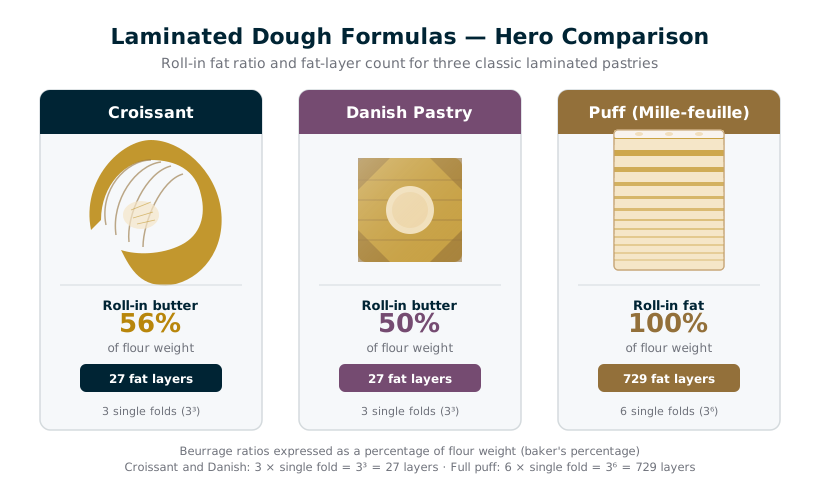 Three baked laminated pastries side by side — a croissant, a Danish spandauer and a mille-feuille — each labelled with its roll-in fat percentage and number of fat layers
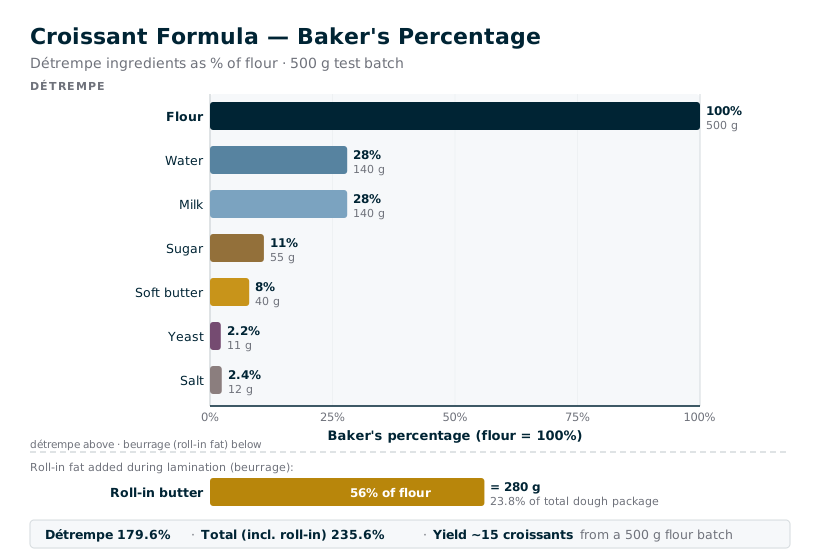 Bar chart of the croissant détrempe in baker's percentage: flour 100%, water 28%, milk 28%, sugar 11%, butter 8%, yeast 2.2%, salt 2.4%, with the 56% roll-in butter shown separately
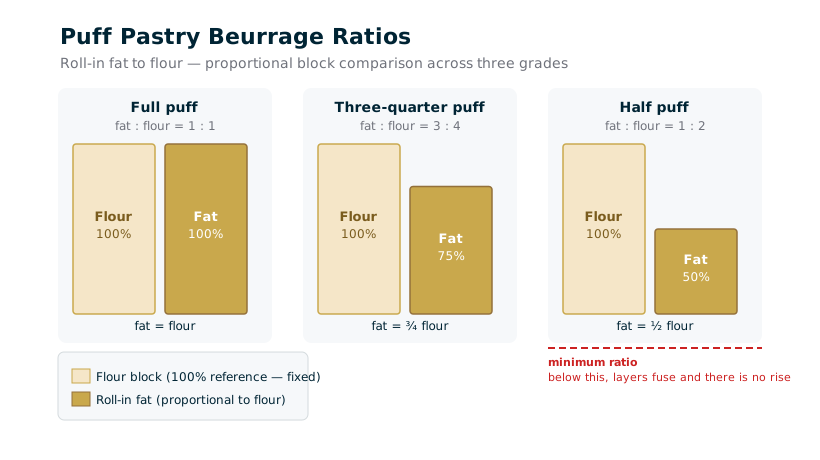 Three proportional diagrams showing puff pastry fat-to-flour ratios: full puff with equal fat and flour, three-quarter puff, and half puff, with a warning that below half the pastry will not rise
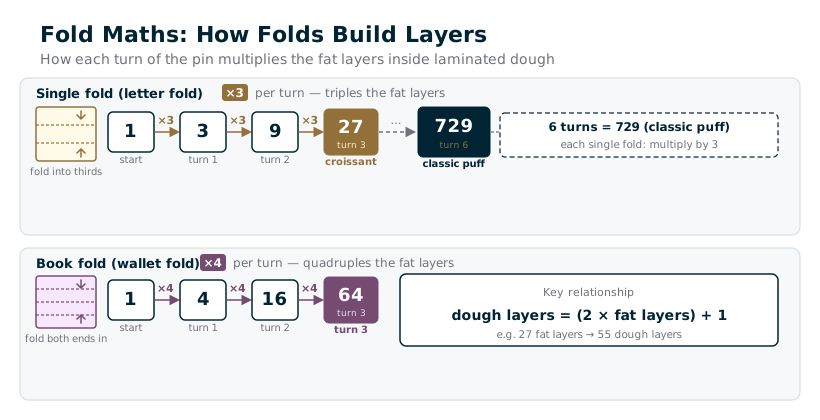 Two-row diagram showing how a single letter fold triples the fat layers and a book fold quadruples them, with running tallies reaching 27 layers for a croissant and 729 for classic puff
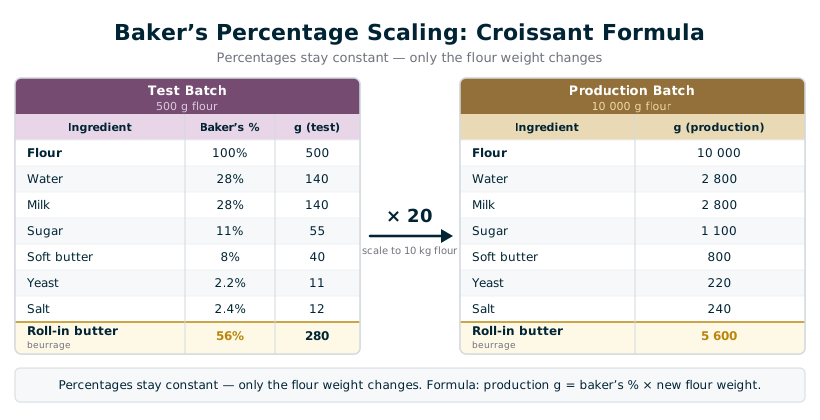 Diagram showing the croissant formula scaled up by multiplying each baker's percentage by a conversion factor to hit a 10 kg flour batch, with the resulting gram weights
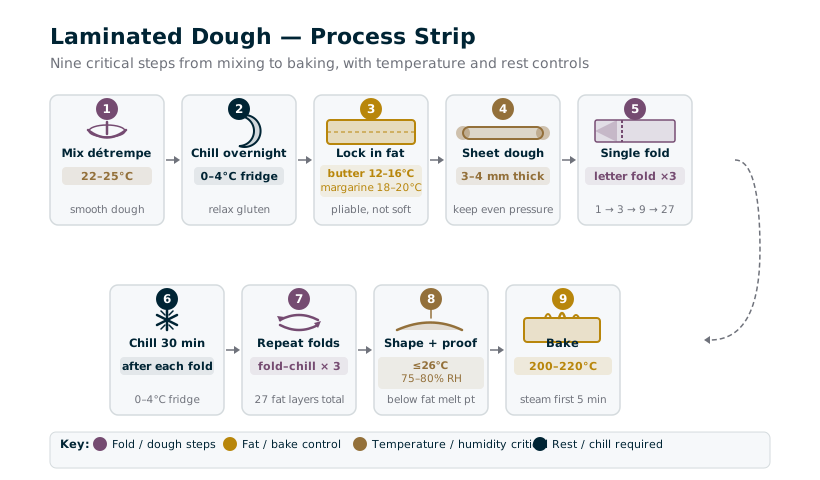 Numbered process strip for laminated dough showing mixing at 22-25°C, overnight chill, locking in the butter, three single folds with 30-minute chills, shaping, proofing below the fat melting point and baking
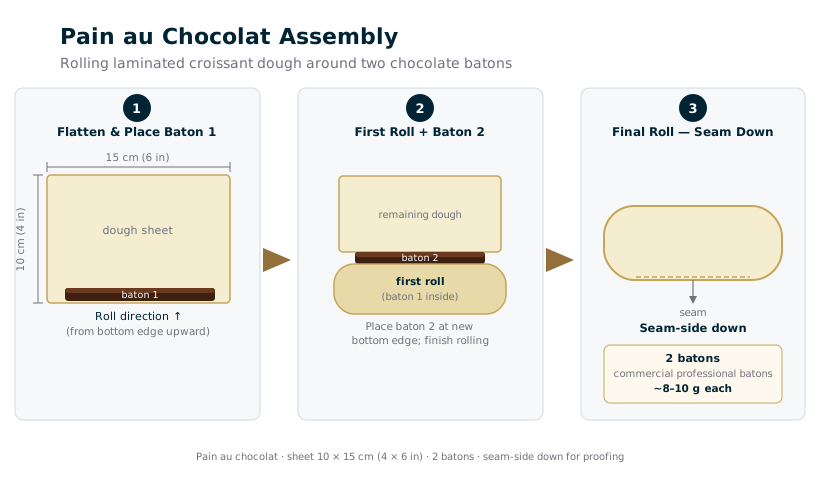 Step diagram showing a rectangle of laminated croissant dough approximately 10 by 15 cm being rolled around two chocolate batons to form a pain au chocolat, seam-side down
Classic croissant — full formula in baker's percentage (worked example)
| Ingredient | Baker's % | Weight |
|---|---|---|
| Medium-strong wheat flour (~11–12.5% protein) — e.g. Windrush Strong White (12.2%) or GoodMills T750 (~11%) | 100% | 500 g |
| Water | 28% | 140 g |
| Whole milk — Water + milk = 56% hydration | 28% | 140 g |
| Sugar | 11% | 55 g |
| Soft butter (in dough) — Separate from the roll-in fat | 8% | 40 g |
| Instant yeast — ≈ 5–7% fresh, e.g. Lesaffre Benevia | 2.2% | 11 g |
| Salt | 2.4% | 12 g |
| DÉTREMPE SUBTOTAL — Base dough before lamination | 179.6% | 898 g |
| ROLL-IN butter (beurrage) — = 23.8% of the total 1178 g package; butter ~12–16°C, or roll-in margarine 18–20°C | 56% of flour | 280 g |
| TOTAL LAMINATED DOUGH — 898 g détrempe + 280 g butter | 235.6% | 1178 g |
- Mix the détrempe to a smooth but not fully developed dough (target 22–25°C); shape, cover and retard overnight so it enters lamination cold.
- Roll the chilled dough to a ~26 × 26 cm square; lock in the tempered butter slab (envelope or single fold) at matched plasticity.
- Sheet to ~20 × 60 cm and give a single (letter) fold; refrigerate 30 min. Rotate 90° and repeat for 3 single folds total; final overnight rest.
- Sheet to ~3–4 mm and ~20 × 110 cm; cut triangles (~78 g) and roll up.
- Proof at 24–26.5°C, 75–80% RH, ~2 h — never above the butter's melting point.
- Bake convection 195°C 6 min then 165°C 9 min, or conventional ~220°C 18–20 min.
Yield: Yeasted + steam-leavened. Worked example from the Weekend Bakery classic French croissant, expressed in baker's percentage with flour = 100%. Roll-in butter is given both as % of flour (56%) and % of the total package (23.8%). Yield ≈ 15 croissants from ~1178 g laminated dough (~78 g each pre-bake). Détrempe percentages sum to 179.6% and the gram column sums to 898 g (898 ÷ 500 = 1.796) — arithmetic verified.
Danish pastry (wienerbrød) — full formula in baker's percentage (worked example)
| Ingredient | Baker's % | Weight |
|---|---|---|
| Plain (soft) wheat flour — Blend lowers strength for tenderness | 60% | 360 g |
| Strong (bread) wheat flour — Provides the structure to hold layers | 40% | 240 g |
| TOTAL FLOUR — Base of the percentage | 100% | 600 g |
| Caster sugar | 13.3% | 80 g |
| Salt | 2.0% | 12 g |
| Whole milk (cold) — Milk + water = 45% hydration | 28.3% | 170 g |
| Water (cold) | 16.7% | 100 g |
| Egg — Total liquids incl. egg ≈ 53.3% | 8.3% | 50 g |
| Dried active yeast — ≈ 1% osmotolerant instant in high-sugar formulas | 2.0% | 12 g |
| Soft butter (in dough) | 10% | 60 g |
| DÉTREMPE SUBTOTAL — Enriched base dough | 180.7% | 1084 g |
| ROLL-IN butter (beurrage) — + 25 g flour worked into the block; = 21.3% of the ~1409 g package | 50% of flour | 300 g |
- Mix to a smooth dough; chill 12–16 h so it laminates cold.
- Lock in the butter block (300 g butter + 25 g flour) at matched consistency.
- Give 3 single (letter) folds, rotating 90° each time, with a 30-min refrigerated rest between; final chill ≥2 h.
- Sheet, cut and shape (spandauer, windmills, combs); egg-wash.
- Proof 2–3 h below the butter's melting point.
- Bake 220°C for 16–18 min; glaze warm.
Yield: Yeasted + steam-leavened, richer than croissant (egg + more sugar). Worked example from Salt. Butter. Smoke.. Total flour = 600 g (plain 360 g 60% + strong 240 g 40%). Roll-in butter 50% of flour. Détrempe percentages sum to 180.7% and grams sum to 1084 g (1084 ÷ 600 = 1.807) — arithmetic verified.
Classic puff pastry (pâte feuilletée) — ratio card + worked full puff
| Ingredient | Baker's % | Weight |
|---|---|---|
| Medium-strength wheat flour — Some bakers blend a little weaker flour for extensibility | 100% | 1000 g |
| Cold water — Détrempe hydration ~50–55% | 52.5% | 525 g |
| Salt | 1.8% | 18 g |
| Soft butter rubbed into détrempe (optional) — Eases sheeting; ~10% per BakeInfo | 10% | 100 g |
| DÉTREMPE SUBTOTAL — Base dough | 164.3% | 1643 g |
| ROLL-IN fat (beurrage) — FULL puff — Three-quarter puff = 750 g (75%); half puff = 500 g (50%) | 100% of flour | 1000 g |
| TOTAL (full puff) — Beurrage = 37.8% of total | 264.3% | 2643 g |
- Mix a slack détrempe; rest 30–60 min refrigerated; keep everything cold (dough 2–7°C, room 10–20°C).
- Lock in the fat (envelope/single) at matched consistency.
- Give 6 single turns (or 3 book folds), resting 15–30 min between sets.
- Six single turns ≈ 729 fat layers; do not over-fold past ~6 turns or the butter seeps and de-laminates.
- Rest before cutting to limit shrinkage; bake ~220°C.
- TESTED reference (three-quarter puff): King Arthur détrempe 510 g flour / 284 g water / 57 g butter / ~9 g salt + beurrage 396 g butter (77.6%) + 60 g flour; 6 letter turns.
Yield: Unleavened; steam does all the lifting. The détrempe is constant; only the beurrage changes: full puff = 100% of flour, three-quarter = 75%, half = 50%. Never go below ~50% or the layers fuse and the pastry will not rise. Worked full-puff example at 1 kg flour: détrempe sums to 164.3% (1643 g); + 1000 g beurrage = 2643 g package; beurrage = 37.8% of total — arithmetic verified.
Rough / blitz (flaky) puff — quick formula in baker's percentage
| Ingredient | Baker's % | Weight |
|---|---|---|
| Pastry / bread flour | 100% | 1000 g |
| Cold butter or shortening (cubed) — Left in pea-sized pieces, not creamed in | 70–75% | 700–750 g |
| Water | 59% | 590 g |
| Salt | 0.5–1.0% | 5–10 g |
| Lemon juice — Acidity relaxes gluten | 1.0% | 10 g |
- Rub/cut the cold fat into the flour, leaving visible pieces; add the salted, acidulated water and bring together to a rough, marbled dough.
- Give 4 single folds, resting 15–30 min refrigerated between; keep the dough 10–20°C.
- Rest, then sheet, cut and bake at ~220°C.
Yield: A fast alternative: cold fat is cut into cubes and folded in directly (no separate butter block). Baker's percentages from BAKERpedia flaky pastry. Gives ~81 fat layers from 4 single folds — less lift than classic puff but far quicker. Percentages sum to ~233.25%.
Pain au chocolat — croissant dough variation (assembly card)
| Ingredient | Baker's % | Weight |
|---|---|---|
| Laminated croissant dough — Sheeted to ~3–4 mm | 100% (of itself) | per formula-a8ld-croissant |
| Chocolate batons — Bake-stable batons ~44–70% cocoa (Terravita 70%, Callebaut 811 54.5%); e.g. PGD Dark Chocolate Sticks 8 cm or couverture cut to batons. Allergen: commercial chocolate almost always contains SOY lecithin and may carry MILK may-contain — verify from current spec before labelling | 2 batons per piece | commercial professional batons typically 8–10 g each (16–20 g/piece) |
- Cut the sheeted dough into rectangles ~10 × 15 cm (4 × 6 in).
- Lay one baton near the edge, roll once, add the second baton, then roll up to enclose, finishing seam-side down.
- Proof 24–26.5°C, ~2 h, below the fat melting point; egg-wash.
- Bake as croissants (~200–220°C) until deep golden.
Yield: Not a separate dough: use the croissant détrempe and beurrage from formula-a8ld-croissant. Only the shaping and the chocolate change. Batons map directly to catalogue products.
How much roll-in fat each laminated dough carries, expressed two ways — as a percentage of flour (the formula figure) and as a percentage of the total laminated package (the bench figure) — plus the standard fold scheme and resulting fat layers. Figures from the worked formulas in this dossier and cross-checked against trade references. Quality note: roll-in fat must not drop below ~50% of flour or the layers fuse and the pastry will not rise.
| Dough | Roll-in fat (% of flour) | Roll-in fat (% of total dough) | Standard fold scheme | Fat layers | Bake |
|---|---|---|---|---|---|
| Croissant (yeasted) | 50–60% (worked example 56%) | ~24–28% (worked example 23.8%) | Lock-in + 3 single folds (or 1 letter + 1 book for a more open crumb) | 27 (3 single folds); ~25 with letter+book | 200–220°C |
| Danish (yeasted + egg) | 40–60% (worked example 50%) | ~20–25% (worked example 21.3%) | 3 single folds, rotate 90° each | 27 (3 single folds) | 220°C |
| Full puff (unleavened) | 100% (1:1 fat:flour) | ~38% | 6 single turns (or 3 books) | 729 (3^6) | 220°C |
| Three-quarter puff | 75% (3:4) | ~33% | 6 single turns | 729 | 220°C |
| Half puff | 50% | ~25% | 6 single turns | 729 | 220°C |
| Rough / blitz (flaky) puff | 70–75% (3:4) | ~30% | Fat cubed into flour, 4 single folds | 81 (3^4) | ~220°C |
Every fold multiplies the existing fat-layer count: a single (letter / tri-) fold ×3, a double (book / four-) fold ×4. Dough layers = (2 × fat layers) + 1. Note that the simple multiplication overstates true functional layers because folding presses dough onto dough; the Universal Numbering System (Pastry Arts) subtracts these dough-touching points. For a deeper treatment of the conventions see the companion article A6-laminated-dough-fundamentals.
| Fold type | Other names | Multiplier | Fat layers after n folds (from one sheet) | Worked counts |
|---|---|---|---|---|
| Single fold | Letter / tri-fold / tour simple | × 3 | 3^n | 1 → 3 → 9 → 27 (3 folds); 6 folds = 729 |
| Double fold | Book / four-fold / tour double | × 4 | 4^n | 1 → 4 → 16 → 64 (3 folds) |
| Croissant (open crumb) | 1 letter + 1 book | 3 × 4 | ≈ 12–25 working layers | ~25 layers → defined honeycomb (King Arthur) |
| Classic puff | 6 single turns (mille-feuille) | 3^6 | 729 | 729 fat layers; dough layers = 2×729+1 = 1459 |
The base dough wants a medium-strong, extensible flour (~11–12.5% protein): strong enough to hold the layers, not so strong it snaps back and tears during sheeting. First-party spec-sheet values. Allergen: allergen rows are food-safety data — verify against current batch documentation before labelling.
| Flour | Protein | Falling number | Water absorption / gluten | Allergens |
|---|---|---|---|---|
| FWP Matthews Windrush Strong White (UK) | 12.0–12.2–12.5% | HFN 250–350–400 | W/A 55–58–61%; added vital wheat gluten <1.5% | Gluten (wheat); soy contamination risk |
| GoodMills Wheat Flour Type 750 (HQ, PL) | 11 g/100 g | min 220 s | Wet gluten min 28%; gluten index 75–99; ash max 0.82% | Gluten; trace soy/lupine/mustard risk |
| Komplexmłyn Wheat Flour Type 550 (PL) | min 8.0% | min 220 s | Wet gluten min 25%; ash max 0.58% | Gluten; trace soy/lupine/mustard risk |
The beurrage is the structural heart of the formula. Butter is worked colder (≈12–16°C) than roll-in margarine (18–20°C) because of their different solid-fat profiles. SFC = Solid Fat Content; SMP = slip melting point. Allergen: allergen and nutrition rows are food-safety data — verify against current batch documentation.
| Fat | Type | Fat % | SFC / melting | Working temp | Allergens |
|---|---|---|---|---|---|
| Polmlek Unsalted Butter 82% | Dairy butter | min 82% (16% water) | Melts ~30–34°C (SFC not on spec) | ~12–16°C (general industry guidance; not stated in the Polmlek spec sheet, which gives storage 0–10°C only) | CONTAINS MILK (lactose) |
| Kruszwica Maestra Puff Pastry Margarine 80% | Roll-in margarine | 80% ± 0.5% | SFC 33–37% @20°C, 17–23% @30°C, 9–13% @35°C | 18–20°C (spec) | Soya lecithin (SOY); may contain trace MILK |
| Cardowan Crown NHAV Pastry Margarine | Roll-in margarine (high SMP) | 82% | Slip melting point 47.0°C | ~15–22°C (estimated from SMP) | All 14 EU/UK allergens absent; vegan |
Faults that trace back to the FORMULA (fat ratio, hydration, flour strength, fold count) rather than only to handling. Cross-checked across BakeInfo, BAKERpedia, King Arthur and the supplier specs. For pure handling/temperature faults see A6-laminated-dough-fundamentals.
| Fault | Likely formula cause | Remedy |
|---|---|---|
| Pastry does not rise; layers fused into a brick | Roll-in fat below ~50% of flour, so dough layers stick together | Raise beurrage to at least half-puff (50%); for maximum lift use full puff (100% of flour) |
| Heavy, greasy, low pastry | Too much fat for the structure, or fat smeared because it was warmer than the dough | Drop toward three-quarter or half puff; work butter at 12–16°C, margarine at 18–20°C |
| Dough tears and snaps back during sheeting | Flour too strong / under-hydrated; tense gluten | Use a medium-strong ~11–12.5% flour, raise détrempe hydration toward 50–56%, rest longer between folds |
| Tight, cell-like crumb instead of open honeycomb (croissant) | Too many folds — butter pressed too thin to make separating steam | Reduce to ~25 layers (1 letter + 1 book) for a defined honeycomb |
| Fat melts and leaks at the base during baking | Proof temperature above the fat's melting point | Proof ≤26°C; in a warm bakery switch to a high-SMP fat (e.g. Crown NHAV, SMP 47°C) |
| Danish dense or pale, poor lift | Yeast under-dosed for the high sugar/egg load, or proof too cool | Use ~2% dried active (≈1% osmotolerant instant) and proof 2–3 h at 24–26°C |
| Puff shrinks badly after cutting | Insufficient final rest; over-developed détrempe | Rest the laminated block ≥1 h (ideally 3–4 h) before cutting; mix the détrempe minimally |
Buy the ingredients
Catalogue products and brands referenced in this article.
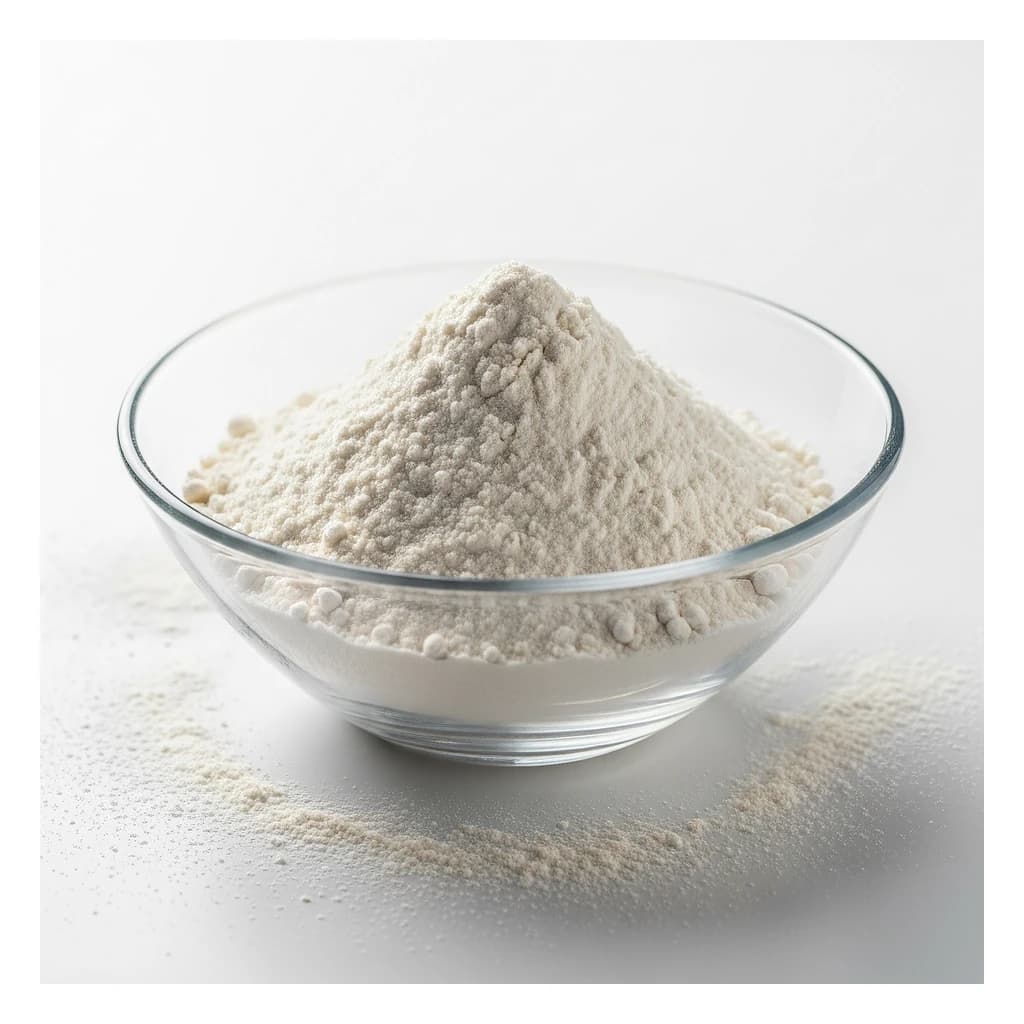
Komplexmłyn Wheat Flour Type 550 25 kg

Unsalted Butter 82% 25 kg
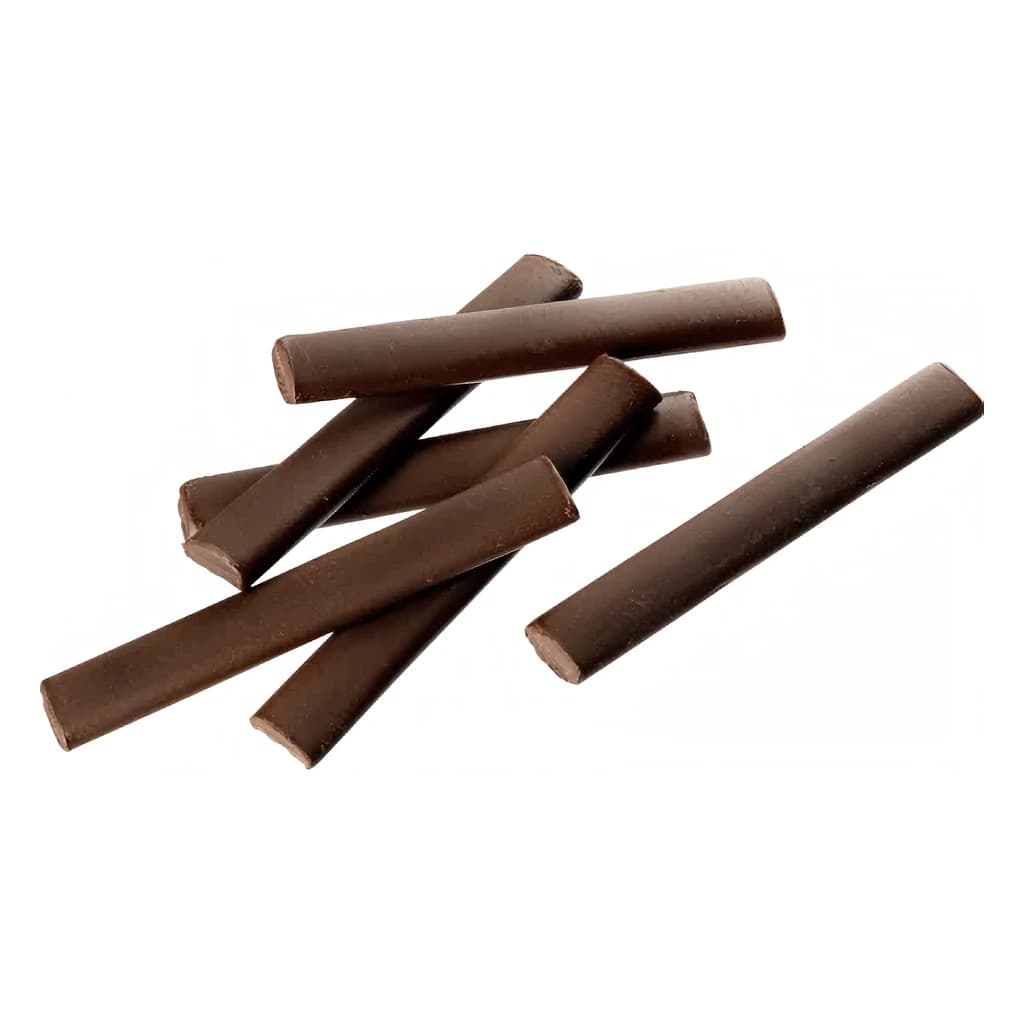
Dark Chocolate Sticks 8 cm – 1.6 kg Box
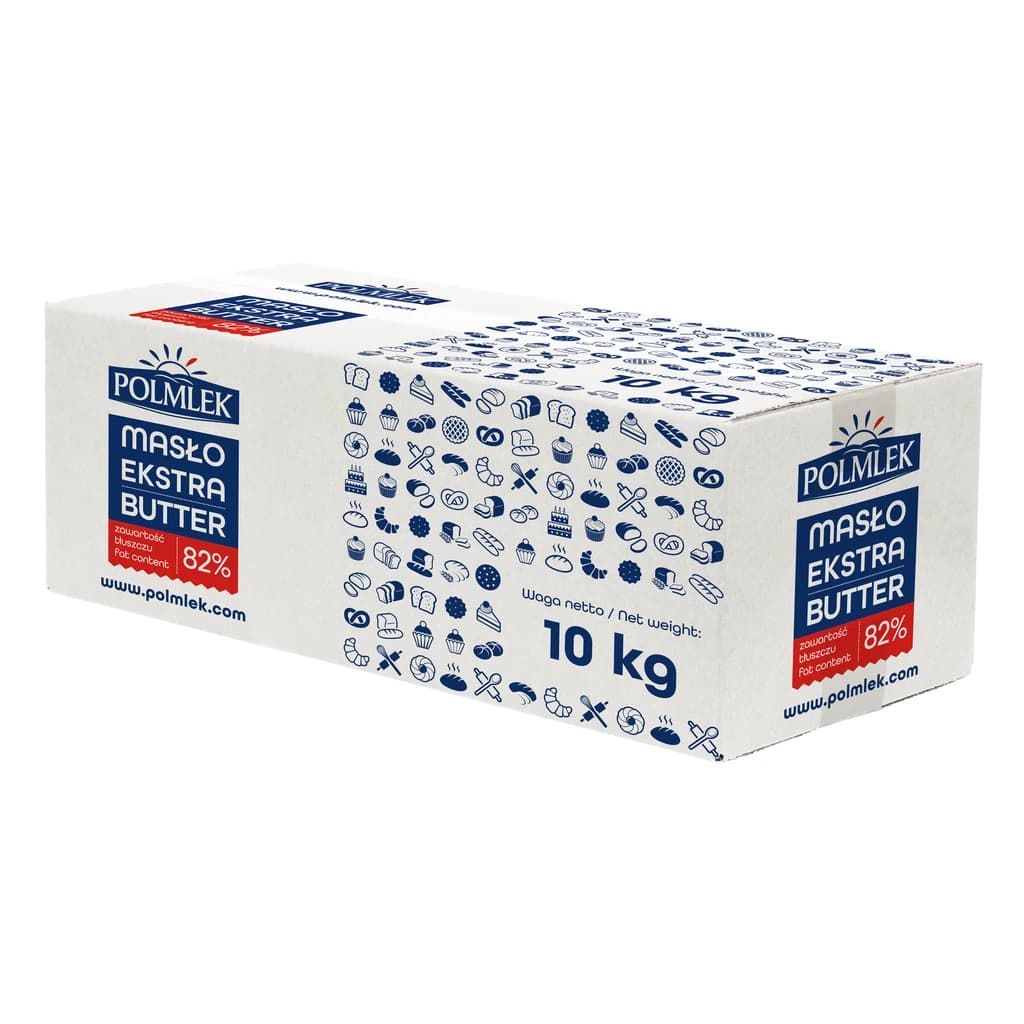
Unsalted Butter 82% 10 kg
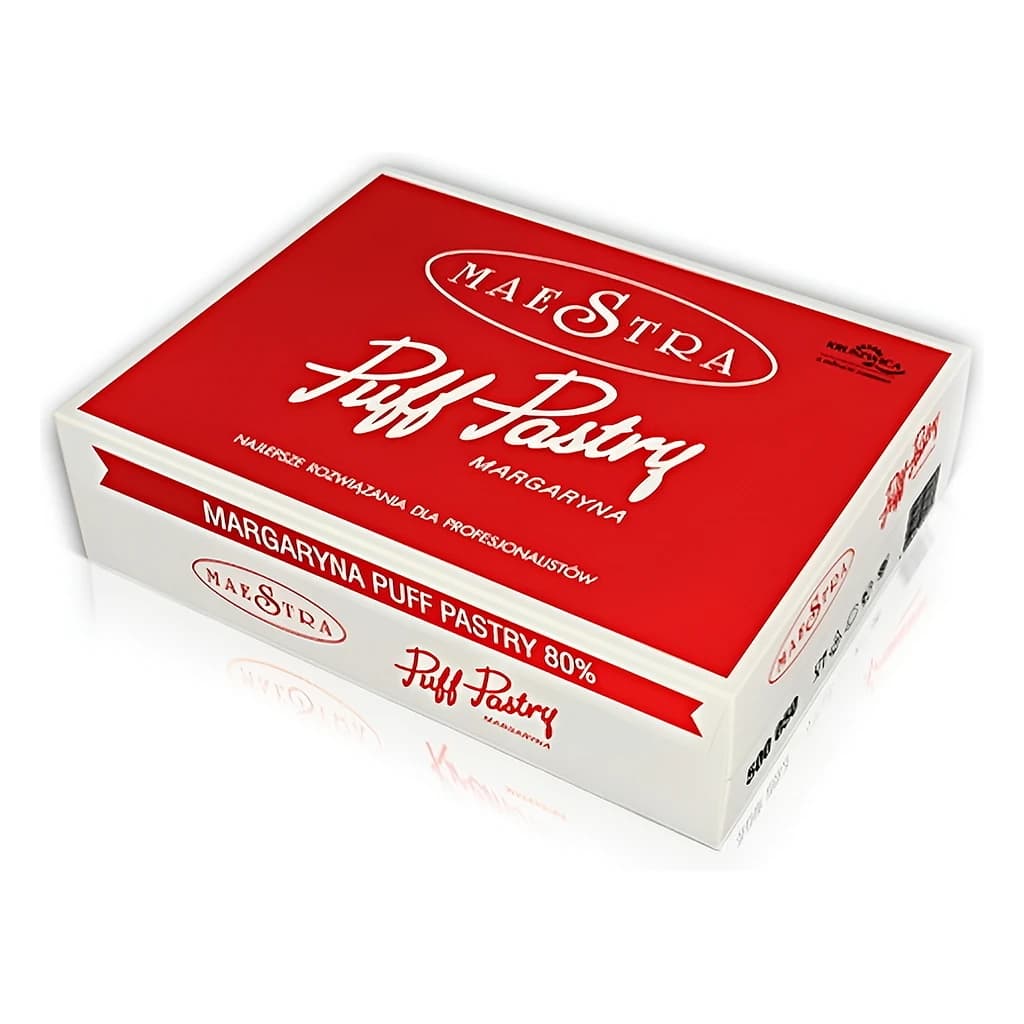
Puff Pastry Margarine 80% 10 kg

Puff Favorit Laminating Margarine 10 kg
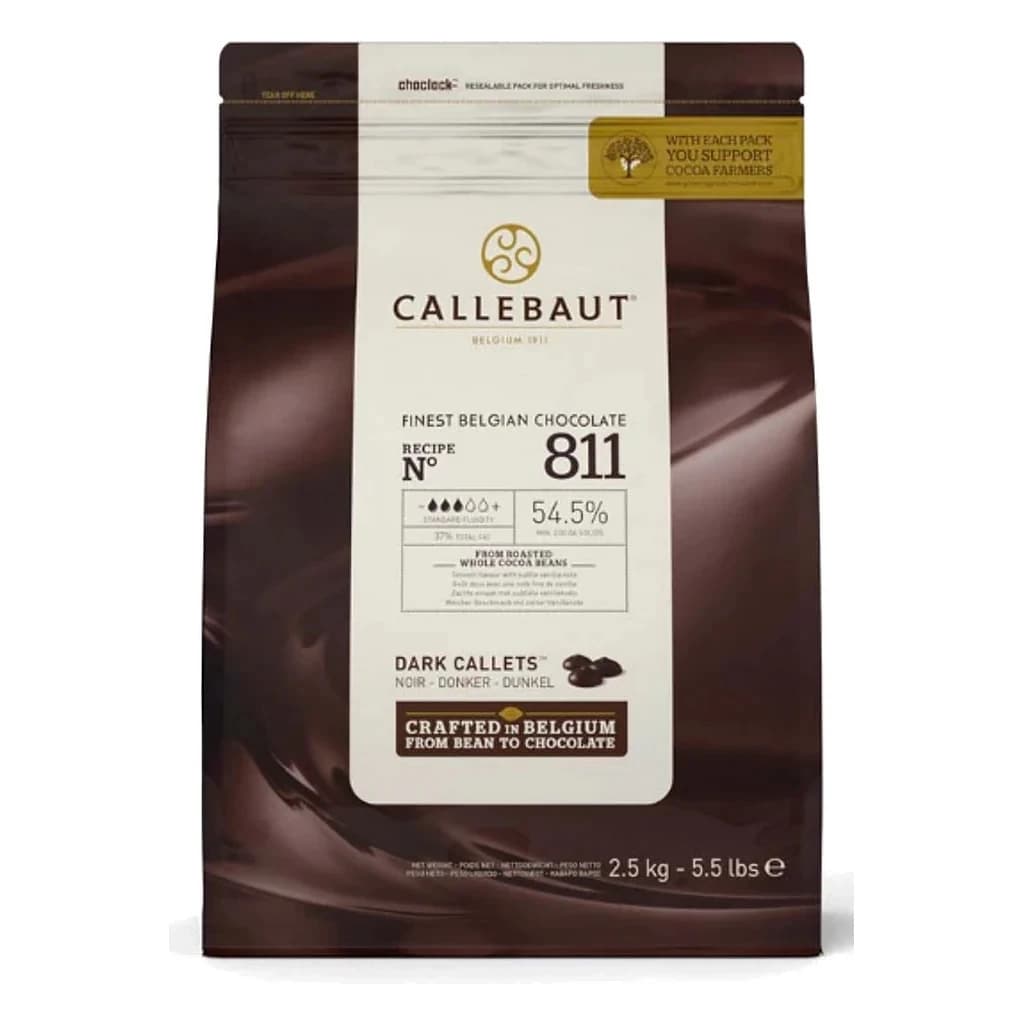
Callebaut 811 Dark Couverture Callets 54.5%
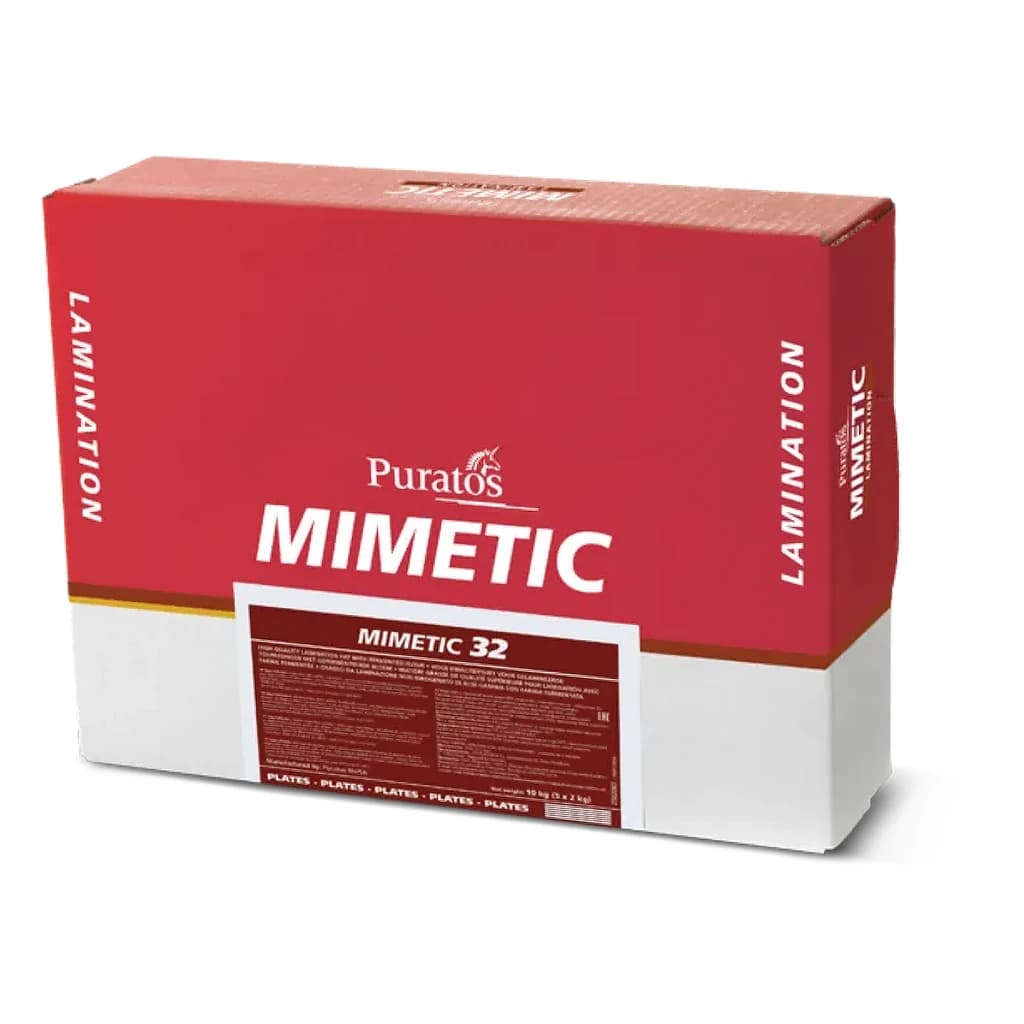
Mimetic 32 Lamination Fat 10 kg
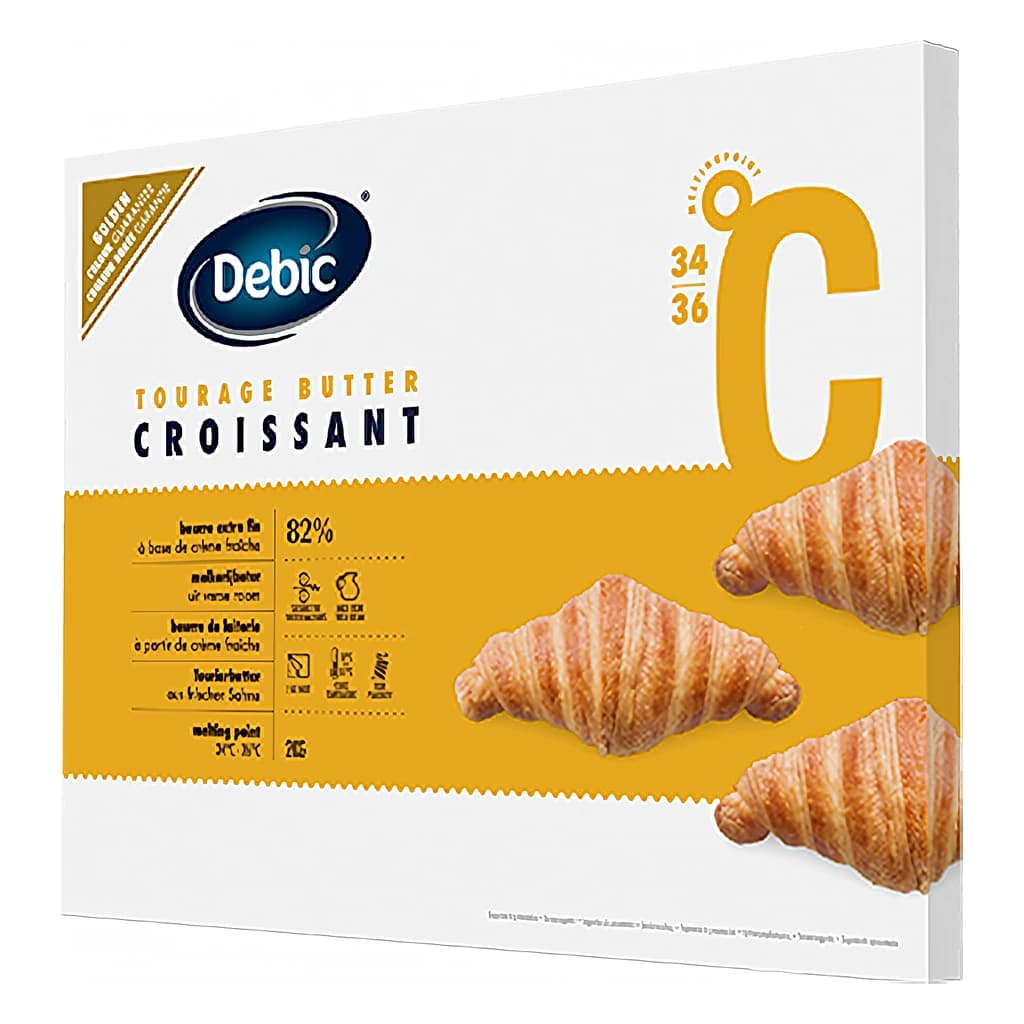
Tourage Croissant Butter 10 kg (5 × 2 kg)

Fresh Yeast Benevia 10 kg
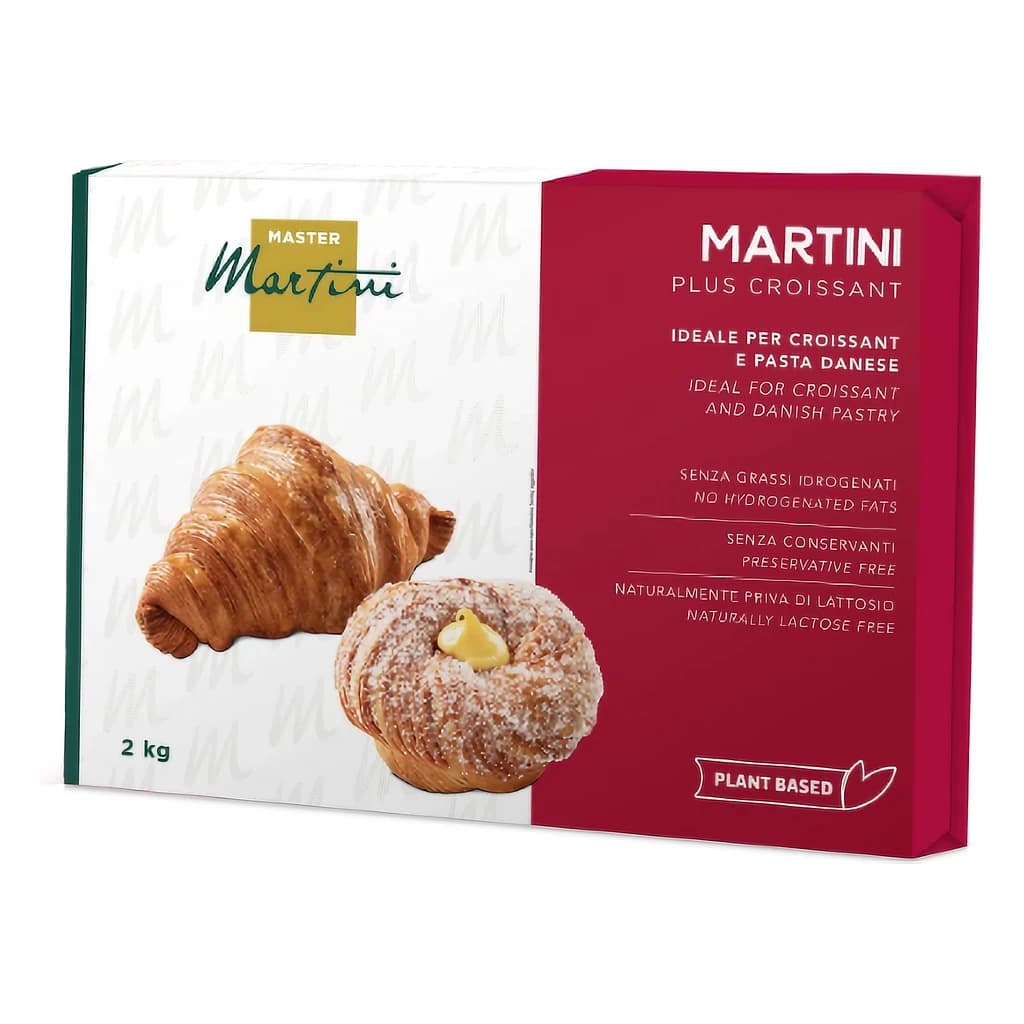
Plus Croissant Margarine 10 kg (5 × 2 kg)
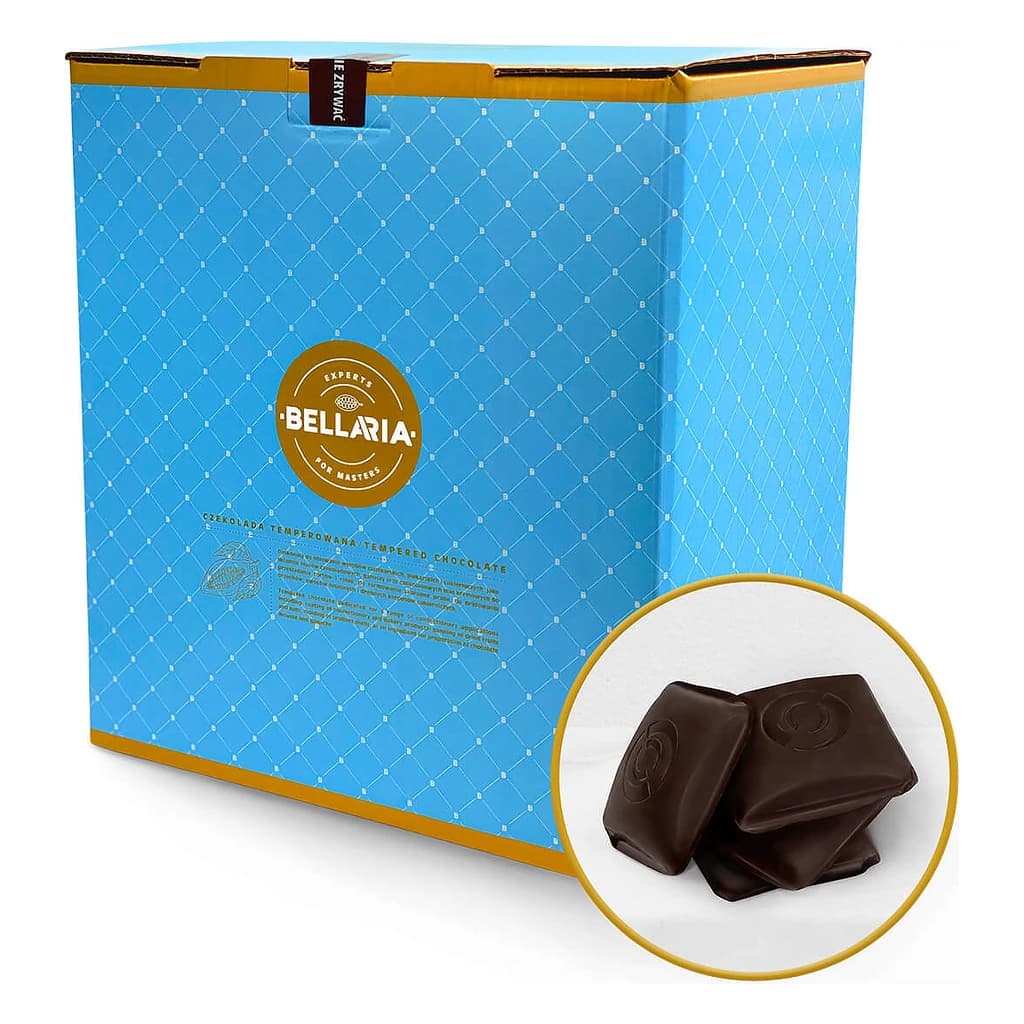
Dark Couverture Chocolate 70% Cubes 10 kg
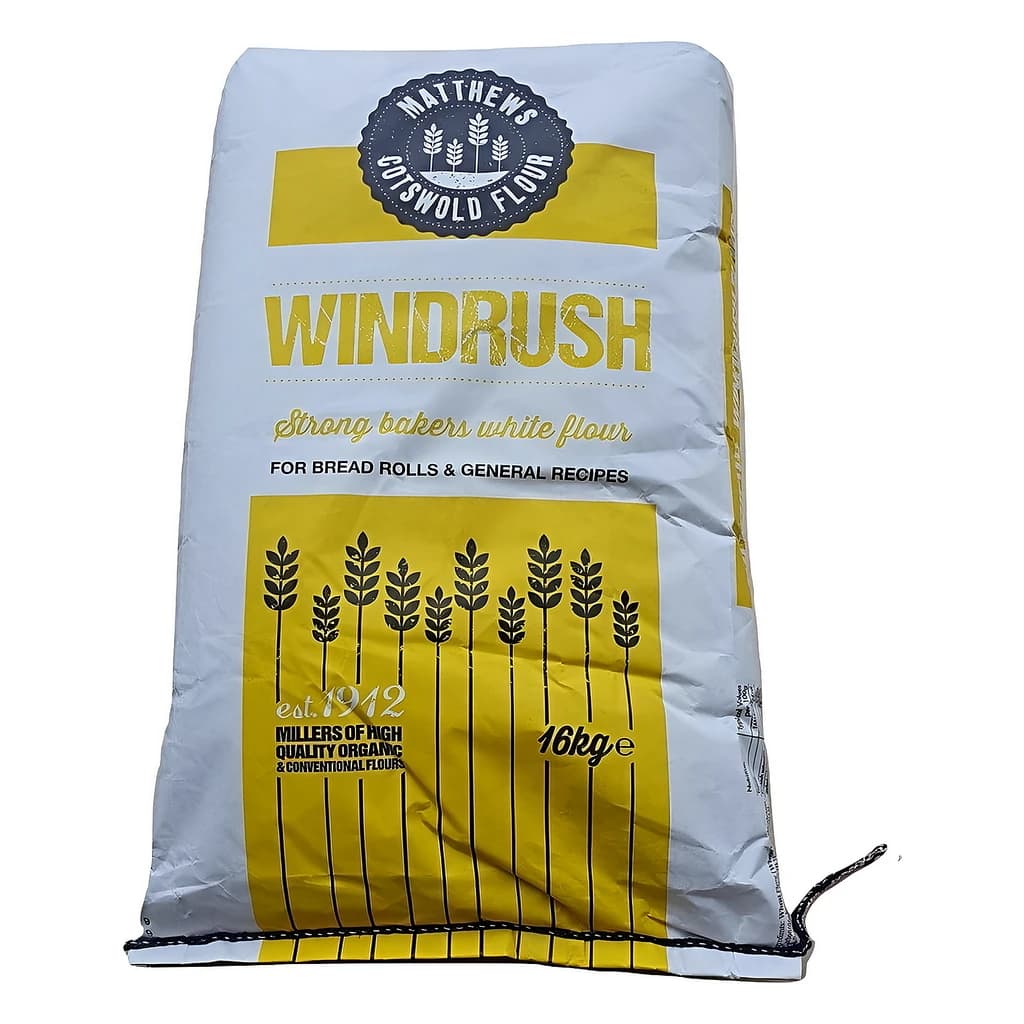
Windrush Strong White Bread Flour 16 kg
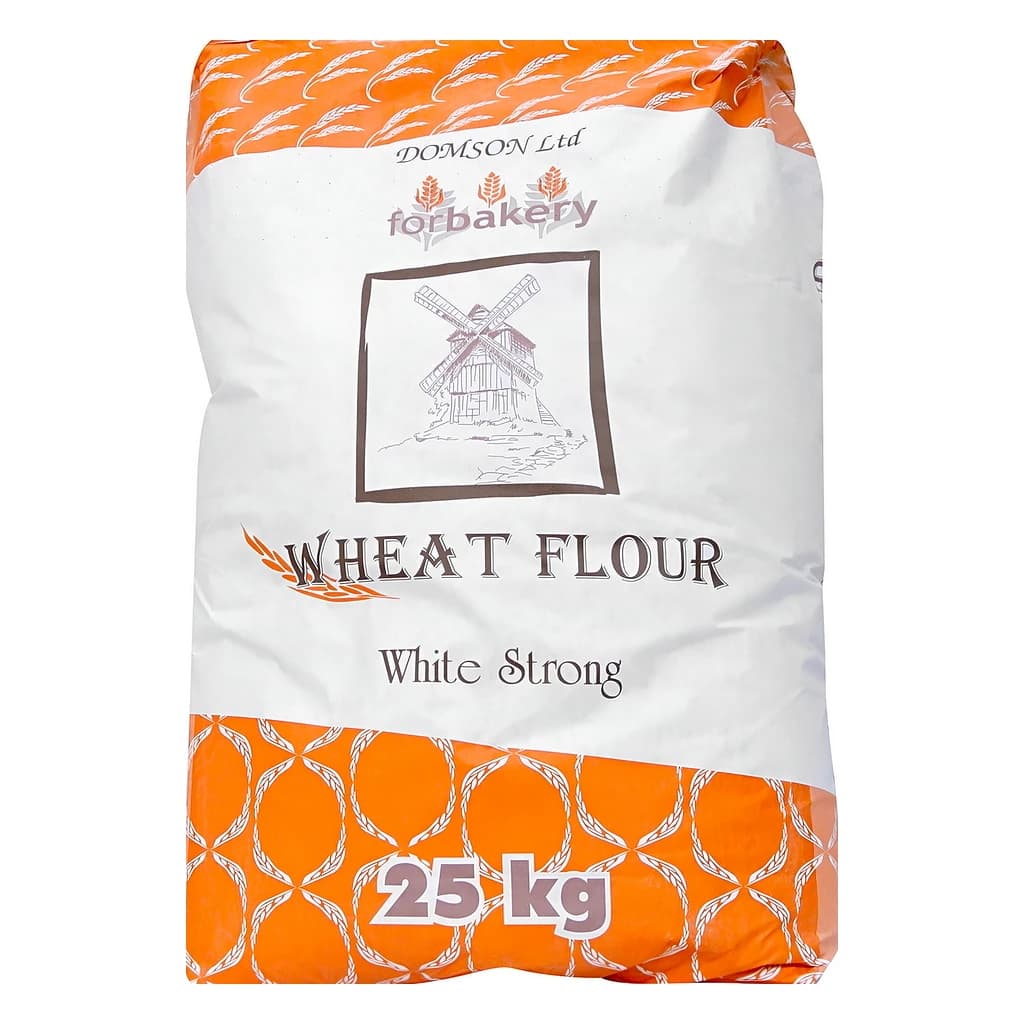
Domson White Strong Wheat Flour 25 kg
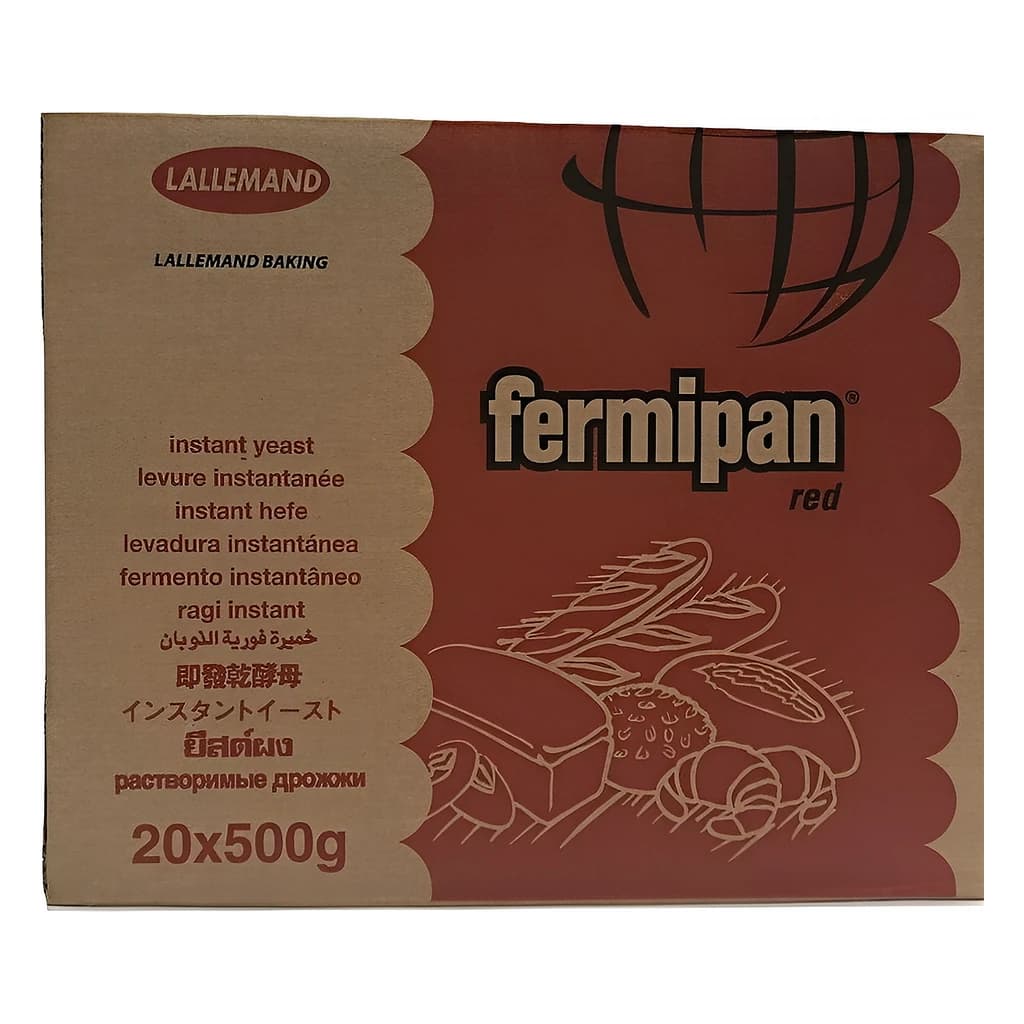
Dried Yeast Fermipan Red 10 kg
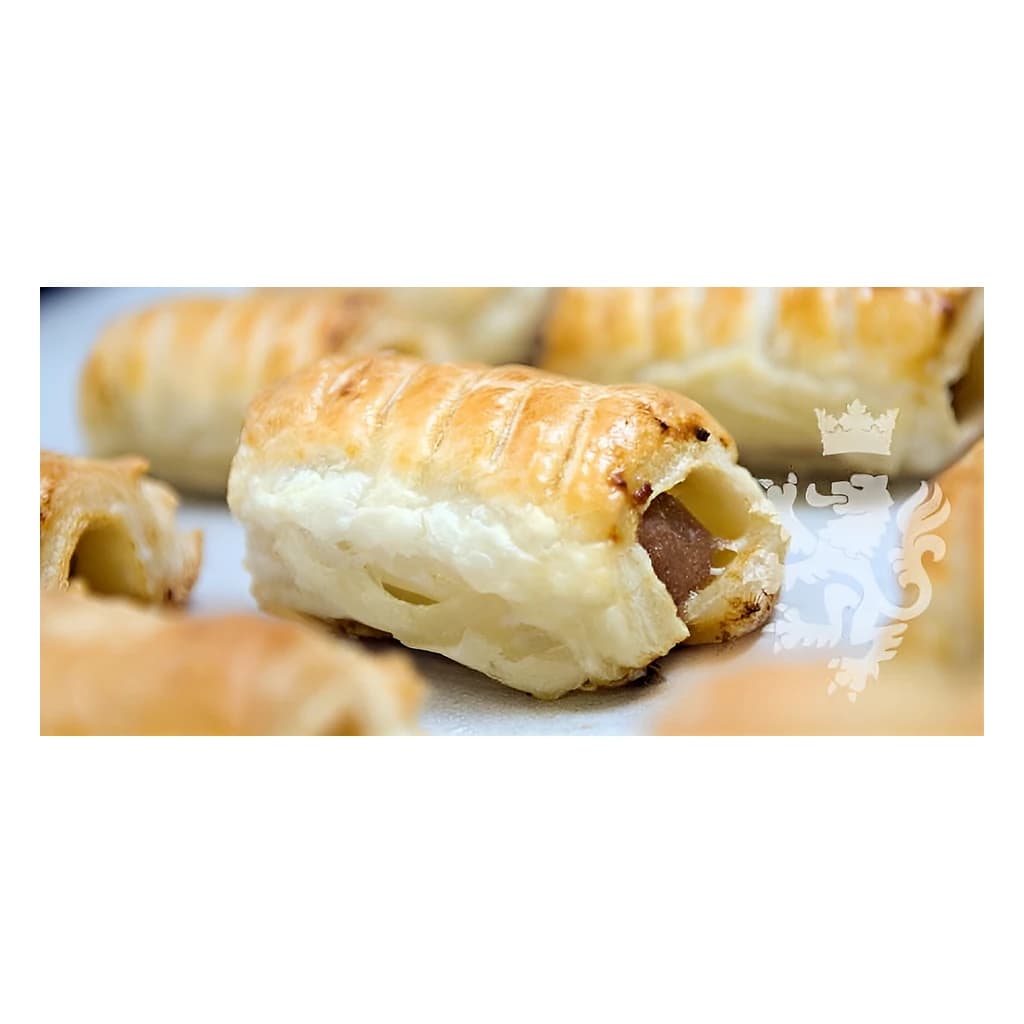
Puff Pastry Margarine 12.5 kg
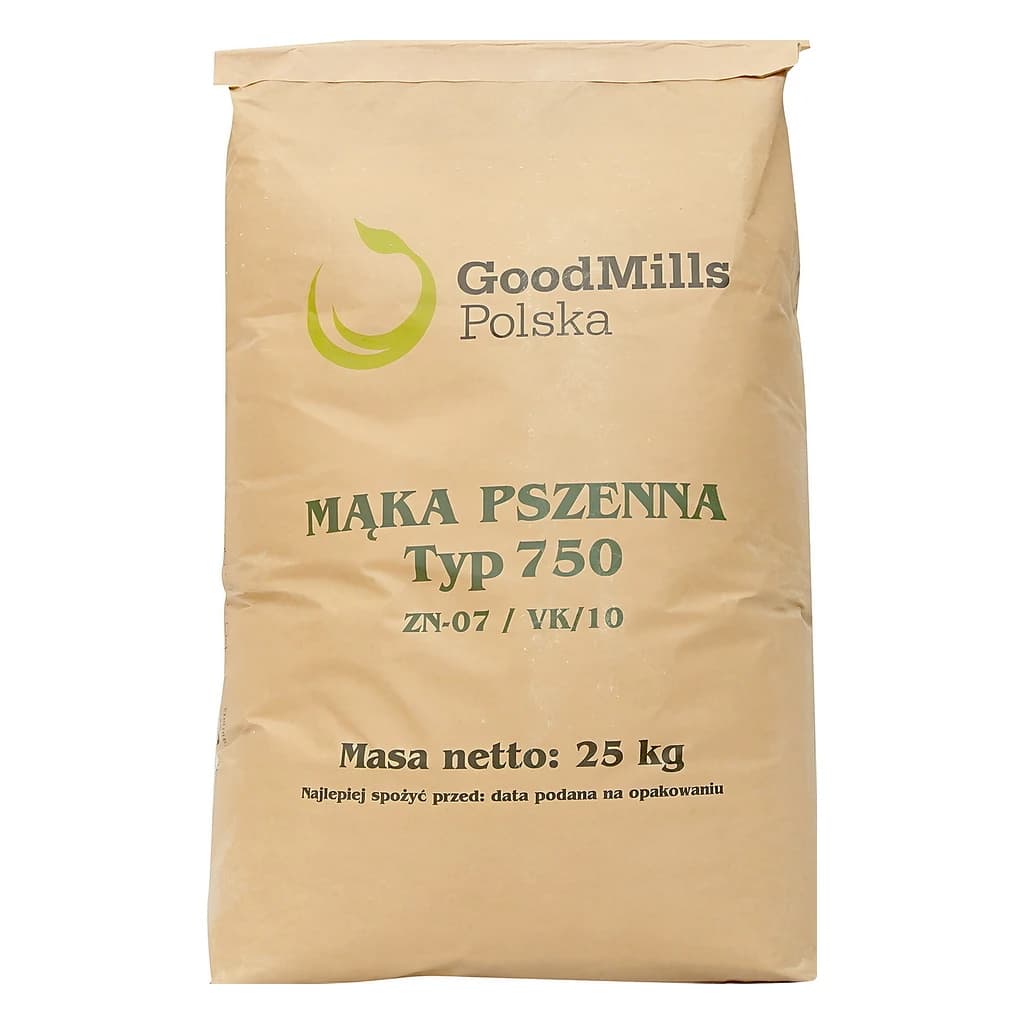
Wheat Flour Type 750 25 kg