
Laminating fats for croissants, puff pastry & Danish: butter vs roll-in margarine
A practical, data-driven guide for professional bakers choosing between butter and roll-in margarine for laminated viennoiserie. Covers the physics of Solid Fat Content (SFC) and why it determines lamination success; the composition and working properties of standard unsalted butter (82%) and tourage butter (~84%); how roll-in puff pastry margarines are formulated to deliver broader plasticity and higher melting points; how to read an SFC curve to select the right fat; step-by-step lamination process guidance; a full fault table; and allergen, trans-fat, and sustainability considerations. Numeric SFC and melting point data are extracted directly from five Domson-catalogue spec sheets (Polmlek butter, Kruszwica Maestra Puff Pastry, Cardowan Crown NHAV Pastry, Cardowan Coronet HR Shortening, CSM Marvello) and cross-referenced against BAKERpedia, the IREKS Compendium, and the BC Campus open textbook on baking ingredients.
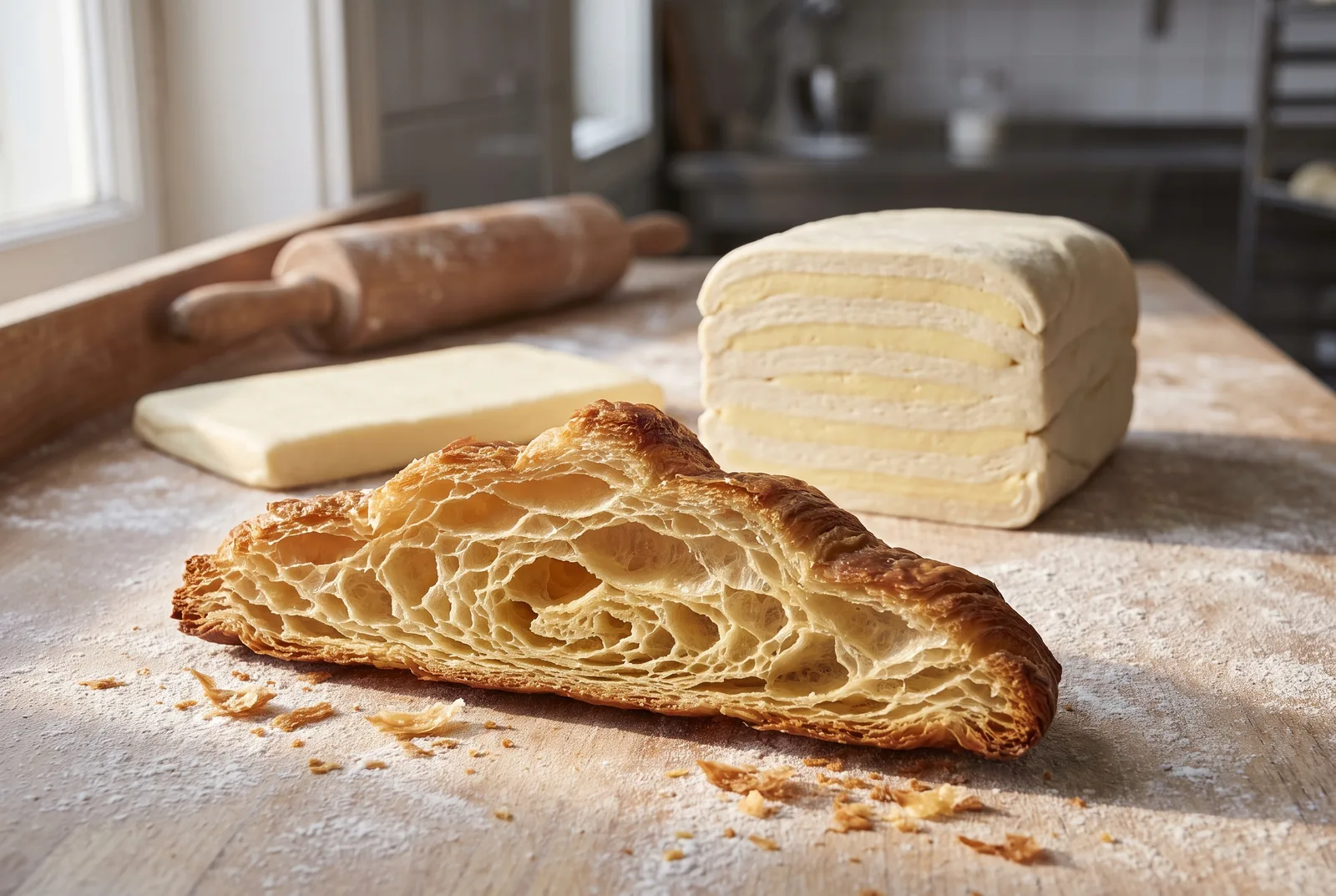
What is a laminated dough?
Croissants, puff pastry, and Danish pastry belong to a family called laminated doughs — products built on alternating, paper-thin sheets of fat and dough. When heat hits the oven, water in the dough and in the fat converts to steam, the layers puff apart, and the fat seals each layer before it collapses. The result is the shatteringly flaky crust and open, honeycomb crumb that defines this category of viennoiserie.
The quality of that fat layer — its consistency, melting behaviour, and how it handles the mechanical stress of sheeting and folding — determines whether the lamination works or fails. This article explains the underlying physics, compares butter and roll-in margarine with first-party spec-sheet data, and gives practical guidance for production.
How lamination works: layers, folds, and counting
Each lamination cycle — one fold — multiplies the number of fat and dough layers. A single fold (letter fold, 3-fold) triples the layer count. A double fold (book fold, 4-fold) quadruples it.
| Product | Typical fold sequence | Fat layer count |
|---|---|---|
| Croissant | 3 × single fold | 3³ = 27 layers |
| Danish pastry | 3–4 × single fold | 27–81 layers |
| Puff pastry (feuilletage) | 6 × single fold | 3⁶ = 729 layers |
| Puff pastry (double fold) | 4–5 × double fold | 4⁴–4⁵ = 256–1024 layers |
Source: BAKERpedia Dough Lamination. Layer counts are widely cited but not universally standardised — individual recipes vary. Confidence: medium.
<!-- image: img-lf-03 -->Between each fold, the dough-fat package must rest — in the refrigerator for butter-based doughs (15–30 min minimum), or in a cool room for margarine-based doughs. Resting relaxes the gluten so that the next sheeting pass does not tear the dough or disrupt the fat layers already formed.
The key physical property: Solid Fat Content (SFC)
Solid Fat Content (SFC) is the proportion of fat that is in solid crystalline form at a given temperature. It is expressed as a percentage at specific temperatures (10°C, 20°C, 30°C, 35°C).
SFC governs two things in lamination:
- Plasticity: Fat must be solid enough to hold its shape as a layer but pliable enough to sheet without cracking. Too solid (high SFC) → cracks and punctures the dough. Too soft (low SFC) → smears into the dough and merges the layers.
- Oven behaviour: Fat must remain sufficiently solid through the early baking phase to generate steam pressure before it liquefies. If the fat melts too early, layers merge and lift collapses.
SFC data from spec sheets — what the numbers say
| Fat | SFC @ 20°C | SFC @ 30°C | SFC @ 35°C | Source |
|---|---|---|---|---|
| Butter 82% (reference) | ~30–35% (seasonal) | ~5–10% | ~0–5% | Canadian Baker textbook |
| Maestra Puff Pastry 80% (Kruszwica) — summer | 33–36% | 14–17% | 8–10% | Spec sheet |
| Maestra Puff Pastry 80% (Kruszwica) — winter | 35–38% | 16–20% | 9–12% | Spec sheet |
| Milama Cake Margarine 80% (Kruszwica) | 20–25% | ~3–8% | max 5% | Spec sheet |
| Marvello Cake Margarine 80% (CSM) | 18–24% | 9.5–13.5% | 7–11% | Spec sheet |
Key takeaway: The Maestra Puff Pastry Margarine retains substantially more solid structure at 30°C and 35°C than butter or than a cake margarine. That higher SFC at bakery temperatures is by design — it compensates for the fact that a busy production hall can reach 22–26°C on a warm day.
Cake margarines (Milama, Marvello) have SFC profiles closer to butter but with a lower range — they are formulated for creaming and aeration, not for lamination. Using a cake margarine as a roll-in fat is a common and costly mistake: the fat smears into the dough at room temperature, merging the layers, and produces poor lift and a greasy finish.
Butter: the artisan choice
Composition
EU law (Regulation (EU) No 1308/2013 Annex VII Part VII ) defines butter as a product derived exclusively from bovine milk with a minimum fat content of 80% and maximum water content of 16%. In practice, standard unsalted butter contains approximately 82% fat, with the remaining 18% being water, milk proteins, and milk sugars (lactose).
The Polmlek Unsalted Butter 82% spec sheet (confirmed) states:
- Fat: minimum 82 g per 100 g
- Saturated fatty acids: 55.0 g per 100 g (approximately 67% of total fat is saturated)
- Water: 16%
- Energy: 3058 kJ / 744 kcal per 100 g
- Salt: 0.20 g per 100 g (trace — "unsalted")
- Allergen: CONTAINS MILK, including lactose.
Butter fat is predominantly saturated (66–70% depending on season and feed) and naturally forms beta-prime (β') crystals under normal refrigeration — the ideal crystal form for lamination.
Seasonal variation
Butter SFC changes with the cow's diet. Summer milk from grass-fed herds produces butter that is slightly softer at 20°C than winter milk from stall-fed cows. This is a well-known challenge in artisan bakeries: the same butter brand can behave differently in June versus December. Reference SFC values (not spec-sheet confirmed) suggest seasonal variation of approximately 5–8 percentage points at 20°C.
Working temperature for lamination
Butter for lamination must be kept at 12–15°C: firm enough to sheet as a slab without cracking, but not so cold that it shatters. At this temperature the fat is plastic — it bends without breaking and yields evenly under the sheeter roller.
Practical test: bend a 1 cm slab of tempered butter. It should flex without cracking (too cold) and without leaving a significant fat smear on your fingers (too warm).
Butter from the refrigerator (0–4°C) must be tempered for 1–2 hours before lamination — placing it directly on the sheeter will crack it and disrupt the layers. Equally, allowing it to reach room temperature (20°C+) in summer will cause smearing.
Standard butter vs tourage (dry) butter
Some recipes specify tourage butter (also called beurre sec or dry butter) with a fat content of approximately 84% (premium grades sometimes labelled 84–86%), compared to the standard 82%. The lower water content in tourage butter reduces the steam created during baking, which can help achieve crisper, more defined layers with less tendency to blister.
Note: The claim that tourage butter is approximately 84% fat (confidence:low) rests on a single medium-reliability trade source. A standard 85% grade is not confirmed by independent industry sources — commercial tourage butters are most commonly sold at 84%. The Domson catalogue includes "Tourage Croissant Butter 10 kg (5 × 2 kg)" but no spec sheet is available for this product — allergen status and exact fat content cannot be confirmed from first-party data. Assume MILK allergen is present.
For most professional croissant production, standard 82% unsalted butter gives excellent results when temperature is managed correctly. Tourage butter offers a marginal technical advantage that is most apparent in very high-volume, high-precision production.
Roll-in margarine: the industrial choice
What makes a roll-in margarine different from a cake margarine?
A roll-in (laminating) margarine is not the same product as a general cake or cake-decoration margarine. The two categories have fundamentally different SFC profiles:
| Property | Roll-in / puff pastry margarine | Cake margarine |
|---|---|---|
| SFC at 20°C | 33–38% | 18–25% |
| SFC at 35°C | 8–12% | Max 5–11% |
| Melting point | ~38–47°C (product-specific) | ~30–36°C |
| Application | Laminated viennoiserie | Batters, creaming, spreading |
Data from spec sheets.
Using a cake margarine as a roll-in fat will produce smeared, merged layers, poor lift, and a greasy finish. If you are unsure which product you have, check the SFC at 30°C: a laminating margarine retains at least 14% solid fat at 30°C; a cake margarine typically drops below 10% at this temperature.
How roll-in margarines are formulated
Roll-in margarines are blends of vegetable oils and fats — typically palm oil (for high SFC and β' crystal stability) and a liquid oil such as rapeseed (for plasticity and a lower melting point than 100% palm). The blend is emulsified with water, salt, and emulsifiers, then crystallised under controlled conditions.
The Maestra Puff Pastry Margarine (Kruszwica, spec sheets ) illustrates the formulation:
- Ingredients (2009 spec, code 500050 ): vegetable oils and fats (palm, rapeseed, partly hydrogenated palm), water, emulsifiers (mono- and diglycerides E471, soy lecithin E322), salt, antioxidants, acidity regulator, flavour, colour (annatto)
- Fat: 80% ± 0.5%; Salt: 0.5% ± 0.05%
- Fatty acid composition (typical): SAFA 46%, MUFA 42%, PUFA 10%, Trans max 2%
- Erucic acid (C22:1): max 0.5% (within EU limit; previously max 2% in older spec)
Allergen: the ingredient list above is from the 2009 specification, which includes soy lecithin (E322) — a listed EU allergen under Regulation 1169/2011 Annex II. However, the 2021 Mass Balance specification for the same product family declares no allergens present, including no soy. These declarations are mutually exclusive. The formulation may have changed since 2009 (soy lecithin replaced by a non-allergenic emulsifier), or one spec is in error. Do not publish an allergen declaration for the current Maestra product without written confirmation from Kruszwica of the current formulation's allergen status.
The recommended working temperature is 18–20°C (both spec versions agree ), which is 3–8°C higher than butter. This wider plasticity range is the principal advantage of roll-in margarine in warm production environments.
Crystal structure: why β' matters
<!-- image: img-lf-07 -->Fat can crystallise in several polymorphic forms. For lamination, beta-prime (β') crystals are essential. They are small, uniform, and pack into a smooth plastic mass that sheeets evenly between dough layers without tearing them. The large, grainy beta (β) crystals that form in some fats — including improperly handled shortenings — produce a waxy, gritty texture that disrupts layers.
Palm-based margarines naturally crystallise in β' form and are relatively stable in this state. Butter is predominantly β' under normal refrigeration but can transition toward β crystals if it is cycled through temperature changes repeatedly — another reason to avoid re-warming and re-chilling laminating butter multiple times.
The Cardowan Crown NHAV Pastry Margarine: a high-SMP option
The Crown NHAV Pastry Margarine (Cardowan Creameries, spec ) takes a different approach. With a slip melting point of 47.0°C — substantially higher than any butter and higher than the Kruszwica Maestra range — it is designed for machine lamination in warm production environments or for puff pastry applications where the fat layer must remain intact during a long bake at high temperature.
Key spec data:
- Fat: 82 g per 100 g; Saturates: 41.2 g (vs. 55.0 g in Polmlek butter )
- Mono-unsaturates: 29.8 g; Polyunsaturates: 8.7 g
- Salt: 2.5 g per 100 g (note: this is a salted margarine)
- FFA: 0.10%; Peroxide value: 1.0
- Ingredients: Palm, Rapeseed; Water; Salt; Emulsifier: distilled monoglyceride E471
- All 14 EU/UK legal allergens absent in product, production line, and factory.
- RSPO certified (Segregated and Mass Balance; BMT-RSPO-000023)
The high SMP (47°C) means this fat will remain partially solid through the early baking phase even at very high oven temperatures — advantageous for industrial puff pastry lines. The trade-off is a very different eating experience from butter: there is no dairy flavour, and the fat is denser on the palate. Best suited to products where texture and yield matter more than dairy character.
Fat selection by product
| Product | Best choice | Alternative | Notes |
|---|---|---|---|
| Artisan croissant | Unsalted butter 82% or Tourage Croissant Butter | Roll-in puff pastry margarine | Butter gives superior flavour; requires skilled temperature management |
| Industrial croissant | Maestra Puff Pastry Margarine 80% or Plus Croissant Margarine | Argenta Pastry Laminating Fat | Margarine more consistent; higher throughput possible |
| Danish pastry | Flex Quatro Danish Pastry Margarine (CSM) | Butter or Maestra | Danish requires softer layers than puff pastry — choose a margarine with SFC@20°C 28–35% |
| Puff pastry (feuilletage) | Maestra Puff Pastry 80% or Crown NHAV Pastry (47°C SMP) | Puff Favorit Laminating Margarine | Choose Crown NHAV for hot kitchens or industrial high-speed lines |
| Palm-free viennoiserie | Qualita NP Palm-Free Margarine 80% | (No spec sheet available) | Growing segment; verify SFC profile directly with supplier |
| Dairy-free / vegan product | Any roll-in margarine listed above (check spec for milk) | — | All Kruszwica and Cardowan products confirmed dairy-free (verify against current spec before use) |
Process: step-by-step lamination
<!-- image: img-lf-03 -->Step 1: Prepare the détrempe (base dough)
Mix flour, water, yeast, salt, sugar, and a small quantity of fat (5–10% on flour) to a smooth, non-overworked dough. Target dough temperature 22–24°C. Rest 30 min in refrigerator. The détrempe should be extensible but not elastic — excessive gluten development at this stage will cause tearing during lamination.
Step 2: Prepare the roll-in fat
- Butter: Remove from refrigerator 1–2 hours before use. Target 12–15°C. Beat lightly with a rolling pin to an even plasticity if too firm; chill briefly if too soft.
- Roll-in margarine: Remove from storage (max 4–15°C) 30–60 min before use. Target 18–20°C (Maestra spec ). Do not work it — it should be ready-plastic at this temperature.
Form the fat into an even flat slab of consistent thickness.
Step 3: Enclose the fat (tournant)
Flatten the détrempe into a rectangle approximately twice the area of the fat slab. Place the fat slab in the centre and fold the dough over it like an envelope, sealing the edges. Sheet carefully to the first fold thickness.
Step 4: First fold and chill
Apply the first single fold (letter fold). Rotate 90°. Chill (refrigerator, 0–4°C) for:
- Butter: 20–30 min minimum per fold cycle
- Roll-in margarine: 10–20 min (less critical due to higher working temperature range)
Step 5: Repeat
Apply remaining fold cycles, chilling between each. For croissant: 3 folds total. Mark each fold with a fingertip impression in the dough to track progress.
Step 6: Final sheeting, cutting, and shaping
Sheet to final dough thickness (typically 3–4 mm for croissant). Cut and shape. Rest 10–15 min before final proof.
Step 7: Proof and bake
Final proof at 25–28°C, 70–80% RH. Croissant: 60–90 min for margarine-based, up to 3 hours for butter-based (yeast is slower in a cold environment).
Bake at 190–210°C (conventional) or 170–185°C (fan-assisted). Steam injection in the first 5 minutes helps crust formation. Do not open the oven in the first 10–12 minutes.
Troubleshooting
See the fault table below for the complete list. Summary of most common issues:
<!-- image: img-lf-09 -->Fat cracks during sheeting: Fat too cold. Temper butter longer; bring margarine to 18–20°C.
Fat smears into dough: Fat too warm (butter above 18°C, margarine above 24°C) or sheeter pressure too high. Chill immediately; reduce roller gap.
Poor lift / lost layers: Usually caused by smearing that has already merged layers. Prevention: correct temperature management throughout. In puff pastry, also check that SFC at 35°C is sufficient (>8%) — a cake margarine used in error will pool out.
Fat leaks from base: Fat has melted before layers are set. Switch to a fat with higher SMP (e.g. Crown NHAV at 47°C). Check oven loading — excess dough weight on a cold tray delays crust formation.
Dense crumb, no flake: Insufficient folds or fat type wrong. Confirm you are using a dedicated roll-in laminating fat, not a cake margarine.
Allergens, trans fat, and labelling
Allergens
Butter contains milk (and lactose) and must be labelled accordingly. Any viennoiserie made with butter must carry a "Contains: Milk" declaration. This applies regardless of the butter format (salted, unsalted, tourage, clarified) unless allergen-removal processes have been applied.
Roll-in margarines in the Domson catalogue (Cardowan Crown NHAV, CSM Marvello) are confirmed dairy-free from their respective spec sheets.
Allergen — Kruszwica Maestra status unresolved: the 2009 Maestra spec listed soy lecithin (E322) as an emulsifier, making SOY a declared allergen under EU Regulation 1169/2011 Annex II; but the 2021 Mass Balance spec declares no allergens, including no soy. These declarations are mutually exclusive. Do not use either spec for Maestra allergen labelling without written current-formulation confirmation from Kruszwica.
Trans fatty acids
Industrial trans fats from partial hydrogenation have been substantially eliminated from European margarines following WHO guidance and market pressure. The Maestra spec (2021 version) declares trans fatty acids max 2% of total fatty acids, and the Marvello spec declares 0.9 g non-animal trans fat per 100 g. EU Regulation (EU) 2019/649 limits industrial trans fats in foods for the final consumer to a maximum of 2 g per 100 g of fat. Marvello (0.9 g/100 g) is comfortably within this limit. Maestra (max 2% of total FA at 80% fat content) equates to approximately 2.0 g per 100 g of fat — placing it exactly at the regulatory boundary.
Regulatory note: Maestra's trans fat is at the limit, not comfortably within it; any batch variability above the declared maximum could breach EU 2019/649. Verify current batch trans fat certificates with Kruszwica. For UK-market products, an equivalent statutory trans fat limit has not been confirmed in UK law; seek food-safety legal advice for UK labelling.
Butter contains natural CLA (conjugated linoleic acid), which is a trans fatty acid but is not classified as "industrial" trans fat and is exempt from the 2 g limit under EU rules.
Process contaminants (3-MCPD and glycidyl esters)
Palm oil processing can generate process contaminants — 3-MCPD fatty acid esters and glycidyl fatty acid esters — which are formed during high-temperature refining. EU Regulation (EU) 2020/1322 sets maximum levels:
- 3-MCPD esters: max 2500 µg/kg in vegetable oils/fats for food use
- Glycidyl esters: max 1000 µg/kg
The Maestra Puff Pastry Margarine spec sheets (2021 version) state:
- 3-MCPD and esters: max 2188 µg/kg
- Glycidyl esters: max 1000 µg/kg
Regulatory note: EU Regulation 2020/1322 sets maximum levels per kg of vegetable fat or oil, not per kg of finished margarine product. If the Maestra spec values above are expressed per kg of finished product (80% fat), the fat-equivalent concentrations would be approximately 2735 µg/kg for 3-MCPD esters (exceeding the 2500 µg/kg EU limit) and 1250 µg/kg for glycidyl esters (exceeding the 1000 µg/kg EU limit). If the values are already expressed per kg of fat fraction, they comply. The Milama spec (same manufacturer) states identical contaminant values, suggesting these may be internal product-basis limits. Kruszwica must confirm the measurement basis before making any compliance statement.
Butter, as a dairy fat, does not have a 3-MCPD/glycidyl ester concern.
Sustainability and palm oil
Roll-in margarines typically contain palm oil, which provides the high SFC and β' crystal stability required for lamination at a commercially viable cost. The environmental and social concerns around palm oil expansion are well-documented.
The Domson catalogue contains RSPO-certified options:
- Maestra Puff Pastry Margarine (movex 515104): RSPO Mass Balance certified (certificate CU-RSPOSCCS-828140). The MB model means each tonne of RSPO palm in the supply chain is tracked but not physically segregated.
- Cardowan Crown NHAV Pastry / Coronet HR Shortening: RSPO member (BMT-RSPO-000023) with Segregated (SG) and Mass Balance (MB) supply chain options. Segregated means the RSPO palm is kept physically separate from conventional palm.
Palm-free alternative: The Qualita NP Palm-Free Margarine 80% offers a laminating fat formulated without palm oil. No spec sheet is available; verify SFC, allergen status, and working temperature directly with the supplier before specifying this product on a production line.
Palm-free reformulations typically use combinations of high-oleic sunflower oil, shea stearin, coconut oil, or interesterified rapeseed/sunflower fractions to achieve an SFC profile comparable to palm-based products.
What cake margarine is — and why it is not a laminating fat
Several products in the Domson catalogue are cake margarines, not laminating fats, and it is worth being explicit about the distinction:
- Milama Cake & Cookie Margarine 80% (Kruszwica): SFC@20°C only 20–25%; at 35°C max 5%. Designed for confectionery batters and creaming. Too soft for lamination.
- Marvello Cake Margarine 80% (CSM): SFC@20°C 18–24%. General-purpose bakery use. Soft, plastic, excellent for creaming. NOT for roll-in lamination.
- Unsalted Cake Margarine 80% 10 kg (AMARG): SFC@20°C 23–27%. Too soft for lamination; designed for creamed goods.
These products have lower SFC because they are optimised for aeration (creaming traps air bubbles efficiently at lower SFC) rather than for maintaining structural fat layers under repeated sheeting pressure. Do not use them as roll-in fats.
Coverage notes (transparency)
Strong (spec-sheet confirmed): Fat content, SFC, working temperatures, allergen declarations, process contaminant limits for Polmlek Butter, Kruszwica Maestra (both versions), Cardowan Crown NHAV, Cardowan Coronet HR Shortening, CSM Marvello.
Thin (single-source, reference only): Butter SFC profile; tourage butter fat content ~84% (narrowed from original 84–85%; 85% is not a confirmed standard grade); butter working temperature 12–15°C. Follow-up should seek a spec sheet for Polmlek or Tourage Croissant Butter that states SFC values.
No data available: SFC or melting points for Tourage Croissant Butter, Plus Croissant Margarine, Puff Favorit, Flex Quatro, Argenta, Mimetic 32, Qualita NP — all lack spec sheets in the current catalogue. Allergen status for these products must be confirmed before use in product labelling.
Figures
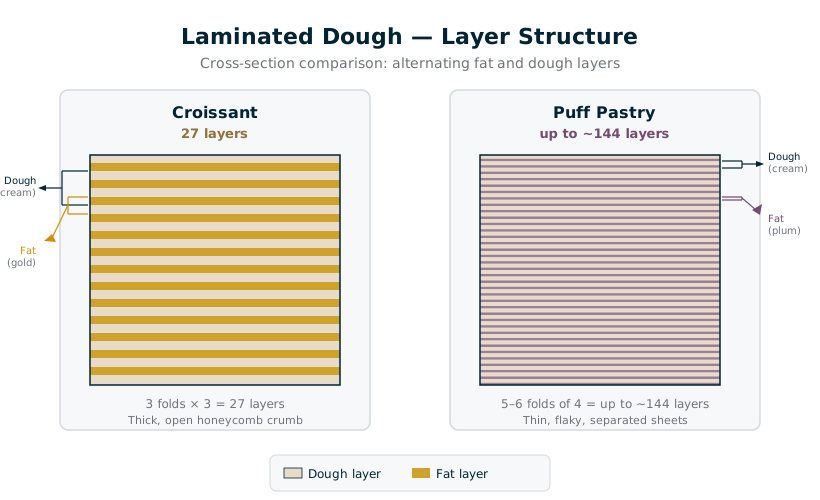 Technical cross-section diagram comparing layer structures of croissant dough (27 layers) and puff pastry (up to ~144 layers), showing alternating thin fat and dough sheets
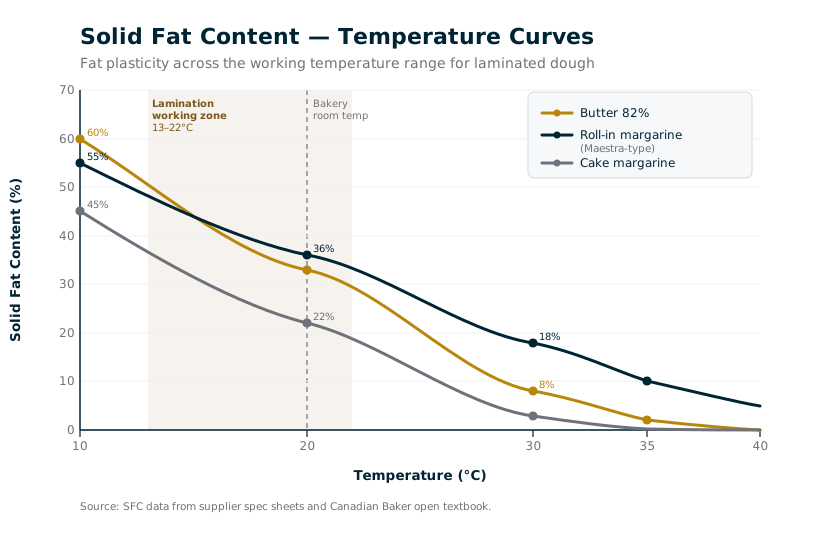 Graph showing Solid Fat Content (%) versus temperature (°C) for three fat types: butter (~60% at 10°C declining to near zero at 35°C), roll-in puff pastry margarine (higher SFC at 20–30°C than butter, with a broader working plateau), and cake margarine (lower SFC at all temperatures)
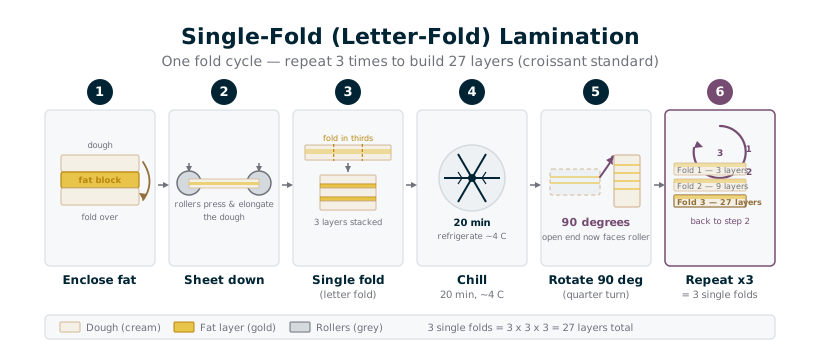 Six-step process diagram showing how a single fold cycle is performed in dough lamination: enclosing fat, sheeting, folding in thirds, rotating 90 degrees, and repeating
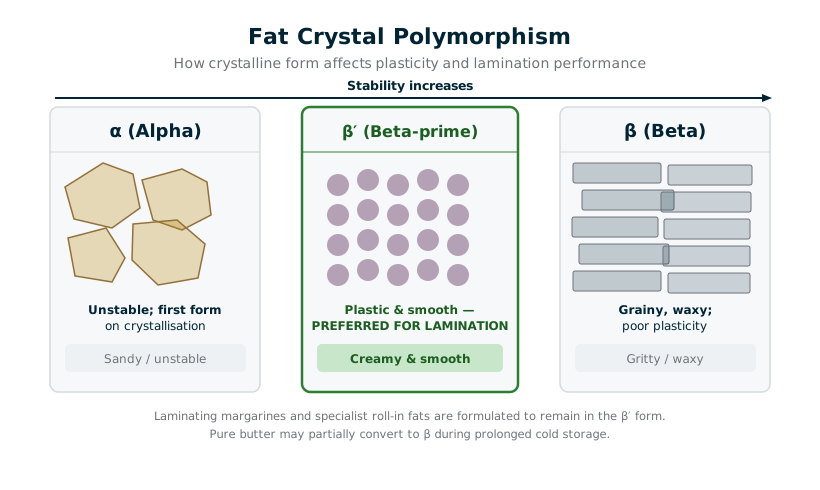 Three-panel diagram showing fat crystal polymorphic forms: alpha (large unstable crystals), beta-prime (small smooth plastic crystals — preferred), and beta (large grainy waxy crystals)
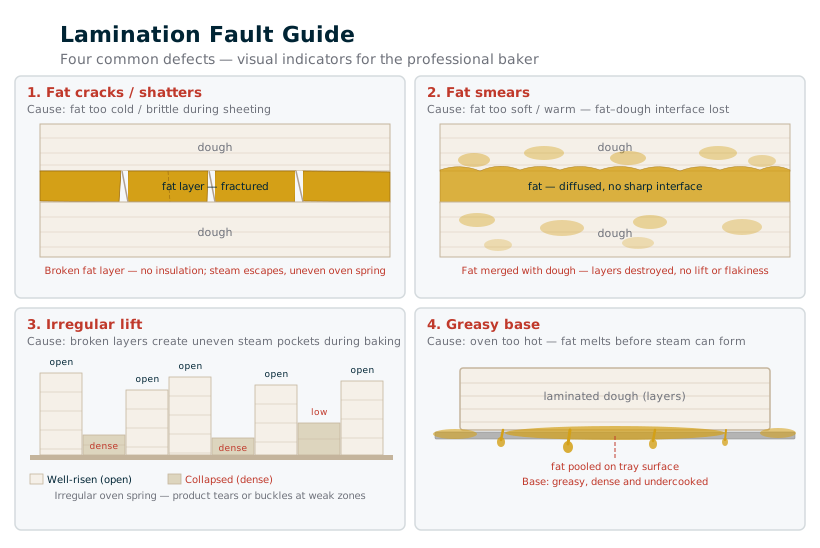 Four-panel illustration of lamination faults: fat cracking during sheeting, fat smearing into dough, uneven oven spring with irregular blisters, and greasy pooling at the base of the product
Classic French Croissant — butter version (baker's %)
Reference formula for an artisan croissant using unsalted butter as the roll-in fat. All percentages are on flour weight. Derived from industry reference sources; not tested in Domson kitchen. For guidance only.
| Ingredient | Baker's % | Weight |
|---|---|---|
| Bread flour (min 12% protein) | 100% | |
| Water (cold) | 50–55% | |
| Fresh compressed yeast | 3–5% | |
| Salt | 2% | |
| Sugar | 8–10% | |
| Milk powder (full fat) | 3–4% | |
| Butter (detrempe — in dough) | 5–8% | |
| Unsalted butter 82% (roll-in / tourage) | 40–50% on flour |
Roll-in fat (40–50%) is calculated on flour weight, not total dough weight,Total fat (dough + roll-in) approximates 45–58% on flour,Dough temperature at mixing: target 22–24°C,Roll-in butter temperature: 12–15°C — must match dough consistency,3 × single folds (letter folds) = 27 fat layers,Chill minimum 20–30 min between each fold cycle,Final proof: 25–27°C, 70–75% RH, approx 2–3 hours,Bake: 190–210°C conventional; 170–185°C fan-assisted
Industrial croissant — roll-in margarine version (baker's %)
Reference formula for a machine-produced croissant using puff pastry margarine (e.g. Maestra) as the roll-in fat. Optimised for consistent results at scale.
| Ingredient | Baker's % | Weight |
|---|---|---|
| Bread flour (min 12% protein) | 100% | |
| Water | 48–52% | |
| Fresh compressed yeast | 3–5% | |
| Salt | 2% | |
| Sugar | 8–12% | |
| Milk powder or liquid milk | 3–5% | |
| Cake margarine (in dough) | 5–8% | |
| Roll-in puff pastry margarine (e.g. Maestra) | 40–50% on flour |
Roll-in margarine working temperature: 18–20°C (per Maestra spec),Margarine is more forgiving at room temperature — less chilling needed between folds,3 × single folds = 27 fat layers; some industrial recipes use 4 folds = 81 layers,Margarine dough can be held in retarder (0–4°C) overnight between fold cycles,Final proof: 25–28°C, 70–80% RH, approx 60–90 min,Bake: 190–210°C
Classic puff pastry (feuilletage) — roll-in fat version (baker's %)
Reference formula for unleavened puff pastry (no yeast). The very high roll-in fat content and large number of folds create extreme layering.
| Ingredient | Baker's % | Weight |
|---|---|---|
| Bread or all-purpose flour | 100% | |
| Water (cold) | 50–55% | |
| Salt | 1.5–2% | |
| Lemon juice or white wine vinegar (optional) | 0.5% | |
| Butter or margarine (in détrempe) | 5–10% | |
| Roll-in puff pastry margarine OR unsalted butter (tourage) | 70–100% on flour |
Roll-in fat for puff pastry is approximately equal to flour weight (100%) — much higher than croissant,5 × 3-fold (letter) = 243 layers; 6 × 3-fold = 729 layers; 4 × 4-fold = 256 layers,Puff pastry requires no yeast — lift comes entirely from steam between fat layers,Steam generation requires fat that is solid at room temperature (hence high SFC at 35°C is critical),Butter-based puff: chill between every fold (every 20 min minimum); margarine more tolerant,Bake: 200–220°C to generate maximum steam
SFC values for butter are from the Canadian Baker open textbook (single reference, confidence:medium — no Domson spec sheet available). All margarine SFC values are from first-party spec sheets. Melting points from spec sheets where stated (SMP method) or from reference literature for butter.
| Fat type | Fat content | SFC @ 20°C | SFC @ 30°C | SFC @ 35°C | Melting point (approx) | Recommended working temp | Allergens |
|---|---|---|---|---|---|---|---|
| Standard unsalted butter (Polmlek 82%) | Min 82% | ~30–35% (seasonal; single reference source) | ~5–10% (single reference source) | ~0–5% (single reference source) | 28–35°C (seasonal; single reference; other sources suggest winter upper end may reach 35–36°C) | 12–15°C | MILK (lactose) |
| Tourage / dry butter (e.g. Tourage Croissant Butter 10 kg) | ~84% (single reference source; confidence:low; 85% is not a confirmed standard grade) | ~32–38% (seasonal; no spec sheet available) | ~5–12% (estimated; no spec sheet available) | ~1–5% (estimated; no spec sheet available) | 28–35°C (seasonal; single reference source) | 12–15°C | MILK — no spec sheet is available for this product; assume the milk allergen is present |
| Maestra Puff Pastry Margarine 80% (Kruszwica) | 80% ± 0.5% | 35–38% (summer 33–36%) | 16–20% (summer 14–17%) | 9–12% (summer 8–10%) | Not stated in spec; estimated ~38–42°C from SFC profile | 18–20°C (spec stated) | None declared |
| Crown NHAV Pastry Margarine 82% (Cardowan) | 82% | Not stated in spec | Not stated | Not stated | 47.0°C (slip melting point) | 15–22°C (estimated from SMP; spec does not state) | None (dairy-free, gluten-free) |
| Cake margarine / general bakery margarine (e.g. Milama, Marvello) | 80% | 18–25% (product-specific) | ~3–13% | Max 5–11% | ~30–36°C (estimated) | 14–22°C (storage range; not a laminating fat) | None declared (Milama/Marvello); check individual products |
| Vegetable shortening 100% (Coronet NHAV HR Cardowan) | 100% (anhydrous) | Not stated | Not stated | Not stated | 44.0°C (slip melting point) | 15–20°C (estimated) | None |
Practical comparison for professional bakeries choosing between butter and roll-in margarine for croissant, Danish, and puff pastry. Numeric values from spec sheets where available; qualitative judgements from reference sources.
| Criterion | Butter (standard 82%) | Roll-in margarine (puff pastry type) | Notes |
|---|---|---|---|
| Fat content | Min 82% (EU reg.); Polmlek = 82% confirmed | 78–84% (typically 80%); Maestra = 80% ± 0.5% | Tourage butter is typically ~84% fat (single reference source, low confidence; 85% is not a confirmed standard commercial grade) |
| Saturated fat | ~67% of total fat (Polmlek: 55g/100g from 82g fat) | ~51% of total fat (Maestra: 35g/100g from 80g fat at 46% SAFA) | Lower SAFA in palm/rapeseed margarine vs butter from grass-fed cows |
| SFC plateau (20°C) | ~30–35% (seasonal; single reference) | 33–38% (Maestra spec sheet; both seasonal bands) | Margarine SFC is more consistent season-to-season |
| SFC at 30°C | ~5–10% (drops sharply; narrow working window) | 14–20% (Maestra spec); still plastic at bakery temperatures | KEY DIFFERENCE: margarine retains more solid structure above 25°C |
| Recommended working temperature | 12–15°C | 18–20°C (Maestra spec stated) | Higher margarine temp = less chilling required; more forgiving on warm production days |
| Plasticity range | Narrow — must be held at 12–15°C; cracks if too cold, smears if too warm | Broader — more forgiving across 15–22°C range | Margarine designed with plasticity in mind; butter requires skilled handling |
| Flavour contribution | Rich, complex dairy flavour and aroma; characteristic of artisan viennoiserie | Neutral to lightly buttery (flavour added); less aromatic | Flavour gap is the principal reason artisan bakeries prefer butter |
| Allergen status | CONTAINS MILK (including lactose) | Typically dairy-free; Maestra and Cardowan Crown NHAV = no milk allergen | Margarine advantage for dairy-free/vegan or halal/kosher lines |
| Trans fat | Contains natural CLA (conjugated linoleic acid); not legally classified as industrial trans fat | Max 2% total fatty acids (Maestra spec); post-2010 reformulations eliminated most industrial trans | EU Regulation (EU) 2019/649: max 2g trans fat per 100g fat in food for consumers. Both comply. |
| Shelf life (refrigerated) | 60 days at 0–10°C (Polmlek spec); 12 months frozen | 150 days at 4–15°C (Maestra); 150–182 days typical | Margarine shelf life 2–3× longer, reducing wastage risk |
| Relative cost | Higher (dairy commodity price-driven) | Lower (vegetable oil price-driven) | Margin impact significant on high-volume lines |
| Sustainability | Linked to dairy sector GHG emissions; pasture quality varies | Palm-based fats: RSPO certification available (Maestra MB; Cardowan BMT-RSPO-000023) | Palm-free alternatives (high-oleic sunflower, shea) also available |
All products listed are from the Domson B2B catalogue. Spec-sheet data is noted where available; products marked 'no spec' rely on product title and supplier description only.
| Product | Type | Fat % | Key spec data | Application | Allergens | Has spec sheet | Product ID |
|---|---|---|---|---|---|---|---|
| Unsalted Butter 82% 10 kg | Butter | 82% | Saturates 55g/100g; water 16%; energy 3058 kJ/744 kcal; storage 0–10°C 60 days | All viennoiserie, pastry, lamination (standard) | MILK | true | |
| Unsalted Butter 82% 25 kg | Butter | 82% | Same composition as 10 kg; bulk format for high-volume production | High-volume croissant and puff pastry production | MILK | false | |
| Tourage Croissant Butter 10 kg (5 × 2 kg) | Dry/tourage butter | ~84% (no spec sheet; single medium-reliability source; confidence:low; 85% is not a confirmed standard grade) | No spec sheet available; slab format convenient for lamination; allergen status unconfirmed from first-party data | Artisan croissant and Danish — butter lamination | MILK — no spec sheet is available for this product; assume the milk allergen is present | false | |
| Puff Pastry Margarine 80% 10 kg (Maestra Kruszwica, internal 500050) | Roll-in puff pastry margarine | 80% ± 0.5% | SFC@20°C 35–37%; SFC@30°C 18–23%; working temp 18–20°C; shelf life 150 days; RSPO-eligible | Puff pastry (feuilletage), croissant, Danish | None declared | true | |
| Maestra White Cream Margarine 80% 10 kg (Kruszwica, movex 515104 — RSPO Mass Balance) | Roll-in puff pastry margarine | 80% ± 0.5% | SFC@20°C 35–38%; SFC@30°C 16–20%; SFC@35°C 9–12%; SAFA 46%; MUFA 42%; working temp 18–20°C; RSPO MB certified | Puff pastry, croissant, Danish (mass-balance sustainability label) | None declared | true | |
| Puff Pastry Margarine 12.5 kg (Crown NHAV Pastry, Cardowan) | Roll-in puff pastry margarine | 82% | SMP 47°C; FFA 0.10%; saturates 41.2g/100g; salt 2.5g/100g; RSPO BMT-RSPO-000023; shelf life 5 months | Puff pastry, machine lamination, high-temperature bakery | None (dairy-free, gluten-free) | true | |
| Plus Croissant Margarine 10 kg (5 × 2 kg) | Roll-in croissant margarine | ~80% (no spec) | No spec sheet; slab format for croissant lamination | Croissant and Danish lamination | No spec — cannot confirm | false | |
| Puff Favorit Laminating Margarine 10 kg | Roll-in puff pastry margarine | ~80% (no spec) | No spec sheet available | Puff pastry lamination | No spec — cannot confirm | false | |
| Flex Quatro Danish Pastry Margarine 12.5 kg (CSM) | Roll-in Danish pastry margarine | ~80% (no spec) | No spec sheet; CSM describes broad plasticity for machine lamination | Danish pastry, machine lamination | No spec — cannot confirm | false | |
| Argenta Pastry Laminating Fat 5 × 2 kg (Puratos/Zeelandia) | Roll-in pastry fat | ~80% (no spec) | No spec sheet; Puratos positions as croissant/Danish laminating fat | Croissant, Danish, puff pastry | No spec — cannot confirm | false | |
| Mimetic 32 Lamination Fat 10 kg (Puratos) | Specialty lamination fat | ~80% (no spec) | No spec sheet; Puratos positions as a specialty fat for croissant/Danish | Viennoiserie lamination | No spec — cannot confirm | false | |
| Qualita NP Palm-Free Margarine 80% 10 kg | Palm-free roll-in margarine | 80% (no spec) | No spec sheet; palm-free formulation — sustainable alternative | Puff pastry, viennoiserie (palm-free) | No spec — cannot confirm | false | |
| High Ratio Vegetable Shortening 12.5 kg (Coronet NHAV HR, Cardowan) | Shortening (not laminating) | 100% | SMP 44°C; air content 12%; FFA 0.10%; anhydrous; RSPO | Creaming cakes, pie pastry; NOT for lamination | None | true | |
| Milama Cake & Cookie Margarine 10 kg (Kruszwica) | Cake margarine (not laminating) | 80% ± 0.5% | SFC@20°C 20–25%; SFC@35°C max 5% — too soft for lamination; application: cakes and cookies | Cake batters, cookies — NOT suitable for lamination | None declared | true | |
| Marvello Cake Margarine 12.5 kg (CSM) | Cake margarine (not laminating) | 80% | SFC@20°C 18–24%; storage 14–18°C; Halal + Kosher certified; dairy-free; vegan; shelf life 182 days | Cakes, general bakery — NOT suitable for lamination | None (dairy-free, gluten-free, vegan) — verify current certification with CSM before relying on it | true |
Common faults encountered during lamination and in the finished product. Root causes and remedies are based on reference sources and spec-sheet working temperature data.
| Fault symptom | Likely cause(s) | Remedy |
|---|---|---|
| Fat shatters / cracks when sheeted | Fat too cold (butter below 10°C; margarine below 14°C),Fat taken straight from cold storage without tempering | Temper butter at 12–15°C for 1–2 hours before use; temper margarine to 18–20°C. Never sheet frozen or fridge-cold fat directly. |
| Fat smears into the dough layers | Fat too warm (butter above 18°C; margarine above 24°C),Excessive pressure on the sheeter,Dough too warm from overworking | Chill the dough-fat package after each fold. Reduce sheeter pressure. Use margarine with higher SFC/SMP for warm bakeries. Target fat at 12–15°C (butter) or 18–20°C (margarine). |
| Irregular lift / uneven oven spring | Fat smearing has already occurred — layers merged,Inconsistent sheeting pressure across width,Over-proofing (yeast-leavened products) | Ensure consistent fat plasticity throughout lamination. Calibrate sheeter rollers for even gap. Avoid excess proof time at warm temperatures. |
| Fat pools / leaks out during baking | SMP of fat too low for baking temperature,Layers too thick — fat reservoirs form,Cake margarine (too soft) used instead of laminating margarine | Switch to a fat with higher SMP (e.g. Crown NHAV at 47°C vs a cake margarine at ~32°C). Verify you are using a dedicated roll-in fat, NOT a cake margarine. Check SFC@35°C: should be >8% for puff pastry margarine. |
| Poor flaky texture — crumb is dense | Insufficient folds — too few layers,Gluten over-relaxation — over-sheeting without rest,Fat absorbed into dough (wrong fat type or too warm) | Ensure correct fold count (minimum 3 folds for croissant = 27 layers). Rest dough minimum 20 min between folds. Use correct laminating fat, not a softer cake margarine. |
| Dough tears during sheeting | Gluten too tight — insufficient rest between folds,Dough too cold and stiff,Fat layer too thick creates stress concentrations | Rest dough longer between folds (30 min minimum). Sheet progressively — avoid reducing thickness by more than 50% in one pass. Ensure fat is correctly tempered and at plastic consistency. |
| Butter product has no dairy flavour | Roll-in fat used is a margarine or flavoured fat, not genuine butter,Butter was exposed to strong odours during storage (milk fat absorbs off-flavours readily) | Use genuine unsalted butter 82% (e.g. Polmlek) or tourage butter. Store butter tightly wrapped, away from odorous products. Source from quality dairy (Polmlek spec requires: milky, clean smell; rejection criterion = unclean, rancid). |
- Description:
- Solid Fat Content (%) at key temperatures — spec-sheet confirmed values
- Note:
- Butter SFC from single reference source only (medium confidence — no Domson spec sheet available); all margarine SFC from first-party spec sheets. Butter melting point upper end may extend to 35–36°C in winter (independent sources); single reference cites 33°C.
- Data · Butter 82pct reference · 10C:
- ~60–65%
- Data · Butter 82pct reference · 20C:
- ~30–35%
- Data · Butter 82pct reference · 30C:
- ~5–10%
- Data · Butter 82pct reference · 35C:
- ~0–5%
- Data · Maestra puff pastry 80pct · 20C:
- 35–38% (summer 33–36%)
- Data · Maestra puff pastry 80pct · 30C:
- 16–20% (summer 14–17%)
- Data · Maestra puff pastry 80pct · 35C:
- 9–12% (summer 8–10%)
- Data · Milama cake 80pct · 20C:
- 20–25%
- Data · Milama cake 80pct · 35C:
- max 5%
- Data · Marvello cake 80pct · 10C:
- 34% (target)
- Data · Marvello cake 80pct · 20C:
- 18–24%
- Data · Marvello cake 80pct · 30C:
- 9.5–13.5%
- Data · Marvello cake 80pct · 35C:
- 7–11%
- Description:
- Slip Melting Point (SMP) where stated in spec sheets
- Crown nhav pastry cardowan:
- 47.0°C (spec-confirmed)
- Coronet nhav hr shortening cardowan:
- 44.0°C (spec-confirmed)
- Butter:
- 28–35°C (single reference source; seasonal variation — some sources cite winter upper end 35–36°C; medium confidence; no spec-sheet value in Domson catalogue)
- Butter polmlek:
- Contains MILK (including lactose) — allergen present in product
- Maestra puff pastry kruszwica:
- No allergens declared (absent from product and cross-contamination)
- Crown nhav pastry cardowan:
- All 14 EU/UK allergens absent in product, production line, and factory
- Coronet nhav hr shortening cardowan:
- All 14 EU/UK allergens absent
- Milama cake kruszwica:
- No allergens declared
- Marvello cake csm:
- No allergens in product or production line; wheat present on factory site (may contain traces)
- Description:
- Process contaminants compliance with EU Regulation 2020/1322
- Maestra puff pastry · Glycidyl esters:
- max 1000 µg/kg (equals EU limit)
- Maestra puff pastry · 3 mcpd esters:
- max 2188 µg/kg (below EU limit of 2500 µg/kg)
- Milama cake margarine · Glycidyl esters:
- max 1000 µg/kg
- Milama cake margarine · 3 mcpd esters:
- max 2188 µg/kg
Buy the ingredients
Catalogue products and brands referenced in this article.
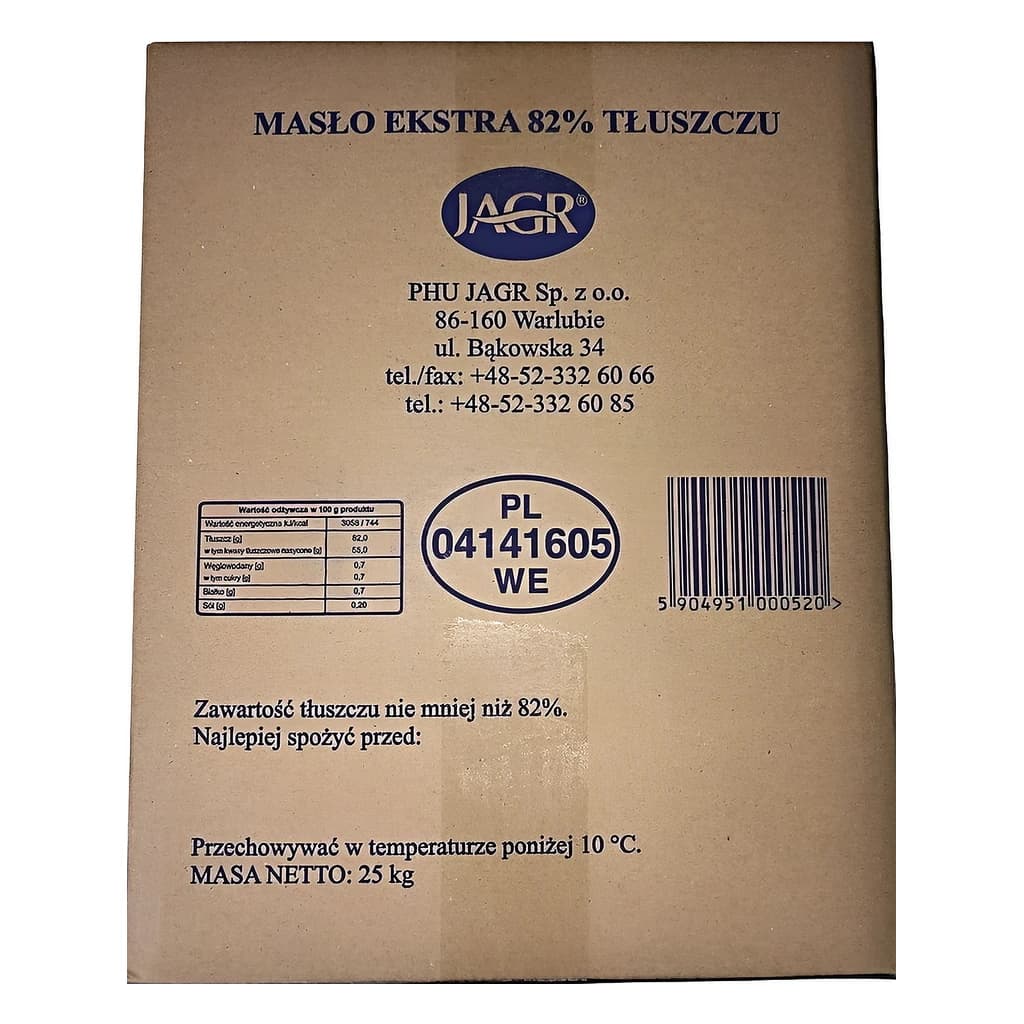
Unsalted Butter 82% 25 kg
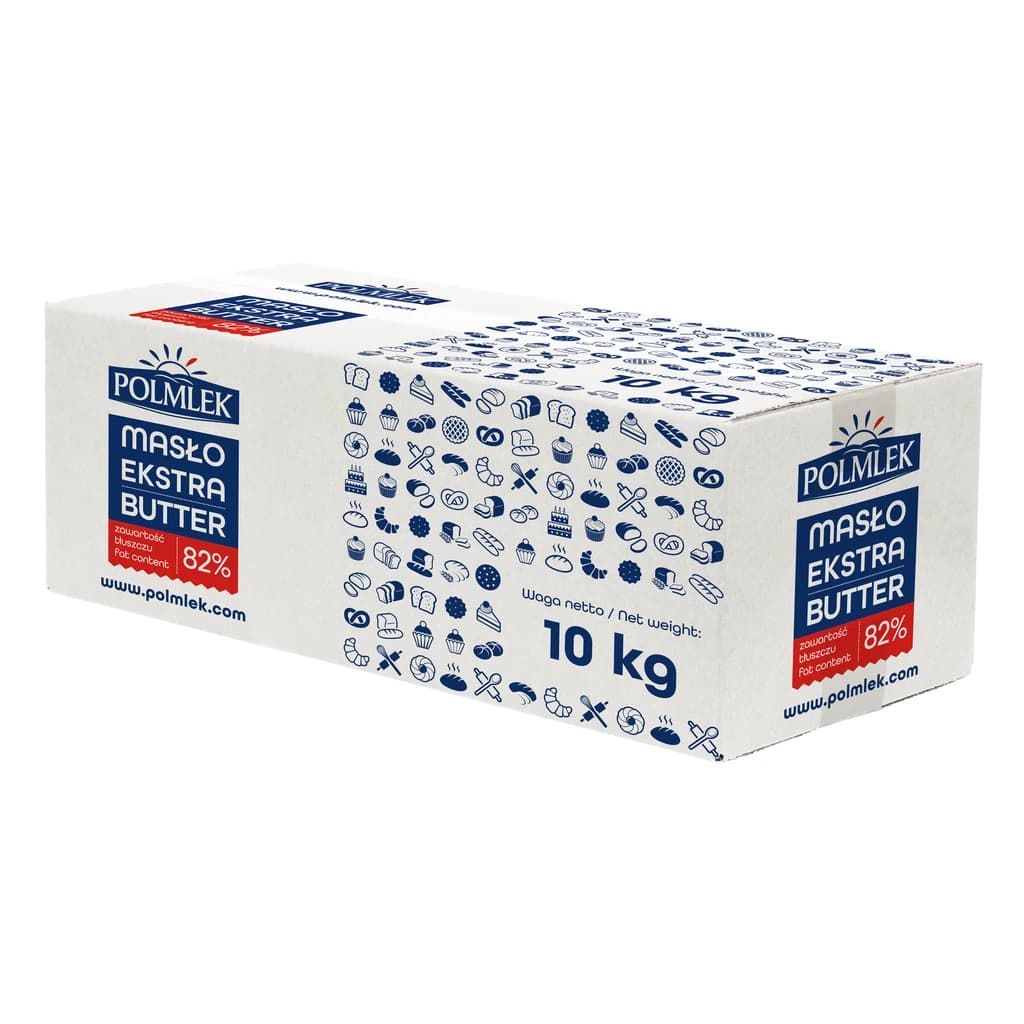
Unsalted Butter 82% 10 kg
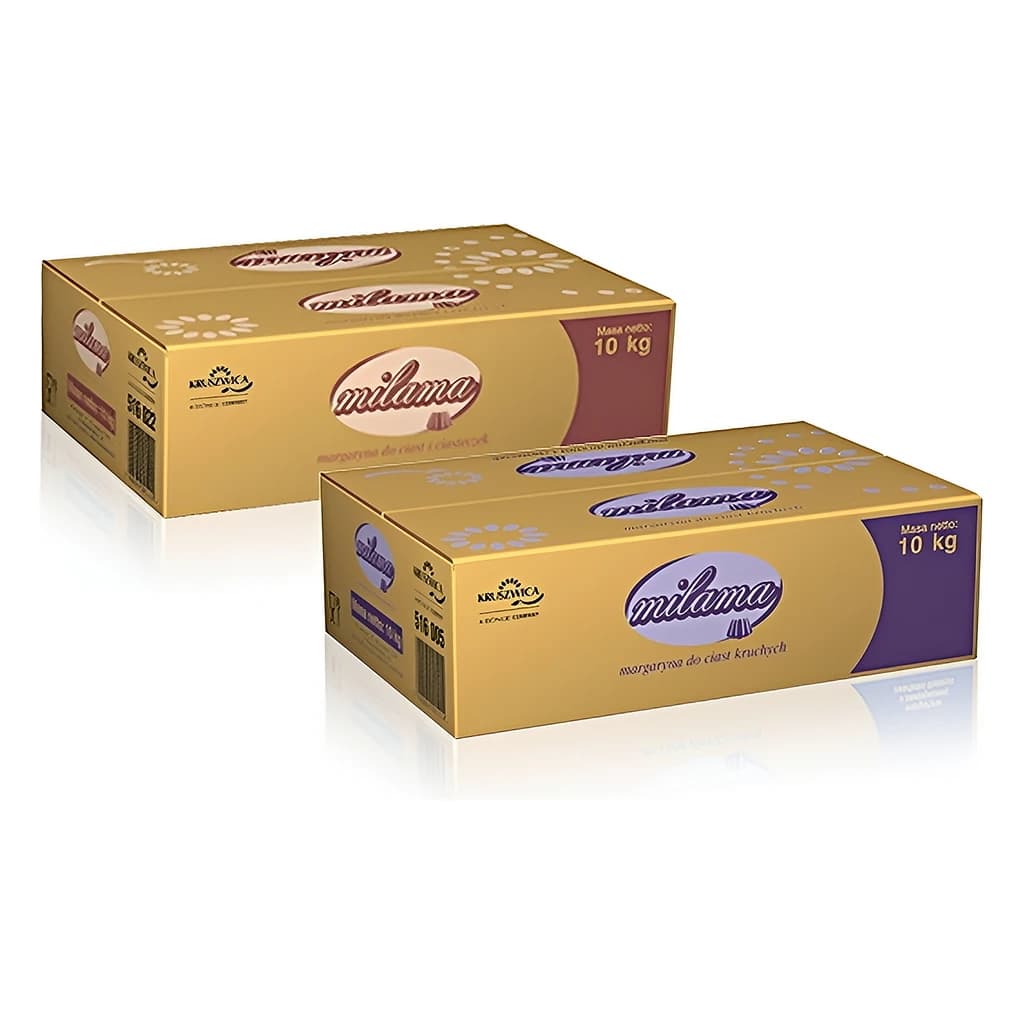
Milama Cake & Cookie Margarine 10 kg
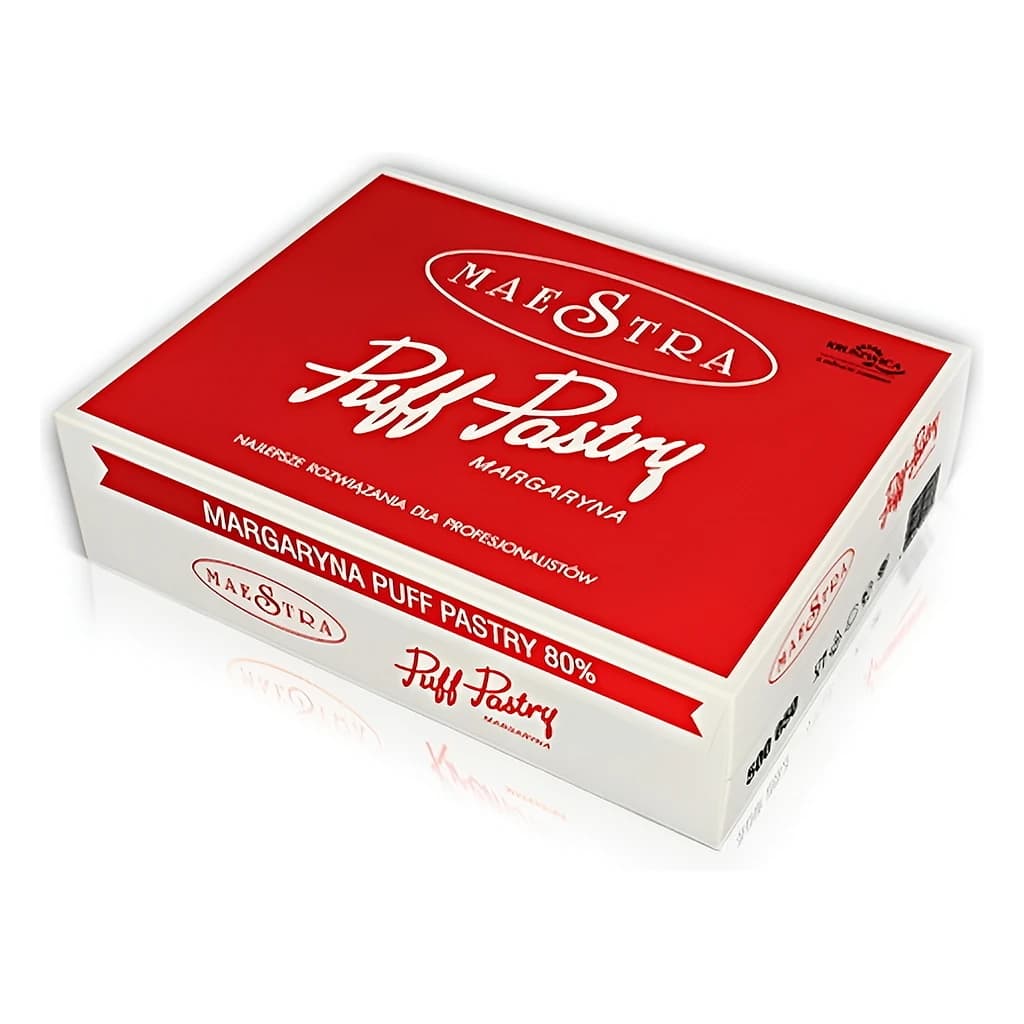
Puff Pastry Margarine 80% 10 kg

Puff Favorit Laminating Margarine 10 kg
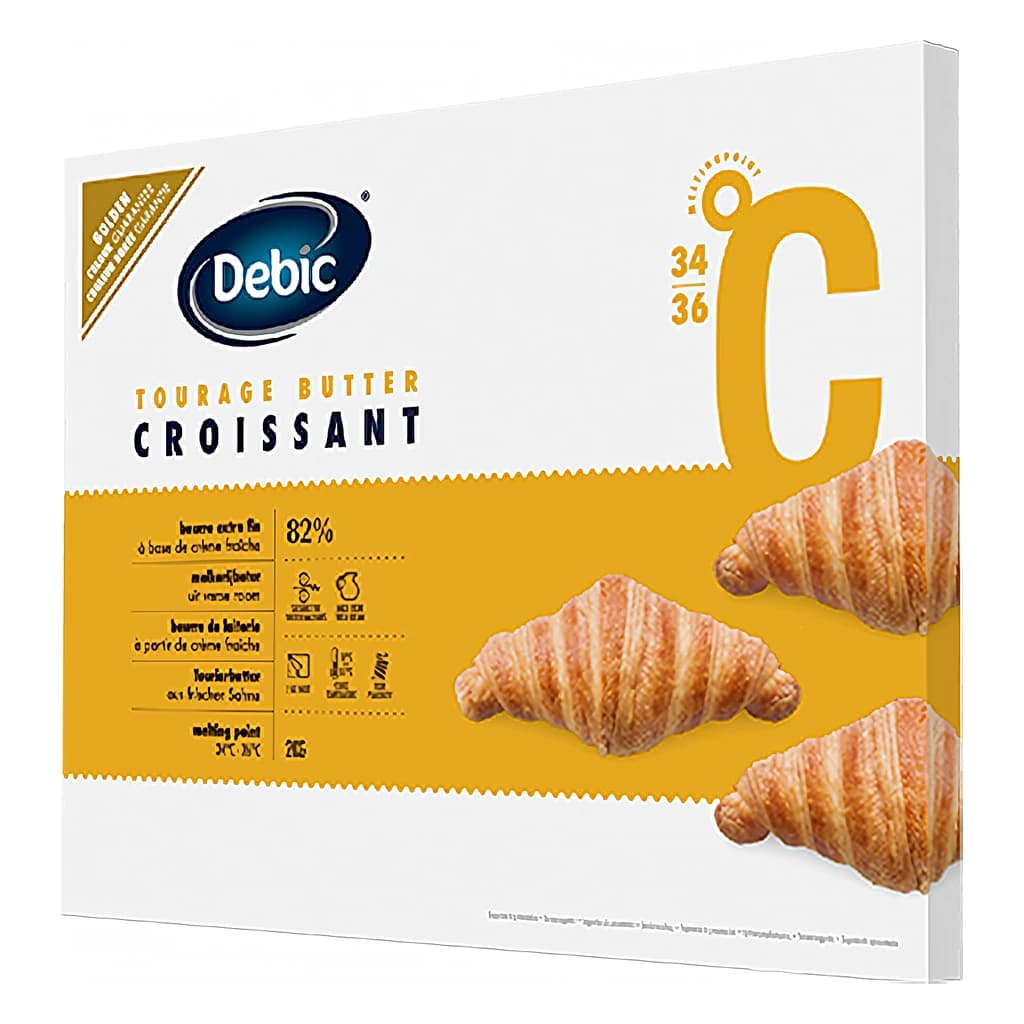
Tourage Croissant Butter 10 kg (5 × 2 kg)
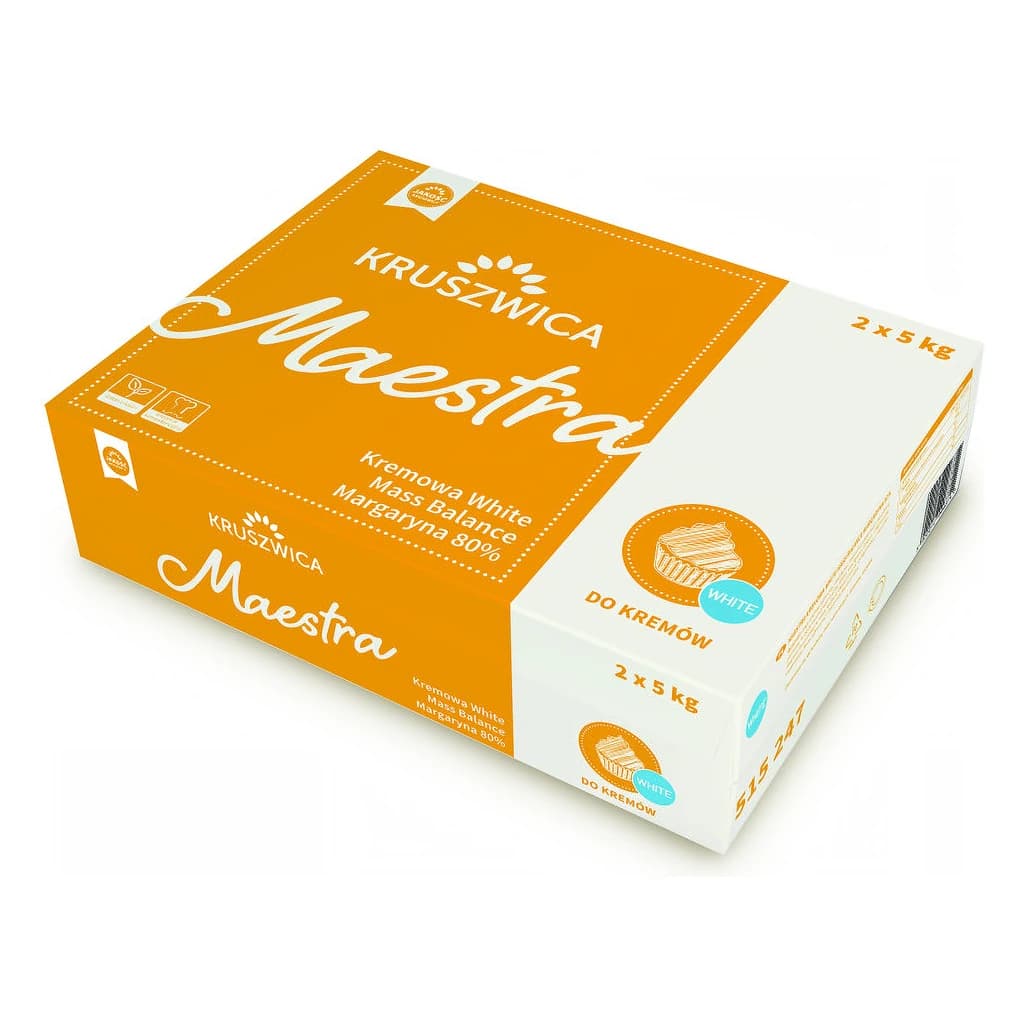
Maestra White Cream Margarine 80% 10 kg
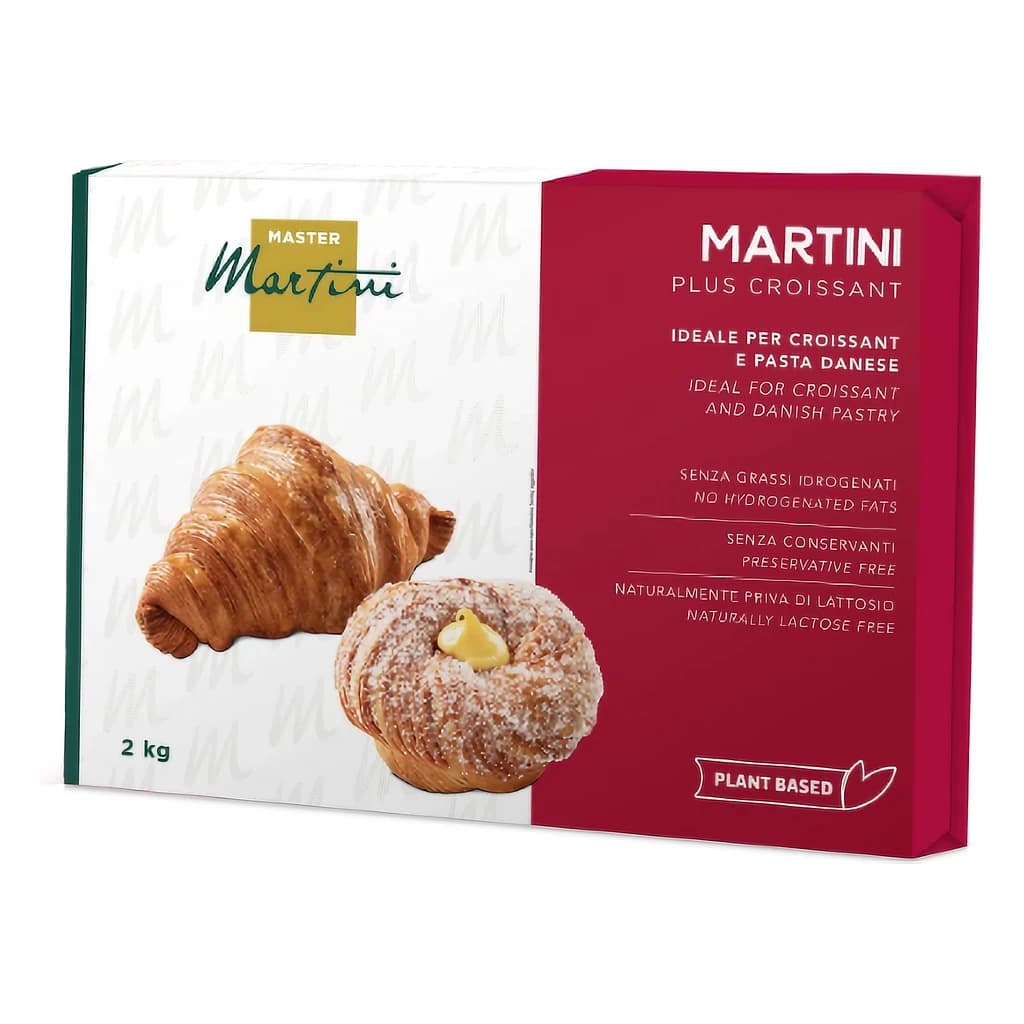
Plus Croissant Margarine 10 kg (5 × 2 kg)
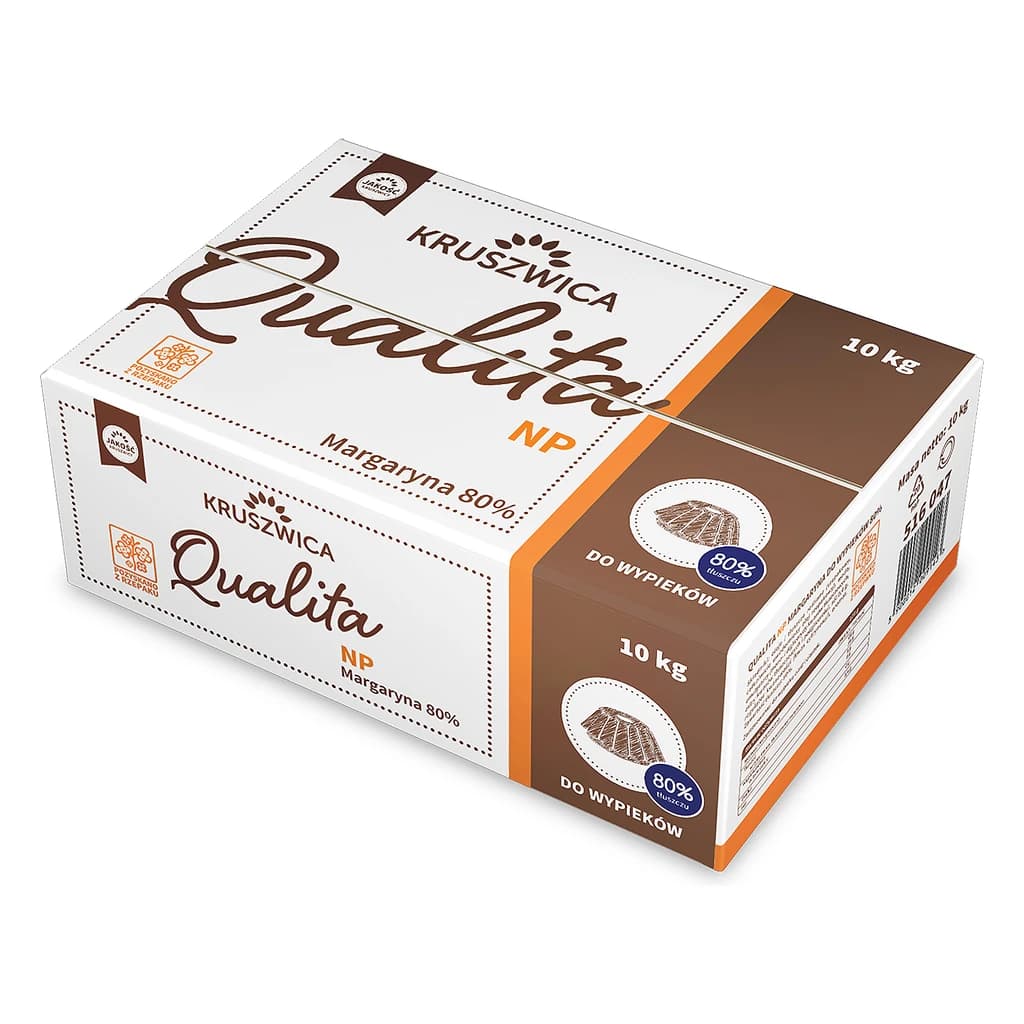
Qualita NP Palm-Free Margarine 80% 10 kg

Flex Quatro Danish Pastry Margarine 12.5 kg

High Ratio Vegetable Shortening 12.5 kg
Puff Pastry Margarine 12.5 kg

Marvello Cake Margarine 12.5 kg