
Roll-in fats for laminated pastry: butter vs pastry margarine — plasticity, melting point & how to choose
A decision-focused guide for professional bakers choosing the roll-in fat for croissants, Danish and puff pastry. It reduces the choice to two governing properties — plasticity (the plastic range over which the fat sheets without cracking or smearing) and melting point (which must sit above the proof temperature so layers set before the fat liquefies) — and turns them into practical decision frameworks by kitchen temperature, product type, eating quality, cost and dietary/label constraints. It maps the fat spectrum from butter (best flavour, narrowest plastic range) through tourage butter, butter-blend and croissant margarine to high-melt puff-pastry margarine, and warns against the common, costly error of reaching for a cake margarine or shortening. Numeric SFC, melting point, composition and allergen data are extracted directly from six Domson-catalogue spec sheets (Polmlek Butter 82%, Kruszwica Maestra Puff Pastry 80%, Kruszwica Milama Cake, Cardowan Crown NHAV Pastry, Cardowan Coronet HR Shortening, CSM Marvello Cake) and cross-checked against BAKERpedia, the American Society of Baking, the BC Campus Canadian Baker textbook and EU regulations. For the underlying lamination physics see A4-laminating-fats-viennoiserie and A6-laminated-dough-fundamentals.

The fat is the decision
In a laminated dough the base dough is almost an afterthought — flour, water, yeast, salt, a little sugar. The product is made or broken by the roll-in fat (the beurrage or tourage fat) that is folded into it. That fat is not a minor ingredient: it makes up roughly 25–33% of the total dough weight, and its mechanical and thermal behaviour decides whether your croissant shatters into clean honeycomb or bakes into a greasy, dense brick.
This article is about the choice, not the chemistry — for the underlying physics of lamination, Solid Fat Content curves and crystal polymorphism, read the companion deep-dive A4-laminating-fats-viennoiserie and the process article A6-laminated-dough-fundamentals. Here the goal is to let you walk up to a supplier list and pick the right fat with confidence.
The good news: the entire decision reduces to two properties — plasticity and melting point — plus a short checklist of commercial constraints (kitchen temperature, eating quality, flavour, cost, and dietary/label rules).
The two properties that decide everything
1. Plasticity (the plastic range)
A roll-in fat has to do something contradictory: stay solid enough to remain a continuous sheet, yet soft enough to be rolled paper-thin between dough layers without cracking or smearing. The temperature window in which a fat does both is its plastic range.
Technically, a fat is workable when its solid-fat fraction sits roughly between 15% and 25% (Solid Fat Index): above ~25% it is too brittle and cracks; below ~15% it is too fluid and smears. A reference roll-in shortening stays in that window across a wide span (SFI ~24 at 21°C down to ~17 at 33°C).
<!-- image: img-rf-03 -->The single most important practical fact: butter has the narrowest plastic range of all the solid bakery fats. It goes from shatteringly brittle (below ~10°C / 50°F) to a greasy smear (much above ~18°C) over a very short temperature span. That is why butter lamination demands a skilled hand and a cool room. A purpose-built roll-in margarine is engineered for a wide plastic range — plastic and workable across roughly 12–18°C, with the Kruszwica Maestra spec recommending a working temperature of 18–20°C, a comfortable 3–8°C warmer than butter. That margin is the whole point of margarine in a warm production hall.
2. Melting point (and the rule that protects your layers)
The melting point decides what happens in the oven. The fat must stay partly solid long enough for the dough to set around steam pockets; if it liquefies too early, the layers merge, the fat is absorbed into the dough ("oil-out"), and the flake is lost.
The working rule from baking technologists: a roll-in fat's melting point should be at least about 5°C (9°F) above the proofing temperature of croissants and Danish (proof ≈ 32–35°C). That puts the practical floor at roughly 37–40°C.
<!-- image: img-rf-04 -->This is where butter is structurally disadvantaged: standard butter melts at about 30–34°C — i.e. it overlaps the proof band, which is exactly why butter viennoiserie must be proofed cool and handled carefully. Lamination ("tourage" or "dry") butter is pushed higher, to about 34–38°C, and roll-in margarines run from croissant grades around 32–40°C up to high-melt puff-pastry grades like Cardowan Crown NHAV at 47.0°C. Pure pastry shortening sits higher still, at 47–57°C.
Reading it off a spec sheet
You do not need a lab — the spec sheet tells you both properties. Look for SFC at 30°C and 35°C (plastic range / heat-hold) and the slip melting point. A real laminating margarine keeps meaningful structure at bakery and early-oven temperatures; a cake margarine collapses.
<!-- image: img-rf-02 -->| Fat | Category | SFC @20°C | SFC @30°C | SFC @35°C |
|---|---|---|---|---|
| Butter 82% (reference) | Roll-in (butter) | ~30% | ~6% | ~1% |
| Maestra Puff Pastry 80% (Kruszwica) | Roll-in margarine | 33–37% | 17–23% | 9–13% |
| Marvello Cake 80% (CSM) | Cake — NOT roll-in | 20% (18–24%) | 12% (9.5–13.5%) | 9% (7–11%) |
| Milama Cake & Cookie 80% (Kruszwica) | Cake — NOT roll-in | 20–25% | — | max 5% |
Margarine values are spec-sheet confirmed. Butter SFC is reference-only — no Domson butter spec states SFC. See the table above.
The takeaway: the Maestra puff-pastry margarine retains 17–23% solid fat at 30°C — far more than the cake margarines (≤12%) or butter (~6%). That retained structure at bakery temperature is the engineered advantage of a true roll-in fat.
The fat spectrum: from flavour to heat tolerance
Think of roll-in fats as a ladder. As you climb it you trade dairy flavour and melt-in-the-mouth for plastic range and heat tolerance.
- Butter 82% — best flavour, narrowest plastic range, melts ~30–34°C. The artisan benchmark. Its ~16% water also turns to steam and helps lift.
- Tourage / dry butter (82% and 84%) — same dairy flavour, less water and a higher melting point (~34–38°C) for crisper, more defined layers and a little more warm-room tolerance.
- Butter-blend margarine — engineered to keep a butter-like flavour while gaining margarine's wider plastic range and lower cost.
- Croissant margarine — supplied in melting-point grades (commonly ~32 / 36 / 40°C); lower grades give a softer product with fast melt-in-mouth, higher grades resist heat but can feel waxy.
- Puff-pastry margarine — the widest plastic range and the highest melting points (Maestra 80%; Crown NHAV at 47°C for hot kitchens and long, hot bakes).
Butter: the flavour leader
EU law defines butter as ≥80% milk fat and ≤16% water. The Polmlek Unsalted Butter 82% spec confirms a working profile: fat min 82 g/100 g, water 16%, saturated fat 55.0 g/100 g (about two-thirds of the fat is saturated), energy 3058 kJ / 744 kcal, salt 0.20 g. Allergen: contains MILK, including lactose — any butter viennoiserie must carry a "Contains: Milk" declaration.
Butter's strengths are flavour and that ~16% water, which flashes to steam and contributes to volume. Its weaknesses are the narrow plastic range, the low melting point overlapping the proof band, and seasonal variation — summer grass-fed butter is softer than winter butter, so the same brand behaves differently in June and December. Store cold (Polmlek: 0–10°C, max 60 days; frozen -18 to -22°C, 12 months).
<!-- image: img-rf-08 -->Tourage (dry) butter trades a little flavour-neutrality for performance: a higher fat content (the Domson catalogue Tourage Croissant Butter sits in the 82–84% family typical of beurre de tourage ) and lower water, giving a higher melting point (~34–38°C) and crisper layers with less blistering. It is the premium choice for all-butter puff and high-precision croissant. No spec sheet is available for the catalogue Tourage Croissant Butter — assume the MILK allergen and confirm fat content with the supplier.
<!-- image: img-rf-09 -->Pastry margarine: the workhorse
A roll-in margarine is built to remove butter's fragility. The Kruszwica Maestra Puff Pastry 80% spec is a textbook example: fat 80% ±0.5%, SFC 33–37% / 17–23% / 9–13% at 20/30/35°C, suggested working temperature 18–20°C, energy 2960 kJ / 720 kcal. It is a blend of vegetable oils and fats with emulsifiers, salt, a preservative (potassium sorbate), antioxidants, citric acid and annatto colour.
<!-- image: img-rf-06 -->For warm kitchens and industrial lines, the Cardowan Crown NHAV Pastry Margarine goes further: a slip melting point of 47.0°C, fat 82 g, saturates 41.2 g (note: only ~half the saturates of the same weight of butter), but salted at 2.5 g/100 g so account for it in the recipe. Crucially, its spec declares all 14 EU/UK allergens absent and certifies it vegan, vegetarian, kosher and halal, with RSPO (Segregated & Mass Balance) palm. That 47°C melting point keeps the fat partly solid deep into a long, hot bake — ideal for puff pastry and high-throughput lines, at the cost of a denser, non-dairy mouthfeel.
<!-- image: img-rf-07 -->The expensive mistake: cake margarine and shortening are NOT roll-in fats
The most common — and most costly — error in a busy bakery is grabbing a "margarine" or "shortening" off the shelf without checking that it is a laminating fat. The spec sheets make the difference unmistakable.
<!-- image: img-rf-10 -->- CSM Marvello Cake Margarine 80% — a general-purpose cake/creaming margarine. SFC drops to ~12% at 30°C and the block is "smooth, plastic, kneadable" at room temperature. Roll it in and it smears into the dough and merges the layers.
- Kruszwica Milama Cake & Cookie Margarine 80% — SFC only 20–25% at 20°C and max 5% at 35°C, explicitly intended for "confectionery production (cakes and cookies)". There is almost no solid structure left to hold layers through the bake.
- Cardowan Coronet NHAV HR Shortening — a 100% fat, anhydrous high-ratio cake shortening (slip melting point 44.0°C, 12% aerated). Because it contains no water it contributes no steam lift, and it is formulated for emulsified high-ratio cakes, not for sheeting.
These fats are excellent at their jobs — creaming, aeration, cake structure — and useless as roll-in fats. The reliable check: read SFC at 30°C. A roll-in fat holds roughly 14–23% solid there; a cake margarine has typically fallen below 12%.
How to choose — practical frameworks
By kitchen / climate temperature
This is the first filter, because it overrides taste. If your production room runs cool and you have refrigeration and skilled hands, butter is on the table. As the room warms, climb the melting-point ladder:
- Cool room (<18°C): butter or tourage butter is workable.
- Typical hall (18–22°C): croissant/puff-pastry margarine (e.g. Maestra 80%) gives a forgiving plastic range.
- Hot kitchen (>22°C) or industrial line: a high-melt puff-pastry margarine (Crown NHAV, 47°C) resists smearing and oil-out.
By product
Croissant, Danish and puff pastry want different layer softness. Danish wants the softest layers (a lower-melt grade), puff pastry the firmest (high SFC at 30–35°C to survive a long bake), croissant in between. See the product map below.
By eating quality vs throughput vs cost
- Flavour-led / premium: butter or tourage butter. Accept lower throughput and tighter temperature control.
- Throughput-led / consistency: roll-in margarine. Wider plastic range = fewer rejects, faster lamination.
- Cost-led: margarine is materially cheaper than butter and far more tolerant of a warm hall.
- Mouthfeel: a lower melting point eats softer and melts faster on the palate; a higher one is more heat-stable but can feel waxy. Match the grade to the product, not just the process.
By dietary / label constraint
- Vegan / dairy-free: butter is excluded; choose a confirmed dairy-free margarine (Crown NHAV is certified vegan). For Maestra, resolve the allergen discrepancy first.
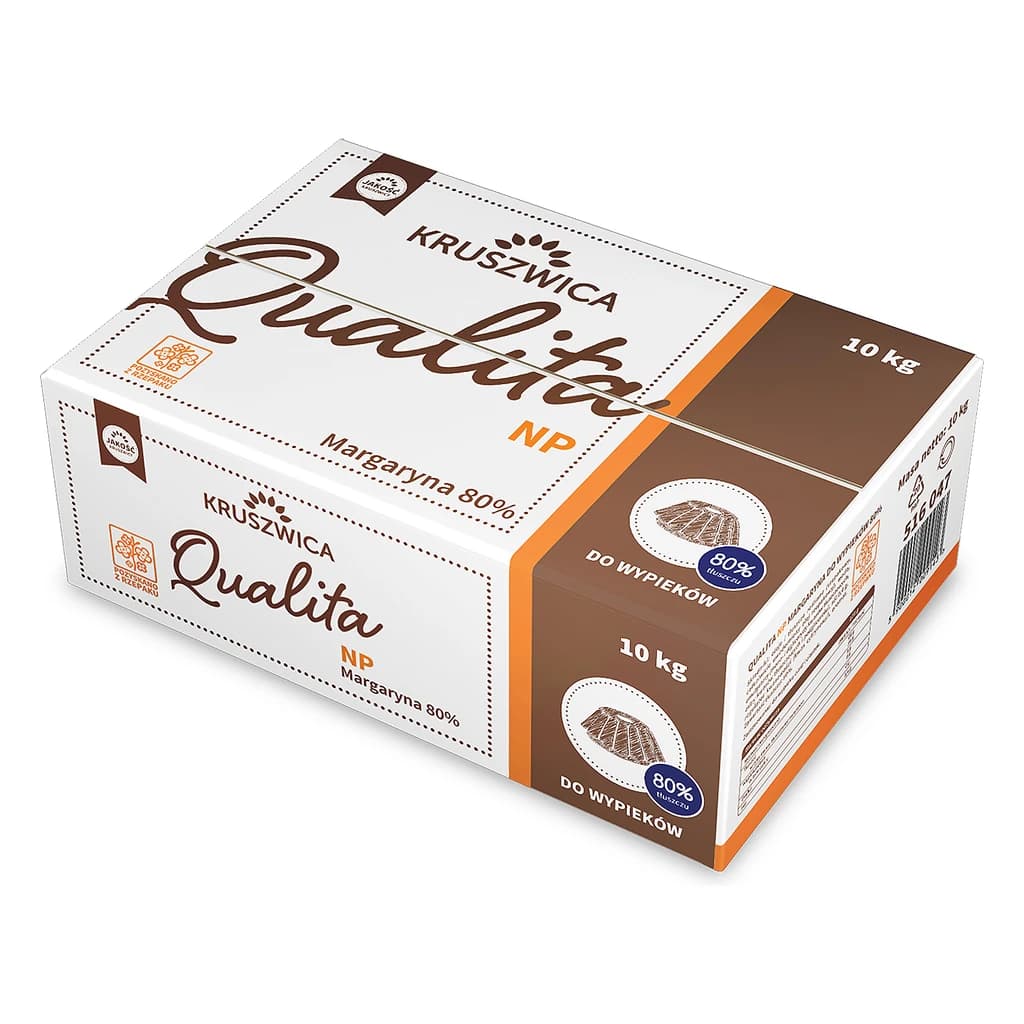
- Palm-free: specify a palm-free laminating margarine (e.g. Qualita NP Palm-Free 80%) and confirm SFC, melting point and allergens directly with the supplier (no spec sheet available).
- Allergen control: Crown NHAV and Coronet declare all 14 allergens absent in product, line and factory; always verify against current batch documentation before labelling.
Hitting the right temperature
Selecting the fat is half the job; the other half is matching its temperature to the dough so both sheet together as one plastic mass.
<!-- image: img-rf-05 -->- Butter slab: temper to ~13–18°C (the plastic working window; butter is brittle below ~10°C). From the fridge (0–4°C) it needs 1–2 hours; do not sheet it cold or it shatters.
- Roll-in margarine: bring to its spec working temperature — 18–20°C for Maestra; it should be ready-plastic without beating.
- Base dough (détrempe): bring close to the fat temperature, typically ~14–18°C, so neither tears the other.
- The bend test: flex a slab. Correct = bends into a smooth U without cracking and without greasing your fingers; too cold = cracks; too warm = floppy smear. (See the bend-test card below.)
- Proof below the fat's melting point: proof croissant/Danish at ~25–28°C — well under butter's ~30–34°C and any margarine's melting point — so layers set before the fat runs.
A common rescue: layers behave beautifully in winter, then collapse on the first hot day. The fix is rarely technique — it is the fat. Move one rung up the melting-point ladder for summer (croissant margarine → puff-pastry margarine → high-melt).
Troubleshooting (summary)
The full fault table is below. The fat-selection greatest hits:
- Cracks/shatters when sheeting → fat too cold for its plastic range; temper to spec.
- Smears and merges layers → fat too warm, or a cake margarine/shortening used in error; chill and/or switch to a real roll-in fat.
- Oils out / greasy base in the oven → melting point too low for the proof/bake; use a higher-melt fat or proof cooler.
- Dense, no flake → wrong fat category (SFC collapsed before set); confirm a laminating fat and check SFC@30°C on the spec.
Allergens, trans fat and sustainability
Allergens. Butter contains milk/lactose — always declared. For margarines, trust the spec but verify against current batches: Cardowan Crown NHAV declares all 14 allergens absent; Kruszwica Maestra is unresolved — its 2009 spec lists soya lecithin (SOY) and 'may contain trace dairy'. Do not publish a Maestra allergen declaration without written current-formulation confirmation from Kruszwica. Products without spec sheets (Tourage Croissant Butter, Plus Croissant, Puff Favorit, Flex Quatro, Argenta, Mimetic 32, Qualita NP) have no first-party allergen data — confirm before labelling.
Trans fat. Industrial trans fats are largely engineered out of European margarines. EU Regulation 2019/649 caps industrial (non-animal) trans fat at 2 g per 100 g of fat for the final consumer; naturally occurring trans fat in butter is exempt. CSM Marvello declares 0.9 g/100 g (comfortably within), but Maestra's "max 2% of fatty acids" sits exactly at the limit, not within it — batch variability could breach it; verify current certificates. Kruszwica Milama also declares trans fat at 'max 2% of fatty acids' against an ingredient list that includes 'partially hydrogenated palm'; the fat-fraction equivalent sits at the regulatory boundary — obtain a current trans-fat certificate before any use or labelling.
Erucic acid (Maestra). The 2009 Maestra spec declares erucic acid (C22:1) at max 2% of fatty acids. EU Regulation 2019/1870 sets a maximum of 20 g/kg (≈ 2% by mass in vegetable fats) in food-grade vegetable oils. Maestra's declared maximum sits exactly at this regulatory ceiling — batch variability could result in non-compliance. Modern canola-grade rapeseed oil typically contains well under 0.1% erucic acid, suggesting the spec limit may be conservative legacy wording from 2009, but a current analytical certificate must be obtained from Kruszwica to confirm regulatory compliance before use.
Process contaminants. Palm refining can generate 3-MCPD and glycidyl esters. Kruszwica Milama declares 3-MCPD/esters max 2188 µg/kg and glycidyl esters max 1000 µg/kg. EU 2020/1322 (verify whether superseded by Regulation 2023/915 — apply the current in-force instrument) sets limits per kg of fat (3-MCPD esters 2500 µg/kg; glycidyl 1000 µg/kg) — so confirm with the manufacturer whether the spec values are per kg of product or per kg of fat before stating compliance. If these spec values are per kg of finished product, the fat-fraction equivalents would exceed the regulatory limits; this ambiguity must be resolved. Butter, a dairy fat, has no 3-MCPD/glycidyl concern.
Sustainability. Roll-in margarines rely on palm for high SFC and stable β′ crystals. The catalogue offers RSPO-certified options (Cardowan Crown NHAV: Segregated & Mass Balance ) and a palm-free route (Qualita NP Palm-Free 80% — verify spec). See A4-sustainable-palm-free-fats for the trade-offs.
Catalogue pick list
Butter (flavour-led): Polmlek Unsalted Butter 82% (10 kg, spec-confirmed; also 25 kg); Tourage Croissant Butter (Agart, 5 × 2 kg — premium dry butter, no spec).
Roll-in margarine (workhorse): Maestra Puff Pastry Margarine 80% (Kruszwica, spec-confirmed); Crown NHAV Pastry Margarine (Cardowan, 47°C, spec-confirmed — best for hot kitchens/industrial); Plus Croissant Margarine (Master Martini); Puff Favorit Laminating Margarine (PGD); Flex Quatro Danish Pastry Margarine (CSM — Danish-grade); Argenta Pastry Laminating Fat and Mimetic 32 Lamination Fat (Puratos).
Palm-free: Qualita NP Palm-Free Margarine 80% (Kruszwica — verify spec).
Do NOT use as roll-in fats (cake/creaming/shortening): Marvello Cake Margarine (CSM), Milama Cake & Cookie Margarine (Kruszwica), Coronet High Ratio Vegetable Shortening (Cardowan).
Coverage notes (transparency)
Strong (spec-sheet confirmed): composition, SFC, melting point, working temperature, allergen and contaminant declarations for Polmlek Butter 82%, Kruszwica Maestra (2009), Kruszwica Milama, Cardowan Crown NHAV, Cardowan Coronet HR, CSM Marvello.
Medium (cross-checked literature, single spec per product): the 5°C-above-proof melting-point rule and SFI plastic-range window (BAKERpedia, ASB); croissant margarine melting-point grades (~32/36/40°C); butter and tourage melting points (~30–34°C / 34–38°C).
Thin (reference only): butter SFC curve — no Domson butter spec states SFC (Canadian Baker textbook + dairy-science source, confidence:low). Roll-in fat as 25–33% of dough weight (one academic + one reference).
No first-party data: Tourage Croissant Butter, Plus Croissant, Puff Favorit, Flex Quatro, Argenta, Mimetic 32, Qualita NP, Unsalted Butter 25 kg — no spec sheets; allergen and numeric data must be confirmed with suppliers before use.
Figures
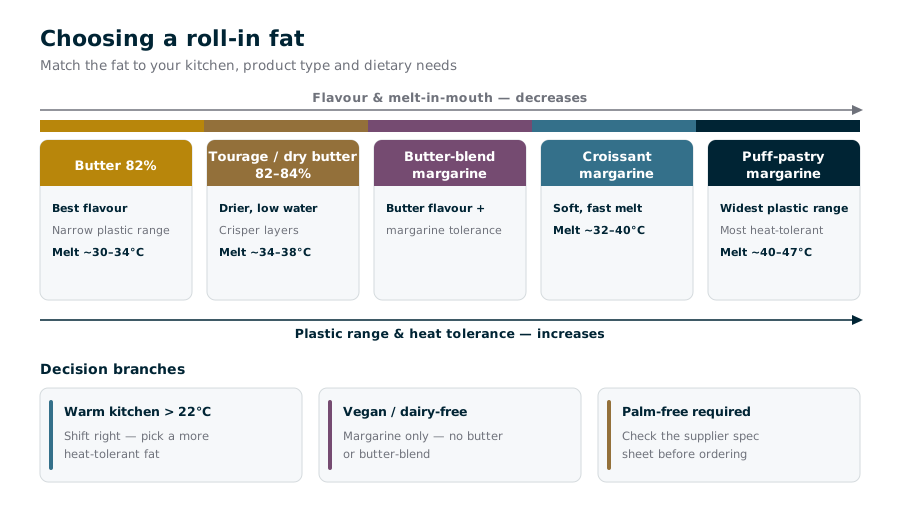 Decision diagram for selecting a roll-in laminating fat, showing a spectrum from butter (best flavour, narrow plastic range) through butter-blend and croissant margarine to puff-pastry margarine (widest plastic range, highest melting point), with branches for warm kitchen, product type and vegan/palm-free requirements
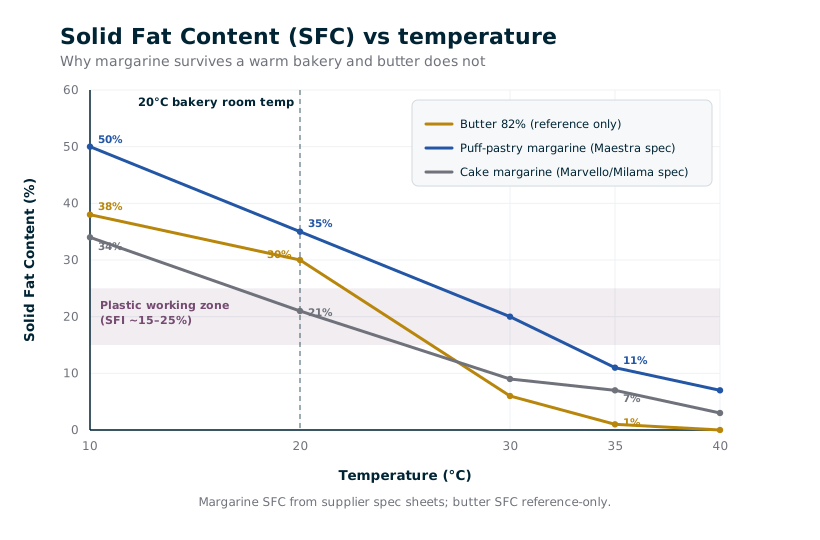 Line graph of Solid Fat Content percentage versus temperature from 10 to 40°C for three fats: butter (high at 10°C, near zero by 35°C), puff-pastry margarine (holds 33–37% at 20°C and 9–13% at 35°C), and cake margarine (lower throughout, near zero by 35°C), with a shaded plastic working zone
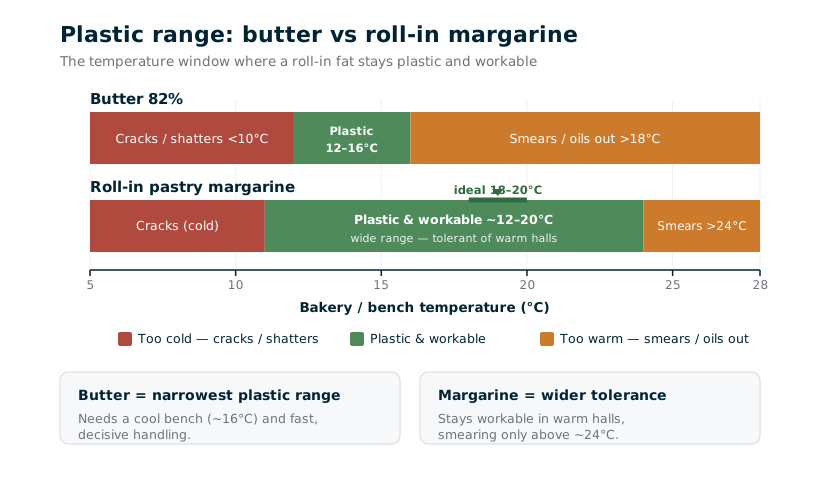 Horizontal bar chart comparing the plastic working temperature range of butter (a narrow band roughly 12–16°C) against roll-in pastry margarine (a wide band roughly 12–20°C), with cold-shatter and warm-smear zones marked at each end
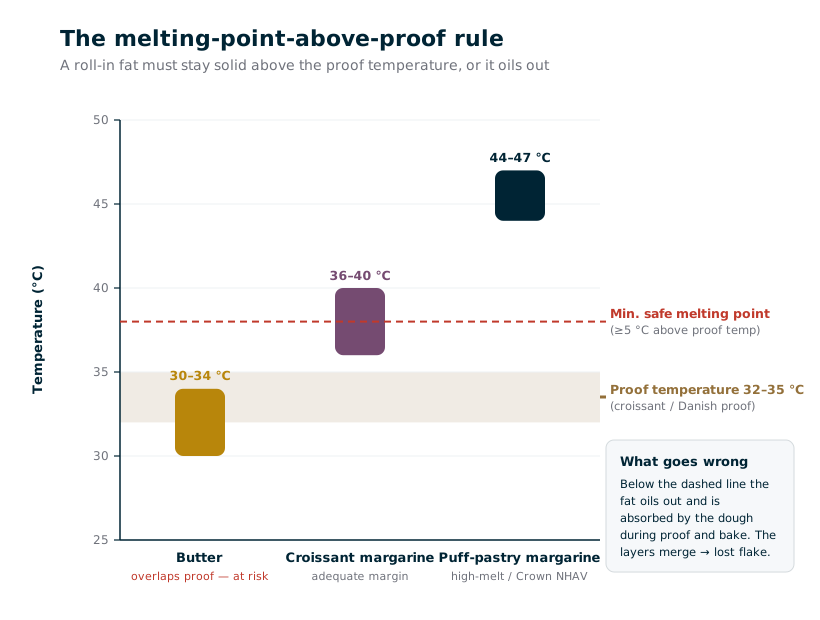 Vertical thermometer-style diagram showing the croissant/Danish proofing band at 32–35°C and a dashed line ~5°C above it marking the minimum safe fat melting point, with butter (30–34°C, at risk), croissant margarine (36–40°C), and puff-pastry margarine (44–47°C) placed on the scale
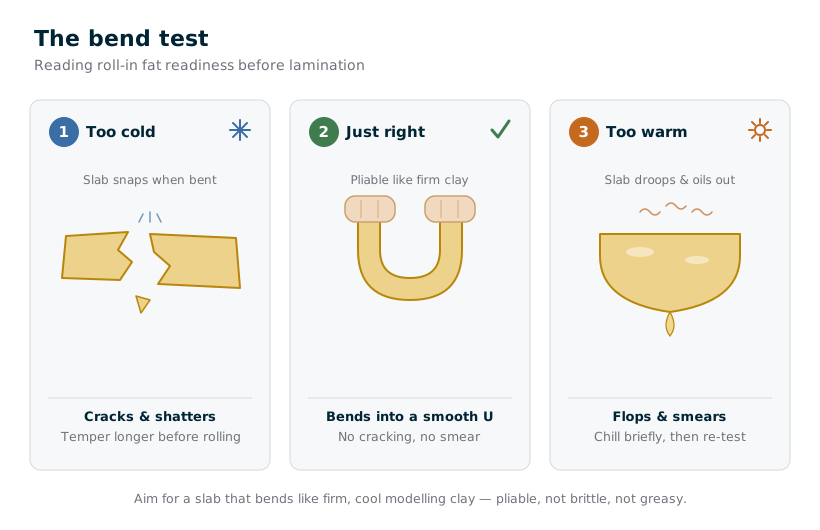 Three-panel illustration of the bend test for a roll-in fat slab: too cold (slab snaps and cracks), correct (slab bends into a smooth U without cracking or greasing the fingers), too warm (slab flops and leaves a greasy smear)
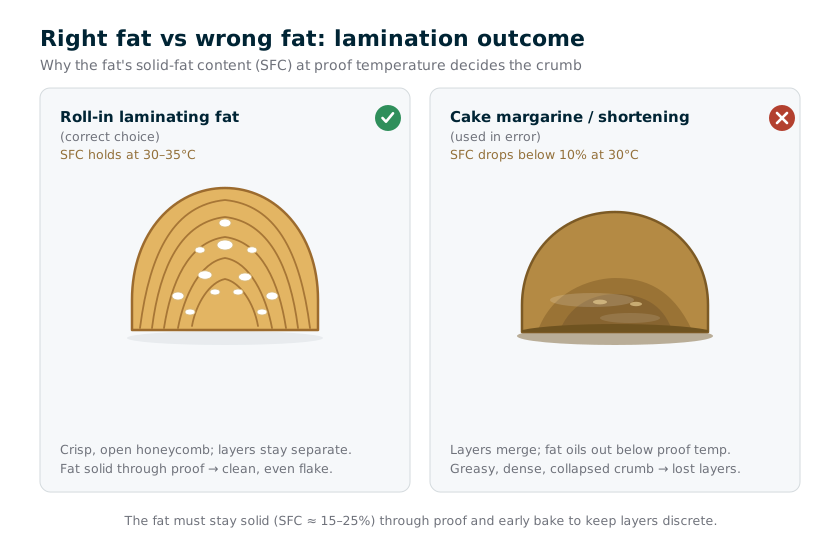 Two baked pastry cross-sections side by side: left, a roll-in laminating fat producing crisp open honeycomb layers; right, a cake margarine used in error producing merged, greasy, dense crumb with lost layers
Roll-in fat dosage (beurrage) — rule of thumb
| Roll-in fat as % of total dough weight | ~25–33% |
| Croissant — fat on flour (beurrage) | ≈ 25–30% of flour weight |
| Puff pastry — fat on flour (beurrage) | ≈ 50–60% of flour weight (higher fat ratio) |
Yield: Per 1000 g détrempe (base dough) flour weight
Roll-in fat is typically 25–33% of total laminated-dough weight; expressed on dough/flour it is usually quoted as a beurrage ratio. Detailed beurrage formulas live in A8-laminated-dough-formulas.
Temperature targets — match the fat to the dough
| Butter slab (plastic working window) | ~13–18°C |
| Roll-in margarine (Maestra suggested working temp) | 18–20°C |
| Détrempe / base dough at enclosure | matched to fat, typically ~14–18°C |
| Rest/chill between folds (butter) | 0–4°C, 20–30 min |
| Final proof (croissant/Danish) | ~25–28°C (must stay below the fat's melting point) |
| Minimum fat melting point vs proof | ≥ ~5°C above proof temp (≥ ~37–40°C) |
Yield: Lamination working temperatures
The bend test — is the fat ready?
| Too cold | Slab snaps/cracks when bent → temper longer (butter brittle below ~10°C) |
| Just right | Slab bends into a smooth U without cracking and without greasing the fingers |
| Too warm | Slab flops and leaves a greasy smear → chill briefly |
Yield: Field check before enclosing the fat
| Property | Butter (82%) | Tourage / dry butter (82–84%) | Croissant margarine | Puff-pastry margarine |
|---|---|---|---|---|
| Flavour | Best — dairy, full | Best — dairy, full | Neutral / butter-like | Neutral |
| Fat content | ~82% (min 80% legal) | 82% or 84% | ≥80% | 80% (Maestra) |
| Water content | ~16% | Lower than standard butter | Low (~18–20%) | ~18–20% |
| Plastic range | Narrowest — temperature-sensitive | Slightly wider than standard butter | Wide | Widest |
| Melting point | ~30–34°C | ~34–38°C | ~32–40°C (graded) | ~40–47°C (e.g. Crown NHAV 47°C) |
| Working temp (slab) | ~12–16°C | ~12–16°C | ~12–18°C | 18–20°C (Maestra spec) |
| Steam / lift from water | Yes — ~16% water | Less (drier) | Some | Some |
| Warm-kitchen tolerance | Poor | Fair | Good | Best |
| Allergen | MILK / lactose | MILK / lactose (assume) | Dairy-free (verify) | Dairy-free (Maestra: SOY + may-contain milk) |
| Typical cost | Highest | High (premium) | Lower | Lower |
| Fat | Category | SFC @20°C | SFC @30°C | SFC @35°C | Source |
|---|---|---|---|---|---|
| Butter 82% (reference) | Roll-in (butter) | ~30% | ~6% | ~1% | Trade reference |
| Maestra Puff Pastry 80% (Kruszwica) | Roll-in margarine | 33–37% | 17–23% | 9–13% | Spec sheet |
| Marvello Cake Margarine 80% (CSM) | Cake margarine — NOT roll-in | 20% (18–24%) | 12% (9.5–13.5%) | 9% (7–11%) | Spec sheet |
| Milama Cake & Cookie 80% (Kruszwica) | Cake margarine — NOT roll-in | 20–25% | (not stated) | max 5% | Spec sheet |
Margarine SFC values are read directly from supplier spec sheets. Butter SFC is reference-only (no Domson butter spec states SFC). Cake margarines and shortenings are shown to demonstrate they are NOT roll-in fats.
| Temperature | SFI (typical) | Process context | Within plastic range (15–25)? |
|---|---|---|---|
| 10°C (50°F) | 26 | Retarder / refrigeration | Just above (firm) |
| 21°C (70°F) | 24 | Mixing & make-up | Yes |
| 27°C (80°F) | 19 | Warm bench | Yes |
| 33°C (92°F) | 17 | Proofing | Yes |
| 40°C (104°F) | 14 | Hot hall / early bake | Just below (softening) |
Solid Fat Index (SFI) reference values for a generic roll-in shortening; the workable plastic range is SFI ~15–25.
| Product | First choice | Practical alternative | Why |
|---|---|---|---|
| Artisan croissant (flavour-led) | Unsalted butter 82% or Tourage butter 82–84% | Butter-blend / croissant margarine | Butter wins on flavour; tourage's lower water gives crisper layers; needs tight temperature control |
| Production croissant (throughput-led) | Croissant margarine (melt ~36–40°C) or Maestra Puff Pastry 80% | Plus Croissant Margarine | Wider plastic range = faster, more forgiving lamination at scale |
| Danish pastry | Danish-grade margarine (softer SFC) or butter | Maestra / croissant margarine | Danish wants softer, more pliable layers than puff; choose a lower-melt grade |
| Puff pastry (feuilletage) | Puff-pastry margarine (Maestra 80%) or high-melt Crown NHAV (47°C) | Tourage butter for premium all-butter puff | High SFC at 30–35°C holds layers through a long, hot bake |
| Hot kitchen (>22°C) / industrial line | High-melt puff-pastry margarine (Crown NHAV 47°C) | Maestra 80% | Highest melting point and broadest plastic range resist smearing and oil-out |
| Vegan / dairy-free product | Crown NHAV (certified vegan) or other roll-in margarine | Maestra (verify allergen status) | Butter is excluded; choose a confirmed dairy-free margarine |
| Palm-free requirement | Qualita NP Palm-Free Margarine 80% (no spec sheet — verify) | — | Specify palm-free; confirm SFC, melting point and allergens directly with supplier |
| Product | What it actually is | Why it fails as a roll-in fat | Source |
|---|---|---|---|
| Marvello Cake Margarine 80% (CSM) | General-purpose cake/creaming margarine | SFC drops to ~12% at 30°C and the slab is soft/kneadable at room temp → smears and merges layers | Spec sheet |
| Milama Cake & Cookie Margarine 80% (Kruszwica) | Confectionery cake & cookie margarine | SFC only 20–25% at 20°C and max 5% at 35°C → no structure left to hold layers through the bake | Spec sheet |
| Coronet NHAV HR Shortening (Cardowan) | High-ratio cake shortening (100% fat, anhydrous, 12% aerated) | No water → no steam lift; formulated for emulsified high-ratio cakes, not for sheeting into layers | Spec sheet |
| Fault | Likely cause (fat-related) | Remedy |
|---|---|---|
| Fat cracks / shatters during sheeting | Fat too cold (below plastic range); butter especially brittle below ~10°C | Temper the slab to 13–18°C (butter plastic window) or 18–20°C (margarine); beat lightly to even plasticity |
| Fat smears and merges into the dough | Fat too warm, or wrong fat (cake margarine/shortening with low SFC at room temp) | Chill; switch to a dedicated roll-in fat that holds ≥14–17% SFC at 30°C |
| Fat oils out / leaks from base in the oven | Melting point too low for the proof/bake (below ~5°C above proof) | Use a higher-melt fat (e.g. Crown NHAV 47°C); lower proof temperature below the fat's melting point |
| Dense crumb, no flake | Cake margarine or shortening used instead of a roll-in fat; SFC collapses before layers set | Confirm a dedicated laminating fat; check SFC at 30–35°C on the spec sheet |
| Greasy mouthfeel / heavy product | Fat melting point too high (waxy) or too much fat absorbed by smearing | Drop to a lower-melt grade for eating quality; correct temperature control to stop smearing |
| Inconsistent batch-to-batch (butter) | Seasonal butter variation + narrow plastic range | Re-temper to feel each batch; consider tourage butter or a margarine for consistency |
| Layers fine cold, collapse on warm days | Roll-in fat melting point/SFC too low for a hot hall | Move up the melting-point ladder (croissant→puff-pastry→high-melt margarine) for summer/hot kitchens |
- Fat pct:
- 80% ±0.5%
- Sfc 20C:
- 33–37%
- Sfc 30C:
- 17–23%
- Sfc 35C:
- 9–13%
- Working temp:
- 18–20°C
- Salt:
- 0.5%
- Energy:
- 2960 kJ / 720 kcal per 100 g
- Ffa max:
- 0.75%
- Peroxide max:
- 4.0 meq O2/kg
- Erucic acid max:
- 2%
- Shelf life:
- 150 days; store 4–10°C
- Allergen flag:
- Ingredients list soya lecithin (SOY) and 'may contain trace dairy' (2009 spec) — verify current formulation
- Fat g:
- 82.0 g/100 g
- Saturates g:
- 41.2 g/100 g
- Slip melting point:
- 47.0°C
- Salt g:
- 2.5 g/100 g (salted)
- Ffa:
- 0.10%
- Peroxide:
- 1.0
- Ingredients:
- Palm, Rapeseed oil; Water; Salt; Emulsifier E471
- Allergens:
- All 14 EU/UK allergens absent (product/line/factory)
- Certs:
- RSPO SG & MB; vegan, vegetarian, kosher, halal
- Shelf life:
- 5 months
- Fat g:
- min 82 g/100 g
- Water:
- 16%
- Saturates g:
- 55.0 g/100 g
- Energy:
- 3058 kJ / 744 kcal per 100 g
- Salt g:
- 0.20 g/100 g
- Melting point ref:
- ~30–34°C (reference; not on spec)
- Storage:
- 0–10°C max 60 days; -18 to -22°C 12 months
- Allergen:
- CONTAINS MILK including lactose
Buy the ingredients
Catalogue products and brands referenced in this article.

Unsalted Butter 82% 25 kg
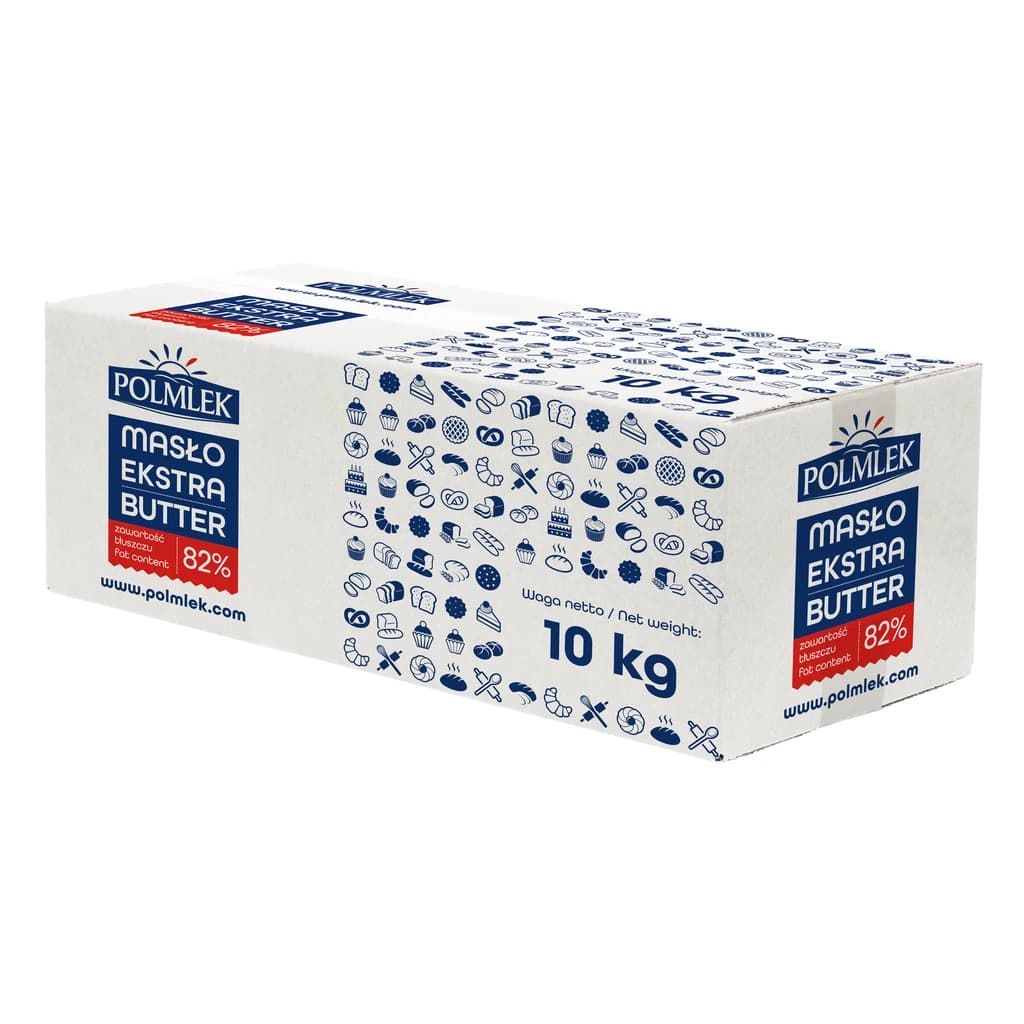
Unsalted Butter 82% 10 kg
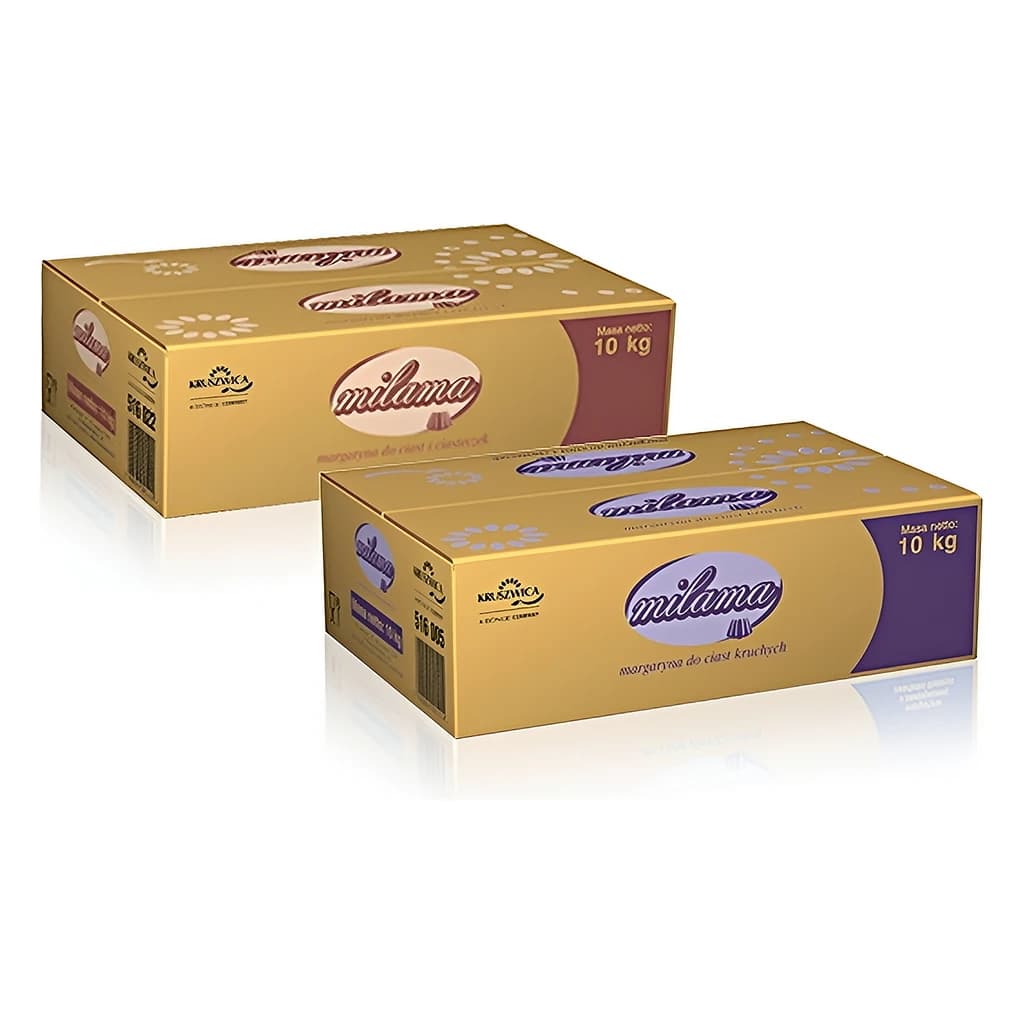
Milama Cake & Cookie Margarine 10 kg
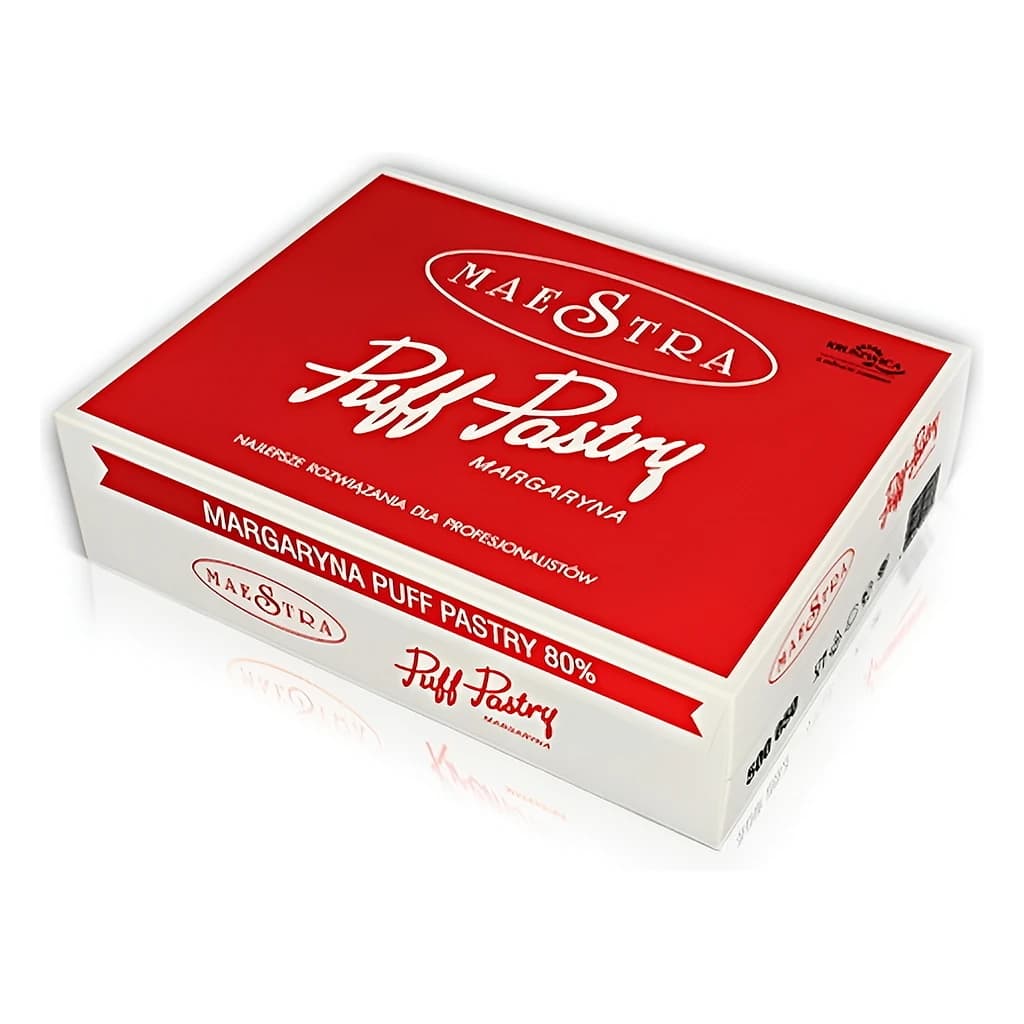
Puff Pastry Margarine 80% 10 kg

Puff Favorit Laminating Margarine 10 kg
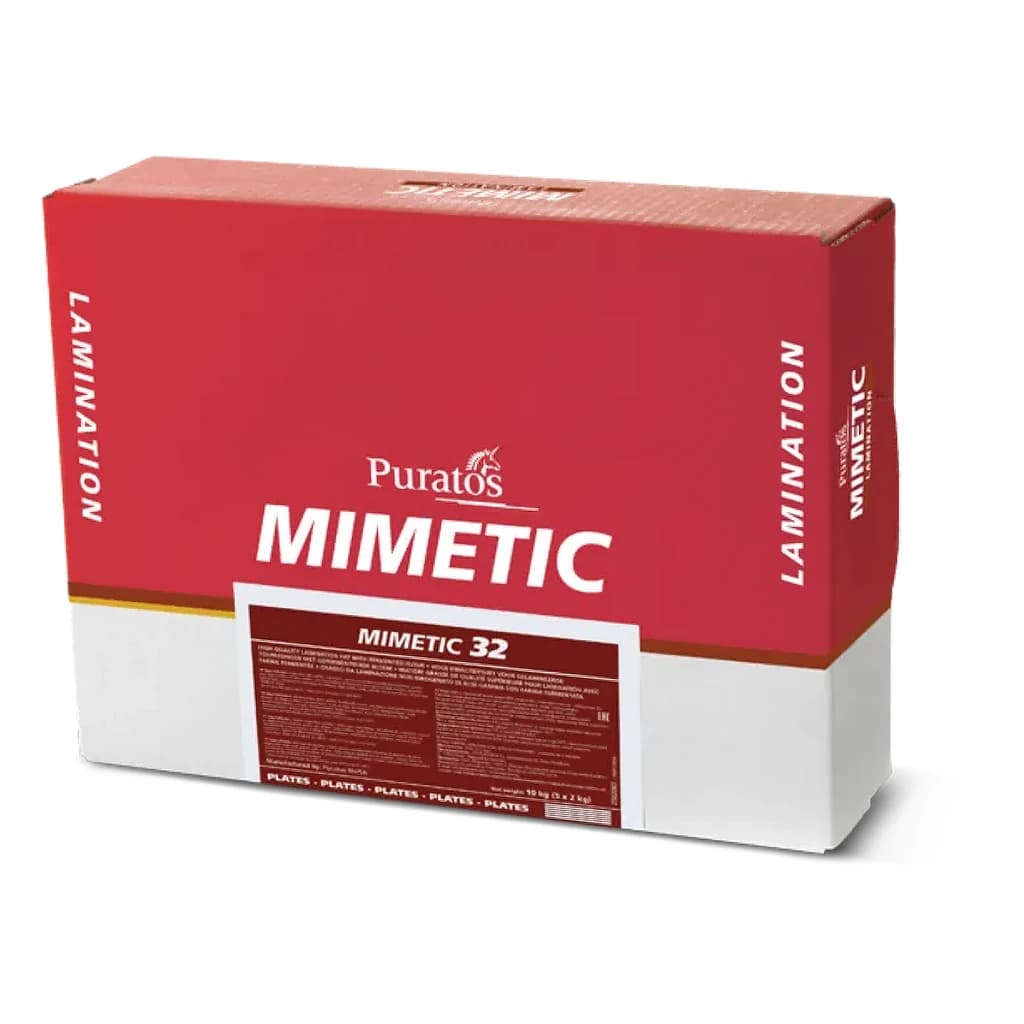
Mimetic 32 Lamination Fat 10 kg
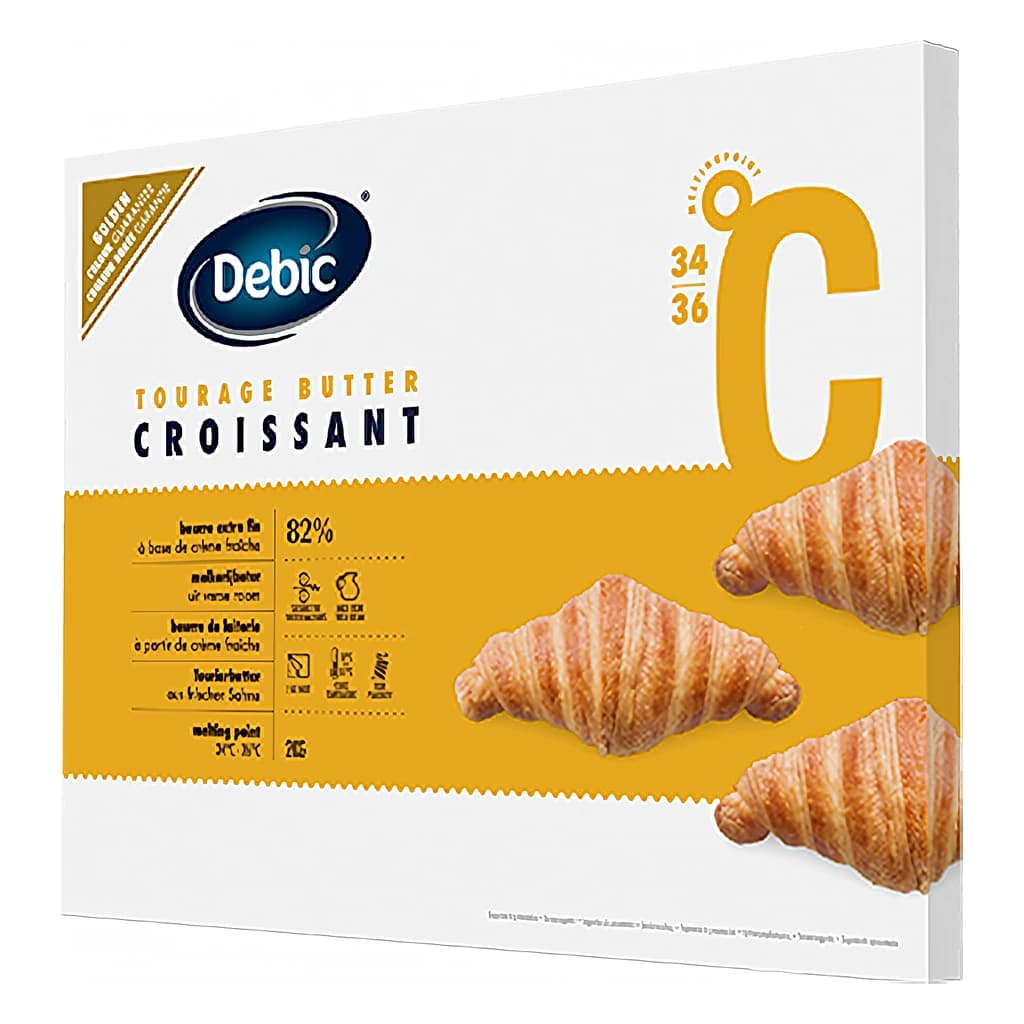
Tourage Croissant Butter 10 kg (5 × 2 kg)
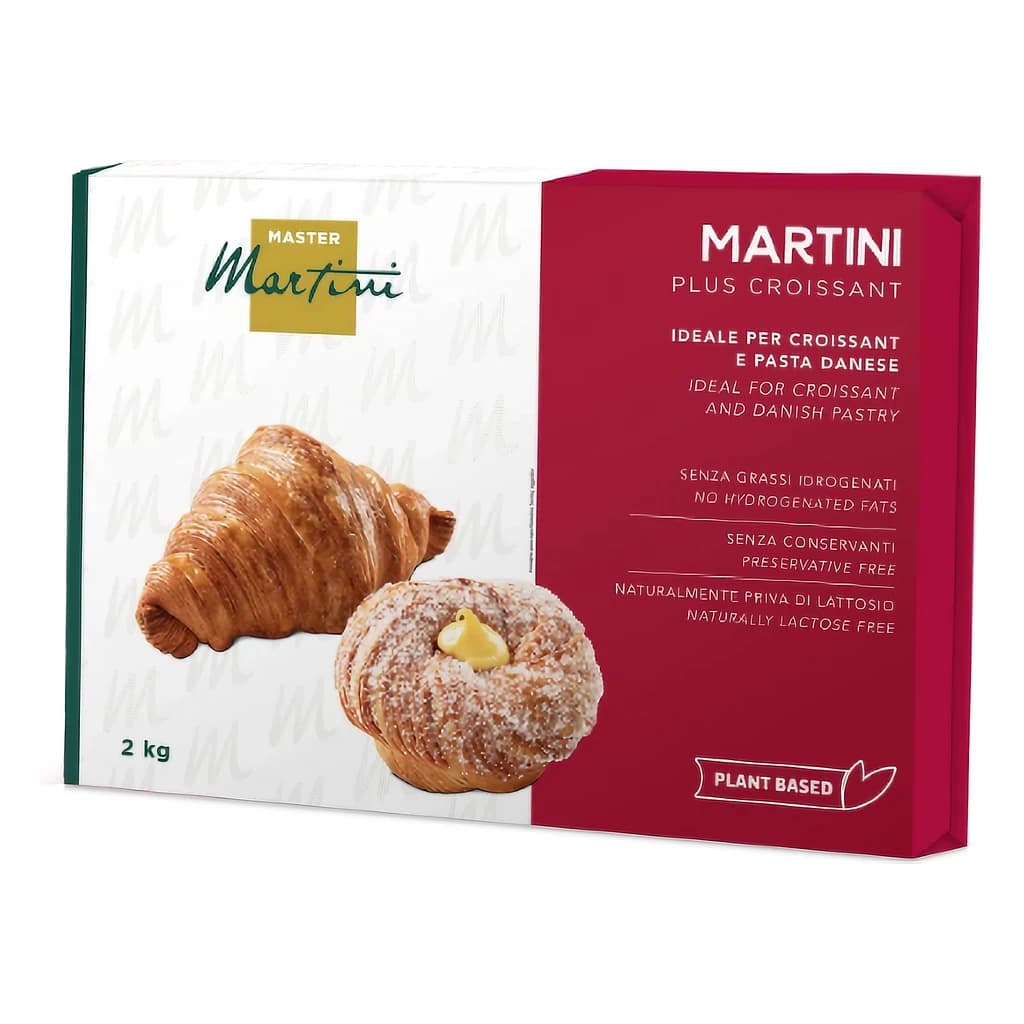
Plus Croissant Margarine 10 kg (5 × 2 kg)
Qualita NP Palm-Free Margarine 80% 10 kg

Flex Quatro Danish Pastry Margarine 12.5 kg

High Ratio Vegetable Shortening 12.5 kg
Puff Pastry Margarine 12.5 kg

Marvello Cake Margarine 12.5 kg