
Chocolate tempering & decor: couverture, cocoa butter, transfer sheets, and velvet spray
The decorator's chocolate workbook: how tempered couverture becomes a finishing medium, and how to run the four signature professional finishes — coloured cocoa-butter airbrushing, velvet/flocking spray, transfer sheets and hand garnishes. Built around manufacturer temper curves and first-party spec-sheet numbers for the Domson couverture, cocoa butter, colour and ready-made decoration range. Cross-links to A6 for the full crystallisation science.
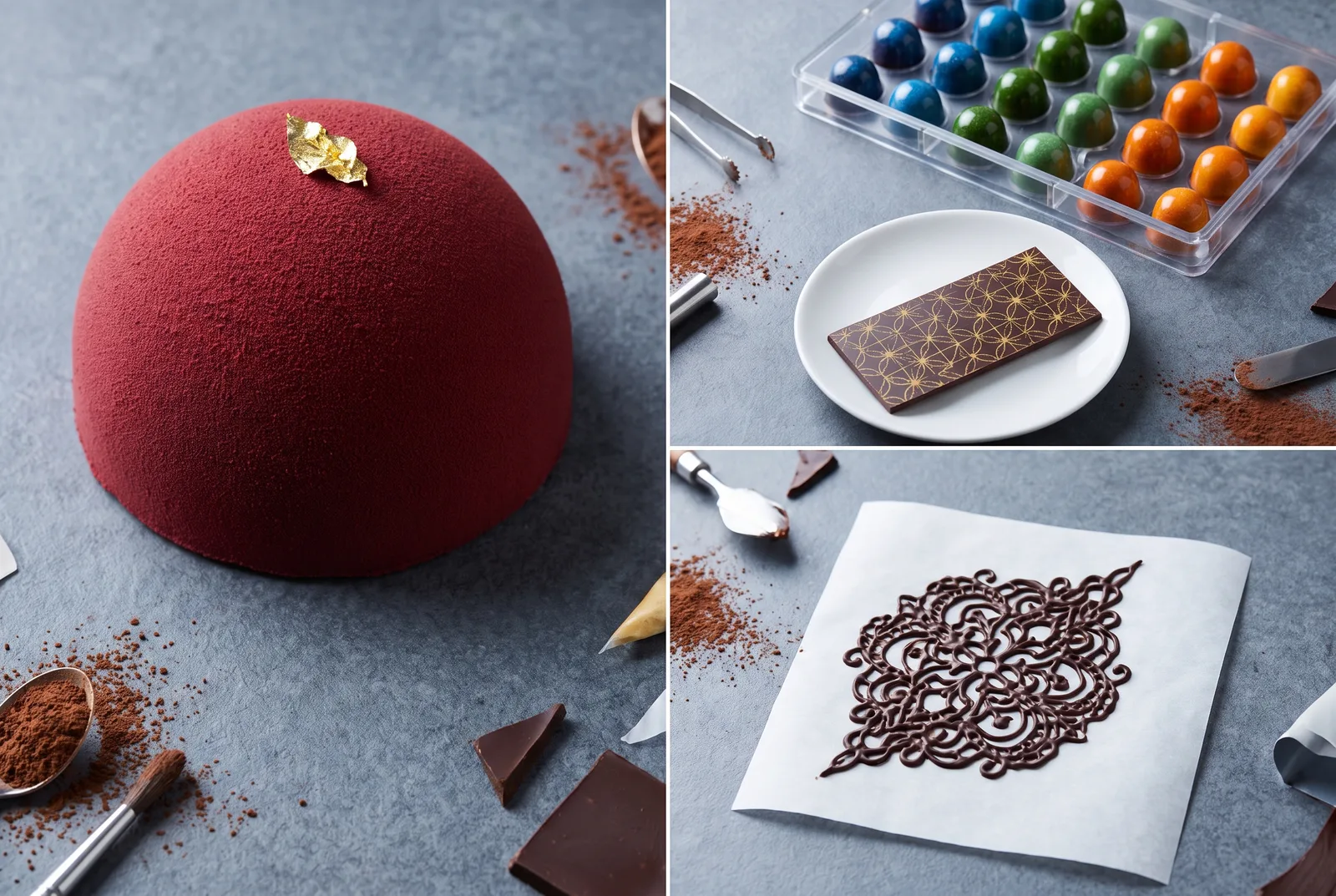
Chocolate is the showpiece medium — but only if it is in temper
Nothing on a patisserie counter reads "professional" faster than chocolate: the suede of a velvet-sprayed entremet, the mirror gloss of a coloured bonbon, a printed plaque, a sweep of piped filigree across a plated dessert. All of it is achievable in a working bakery — and almost all of it stands or falls on one thing you do before you decorate: tempering.
Untempered chocolate is dull, soft, streaky and blooms within hours. Tempered chocolate is glossy, snaps, contracts cleanly out of moulds and holds for months. This article is the decorator's playbook: it takes tempering as the gate, then runs the four finishes that define professional chocolate work — coloured cocoa-butter airbrushing, velvet spray, transfer sheets, and hand garnishes — and maps each to the Domson couverture, cocoa-butter, colour and ready-made-decoration range.
For the full crystallisation science — the six cocoa-butter polymorphs, why Form V is the target, the tabling / seeding / Mycryo / machine methods and the temper test — read the sister article A6-chocolate-tempering-crystallisation. The short version is below.
1. Tempering, in one screen (the gate to everything else)
Cocoa butter is polymorphic: the same fat can set into six crystal forms, and only Form V (melts ~33.8 °C) gives gloss, snap and contraction. Form VI (~36.3 °C) is the slow grey fat bloom \ . Tempering is simply steering the whole batch to Form V.
Every method follows the same three-stage curve — melt fully, cool to pre-crystallise, warm to the working temperature — and the working window differs by chocolate type (full table below):
<!-- IMAGE: img-a7choc-02 — Decorator's temper-curve chart: dark/milk/white melt-cool-work-max bands -->- Dark: melt 40-50 °C → cool 27 °C → work 31-32 °C (do not exceed 34.5 °C) \
- Milk: melt 45 °C → cool 27 °C → work 29-30 °C (max 32.5 °C) \
- White: melt 45 °C → cool 27 °C → work 28-29 °C (max 31.5 °C) \
These are independently corroborated by a first-party spec sheet: the Zeelandia Arabesque Noir 72 datasheet specifies melt 47 °C, table to 28 °C, reheat to 31 °C, tolerance ±1 °C . Above the max working temperature the Form V seeds melt out and you are out of temper — so for decor work, where every layer must set glossy, hold 0.5-1 °C under the ceiling and always run a temper test before you commit a batch.
Couverture is the right base for decor because its high cocoa-butter content (legally min 31%; typically 32-39%) makes it fluid enough for thin shells, fine piping and clean enrobing \ . Compound coatings skip tempering entirely (melt to max 55 °C and use) but give no true snap and a waxier set .
2. The decorator's materials palette
Before the techniques, know your five materials and whether each needs tempering (see the table below):
<!-- IMAGE: img-a7choc-03 — Materials palette: couverture / cocoa butter / coloured cocoa butter / compound / ready-made, each tagged temper yes/no -->- Couverture (callets, drops, discs) — the structural chocolate for moulding, shells, curls, shards, filigree and transfer plaques. Temper required. Catalogue: Callebaut 811 / 823 / W2, Zeelandia Arabesque, Barima.
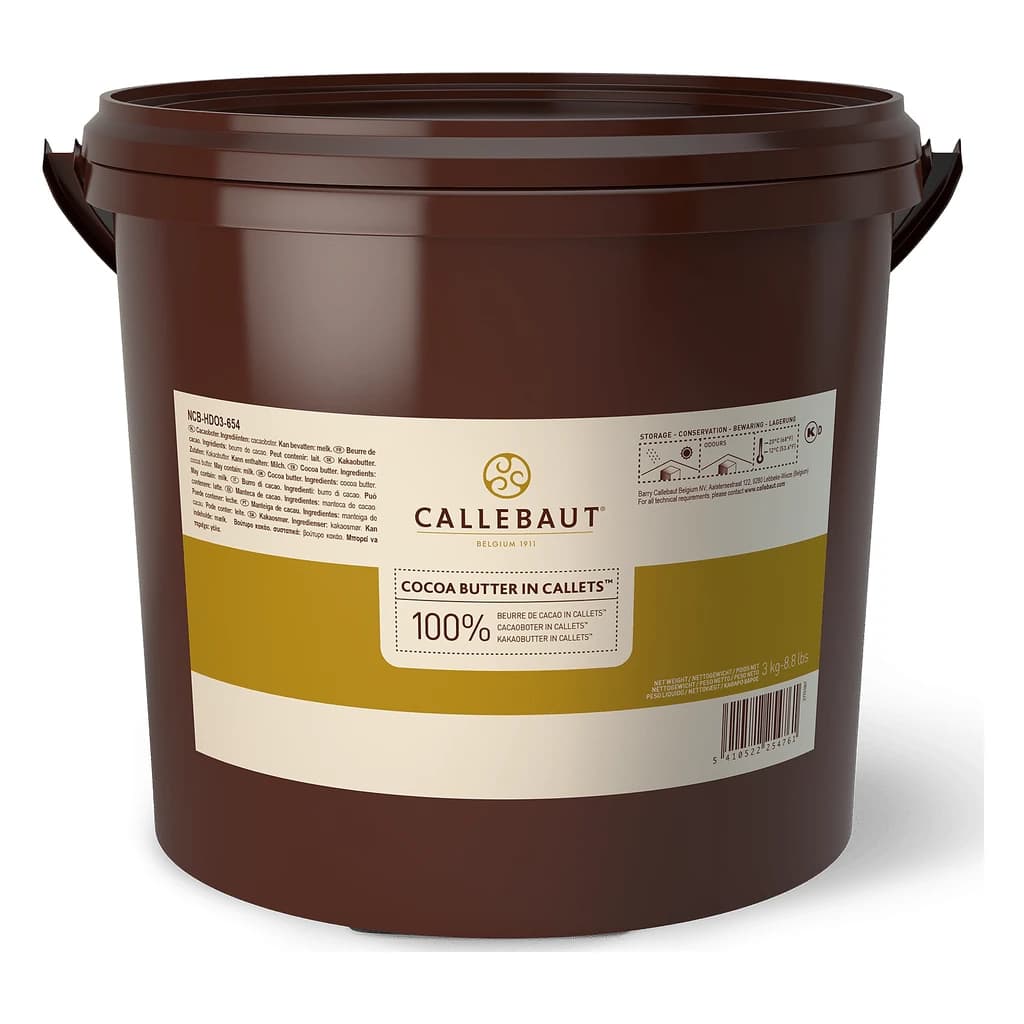
- Pure cocoa butter — the fat carrier behind almost every finish: it is the base of velvet spray, the base of coloured cocoa butter, the seed for "silk" tempering, and a thinner for over-thick couverture. Catalogue: Callebaut Cocoa Butter in Callets 100%, Barbara Luijckx Cocoa Butter 1 kg.
- Coloured cocoa butter (fat-soluble) — cocoa butter carrying fat-soluble pigment; your colour system for chocolate (more in §3).
- Compound coating — vegetable-fat coating for quick drips and coatings where snap doesn't matter; melt-and-use, no temper .
- Ready-made chocolate decorations — bought-in fans, pencils, filigree, plaques and pearls; place as supplied, store 12-20 °C .
3. Colour on chocolate: fat-soluble or nothing
This is the single most expensive beginner mistake, so it comes first: colour applied to chocolate or cocoa butter must be FAT-SOLUBLE (oil-based). A water-, gel- or liquid colour — even a single drop — will seize chocolate into a grainy paste \ . Water-based colours have their place, but it is on fondant, royal icing and sugarpaste, not couverture (see the table below).
<!-- IMAGE: img-a7choc-04 — Colour decision diagram: fat-soluble cocoa butter on chocolate vs water/sugar colour on fondant/icing, "water seizes chocolate" -->The catalogue colour range maps cleanly onto this divide, and the spec sheets prove the base:
- Coloured cocoa butter — make it from pure cocoa butter + fat-soluble powder colour or metallic dust. To airbrush: heat to 40-45 °C, then bring down to 31-33 °C so it sets in temper; hold polycarbonate moulds and the room at 18-21 °C; for surface work on finished pieces, apply around 30 °C \ (single-source reference guidance — validate against your cocoa-butter colour supplier's specific datasheet). See the formula card below.
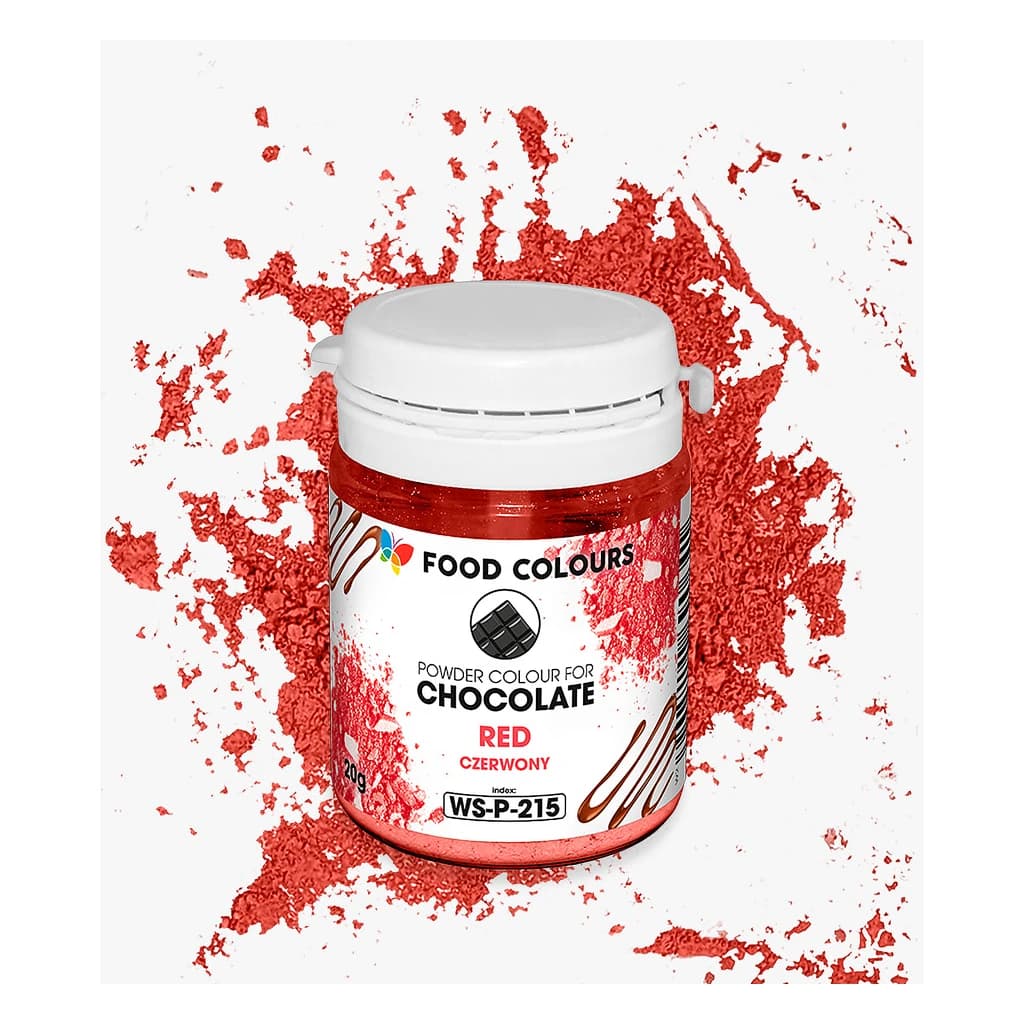
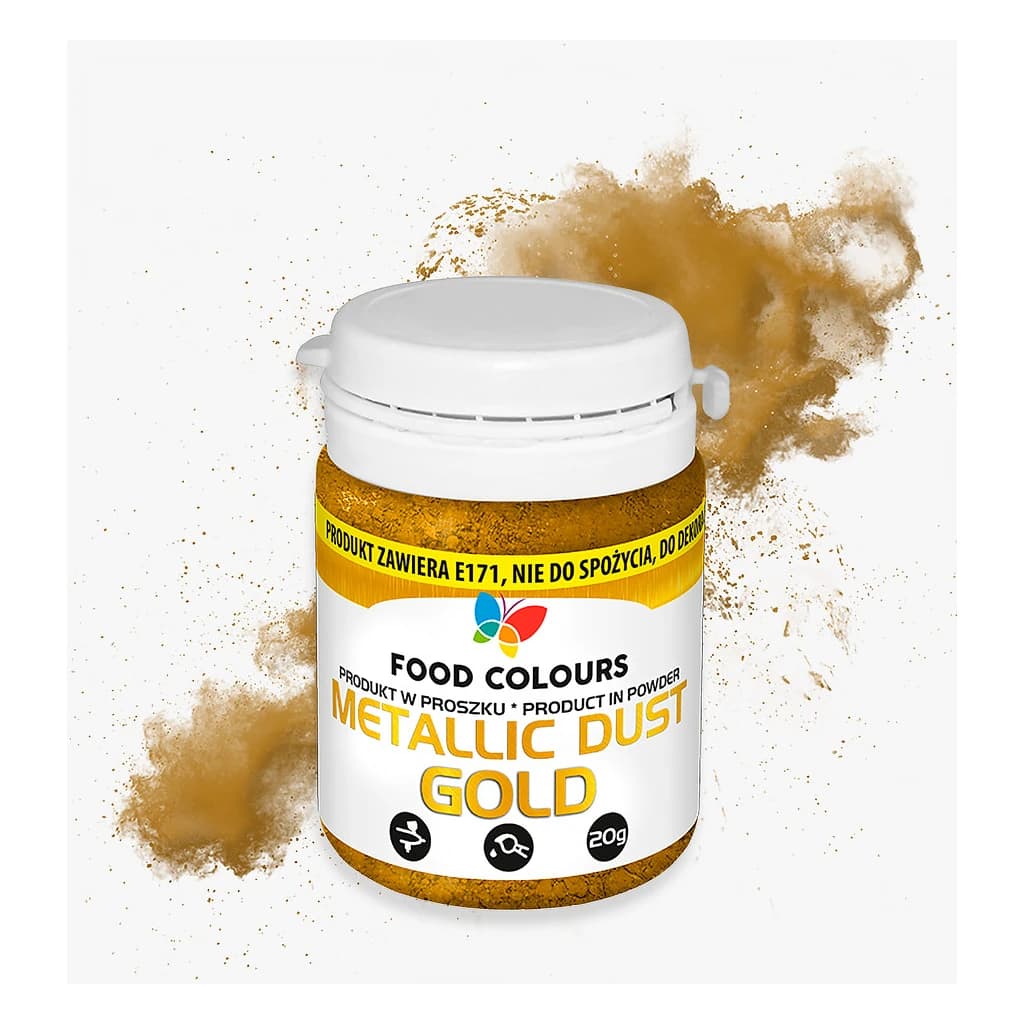
- Metallic / lustre dust (airbrush) — Food Colour Metallic Dust is mica (E555) + titanium dioxide (E171) + iron oxide (E172) with a recommended dose of ~1 g/kg and a particle d50 of 18-25 µm; dust dry onto tempered chocolate, or suspend in cocoa butter/alcohol to airbrush .
- Gel colour — sugar/water based (Brilliant Blue E133, thickener E1422); maximum ~21 g/kg for category 05.4 decorations. For fondant and icing — not chocolate .
- Liquid airbrush colour — water based; maximum ~710 g/kg for category 05.4, labelled "dye for food, not intended for direct consumption." Again, sugar surfaces only .
Glossy coloured moulded chocolates are the showcase use: airbrush coloured cocoa butter into a polished polycarbonate mould, let it set, then cast tempered couverture over it. When the chocolate contracts and releases, the colour is inside the gloss \ .
<!-- IMAGE: img-a7choc-15 — Inspiration: glossy multi-coloured moulded bonbons -->4. Velvet / flocking spray — the signature entremet finish
The matte, suede-like "velvet" you see on plated mousse cakes is cocoa butter sprayed warm onto a frozen surface. The cold shocks the fine droplets into instant tiny crystals, building a fuzzy, light-scattering texture (see the formula card below).
<!-- IMAGE: img-a7choc-05 — Velvet-spray workflow: melt 60/40 to 50C, sieve into gun, freeze entremet -18C, spray thin at 45C -->Spray-gun method (Callebaut) \ :
- Mix 60% chocolate to 40% cocoa butter (some chefs use 1:1); melt together to 50 °C until smooth.
- Sieve into a pre-warmed spray gun; bring to ~45 °C (use a 3-drop fluidity couverture).
- Freeze the entremet hard at -18 °C — the thermal shock is the whole point.
- Spray a thin, even layer in an up-and-down seesaw motion. Too thick a layer peels.
- Set the piece in the fridge at 8 °C for ~5 minutes; keep the gun warm between passes.
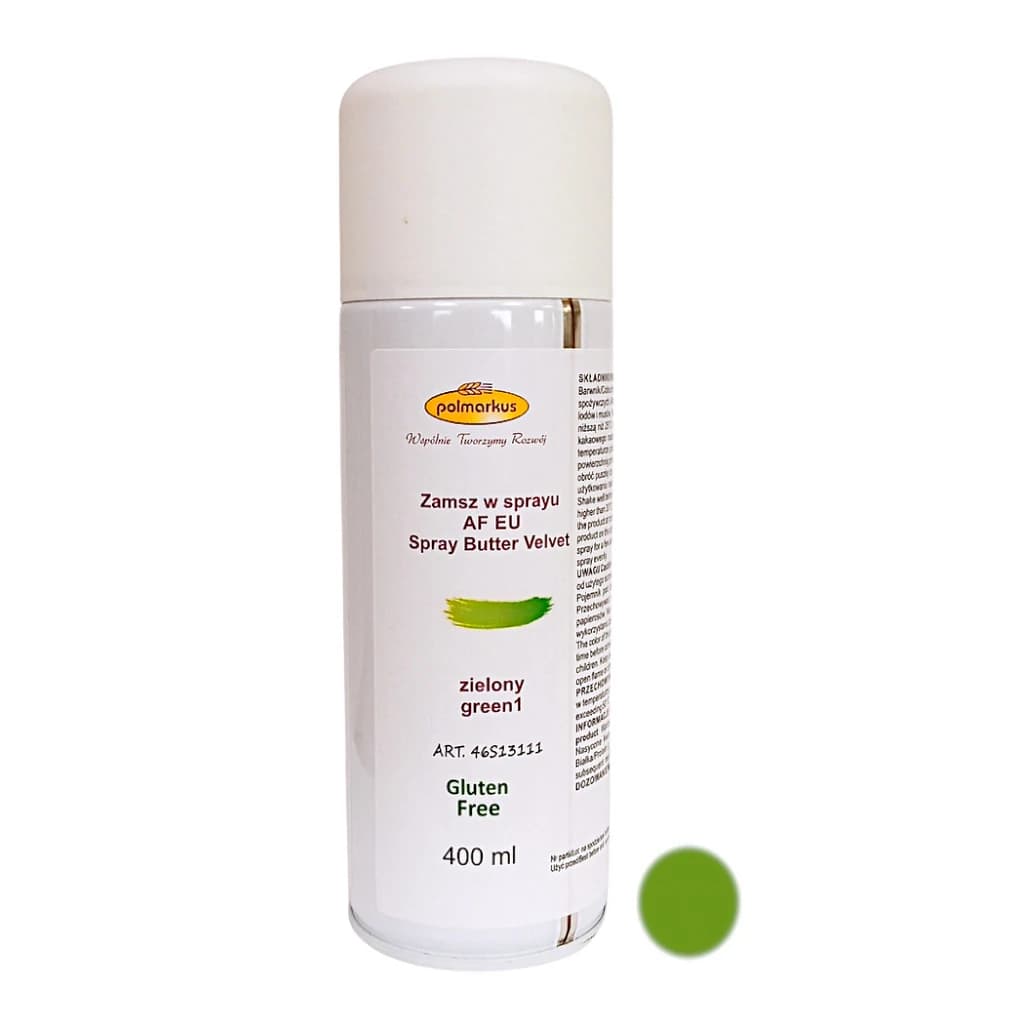
Aerosol velvet cans are the no-gun route — ready-to-use coloured cocoa-butter spray. Apply at a can temperature of 25-35 °C (never above 35 °C) onto the frozen piece \ . Catalogue: Barbara Luijckx Light Blue / Yellow Velvet Spray, Polmarkus Edible Velvet Spray, plus Glossy Food Spray for a shine (rather than matte) finish.
<!-- IMAGE: img-a7choc-06 — Barbara Luijckx edible velvet spray aerosol cans (ready-to-use) --> <!-- IMAGE: img-a7choc-07 — Close-up of a finished velvet entremet (suede texture) -->Safety: aerosol sprays are flammable and pressurised — keep below 50 °C, away from flames, and spray in a dedicated booth/extracted area. See §8 and the food-safety notes.
5. Transfer sheets — printed colour, zero artistry required
Transfer sheets are the highest-impact-for-lowest-skill finish in the book. A transfer sheet is a clear acetate sheet printed (silk-screened) with coloured cocoa butter. Spread tempered chocolate on it; as the chocolate sets, the cocoa-butter design melts into its surface; peel the acetate and the pattern is in the chocolate \ \ (see the formula card below).
<!-- IMAGE: img-a7choc-08 — Transfer-sheet workflow: spread tempered chocolate, set, peel acetate to reveal print -->Workflow:
- Lay the sheet printed-side up; spread an even layer of tempered chocolate — don't pierce the acetate.
- Cut plaques just before full set (or wrap the still-flexible sheet around a chilled entremet for a decorative band).
- Set at room temperature, or a very brief chill only — over-chilling causes condensation that ruins the print .
- Peel the acetate when fully solid.
A clean transfer requires correctly tempered chocolate — untempered chocolate gives a dull, smudged print. Uses span bonbon tops, bars, cigarettes/curls, plaques and entremet bands . Don't want to make them? The catalogue stocks ready-printed transfer decorations — e.g. PAN White Chocolate Transfer Decoration and Chocolate Square Plaque – Baroque Transfer — to place straight onto product.
6. Hand garnishes — the inspiration tier
With tempered couverture and a marble slab, a few classic garnishes cover most plated and gateau work (see the table below) :
<!-- IMAGE: img-a7choc-10 — Inspiration grid: curls/cigarettes, fans, shards, filigree, marbled plaque -->- Cigarettes & curls — spread a thin layer of tempered chocolate on marble, let it set to "just firm," and push a scraper/knife across at an angle.
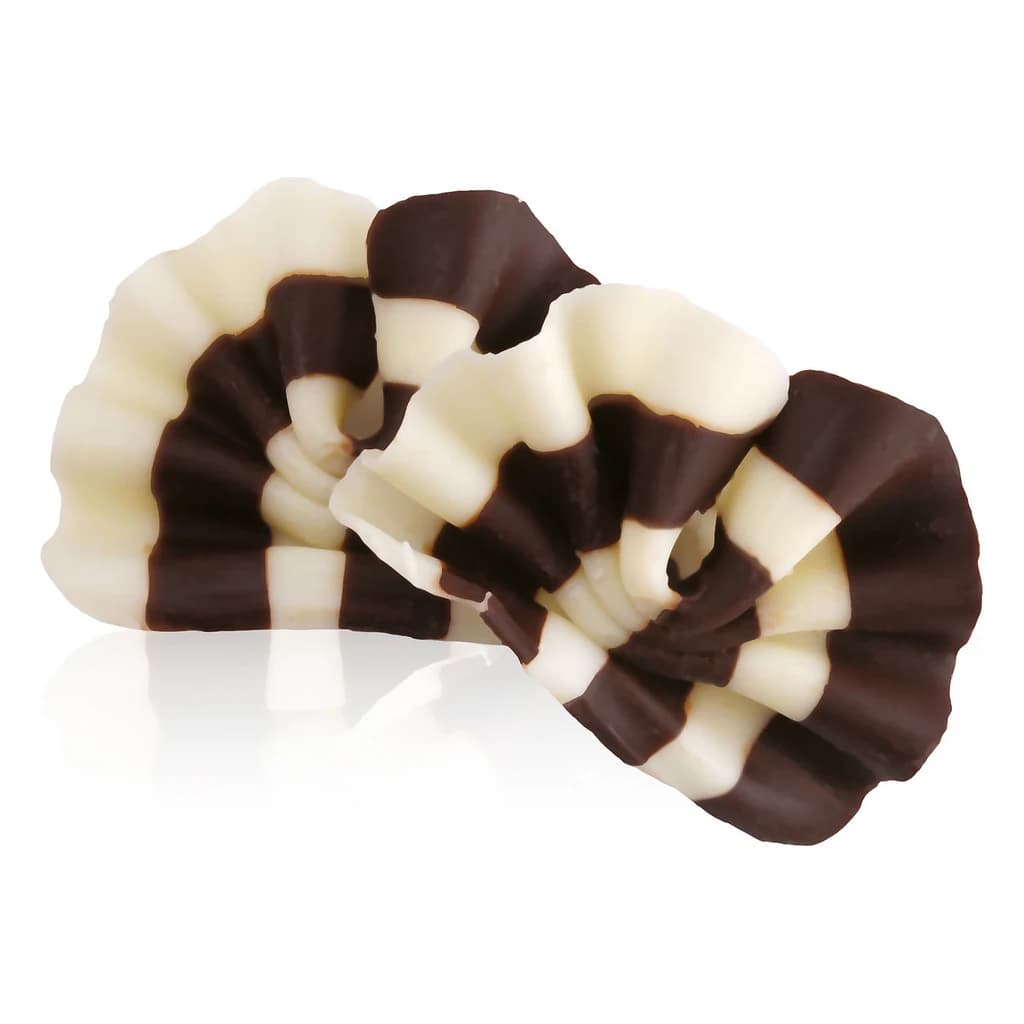
- Fans & ruffles — the same scrape with a thumb anchoring one corner.
- Shards & tuiles — pour/spread tempered chocolate onto acetate, texture or sprinkle, set flat or curved.
- Filigree & run-outs — pipe tempered chocolate from a paper cone in lace patterns onto acetate; peel when set.
- Marbling & splatter — flick or swirl contrasting tempered chocolate or fat-soluble colour for abstract finishes.
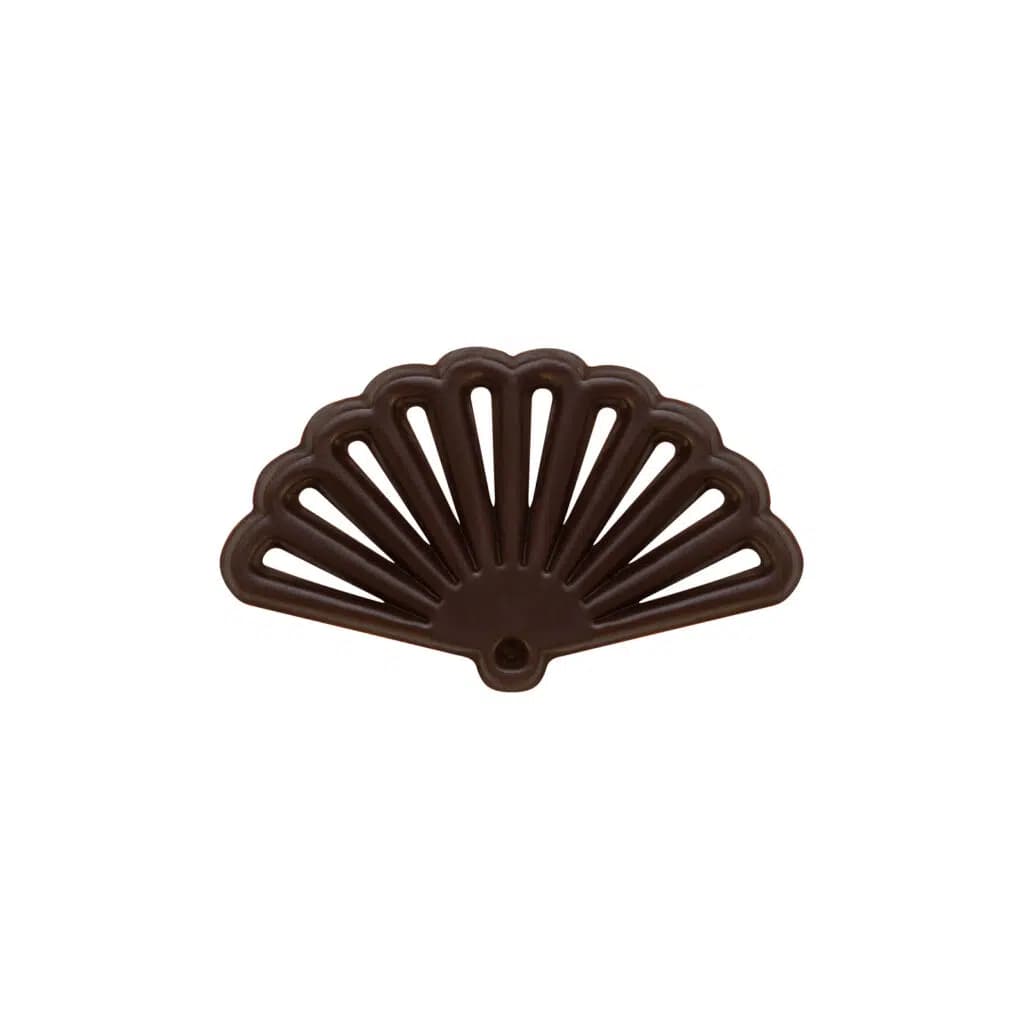
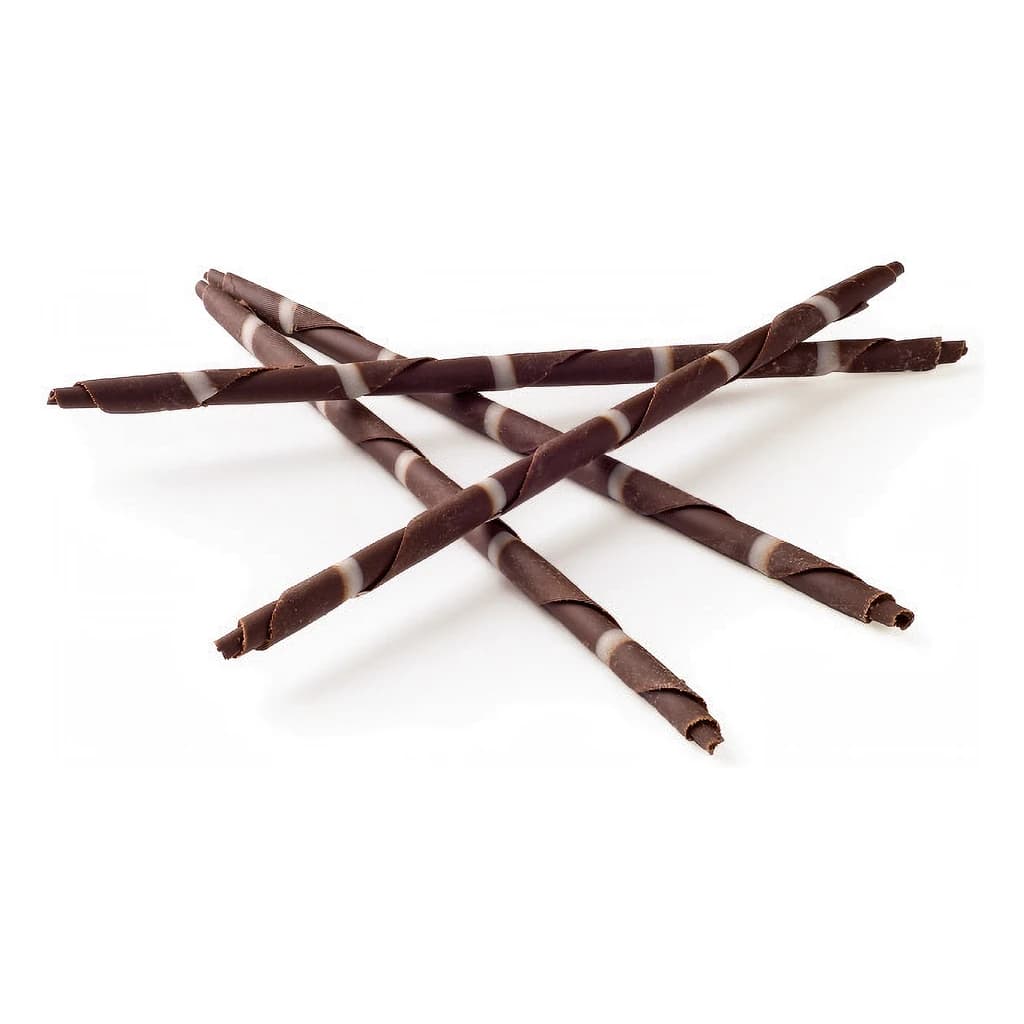
All of these need temper for gloss, snap and clean release, and a working room of 18-21 °C. If hand-piping isn't where your team's time is best spent, buy the look in: Barbara Luijckx Rembrandt pencils and Oriental Fan filigree, Dobla fans, curls and pearls are made to professional consistency and store on the shelf.
<!-- IMAGE: img-a7choc-09 — Barbara Luijckx ready-made decorations: Rembrandt pencils + Oriental Fan filigree -->7. Metallic & lustre finishing
The final flourish — gold, pearl and metallic highlights:
- Metallic / lustre dust — brush dry onto dry, tempered chocolate, or suspend in alcohol or cocoa butter to airbrush. Food Colour Metallic Dust doses at ~1 g/kg .
- Lustre / glitter aerosol — PME Edible Lustre Spray and Silver Edible Glitter Spray add a fast all-over sheen to cakes, sugar and chocolate accents.
Read the label before you spec these. The PME lustre spray is an extremely flammable aerosol (keep <50 °C, professional use only), it contains allura red E129 so it carries the mandatory warning "may have an adverse effect on activity and attention in children" ; Culpitt also designates this product age-restricted as a voluntary retailer policy (this is not a statutory EU/UK legal requirement — the regulation requires only the warning label) . Several of these colour datasheets also list titanium dioxide (E171) — see §9.
8. Storage & shelf life of finished decor
A beautiful finish that blooms in two days is a customer complaint. After tempering, storage is the second half of the job:
- Finished chocolate / decor: store cool, dry and dark. The bloom-prevention ideal is ~15-20 °C and below 55% RH; supplier datasheets validate up to a maximum of 70% RH as the outer limit \ . Wrap against moisture and odours; avoid fridge shock (condensation → sugar bloom).
- Ready-made decorations (filigree, pencils): 12-20 °C, max 70% RH, away from sunlight; shelf lives are SKU-specific — e.g. 24 months for the Oriental Fan filigree but 12 months for the milk-containing Rembrandt pencils \ .
- Compound coatings: Satina specifies 12-18 °C, RH up to 75%, 12 months .
Deeper bloom mechanism and corrective action: A6-chocolate-bloom-defects.
<!-- IMAGE: img-a7choc-12 — Decor fault grid: peeling velvet, seized chocolate, failed transfer, dull shell, bloom -->Full troubleshooting in the fault table below.
9. Buy the decor for this — catalogue guide
All composition/storage figures from first-party supplier datasheets (key numbers in the table below).
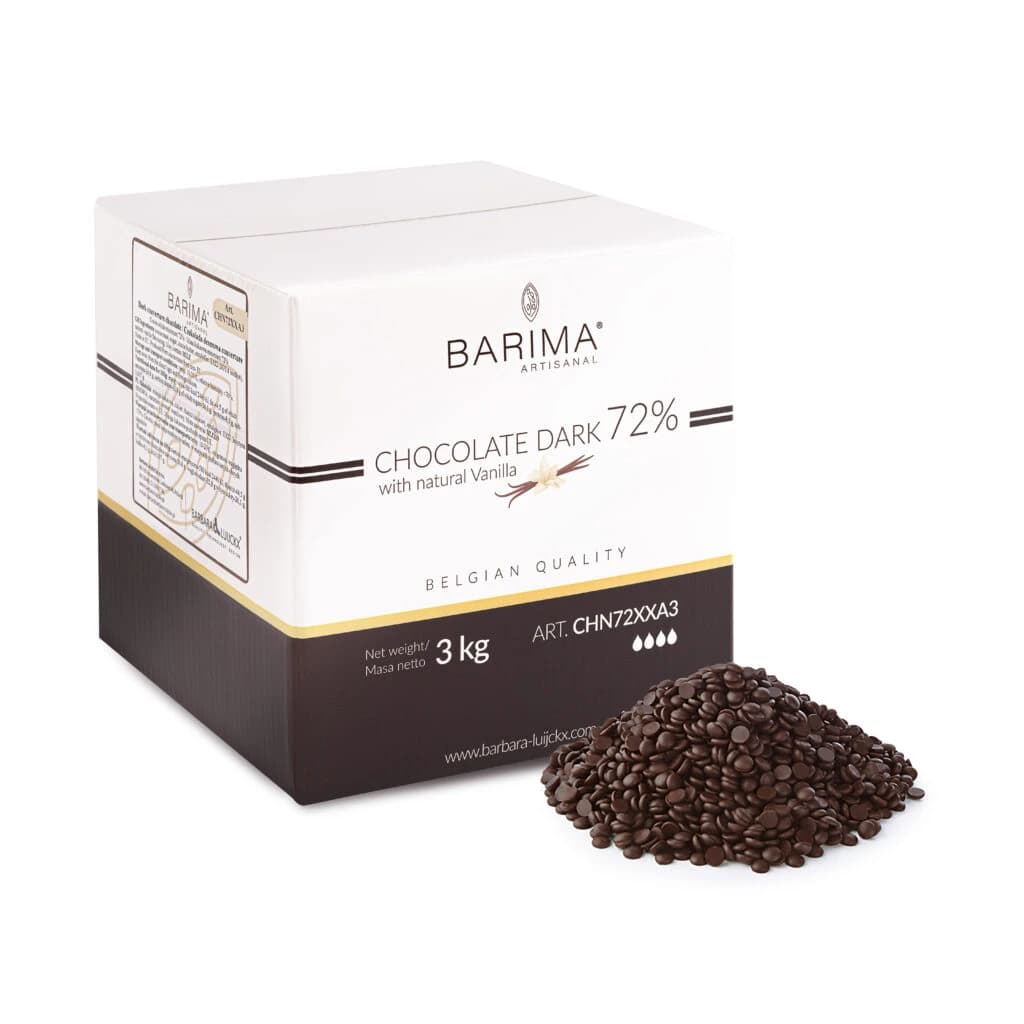
- Structural couverture (temper it): Callebaut 811 Dark / 823 Milk / W2 White, Zeelandia Arabesque Noir 72, Barima Dark Drops 72%.
- Cocoa butter (the carrier):Callebaut Cocoa Butter in Callets 100%, Barbara Luijckx Cocoa Butter 1 kg — for velvet, coloured cocoa butter and silk.
- Velvet & shine sprays:Barbara Luijckx Light Blue / Yellow Velvet Spray, Polmarkus Edible Velvet Spray, Glossy Food Spray.
- Colour systems:Food Colour Metallic Dust and Powder (fat-compatible for chocolate); Food Colour Gel / Airbrush liquid (fondant & icing only).
- Lustre:PME Edible Lustre Spray (note the warnings above).
- Transfer & ready-made decor:PAN transfer plaques, Barbara Luijckx Oriental Fan filigree & Rembrandt pencils, Dobla fans.
- No-temper coating:Satina Pro Compound Coating (melt to max 55 °C).
Allergen & food-safety notes
- FOOD-LAW — titanium dioxide (E171). The PME lustre spray and the Food Colours liquid airbrush and metallic dust datasheets list titanium dioxide (E171). E171 is no longer an authorised food additive in the EU since 7 August 2022 (Commission Regulation (EU) 2022/63) \ . Great Britain retained E171 after Brexit, so the answer depends on the market: obtain current, E171-free datasheets before quoting or selling these into the EU or Northern Ireland.
- Colour warning — E129 (allura red). The PME lustre spray must carry "may have an adverse effect on activity and attention in children" under EU/UK colour rules . The manufacturer (Culpitt) labels this product age-restricted as a voluntary retailer policy — this is not a statutory EU/UK requirement; the applicable regulation mandates only the warning label, not an age gate . Reflect both the warning and the professional-use designation in any consumer-facing copy.
- Aerosol hazard. Velvet and lustre aerosols are extremely flammable and pressurised — keep below 50 °C, away from heat/flames, and spray in an extracted booth .
- Lecithin source. E322 on the Barbara Luijckx decor SKUs (Oriental Fan, Rembrandt pencils) is SUNFLOWER lecithin, not soya — do not auto-declare soya for those. Soya appears only as cross-contamination ("may contain") \ .
- Milk allergen.Rembrandt pencils contain MILK (declarable); the Oriental Fan filigree carries "may contain MILK and SOYA"; Satina compound carries "may contain PEANUTS, MILK" \ \ .
- Sulphur dioxide. The Food Colour gel carries a declarable sulphur-dioxide note (residue ≤15 mg/kg) from its glucose syrup .
- Trans fat. The Satina compound datasheet (2020) lists partly hydrogenated palm fat; confirm the current post-2021 formulation against the EU industrial trans-fat limit (2 g/100 g of fat) .
- Colour base = chocolate killer. Reiterated: gel/liquid/water-based colours seize chocolate. Use fat-soluble colour / coloured cocoa butter on couverture; reserve water-based colour for sugar surfaces .
- Water is the enemy. A drop of water or steam seizes melted chocolate; keep bowls, spatulas, spray guns and frozen surfaces free of free water.
All numeric, dosage, allergen, nutrition and food-safety claims have been independently verified and verdict-applied. Temperatures and storage limits are device- and formulation-dependent — validate against your own equipment, your specific SKU's current datasheet and your local food-law obligations before production or labelling.
Figures
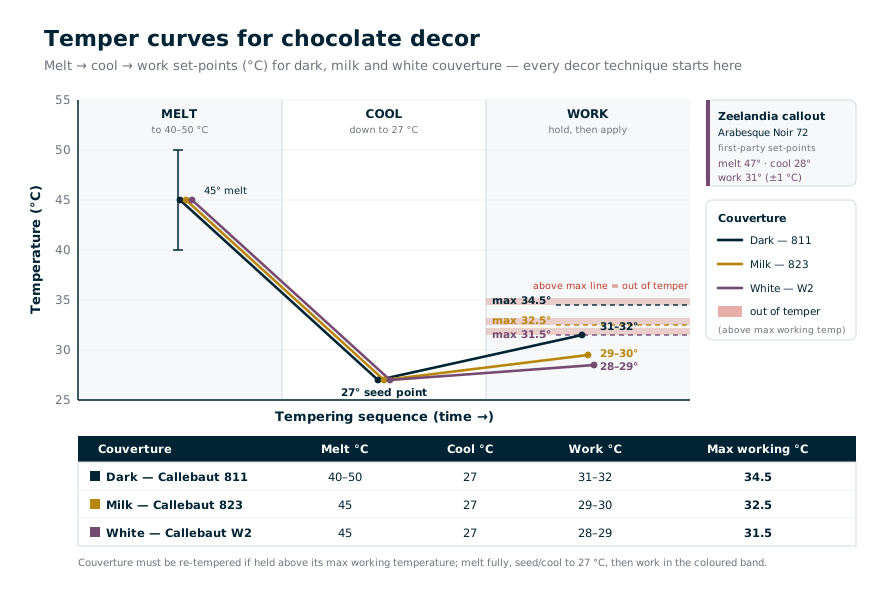 Three V-shaped tempering curves for dark, milk and white couverture showing melt, cooling and working temperatures with the maximum working temperature marked
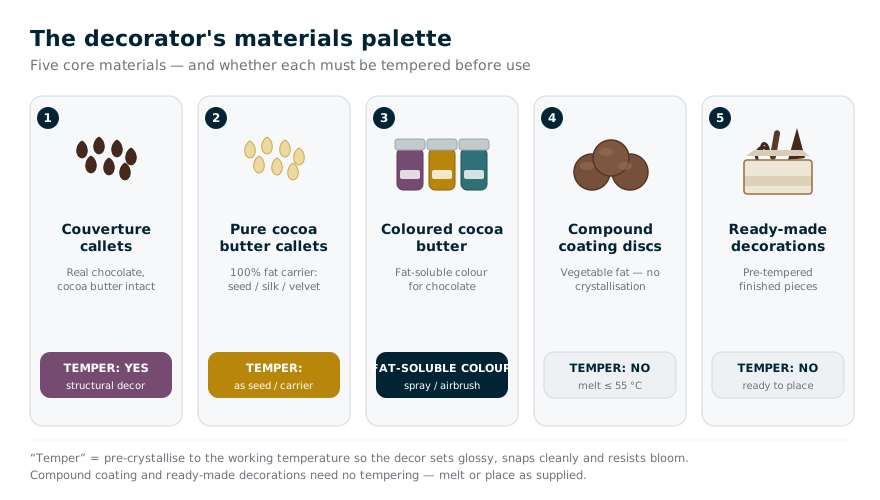 Labelled diagram of chocolate decorating materials: couverture, cocoa butter, coloured cocoa butter, compound coating and ready-made decorations, each marked whether tempering is required
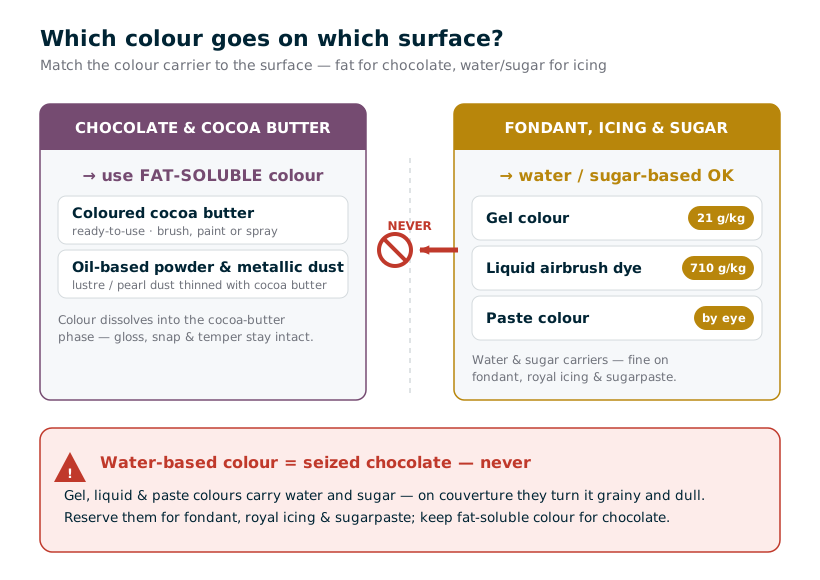 Decision diagram showing fat-soluble cocoa butter colour goes on chocolate while water- and sugar-based colours go on fondant and icing, with a warning that water-based colour seizes chocolate
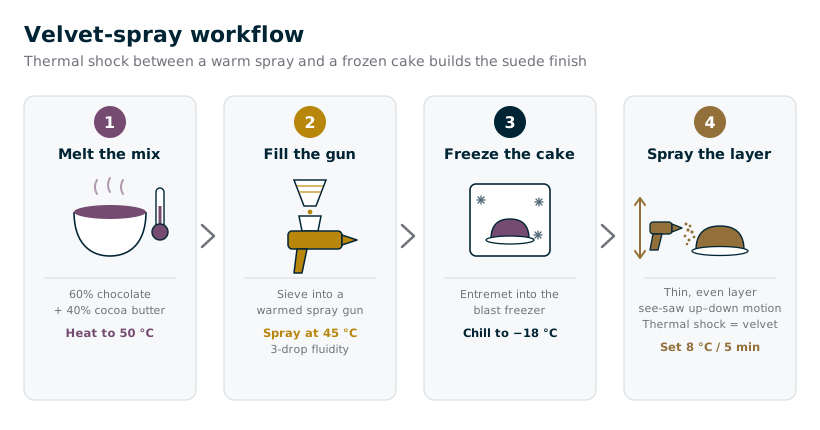 Four-step illustration of velvet spraying: melting a 60-40 chocolate and cocoa butter mix to 50 degrees, filling a spray gun, freezing the cake to minus 18, and spraying a thin velvet layer at 45 degrees
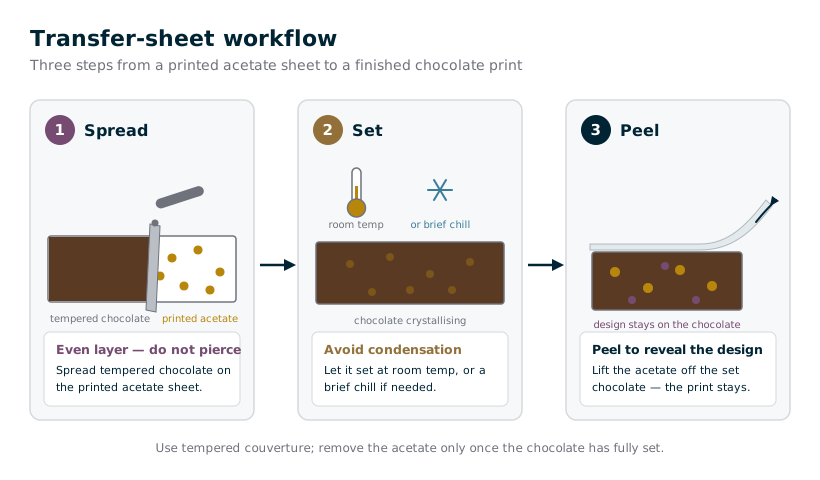 Three-step illustration of using a chocolate transfer sheet: spreading tempered chocolate on a printed acetate sheet, letting it set, and peeling away the sheet to reveal the design
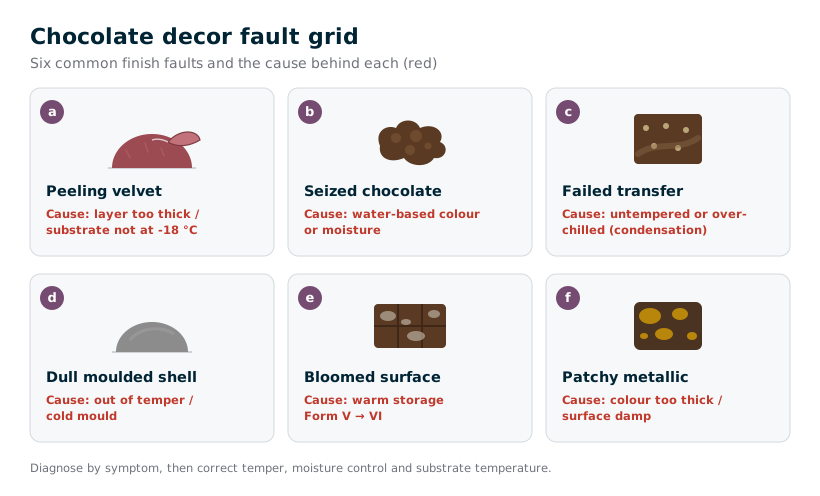 Grid of chocolate decoration faults with causes: peeling velvet, seized chocolate, failed transfer, dull moulded shell and bloomed surface
Velvet / flocking spray (spray-gun method)
| Ingredient | Baker's % | Weight |
|---|---|---|
| Couverture (dark/milk/white, or coloured) | 60% | |
| Pure cocoa butter | 40% |
- Melt the 60/40 chocolate + cocoa butter together to 50 °C, stirring until perfectly smooth and homogeneous.
- Pass through a fine sieve into a pre-warmed spray-gun container; bring the mixture to ~45 °C (use a 3-drop fluidity couverture).
- Have the entremet/garnish frozen hard at -18 °C - the thermal shock is what makes the velvet texture.
- Spray a THIN, even layer in a steady up-and-down seesaw motion inside a spray booth; a thick layer peels.
- Set the coated piece in the fridge at 8 °C for ~5 minutes; keep the gun warm between passes to prevent clogging.
Yield: Coats roughly 4-6 small entremets per 250 g mix (varies with gun and layer)
Ready-to-use aerosol velvet cans are the no-gun alternative: apply at a can temperature of 25-35 °C onto the frozen piece. All numbers from Callebaut, Silikomart and Kadzama guidance.
Coloured cocoa butter for airbrushing and moulded shells
| Ingredient | Baker's % | Weight |
|---|---|---|
| Pure cocoa butter | base | |
| Fat-soluble (oil-based) powder colour or metallic dust | to shade (metallic dust ~1 g/kg as a guide) |
- Melt cocoa butter and stir in fat-soluble colour until fully dispersed (never water/gel/liquid colour - it seizes chocolate).
- Heat to 40-45 °C to liquefy, then bring down to 31-33 °C for spraying so the cocoa butter sets in temper.
- Hold polycarbonate moulds and the room at 18-21 °C; airbrush a thin layer into the mould and let it set.
- Cast tempered couverture over the set colour; when contracted and released you have a glossy coloured shell.
- For surface work on finished chocolate, apply colour at ~30 °C by airbrush, brush, splatter or sponge.
Yield: Any batch; colour to taste of intensity
Fat-soluble colour is required for gloss AND shelf life. Working temperatures (40-45 °C melt, 31-33 °C spray, 18-21 °C mould/room) are reference guidance from a single medium-reliability source (AeroCake) — that source gives 29-30 °C for spraying; treat these figures as guidance and validate against your cocoa-butter colour supplier's specific datasheet. Metallic dose from the colour's own spec sheet.
Transfer-sheet plaques and bands
| Ingredient | Baker's % | Weight |
|---|---|---|
| Printed chocolate transfer sheet (coloured cocoa butter on acetate) | 1 | |
| Tempered couverture (dark/milk/white) | as needed |
- Lay the transfer sheet printed-side UP on a clean board.
- Spread an even layer of tempered chocolate over the whole sheet with an offset spatula - do not pierce the acetate.
- Just before full set, cut plaques to size with a knife or cutter (or wrap the still-flexible sheet around a chilled entremet for a band).
- Let it set at room temperature (or a very brief chill - over-chilling causes condensation that ruins the print).
- Peel the acetate away once solid; the coloured cocoa-butter pattern stays on the glossy chocolate.
Yield: One A4 sheet -> many plaques / one entremet band
A clean transfer needs correctly tempered chocolate. Method from CocoTerra, Edible Print Supplies and Chocolatree guidance.
| Material | Temper needed? | What it is for | Key spec / note | Catalogue example |
|---|---|---|---|---|
| Couverture (callets/drops/discs) | Yes - to Form V | Structural decor: moulding, shells, curls, shards, filigree, transfer plaques | Min 31% cocoa butter, >=35% cocoa solids; fluidity matters for thin work | Callebaut 811 Dark 54.5%; Zeelandia Arabesque Noir 72; Barima Dark 72% |
| Pure cocoa butter | Used as seed/carrier | Velvet spray base, coloured-cocoa-butter base, tempering 'silk', thinning thick couverture | 100% cocoa butter; melts ~34 °C; fat-soluble carrier | Callebaut Cocoa Butter in Callets 100%; Barbara Luijckx Cocoa Butter 1 kg |
| Coloured cocoa butter (fat-soluble) | Tempering-managed when used | Airbrushing/spraying chocolate, painting moulds, splatter and marbling | Must be FAT-soluble; spray ~31-33 °C; never water-based on chocolate | Made in-house from cocoa butter + fat-soluble powder (see colour table) |
| Compound coating | No - melt only | Quick enrobing, drips and coatings where snap is not required | Vegetable fat replaces cocoa butter; heat max 55 °C; may list hydrogenated fat | Satina Pro Compound Coating; IRCA Surrogato flakes |
| Ready-made chocolate decorations | No - place as supplied | Fans, pencils, filigree, curls, plaques, pearls, transfer decorations | Store 12-20 °C, max 70% RH; check allergens per SKU | Barbara Luijckx Oriental Fan filigree; Rembrandt pencils; PAN transfer plaques; Dobla fans |
| Couverture | Melt (°C) | Cool / pre-crystallise (°C) | Working (°C) | Max working (°C) | Source |
|---|---|---|---|---|---|
| Dark (e.g. Callebaut 811) | 40-50 | 27 | 31-32 | 34.5 | Callebaut tempering guide |
| Milk (e.g. Callebaut 823) | 45 | 27 | 29-30 | 32.5 | Callebaut tempering guide |
| White (e.g. Callebaut W2) | 45 | 27 | 28-29 | 31.5 | Callebaut tempering guide |
| Dark, first-party (Zeelandia Arabesque Noir 72) | 47 | 28 (tabled) | 31 (±1) | ~32 | Spec sheet |
Stay 0.5-1 °C below the max working temperature; above it the Form V seeds melt out and you are out of temper. White and milk run cooler than dark and scorch easily - never push white past ~45 °C when melting. See A6-chocolate-tempering-crystallisation for the full method.
| Colour type | Base | Best on | How applied | Key spec / dose | Catalogue example |
|---|---|---|---|---|---|
| Coloured cocoa butter | Fat (cocoa butter) + fat-soluble pigment | Chocolate, moulds, transfer prints | Airbrush, brush, splatter, sponge; spray ~31-33 °C | Fat-soluble only; seizes nothing; carries through tempering | Cocoa butter + Food Colour powder/metallic dust |
| Metallic / lustre dust (airbrush) | Mica (E555) + pigment, powder | Chocolate (dusted dry or in cocoa butter) and sugar surfaces | Brush dry, or suspend in alcohol/cocoa butter and airbrush | Recommended dose ~1 g/kg; d50 18-25 µm | Food Colour Metallic Dust 20 g |
| Lustre / glitter aerosol spray | Cocoa butter or alcohol + pigment, pressurised | Cakes, sugar, chocolate accents | Spray from can; flammable; keep <50 °C | Aerosol; E129 carries the children's warning; age-restricted | PME Edible Lustre Spray; Silver Edible Glitter Spray |
| Gel colour | Sugar/glucose + water + dye | Fondant, buttercream, royal icing, sugarpaste | Knead/stir in; concentrated | Cat 05.4 max ~21 g/kg; do NOT use on chocolate (seizes) | Food Colour Gel 35 g jars |
| Liquid airbrush colour | Water + dye | Fondant, sugarpaste, sprayed cakes | Airbrush onto sugar surfaces | Cat 05.4 max ~710 g/kg; water-based - not for chocolate | Food Colour Airbrush (liquid) |
| Technique | Finish | Needs | Key parameter | Skill |
|---|---|---|---|---|
| Velvet / flocking spray | Matte, suede-like fuzzy surface | 60/40 chocolate+cocoa butter, spray gun, blast freezer | Spray 45 °C onto -18 °C frozen piece; thin layer | Intermediate |
| Glossy coloured moulded shells | High-gloss coloured bonbons | Coloured cocoa butter, polycarbonate moulds, tempered couverture | Colour mould first ~31-33 °C, then cast tempered chocolate | Advanced |
| Transfer sheets | Printed colour pattern on a flat sheen surface | Printed cocoa-butter acetate + tempered chocolate | Even tempered layer; peel when set; avoid condensation | Foundational |
| Hand garnishes (curls, shards, fans, filigree) | Sculptural gloss garnishes | Tempered couverture, marble/acetate, piping cone | Work in temper at 18-21 °C; clean snap on set | Intermediate-Advanced |
| Metallic / lustre finishing | Gold/pearl sheen and highlights | Lustre dust / metallic dust / aerosol | Dry on dry chocolate; airbrush dust ~1 g/kg | Foundational |
| Ready-made decorations | Instant professional accents | Buy-in fans, pencils, plaques, pearls | Store 12-20 °C, max 70% RH; place dry | Foundational |
| Fault | Likely cause | Fix / prevention |
|---|---|---|
| Velvet layer peels or flakes off | Layer sprayed too thick, or substrate not cold enough | Spray a thinner layer; ensure the piece is frozen hard at -18 °C; warm gun to 45 °C |
| Velvet looks wet / not velvety | Substrate too warm, or spray mix too cool/clogged | Re-freeze the piece; bring mix to ~45 °C; keep the gun warm; thermal shock is essential |
| Chocolate seizes into a grainy paste when colouring | Water-, gel- or liquid (water-based) colour used, or a drop of water/steam got in | Use ONLY fat-soluble colour / coloured cocoa butter on chocolate; keep everything dry |
| Transfer print smudges or won't transfer | Chocolate not in temper, or sheet over-chilled (condensation) | Temper correctly; spread evenly; set at room temp or a brief chill only; peel when fully set |
| Moulded coloured shell is dull / grey | Out of temper, cold mould, or cocoa-butter colour applied off-temperature | Re-temper; hold moulds 18-21 °C; apply colour at 31-33 °C; cool gently |
| Metallic / lustre finish is patchy or dull | Surface damp, layer too thick, or applied to untempered/bloomed chocolate | Apply dry dust to dry, tempered chocolate; thin even airbrush passes (~1 g/kg) |
| Finished decor blooms grey within days/weeks | Undertempering or warm/fluctuating storage (Form V -> VI), or moisture (sugar bloom) | Temper correctly; store 15-20 °C, RH below 55% ideal (max 70%), wrapped, no fridge shock |
| Ready-made decoration softens / sticks together | Stored too warm or too humid | Store 12-20 °C at max 70% RH, away from odours and direct sunlight |
Buy the ingredients
Catalogue products and brands referenced in this article.
Dobla Fan (475 pcs)
Chocolate Filigree Oriental Fan 59 mm (400 pc)
Barbara Luijckx Rembrandt Chocolate Pencils 200 mm (120 pc)
Food Colour — Powder
Barima Dark Couverture Drops 72% 3 kg
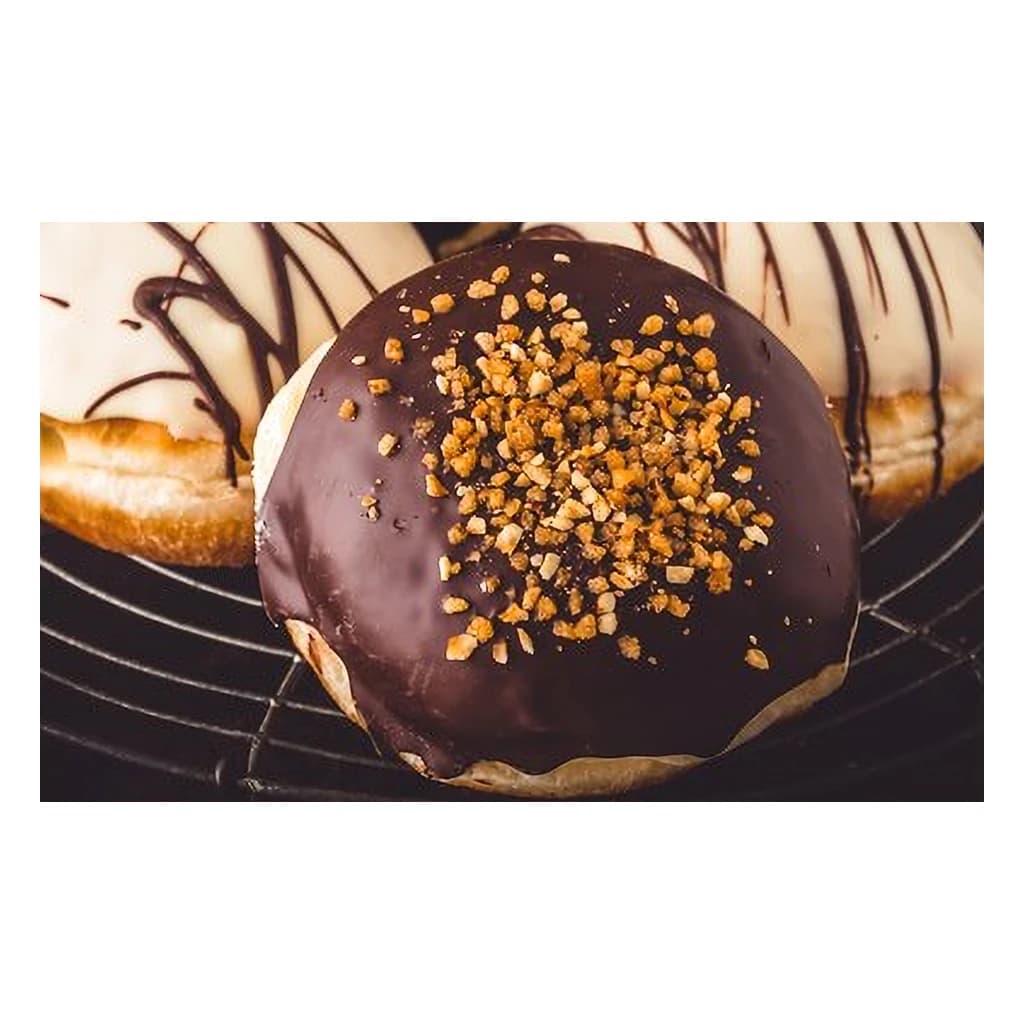
Satina Pro Compound Coating

White Chocolate Transfer Decoration, Excellence Series (75 pc)

Chocolate Square Plaque 40 mm – Baroque Transfer (75 pc)
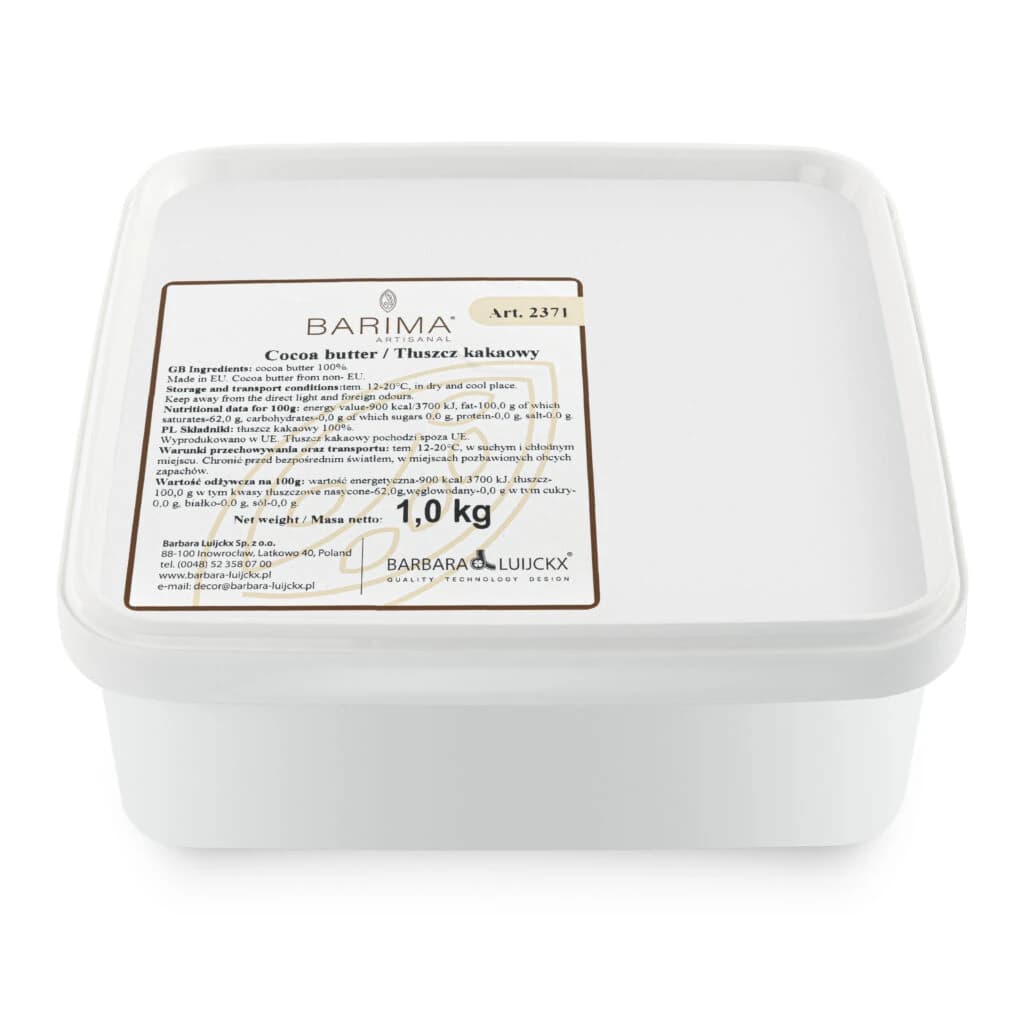
Barbara Luijckx Cocoa Butter 1 kg
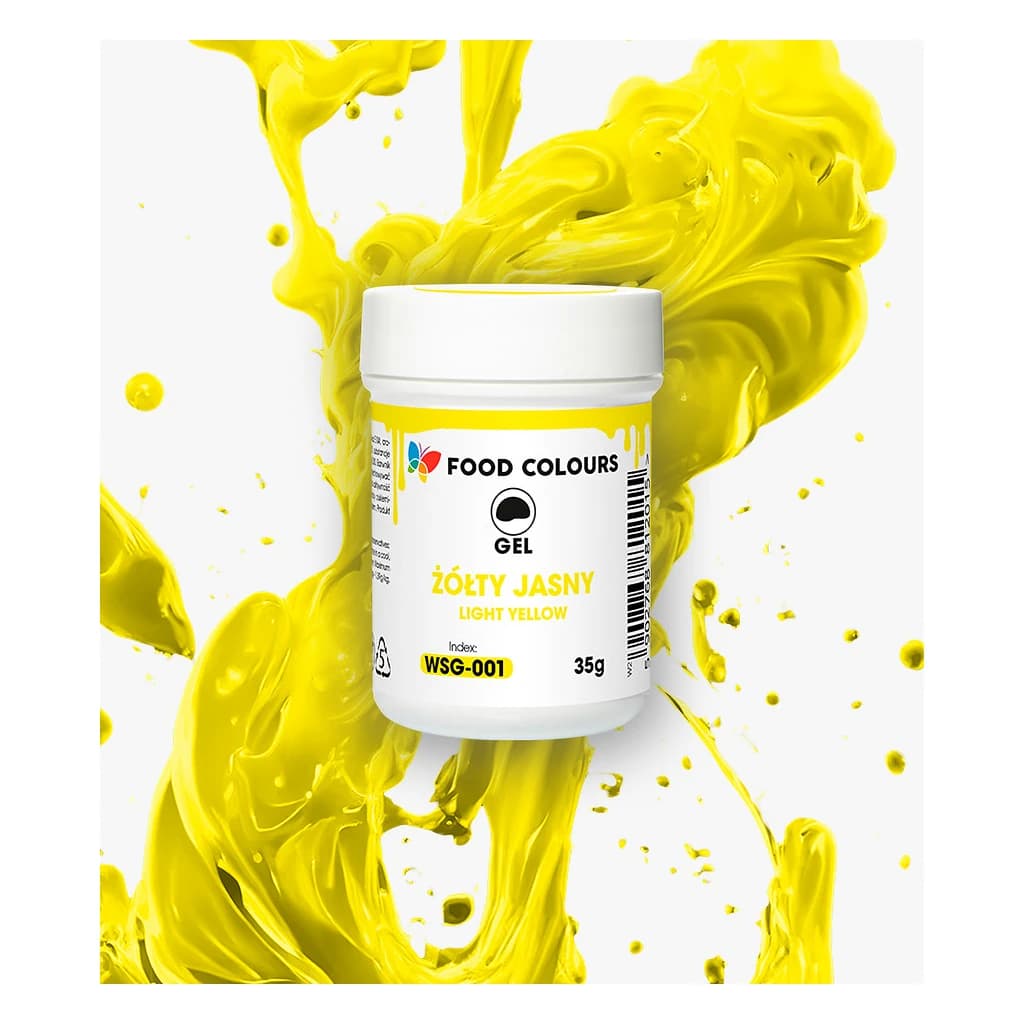
Food Colour — Gel, 35 g Jars
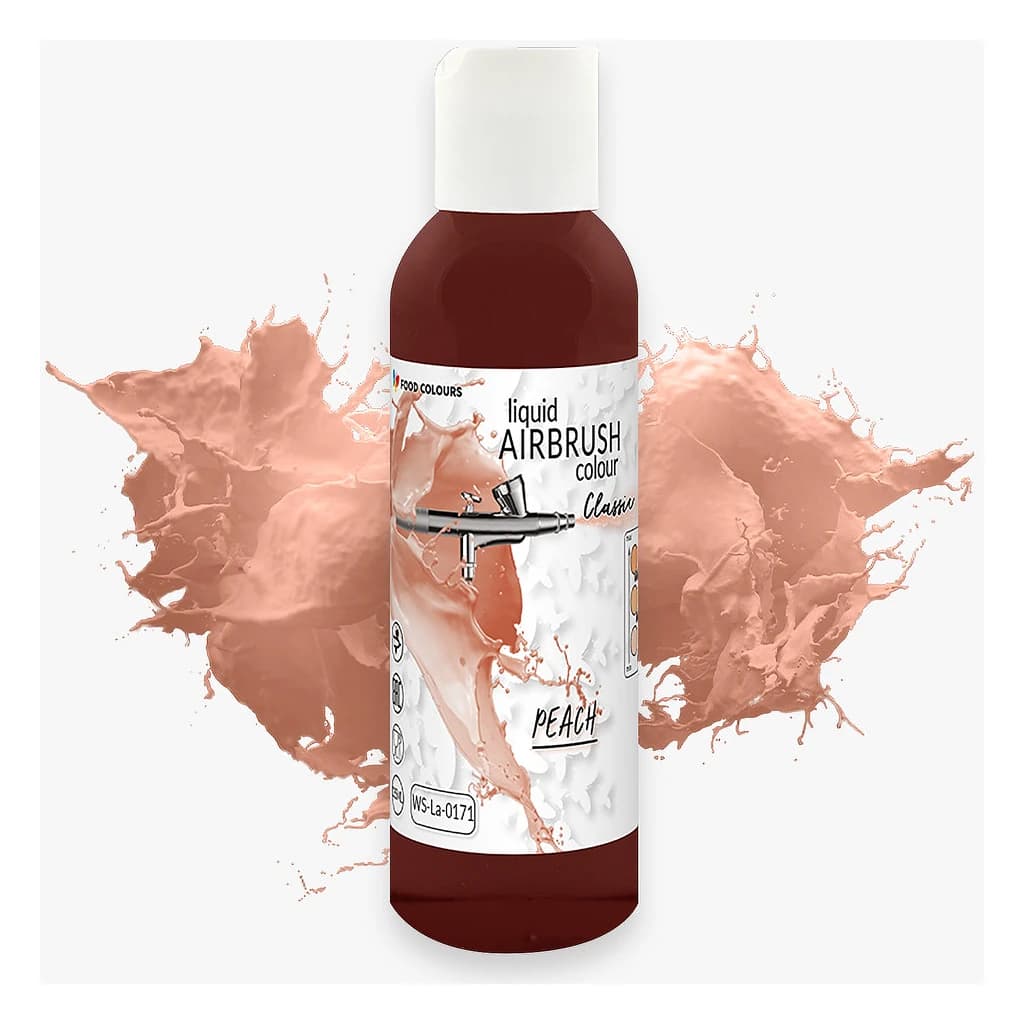
Food Colour — Airbrush
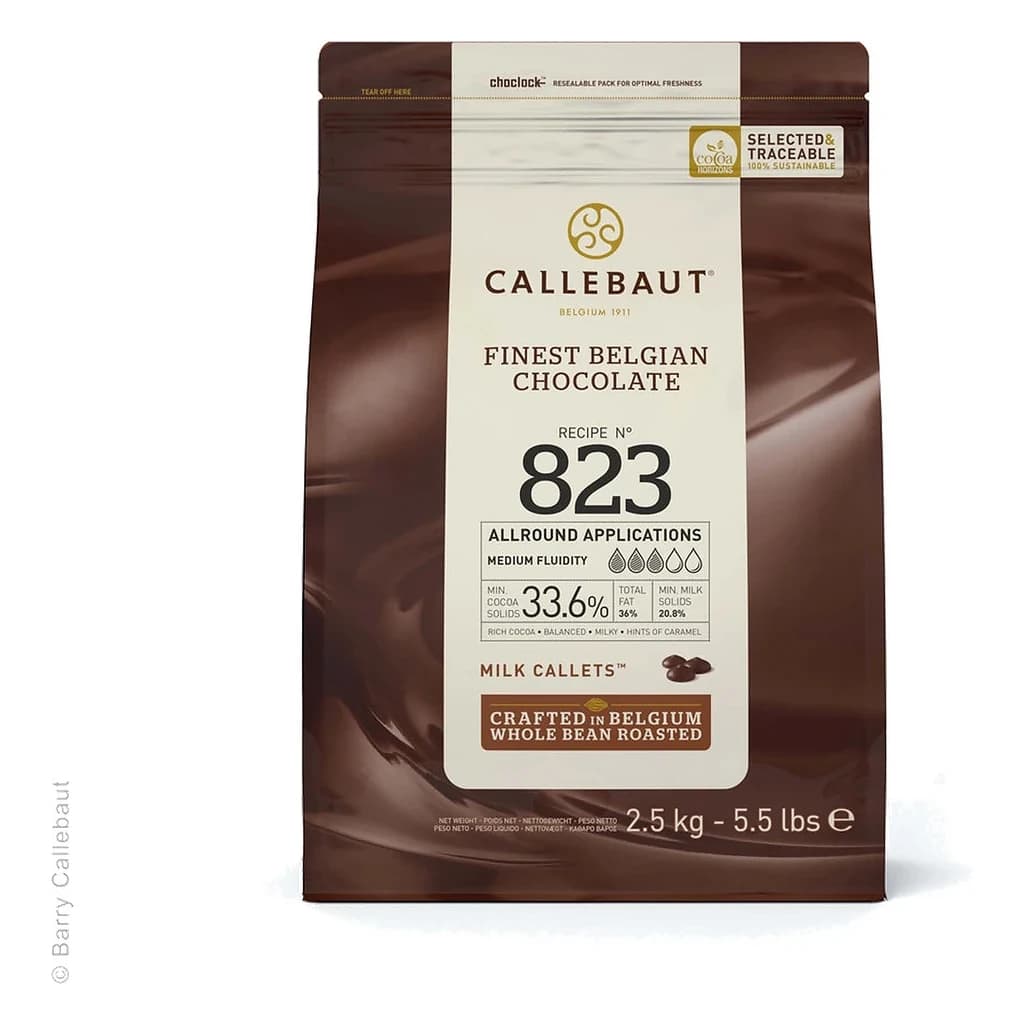
Callebaut 823 Milk Chocolate Callets 33.6% 2.5 kg
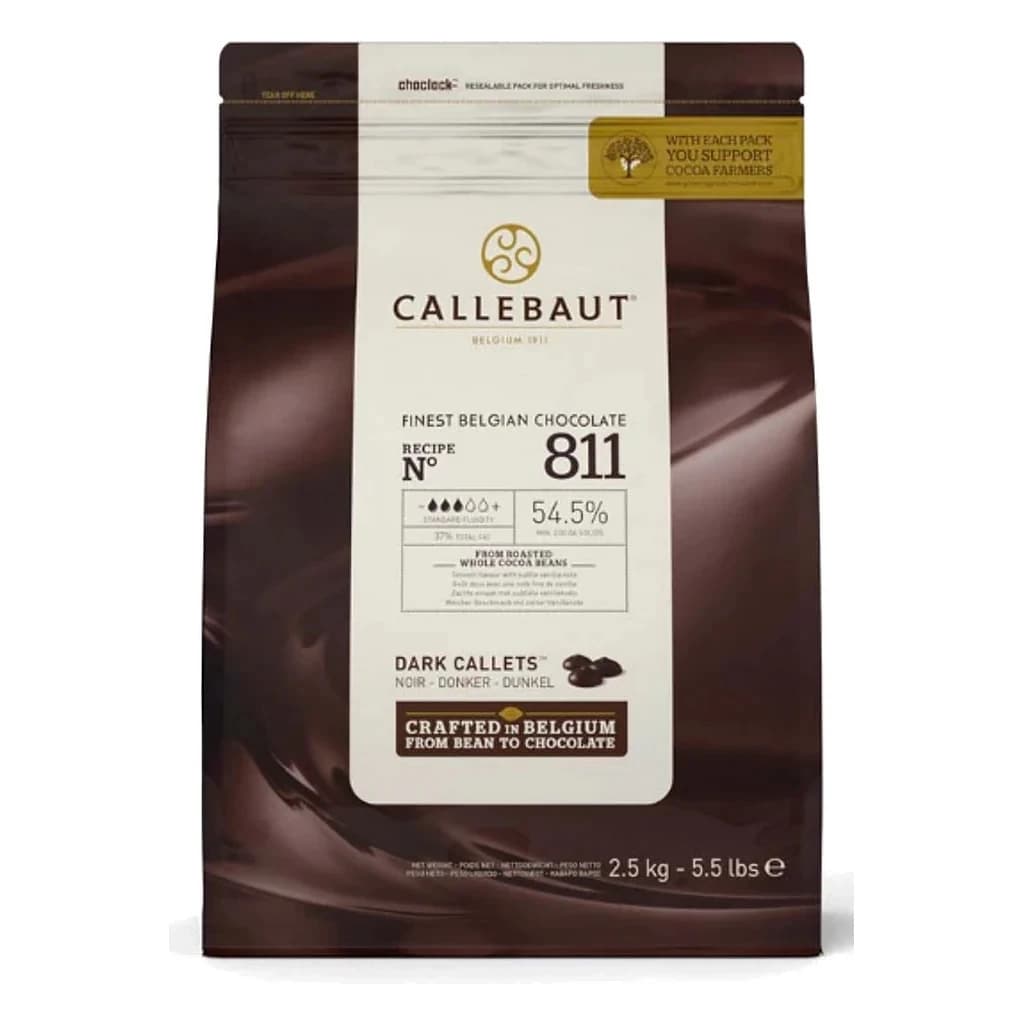
Callebaut 811 Dark Couverture Callets 54.5%
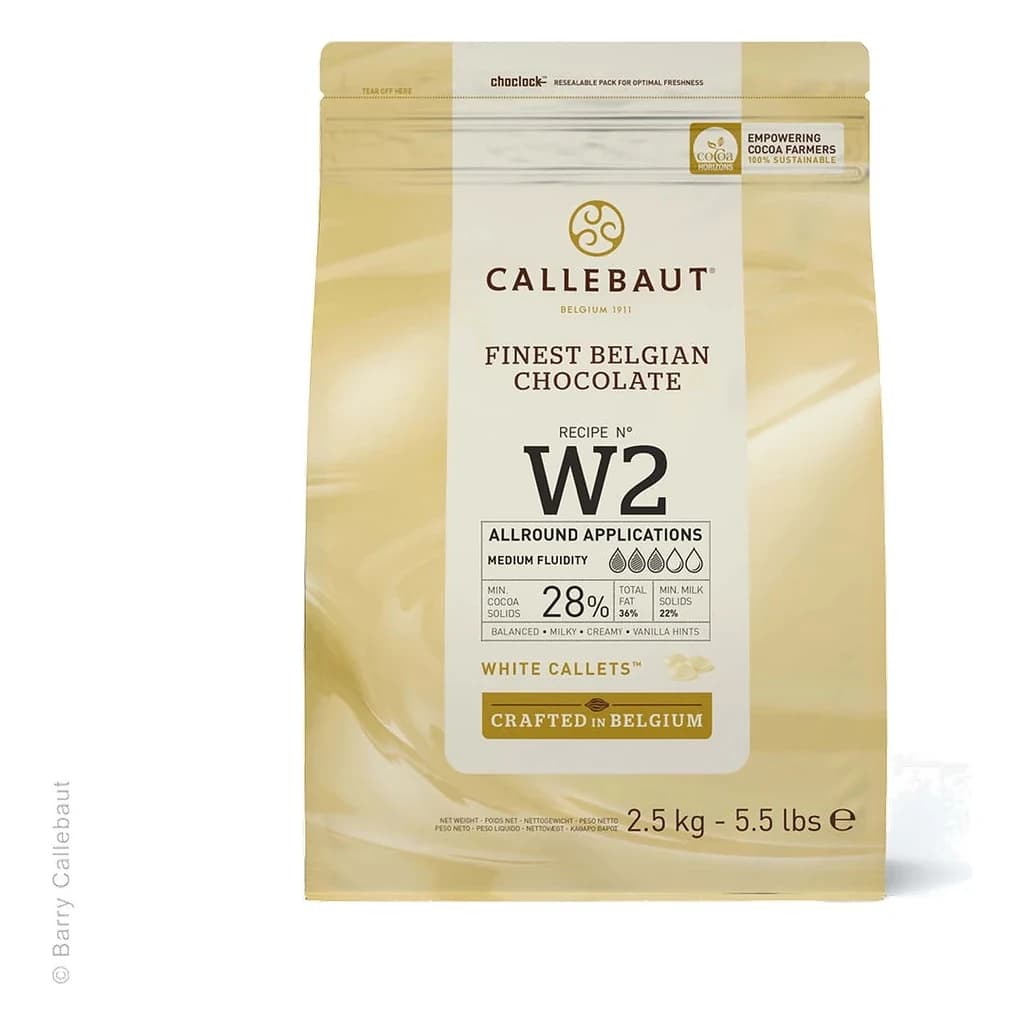
Callebaut SICAO White Chocolate Callets 28% 2.5 kg
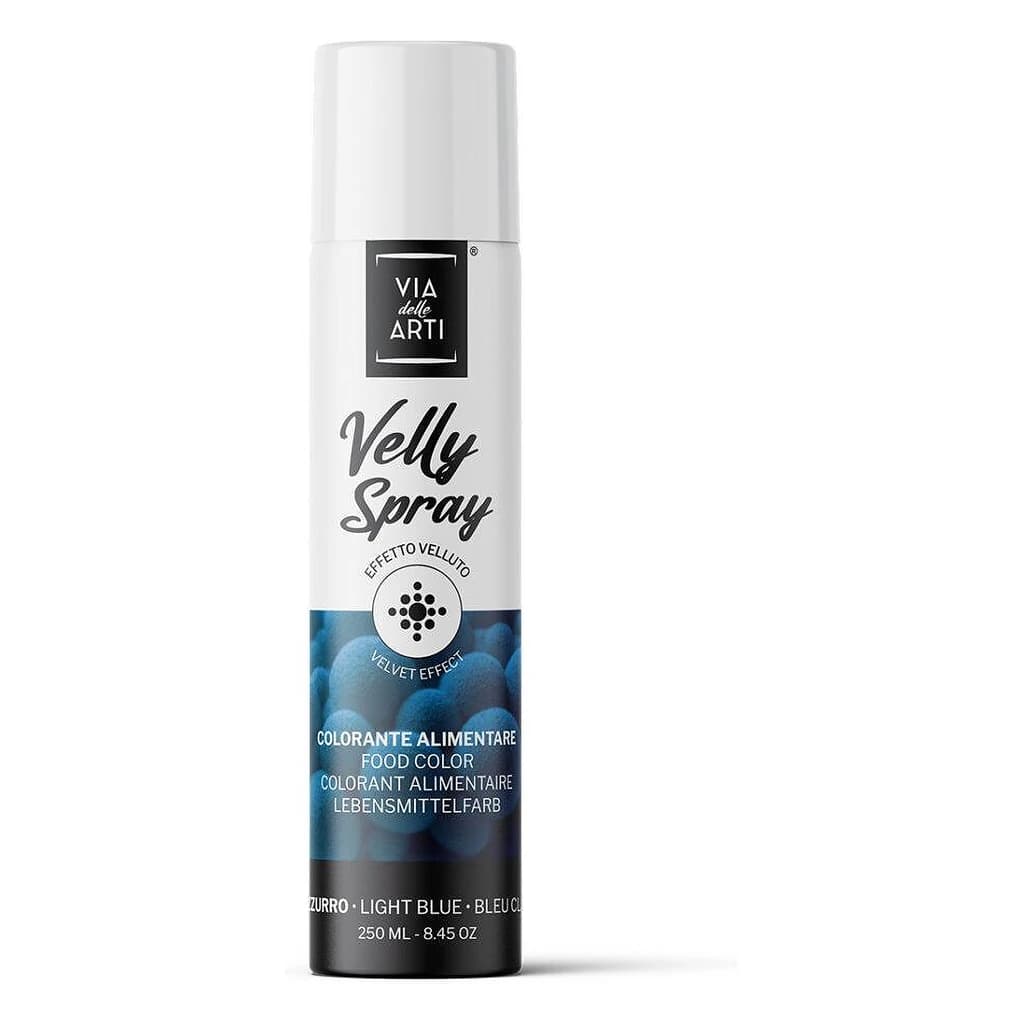
Light Blue Velvet Spray 250 ml
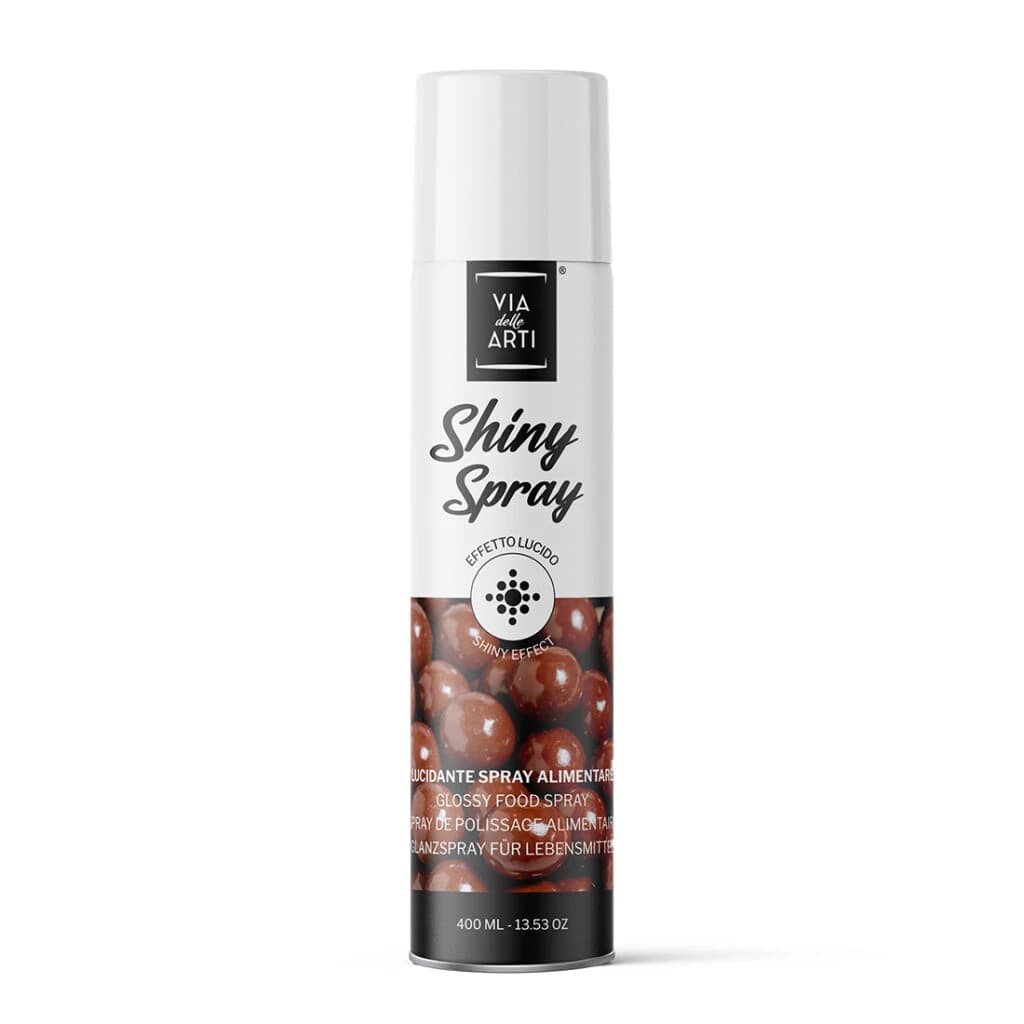
Glossy Food Spray 400 ml
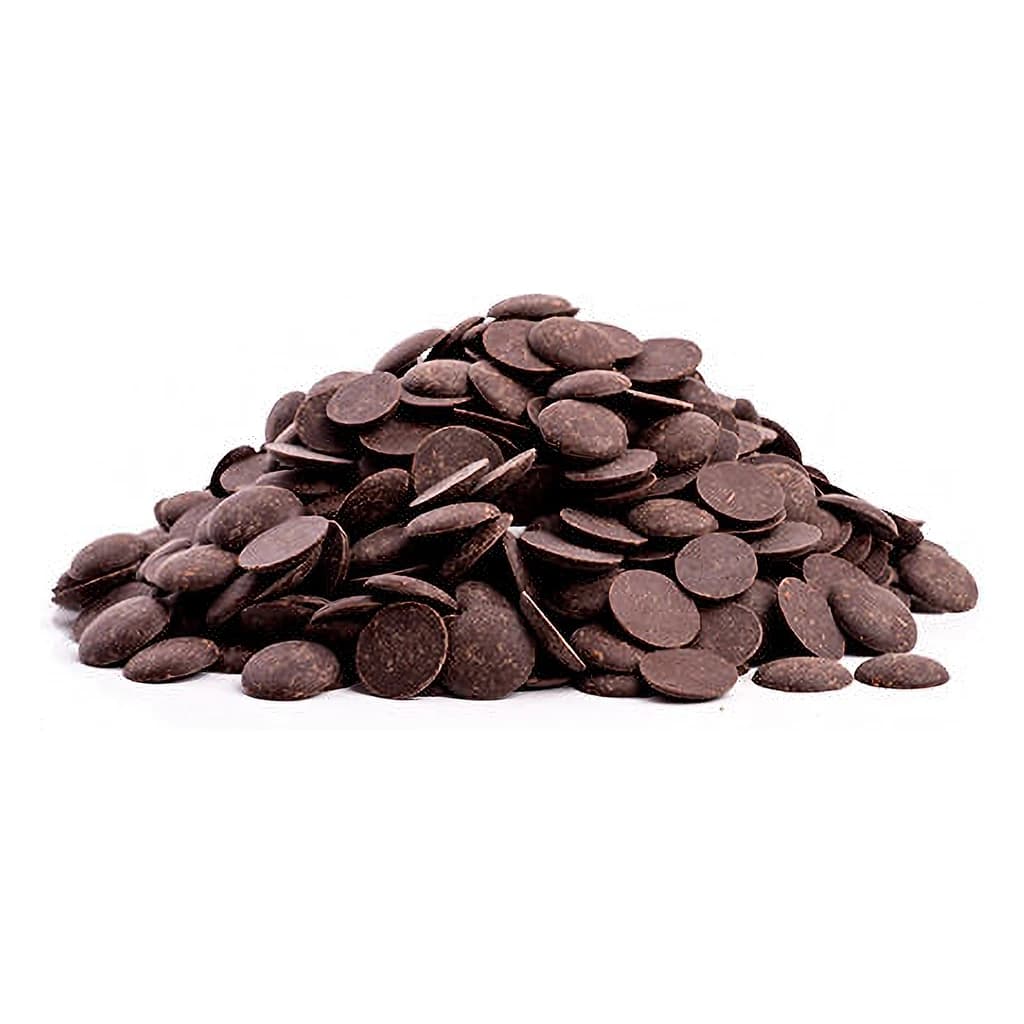
Zeelandia Arabesque Dark Couverture 72% 5 kg
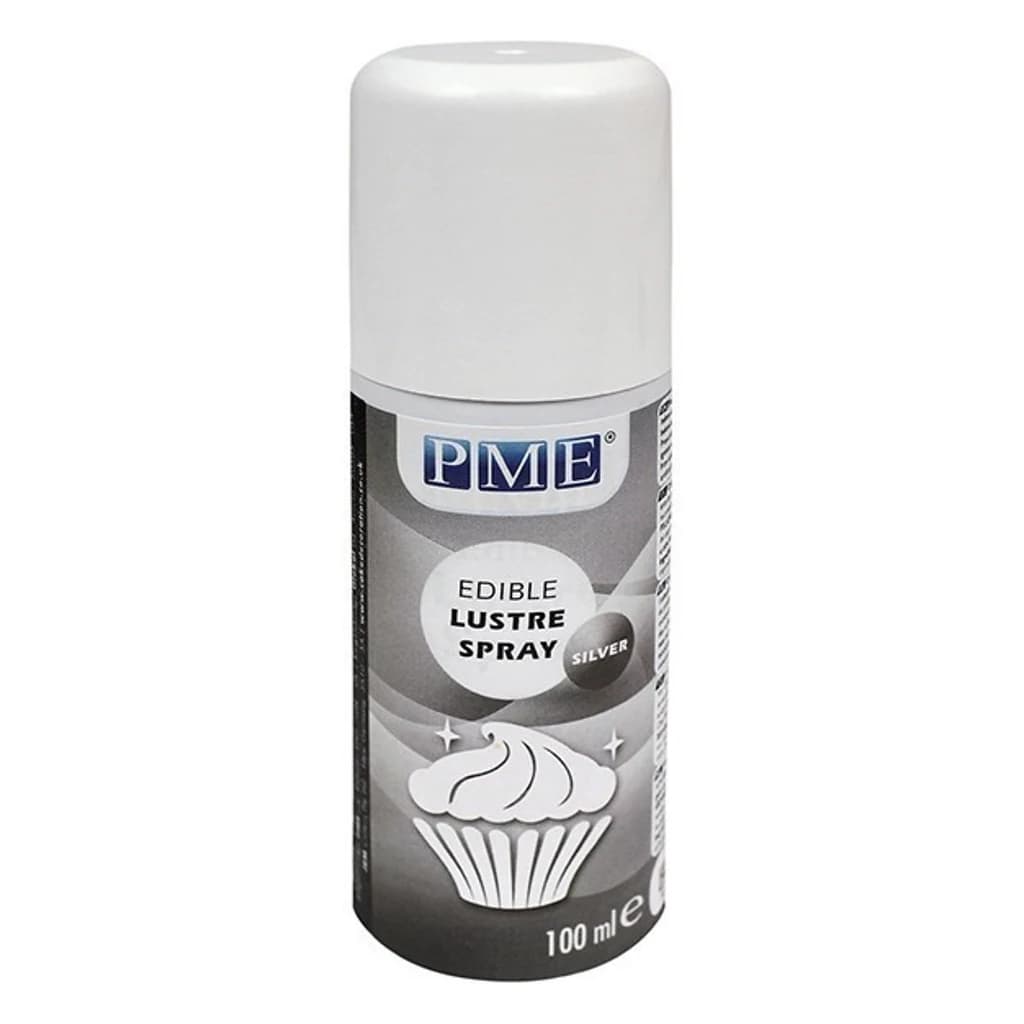
PME Edible Lustre Spray
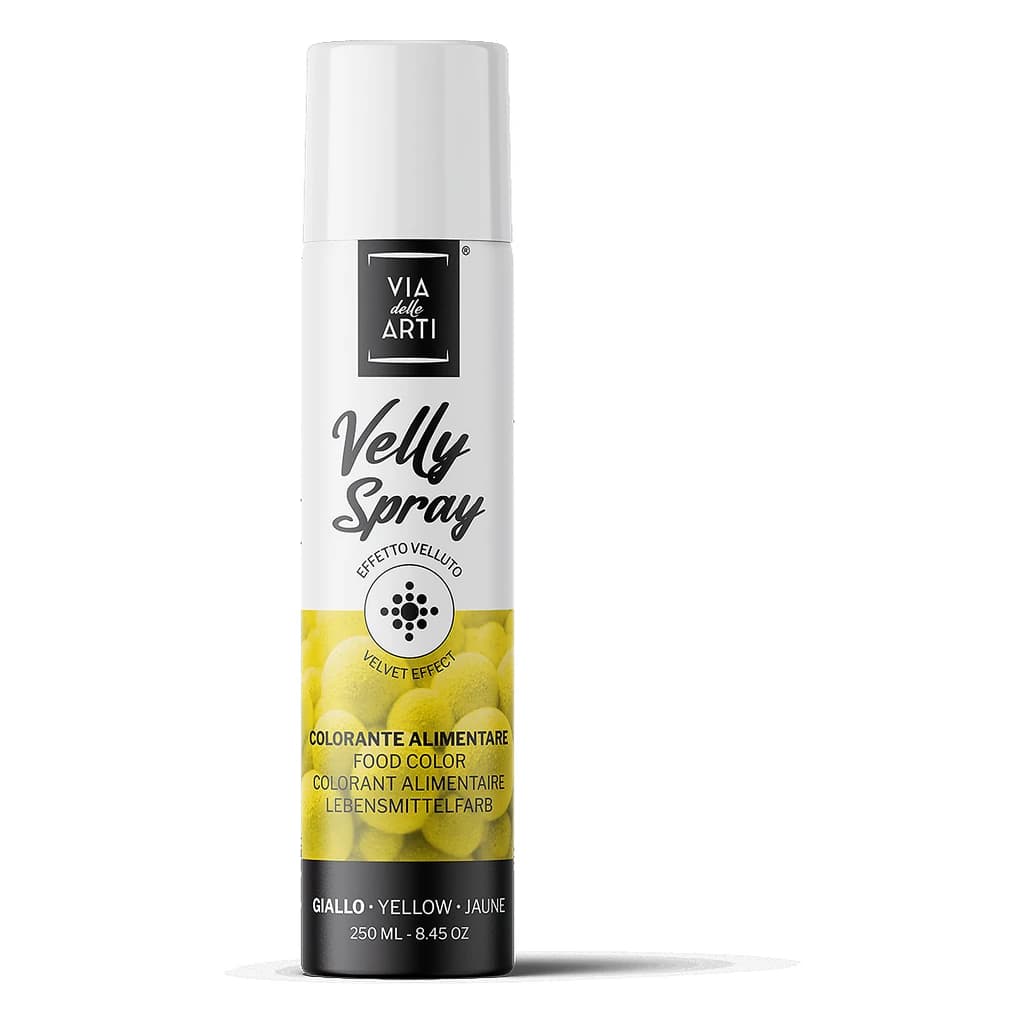
Yellow Edible Velvet Spray 250 ml
Polmarkus Edible Velvet Spray 400 ml
Food Colour — Metallic Dust, 20 g
Callebaut Cocoa Butter in Callets 100% 3 kg