
Mekitsi and Bulgarian fried dough: fermented dough formula, oil-temperature control and the commercial breakfast-pastry opportunity
Mekitsi (мекици) are Bulgaria's everyday breakfast — a soft, puffed, yogurt-and-yeast fried dough eaten at home, at markets and roadside stalls, dusted with icing sugar or topped with white sirene cheese, jam or honey. This dossier gives a UK baker the authentic picture, mined from Bulgarian- language recipe and reference sources (chef Ivan Zvezdev, Gotvach.bg, 1001recepti and other Bulgarian culinary references) and cross-checked against the platform's supplier spec sheets: the name (from mek, "soft"); the three leavening routes — yeast, kiselo mlyako (Bulgarian yogurt) plus bicarbonate of soda, or both; a classic formula in grams and baker's percentage; how mekitsi differ from tiganitsi and langidi; and the one control that makes or breaks a fried-dough line — oil temperature (170-180 C). It maps every step to the Domson catalogue a Bulgarian bakery actually orders (plain Type 500 flour, fresh and instant yeast, frying oils and shortening, icing sugar, sirene, jam) and cross-links the Pillar A craft concepts behind it (A4-frying-fats-and-oils, A2-yeast-types-comparison, A2-chemical-leaveners-baking-powder, A5-proofing-science, A8-enriched-dough-formulas) plus its sister Bulgarian articles (B6-flour-types-milling, B6-dairy-in-baking, B6-festive-baking-calendar, B6-kozunak-enriched-bread).
Why mekitsi matter to a UK bakery
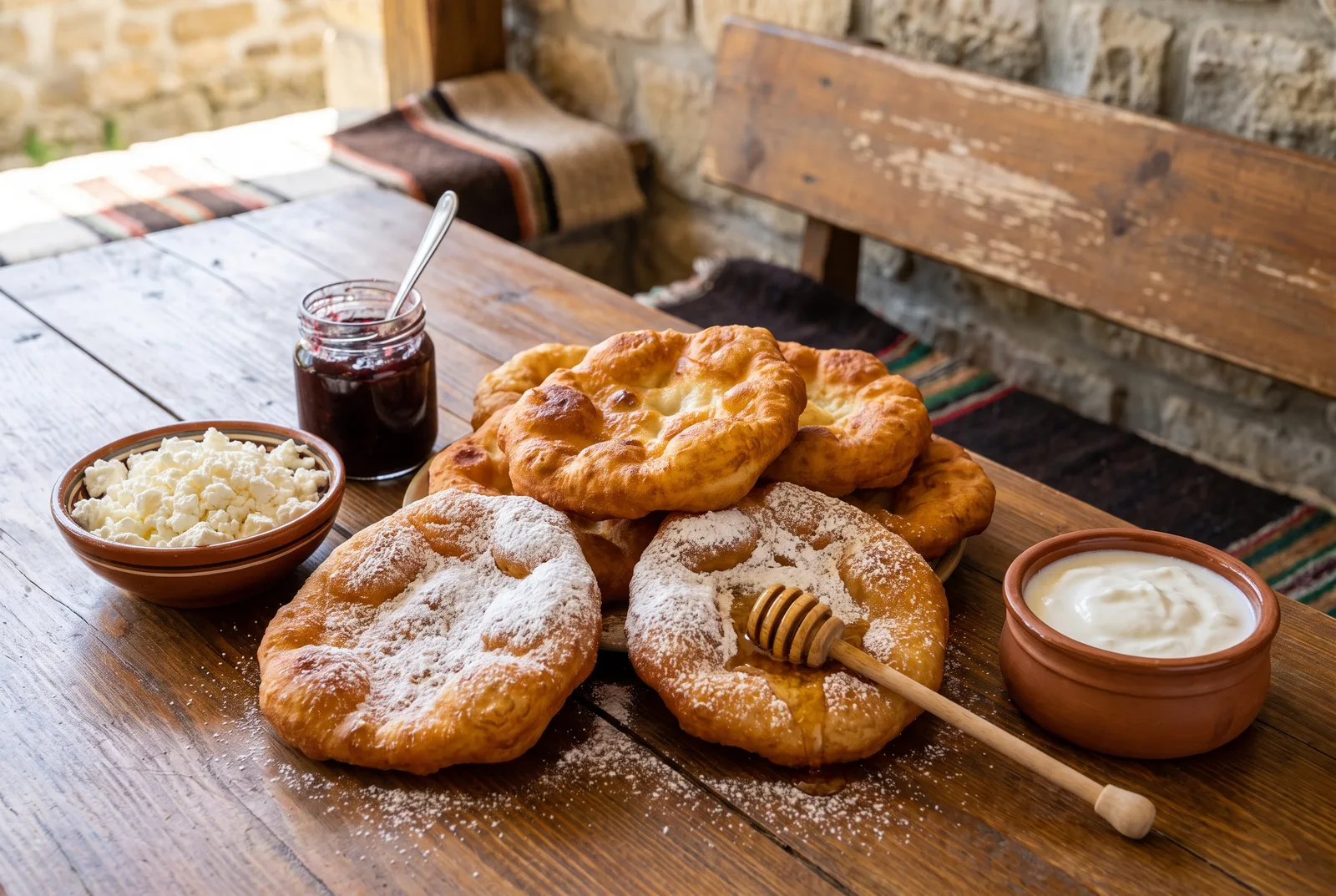
Ask a Bulgarian what they ate for breakfast growing up and, more often than not, the answer is mekitsi (мекици) — soft, puffed rounds of fried dough, snowed with icing sugar or torn open around a lump of white sirene cheese, a spoon of jam or a trickle of honey. They are to a Bulgarian morning what a warm croissant is to a French one: cheap, fast, universally loved, and judged instantly. For a UK B2B bakery serving Bulgarian customers, a good mekitsa is both a loyalty-builder and a genuinely profitable line — a handful of inexpensive ingredients, minutes of work, and a high number of covers per litre of frying oil.
The name tells you the whole ambition of the product. Mekitsa comes from the Bulgarian adjective mek (мек), "soft" or "tender," with the feminine suffix -itsa. Older Bulgarian usage even set it against tvardica (from tvard, "hard") — a crisp flatbread baked on a sač iron. So the target is not a dense doughnut; it is a light, airy, yielding interior with a thin crisp shell. Everything in the method serves that softness.
This article gives you the authentic formula and, more importantly, the two process controls that separate a professional mekitsa from a greasy home effort: the dough's leavening and the frying oil's temperature.
The Bulgarian fried-dough family — get the name right
Mekitsi sit inside a small family of related fried doughs, and Bulgarian customers will notice if you mislabel them. The fried-dough-family comparison table and the diagram below lay it out; the short version:
- Mekitsi (мекици) — yeast-leavened (often with a little soda), a firmer, kneaded dough that must rise ~1 hour / double, then is stretched by hand into rounds. Result: puffy, airy, slightly crisp.
- Tiganitsi (тиганици) — bicarbonate of soda in a thinner, spoon-dropped batter cooked immediately into small delicate rounds; no rise.
- Langidi (лангиди) — thinner still, usually with fresh rather than sour milk, closer to a pancake; the name overlaps regionally with tiganitsi.
Across the border the same idea recurs: Serbian mekike/uštipci, North Macedonian mekica/pituljica, Greek loukoumades and the Ottoman-heritage lokma (a syrup-soaked fried dough), with Hungarian lángos as a wider cousin. These are best understood as one shared Balkan/Ottoman fried-dough family rather than as copies of one another — the honest framing, since the precise lineage is not firmly documented. (In North Macedonia mekici are, by one account, traditionally made the week after a baby is born as a celebration — a nice piece of colour to flag rather than lean on.)
The three ways to lift a mekitsa
This is the decision that shapes your whole workflow. Bulgarian recipes use one of three leavening routes (see the leavening-routes comparison table and the diagram below):
1. Yeast only. Yeast ferments over a rise — about an hour at room temperature, or overnight in the fridge — producing a sustained stream of CO₂ and the lightest, most open crumb. This is the classic, and the best for a bakery running to a fixed morning schedule: mix the night before, retard cold, fry to order. The biology here is exactly the Pillar A story in A2-yeast-fermentation-science, and the fresh-vs-dried choice is A2-yeast-types-comparison.
2. Bicarbonate of soda + kiselo mlyako. Bicarbonate reacts with the acid of the yogurt to release CO₂ — but this is single-shot chemistry: the gas comes off all at once when you mix, so the batter is left only briefly "to bubble" (да шупне) and must then be shaped and fried immediately. This is the fast, no-planning route, and it drifts toward the thinner tiganitsi style. The acid-base mechanism is the subject of A2-chemical-leaveners-baking-powder.
3. Both — the chef-classic. The popular home standard (and chef Ivan Zvezdev's recipe) uses yeast for structure and flavour PLUS a soda-in-yogurt kick for extra lift. It is the most reliably puffy result and the one most Bulgarian customers will recognise as "proper."
The common thread is kiselo mlyako (Bulgarian yogurt). Fermented with Lactobacillus delbrueckii subsp. bulgaricus and Streptococcus thermophilus and standardised nationally under BDS 12:2010, it does double duty: its acidity tenderises the dough (helping that mek softness) and, in the soda route, provides the acid that drives the CO₂ release. Its functional role across Bulgarian baking is the subject of B6-dairy-in-baking.
The formula
The classic-mekitsi formula card below gives chef Ivan Zvezdev's popular home/trade recipe verbatim, in grams and in baker's percentage on flour:
- Flour (Type 500 plain) 500 g / 100%
- Kiselo mlyako ~250 ml (½ tub) / ~50%
- Fresh milk (warmed to 35 C) 100 ml / 20%
- Egg 1 (~50 g) / ~10%
- Dry yeast 8 g / 1.6% (or 20 g fresh / 4%)
- Bicarbonate of soda (into the yogurt) ½ tsp (~2.5 g) / ~0.5%
- Sugar ½ tbsp (~7 g) / ~1.5%, Salt ½ tsp (~2.5 g) / ~0.5%, Oil in dough 1 tbsp / ~3%
The yogurt, milk and egg together (~80% liquid on flour) make a soft, sticky, relatively high-hydration dough — which is exactly why it is shaped with wet or oiled hands rather than on a floured bench. If you understand it as an enriched dough (egg, milk, a little sugar and fat) then A8-enriched-dough-formulas and A8-bakers-percentage-fundamentals are the right Pillar A companions.
For high-volume mornings, the market-mekitsi formula card below is a leaner, egg-free batch dough (800 g flour) that scales cleanly and carries a simpler allergen label; and the quick-soda formula card below is the no-proof soda route for when you need product in minutes. The process end-to-end is drawn in the diagram below.
Key handling points
- Start the yeast in milk warmed to about 35 C — lukewarm, never hot. See A5-proofing-science for reading dough readiness.
- Rise until doubled (~1 h), or retard overnight in the fridge for better flavour. A fresh-yeast dough may want a longer rise (roughly 2-4 h depending on the recipe), then a short rest after shaping. (These fresh-yeast rise/rest times rest on a single recipe source — treat as a starting point and read your own dough.)
- Soda route only: mix and fry at once — do not let the batter stand, or the lift is gone.
Oil-temperature control — the make-or-break
If there is one number to put on the wall, it is the frying window: 170-180 C (see the gauge below). The chef recipe specifies 180 C, and general deep-frying practice for enriched fried dough converges on the same window; the physics is the Pillar A story in A4-frying-fats-and-oils. (Bulgarian frying explainers stress the general principle — enough hot, high-smoke-point oil, checked with a thermometer — rather than a precise Celsius target.)
- Below ~160 C — the dough sits in the oil instead of puffing, the crust sets slowly, and the mekitsa drinks fat: greasy, pale, heavy.
- 170-180 C — steam and the trapped fermentation gas expand fast, the crust sets quickly, and you get a dry, golden, puffed interior.
- Above ~180-190 C — the outside darkens (and eventually turns bitter) before the centre cooks, the oil degrades faster, and acrylamide formation accelerates.
(One Bulgarian recipe quoted "300 C" for the oil — that is an error and is ignored here; no domestic or bakery fryer oil should approach it. The dedicated frying-temperature sources agree on 170-180 C.)
Food safety: acrylamide forms in cereal-based foods fried above 120 C; keeping the oil at or below ~175-180 C and frying only to golden, not brown, is the practical control — the "as low as reasonably achievable" (ALARA) principle behind the EU acrylamide rules (Commission Regulation (EU) 2017/2158). Note there is no mekitsi-specific benchmark level: the regulation sets numeric benchmarks only for named categories (e.g. chips/fries, bread, breakfast cereals, biscuits), so mekitsi fall under the general ALARA duty, not a dedicated limit. Fry temperature and colour should be part of your HACCP.
Choosing the frying fat
The oil is not a detail — on a busy morning it is your biggest running cost and a real quality variable. The platform spec sheets let us compare four options directly (see the frying-fats comparison table and the chart below), per 100 g:
- Sunflower oil (Olympic) — sat 11 g, mono 28 g, poly 60 g. The traditional Bulgarian choice and perfectly authentic, but its high polyunsaturate content means it oxidises faster under repeated frying, so plan to filter and change it more often.
- Rapeseed oil (Olympic) — sat 7.5 g, mono 63 g, poly 28 g, plus an antifoam agent (E900). High-monounsaturate and neutral in flavour: a more stable, cost-effective fryer oil that holds up better over a shift.
- Vegetable shortening (Cardowan) — a solid palm+rapeseed block, sat 38.8 g, mono 43.5 g, poly 15.5 g, slip melting point 45 C, RSPO-certified. The most oxidatively stable, but it sets firm on cooling, so mekitsi fried in it can feel a touch waxy once cold.
- Palm frying oil (Master Martini) — a dedicated, very stable frying oil; check RSPO status and labelling for your market.
The general rule (the subject of A4-fat-types-and-selection): higher monounsaturates and lower polyunsaturates mean better stability at frying heat. A pragmatic bakery answer is to fry the authentic sunflower profile if that is what customers expect, but manage it actively (temperature, filtration, turnover) — or move to rapeseed / a stable frying oil to cut oil cost and off-flavours. A painty, stale smell after a busy service is the classic sign of an overused, oxidised oil (see the fault table below).
From the Domson catalogue — what a Bulgarian kitchen orders
Flour. Bulgarian mills sell a dedicated all-purpose "Pekar" baker's flour (SofiaMel/GoodMills) that explicitly lists mekitsi, doughnuts and buns among its uses — proof that this is a distinct professional flour grade, not just "whatever is open." In the Domson range the natural match is a plain Type 500 (Domson White Flour Type 500): soft crumb, protein ≥8%, ash 0.52%. If you want a chewier, more resilient mekitsa that holds its shape, step up to the stronger Type 550 (Domson Wheat Flour Type 550, protein 11.5-12.5%, wet gluten 28-32%) — noting some batches carry ascorbic acid (E300). Avoid very strong bread flour, which turns the dough tough. The full flour picture is in B6-flour-types-milling and A1-wheat-flour-types-by-application.
Yeast. Both catalogue formats suit a low-sugar mekitsi dough (see the yeast-formats comparison table below): Fresh Yeast Benevia (Lesaffre) — fresh compressed S. cerevisiae, keep at 1-10 C and use within 35 days; or Fermipan Red (Lallemand) — an instant dried yeast made precisely for lean 0-10% sugar doughs, mixed straight into the flour, keeping ~2 years unopened. Use roughly 8 g dried in place of 20 g fresh (the ~2.5-3× rule); details in A2-yeast-types-comparison.
The yogurt. Authentic kiselo mlyako is ideal; where that is not stocked, a natural set yogurt such as Yoghurt Natural 3% (Figand) is the working stand-in for both the acidity and the tenderising effect. (Catalogue note: the spec filed under this yogurt SKU currently resolves to a raisins datasheet — a mapping issue flagged for the catalogue owner; the product is linked but its spec was not read.)
Frying fat.Sunflower Oil (Olympic) for the traditional profile; Rapeseed Oil (Olympic) or Palm Frying Oil (Master Martini) for stability and cost; Vegetable Shortening (Cardowan) if you want the firmest, longest-lasting fat.
Finishing.Icing Sugar (Kent Foods) for the classic dusting, Granulated Sugar for the dough, grated white cheese for the sirene topping, and a Bakery Fruit Jam (Vortumnus/GIL) for the sweet service.
The commercial breakfast-pastry opportunity
Mekitsi are close to an ideal bakery SKU (see the image below): the ingredients are cheap and few (flour, yogurt, yeast, oil), the prep is short, and one batch of dough yields dozens of covers. Two production routes:
- Scratch — the authentic, lowest-ingredient-cost dough above; best flavour and the cleanest label, at the price of a rise/retard step.
- Yeast doughnut concentrate — a factory shortcut. The catalogue's Ireks Global Yeast Doughnut Concentrate is a mix for yeast-raised fried doughnuts added at 50% of flour; it is designed for ring doughnuts but the same fried-dough principle adapts to a mekitsi-style line for speed and consistency. Trade-off: it carries a fuller allergen label — wheat/gluten, soya and milk, plus emulsifiers (E471/E481) and flour-treatment agents (E300/E920) — and it moves you away from the "homemade" positioning that sells mekitsi to a Bulgarian customer. (Note for halal/vegetarian lines: E920 (L-cysteine) can be animal-derived — confirm the source with the supplier. All allergen and additive details must be verified against the current pack label before use.) The clean-label improver debate behind such concentrates is covered in the Pillar A improver articles.
Sell them as the Bulgarians do — hot, in the morning, with a toppings menu: icing sugar, jam, honey, sirene, or a spoon of yogurt. They are also a natural fit for the festive calendar (mekitsi are the everyday counterpoint to kozunak at Easter) — see B6-festive-baking-calendar and, for the enriched-dough cousin, B6-kozunak-enriched-bread.
Allergens
A finished mekitsa typically contains gluten (wheat flour), milk (kiselo mlyako and/or fresh milk) and egg; a sirene topping adds more milk, and the doughnut-concentrate route adds soya. Fry on an allergen-managed line and declare accordingly. Frying-temperature/acrylamide controls (§ above) and all allergen statements must be verified against your own ingredients and process before use. (A separate general caution if a honey topping is offered to families: honey should not be given to infants under 12 months, per standard infant-botulism advice.)
Bottom line
Mekitsi reward exactly two disciplines: a soft, well-leavened dough (yeast, yogurt-and-soda, or both) and a fryer held at 170-180 C. Get those right, buy a plain Type 500 flour, a suitable yeast, a stable frying oil and a bag of icing sugar, and you have an authentic, low-cost, high-margin Bulgarian breakfast line your customers will recognise on the first bite.
Figures
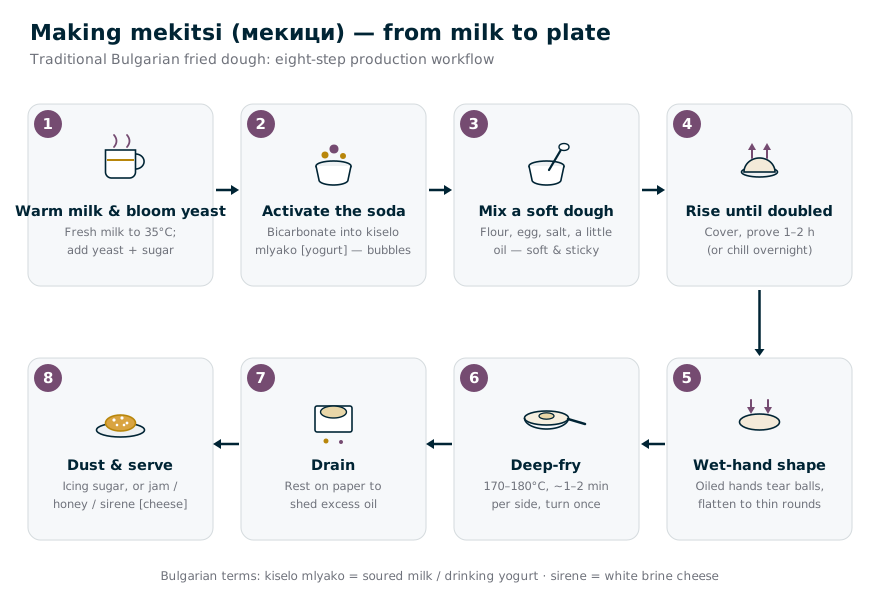 Eight-step flow diagram of mekitsi from warming milk and blooming yeast through soft dough, rise, wet-hand shaping, frying at 170-180 C, draining and serving
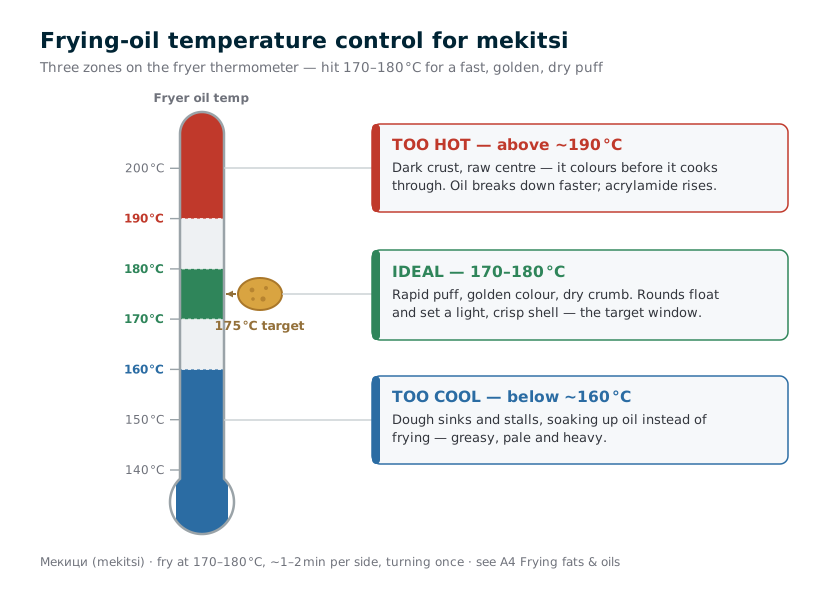 Frying-oil thermometer diagram showing too cool below 160 C, ideal 170-180 C and too hot above 190 C zones for mekitsi
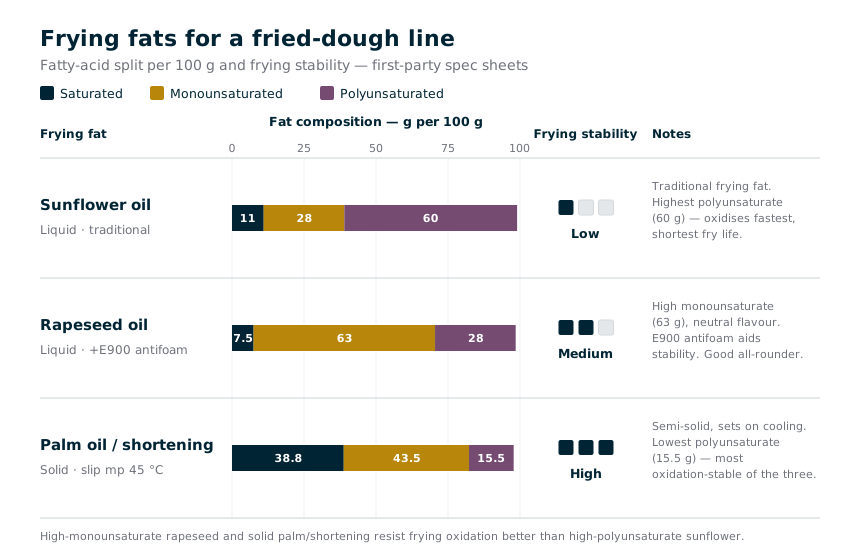 Comparison chart of sunflower, rapeseed and palm/shortening frying fats showing saturated/mono/poly fat and frying stability
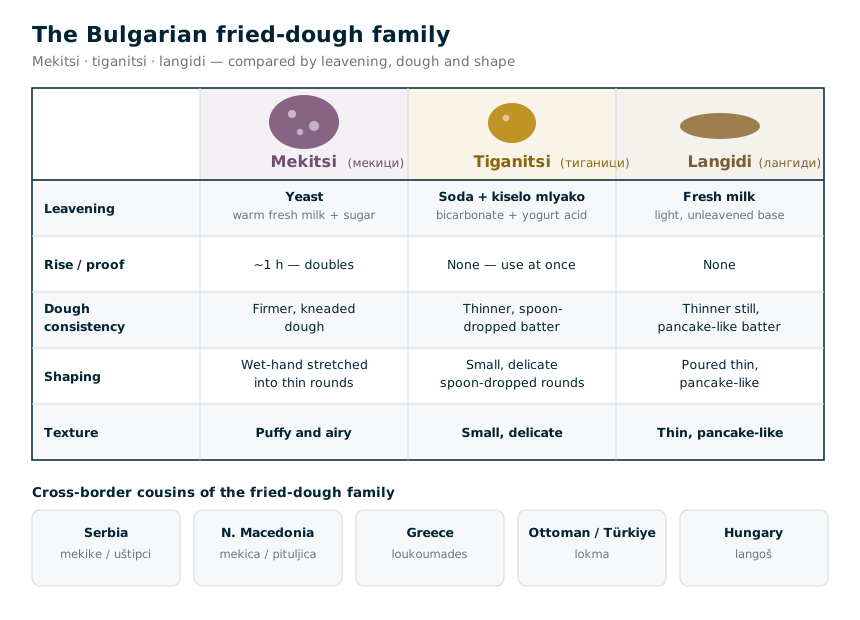 Diagram comparing mekitsi, tiganitsi and langidi by leavening, dough and shape, with cross-border Balkan cousins
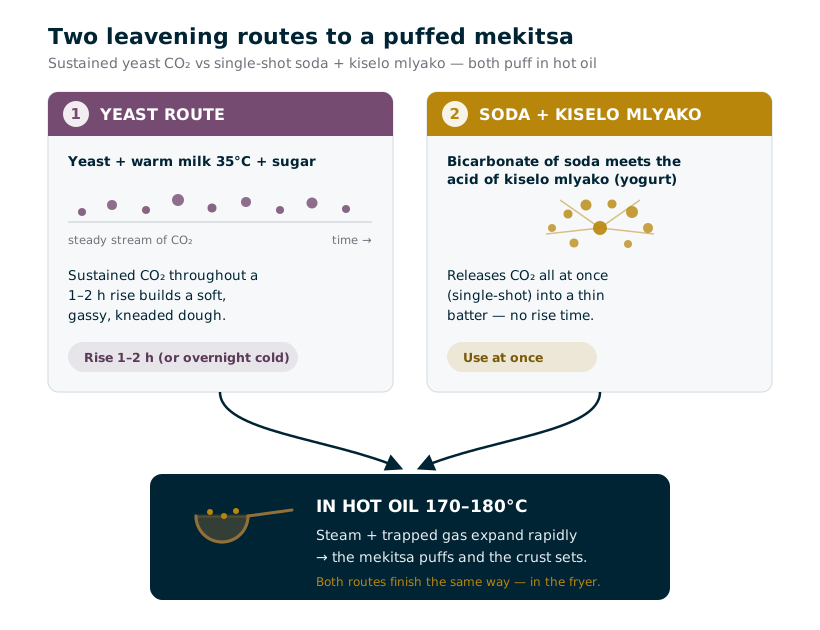 Diagram of the two mekitsi leavening routes — sustained yeast CO2 versus single-shot soda-plus-yogurt CO2 — both puffing in hot oil
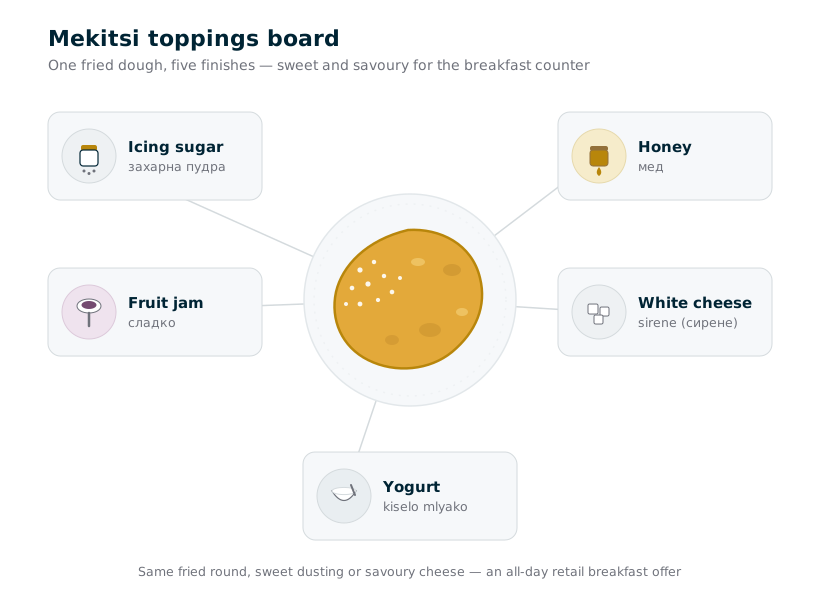 Toppings board showing mekitsi served with icing sugar, jam, honey, white sirene cheese and yogurt
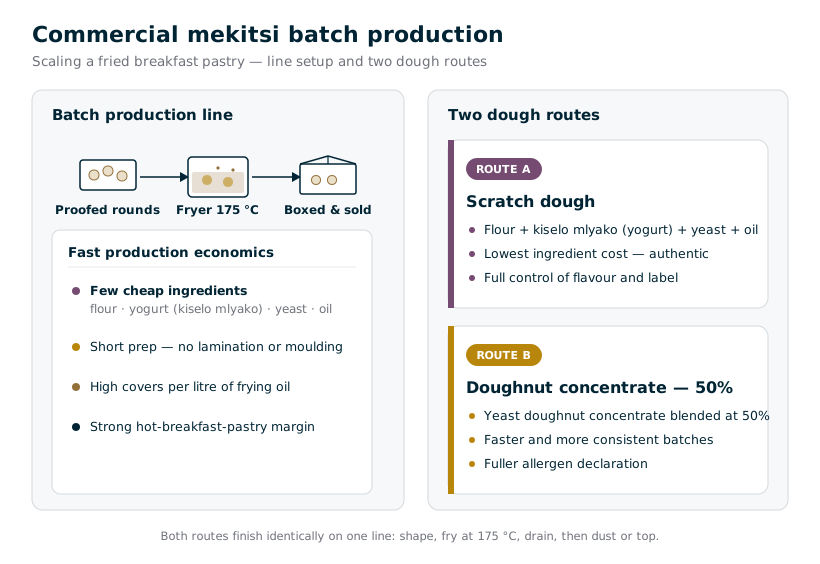 Diagram of commercial mekitsi batch production with a fryer at 175 C and scratch-versus-concentrate routes
Classic mekitsi (yeast + kiselo mlyako + soda) — chef Ivan Zvezdev
The popular home/trade standard: yeast for structure PLUS soda-in-yogurt for extra lift. A soft, sticky, relatively high-hydration dough (~80% liquid on flour) — that softness is the point (mek = soft). Quantities follow the source recipe (note the half-measures of yogurt, soda, sugar and salt); baker's % is calculated on flour.
| Ingredient | Baker's % | Weight |
|---|---|---|
| Wheat flour (Type 500 plain) | 100% | 500 g |
| Kiselo mlyako (Bulgarian yogurt) | ~50% | ~250 ml (1/2 tub) |
| Fresh milk (warmed to 35 C to start yeast) | 20% | 100 ml |
| Egg | ~10% | 1 (~50 g) |
| Dry yeast (or 20 g fresh) | 1.6% (fresh 4%) | 8 g |
| Bicarbonate of soda (into the yogurt) | ~0.5% | 1/2 tsp (~2.5 g) |
| Sugar | ~1.5% | 1/2 tbsp (~7 g) |
| Salt | ~0.5% | 1/2 tsp (~2.5 g) |
| Oil (into the dough) | ~3% | 1 tbsp (~15 g) |
| Oil for deep-frying (170-180 C) | - | as needed (~0.5-1 L) |
Yield: About 20-24 mekitsi (500 g flour base)
Contains gluten, milk and egg. Keep the fryer at 170-180 C — too cool and they drink oil; too hot and they colour before the centre sets.
Market / batch mekitsi (yeast, no egg)
A leaner, scalable yeast dough typical of high-volume morning production; no egg, so a cleaner allergen profile and lower cost.
| Ingredient | Baker's % | Weight |
|---|---|---|
| Wheat flour (Type 500) | 100% | 800 g |
| Kiselo mlyako | ~62% | ~500 ml (2 cups) |
| Fresh milk (35 C, to start yeast) | ~31% | ~250 ml (1 cup) |
| Dry yeast | ~0.9% | 7 g |
| Sugar | ~1.9% | 1 tbsp (~15 g) |
| Salt | ~1.5% | 2 tsp (~12 g) |
| Bicarbonate of soda (into the yogurt) | ~0.6% | 1 tsp (~5 g) |
| Oil for deep-frying (170-180 C) | - | as needed |
Yield: About 30-40 mekitsi (800 g flour base)
Contains gluten and milk; no egg. Scale linearly except yeast and salt, which scale sub-linearly at large batch. See A8-scaling-and-yield-conversion.
Quick no-proof (kiselo mlyako + soda) — the fast route
The soda-only route (leaning toward tiganitsi): no yeast, no rise, mixed and fried at once. Use when you need product in minutes; the crumb is a little less airy than the yeast version.
| Ingredient | Baker's % | Weight |
|---|---|---|
| Wheat flour (Type 500) | 100% | 500 g |
| Kiselo mlyako | ~100% | ~500 ml |
| Egg | ~10% | 1 |
| Bicarbonate of soda | ~1% | 1 tsp (~5 g) |
| Sugar | ~1% | 1 tsp |
| Salt | ~1% | 1 tsp (~5 g) |
| Oil for deep-frying (170-180 C) | - | as needed |
Yield: About 20 pieces (500 g flour base)
Because CO2 release is instantaneous, any delay loses lift; mix in small, fry-ready portions. Contains gluten, milk, egg.
Mekitsi sit inside a family of related fried doughs. Get the name right for your Bulgarian customers: the leavening and the batter/dough consistency are what separate them.
| Item | Leavening | Dough / batter | Shape & result | Notes |
|---|---|---|---|---|
| Mekitsi (мекици) | Yeast (often + a little soda/kiselo mlyako) | Soft, kneaded, must rise ~1 h / double | Wet-hand torn balls flattened to rounds; puffy, airy, slightly crisp outside | The everyday breakfast pastry; sing. mekitsa |
| Tiganitsi (тиганици) | Bicarbonate of soda + kiselo mlyako | Thinner, spoon-dropped batter; no rise | Small delicate golden rounds, cooked immediately | Quicker, thinner, more neutral than mekitsi |
| Langidi (лангиди) | Usually fresh milk, thin batter | Thinnest, pancake-like | Larger, flatter, pancake-ish | Distinguished from tiganitsi mainly by fresh vs sour milk |
| Serbian mekike / uštipci | Yeast or soda | Soft dough balls | Round, often savoury | Cross-border cousin |
| N. Macedonian mekica / pituljica | Yeast/soda | Soft dough | As mekitsi | Cross-border cousin; reportedly made the week after a birth (single-source colour) |
| Greek loukoumades / Ottoman lokma | Yeast | Wet batter, small balls | Round, syrup- or honey-soaked | Shared Ottoman-era fried-dough heritage |
Bulgarian home and trade recipes use yeast, soda-plus-yogurt, or both. Choose by how much lead time and shelf-freshness you need.
| Route | How it works | Lead time | Best for |
|---|---|---|---|
| Yeast only | Yeast ferments over a rise (~1 h, or overnight cold), producing a sustained stream of CO2 and a lighter, more open crumb | Slowest: ~1 h + rise, or overnight retard | The classic, airiest mekitsa; batch production with a fixed schedule |
| Soda + kiselo mlyako | Bicarbonate reacts with the acid of the yogurt to release CO2 all at once; batter is left only to 'bubble' then used immediately | Fastest: no proof | Speed / no planning; gives the thinner tiganitsi style |
| Both (chef-classic) | Yeast for structure and flavour PLUS a soda-in-yogurt kick for extra lift; the route in the Zvezdev formula | As yeast route | A rich, reliably puffy result — the popular home standard |
Bulgarian mills sell a dedicated 'Pekar' baker's flour for mekitsi/doughnuts. In the Domson range, a plain Type 500 is the natural match; a stronger Type 550 gives a chewier, more structured result. See B6-flour-types-milling and A1-wheat-flour-types-by-application.
| Flour | Protein / gluten | Verdict for mekitsi |
|---|---|---|
| Bulgarian 'Pekar' baker's flour (SofiaMel/GoodMills) | All-purpose baker's grade | The authentic native choice; explicitly listed for mekitsi, doughnuts, buns |
| Domson White Flour Type 500 (plain) | Protein >=8%, wet gluten >=23%, ash 0.52% | Closest catalogue match — soft, tender crumb; the default |
| Domson Wheat Flour Type 550 (stronger) | Protein 11.5-12.5%, wet gluten 28-32%, gluten index 75-99 | For a chewier, more resilient dough that holds shape; some batches carry E300 |
| Very strong / bread flour | 13%+ protein | Usually too strong: tough, less tender mekitsa — reserve for enriched breads |
Fat per 100 g and frying behaviour, read from Domson supplier datasheets. Higher monounsaturates and lower polyunsaturates = better oxidative stability under repeated frying. See A4-frying-fats-and-oils.
| Fat | Saturates | Monounsat. | Polyunsat. | State | Frying stability / notes |
|---|---|---|---|---|---|
| Sunflower oil (Olympic) | 11 g | 28 g | 60 g | Liquid | Traditional Bulgarian choice; high polyunsaturates so oxidises faster — change oil more often |
| Rapeseed oil (Olympic) | 7.5 g | 63 g | 28 g | Liquid | High-mono, neutral; carries antifoam E900 — a stable, cost-effective fryer oil |
| Vegetable shortening (Cardowan) | 38.8 g | 43.5 g | 15.5 g | Solid block, slip MP 45 C | Most oxidatively stable; sets firm on cooling so product can feel waxy cold |
| Palm frying oil (Master Martini) | high (palm) | - | low | Semi-solid/liquid | Dedicated frying oil; very stable — check RSPO/labelling for your market |
Both suit a low-sugar mekitsi dough. See A2-yeast-types-comparison for full conversion guidance.
| Product | Type | Dose vs classic recipe | Handling / storage |
|---|---|---|---|
| Fresh Yeast Benevia (Lesaffre) | Fresh compressed S. cerevisiae, dry matter >29% | ~20 g fresh / 500 g flour (classic) | Disperse in warm (35 C) milk; store 1-10 C, use within 35 days |
| Fermipan Red (Lallemand) | Instant dried yeast for lean 0-10% sugar doughs | ~8 g dry / 500 g flour, ~2.5-3x less than fresh | Mix straight into flour; keeps ~2 years ambient unopened |
| Fault | Likely cause | Fix |
|---|---|---|
| Greasy, oil-logged, pale | Oil too cool (<160 C); dough sat too long before frying | Hold oil 170-180 C; fry promptly; drain on paper |
| Dark outside, raw/doughy centre | Oil too hot (>190 C); rounds too thick | Drop to 170-180 C; stretch thinner |
| Dense, flat, not puffed | Under-proofed yeast dough, or soda batter left standing (gas spent) | Give a full rise; for soda route mix and fry at once |
| Tough, chewy | Flour too strong / over-kneaded | Use plain Type 500, mix to a soft sticky dough, don't overwork |
| Off, painty flavour after a busy morning | Oil oxidised / overused (high-poly oil degrades fast) | Switch to a higher-mono/more stable oil; filter and change oil regularly |
| Bitter or over-browned crust | Oil above ~180 C for too long (excess browning, acrylamide risk) | Keep <=175-180 C; fry to golden, not brown |