
Semolina-based Arab sweets: basbousa, namoura (نمّورة) and maamoul (معمول) — grind choice, ghee ratios and resting times
Semolina (سميد, smeed) is the backbone of the Arab sweet counter, and three products define it: the syrup-soaked semolina cake — basbousa (بسبوسة) in Egypt, namoura/nammoura (نمّورة) in Lebanon, harissa/hareseh (هريسة) in Palestine and Jordan, and revani in Türkiye and the Balkans — and the moulded festival shortbread maamoul (معمول). This dossier gives a UK baker the authentic regional picture from native Arabic sources and settles the three questions that actually decide the result: which SEMOLINA GRIND to use (fine vs coarse vs a blend, and why the answer differs by product and region), the GHEE/ butter RATIOS that make the crumb rich without being greasy, and the RESTING TIMES — the short batter rest that lets basbousa/namoura semolina swell, and the long overnight rest of the ghee-soaked semolina that is the secret to a melt-in-the-mouth maamoul. It covers the tahini-lined pan of Lebanese namoura, the attar (قطر) syrup grammar and the hot-cake/cold-syrup rule, the date (ajwa), walnut and pistachio maamoul fillings and the wooden-mould shapes that signal them, mahlab and mastic aromatics, and the Eid-and-Easter ritual meaning of maamoul across Muslim and Christian Arab communities. Every step is wired to the Domson catalogue an Arab/Middle-Eastern patisserie in the UK actually orders (durum and soft-wheat semolina, unsalted butter to clarify, sugar and citric acid for the syrup, baking powder, yoghurt, desiccated coconut, ground and whole almonds, walnuts, pistachios, dates and sesame) and cross-linked to the Pillar A craft (A1-wheat-flour-types-by-application, A2-chemical-leaveners-baking-powder, A4-butter-grades-and- specialist-types, A4-fat-science-functionality, A6-sugar-work-techniques, A7-seeds-nuts-toppings, A8-cake-and-pastry-formulas) and the sister B3/B2 traditions.
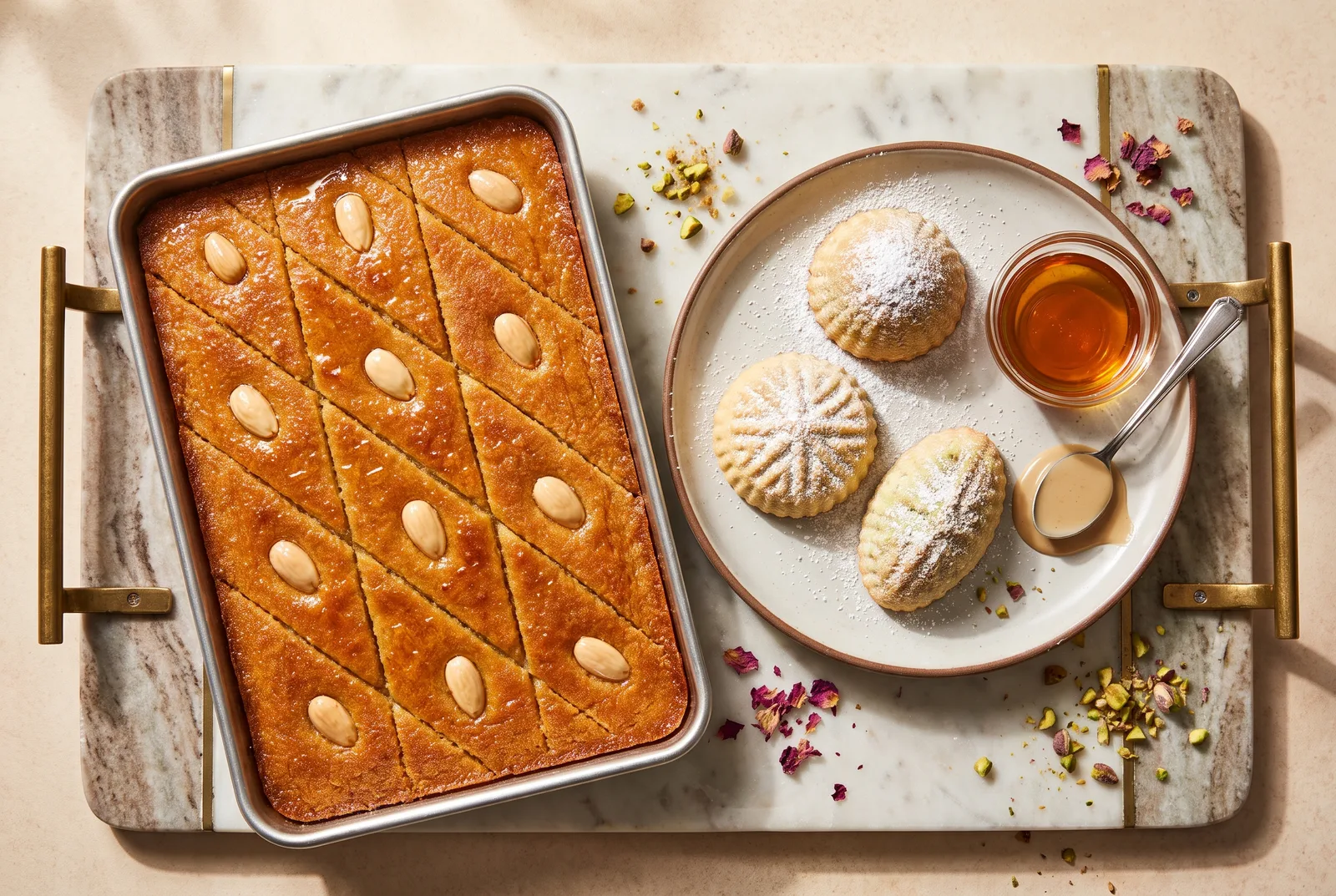
Semolina-based Arab sweets: basbousa, namoura and maamoul
Ask any Arab or Levantine baker what turns coarse yellow grain into a counter of jewelled sweets and the answer is one word: semolina (سميد, smeed). Two products carry the tradition in a UK patisserie serving Egyptian, Levantine and Gulf communities. The first is a syrup-soaked semolina cake that goes by a different name in every country — basbousa (بسبوسة) in Egypt, namoura / nammoura (نمّورة) in Lebanon, harissa / hareseh (هريسة) in Palestine and Jordan, revani in Türkiye and the Balkans. The second is maamoul (معمول), the moulded shortbread cookie filled with dates, walnuts or pistachios that is the flagship of Eid and Easter alike.
Everything else about these sweets — how good, how authentic, how they hold on a shelf — comes down to three decisions this dossier is built around, and which sit right in the title: the semolina grind, the ghee ratio, and the resting time. Get those right and the rest is assembly.
Names and transliteration. Semolina is smeed (سميد). The cake is basbousa (بسبوسة, Egypt), namoura/nammoura (نمّورة, Lebanon), hareseh/harissa (هريسة, Palestine/Jordan) and revani (Türkiye/ Balkans). The cookie is ma'moul (معمول). The syrup is attar / ater / qater (قطر) or sheera (شيرة). This article keeps the Arabic names with an English gloss on first use and treats Latin transliteration as the primary spelling.
1. One cake, many names — the regional map that matters commercially
The syrup-soaked semolina cake is a single idea expressed under many names, and a customer wants their version by name:
- Egypt — basbousa. Usually a coarser crumb, very often with desiccated coconut worked into the batter and an almond or hazelnut on each diamond (c6). The commonest of all names in the UK.
- Lebanon — namoura / nammoura. The pan is greased with tahini, the batter carries yoghurt, and the finish is often a lighter, less-sweet syrup; each lozenge is crowned with a blanched almond (c6, c11, c12).
- Palestine / Jordan — harissa / hareseh. The name derives (lexicographically) from the root harasa, "to crush/grind," pointing at the crumbly ground-semolina texture; often denser and richer (c3).
- Türkiye and the Balkans — revani / ravani (Greek revaní, Bulgarian revane, Albanian revanija, Armenian shamali), frequently made with eggs and citrus zest — treated as the Ottoman cousin in B2-syrup-sweets-ottomans (c4).
Etymology and history (folk and lexicographic — treat as indicative). "Basbousa" is traced by the Syrian historian Khayr al-Din al-Asadi to the verb bas (بس, "to mix"), with a colloquial reading of bas bosa, "just a kiss" (c2). The family may descend from the Abbasid dish ma'muniyya (9th century), and a recognisable syrup-soaked semolina cake appears in an 1844 Ottoman Turkish cookbook (c5, single-line — indicative). "Namoura" is popularly linked to nimr (نمر, leopard/tiger) for the almond "spots" on its surface — a charming folk etymology, not a documented one.
The commercial takeaway: label and build to the customer's register. An Egyptian buyer expects basbousa bel-goz el-hind (with coconut); a Lebanese buyer expects namoura with its tahini base and pale syrup.
2. The semolina grind — the decision that starts everything
Semolina is the purified middlings of milled wheat — classically durum — and its behaviour is governed by particle size (c8). This is treated in depth in A1-wheat-flour-types-by-application and, for the Arab range specifically, in B3-flour-and-semolina-selection. The catalogue durum semolina is a genuinely coarse grade: ~40-60% is retained on a 425 µm sieve, 20-30% on 355 µm and 15-25% on 300 µm, at 100% durum wheat, moisture max 14.99%, protein min 11.0% (dry matter) and ash max 0.8% (c8, c9).
The honest answer is that the "right" grind is contested, and it splits by product and region (c7):
- Basbousa (Egyptian) — a real debate. One authoritative Arabic source, Atyab Tabkha, argues for FINE semolina: fine particles absorb the ghee and the syrup smoothly and set to a tender, cohesive crumb (c7). Much Egyptian home and shop practice, however, prefers a coarser grind for a bit of bite and structure. In practice a medium grind, or a fine-plus-coarse blend, is the workhorse compromise.
- Namoura / harissa (Levantine) — coarse. The Lebanese namoura is built on coarse semolina precisely for its crumblier, more textured bite; the name harissa ("crushed") celebrates that grain (c7).
- Maamoul — fine, or a fine base with a little flour. Maamoul wants a smooth, close shortbread that takes a crisp mould impression, so it uses fine semolina (smeed na'em), often cut with some plain flour to stop it being too crumbly (c22, see §5).
Practical rule. Decide the eating experience first. Smooth, dense, syrup-heavy → lean fine. Crumbly, grainy, textured → lean coarse. When unsure, blend fine and coarse ~50:50 and rest well (§3, §5).
3. Resting the batter — why basbousa/namoura is a two-stage job
Semolina is not flour; its grains need time to drink liquid and swell, and this is the difference between a tender cake and a gritty one. After the batter is mixed, rest it so the semolina hydrates: recipes rest a minimum of 20-60 minutes, and some shops rest it longer still — a few even make the batter the night before — for a denser, more tender crumb (c10).
A representative Lebanese namoura batch (c11):
- ~3 cups coarse semolina, 1 cup sugar, ~½ cup desiccated coconut (optional, Egyptian-leaning),
- 1 cup melted butter/ghee, 1 cup full-fat yoghurt and/or ~1 cup milk,
- 1 tsp baking powder + 1 tsp baking soda (the soda pairs with the yoghurt's acidity),
- greased into a tahini-lined pan, rested, scored into diamonds, one almond per diamond, baked ~180-200 °C until golden.
The tahini pan. Lining the tray with tahini (sesame paste) instead of plain butter is the distinctive Lebanese move: it stops sticking and gives the base and edges a nutty note (c12). Sesame and tahini are covered in B3-tahini-halva-and-sesame-confections — and note tahini brings a sesame allergen into the product (see §7). Leavening here is baking powder (± soda); the catalogue baking powder is a phosphate/bicarbonate blend — E500(ii) sodium bicarbonate + E450(i) disodium diphosphate on a wheat-flour carrier, dosed ~1 kg per 32 kg flour (c13). The chemistry of these leaveners is in A2-chemical-leaveners-baking-powder.
4. The syrup (attar) and the hot-cake / cold-syrup rule
Every semolina cake is drowned in attar (قطر, also ater/qater/sheera) — the same scented sugar syrup family treated in B3-attar-sugar-syrup-science, resting on the sugar-cooking fundamentals of A6-sugar-work-techniques.
Formula and method (c15):
- ~2:1 sugar:water by volume for basbousa; namoura often runs leaner, ~1.5:1, for a lighter finish.
- Dissolve, boil, then add a squeeze of lemon or a pinch of citric acid — this inverts some sucrose and stops the syrup crystallising in the pan and on the cake.
- Off the heat, stir in a little orange-blossom water (ma' zahr) and/or rose water (ma' ward) — covered in B3-aromatic-flavourings-rosewater-orange-blossom-mastic.
The temperature-contrast rule (the one most Levantine recipes teach): pour cold/cool syrup over the HOT cake the moment it leaves the oven (c16), cover for a few minutes so it drinks the syrup, then let it soak and cool. The reliable failure to avoid is cold syrup on a cold cake, which just sits on top. Note, though, that the contrast is a widely-taught convention rather than an absolute law: several Egyptian authorities (Atyab Tabkha; Amira's Pantry) instead pour hot syrup onto the hot cake and report it soaks in cleanly without crumbling. Whichever way round, keep at least one component hot and don't drown the cake. This is the same discipline as the knafeh syrup rule in B3-knafeh-kunafa-production.
Finishing. Score into diamonds/lozenges before baking and set a whole almond (or pine nuts) into each piece; cut on those lines after soaking (c17). Nuts, seeds and their allergen handling are in A7-seeds-nuts-toppings. Because a soaked semolina cake is a moist cake, it also follows the cake logic of A8-cake-and-pastry-formulas.
5. Maamoul — the moulded festival cookie, and the overnight rest that defines it
Maamoul (معمول — from the verb 'amila, "that which is made/filled") is the moulded shortbread of the Levant (Syria, Lebanon, Palestine, Jordan), with cousins across the Arab world: kleicha in Iraq (a medieval Mesopotamian date cookie), kahk in Egypt, and kömbe in Türkiye (c18, c19). It is the signature festival sweet of Muslim and Christian Arabs alike — baked for Eid al-Fitr and Eid al-Adha, and for Christian communities for Easter / Palm Sunday (c20).
5.1 The overnight rest (the single most important step)
Maamoul dough is not kneaded to development; it is rested to hydration. Mix the fine semolina (often with a little plain flour) with the melted ghee, then cover and rest — traditionally overnight at cool room temperature, or refrigerated up to ~3 days (c21). During that rest the semolina grains slowly drink the fat, so the dough turns tender and pliable and bakes to a melt-in-the-mouth short crumb without the toughening you'd get from over-working it. Skipping this rest is the classic reason maamoul comes out hard and sandy.
5.2 Grind, ghee ratio and aromatics
- Grind:fine semolina for a smooth cookie that takes a crisp mould impression; many recipes blend in some plain flour so it is short rather than crumbly (c22). Some Palestinian versions go all flour (a different, cakier style).
- Ghee ratio (the rich part): a commonly cited working guide is semolina(±flour): ghee: filling ≈ 1: 0.5: 1 by volume — that is, semolina:ghee about 2:1. Richer Syrian styles push the fat higher, toward 1:1 semolina:ghee (c22). The fat is deliberately high — this is a butter cookie. Clarified animal ghee (samn baladi) is the traditional choice for flavour and stability over vegetable ghee (c28); fats are covered in A4-butter-grades-and-specialist-types, A4-fat-science-functionality and B3-ghee-and-baking-fats-in-arab-baking.
- Aromatics:mahlab (ground kernels of the St Lucie cherry) and/or mastic (Chios tree resin), plus rose water and orange-blossom water; where mahlab is unavailable, crushed mastic ground with a little sugar substitutes, and Gulf versions add saffron and cardamom (c23). See B3-aromatic-flavourings-rosewater-orange-blossom-mastic. Allergen note: mahlab is a stone-fruit (Prunus) kernel and has documented cross-reactivity with almond and other tree nuts, and Prunus kernels naturally carry trace amygdalin and coumarin — at spice-trace dosing this is not a hazard, but a mahlab-containing maamoul is a point for your allergen review and "may contain nuts" labelling (see §8) (c23).
5.3 Fillings and the mould-shape code
The three classic fillings, each spiced and bound differently (c24):
- Date (ajwa): date paste worked with a little ghee and warm spice (cinnamon/cardamom, sometimes a little sesame). Use the catalogue whole pitted dates blitzed to a paste, or the ready diced dates (note: dusted with rice flour as an anti-caking agent, c31).
- Walnut: chopped walnuts with sugar, cinnamon and a little syrup/blossom water.
- Pistachio: ground pistachio with icing sugar and a touch of syrup.
By widespread convention the wooden mould (tabe / qaleb) shape signals the filling — but the specific key is not fixed and varies by family and region. One common (illustrative, not universal) mapping is a domed round for walnut, a flatter round or patterned disc for date, and an oval for pistachio (c25).
5.4 Baking pale, and finishing
Maamoul is baked pale: cited recipes range from a moderate ~160-180 °C up to a hotter ~200-230 °C (hotter ovens need the shorter time), for roughly 10-20 minutes until just set and only lightly golden on the base — browning the tops is a fault (c26). Cool, then dust with icing sugar (date maamoul is often left plain; nut maamoul is snowed with icing sugar). The decorative mould patterns descend from a long dough-stamping lineage in the Near East (indicative). One caution on the history: the often-repeated Fatimid-era inscribed festival cookie bearing mottoes such as kul wa-shkur ("eat and give thanks") is documented for Egyptian kahk / ka'ak el-Eid — the Egyptian cousin named in §5 — not for Levantine maamoul; the two are frequently conflated in popular sources, so treat the maamoul-specific antiquity claims as indicative only (c34).
6. Fault-finding
The practical failures — gritty cake, greasy or soggy cake, crystallised syrup, hard/sandy maamoul, maamoul that cracks or browns — and their fixes are in the fault table below. The recurring root causes are: semolina not rested/hydrated (gritty cake, hard maamoul), hot syrup on a hot cake (soggy), no acid in the syrup (graining), too little ghee or under-rested dough (hard, cracking maamoul), and oven too hot (browned maamoul, burnt almond crowns).
7. Buy the ingredients: the Domson catalogue for a semolina-sweet line
An Arab/Middle-Eastern patisserie ordering for basbousa, namoura and maamoul maps cleanly onto the catalogue — see the products at the end of this article:
- Semolina: Durum Wheat Semolina 16 kg (Allied Mills — the authentic coarse durum, has spec) and Extra Coarse Semolina 25 kg for coarse basbousa/namoura; Wheat Semolina (Krupczatka) T450 25 kg or Wheat Semolina (Manna) 25 kg for the finer grind of maamoul and fine basbousa. Grind logic per §2 and B3-flour-and-semolina-selection.
- Fat to clarify / use: Unsalted Butter 82% 10 kg (Polmlek, 82% fat/16% water; milk allergen, has spec) or Unsalted Butter 82% 25 kg — clarify to samn/ghee (§5.2, B3-ghee-and-baking-fats-in-arab-baking).
- Syrup: Granulated Sugar 25 kg (min 99.7% sucrose, has spec) or Caster Sugar 25 kg; Citric Acid 5 kg (E330) and/or Glucose Syrup 14 kg to stop graining. Icing Sugar 10 kg for the maamoul dusting.
- Leavening & dairy: Baking Powder 5 kg (E500(ii)+E450(i) on wheat-flour carrier — gluten, has spec); Yoghurt Natural 3% 5 kg or Yoghurt Greek Style 3.5% 5 kg for namoura.
- Coconut (Egyptian basbousa): Coconut Desiccated Medium / Coconut Flakes Fine 25 kg / Coconut Flakes Medium — coconut declares no major allergen and is not a declarable tree nut (§7 note, has spec).
- Nuts (fillings + crown): Almonds Whole Unblanched for the basbousa/namoura almond crown; Almonds Ground 10 kg / 12.5 kg for nut fillings; Walnuts Light Amber Halves 12.5 kg for the walnut maamoul; Roasted Diced Pistachios / Pistachio Granules 2/4 mm for the pistachio maamoul (allergen: tree nuts — A7-seeds-nuts-toppings).
- Dates & sesame: Dates Whole Pitted 10 kg (blitz to ajwa paste) or Dates Chopped 8-10 mm 10 kg (rice-flour dusted, has spec); Sesame Seeds 25 kg for the tahini pan-grease and date-filling sesame.
- Spice: Cinnamon Ground for date and walnut fillings.
Not in the core range (source separately):tahini, mahlab, mastic, rose water and orange-blossom water are central to authentic maamoul and namoura but are not currently in the Domson catalogue — see the aromatics and tahini dossiers (B3-aromatic-flavourings-rosewater-orange-blossom-mastic, B3-tahini-halva-and-sesame-confections) for sourcing.
8. Allergen & food-safety summary
Finished semolina sweets combine several of the Big-14 allergens at once — cereals containing gluten (semolina and any flour or the baking-powder wheat carrier), milk (ghee/butter, yoghurt/milk), tree nuts (almond, walnut, pistachio) and sesame (tahini pan-grease and sesame in some date fillings) (c33). Note two useful practical points from the datasheets: coconut is not a declarable tree nut in EU/UK law and the catalogue desiccated coconut declares no major allergen (c29); and the catalogue diced dates carry a rice-flour dusting (gluten-free) as an anti-caking agent (c31). Two allergen watch-outs beyond the Big-14 list: the almond/pine-nut crown (pine nut is not an Annex II tree nut but is a known allergen) and mahlab — a Prunus stone-fruit kernel with documented cross-reactivity to almond/tree nuts — so treat a mahlab-containing maamoul as a tree-nut "may contain" risk pending review (c23, c33). Two process points to sign off on your HACCP plan: the overnight rest of the maamoul ghee-and-semolina dough (traditionally ambient, but the dough is low-water and fat-coated at that stage; refrigerate the later, milk-added stage), and the soaking of a yoghurt/milk-containing cake in syrup (cool promptly and store chilled if not sold same day).
Figures
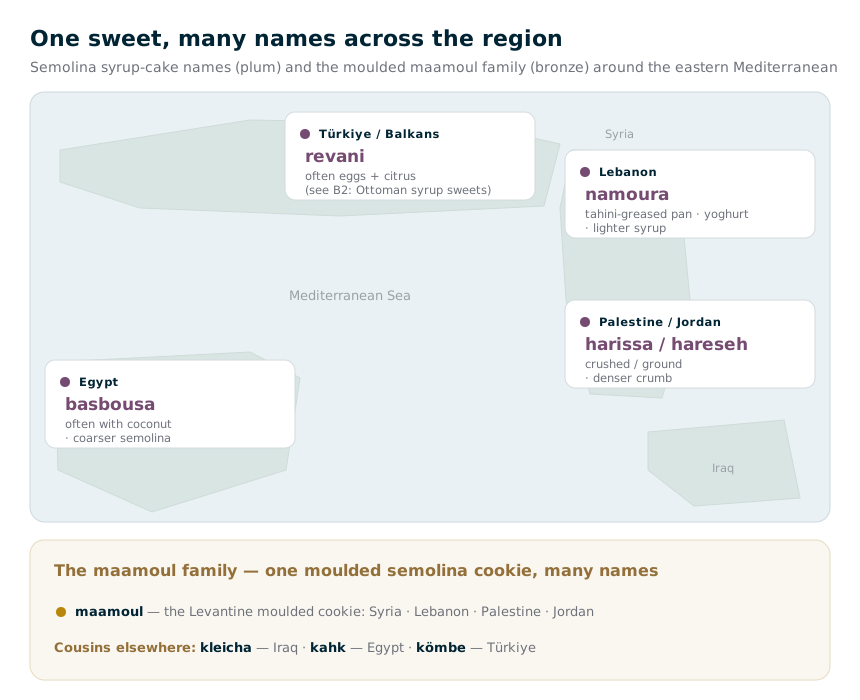 Map of Arab semolina sweets: basbousa in Egypt, namoura in Lebanon, harissa in Palestine/Jordan, revani in Türkiye, and maamoul across the Levant
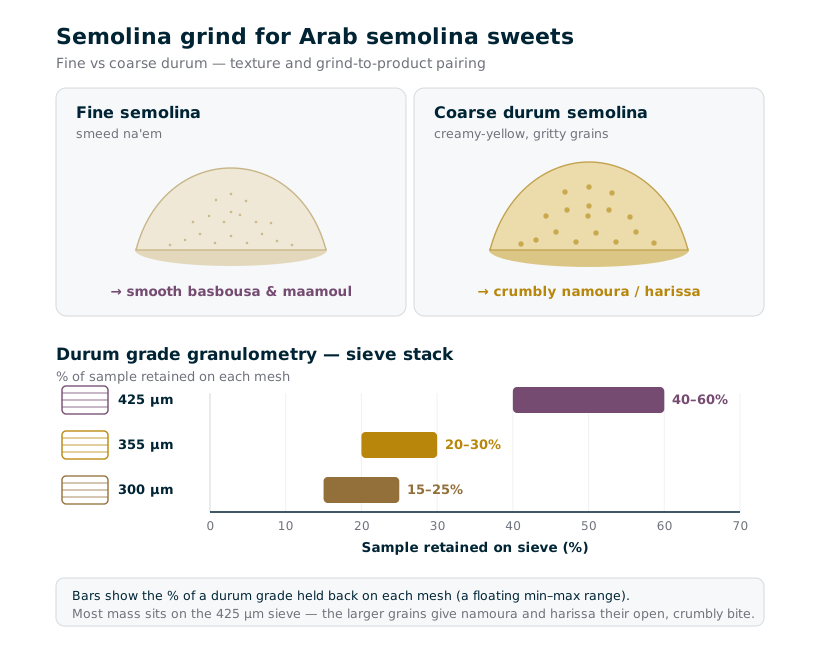 Fine vs coarse semolina comparison with a sieve granulometry diagram and grind-to-product pairing
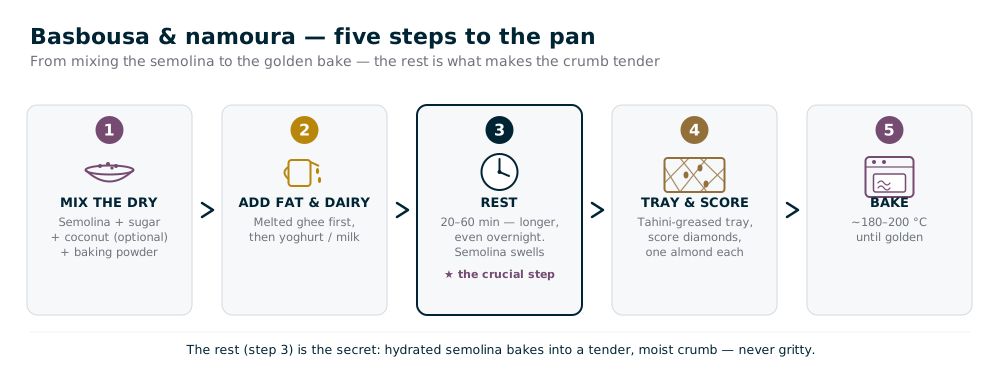 Five-step basbousa/namoura diagram: mix, add ghee and yoghurt, rest to hydrate semolina, tahini pan and score, bake
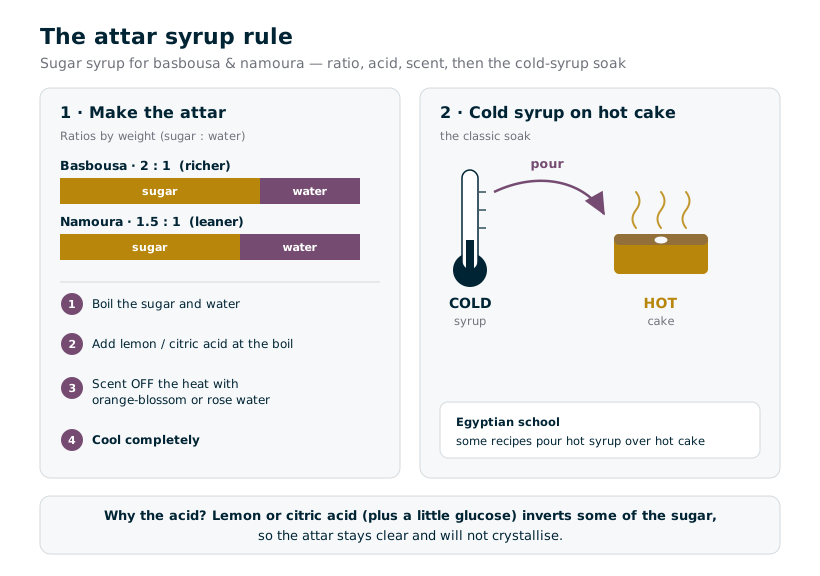 Infographic: attar syrup 2:1 (or 1.5:1) with lemon, cooled, poured cold over the hot cake; acid prevents crystallising
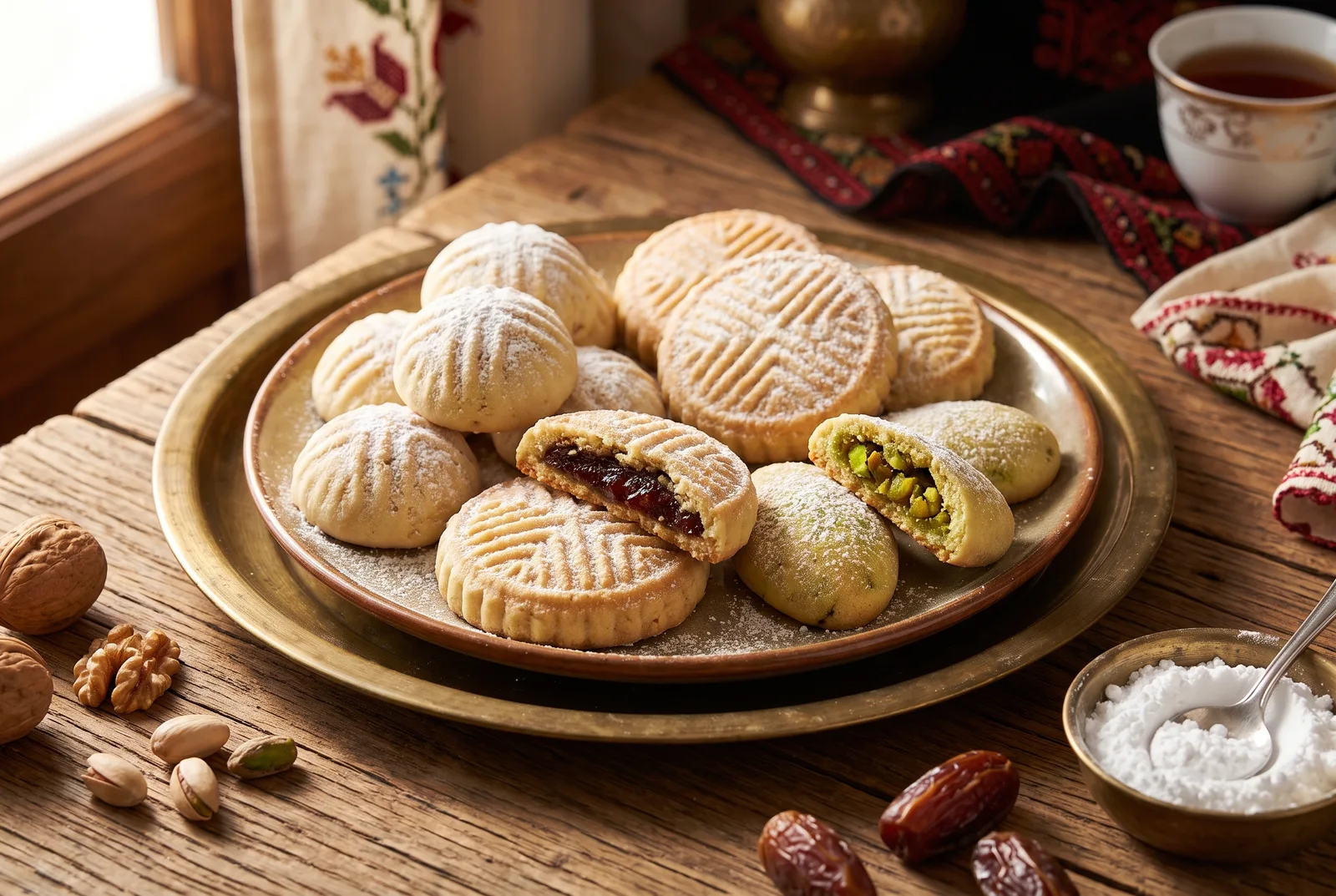 Plate of finished maamoul — domed walnut, patterned date and oval pistachio cookies, one broken to show the filling
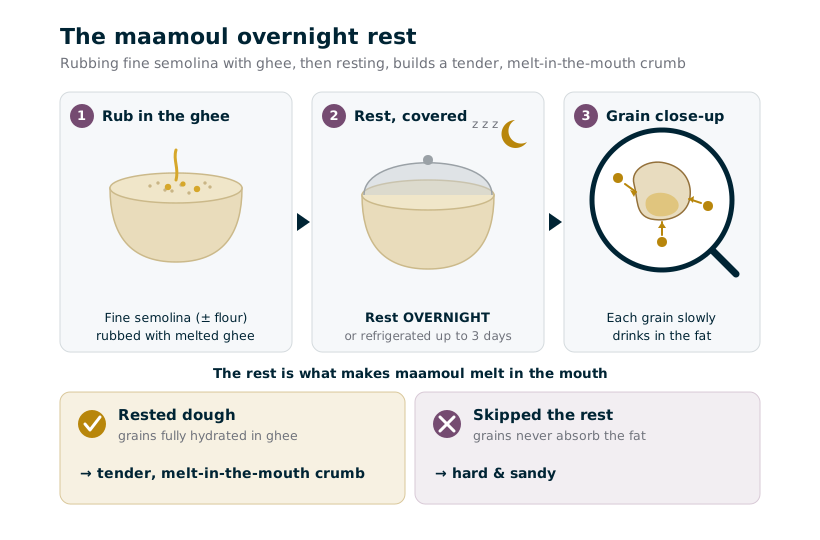 Diagram of the maamoul overnight rest: semolina and ghee rested so grains absorb fat for a tender crumb
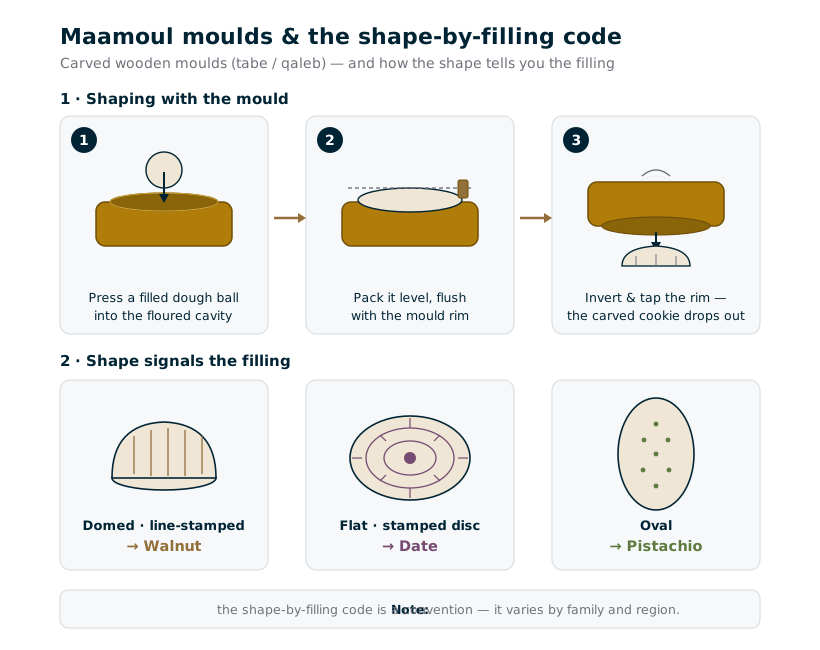 Illustration of carved wooden maamoul moulds and the shape code: domed for walnut, flat patterned for date, oval for pistachio
Namoura / basbousa (syrup-soaked semolina cake) — production batch
| Ingredient | Baker's % | Weight |
|---|---|---|
| Semolina (coarse for namoura; fine or blend for basbousa) — ≈ 500 g; see grind table | 100 | |
| Sugar (in batter) — caster or granulated | 33 | |
| Melted butter/ghee — clarify for a cleaner crumb | 33 | |
| Full-fat yoghurt and/or milk — yoghurt pairs with baking soda | 55 | |
| Desiccated coconut (Egyptian basbousa, optional) — omit for plain namoura | 15 | |
| Baking powder — + ~1% baking soda if using yoghurt | 2 | |
| Tahini (to grease the pan) — Lebanese namoura signature; adds sesame allergen | 4 | |
| Whole almonds (crown) — one per diamond; pine nuts alt | 8 |
Yield: One ~30 × 40 cm tray (~24-30 diamonds); scale linearly
Maamoul (moulded semolina shortbread) — dough + fillings
| Ingredient | Baker's % | Weight |
|---|---|---|
| Fine semolina — smeed na'em | 75 | |
| Plain flour — keeps it short, not crumbly; some make it all-semolina or all-flour | 25 | |
| Melted ghee (samn) / clarified butter — high fat load; semolina:ghee ~2:1 (i.e. 1:0.5); richer Syrian styles run nearer 1:1 | 50 | |
| Mahlab (ground) — or crushed mastic with a little sugar | 1 | |
| Mastic (ground, optional) — Chios resin | 0.3 | |
| Orange-blossom + rose water — added with a little warm milk/syrup after the rest | 6 | |
| Active dry yeast (optional) — tiny amount in some recipes; many use none | 0.3 | |
| Icing sugar (finish) — dust nut maamoul; date often left plain | 8 |
Yield: ≈ 40-50 cookies; scale linearly
| Name | Region | Semolina grind | Signature additions | Syrup | Notes |
|---|---|---|---|---|---|
| Basbousa (بسبوسة) | Egypt | Coarser (fine debated — Atyab Tabkha) | Desiccated coconut; almond/hazelnut crown | ~2:1, rose/orange-blossom | Commonest UK name; 'basbousa bel-goz el-hind' = with coconut |
| Namoura / nammoura (نمّورة) | Lebanon | Coarse | Tahini-greased pan; yoghurt; almond per diamond | Often leaner ~1.5:1 (lighter) | Folk-linked to nimr (leopard) 'spots' |
| Harissa / hareseh (هريسة) | Palestine / Jordan | Coarse (crumbly) | Denser, richer; sometimes tahini | ~2:1 | Name = 'crushed/ground' (harasa) |
| Revani / ravani | Türkiye / Balkans | Semolina ± farina | Often eggs + citrus zest | ~2:1 | Ottoman cousin — see B2-syrup-sweets-ottomans; Greek revaní, Armenian shamali |
| Product | Recommended grind | Why | Catalogue stand-in |
|---|---|---|---|
| Basbousa (smooth style) | Fine (ناعم) | Absorbs ghee/syrup evenly, tender cohesive crumb (Atyab Tabkha) | Wheat Semolina (Krupczatka) T450 / Wheat Semolina (Manna) |
| Basbousa/namoura (textured style) | Coarse (خشن) | Crumblier, grainier bite; classic Levantine namoura/harissa | Durum Wheat Semolina 16 kg; Extra Coarse Semolina 25 kg |
| Either — general purpose | Medium or fine+coarse ~50:50 | Balances tenderness and bite; forgiving | Blend fine soft-wheat + coarse durum |
| Maamoul | Fine (± some plain flour) | Smooth short crumb; takes a crisp mould impression | Wheat Semolina (Krupczatka) T450 + plain flour |
| Filling | Build | Typical mould shape (by convention) | Catalogue |
|---|---|---|---|
| Date (ajwa, تمر) | Date paste + a little ghee + cinnamon/cardamom (± sesame) | Flatter round / patterned disc | Dates Whole Pitted (blitz to paste); Dates Chopped 8-10 mm (rice-flour dusted); Cinnamon Ground; Sesame Seeds |
| Walnut (جوز) | Chopped walnuts + sugar + cinnamon + a little syrup/blossom water | Domed round, stamped lines | Walnuts Light Amber Halves 12.5 kg |
| Pistachio (فستق) | Ground pistachio + icing sugar + touch of syrup | Oval | Roasted Diced Pistachios; Pistachio Granules 2/4 mm; Icing Sugar (dust) |
| Cake state | Syrup state | Result |
|---|---|---|
| HOT (straight from oven) | COLD / cool | The common Levantine rule — syrup drawn in, crumb intact |
| HOT | HOT | The Egyptian hot-on-hot school (Atyab Tabkha, Amira's Pantry) — also soaks in cleanly; risk of mushiness only if over-soaked |
| Cold | Cold | Syrup sits on top, does not penetrate — the real failure to avoid |
| Fault | Likely cause | Fix |
|---|---|---|
| Gritty, sandy cake | Semolina not rested/hydrated before baking | Rest the batter 20-60 min (longer, even overnight, for shop-style) so the grains swell; consider a finer grind |
| Soggy, collapsed cake | Too much syrup/liquid; over-soaked (or a hot cake drowned in syrup) | Keep syrup ~2:1 or leaner and don't over-soak; the cold-syrup-on-hot-cake method gives the most margin, but hot-on-hot works if you don't drown it |
| Syrup won't penetrate (sits on top) | Both cake and syrup cold | Keep at least one component hot — most commonly cold syrup on the hot cake |
| Syrup crystallises / grainy | No acid; boiled too hard/long; sugar undissolved | Add lemon/citric acid at the boil (± glucose); dissolve fully; simmer gently |
| Greasy cake | Too much ghee for the grind; under-rested so fat not absorbed | Balance ghee to semolina; rest to let the semolina take up the fat |
| Hard, sandy maamoul | Ghee-and-semolina dough not rested (no fat uptake); too little ghee; over-baked | Rest the dough overnight; keep the fat load high; bake pale and short |
| Maamoul cracks / won't hold the mould pattern | Dough too dry or over-worked; grind too coarse | Use fine semolina (± flour); add a little more ghee/liquid; don't over-knead; chill before moulding |
| Maamoul browned / tops coloured | Oven too hot / baked too long | Lower the oven and/or shorten the bake; pull when just set and only the base is lightly golden (keep the tops uncoloured) |
| Filling leaks / splits | Filling too wet or too much; dough wrapped too thin | Balance ~1:1 dough:filling; firm the date/nut paste; seal the ball fully before moulding |
| Almond crown burnt (basbousa) | Oven too hot / rack too high | Lower temperature; move down a shelf; foil the top if colouring early |