
Ghee and clarified fats in Arab baking: animal ghee (samneh) vs vegetable ghee, smoke point, flavour and when to substitute
Quality animal ghee is specified in Arabic pastry for a reason. This dossier gives a UK baker the authentic Arab picture, built from Arabic-language brand and reference sources and cross-checked against the platform's own supplier specifications: what samneh / samn baladi (سمنة / سمن بلدي) is and why clarifying butter to remove its water and milk solids became the region's preservation-first baking fat; the regional map of names and milk sources (Levantine samneh, Egyptian cow/buffalo samn baladi, Gulf/Najran samn, Maghrebi fermented smen); how animal ghee differs from samn nabati (سمن نباتي, vegetable ghee) and from whole butter in smoke point (~250 C vs ~220-230 C vs ~175 C), water content, melting behaviour, flavour and allergen status; and, above all, the practical calls a working baker makes - which fat for maamoul, baklawa, kunafa and basbousa, and exact substitution ratios. Every fat is wired to the Domson catalogue an Arab kitchen actually orders (unsalted butter to clarify, dairy-free vegetable shortening, palm oil, frying oils, semolina and kataifi) and cross-linked to the Pillar A craft concepts behind it (A4-fat-types-and-selection, A4-fat-science-functionality, A4-frying-fats-and-oils, A4-margarine-shortening-manufacturing) and to its sister Arab articles (B3-baklava-and-phyllo-pastries, B3-knafeh-kunafa-production, B3-semolina-desserts-basbousa-maamoul, B3-zaatar-manakish-and-savoury-flatbreads).
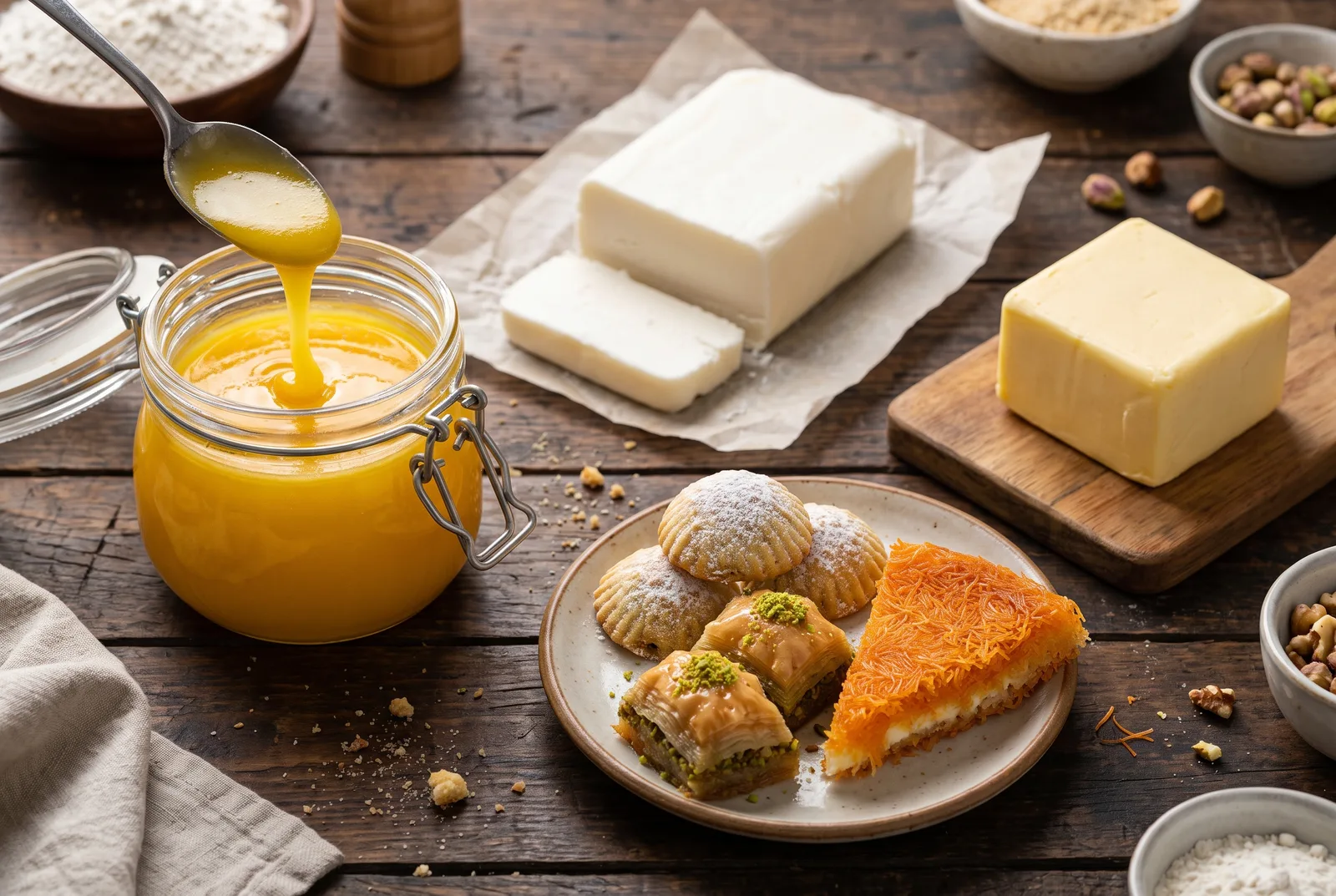
Why Arabic pastry insists on ghee
Ask a Damascene, a Cairene or a baker from the Balqa hills what makes their maamoul, baklawa or basbousa taste "right", and the answer almost always includes the fat. Arabic pastry is built on clarified animal fat - samneh / samn baladi (سمنة / سمن بلدي) - and it is specified for concrete, testable reasons: flavour, smoke point and the way it sets. This dossier explains those reasons in a UK bakery's terms, and tells you exactly when the modern alternative, vegetable ghee (samn nabati, سمن نباتي), is the right call and when it is not. It sits next to the Pillar A craft articles that cover the underlying science - A4-fat-types-and-selection and A4-fat-science-functionality - and reads them into an Arab kitchen. The three fats side by side are in the table and image below.
1. Preservation came first: why the region clarifies its butter
Ghee is not a flavour affectation; it began as food preservation. Removing the water and milk solids from butter leaves an almost pure fat that keeps for months at ambient temperature - which, in a hot climate and before refrigeration, is exactly what a farming or Bedouin household needed . The practice is old, though its exact origins are not settled: a single Ark of Taste heritage record dates the earliest samneh baladieh production to roughly the 13th century BCE in the kingdom of Moab (western Jordan, near the Dead Sea), where it was made and sold in markets - treat this as one-source heritage lore, not settled history. Once you have a shelf-stable, high-fat cooking medium, it becomes the default fat for everything - including the sweets.
2. The regional map: samneh, samn baladi, smen
The same idea carries different names, milk sources and characters across the Arab world (see the table and figure below):
- Levant (Syria, Lebanon, Palestine, Jordan) - samneh / samn baladi, clarified from cow, sheep or goat butter. The Jordanian/Balqa version (samen baladi) is clarified sheep fat flavoured with wild herbs - turmeric, fenugreek and handaqooq (sweet clover / melilot) - which gives festive sweets their golden colour and aroma.
- Egypt - samn baladi, from cow (baqari, بقري) or buffalo (gamousi, جاموسي) milk; a strong, deep-yellow fat central to basbousa, feteer and everyday cooking.
- Gulf & Saudi Arabia - samn baladi; the artisanal Najran product is churned and developed in a heated stone vessel (Al-Tablah) and strained through an Al-Mishneh cloth.
- Maghreb (Morocco, Algeria, Tunisia) - smen / sman, which is different: a salted, fermented, aged butter (sheep or goat), sometimes buried for temperature stability, with a pungent, blue-cheese-like aroma. It is a fermented cousin of Levantine clarified samneh and is used in both pastries and savoury dishes (shown below).
Getting the name right for your customer's region is part of the authenticity.
3. How animal ghee is made - and why it behaves differently
Making samneh is simple: melt butter, simmer so the ~16% water boils off, skim the foam, let the milk solids sink and (optionally) brown, then strain the clear golden fat off the sediment. A distinctively Levantine step is to simmer the butter with a little bulgur or cracked wheat, which absorbs the residual milk solids before straining. Allergen note: that bulgur/cracked-wheat step puts the fat in contact with wheat/gluten; although the grain is strained out, a precautionary gluten cross-contact statement is prudent for any coeliac-facing product. One retailer lists its (Dutch-packed) commercial cow ghee at about 99.8% milk fat, 0.2% moisture - a single product spec, so read it as indicative rather than a regional standard. The step-by-step is in the figure and formula card below.
That removal is what changes the fat's behaviour. Whole butter is only min 82% fat and carries about 16% water plus milk solids (Polmlek Butter 82% datasheet: 744 kcal, 82.0 g fat, 55.0 g saturated fat per 100 g, and it declares milk). In a hot oven that water steams into the pastry (soggy layers) and the milk proteins and sugars scorch. Take them out and the smoke point jumps: ghee smokes at about 250 C / 485 F versus roughly 175 C / 350 F for whole butter. This is the same milk-solids-burn logic covered for the fryer in A4-frying-fats-and-oils, and it is why layered and high-heat Arab pastries are brushed with samneh, not butter (shown below).
4. Vegetable ghee (samn nabati): what it is and where it wins
Vegetable ghee - samn nabati in Arabic, vanaspati in South Asia - is a modern industrial fat made to imitate samneh from vegetable oils (historically palm, soybean, cottonseed, sunflower or rapeseed), solidified into a plastic fat with emulsifiers, colour and flavour added; some grades are fortified with vitamins A, D and E. Any added colour or emulsifier must be a permitted UK/EU additive, and a soy-derived emulsifier (e.g. soya lecithin) triggers a SOYA allergen declaration - always check the specific product's recipe. The manufacturing science - hydrogenation, interesterification and fractionation - is the subject of A4-margarine-shortening-manufacturing. The important modern point: reputable producers now use interesterification and naturally-solid palm fractions instead of partial hydrogenation, cutting trans fat close to zero (the platform's KTC refined palm oil shows about 1.0 g trans fat per 100 g, well inside the UK/EU 2 g per 100 g of fat industrial-trans-fat limit), whereas older partially-hydrogenated vanaspati was high in industrial trans fat.
Where does vegetable ghee win? Three places:
- Dairy-free / vegan / strict-halal lines. The platform's Cardowan Vegetable Shortening (palm + rapeseed) and KTC Palmax SG palm oil are 100% fat, essentially no water, free of all 14 EU-declarable allergens, and certified halal, vegan and kosher. See the figure below.
- Long shelf life and stable supply - 5 to 11 months at ambient.
- Frying. A high smoke point - comfortably above 200 C (single-source figures put it around 220-230 C, so treat the upper band as approximate) - fries qatayef and luqaimat and browns without burning.
Its weaknesses are flavour and set: it is neutral (relying on added flavourings, not a natural dairy aroma) and it is firmer/higher-melting - the Cardowan shortening has a slip melting point of 45 C (44 C for its high-ratio grade) and refined palm oil melts at 34-42 C. In the mouth that can read as a slightly waxy, coating finish rather than the clean melt of butterfat.
5. Which fat for which sweet
This is the call a working baker actually makes (see the table and decision-flow figure below):
- Maamoul (معمول). The festive Eid/Easter semolina shortbread is the clearest case: its tender, crumbly hashsh (هش) texture comes almost entirely from fat - roughly 450-500 g of fat per 1 kg of dough (less gives a crunchy cookie, more a melt-in-the-mouth one). For the authentic flavour, use animal ghee / samen baladi; for a dairy-free or strict-halal line, vegetable ghee works 1:1 but tastes flatter. Formula in the formula card below; the sweet itself is detailed in B3-semolina-desserts-basbousa-maamoul (shown below).
- Baklawa (بقلاوة) and kunafa (كنافة). Brushed and layered with samneh, never whole butter, so the phyllo/kataifi layers stay crisp and separate and the fat does not scorch; commercial, vegan and halal-strict lines use vegetable ghee as the layering fat. Important allergen caveat: switching the brushing fat to vegetable ghee makes baklawa dairy-free, but classic kunafa is built on cheese (and often milk or cream) - so a vegetable-ghee kunafa is not milk-free unless the cheese and cream are also replaced; the fat choice alone does not remove the milk allergen. See B3-baklava-and-phyllo-pastries and B3-knafeh-kunafa-production, and the layering craft in A6-laminated-dough-fundamentals.
- Basbousa (بسبوسة). Egyptian semolina cake - traditionally rich with samn baladi, though many modern recipes use oil for a lighter, longer-life crumb.
- Fried sweets - qatayef (قطايف), luqaimat. Deep-fry in a high-smoke-point fat (vegetable ghee or a refined frying oil) at 170-190 C.
6. Not everything is ghee: the savoury side
An important authenticity note: savoury Arab flatbreads do not use ghee. Manakish (مناقيش) and other za'atar breads are dressed with olive oil (zeit zaytoun), blended into the za'atar paste, not samneh. The fat choice tracks a sweet-versus-savoury split - clarified animal or vegetable ghee for pastries and sweets, olive oil for savoury breads. This is covered in B3-zaatar-manakish-and-savoury-flatbreads; the platform stocks Olive Pomace Oil for it (see the products at the end of this article).
7. Substitution ratios - swapping without ruining the bake
The recurring trap is water content: whole butter is only ~82% fat, while ghee and shortening are ~100% (see the substitution table below):
- Animal ghee ↔ vegetable ghee: about 1:1 by weight (both near-100% fat). Expect a firmer set and neutral flavour from vegetable ghee; if dairy is acceptable, add a little browned butter or mahleb to restore aroma.
- Whole butter → ghee: use ~80-85 g ghee per 100 g butter, and add back a little liquid (~15 g water/milk per 100 g butter replaced) to restore hydration.
- Ghee → whole butter: use ~100 g butter per 80-85 g ghee, but note the extra water softens pastry and milk solids can scorch - clarify the butter first for layered pastry.
All three fats are energy-dense (butter 744 kcal, shortening/palm ~900 kcal per 100 g) and high in saturated fat (butter 55.0 g, palm 45.3 g, shortening 38.8 g per 100 g, each per its own supplier datasheet - single-source values that differ a few grams from generic food tables, so trust the ranking more than the exact gram). Popular Arabic-media claims that animal ghee is "healthier" (vitamin D, cholesterol benefit) are contested - treat them as flagged for human review, not medical advice.
8. Allergens, safety and sourcing (flagged for review)
- Milk allergen.Clarifying butter into samneh does NOT remove the milk allergen - traces of casein and lactose remain, so samneh and any pastry made with it must still declare milk under UK/EU FIC (Regulation (EU) No 1169/2011). Map every recipe to its own declaration.
- The sweets carry their own allergens - not just the fat. Choosing vegetable ghee removes only the dairy from the fat. Maamoul and baklawa are typically built on wheat/semolina (gluten) and filled with tree nuts (walnuts, pistachios, almonds), and kunafa contains cheese and often milk or cream. Declare each product's full allergen set, not just the fat's.
- Dairy-free option. Where a milk-free, vegetarian or strict-halal product is required, the Cardowan vegetable shortening and KTC palm oil are - on their supplier specs - dairy-free, free of all 14 EU-declarable allergens and halal/vegan/kosher certified. These are per-product supplier declarations, not legal absolutes: confirm against the producer's current, in-date specification and certificates, and check any shared-line "may contain" cross-contact before you state them to a customer.
- Hot-fat and syrup hazards. Deep-frying at 170-190 C and pouring hot sugar syrup (attar, see B3-attar-sugar-syrup-science) are scald hazards; never add water to hot frying fat (the water flashes to steam and throws burning fat).
Sourcing gap to flag for the buyer. The Domson catalogue currently stocks whole unsalted butter (to clarify), dairy-free vegetable shortening, sustainable palm oil, palm/sunflower/rapeseed frying oils, olive oil, semolina and kataifi - but no ready samneh/ghee, the very fat that defines authentic Arab pastry (shown below). For flavour-critical work an Arab kitchen must clarify its own samneh from Unsalted Butter 82% (see the formula card below). Stocking a ready animal ghee and a branded vegetable ghee is a clear range opportunity for a distributor serving Arab and Levantine bakers. Everything an Arab kitchen can buy today is available in our catalogue; see the products at the end of this article.
Figures
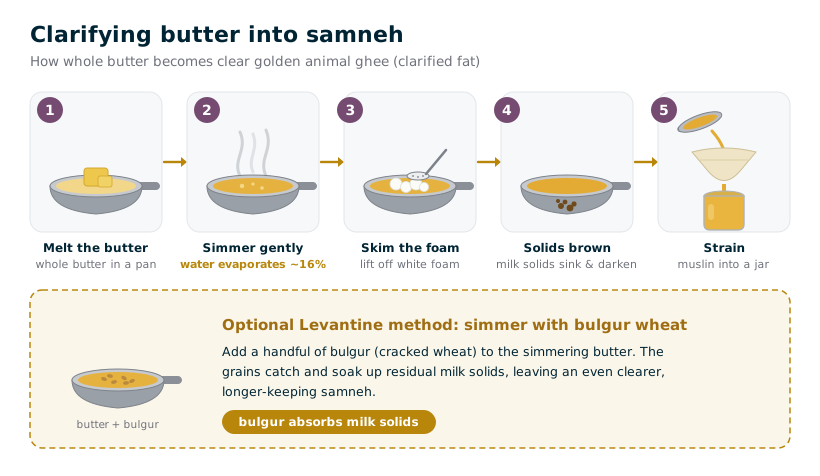 Five-step process diagram of clarifying butter into samneh, from melting to straining clear golden ghee
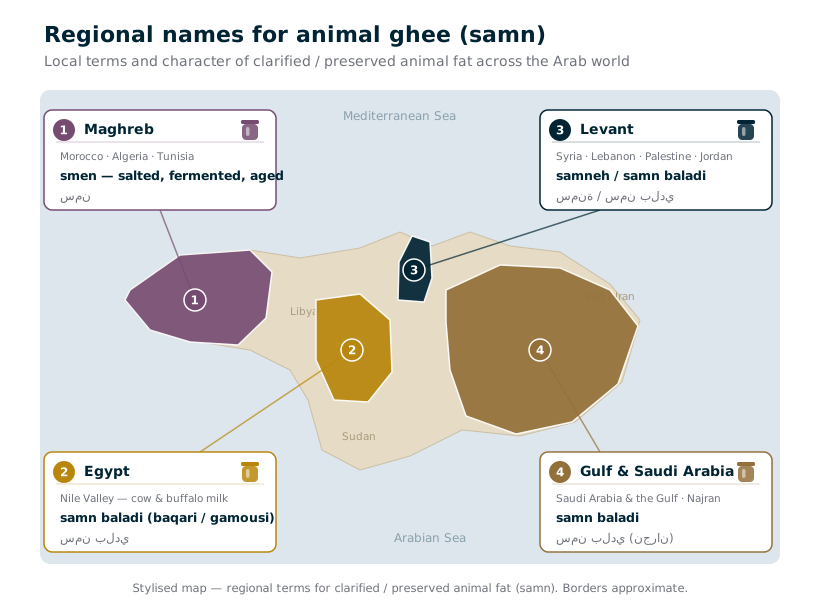 Map of the Arab world labelling regional ghee names: Levant samneh, Egypt samn baladi, Gulf samn baladi, Maghreb smen
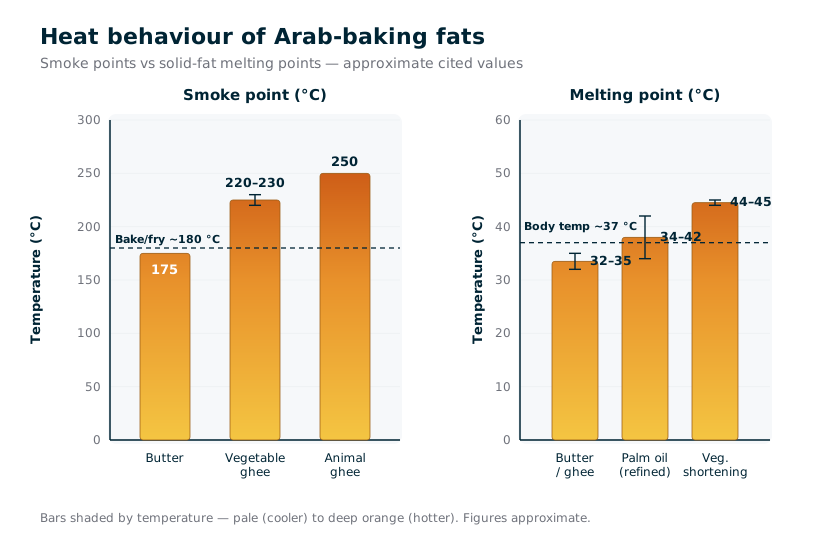 Chart comparing smoke points and melting points of butter, vegetable ghee and animal ghee
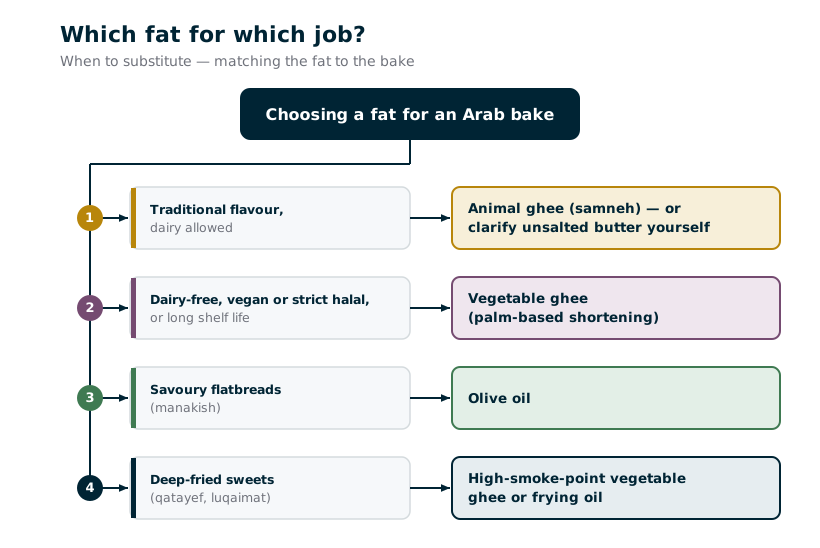 Decision-flow diagram for choosing animal ghee, vegetable ghee, butter or olive oil in Arab baking
Clarify your own samneh from unsalted butter
There is currently NO ready samneh/ghee in the Domson range, so clarify it from Unsalted Butter 82% (Polmlek). IMPORTANT: clarifying does NOT remove the milk allergen - samneh still declares milk. Store cool; the removed water is exactly what lets it keep. See A4-butter-grades-and-specialist-types for butter fat/water grades and B3-baklava-and-phyllo-pastries for its use.
| Ingredient | Baker's % | Weight |
|---|---|---|
| Unsalted butter (min 82% fat) | 100% | |
| Coarse bulgur (Levantine method, optional) | ~5% (strained out) | |
| Total | yields ~80-85% clear fat by weight |
Worked example
Melt 1 kg unsalted butter (min 82% fat) gently. Bring to a bare simmer so the water (~16%) boils off; skim the white foam. Let the milk solids sink and lightly brown (stop before dark for a clean samneh, or let them deepen for a nuttier Levantine note). Strain the clear golden fat through muslin off the sediment. Levantine option: simmer with a handful of coarse bulgur, which catches residual milk solids, then strain. Yield is about 800-850 g because water and solids are removed.
Yield: ~800-850 g samneh per 1 kg butter
Maamoul semolina dough - fat is the texture lever
Maamoul is a festive Eid/Easter shortbread across the Levant. The crumb (hashsh, هش) comes almost entirely from the fat, so this is the article where fat choice is most visible. Deep dive: B3-semolina-desserts-basbousa-maamoul; base craft: A8-cake-and-pastry-formulas and A4-fat-science-functionality.
| Ingredient | Baker's % | Weight |
|---|---|---|
| Fine + coarse semolina (± some flour) | 100% | |
| Ghee / samneh (or vegetable ghee) | ~45-50% | |
| Orange-blossom / rose water + milk | to bind | |
| Yeast or mahleb/aromatic (regional) | trace | |
| Total | fat ~45-50% of the dry mix |
Worked example
Rule of thumb: ~450-500 g fat (ghee/butter/oil) per 1 kg of dough - less fat gives a crunchy maamoul, more gives a melt-in-the-mouth one. For authentic flavour use animal ghee (samneh) or samen baladi (sheep-fat ghee with turmeric/fenugreek/handaqooq); for a dairy-free/halal-strict line use vegetable ghee 1:1. Made on a semolina base (see linked semolina), perfumed with orange-blossom/rose water, moulded in a carved tabe' and filled with dates or walnuts.
Yield: one batch of moulded cookies
The three fats behave differently in the oven and fryer. Figures are approximate and, where marked, taken from the platform's own supplier specifications. Use this to decide which fat a given product needs before you buy.
| Property | Animal ghee (samneh / samn baladi) | Vegetable ghee / shortening (samn nabati) | Whole butter |
|---|---|---|---|
| What it is | Butter simmered to remove water + milk solids; near-pure butterfat | Vegetable oils (palm/rapeseed/soy) set into a plastic fat, flavour/colour added | Churned cream: fat + water + milk solids |
| Fat content | ~99.8% | ~100% (spec: 100 g/100 g) | min 82% (spec) |
| Water content | ~0.2% | ~0% | ~16% (spec) |
| Smoke point | ~250 C / 485 F | >200 C (~220-230 C, approx.) | ~175 C / 350 F |
| Melting point | Soft/liquid near body temp | Firm: palm 34-42 C, shortening 44-45 C (spec) | ~32-35 C |
| Flavour | Rich, nutty, dairy aroma; the authentic taste | Neutral; relies on added flavouring | Rich, fresh-dairy |
| Dairy / milk allergen | Contains milk (traces of casein/lactose remain) | Dairy-free; free of all 14 EU allergens (spec) | Contains milk (spec) |
| Halal / vegan | Halal if from halal dairy; not vegan | Certified halal, vegan, kosher (spec) | Not vegan; halal if from halal dairy |
| Energy | ~900 kcal/100 g | ~900 kcal/100 g (spec) | 744 kcal/100 g (spec) |
| Shelf life | Months at ambient (that is the point) | 5-11 months ambient (spec) | ~60 days chilled; 12 months frozen (spec) |
| Best for | Maamoul, baklawa, kunafa, basbousa where authentic flavour is judged | Dairy-free/vegan/strict-halal or commercial long-life lines; frying | Clarify it into samneh; or enriched doughs/creams where fresh-dairy taste wanted |
The same idea - butterfat freed of water and milk solids so it keeps in a hot climate - carries different names, milk sources and characters across the Arab world. Get the name right for your customer's region.
| Region | Local name | Milk source | Character | Typical use |
|---|---|---|---|---|
| Levant (Syria, Lebanon, Palestine, Jordan) | Samneh / samn baladi (سمنة / سمن بلدي) | Cow, sheep or goat | Clarified butter; Balqa version flavoured with turmeric, fenugreek, handaqooq | Maamoul, baklawa, kunafa, mansaf |
| Egypt | Samn baladi (سمن بلدي) | Cow (baqari) or buffalo (gamousi) | Strong, deep-yellow clarified fat | Basbousa, feteer, pastries, cooking |
| Gulf & Saudi Arabia | Samn baladi (سمن بلدي) | Cow or sheep | Artisanal (e.g. Najran, made in a heated Al-Tablah vessel) | Sweets, rice dishes, dates |
| Maghreb (Morocco, Algeria, Tunisia) | Smen / sman (سمن) | Sheep or goat | Salted, fermented, aged - sometimes buried; pungent, blue-cheese-like | Pastries and savoury dishes; a fermented cousin of samneh |
| Modern / commercial (region-wide) | Samn nabati (سمن نباتي) - vegetable ghee | None (vegetable oils) | Plant-based, dairy-free, neutral, high-melting | Cheaper/vegan/halal-strict substitute in the same sweets |
The trap is water content: whole butter is only ~82% fat, ghee and shortening are ~100%. Match on fat, not gram-for-gram, and expect texture/flavour shifts.
| Replace... | ...with | Ratio by weight | Adjustment / effect |
|---|---|---|---|
| Animal ghee (samneh) | Vegetable ghee / shortening | ~1:1 (both ~100% fat) | Firmer set (higher melting point), neutral flavour; add browned butter/mahleb for aroma if dairy OK |
| Whole butter | Animal or vegetable ghee | ~80-85 g ghee per 100 g butter | Add back a little liquid (~15 g water/milk per 100 g butter replaced) to restore hydration |
| Animal or vegetable ghee | Whole butter | ~100 g butter per 80-85 g ghee | Extra water softens pastry and milk solids can scorch - clarify the butter first for layered pastry |
| Vegetable shortening (frying) | Refined frying oil (sunflower/palm) | ~1:1 by weight for deep frying | Liquid oil gives a lighter fry; keep 170-190 C and never add water to hot fat |
| Fault | Likely cause | Fix |
|---|---|---|
| Baklawa/kunafa soggy, layers stuck, not crisp | Whole butter used - its ~16% water steams into the pastry | Use clarified samneh or vegetable ghee (near-0% water); brush between layers |
| Dark scorched flecks / burnt taste on the surface | Milk solids in whole butter burning at oven heat | Clarify the butter first (samneh smoke point ~250 C) or use vegetable ghee |
| Sweet tastes flat / 'not like home' | Neutral vegetable ghee with no dairy aroma | Use animal ghee/samneh for flavour-critical sweets, or add a little browned butter/mahleb |
| Maamoul crunchy and hard, not tender | Too little fat in the dough | Raise fat toward ~500 g per kg dough; rest the dough |
| Maamoul greasy, spreads, loses its moulded pattern | Too much fat or fat too soft/warm | Dial fat back toward ~450 g/kg; chill dough and use a higher-melting-point fat |
| Fried qatayef/luqaimat greasy or burnt | Fat too cool (absorbs) or too hot (burns); wrong fat | Hold 170-190 C; use high-smoke-point vegetable ghee or frying oil; never add water to hot fat |