
Kürtőskalács (chimney cake): spit-baked enriched dough, caramelisation science and scaling to bakery production
Kürtőskalács (chimney cake) is Transylvania's great spit-baked sweet — a Hungarian, Székely speciality from the Székely Land that a UK baker will meet as festival and street food, sold in Romania as cozonac secuiesc ("Székely cozonac"). This dossier, built from Romanian- and Hungarian-language sources and cross-checked against the platform's supplier specifications, gives the authentic picture: the moderately-enriched sweet yeast dough (flour, milk, egg, butter, a modest 10–14% sugar, fresh yeast — leaner than cozonac ON PURPOSE); the shaping — a thin dough strip wound helically around an oiled tapered wooden spit (the kürtőskalács henger, baking roller) with the coils touching so they fuse; and the one thing that IS the cake — the caramelised sugar shell, made by rolling the wound spit in granulated sugar and baking it rotating over charcoal embers (jăratec) or in an electric rotisserie oven, basted with butter, until the surface sugar caramelises (onset ~160°C, sucrose melts ~186°C) into a crisp, glossy amber crust over a soft, steamy crumb. It maps the history (first record 1679 at Úzdiszentpéter/Sânpetru de Câmpie; the 1784 recipe of Countess Mária Mikes of Zabola; the caramel glaze added only in the 19th century; Hungarikum status in 2015), the toppings (cinnamon-sugar, walnut, coconut, cocoa), and how the trade scales it (rotisserie ovens, ~4–12 spits, up to ~90 cakes/hour). Every technique is wired to the Domson catalogue a Transylvanian or Hungarian baker actually orders — strong flour, fresh yeast, 82% butter, granulated sugar, pasteurised liquid egg, walnut, cinnamon, coconut — and cross-linked to the Pillar A craft concepts (A6-sugar-work-techniques, A5-baking-oven-science, A2-osmotolerant-yeast-enriched-doughs, A1-protein-gluten-and-strength, A4-butter-grades-and-specialist-types, A7-seeds-nuts-toppings, A8-enriched-dough-formulas) and to its sister articles (B4-cozonac-enriched-dough, B4-flour-classification-romanian, B4-bread-landscape and the Lithuanian spit-cake B5-sakotis-spit-cake).
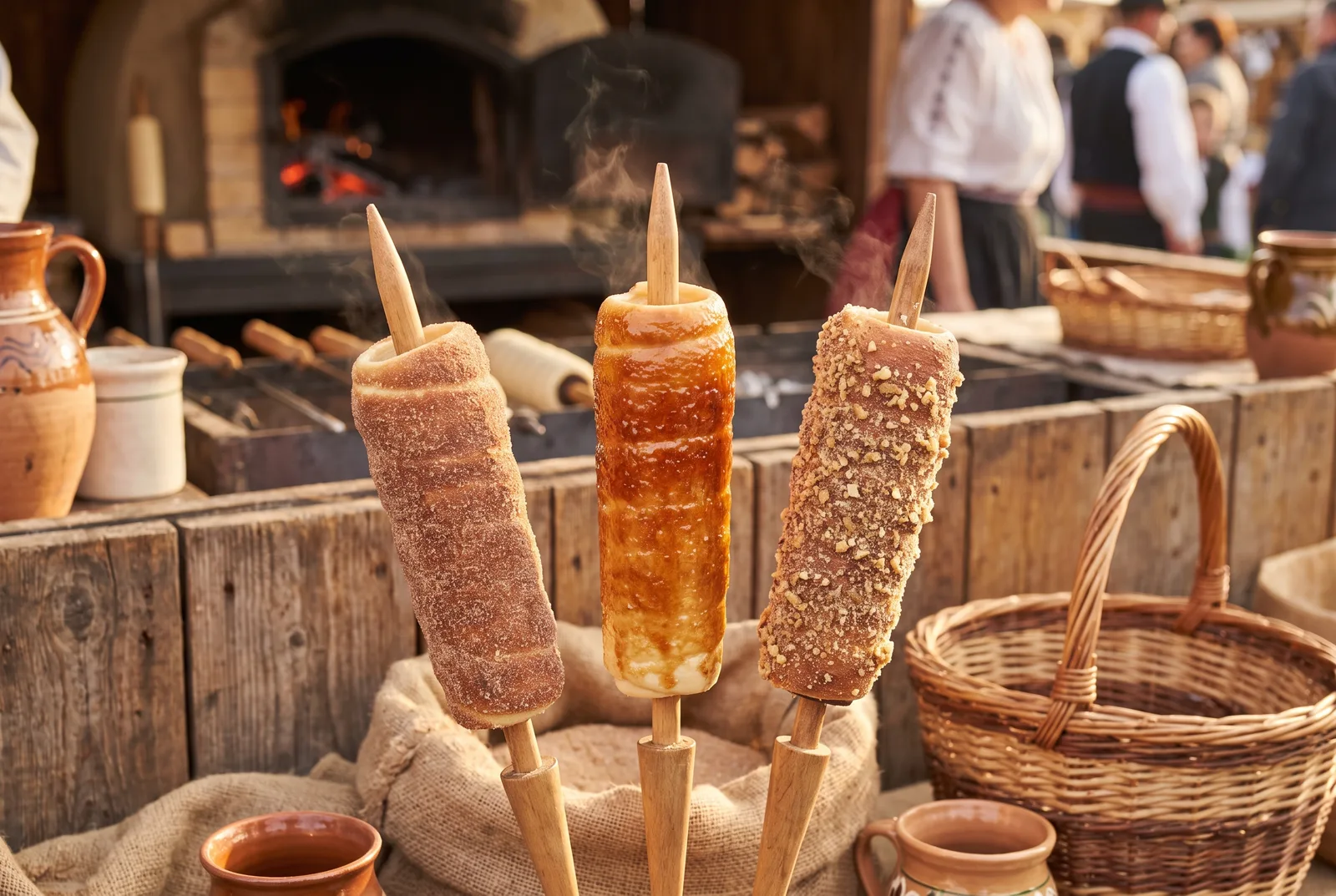
Kürtőskalács is Transylvania's spit cake — Hungarian and Székely first
Before anything else, get the attribution right, because your Transylvanian customers will. Kürtőskalács (chimney cake, sometimes stovepipe cake) is a Hungarian speciality — specifically a Székely one, from the Székely Land (Hungarian Székelyföld, Romanian Ținutul Secuiesc) in Transylvania (Erdély / Ardeal). In Romanian it is called cozonac secuiesc ("Székely cozonac"). It was born in the Székely villages, spread across the whole Hungarian-speaking area, and — especially after 1989, when Székely bakers from Covasna County turned it into commercial street food — became beloved right across Romania and, now, at fairs and food courts across the UK. So it belongs in a Romanian baker's repertoire; just don't call it Romanian in origin. See the figure below.
The name is literal and lovely. Kürtő means stovepipe / chimney; kalács is a sweet, festive plaited bread (the same word family as Polish kołacz and the Slavic kalač). The finished cake is a hollow, truncated cone — and a fresh, steaming one really does look like a hot little chimney. The old German name, Baumstriezel, means "braided cake wound round a tree trunk," which tells you exactly how it is made.
It has a long, well-documented Transylvanian lineage (see the figure and comparison table below): the first written record is from 1679 in the village of Úzdiszentpéter (today Sânpetru de Câmpie); the first recipe appears in a 1781 manuscript; and the famous 1784 recipe in the cookbook of Countess Mária Mikes of Zabola (Zăbala, Covasna) — "kürtős kaláts à la Mrs. Poráni" — contains no sugar coating at all. That matters: the caramel shell that now defines the cake was a later addition. Sweetening after baking is first mentioned by Kristóf Simai (1795), and the caramelised-sugar glaze technique is credited to Terézia Dolecskó's 1876 "Aunt Rézi's Cookbook"; the modern spelling "Kürtőskalács" only appears in print in 1926. The cake was granted Hungarikum (Hungarian national-heritage) status in 2015; an EU Protected Designation of Origin application was filed the same year but, as of 2024, no EU PDO/PGI has been granted.
1. What kind of dough this is — and why it is leaner than cozonac
Here is the single most useful thing for a baker who already knows cozonac (see B4-cozonac-enriched-dough): the two doughs solve opposite problems (see the comparison table below). Cozonac loads all its richness into the crumb — many yolks, 25–30% sugar, lots of butter — chasing a soft, fibrous interior. Kürtőskalács does the reverse. Its crumb is a moderately-enriched sweet yeast dough — wheat flour, milk, egg, butter, only ~10–14% sugar, fresh yeast, salt, vanilla and lemon zest — kept deliberately leaner and less sweet, because the sweetness and the drama live on the outside, in the caramel shell and the toppings.
A representative professional formula, in baker's percentage (flour = 100%), is roughly milk 30–40%, egg ~20%, butter 10–12%, sugar 10–14%, fresh yeast 4–5%, salt ~1%, plus vanilla sugar and lemon zest (see the formula card below). Treat the exact numbers as representative — Székely and Hungarian household ratios vary — but treat the shape of it as the point: enough enrichment to be tender and rich-smelling, not enough sugar to stop the surface coating being the star. The formula language is in A8-bakers-percentage-fundamentals and the sister enriched formulas (brioche, challah, sweet buns) in A8-enriched-dough-formulas.
Two Pillar A concepts govern the dough. First, it must have enough gluten to be sheeted thin and wound onto the spit without tearing — so use a strong flour and build the gluten well (A1-protein-gluten-and-strength). Second, the sugar still slows the yeast osmotically, though far less brutally than in cozonac, so a warm proof and a healthy dose of yeast are sensible (A2-osmotolerant-yeast-enriched-doughs). Use the platform's strong wheat flour (Domson White Strong / Type 550: wet gluten 28–32%, gluten index 75–99, falling number min 220 s), and fresh yeast proofed in warm milk — the platform's Benevia (Lesaffre) is S. cerevisiae, dry matter >29%, fermentative activity 125 ± 10 ml CO2, stored at 1–10°C with a 35-day life. Choosing fresh vs instant dry yeast is covered in A2-yeast-types-comparison.
2. Shaping: winding the strip onto the spit (kürtőskalács henger)
Give the dough a short first proof — about half an hour in the traditional recipe, though household recipes vary (some proof for an hour or more) — then roll it thin and cut it into long strips roughly 1.5–2 cm wide and ~0.5–1 cm thick (about a finger's thickness). Wind each strip helically around an oiled, tapered / truncated-cone wooden spit — the Hungarian kürtőskalács henger (baking roller; the older spit term is dorong, as in dorongfánk, "spit doughnut") — with the coils just touching, so that during baking they fuse into a single hollow tube (see the figure below). The spit's taper is what gives the cake its cone shape and lets you slide the finished cake off.
Then comes the step that makes it a kürtőskalács and not a plain spit bread: brush the wound dough with melted butter and roll the whole spit in granulated sugar so an even layer clings. This is why the dough must be strong — a slack or over-sugared dough tears or unwinds on the spit (see the fault table below).
3. The make-or-break: the caramelised sugar shell
This is the section that matters, exactly as fâșii matter for cozonac. Bake the sugared spit while rotating it continuously over glowing charcoal or wood embers (Romanian jăratec), basting with melted butter as it turns, until the surface is golden and the clinging sugar caramelises into a crisp, glossy amber shell over a soft, steaming crumb (see the figures below). The traditional method — hand-turned over embers, basted with butter applied on a goose feather ("pană de gâscă"), for roughly 40 minutes — is described in Romanian sources right back to Mihail Sevastos's 1939 account. When it is done, the spit is held vertical and tapped so the hollow "chimney" slides off.
The science is worth understanding because it is what you are controlling on the spit (A6-sugar-work-techniques, A5-baking-oven-science). Caramelisation — the browning of sugar alone, driven by heat — begins at about 160°C, and sucrose melts and decomposes at about 186°C . Below the window you get no shell (pale, dull); push past it and the sugar scorches to a bitter, black crust. Caramelisation is distinct from the Maillard reaction (which needs reducing sugars plus proteins/amino acids, and browns the dough itself), though on the hot surface both run together. The practical rules fall straight out of this: an even sugar coat + steady rotation = an even shell; a hot spot or a pause in turning = a burnt patch; and finer sugar (caster) caramelises faster and more evenly than coarse granulated (see the formula card below).
Use the platform's granulated sugar for the coat — min 99.7% sucrose, ~400 kcal/100 g, GMO-free beet — and the 82%-fat butter for basting, because a high-fat, low-water butter (min 82% fat, 16% water) browns and flavours without sogging the surface (the fat craft is in A4-butter-grades-and-specialist-types). For a finer, quicker shell, reach for caster sugar.
4. Toppings: cinnamon-sugar, walnut, coconut, cocoa
Roll the cake in its topping the moment it comes off the heat, while the caramel is still hot and tacky — wait and nothing sticks (see the comparison table and figure below). The classic Székely finishes are :
- Cinnamon-sugar — fahéjas cukor. The most iconic. The platform's ground cinnamon is Indonesian, moisture max 16%, and carries a trace risk of celery, mustard and sulphur dioxide on the label.
- Walnut — dió. Ground or chopped walnut, often with sugar. Grind it fresh; it declares tree nuts. Nut toasting, rancidity control and allergen handling are in A7-seeds-nuts-toppings.
- Coconut — kókusz. Desiccated coconut (fine or medium). The platform's is oil min 45%, 630 kcal/100 g, aflatoxin B1 max 2 µg/kg, with no declarable allergens — and note that coconut is a fruit, not a tree nut, under EU allergen law.
- Cocoa — kakaó (alone or with sugar), ground almond — mandula (declares tree nuts), and vanilla sugar — vaníliás cukor round out the range.
The original 1784 cake had none of this; the sugar-and-walnut finish is a 19th- to early-20th-century development, so a "traditional" kürtőskalács is really the modern caramel-and-nut one your customers expect .
5. Scaling to bakery production
Kürtőskalács is fundamentally a made-to-order, eaten-warm product — so "scaling" does not mean a longer shelf life; it means more spits turning at once, consistent caramelisation, and prepped dough (see the comparison table and figure below; the general principles are in A5-scaling-artisan-to-industrial). The trade has three gears:
- Traditional embers — one hand-turned wooden spit over charcoal, ~40 min: the most authentic aroma, but slow and skilled.
- Electric (or gas) rotisserie "chimney-cake" ovens with vertical heating elements that turn the spits for you. A compact ~4-spit machine is the standard café/kiosk starter; a high-capacity ~12-spit machine can bake up to about 90 kürtőskalács per hour (a single-manufacturer figure — indicative of scale, not an industry standard).
- Chilled / retarded dough, baked to order. Bulk-mix the sweet dough, retard it, then wind and bake to demand — this smooths labour and steadies quality (proof control is in A5-proofing-science).
Whichever gear you run, the crumb stays lean and the sugar coat does the work — and the theatre of the turning spit and the caramel smell is, frankly, part of what sells it. (For context on giant record cakes: Transylvanian villages baked kürtőskalács from 2.5 up to 16.8 metres long between 2007 and 2009 — one popular source, treat as colour, not spec.)
6. Where it sits in the spit-cake family
Kürtőskalács is the wound-dough, caramel-glazed member of a broad European spit-cake family (see the comparison table below). Its closest relative is the Czech trdelník / Slovak skalický trdelník, which is made the same way but lacks the caramelised-sugar glaze; skalický trdelník is a registered EU Protected Geographical Indication (PGI). Beyond those sit the Austrian Prügelkrapfen, the German Baumkuchen, and the batter-based tree cakes — Lithuanian šakotis and Polish sękacz, and Swedish spettekaka. The batter-vs-dough split is the key distinction, and it is worth reading the Lithuanian sibling B5-sakotis-spit-cake alongside this one: same rotating spit, completely different construction (poured/dripped batter forming spikes, not a wound dough sheet).
7. Allergens, food safety and sourcing
A finished kürtőskalács will typically need to declare, under UK/EU FIC (Reg (EU) 1169/2011): cereals containing gluten (wheat flour), eggs and milk (butter and milk) from the dough — and, from the topping, tree nuts (walnut and/or almond) and possibly soya (from a fat, margarine or premix). One authenticity-and-labelling nuance to get right: desiccated coconut is a fruit, not a tree nut, in EU allergen law, so it is not a declarable nut — but confirm your supplier's shared-line statement (see the figure below). One more, easy to miss on the topping side: the cinnamon-sugar finish can bring declarable allergens the dough does not — the platform's ground cinnamon carries a precautionary celery, mustard and sulphur dioxide trace (all EU Annex II allergens), and sulphites from cinnamon, desiccated coconut or sugar can cross the labelling threshold (declarable above 10 mg/kg in the finished product) — so check each topping's spec, not just the dough. Map all of this to your own recipe before labelling. Two extra cautions: the egg- and dairy-enriched dough must be fully cooked — the thin, spit-baked wall cooks fast, but confirm the crumb is cooked through (well above ~70–75°C) even though the caramel shell reaches far higher (≥160°C); and dried toppings carry regulated mycotoxin limits — buy reputable coconut and walnut (the platform's coconut meets aflatoxin B1 max 2 µg/kg) and store cool and dry.
What to buy on the platform (see the figure below and the products at the end of this article): strong flour — Domson White Strong Wheat Flour, Titan Strong Bakers, Centurion Canadian Very Strong, or Domson Type 550 (wet gluten 28–32%); fresh yeast (Benevia, Lallemand) or Fermipan Red dried; Unsalted Butter 82% (Polmlek) for the dough and the basting; Granulated Sugar for the caramel coat, with Caster Sugar for a finer shell and cinnamon-sugar, plus Vanillin Sugar for the dough; pasteurised liquid egg — Liquid Egg Eifix (EIPRO) or Whole Egg / Egg Yolk Liquid Domson; and for the toppings, Walnuts to grind, Ground Cinnamon, fine or medium desiccated coconut, and Dutch cocoa. For scale there are the Ireks / Backaldrin enriched sweet-dough concentrates.
A range note worth flagging (in a good way). The sister cozonac article flagged that the catalogue had no fresh shell egg or egg-yolk product. That gap is now partly closed: the range carries pasteurised liquid whole egg and liquid egg yolk (Eifix / Domson) — which for a made-to-order, egg-in-the-dough product like kürtőskalács is actually the safer, more scalable choice than shell eggs. The remaining honest gap for a distributor serving Transylvanian and Hungarian bakers is equipment: the tapered wooden baking rollers (kürtőskalács henger) and the rotisserie chimney-cake ovens are the enabling kit, and are not part of an ingredients catalogue — worth knowing when a customer asks "what do I need to start making these?"
Figures
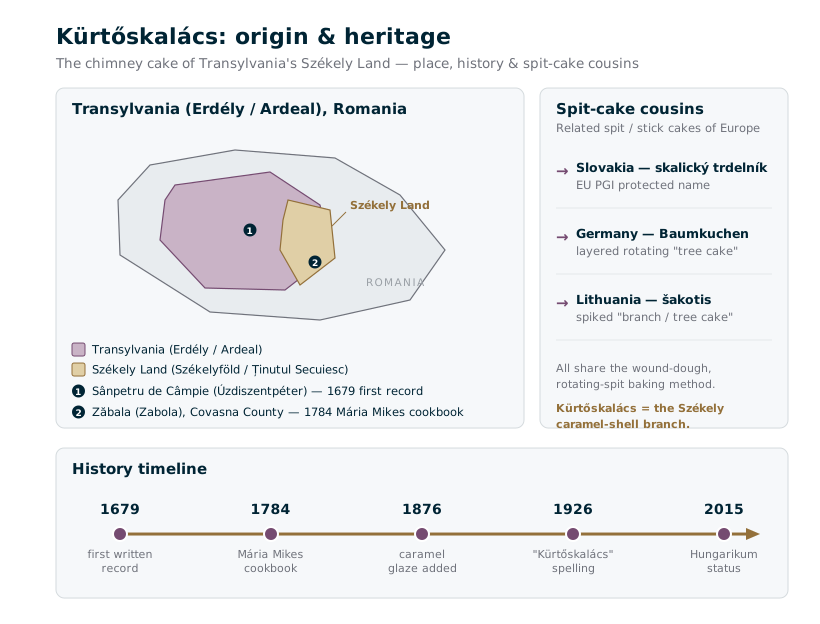 Map of Transylvania's Székely Land marking Covasna/Zăbala and Sânpetru de Câmpie with a kürtőskalács history timeline and spit-cake cousins
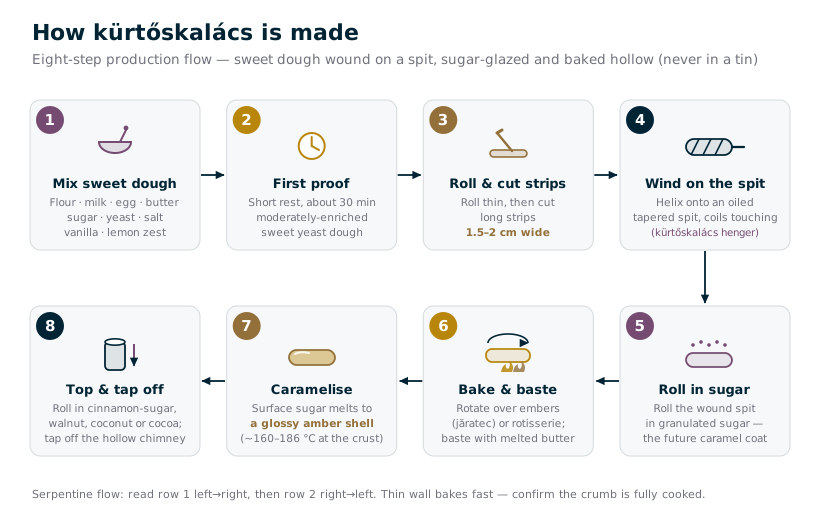 Step-by-step flow diagram of kürtőskalács from mixing sweet dough through winding on the spit, sugar-rolling, ember baking, caramelisation and topping
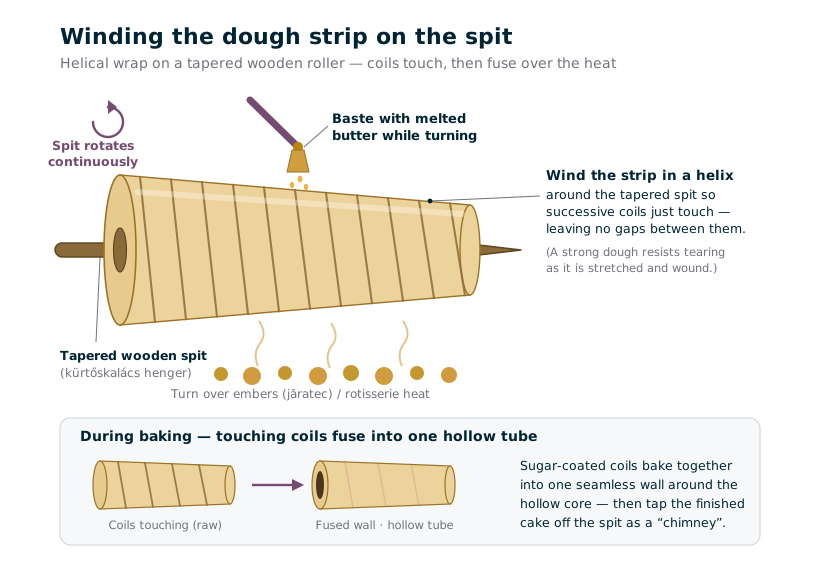 Diagram of a dough strip wound helically on a tapered wooden spit with coils touching, rotated over heat and basted with butter
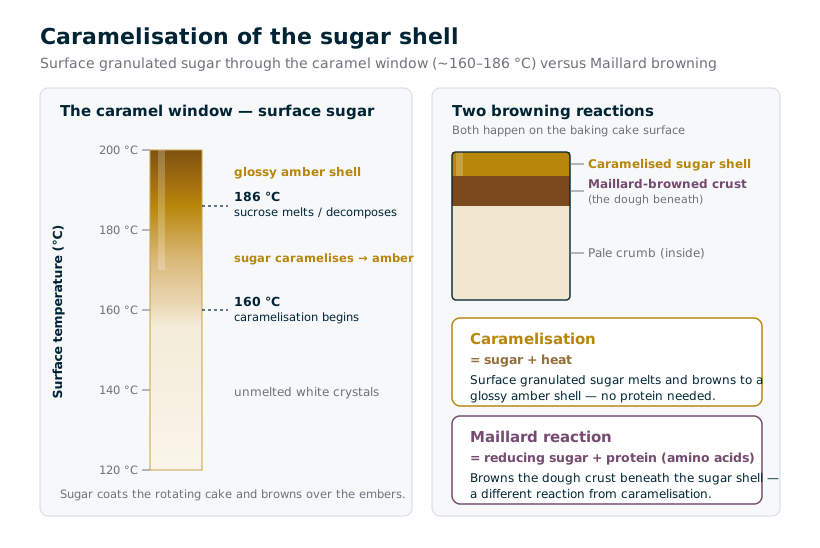 Diagram showing surface sugar caramelising between 160 and 186 C into a glossy amber shell, contrasted with the Maillard browning of the dough
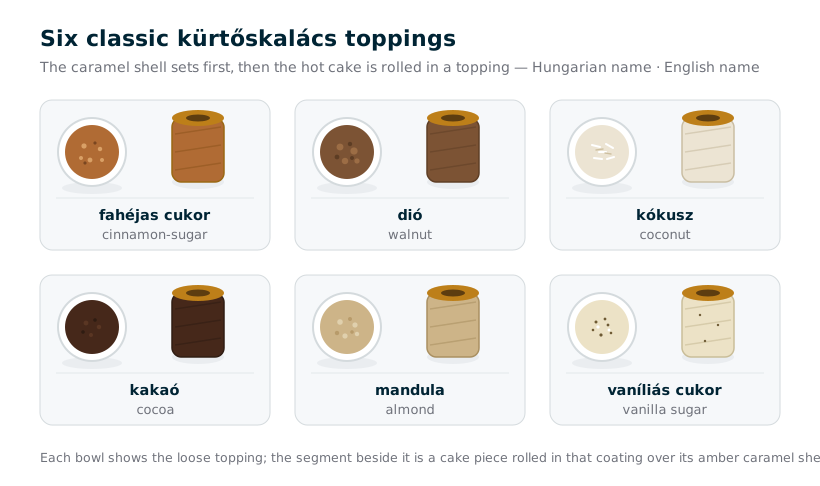 Six labelled kürtőskalács toppings — cinnamon-sugar, walnut, coconut, cocoa, almond and vanilla sugar
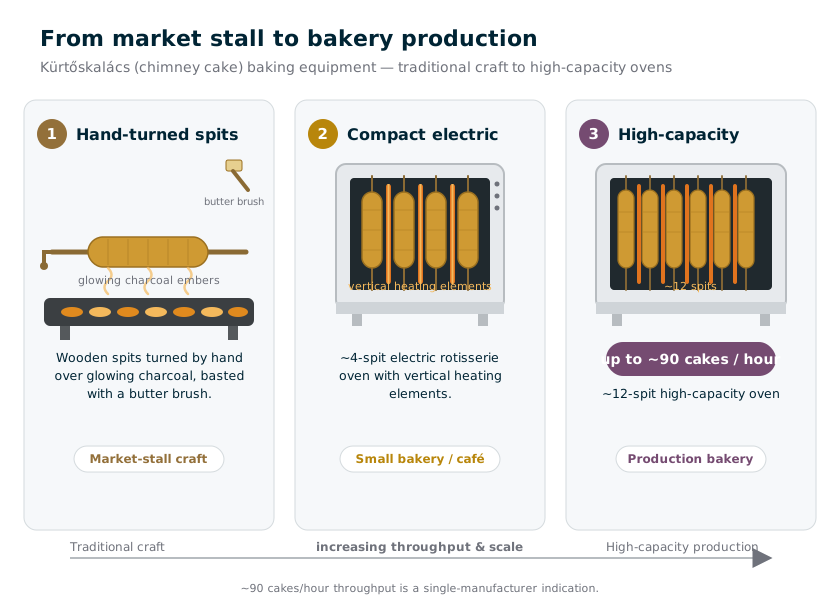 Panel comparing hand-turned spits over charcoal with 4-spit and 12-spit electric rotisserie chimney-cake ovens
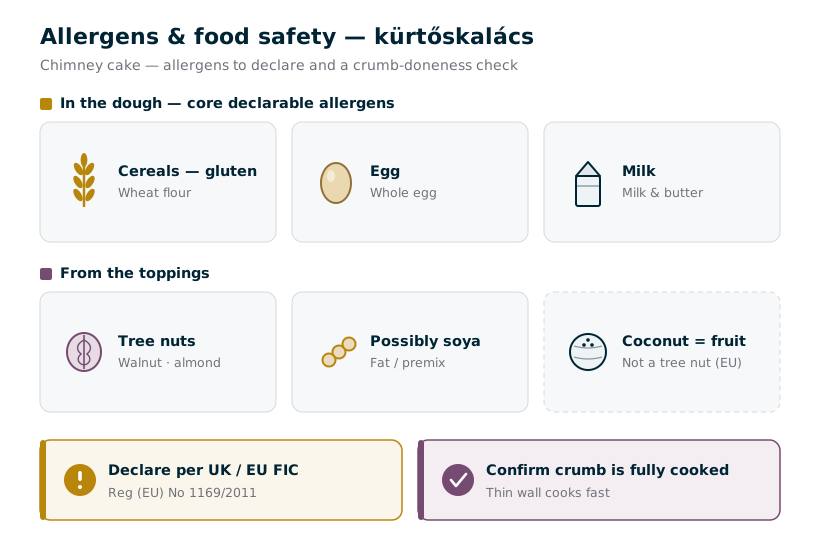 Allergen panel for kürtőskalács: gluten, egg, milk and tree-nut icons with an FIC declaration note and a fully-cooked crumb food-safety note
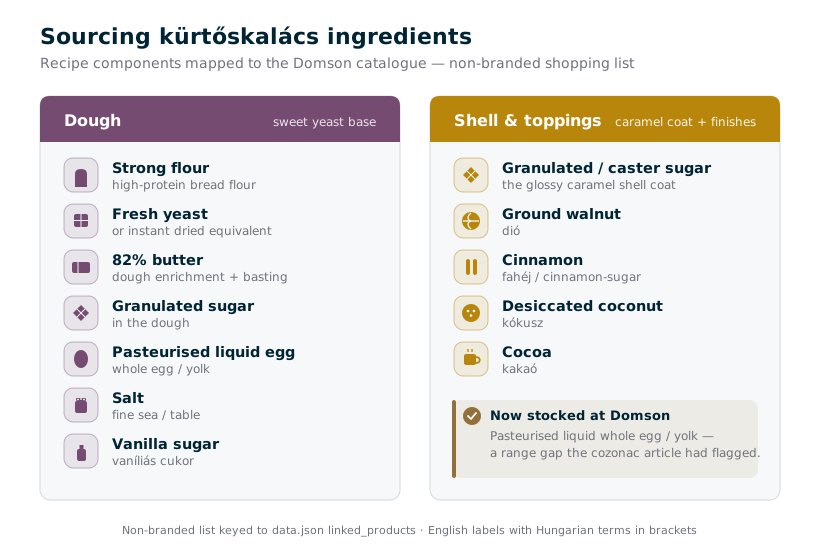 Panel mapping kürtőskalács ingredients to Domson catalogue products including strong flour, butter, granulated sugar, liquid egg and toppings
Kürtőskalács enriched dough — representative formula (baker's %)
A moderately-enriched sweet yeast dough. It must have enough gluten to sheet thin and wind onto the spit without tearing (see A1-protein-gluten-and-strength), yet stay tender. Keep the dough sugar modest — the sweetness and the show come from the caramel shell, not the crumb. Formula language is in A8-bakers-percentage-fundamentals and A8-enriched-dough-formulas; the high-sugar-yeast interaction (milder here than in cozonac) is in A2-osmotolerant-yeast-enriched-doughs. Treat exact quantities as representative, not canonical — Hungarian/Székely household ratios vary.
| Ingredient | Baker's % | Weight |
|---|---|---|
| Strong wheat flour | 100% | |
| Milk (warmed ~35–37°C) | 30–40% | |
| Whole egg | ~20% | |
| Butter (min 82% fat) | 10–12% | |
| Sugar (in the dough) | 10–14% | |
| Fresh yeast | 4–5% (or ~1.4–1.7% dry) | |
| Salt | ~1% | |
| Vanilla sugar + lemon zest | to taste | |
| Total | ~165–175% (moderately enriched — leaner than cozonac by design) |
Worked example
Per 1 kg strong flour (wet gluten ~28–32%): ~350 ml milk warmed to ~35–37°C, ~200 g whole egg (about 4 eggs), 40–50 g fresh yeast (or ~14–17 g instant dry), 100–140 g sugar, 100–120 g soft butter (min 82% fat), ~10 g salt, vanilla sugar and the zest of a lemon. Proof the yeast in a little warm milk + sugar; mix and knead to a smooth, elastic, non-sticky dough that clears the bowl; give a short first proof (~30 min); roll thin, cut strips ~1.5–2 cm wide; wind around oiled tapered spits with coils touching; roll in granulated sugar; bake rotating over embers or in a rotisserie oven, basting with melted butter, until the sugar caramelises and the surface is golden; roll the hot cake in the chosen topping.
Yield: several cakes (per 1 kg flour), depending on spit size
The caramel shell — the make-or-break coating
This coating is the whole identity of the cake. Caramelisation is a sugar-plus-heat reaction, distinct from the Maillard browning of the dough proteins, though both run together on the hot surface (see A6-sugar-work-techniques for the sugar-cooking stages, and A5-baking-oven-science for crust chemistry). Even coating + steady rotation = an even shell; a hot spot or a pause in turning gives a burnt patch. Caster sugar (finer) caramelises faster and more evenly than coarse granulated.
| Ingredient | Baker's % | Weight |
|---|---|---|
| Granulated sugar (min 99.7% sucrose) | an even clinging layer | |
| Melted butter (min 82% fat) for basting | as needed | |
| Total | n/a (a surface coating, not a dough ingredient) |
Worked example
Brush the wound dough with melted butter (min 82% fat), then roll the whole spit in granulated sugar (min 99.7% sucrose) so an even layer clings. Bake while rotating and basting with more butter. The surface sugar melts and caramelises — sucrose caramelisation begins ~160°C and sucrose melts/decomposes ~186°C — into a crisp, glossy amber shell. Pull it before it scorches (caramel goes bitter and dark).
Yield: one glossy shell per cake
Both are Romanian-market festive enriched breads, but they solve opposite problems. Cozonac puts all the richness in the crumb; kürtőskalács keeps a leaner crumb and puts the drama on the outside — a caramelised sugar shell. Use this before choosing a build. See B4-cozonac-enriched-dough.
| Feature | Kürtőskalács (chimney cake) | Cozonac (festive loaf) |
|---|---|---|
| Origin / attribution | Hungarian / Székely, Transylvania (Székelyföld); 'cozonac secuiesc' in Romanian | Romanian/Moldovan Orthodox festive loaf, national |
| Dough | Moderately enriched sweet yeast dough — leaner and less sweet on purpose | Heavily enriched, high-sugar, many yolks |
| Where the flavour lives | The caramelised sugar SHELL + toppings on the outside | The rich, fibrous crumb inside |
| Shaping | Strip wound helically around a tapered wooden spit (the kürtőskalács henger, baking roller) | Rolled/braided logs in a tin |
| Baking | Rotated over embers / in an electric rotisserie oven; sugar caramelises | Static in a loaf tin, 50–60 min |
| Signature quality mark | Crisp glossy caramel shell, soft steamy crumb, hollow 'chimney' that pulls apart in a spiral | Crumb that pulls into fine fibrous strands (fâșii) |
| Format | Made to order, eaten warm as street food / festival food | Whole loaf, keeps days–weeks |
A Transylvanian-Székely lineage. Note that the caramelised-sugar finish that defines the modern cake is a 19th-century development — the original was a plain spit bread.
| Date | Milestone | Where / who |
|---|---|---|
| 1679 | First written record of the cake | Úzdiszentpéter (today Sânpetru de Câmpie), Transylvania |
| 1781 | First recipe in a manuscript cookbook | Transylvania |
| 1784 | Recipe in Countess Mária Mikes of Zabola's cookbook ('kürtős kaláts à la Mrs. Poráni') — NO sweetening | Zăbala, Covasna County (Székely Land) |
| 1795 | First mention of sweetening AFTER baking | Kristóf Simai's cookbook, Upper Hungary (now Slovakia) |
| 1876 | Caramelised-sugar glaze technique introduced | Terézia Dolecskó, 'Aunt Rézi's Cookbook' (Szeged) |
| 1926 | Modern spelling 'Kürtőskalács' first in print | Brassói Lapok cookbook |
| 2015 | Hungarikum status; EU PDO application filed (3 Dec) — not granted | Hungary |
Rolled onto the hot, tacky caramel immediately after baking. All the classic toppings add allergens — see key_specs and the food-safety section (A7-seeds-nuts-toppings covers nut handling and allergen control).
| Topping (Hungarian) | What it is | Notes |
|---|---|---|
| Cinnamon-sugar — fahéjas cukor | Ground cinnamon blended with sugar | The most iconic finish; platform cinnamon is Indonesian, moisture max 16%, trace celery/mustard/SO2 |
| Walnut — dió | Ground or chopped walnut, often with sugar | Grind fresh; declares tree nuts. Toasting/rancidity control in A7-seeds-nuts-toppings |
| Coconut — kókusz | Desiccated coconut (fine or medium) | Platform desiccated coconut: 630 kcal, oil min 45%, aflatoxin B1 max 2 µg/kg; a fruit, not a tree nut, in EU allergen law |
| Cocoa — kakaó | Cocoa powder, alone or with sugar | Dutch-alkalised cocoa for colour and depth |
| Almond — mandula | Ground almond | Less common; declares tree nuts |
| Vanilla sugar — vaníliás cukor | Sugar with vanilla/vanillin | Aroma boost; may contain gluten depending on the carrier |
Kürtőskalács is the wound-dough, caramel-glazed member of a wide European spit-cake family. The key distinction: wound yeast DOUGH (kürtőskalács, trdelník) vs layered/poured BATTER (Baumkuchen, šakotis, sękacz). See the Lithuanian sibling B5-sakotis-spit-cake.
| Cake | Country / region | How it differs |
|---|---|---|
| Kürtőskalács | Transylvania / Hungary (Székely) | Wound sweet yeast dough; caramelised sugar shell |
| Trdelník / skalický trdelník | Czechia / Slovakia | Wound dough but LACKS the caramel glaze; skalický trdelník is an EU PGI |
| Prügelkrapfen | Austria | Spit-baked, related festive cake |
| Baumkuchen | Germany | Layered POURED batter built up on a rotating spit — different construction |
| Šakotis / sękacz | Lithuania / Poland | Batter dripped onto a rotating spit to form spikes ('tree cake') — see B5-sakotis-spit-cake |
| Spettekaka | Sweden | Egg-and-sugar batter piped onto a rotating cone |
Kürtőskalács is a made-to-order, eaten-warm product, so 'scaling' means more spits turning at once, prepped chilled dough, and consistent caramelisation — not longer shelf life. See A5-scaling-artisan-to-industrial and A5-proofing-science.
| Approach | How it works | Trade-offs |
|---|---|---|
| Traditional embers | Hand-turned wooden spit over glowing charcoal, basted with butter, ~40 min | Most authentic aroma; skilled, slow, one cake at a time |
| Electric rotisserie oven (small) | ~4-spit compact machine, vertical elements, motor-turned | Consistent, low-skill; ideal starter for a café/kiosk |
| Electric rotisserie oven (high-capacity) | ~12 spits at once; up to ~90 cakes/hour | High throughput for fairs/food-court; capital + power draw |
| Chilled/retarded dough + made-to-order bake | Bulk-mix the sweet dough, retard it, wind and bake to order | Steady quality and labour smoothing; needs cold storage and proof control |
| Fault | Likely cause | Remedy |
|---|---|---|
| No caramel shell / pale, dull surface | Too little sugar clinging; spit too far from heat; not hot enough to caramelise (<160°C surface) | Butter-brush then roll fully in sugar; move closer to the heat; bake until the sugar visibly melts and turns amber |
| Burnt, bitter, blackened shell | Sugar overshoots (well past 186°C); a hot spot; rotation paused | Keep the spit turning steadily; pull as soon as it is glossy amber; use even heat / a rotisserie oven |
| Cake tears / unwinds on the spit | Dough too weak or over-sugared; coils not touching; strip too thin | Use strong flour (wet gluten ~28–32%); wind coils touching so they fuse; keep dough sugar modest |
| Doughy, raw crumb; caramel done but inside wet | Wall wound too thick; heat too fierce, too fast | Roll strips thinner (~0.5–1 cm); moderate the heat so crumb and shell finish together; confirm the crumb is cooked through |
| Dense, poor rise; heavy crumb | Yeast killed by hot milk or by contact with salt/sugar; under-proofed | Warm milk to ~35–37°C; proof yeast separately; give the short first proof before shaping |
| Toppings won't stick | Caramel already set / cake too cool | Roll in the topping immediately, while the caramel is hot and tacky |
| Greasy, slack dough that won't wind | Butter/fat added too early or too much; over-soft dough | Build the gluten first, keep enrichment moderate, chill the dough if slack |