
Pastry & Confectionery
Choux, laminated, creams, fillings
10 articles · 69 diagrams · avg 13 min read
Articles in this section
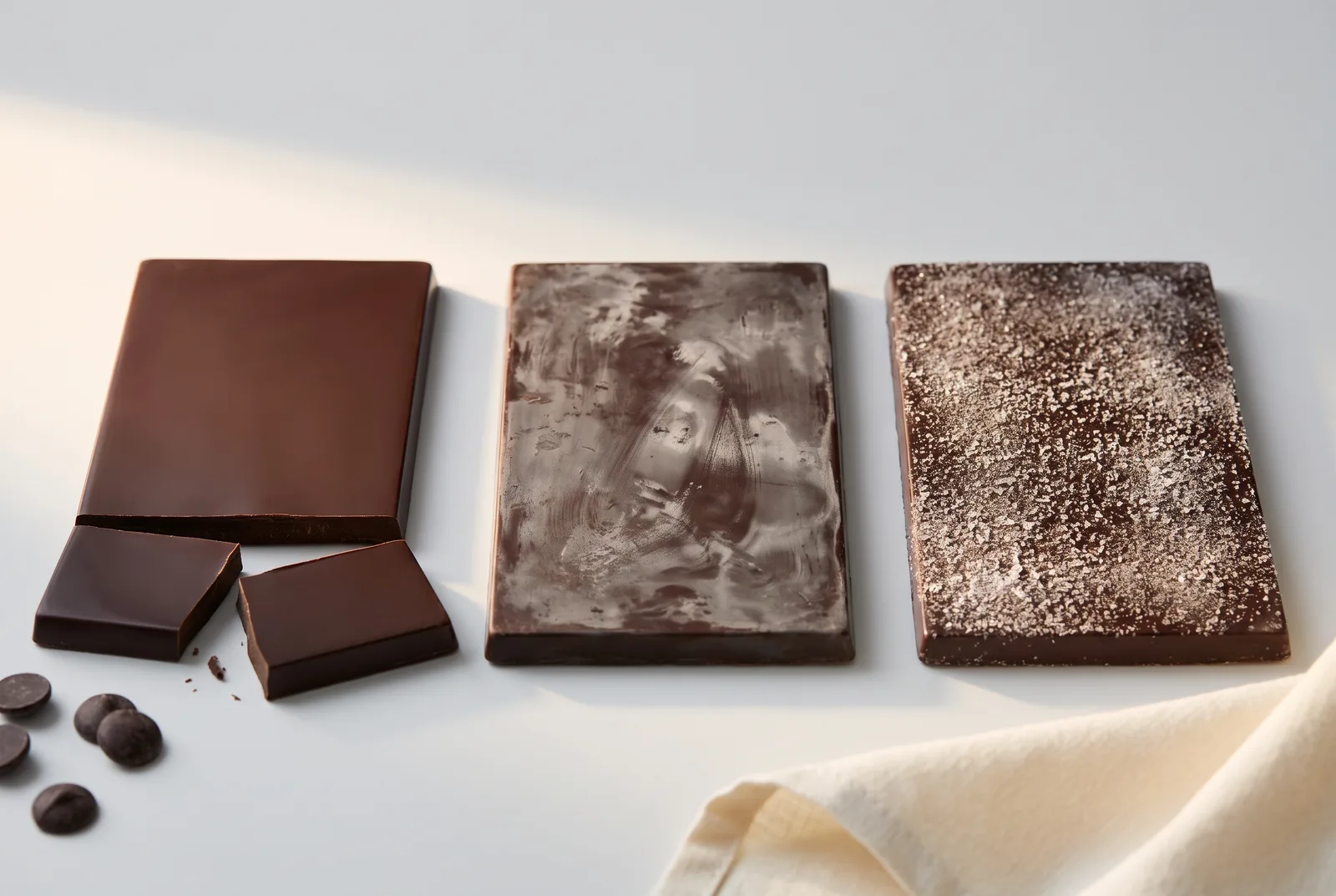
Chocolate defects — fat bloom & sugar bloom: causes, prevention and corrective action
The working bakery's guide to the two white-film defects that generate the most chocolate complaints. Explains what fat bloom and sugar bloom actually are, how to tell them apart in seconds, why one is reversible and the other is not, the crystal and moisture mechanisms behind them (including filling-oil migration in pralines), and a practical prevention and rescue protocol — cross-referenced to the Domson couverture and compound range with first-party spec-sheet storage numbers.
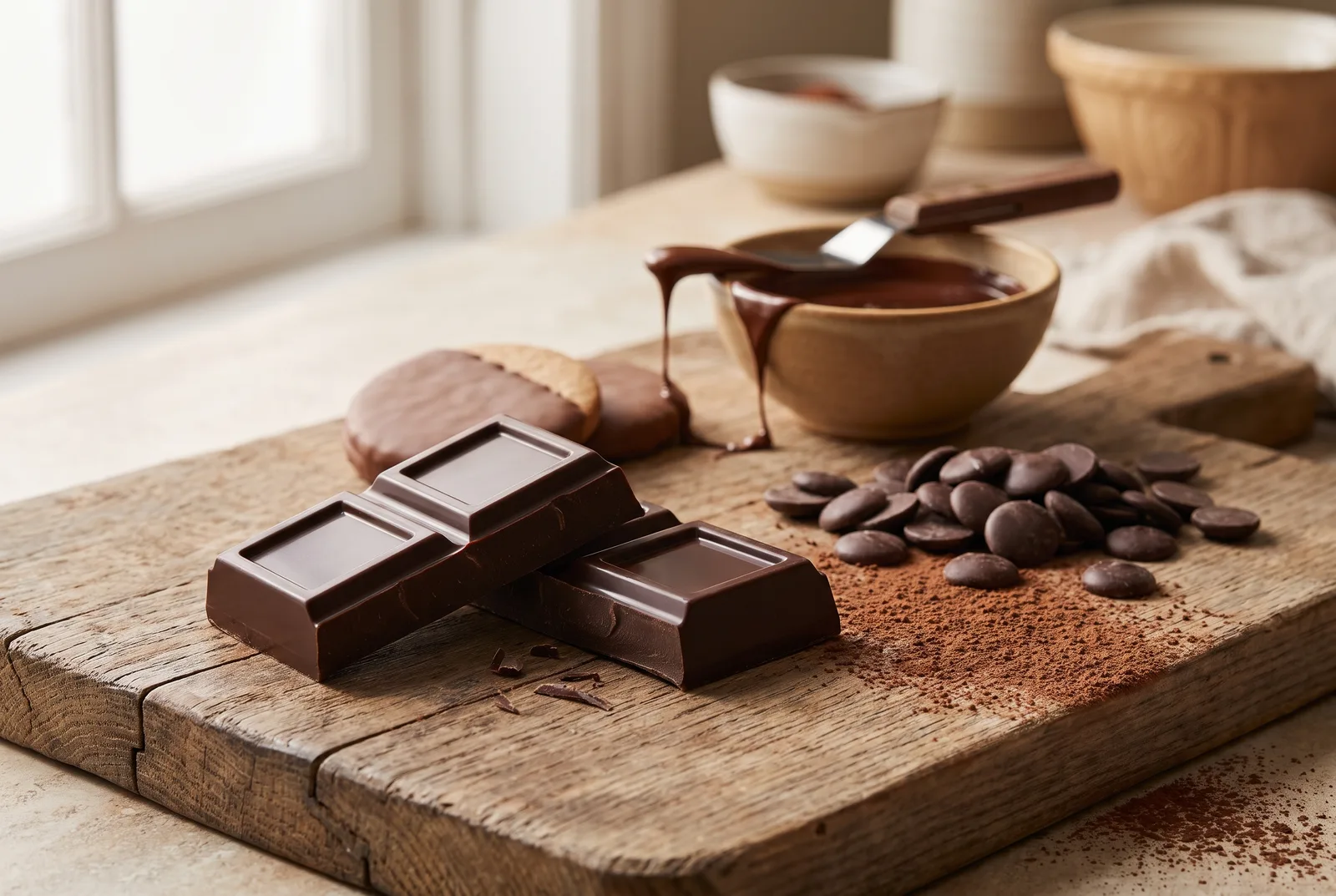
Couverture vs compound chocolate: cocoa butter, fluidity and the right choice for each job
A practical professional reference for choosing chocolate. Explains the one difference that changes everything - whether the fat is cocoa butter (couverture) or vegetable fat (compound coating) - and what that means for tempering, fluidity, finish, flavour, cost and saturated fat. Covers the EU legal definitions of chocolate and couverture, the cocoa-butter crystal forms and tempering curves for dark/milk/white (cross-checked against Zeelandia couverture spec sheets), the Callebaut 1-5 drop fluidity system, fat vs sugar bloom, ganache ratios, bake-stable inclusions, and the CBS/CBR vegetable fats behind compound coatings. Includes spec-sheet tables for eight catalogue couvertures and four compound coatings from Barbara Luijckx, Zeelandia, Belcolade/Puratos, Callebaut and Polen.
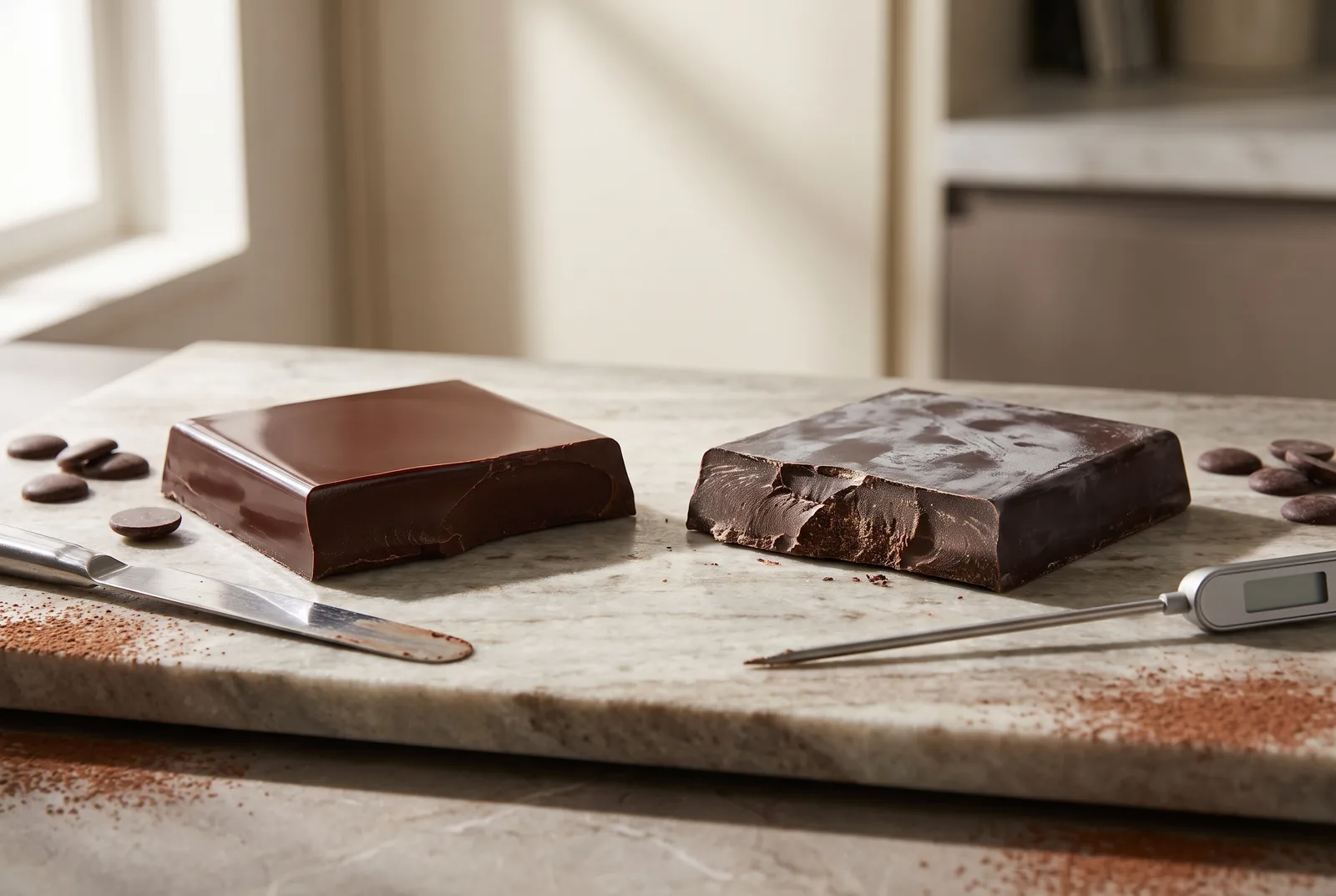
Chocolate tempering & cocoa-butter crystallisation: achieving Form V for snap, gloss & shelf life
A working chocolatier's guide to why chocolate must be tempered, what cocoa-butter crystallisation actually is, and how to hit the correct Form V crystal every time. Covers the six polymorphs, the dark/milk/white temper curves, the tabling, seeding, Mycryo and machine methods, the temper test, and bloom — cross-referenced to the Domson couverture and compound range with first-party spec-sheet numbers.
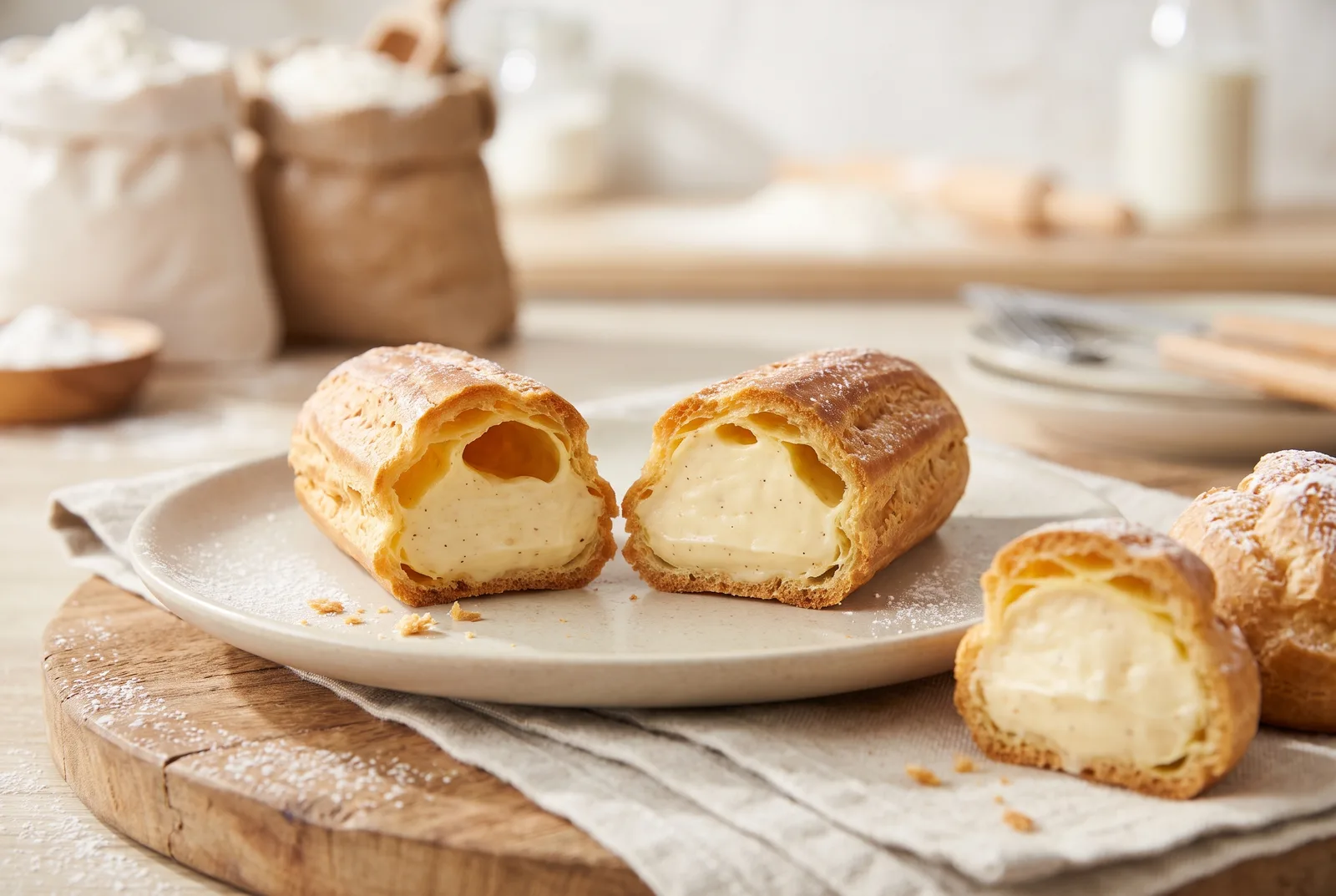
Choux pastry technology: steam leavening, piping consistency and troubleshooting hollow, sunken & wet choux
A practical, data-driven guide to choux pastry (pâte à choux) for professional bakers and confectioners. Explains why choux is leavened almost entirely by steam, how cooking out the panade gelatinises wheat starch so the paste can hold that steam, the classic ~2:1:1:2 water:butter:flour:egg ratio, how to judge egg addition by consistency, flour choice, the door-shut bake and shell-drying step, craquelin, and éclair finishing. Includes a full fault table for flat, collapsed, sunken, wet, cracked and spread choux. First-party numbers are extracted from eight Domson-catalogue spec sheets — three choux mixes (Zeelandia Basis Brand, Dawn Choux Pastry Mix, Macphie Choutex), two ready-baked shells (Mademoiselle Desserts giant éclair and mini profiterole), Polmlek 82% butter, Eipro Eifix whole liquid egg, and Zeelandia sugar fondant — and cross-referenced against FoodCrumbles, King Arthur, Serious Eats, The Flavor Bender and an academic study of wheat-starch gelatinisation.
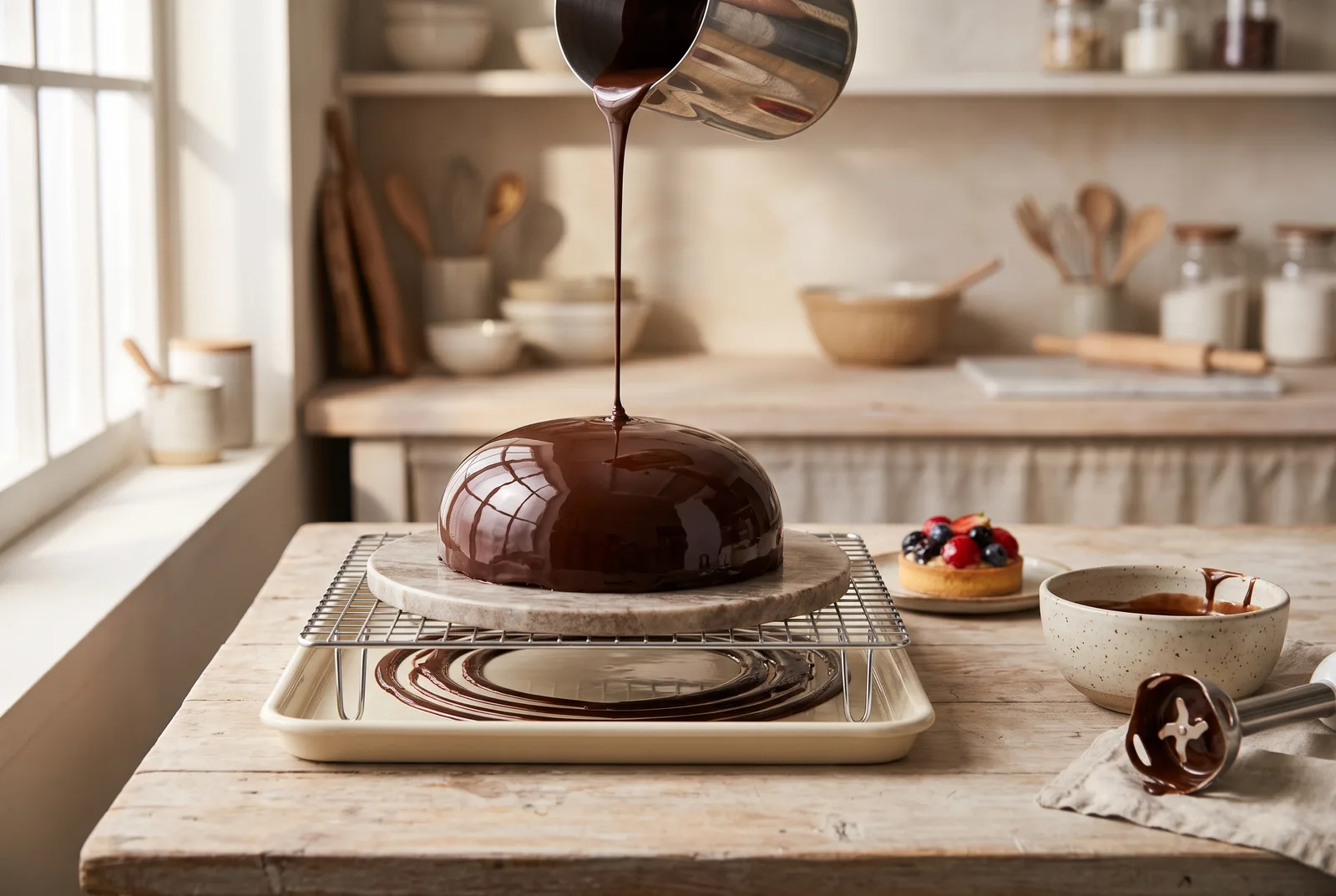
Glazes, mirror glazes & neutral nappages: gelatin, pectin, glucose and application temperature control
A practical, bench-level guide to the finishing glazes a professional pastry kitchen relies on: the high-gloss mirror glaze (glaçage miroir), neutral and cold gel glazes, hot apricot/neutral nappages, bun and protein glazes, and compound chocolate (pâte à glacer) coatings. It explains the three gelling systems that sit underneath all of them — gelatin, agar and pectin (HM/LM/NH) — plus the role of glucose syrup, and treats application temperature as the master variable: cook to 103°C, pour mirror glaze at 28-35°C onto an entremet frozen at -18°C, work pâte à glacer at 35-40°C with no tempering. Includes gelatin grade/Bloom data, food-safety notes (porcine vs halal/kosher/vegan gelling, the raw pineapple/kiwi/papaya enzyme trap), a fault-finder, and ready-to-buy Domson catalogue products. Numbers are drawn first from first-party supplier spec sheets (Zeelandia Paletta, Dawn Decorgel, CSM Merjel, Bakels, Bowika, Kluman, Hortimex, Helios) and cross-checked against pastry references.
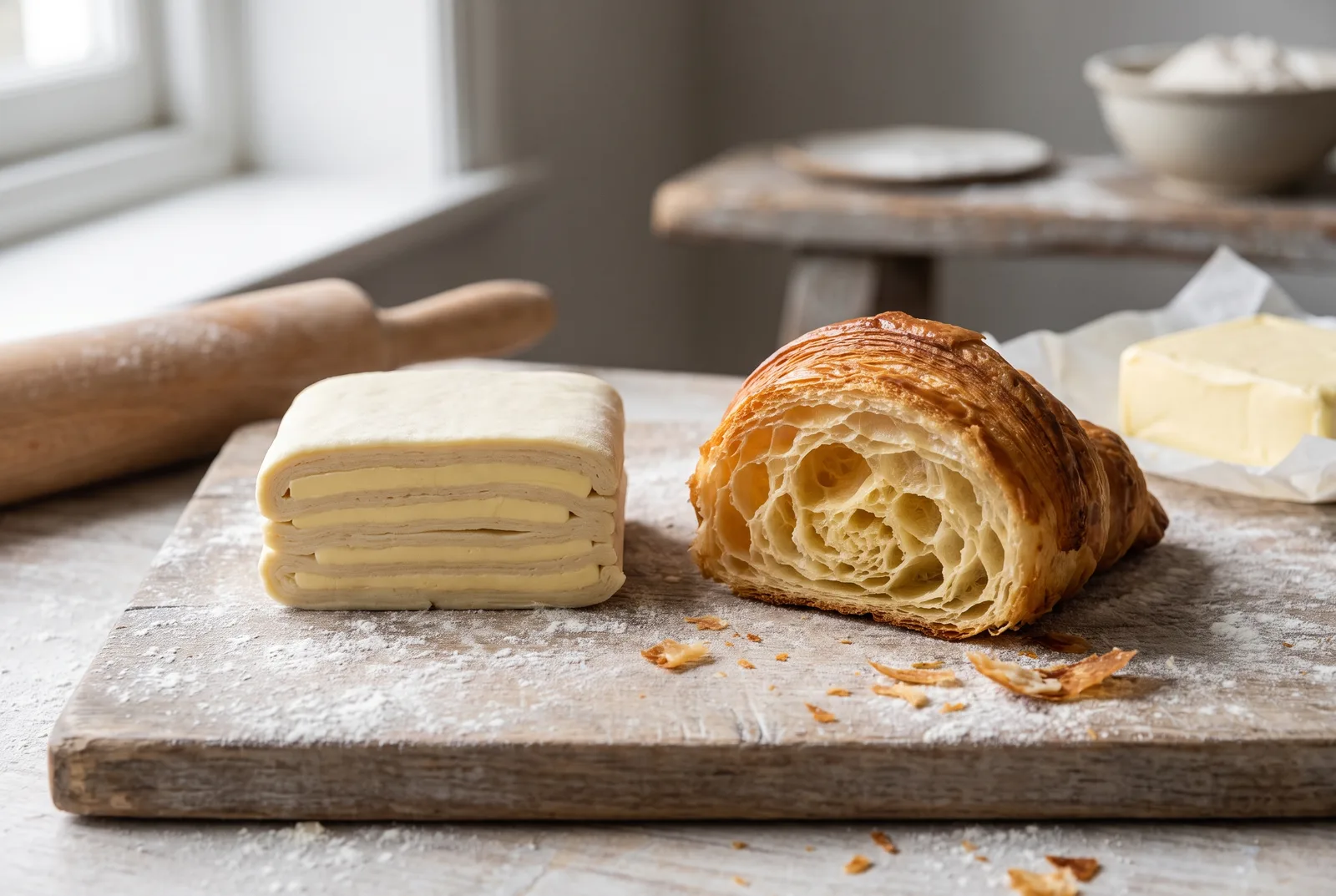
Laminated dough fundamentals: layers, folds & fat choice for croissants, Danish & puff pastry
A practical, data-driven guide to the craft that underpins all viennoiserie: building alternating sheets of dough and fat that puff apart in the oven. Covers what lamination is and why steam (not yeast alone) does the lifting; the three classic doughs (croissant, Danish, puff pastry) and how they differ; the fold mathematics (single fold ×3, book fold ×4) and the realistic layer counts; the four lock-in methods; the single most important control — matching the consistency and temperature of the détrempe and the roll-in fat; how to choose a medium-strong détrempe flour and the right roll-in fat; a full step-by-step process; a complete fault table; and flagged allergen guidance. Numeric specs are extracted directly from seven Domson-catalogue spec sheets (Komplexmłyn T550, FWP Matthews Windrush, GoodMills T750, Lesaffre Benevia yeast, Kruszwica Maestra Puff Pastry Margarine, Polmlek Butter 82%, Cardowan Crown NHAV) and cross-referenced against BAKERpedia, King Arthur Baking, Pastry Arts Magazine, The Culinary Pro and other baking authorities.
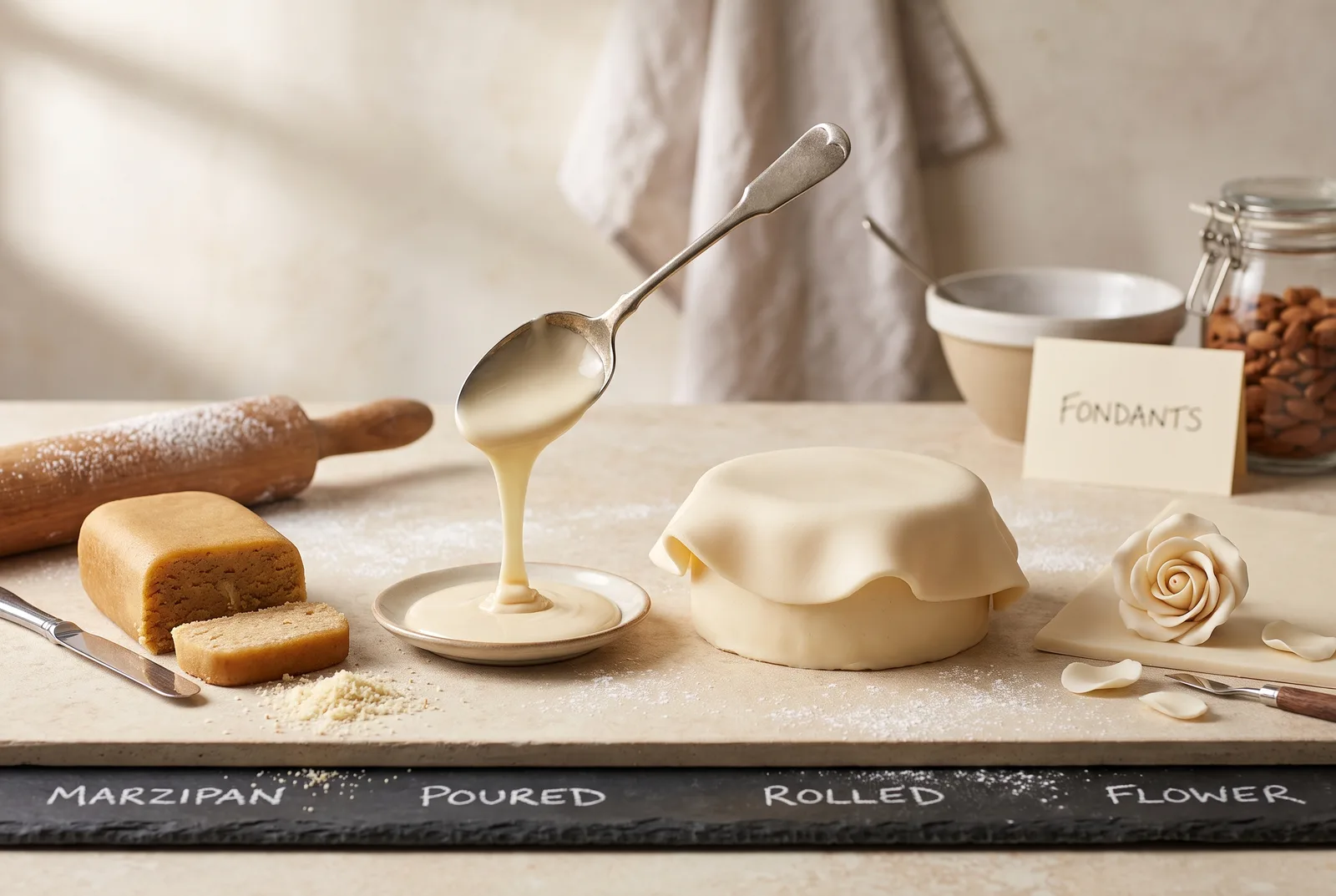
Marzipan, fondant & sugar pastes: composition, workability, colouring and covering cakes
A practical guide to the sugar-based covering and modelling media a confectioner reaches for every day — marzipan and almond paste, confectioner's (poured) fondant, rolled fondant icing / sugarpaste, and the firmer gum, flower and modelling pastes. It untangles the word "fondant" (poured glaze vs rolled covering paste), explains the composition and the single property that governs each one (almond:sugar ratio for marzipan, sucrose crystal size for poured fondant, humectant + gum for sugarpaste), and turns that into working rules: roll to 3–4 mm, warm poured fondant to 40–48°C but never above 50°C, convert sugarpaste to modelling paste with CMC or gum tragacanth, and colour with gel/paste rather than liquid. Numeric composition, allergen and dosage data are extracted directly from fourteen Domson-catalogue spec sheets (Zeelandia Roll Dekor sugarpaste, PA Foods and Doric ready-to-roll sugarpaste, Vortumnus, Zeelandia and Arctos poured fondants, Kent icing sugar, ground almonds, glycerine, isomalt, Sweet Snow non-melting dust and a gel colour) and cross-checked against BAKERpedia, the American Society of Baking, Lübeca and EU regulations. Food-safety flags cover almond aflatoxin limits, the titanium-dioxide (E171) ban, the "Southampton Six" colour warning and persipan's amygdalin. For decorative sugar showpieces see A6-sugar-work-techniques; for mirror glazes and nappages see A6-glazes-finishes.
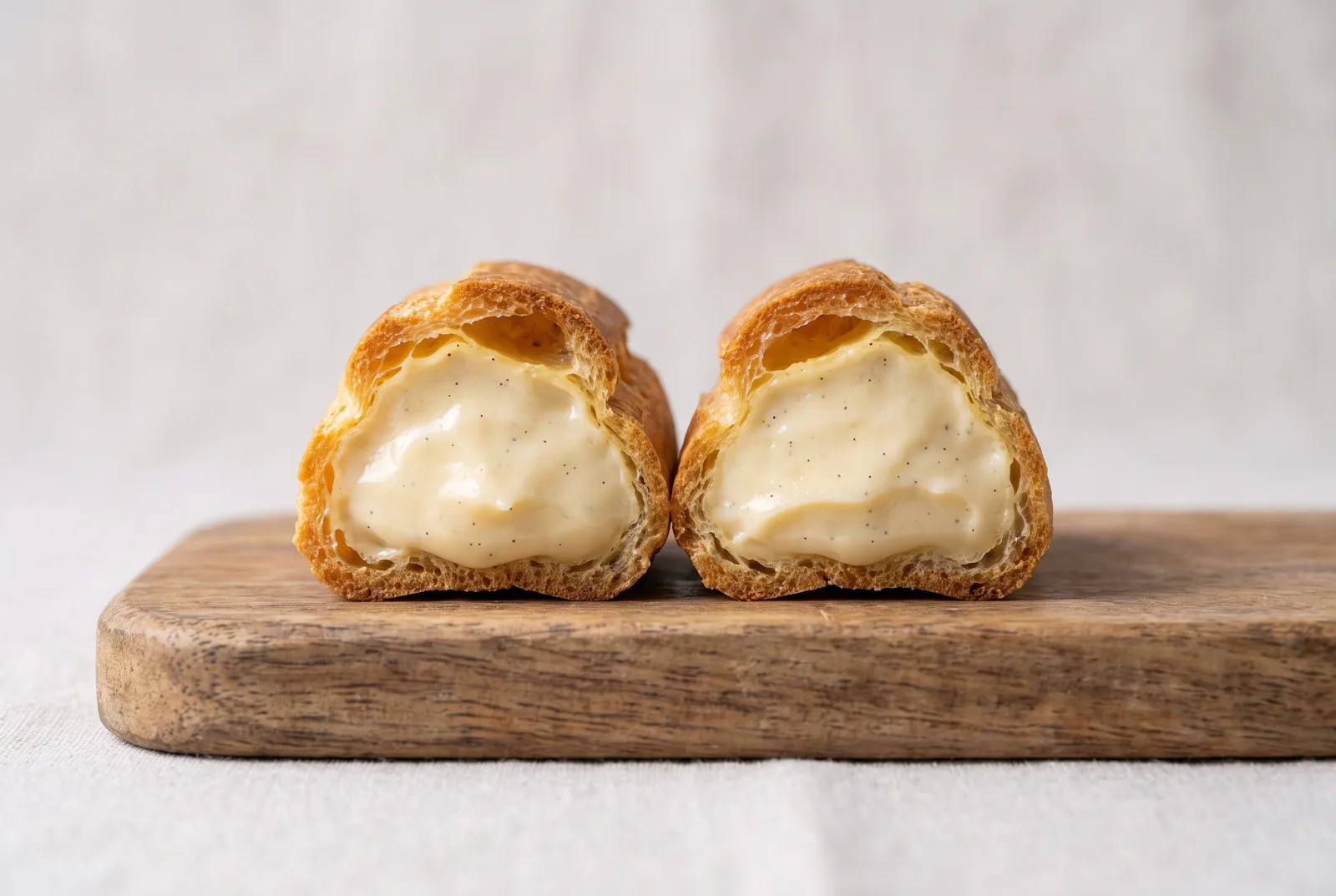
Pastry creams & cold fillings: crème pâtissière, diplomat, mousseline, ganache and stable fruit curds
A working reference to the cold fillings behind éclairs, tarts, choux, croissants and entremets. Covers the crème pâtissière family (diplomat, mousseline, chiboust, légère), ganache ratios for dark/milk/white couverture, and stable fruit curds — plus the science that decides success: starch gelatinisation, the egg-yolk amylase that turns pastry cream runny, gelatine Bloom grades and blooming, agar as a vegan/heat-stable alternative, whipping-cream fat thresholds, and the food-safety rules for egg-based creams. Built on 14 first-party supplier spec sheets (Zeelandia, CSM/Craigmillar, Emix, Puratos, Martin Braun, Barbara Luijckx, Bowika, Kluman, Hortimex, AGRANA, OSM Bieruń) cross-checked against culinary and regulatory references, with comparison tables, five formula cards and a fault-diagnosis table.
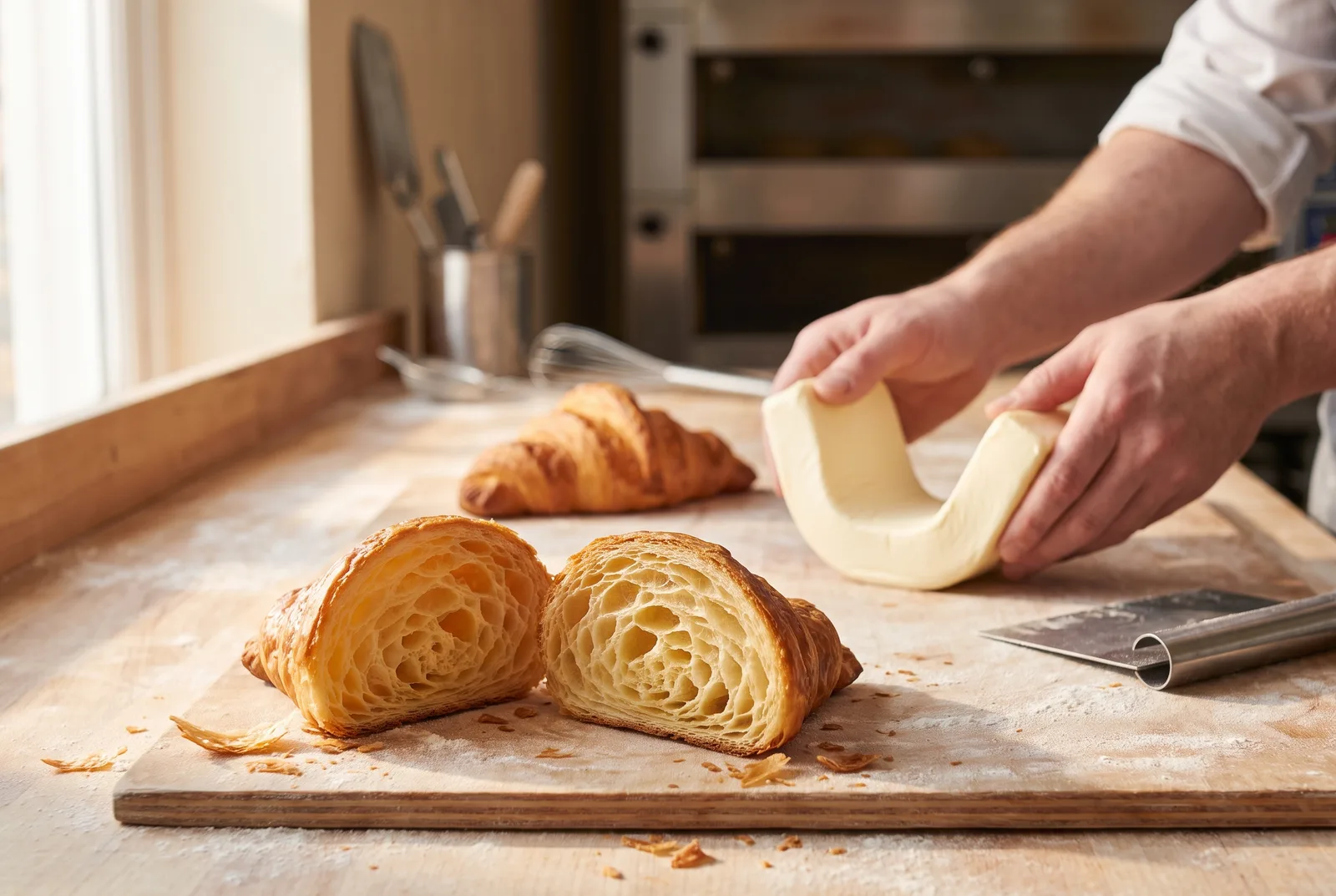
Roll-in fats for laminated pastry: butter vs pastry margarine — plasticity, melting point & how to choose
A decision-focused guide for professional bakers choosing the roll-in fat for croissants, Danish and puff pastry. It reduces the choice to two governing properties — plasticity (the plastic range over which the fat sheets without cracking or smearing) and melting point (which must sit above the proof temperature so layers set before the fat liquefies) — and turns them into practical decision frameworks by kitchen temperature, product type, eating quality, cost and dietary/label constraints. It maps the fat spectrum from butter (best flavour, narrowest plastic range) through tourage butter, butter-blend and croissant margarine to high-melt puff-pastry margarine, and warns against the common, costly error of reaching for a cake margarine or shortening. Numeric SFC, melting point, composition and allergen data are extracted directly from six Domson-catalogue spec sheets (Polmlek Butter 82%, Kruszwica Maestra Puff Pastry 80%, Kruszwica Milama Cake, Cardowan Crown NHAV Pastry, Cardowan Coronet HR Shortening, CSM Marvello Cake) and cross-checked against BAKERpedia, the American Society of Baking, the BC Campus Canadian Baker textbook and EU regulations. For the underlying lamination physics see A4-laminating-fats-viennoiserie and A6-laminated-dough-fundamentals.
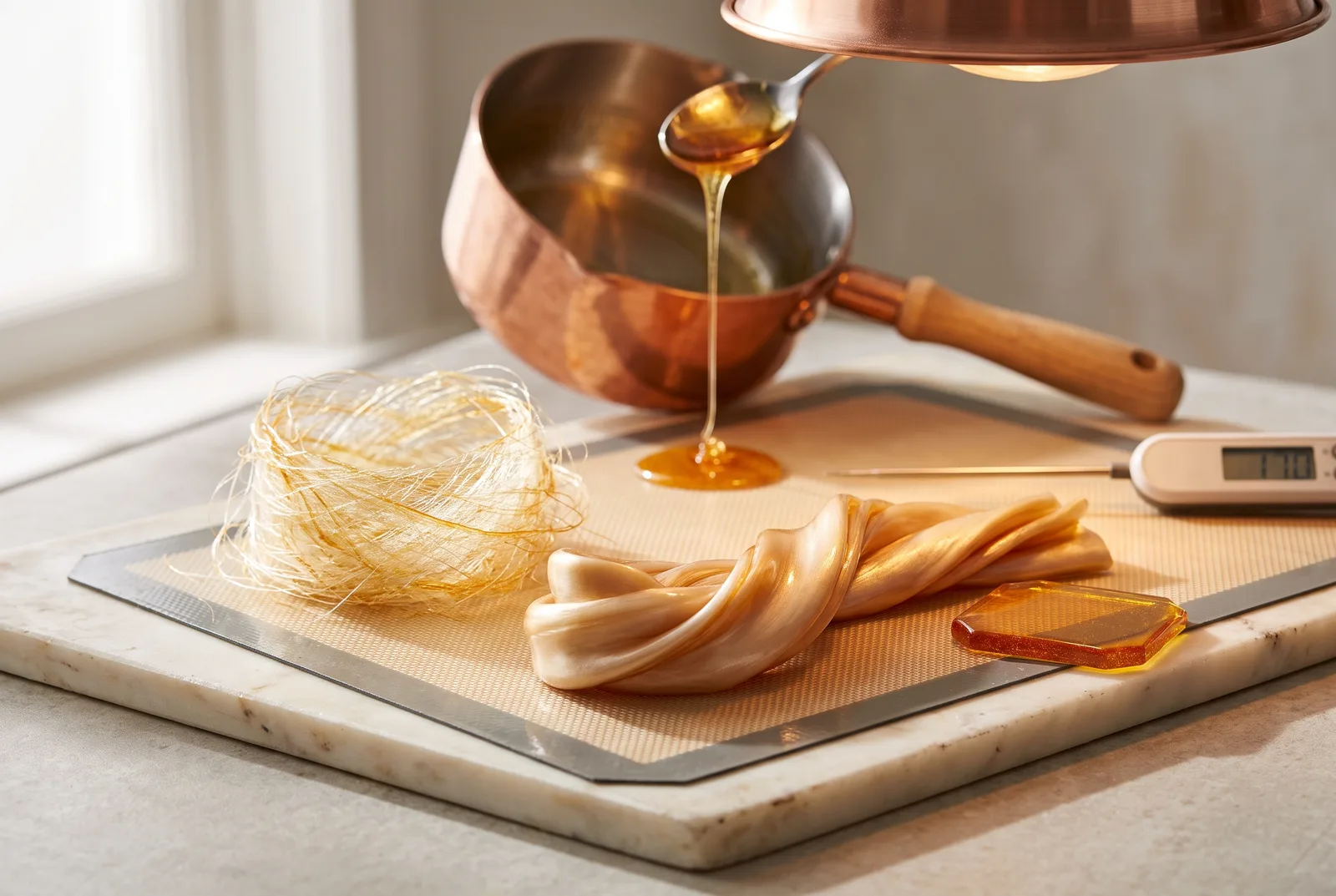
Sugar work for confectioners: cooking stages, pulled, blown and spun sugar, and isomalt
A practical guide for confectioners to working with cooked sugar: the eight cooking stages (thread to dark caramel) and what each is for; the science of crystallisation and the doctoring agents (glucose, invert sugar, acid) that keep sugar clear; the difference between caramelisation and the Maillard reaction; and the decorative techniques - pulled, blown, cast, spun and rock sugar, plus pastillage. A full section covers isomalt, the modern showpiece sugar, with cooking and working temperatures and its big advantage in humidity. Poured fondant is explained as controlled recrystallisation. All numbers are cross-checked against reference charts and first-party spec sheets for the sugars, syrups, isomalt and fondant in the Domson catalogue, with hot-sugar burn safety and polyol labelling flagged for review.