
Medutis and multi-layer tortes: honey cake, šimtalapis and varškės pyragas for professional production
Three Lithuanian celebration cakes that a UK bakery is regularly asked for, built from native Lithuanian sources and cross-checked against the platform's supplier specifications. Medutis (from medus, "honey"; also medaus tortas, "honey cake") is Lithuania's member of the pan-Central/Eastern- European honey-cake family — a stack of thin, spiced, soda-leavened honey-dough layers glued with a soured-cream (grietinė) cream and matured overnight so the cream soaks in. Šimtalapis ("hundred leaves") is the Tatar-heritage poppy-seed pastry of the Alytus region / Dzūkija — a lightly enriched yeast dough rolled almost transparent, spread with poppy filling, rolled into logs and coiled into a spiral so the cut cake shows a hundred layers. Varškės pyragas is the Lithuanian curd-cheese cake (the counterpart of Polish sernik), most often made as a trupininis crumble with a shortcrust/crumb base and lid around a baked varškė filling. The dossier gives authentic formulas in baker's %, the soda-in-honey leavening chemistry (and the baking-powder and E450/E500 commercial alternatives), the natural-honey vs "artificial honey" vs honey-cake-mix distinction read from first-party datasheets, the maturation discipline that makes or breaks a honey cake, a faults table, allergen and food-safety flags, and a Domson shopping list — cross-linked to Pillar A craft concepts (A8-cake-and-pastry-formulas, A8-bakers-percentage-fundamentals, A2-chemical-leaveners-baking-powder, A6-pastry-creams-fillings, A6-laminated-dough-fundamentals, A4-butter-grades-and-specialist-types, A5-shelf-life-and-staling, A1-flour-classification-systems) and to sister articles (B5-varske-in-baking, B5-sakotis-spit-cake, B5-seasonal-festive-baking, B5-rye-bread-culture-and-history, B1-sernik-polish-cheesecake, B1-makowiec-and-poppy-seed-fills, B1-piernik-gingerbread, B3-baklava-and-phyllo-pastries).
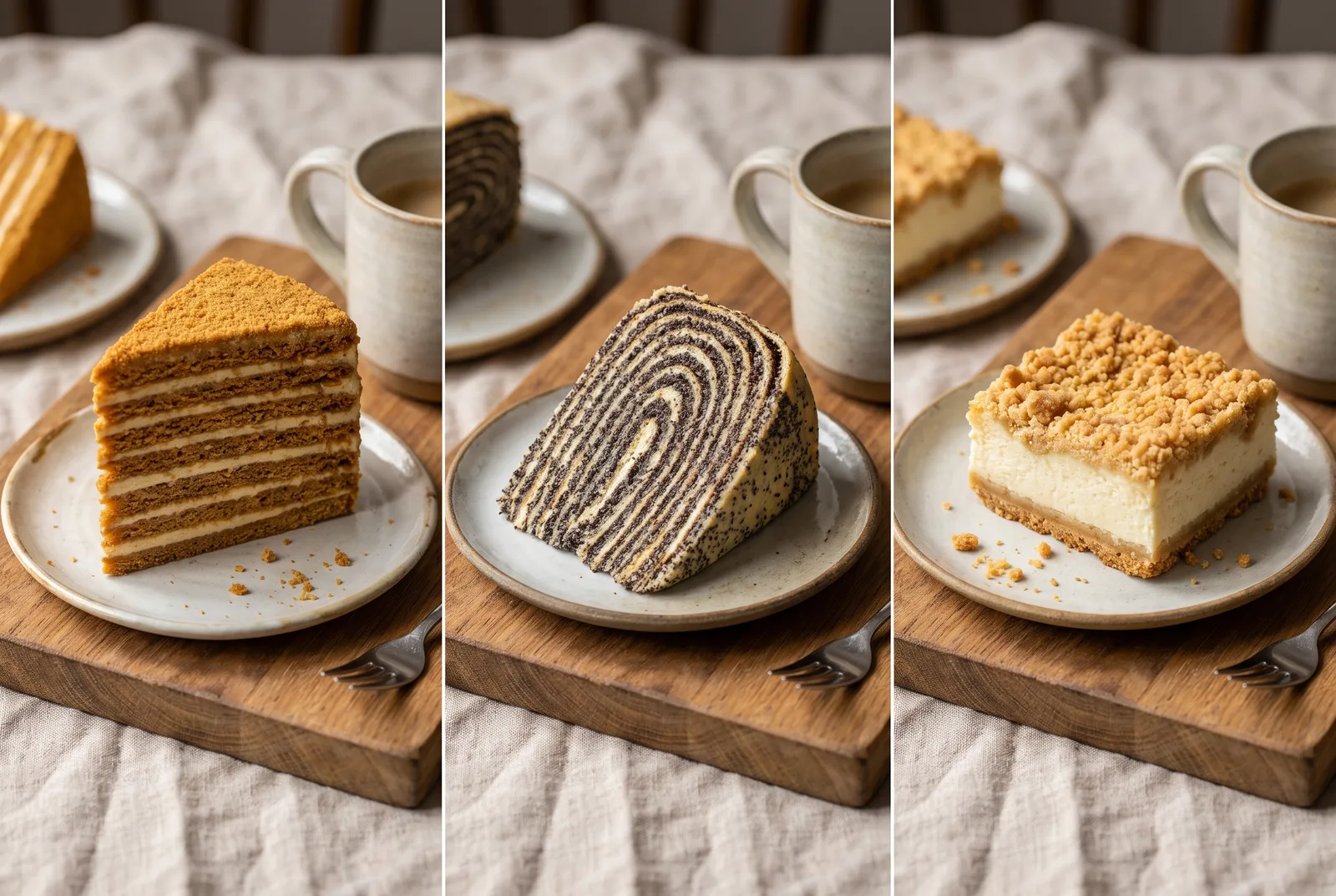
Three cakes, one brief
A UK bakery serving Lithuanian customers gets asked for the same three celebration cakes again and again, and they sit together neatly because none of them is a single baked sponge — each is an assembly of many thin elements:
- Medutis (from medus, "honey"; also medaus tortas, "honey cake") — a stack of thin, spiced, honey-dough layers cemented with a soured-cream cream and left to soften overnight.
- Šimtalapis ("hundred leaves") — a Tatar-heritage poppy-seed pastry whose dough is rolled almost transparent, filled, rolled into logs and coiled so the cut cake shows a hundred layers.
- Varškės pyragas — the Lithuanian curd-cheese cake (the cousin of Polish sernik), most often a trupininis crumble around a baked varškė filling.
They share a supplier basket (honey, soft-to-medium wheat flour, 82% butter, sugar, eggs, soured dairy, poppy seed) and they share a discipline: get the assembly and the resting right, or the parts never become a cake. See img-b5hc-01 for the three formats side by side.
Medutis: the honey layer cake
Where it sits — the honey-cake family
Medutis is Lithuania's member of a pan-Central/Eastern-European honey-cake family: the Russian medovik, Czech medovník, Polish miodownik, Ukrainian medivnyk and Czech-Armenian marlenka are all the same idea — thin honey layers with a cream — under different names. The popular origin story places the cake in the 19th-century Russian Empire (a young court confectioner who supposedly won over Empress Elizabeth Alexeievna, wife of Alexander I, with a cake she did not realise was made with the honey she disliked), but that is a legend: medovik appears in no 19th-century Russian cookbook, and the cake only became a household staple in the Soviet era. In Lithuania that is exactly its trajectory — it became ubiquitous in the Soviet decades, when varied shop desserts were scarce, and it remains a default cake for birthdays, jubilees and weddings. The family map and Tatar-heritage timeline are drawn in img-b5hc-06.
The dough, and why there is soda in the honey
A classic medutis dough is a cooked honey dough: butter, honey and sugar are melted together to a unified mass, cooled, then eggs are beaten in and flour is worked in with a leavener and warm spice, and the dough is chilled before rolling. A representative classic formula (about 8 layers, 22 cm) is 100 g butter, 100 g honey, 200 g brown sugar, a warm-spice mix (cinnamon, nutmeg, allspice, cloves), 3 eggs, 560–630 g flour, 1 tbsp baking powder and a pinch of salt. See the formula card below for the baker's-% version and the comparison table below for the three formats side by side.
The leavening is the interesting part. In the traditional soda method, bicarbonate of soda (often gesinama — slaked — with a little vinegar) is stirred into the hot honey mass, where it reacts and foams strongly, lightening the dough and deepening its colour. This works because honey is acidic — the natural-honey datasheet gives an acidity of 1–5 and lists honey as a high- reducing-sugar, low-sucrose syrup — so the soda both aerates and is neutralised, while honey's invert sugars are hygroscopic and Maillard-active, keeping the baked layers moist and giving colour . Bicarbonate of soda (E500ii) is a ≥99.3% NaHCO₃, ammonium-salt-free powder made for cake concentrates and confectionery. The chemistry is drawn in img-b5hc-03 and covered in A2-chemical-leaveners-baking-powder; many Lithuanian home recipes simply use baking powder in a spiced honey sponge instead of slaked soda, and a commercial mix uses a E450 + E500 raising system (see below). The leavening-options table below lays out the three routes.
Rolling, baking and — above all — maturing
The dough is divided, chilled about an hour, rolled very thin and each layer is baked separately at 180°C for ~4–5 minutes (some home recipes roll ~0.5 cm sheets and bake 8–10 minutes) . For a moist crumb the rule is to work with less flour and to spread the layers before they fully dry — over-flouring gives a hard, dry sponge.
The filling is a soured-cream cream: for example ~1 litre of 30–40% sour cream (grietinė) whipped with ~200 g sugar, vanilla and lemon zest and juice; medovik-family fillings equally use smetana, sweetened condensed milk or buttercream. Cream chemistry and stabilisation are in A6-pastry-creams-fillings.
Then the single most important instruction in the whole method: the assembled cake must mature refrigerated — at least several hours, ideally overnight (~16 h), or up to two days — so the cream soaks into and softens the firm baked layers. This is deliberate moisture migration: the same starch/moisture dynamics covered in A5-shelf-life-and-staling, run forwards on purpose. A medutis served the same day is hard and disappointing; the next day it is a cake. The full workflow is in img-b5hc-02.
Honey, "artificial honey" and honey-cake mix — know what you are buying
Three very different things sit under "honey" in a bakery store, and the datasheets make the difference plain (see the table below):
- Natural honey — an acidic, enzyme-bearing syrup (reducing sugars min 60%, sucrose+melezitose max 5%, water max 20%, diastase min 8, HMF max 4 mg/100 g; ~330 kcal/100 g; no declarable allergens). This gives real honey aroma and browning.
- "Artificial honey" (sztuczny miód) — not honey at all, but an invert-type syrup of glucose, maltose, sucrose, water, caramel and honey flavour (sucrose 15–30%, dry mass 83–87%, ~336 kcal/100 g) — a cheaper baking substitute without honey's enzymes or aroma depth. Labelling flag: under the Honey Directive (2001/110/EC) "honey" is a reserved/protected sales name, so the English "artificial honey" designation should be verified for UK/EU labelling compliance before retail sale (sztuczny miód is an established Polish name; the English designation is what needs checking) — flagged for review.
- Commercial honey-cake mix (Zeelandia "Ciasto Miodowe EU") — a honey-flavoured base with honey at only 0.2%, coloured with caramel (E150a) and raised with E450 (diphosphates) + E500; used at 1000 g mix: 500 g oil: 500 g eggs, baked 180°C for 40–50 min in 30×40 cm frames as sheet-cake layers or dessert bases; it declares wheat gluten and milk.
For an authentic medutis, use natural honey; the mix is a fast route to honey-flavoured sheet layers when volume matters.
Šimtalapis: the hundred-layer Tatar pastry
Heritage — the Lithuanian Tatars
Šimtalapis is the most famous sweet of the Lithuanian Tatars, and it is documented in the Lithuanian National Culture Centre (LNKC) intangible-heritage inventory as part of "the gastronomic tradition of the Tatars in Lithuania," where it is described as a poppy-seed layered pastry. Lithuania's Tatars — the Lipka Tatars — settled in the Grand Duchy of Lithuania from the early 14th century: by a traditional account the first Tatars came as allies against the crusaders under Grand Duke Gediminas (1319–1320), while the securely documented settlement is the later-14th-century wave invited by Vytautas the Great; today they are concentrated in Alytus, Kaunas and Vilnius counties . Šimtalapis is tied above all to the Alytus region / Dzūkija — the Tatar village of Raižiai (Alytus district) is a heartland — and it is sold in most bakeries across Alytus and its district. By one (single-source) account its name is also recent — earlier simply pyragas ("pie"), renamed šimtalapis in the Soviet era for the "hundred layers" revealed when it is cut (this renaming story comes from a single commercial recipe site; the "hundred leaves" reading of the name itself is more widely corroborated ). It is a celebration bake — weddings, birthdays and religious feasts, a sign of hospitality. A closely related Tatar variant, arbuznikas, is a šimtalapis with a pumpkin-and-chopped-meat filling — a meat-filled bake, so if produced the filling must reach a safe core temperature (e.g. 70°C for 2 minutes or equivalent) with cross-contamination controls, and a thick coil risks an undercooked centre (food-safety flag).
The layering method — pseudo-lamination by coiling
The dough is a lightly enriched yeast dough — e.g. 500 g flour, 250 ml water, 140 ml milk, 100 g butter, 1 egg, 25 g fresh (or 14 g dry) yeast, 1 tbsp sugar, 1 tsp 9% vinegar and salt — divided into about 5 balls, oiled and proofed ~1–2 h (or overnight). Each ball is then rolled out extremely thin — beveik permatomą, "nearly transparent" — brushed with softened butter and spread with poppy-seed filling (poppy seeds blanched and ground, with sugar, honey and optional raisins, prunes or nuts); the principle is "the thinner the sheets, the more layers". Each filled sheet is rolled into a log, the logs are coiled into a spiral and packed concentrically into a round tin, so that when the baked cake is cut it shows the many layers; it is egg-washed and baked at 180–200°C for ~45–60 minutes (cover with foil if it browns too fast). This is pseudo-lamination — layers built by rolling and coiling rather than by book folds — and it rhymes with the thin-sheet layered pastries of the wider region (see A6-laminated-dough-fundamentals and, for the Turkic/phyllo kinship, B3-baklava-and-phyllo-pastries). The assembly is drawn in img-b5hc-04.
For the poppy filling, poppy seed is scalded and ground; a ready powdered poppy-seed filling (ground poppy seeds 40% with sugar, starch and wheat crumbs) can be reconstituted 1000 g concentrate : 100 g crumbs: 600 g water and carries ~445 kcal/100 g with a wheat-gluten allergen. Regulatory flag (poppy seed): under EU/retained-UK rules (Commission Reg (EU) 2023/915, consolidating the maxima applied from 1 July 2022) bakery products containing poppy seeds are limited to 1.5 mg/kg and whole/ground/crushed poppy seeds sold to the final consumer to 20 mg/kg, expressed as morphine + 0.2 × codeine; the traditional scalding/washing and grinding cut the alkaloids substantially, but baking alone does not reliably reduce them, so use low-alkaloid seed and pre-treat it (flagged for review). Poppy processing and the roll-vs-strudel logic are covered for the Polish tradition in B1-makowiec-and-poppy-seed-fills; poppy also pairs with the Christmas-Eve kūčiukai and poppy-seed milk in B5-kuciukai-christmas-biscuits and B5-seasonal-festive-baking.
Varškės pyragas: the Lithuanian curd-cheese cake
Varškės pyragas is built on varškė — Lithuanian fresh curd cheese — and is the Lithuanian counterpart of Polish sernik (the curd itself, its fat grades and handling are the subject of B5-varske-in-baking, and the Polish parallel is B1-sernik-polish-cheesecake). The most popular home format is the trupininis ("crumble") cake: a shortcrust/crumb base and lid enclosing a baked curd filling.
A representative formula: crumb dough of 420 g flour, 200 g cold butter, 100 g sugar, 1 tsp baking powder, 1 egg, vanilla and a pinch of salt, rubbed to a breadcrumb texture; curd filling of 500 g varškė (9% fat) blended smooth with 100–120 g sugar, 2 eggs, 1–2 tbsp flour and vanilla. Method: press about two-thirds of the crumb onto the base and pre-bake ~10 min at 170°C, spread the curd (optionally topped with jam), scatter the remaining crumb as a lid, and bake ~45–50 min at 170–180°C; then cool completely in the tin before cutting, or the filling leaks and the base crumbles. Two working rules: use creamy, higher-fat varškė (≥9%) for the best baked texture, and refrigerate the crumb dough 30–60 min before use so the fat firms and the flour hydrates. The cross-section is drawn in img-b5hc-05; short-pastry and curd-filling craft are in A8-cake-and-pastry-formulas and A6-pastry-creams-fillings.
The ingredients that matter (read from the datasheets)
- Flour. A medium Type 550 (ash 0.51–0.58%, protein 11.5–12.5% / wet gluten 28–32%, falling number ≥220 s) suits the honey-dough layers, the šimtalapis dough and the shortcrust base; a softer Type 450 gives a more tender honey-sponge crumb. Note "Type 550" is a national, ash-based grade (German/Polish; ≈ French T55, roughly UK plain-to-medium flour), not an EU-harmonised statutory type — treat "medium flour" as an approximation, not a regulated equivalence. Flour numbering is decoded in A1-flour-classification-systems.
- Butter. A high-fat unsalted butter (min 82% fat, 16% water; 744 kcal/100 g; contains milk incl. lactose; store 0–10°C, ≤60 days) creams for the honey dough and rubs cold into the crumb; fat behaviour is in A4-butter-grades-and-specialist-types.
- Sugar.Caster sugar is effectively 100% sucrose (400 kcal/100 g, no declarable allergens), clean-dissolving in the honey mass and the creams; icing sugar finishes the tops.
- Soured dairy.Sour cream (grietinė) for the medutis cream, varškė for the curd cake; note the catalogue's curd and sour-cream SKUs carry mismatched datasheets (see the sourcing note), so verify the real spec before relying on numbers.
Faults and fixes
The full grid is in the fault table below. The most common:
- Medutis hard/dry the next day → too much flour, or layers over-baked/left to dry before spreading; and/or too little cream or too short a rest. Use less flour, spread while supple, add enough cream and mature overnight so it softens.
- Honey dough won't rise / stays dense → soda not activated in the hot honey (add it to the hot mass; slake with a little vinegar), or leavener stale.
- Šimtalapis not layered / gummy → sheets rolled too thick, or under-baked in the middle. Roll each sheet nearly transparent and bake fully at 180–200°C.
- Šimtalapis burnt outside, raw inside → oven too hot for the mass; cover with foil and lower/lengthen the bake.
- Varškės pyragas filling leaks / base crumbles → cut while warm, or filling too wet. Cool completely in the tin; bind the curd with the flour/egg and use a firm ≥9% varškė.
- Curd filling grainy → curd not blended smooth; pass or blend the varškė before mixing.
Allergens and food safety
All three cakes carry the major allergens cereals containing gluten (wheat flour), egg, and milk (butter, sour cream, varškė); the poppy filling and the commercial honey-cake mix can also introduce soya/sesame traces, and any optional walnuts/nuts (a studded šimtalapis filling or a medutis crumb finish) add tree nuts — all are declarable allergens under UK/EU food-information rules (Reg (EU) 1169/2011 Annex II / retained UK FIC). (Poppy seed itself is not a mandatory allergen, but see the poppy-seed opium-alkaloid maximum levels flagged in the šimtalapis section.) Varškės pyragas is the food-safety watch-point: it has a perishable baked fresh-dairy (curd) filling plus egg, so it must be fully baked, cooled and kept refrigerated, and the raw crumb/curd carries the usual egg/dairy handling risk. Keep the 82% butter chilled at 0–10°C . Infant advisory (honey): because medutis and the poppy filling contain honey, note that honey must not be given to infants under 12 months — it can carry Clostridium botulinum spores, and those spores are heat-resistant and are not reliably destroyed by baking; carry this on labels/menus where infants may be served. The allergen panel is img-b5hc-07.
Sourcing it from the Domson catalogue
A UK-based Lithuanian baker can build all three from stock (full list among the products at the end of this article; panel in img-b5hc-08):
- Honey & leavening (medutis) — Multifloral Honey (Ratos Natura) for real honey aroma, or Artificial Honey (Ratos Natura) as a cheaper syrup; Bicarbonate of Soda (Emix) for the classic slaked-soda method, or Baking Powder (Domson) for the home-style sponge; and Zeelandia Honey Cake Mix for a fast honey-flavoured sheet base.
- Dough & fat — Wheat Flour Type 550 (Domson) for the layers and shortcrust, Wheat Flour Type 450 (Komplexmłyn) for a softer sponge; Unsalted Butter 82% (Polmlek); Caster Sugar and Icing Sugar CP (Kent Foods); Cinnamon (PGD), Nutmeg (KST) and Vanillin Sugar (Emix) for the warm spice; Whole Egg and Egg Yolk Liquid (Domson) for the high egg counts.
- Cream & curd — Sour Cream FigAnd 18% for the grietinė cream, or Condensed Milk (Gostyń) / Classic Kajmak (Agart) for a condensed-milk cream; Cheesecake Curd Cheese Polmlek 14%, Włoszczowa Creamy Quark 4% or Cheesecake Curd Cheese Wykwintny (OSM Bieruń) for varškė, and Vanilla Curd Cheese Filling (Figand) as a ready filling. (Note: the datasheets attached to the curd-cheese and sour-cream SKUs are mismatched in the catalogue — verify the real spec before use.)
- Poppy (šimtalapis) — Blue Poppy Seeds (Agart) to scald and grind, Poppy Seed Dry Filling (AKO) or Poppy Seed Paste (Prospona) as a ready filling; Walnuts (for a nut-studded filling).
For related festive layer cakes and finishing, Baltic-region professional ingredients from Zeelandia (a major supplier in Lithuania) are also in range; and this trio sits inside the wider Lithuanian repertoire whose spine is rye bread and the scald — see B5-rye-bread-culture-and-history — alongside the spit-cake šakotis (B5-sakotis-spit-cake) and the festive calendar (B5-seasonal-festive-baking). Honey chemistry and maturation also connect to Polish piernik gingerbread (B1-piernik-gingerbread).
Figures
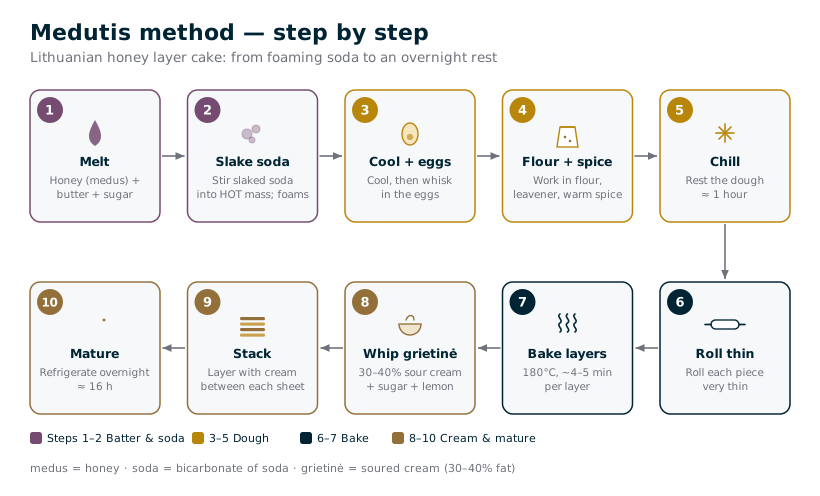 Step-by-step flow diagram of medutis honey cake from melting honey and adding foaming soda through baking thin layers and maturing overnight
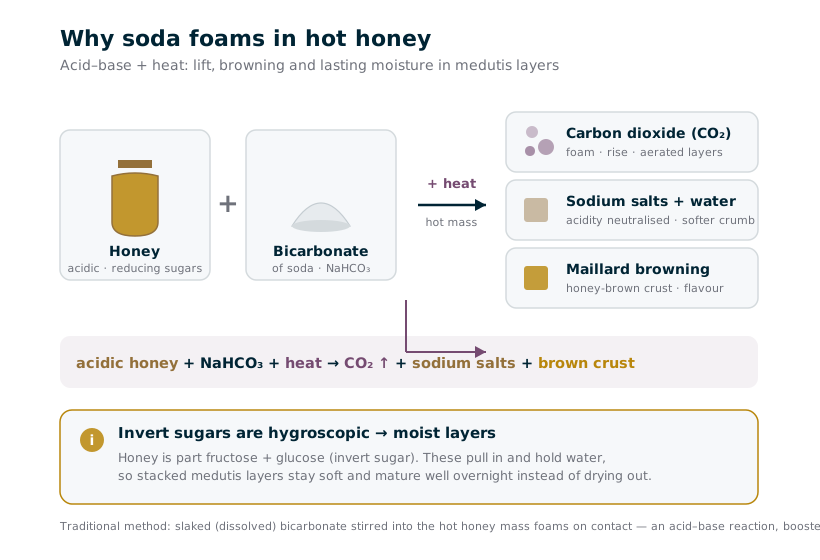 Diagram of the soda-honey reaction: acidic honey plus sodium bicarbonate and heat producing carbon dioxide foam, browning and moisture retention
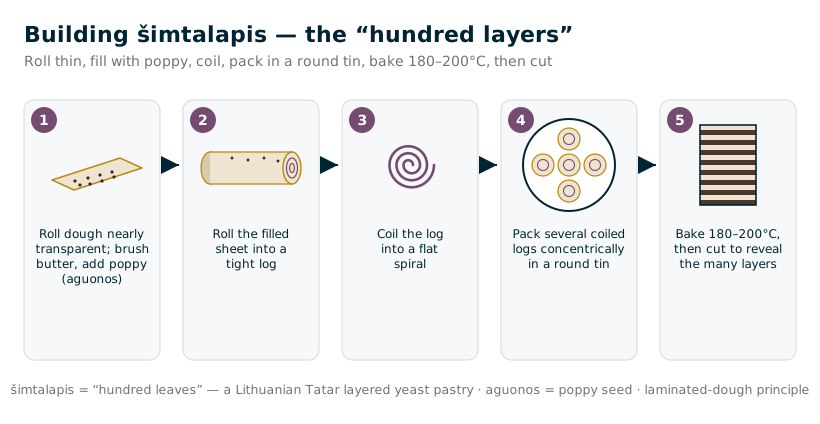 Diagram showing šimtalapis built by rolling thin dough, filling with poppy, rolling into logs, coiling into a spiral in a round tin, then cut to show many layers
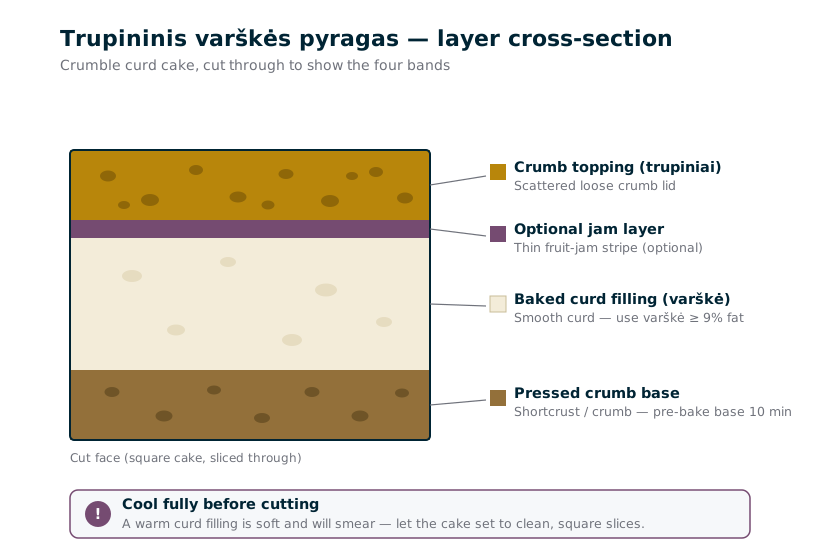 Cross-section diagram of a Lithuanian crumble curd cake showing crumb base, curd filling, optional jam and crumb topping
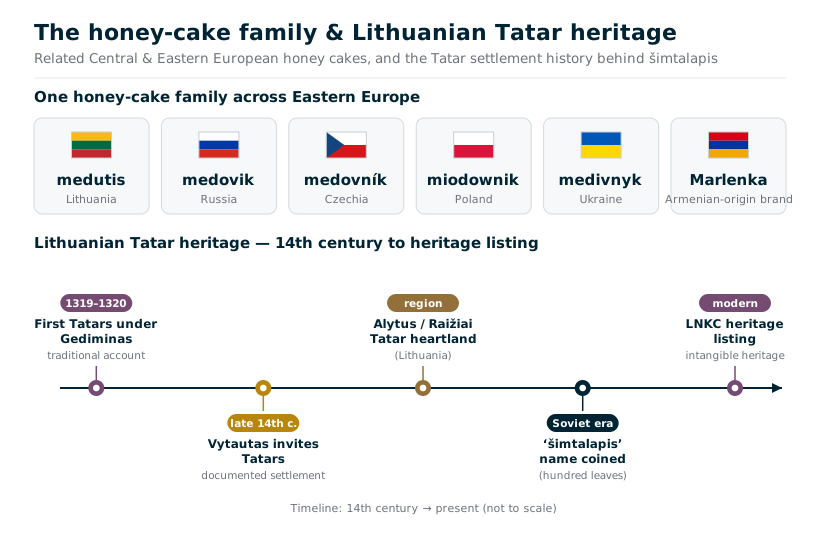 Graphic pairing the honey-cake family across Eastern Europe with a timeline of Lithuanian Tatar settlement from the 14th century to heritage listing
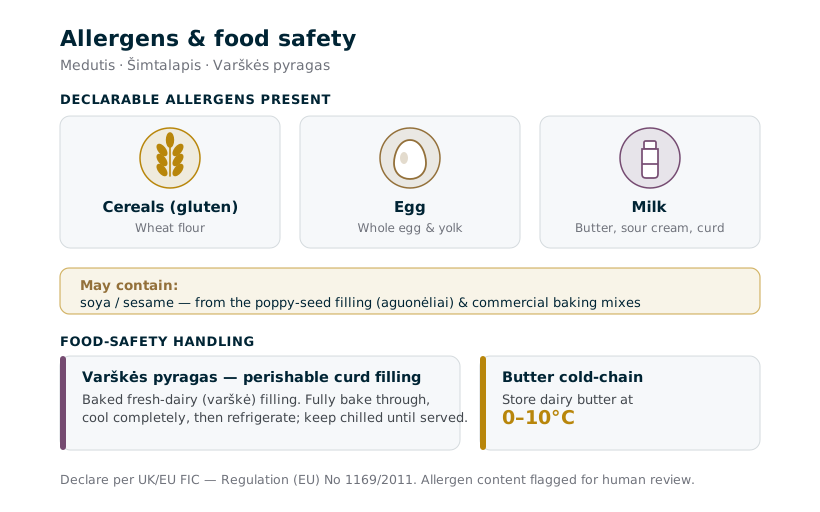 Allergen panel showing gluten, egg and milk with a refrigerate-the-curd-cake food-safety note and a butter cold-chain note
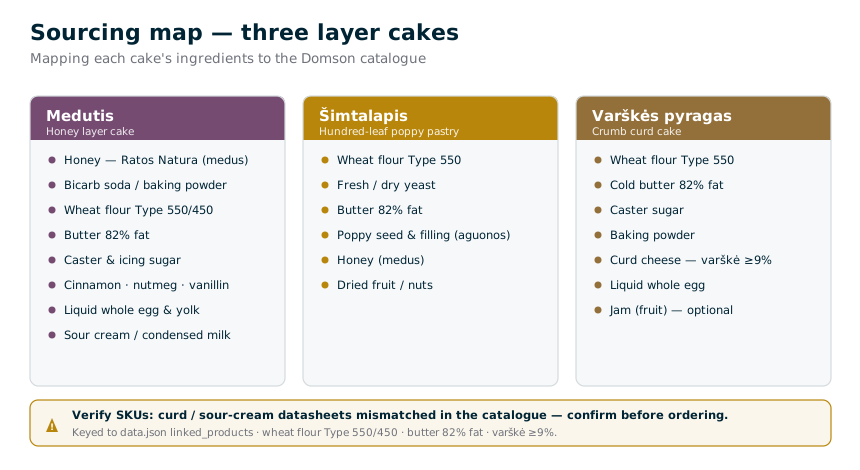 Panel mapping medutis, šimtalapis and varškės pyragas ingredients to Domson catalogue products
Medutis (honey layer cake) — representative classic formula (baker's %)
A cooked honey dough rolled into thin layers and glued with a soured-cream cream, then matured so the cream soaks in. Major allergens: egg, milk, wheat gluten (flag for review). The maturation is not optional — a same-day medutis is hard. Formula language is in A8-bakers-percentage-fundamentals; layer-cake/cream balance is in A8-cake-and-pastry-formulas and A6-pastry-creams-fillings; the soda-in-honey chemistry is in A2-chemical-leaveners-baking-powder. Quantities are representative, not canonical.
| Ingredient | Baker's % | Weight |
|---|---|---|
| Wheat flour (Type 550, or 450 for a softer sponge) | 100% (560–630 g) | |
| Honey (natural) | ~16–40% (100–250 g) | |
| Butter (unsalted, 82%) | ~16–33% (100–200 g) | |
| Sugar (brown / white) | ~32–33% (200 g) | |
| Whole eggs | ~24–36% (2–3 eggs) | |
| Bicarbonate of soda (traditional) OR baking powder | ~0.5–2% (½–1 tsp soda / ~1 tbsp baking powder) | |
| Warm spice (cinnamon, nutmeg, allspice, cloves) | to taste (~1–1.5 tbsp mix) | |
| Salt | pinch | |
| CREAM: sour cream 30–40% (grietinė) | separate layer (~1 L per 600 g flour) | |
| CREAM: sugar + vanilla + lemon | ~200 g sugar + zest/juice to taste | |
| Total | Dough ~200–230% (honey/butter/sugar/egg rich); plus a separate soured-cream cream |
Worked example
DOUGH (≈8 layers, 22 cm): 100 g butter, 100 g honey, 200 g brown sugar, warm-spice mix (cinnamon ~1 tbsp, nutmeg ½ tbsp, allspice ½ tbsp, cloves ¼ tbsp), 3 eggs, 560–630 g flour, 1 tbsp baking powder, pinch salt. Melt butter+honey+sugar to a unified mass; (traditional route: off the heat while hot, stir in slaked bicarbonate of soda — it foams); cool, whisk in eggs, work in flour + leavener + spice to a soft dough; chill ~1 h; roll very thin and bake each layer separately at 180°C ~4–5 min (or ~0.5 cm sheets 8–10 min). CREAM: ~1 L sour cream 30–40% (grietinė) whipped with ~200 g sugar, 1 tbsp vanilla sugar, zest + 2 tbsp juice of 1 lemon (± 250 ml whipped cream 35–36%). ASSEMBLE: stack layers with cream (moisten with brewed black tea if using drier sheets); crumb-coat the sides. MATURE refrigerated overnight (~16 h) up to 2 days so the cream softens the layers.
Yield: One ~8-layer torte, ~22 cm, per ~600 g flour
Šimtalapis (hundred-layer Tatar poppy pastry) — worked formula
A pseudo-laminated poppy pastry: layers built by rolling sheets 'nearly transparent', filling, rolling into logs and coiling into a spiral so the cut cake shows a hundred layers. Major allergens: gluten (wheat), egg, milk; poppy filling may carry soya/sesame traces. The thinner the sheets, the more layers. See A6-laminated-dough-fundamentals for the layering logic and B1-makowiec-and-poppy-seed-fills for poppy processing.
| Ingredient | Baker's % | Weight |
|---|---|---|
| Wheat flour (Type 550) | 100% (500 g) | |
| Water | ~50% (250 ml) | |
| Milk | ~28% (140 ml) | |
| Butter/margarine (in dough) | ~20% (100 g) | |
| Egg | ~10% (1 egg) | |
| Fresh yeast (or 14 g dry) | ~5% (25 g) | |
| Sugar (dough) | ~3% (1 tbsp) | |
| Vinegar 9% | ~1% (1 tsp) | |
| FILLING: butter | ~40–60% (200–300 g) | |
| FILLING: sugar + honey | ~40% sugar (200 g) + 20% honey (100 g) | |
| FILLING: ground poppy seed | to fill (~½ cup +, or reconstituted concentrate) | |
| Total | Dough ~180% of flour; plus a butter-and-poppy filling |
Worked example
DOUGH: 500 g flour, 250 ml warm water, 140 ml milk, 100 g melted butter/margarine, 1 egg, 25 g fresh yeast (or 14 g dry), 1 tbsp sugar, 1 tsp 9% vinegar, pinch salt. Dissolve yeast + sugar in warm milk; combine with flour and the rest; knead ~30 min until elastic; divide into ~5 balls, oil, proof ~1–2 h (or overnight). FILLING: 200–300 g soft butter, 200 g sugar, 100 g honey, ~½ cup poppy seeds (blanched, ground; or reconstituted poppy-filling concentrate), optional 200 g each raisins / prunes / nuts. ASSEMBLE: roll each ball 'nearly transparent', brush with butter, spread filling; roll into a log; coil logs into a spiral and pack concentrically into a round tin. Egg-wash; bake 180–200°C ~45–60 min (foil if browning too fast). Cool on a rack.
Yield: One large coiled round cake in a round tin (~1.5 h total bake)
Varškės pyragas (trupininis curd-cheese crumble cake) — worked formula
The Lithuanian curd cake (cousin of Polish sernik) in its most popular home format: a crumble base and lid around a baked varškė filling. Major allergens: gluten (wheat), egg, milk (butter, varškė). Food-safety watch-point: perishable baked fresh-dairy filling — fully bake, cool and refrigerate. Use a firm ≥9% varškė and cool fully before cutting or the filling leaks. Short-pastry craft is in A8-cake-and-pastry-formulas; curd itself is in B5-varske-in-baking; the Polish parallel is B1-sernik-polish-cheesecake.
| Ingredient | Baker's % | Weight |
|---|---|---|
| Wheat flour (Type 550) | 100% (420 g) | |
| Butter (cold, unsalted) | ~48% (200 g) | |
| Sugar (dough) | ~24% (100 g) | |
| Baking powder | ~1% (1 tsp) | |
| Egg (dough) | ~12% (1 egg) | |
| FILLING: varškė (curd, ≥9% fat) | separate layer (500 g) | |
| FILLING: sugar | 100–120 g | |
| FILLING: eggs | 2 eggs | |
| FILLING: flour (binder) | 1–2 tbsp | |
| Jam (optional layer) | 450–500 g | |
| Total | Crumb dough + a baked curd filling (+ optional jam layer) |
Worked example
CRUMB DOUGH: 420 g flour, 200 g cold butter, 100 g sugar, 1 tsp baking powder, 1 egg, 1 tsp vanilla, pinch salt — rub cold butter into the dry to a breadcrumb texture (chill 30–60 min). FILLING: 500 g varškė (9% fat) blended smooth with 100–120 g sugar, 2 eggs, 1–2 tbsp flour, 1 tsp vanilla (± raisins). ASSEMBLE: press ~2/3 of the crumb onto the base, pre-bake ~10 min at 170°C; spread the curd; optional 450–500 g jam; scatter the remaining crumb as a lid; bake ~45–50 min at 170–180°C. Cool COMPLETELY in the tin before cutting.
Yield: One tray / round cake, cut into squares
None of these is a single baked sponge — each is an assembly of many thin elements, which is why they sit together. Use this to place the format, the dough, the filling and the leavening before choosing a formula. All three carry gluten, egg and milk (flag for review).
| Cake | Family / heritage | Dough / element | Filling | Leavening | Layers & assembly | Occasion |
|---|---|---|---|---|---|---|
| Medutis (medaus tortas) | Pan-CEE honey-cake family (medovik / medovník / miodownik / medivnyk / marlenka) | Cooked, spiced honey dough rolled thin | Soured-cream (grietinė) cream, or smetana / condensed milk / buttercream | Soda slaked into hot honey (foams) OR baking powder | ~5–10 thin layers stacked; matured overnight | Birthdays, jubilees, weddings |
| Šimtalapis | Lithuanian Tatar heritage (LNKC inventory); Alytus / Dzūkija | Lightly enriched yeast dough rolled 'nearly transparent' | Poppy seed (blanched, ground) with sugar, honey, optional raisins/prunes/nuts | Yeast (dough); poppy filling has no leavening | Thin sheets rolled into logs, coiled into a spiral, packed in a round tin → hundred layers | Weddings, birthdays, religious feasts |
| Varškės pyragas (trupininis) | Lithuanian curd-cheese cake; cousin of Polish sernik | Shortcrust / crumb base and lid | Baked varškė (curd) filling with egg, sugar, flour; optional jam | Baking powder in the crumb dough | Base + curd (+ jam) + crumb lid; cool fully before cutting | Everyday-to-festive; a home staple |
Medutis is Lithuania's member of a group of near-identical honey layer cakes across the region. The Imperial-court origin story is a legend (the cake is absent from 19th-century Russian cookbooks and became popular only in the Soviet era). Use this to answer 'is this the same as medovik?' — yes, with local names and cream choices.
| Name | Country | Notes |
|---|---|---|
| Medutis / medaus tortas | Lithuania | Honey-dough layers + grietinė (sour-cream) cream; Soviet-era staple, wedding/birthday cake |
| Medovik | Russia / former USSR | The best-known name; legend of the chef and Empress Elizabeth Alexeievna, unverified |
| Medovník | Czechia | Same honey-layer-and-cream construction |
| Miodownik | Poland | Polish honey layer cake; cross-border cousin of medutis |
| Medivnyk | Ukraine | Ukrainian honey cake; an early printed recipe appears in a 1957 Kyiv cookbook cited by Lithuanian sources |
| Marlenka | Czech-Armenian | Branded/commercial honey layer cake in the same family |
Three very different products sit under 'honey' in a bakery store. The datasheets make the difference plain. For an authentic medutis use natural honey; the mix is a fast honey-FLAVOURED sheet base. Read alongside A2-chemical-leaveners-baking-powder (the mix uses an E450+E500 raising system).
| Product | What it is | Key composition (per datasheet) | Best use |
|---|---|---|---|
| Natural multifloral honey (Ratos Natura) | Real honey, enzyme-bearing acidic syrup | Reducing sugars min 60%, sucrose+melezitose max 5%, water max 20%, diastase min 8, HMF max 4 mg/100 g; ~330 kcal/100 g; no declarable allergens | Authentic medutis dough; honey aroma + browning; the acidity that drives the soda reaction |
| Artificial honey / sztuczny miód (Ratos Natura) | NOT honey — an invert-type flavoured syrup | Glucose, maltose, sucrose, water, caramel, honey flavour; sucrose 15–30%, dry mass 83–87%; ~336 kcal/100 g; no declarable allergens | Cheaper baking substitute where honey aroma/enzymes are not essential; 'honey' is a reserved sales name (Honey Directive 2001/110/EC) — verify the 'artificial honey' designation for UK/EU labelling |
| Honey cake mix — Zeelandia 'Ciasto Miodowe EU' | Honey-FLAVOURED cake base powder | Honey only 0.2%; caramel colour E150a; raising agents E450 (diphosphates) + E500; wheat gluten + milk; ~373 kcal/100 g | Fast sheet-cake layers / dessert bases: 1000 g mix: 500 g oil: 500 g eggs, 180°C 40–50 min in 30×40 cm frames |
The honey layer cake can be raised three ways. The traditional route exploits honey's own acidity. See A2-chemical-leaveners-baking-powder for the underlying chemistry and dosages.
| Route | How it works | Notes |
|---|---|---|
| Slaked soda in hot honey (traditional) | Bicarbonate of soda stirred into the hot honey/butter/sugar mass reacts with honey's acids and heat, foaming strongly; lightens and darkens the dough | Classic medovik technique; soda often slaked with a little vinegar. Bicarbonate E500ii is ≥99.3% NaHCO₃, ammonium-salt-free |
| Baking powder in a honey sponge | A complete acid+base powder raises a spiced honey sponge (meduolinis biskvitas); no reliance on honey acidity | The route used by many Lithuanian home recipes (e.g. ~1 tbsp per ~600 g flour) |
| E450 + E500 (commercial mix) | Diphosphates (E450) + sodium carbonates (E500) give controlled rise in a ready honey-flavoured mix | Zeelandia 'Ciasto Miodowe EU'; consistent sheet layers at volume |
Read on disk this session from supplier datasheets. Curd-cheese and sour-cream SKUs are linked as a shopping list but their attached datasheets are MISMATCHED in the catalogue (they resolve to unrelated flour/oil sheets) so no curd/cream numbers are cited — verify before use.
| Ingredient | Grade / spec | Notes |
|---|---|---|
| Wheat flour Type 550 (Domson / GoodMills) | Ash 0.51–0.58%, protein 11.5–12.5% (wet gluten 28–32%), falling number ≥220 s, moisture max 15% | Medium flour for honey-dough layers, šimtalapis dough and shortcrust; gluten allergen; some batches carry E300/enzymes. 'Type 550' is a national ash-based grade (German/Polish; ≈ French T55), not an EU-harmonised statutory type |
| Wheat flour Type 450 (Komplexmłyn) | Softer, lower-protein grade | For a more tender honey-SPONGE crumb (meduolinis biskvitas) |
| Unsalted butter 82% (Polmlek) | Min 82% fat, 16% water; 744 kcal/100 g; contains milk incl. lactose; store 0–10°C ≤60 days | Creamed for the honey dough; rubbed cold into the crumb |
| Caster sugar (Kent Foods) | Effectively 100% sucrose; 400 kcal/100 g; no declarable allergens; UK sugar beet | Dissolves into the honey mass and the creams |
| Bicarbonate of soda E500ii (Emix/Bowika) | ≥99.3% NaHCO₃, ammonium-salt-free, salt-equiv 68.4 g/100 g, Salmonella absent in 25 g | The traditional honey-cake leavener; slake in hot honey |
| Poppy-seed filling concentrate (AKO) | Ground poppy seeds 40% + sugar + starch + wheat crumbs; ~445 kcal/100 g; wheat-gluten allergen | Reconstitute 1000 g: 100 g crumbs: 600 g water for šimtalapis filling |
| Cake | Fault | Likely cause | Remedy |
|---|---|---|---|
| Medutis | Hard / dry the next day | Too much flour; layers over-baked or dried before spreading; too little cream or too short a rest | Use less flour; spread while supple; add enough cream; mature refrigerated overnight (~16 h) up to 2 days |
| Medutis | Dough won't rise / dense | Soda not activated (add to the HOT honey; slake with vinegar) or leavener stale | Stir soda into the hot honey mass so it foams; use fresh leavener |
| Medutis | Bland / pale honey flavour | Used artificial honey or honey-cake mix (0.2% honey) expecting real honey | Use natural honey for aroma and browning; the mix is honey-FLAVOURED only |
| Medutis | Cream runs / won't hold | Sour cream too low-fat or under-whipped | Use 30–40% grietinė; whip stable; or add whipped cream/stabiliser (see A6-pastry-creams-fillings) |
| Šimtalapis | Not layered / gummy | Sheets rolled too thick; under-baked centre | Roll each sheet 'nearly transparent'; bake fully at 180–200°C ~45–60 min |
| Šimtalapis | Burnt outside, raw inside | Oven too hot for the mass | Cover with foil; lower temperature and lengthen the bake |
| Šimtalapis | Spiral collapses / unrolls | Dough over-proofed or logs too loose | Proof ~1–2 h (avoid over-proofing); coil logs snugly and pack concentrically in the tin |
| Varškės pyragas | Filling leaks / base crumbles | Cut while warm; filling too wet | Cool COMPLETELY in the tin; bind curd with flour + egg; use firm ≥9% varškė |
| Varškės pyragas | Grainy filling | Curd not blended smooth | Blend or pass the varškė before mixing |
| Varškės pyragas | Soggy base | Base under-pre-baked; filling too wet | Pre-bake the base ~10 min at 170°C before filling; drain wet varškė |