Grybukai and festive cookies: shaping, chocolate-dipping and decorating mushroom-shaped biscuits
For a Lithuanian baker, grybukai (mushroom-shaped cookies) are pure nostalgia — the little chocolate-capped, poppy-seeded mushrooms every grandmother baked, and a bestseller at Kalėdos (Christmas), Velykos (Easter) and every family celebration. This dossier gives a UK baker the authentic picture, built from Lithuanian-language recipe, heritage and food-history sources and cross-checked against the platform's supplier specifications. It covers the two authentic families — biskvitiniai grybukai (soft sponge type baked whole in a hinged mushroom iron, the grybukų forma) and meduoliniai grybukai (firm honey-and-spice type, hand-rolled and assembled) — with representative formulas in baker's percentage; the two build methods (one-piece mould-baked vs three-piece hand-assembled cap + stem); and the finishing that makes a grybukas read as a mushroom: dipping the cap (kepurėlė) in chocolate and coating the stem (kotelis) in a white royal-icing glaze (glajus) rolled in poppy seeds (aguonos) to mimic forest soil. It sets grybukai in their culture — the Soviet-era home-baking boom, Lithuania's deep mushroom-gathering (grybavimas) tradition, and the Sudargas grybukai certified a National Heritage Product (Tautinio paveldo produktas) in 2014 — and widens out to festive decorated meduoliai (gingerbread) and their spice blends. Every technique is wired to the Domson catalogue a Lithuanian kitchen in the UK actually orders (couverture and compound coatings, cocoa, honey, cinnamon/ginger/clove, bicarbonate of soda, icing sugar, pasteurised albumen, poppy seeds, piping kit) and cross-linked to the Pillar A craft concepts behind it (A6-chocolate-tempering-crystallisation, A6-chocolate-selection-couverture, A6-chocolate-bloom-defects, A7-icings-and-buttercreams, A7-piping-and-sugar-work, A2-chemical-leaveners-baking-powder, A4-fat-types-and-selection, A8-cake-and-pastry-formulas) and its sister Lithuanian articles (B5-honey-cake-and-layer-cakes, B5-seasonal-festive-baking, B5-fried-pastry-traditions).
Why grybukai matter
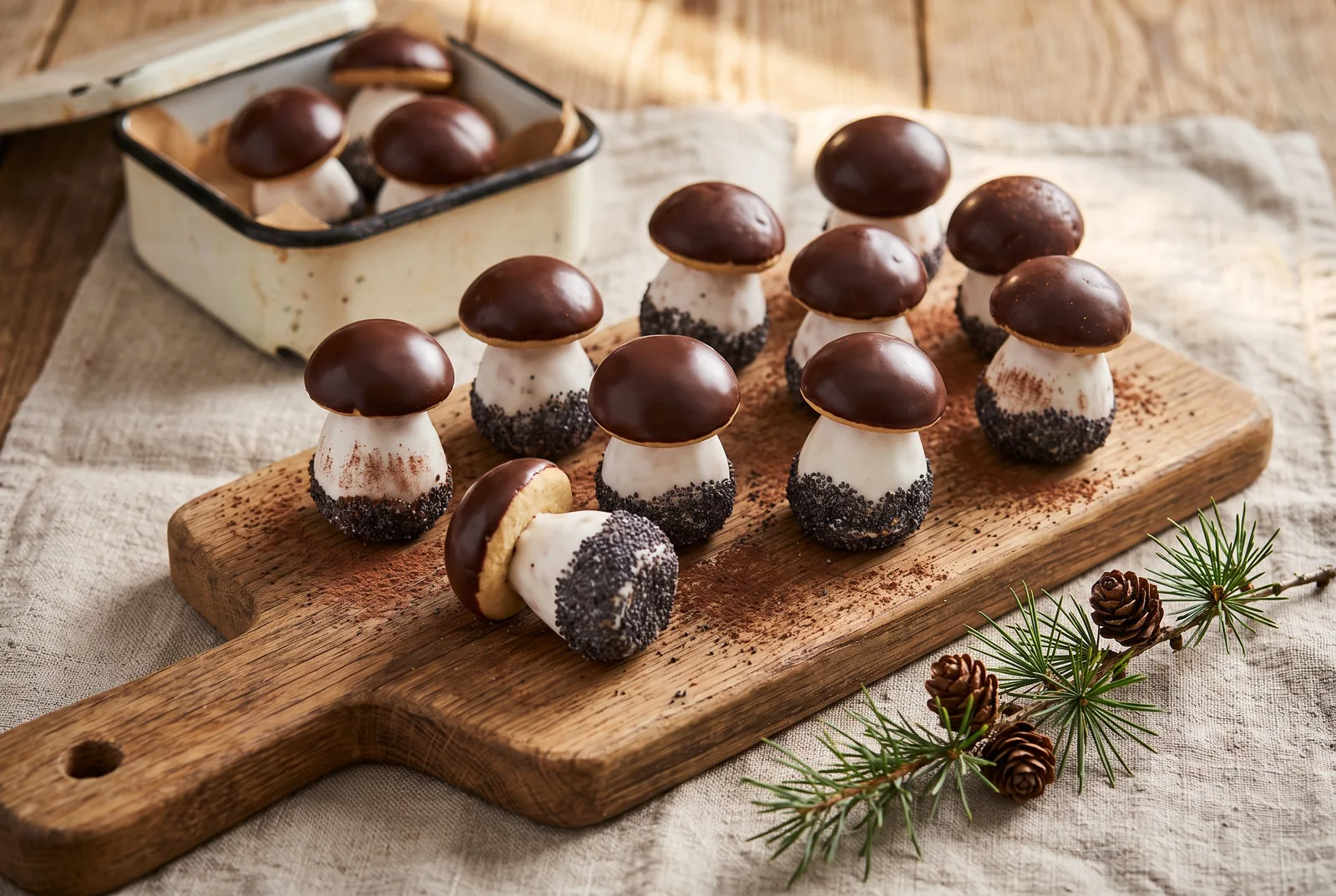
Ask a Lithuanian what their grandmother baked and, sooner or later, someone will say grybukai — little mushroom-shaped cookies with a chocolate-dipped cap and a white, poppy-seed-flecked stem, each one a miniature of the forest mushrooms the whole country goes out to gather every autumn. They are described in the sources as the cookie "where every bite tastes of childhood," and they are a fixture on the festive table at Kalėdos (Christmas), Velykos (Easter) and family celebrations. (Christmas Eve, Kūčios, traditionally centres on its own cookie, kūčiukai — see B5-kuciukai-christmas-biscuits — so treat grybukai as a broad festive line rather than a Kūčios-specific one.)
Two things explain why they carry so much weight. First, timing: grybukai became a household staple during the Soviet period (sovietmetis), when shop confectionery was scarce and a tin of home-made mushrooms was a small act of care — which is exactly why they read as "childhood" and "mother's warmth" today. Second, the shape: Lithuania is a grybavimas (mushroom-gathering) culture to its bones. Food historian Prof. Rimvydas Laužikas explains that on Lithuania's poor soils forest foods — mushrooms, berries, wild plants — were daily staples rather than luxuries, eaten by "the poorest and the wealthiest" alike; the mushroom-gathering of the šiliniai dzūkai (the "heath Dzūkians" of Dzūkija) is even inscribed on Lithuania's intangible cultural heritage registry. A mushroom-shaped cookie is therefore not a novelty — it is an edible wink at the national pastime.
For a working baker in the UK, grybukai are also a smart line: high perceived craft, long shelf life, year-round gift appeal and a natural anchor for a Baltic Christmas range alongside kūčiukai (see B5-kuciukai-christmas-biscuits) and layered honey cakes (see B5-honey-cake-and-layer-cakes).
The heritage benchmark: Sudargas grybukai
The most decorated grybukai come from Sudargas in the Šakiai district, where they were certified a Tautinio paveldo produktas (National Heritage Product) in 2014. The local tradition runs more than a century; because the town sat on the former German border, the recipes are thought to have travelled from manor houses across the frontier, and were passed on at interwar home-economics courses (namų ruošos kursai) at the Sudargas school. The report names Marcelė Timinskaitė (b. 1910) as the district's premier festive cook for some fifty years, and Marija Janušaitienė as a keeper of the recipe who has taught it for thirty; a community "Baravykų klubas" (Boletus Club) was formed to keep the craft alive. It is worth naming this benchmark to customers — "made the Sudargas way" is a genuine mark of authenticity, not marketing.
Get the status right (verify before you print it). Tautinio paveldo produktas is Lithuania's national heritage-product scheme, run by the Ministry of Agriculture — it is not an EU PGI/PDO/TSG geographical indication, so don't imply EU-protected status on packaging. The specific 2014 certification, the century-plus lineage and the named makers all rest on a single (reputable) report; treat the detail as authentic background but human-verify the certification, dates and names before using them in marketing copy.
Two authentic families
Lithuanian bakers make grybukai in two distinct ways, and it pays to decide which you are selling.
- Biskvitiniai grybukai — a soft, cake-like sponge cookie, enriched with sour cream (grietinė), butter and eggs, baked whole (cap and stem in one) in a hinged mushroom iron. Tender, melt-in-the-mouth, faster to produce.
- Meduoliniai grybukai — a firm honey-and-spice (gingerbread) dough, hand-rolled into caps and stems, baked separately and then assembled. Chewier, keeps longer, and is the style behind the Sudargas heritage product. This is the cousin of Lithuanian meduoliai (gingerbread) proper — which the sources tie to the country's old beekeeping tradition, "because most farmers kept bees and had honey."
Both end up looking like a mushroom by the same finishing logic (below); they differ mainly in dough and in how the mushroom is built.
Build method 1 — the mushroom iron (grybukų forma)
The classic tool is the grybukų forma (also keptuvė): a heavy, two-part hinged metal press with mushroom-cap cavities, worked like a small waffle iron. You spoon batter into the cavities, close the halves, and flip the iron over the heat so both sides brown; it releases a one-piece cap-and-stem. Soviet-era irons were cast in evenly heating aluminium and are prized to this day; modern silicone versions exist, but bakers still favour the metal irons (about €20 second-hand) for heat distribution. Bake at about 180°C for roughly 10–15 minutes — only a few minutes per side, as little as 3–4 minutes per batch on a thin or electric iron — until golden. The figure below shows the mould, and the diagram below shows the process.
This is the route in Beata Nicholson's widely followed recipe: a honey-spice batter (flour 400 g; 3 eggs + 2 extra yolks; 300 g moist dark brown sugar; 200 ml 30% sour cream; 200 g butter; 1 tsp baking powder; 2 tsp gingerbread spice — or 1 tsp cinnamon plus ⅓ tsp each cloves, nutmeg and cardamom), whipped light, spooned into an oiled mould and baked 3–4 minutes a batch, then the caps dipped and the stems glazed.
Build method 2 — hand-shaped and assembled
The heritage / meduoliniai route needs no special iron. The dough is mixed to a texture "between firm and pourable," rested, then rolled between the palms into even balls and baked about 12 minutes until browned. Assembly is a second-day job: caps and stems are glued with glaze (glajus), a stem inserted into a hollow pressed in the cap, the stems coated, and everything left to dry ~24 hours. The English diaspora recipes describe the same construction — shape ¾-inch balls for caps, press a ¼-inch dimple with a wooden-spoon handle, dip the stem end in icing and push it into the cap, then dry cap-side down.
Choosing a method. If you want speed and a soft "sponge" eat, buy an iron and make biskvitiniai. If you want the heritage look, a chewier bite and longer shelf life — and you don't want to source an iron — hand-shape meduoliniai. Both are covered by the formula cards below.
Finishing — what turns a biscuit into a mushroom
This is where grybukai are won or lost, and it is the same for both families.
The cap (kepurėlė) — chocolate. Dip the domed cap in melted chocolate. Home recipes melt about 100 g dark chocolate with ~1 tsp (≈5%) neutral oil (rapeseed or sunflower) or a little butter, over a bain-marie, to thin it and add gloss. That works at home, but understand the trade-off: adding oil to real couverture breaks the temper, so the coating will not set with a crisp snap and will bloom over time. For a bakery line, choose one of two disciplined routes (see A6-chocolate-selection-couverture):
- Tempered couverture for snap, gloss and shelf life — e.g. a dark couverture at ~54–72% cocoa solids. The platform's Barima Dark Couverture 72% lists dry cocoa solids min 72%, total fat min 43%, moisture max 1% and carries emulsifier E322 (soya lecithin); it "may contain milk" and is vegetarian but not vegan. Temper it to Form V (see A6-chocolate-tempering-crystallisation) rather than thinning with oil.
- Compound coating for zero-temper convenience — e.g. Puratos Carat Cover Dark U2: melt at 50–55°C, apply at 40–45°C, no tempering required; total fat 37–40% on hydrogenated palm-kernel fat. It contains milk (whey) and is not vegan, and "fat bloom may appear during storage" without affecting function.
Either way, hold the chocolate at a steady temperature: the speckling ("taškiukai") / dull bloom that ruins caps comes from temperature fluctuation of the coating, and from warm storage (see A6-chocolate-bloom-defects). For variety, white or milk caps work too (the catalogue carries white compound coatings and a milk couverture), and a dusting of cocoa powder on the tray reads as forest soil.
The stem (kotelis) — white glaze and poppy seeds. Coat the stem in a white royal-icing glaze (glajus): roughly 300 g icing sugar to 1 egg white plus ~1 tsp lemon juice, beaten thick, glossy and pipeable. While it is still wet, roll or press the stem in poppy seeds (aguonos) — the signature detail that makes the base look like a mushroom just pulled from the earth. Pipe it from a bag with a fine plain tube for neat coverage (see A7-icings-and-buttercreams and A7-piping-and-sugar-work).
FOOD-SAFETY FLAG. The classic glaze is a raw egg-white royal icing. For commercial sale, and for anyone serving children, the elderly or pregnant customers, replace raw white with pasteurised egg white or reconstituted pasteurised albumen powder. The platform's Egg White Powder reconstitutes at 1:9 with water (1 kg ≈ 316 fresh whites), is protein min 80%, and of course still declares egg. A meringue/royal-icing mix is another off-the-shelf route.
SAFETY / REGULATORY FLAG — poppy seeds. The poppy-seed "soil" on the stem is not just decoration: poppy seeds naturally carry opium alkaloids (morphine and codeine). EU contaminants law Regulation (EU) 2023/915 (consolidating the earlier limits added by (EU) 2021/2142, in force since 1 July 2022) sets a maximum of 1.5 mg/kg — expressed as morphine plus 0.2×codeine — for bakery products containing poppy seeds (and 20 mg/kg for poppy seeds sold as such). Grybukai stems rolled in poppy seeds fall squarely in scope. Source low-alkaloid / washed-and-heat-treated poppy seed and confirm compliance; for a GB line this limit is not automatically assimilated, but FSA plant-toxin guidance still applies, so treat it as the working standard.
The doughs, in baker's percentage
Full formula cards are below; here is the shape of them (see A8-cake-and-pastry-formulas and A8-bakers-percentage-fundamentals).
-
Biskvitiniai (sponge) grybukai — on flour 100%: sugar ~57%, 30% sour cream ~57%, butter ~43%, egg ~31%, baking powder ~1.4%, vanilla sugar ~2%, salt trace. A soft, medium-stiff mouldable batter.
-
Meduoliniai (honey-spice) grybukai — on flour 100%: honey ~21%, fat (margarine or butter) ~21%, sugar ~21%, egg ~12%, soda ~1% slaked in sour cream, gingerbread spice ~1%. A firm, rollable dough.
Two chemistry notes for the honey doughs (see A2-chemical-leaveners-baking-powder):
- Bicarbonate of soda (E500ii) is the traditional leaven here. The platform's food-grade bicarbonate is min 99.3% NaHCO₃; note its salt equivalent of 68.42 g/100 g — it is essentially all sodium, so dose sparingly or the crumb tastes soapy/metallic. Slaking the soda in sour cream (an acid) is how the classic recipe fires it before it hits the oven.
- Ammonium bicarbonate ("hartshorn") is the leaven that gives thin, very crisp honey biscuits their shatter — a good option for flat meduoliai (see below), though the grybukai home recipes surveyed here use soda or baking powder. Because ammonia off-gasses on baking, it suits thin, dry cookies, not thick soft ones. See A2-chemical-leaveners-baking-powder for dosing and the smell caveat.
Honey does more than sweeten: it holds moisture, browns fast (Maillard) and softens the crumb over days. The platform Multifloral Honey is water max 20%, reducing sugars min 60%, HMF max 4 mg/100 g, ~330 kcal/100 g. Where cost or crystallisation matters, an artificial (invert) honey is the industry stand-in.
SAFETY FLAG — honey and infants. Honey is not safe for infants under 12 months in any form, including baked goods: Clostridium botulinum spores can survive baking (infant-botulism risk). Grybukai and meduoliai are framed here as a childhood/family treat, so if any line is positioned or marketed for very young children, carry an under-1 advisory.
Widening out: festive decorated meduoliai
Grybukai sit inside a bigger family of festive cookies, and the obvious companion is flat, cut-out, iced meduoliai (gingerbread) for Christmas — the pieces you hang on the tree and pipe with white glaze. A representative dough: honey 150 g, butter 110 g, brown sugar 100 g, flour 375 g, plus cinnamon ~½ tbsp, ground ginger ~½ tbsp, ground cloves ~¼ tbsp, baking powder ~½ tbsp, salt ~¼ tbsp and 1 egg. The spicing is the identity: a traditional Lithuanian blend recorded in the 1991 Lietuviški patiekalai runs roughly 2–3 tsp cinnamon, 2–3 tsp allspice, 1–1½ tsp cloves, 1–1½ tsp grated orange peel and ½ tsp ginger. Decorate with the same white royal-icing glaze piped from a fine tube, and food-colour gels where wanted (see A7-icings-and-buttercreams).
The platform's single spices back this up: ground cinnamon (Indonesia, moisture max 16%; may contain traces of celery, mustard, sulphur dioxide) and ground ginger (100% ginger, India; volatile oil min 1.5%; naturally occurring sulphites up to ~30 ppm; vegan/kosher/halal). For scale, a ready honey-cake mix (e.g. Zeelandia Honey Cake Mix, used 1000 g mix: 500 g oil: 500 g eggs, baked 180°C 40–50 min) gives a consistent honey-spice base — note it declares wheat + milk and may contain rye/barley/oat/egg/soya/sesame.
REGULATORY FLAG — coumarin in cinnamon-heavy meduoliai. The platform's cinnamon is Indonesian, i.e. almost certainly Cassia, which is high in coumarin (hepatotoxic; EFSA TDI 0.1 mg/kg body weight). EU flavourings law Regulation (EC) 1334/2008 Annex III limits coumarin to 15 mg/kg in fine bakery ware (and 50 mg/kg for seasonal/traditional bakery labelled as containing cinnamon). The heavily spiced traditional blend (2–3 tsp cinnamon) can approach or exceed these limits, so for high-cinnamon lines consider Ceylon cinnamon (Cinnamomum verum, low coumarin) and verify by calculation or test. Separately, SO₂/sulphites must be declared when >10 mg/kg in the ready-to-eat product; ginger's ~30 ppm as a raw material dilutes well below that at ~1% dough inclusion, but confirm on the finished cookie.
Neighbouring traditions (don't confuse them). Lithuania's festive-cookie world also includes the fried ribbons and knots covered in B5-fried-pastry-traditions (žagarėliai, spurgos, skruzdėlynas), the Christmas-Eve kūčiukai in B5-kuciukai-christmas-biscuits, and the layered honey cakes and šakotis spit-cake in B5-honey-cake-and-layer-cakes / B5-seasonal-festive-baking. Grybukai are their own thing — a shaped, dipped, assembled cookie, not a fried or layered one.
Faults and fixes
The full table is below; the recurring ones:
- Caps bloom / go dull and speckled → chocolate temperature swung, or storage too warm. Temper properly or use compound coating; hold steady; store cool and dry.
- Chocolate won't set / stays soft → too much oil added to couverture (temper broken). Switch to compound coating, or temper and stop thinning with oil.
- Grybukai turn out hard → dough too stiff / over-baked. Keep the dough at "medium" (mouldable, not dry) and pull from the iron while still pale-gold.
- Glaze slides off the stem / never dries → too thin. Beat in more icing sugar to a thick, glossy, standing paste before dipping; poppy seeds also help it grip.
Allergens
Grybukai and festive meduoliai routinely carry gluten (wheat flour), egg (dough and the raw-egg glaze), milk (butter, and milk/compound chocolate), and soya (lecithin in couverture); they may contain nuts and/or sesame depending on the chocolate and shared production lines; and the stems carry poppy seeds. Add these to the review, which the base list can miss:
- Celery and mustard traces (both EU Annex II allergens) can arrive via the cinnamon ("may contain traces of celery, mustard, sulphur dioxide") — declare if present on your spice datasheet.
- SO₂/sulphites must be declared when >10 mg/kg in the finished product (see the coumarin/sulphite flag above); document the calculation even where you fall below the threshold.
- If you use a ready honey-cake or gingerbread mix for scale, it can add rye, barley and oat (further gluten sources) plus sesame and soya cross-contact that the from-scratch recipe does not.
- The poppy-seed opium-alkaloid limit (see the poppy-seed flag above) is a contaminant/compliance item that belongs in the same pre-labelling review, not just the allergen list.
Confirm every declaration against the specific supplier datasheets and your own line before labelling.
Buy the ingredients for this
Mapped into the Domson catalogue below: dark couverture (Barbara Luijckx Barima, Callebaut, Zeelandia Arabesque) or no-temper compound coatings (Puratos Carat Cover, Zeelandia Satina) for caps; cocoa powder for dusting; bicarbonate of soda, ammonium bicarbonate and baking powder for the doughs; multifloral or invert honey; ground cinnamon, ginger, nutmeg and a mixed-spice blend, plus vanilla/vanillin sugar; icing sugar and pasteurised egg-white / albumen powder (or a royal-icing mix) for the glaze; blue poppy seeds for the stems; 82% butter and cake/plain flour for the dough; a ready honey-cake or gingerbread mix for scale; and piping bags and fine plain tubes for glazing.
Figures
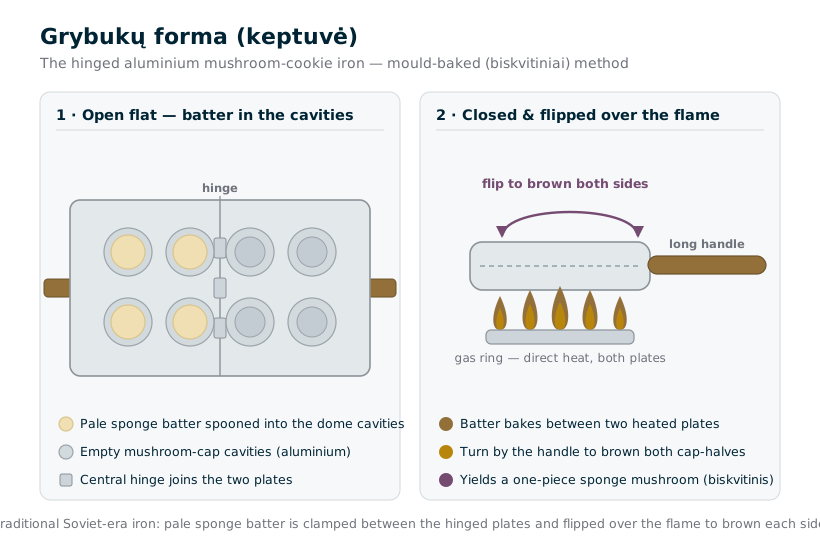 Hinged aluminium Lithuanian mushroom-cookie iron (grybukų forma) open and closed
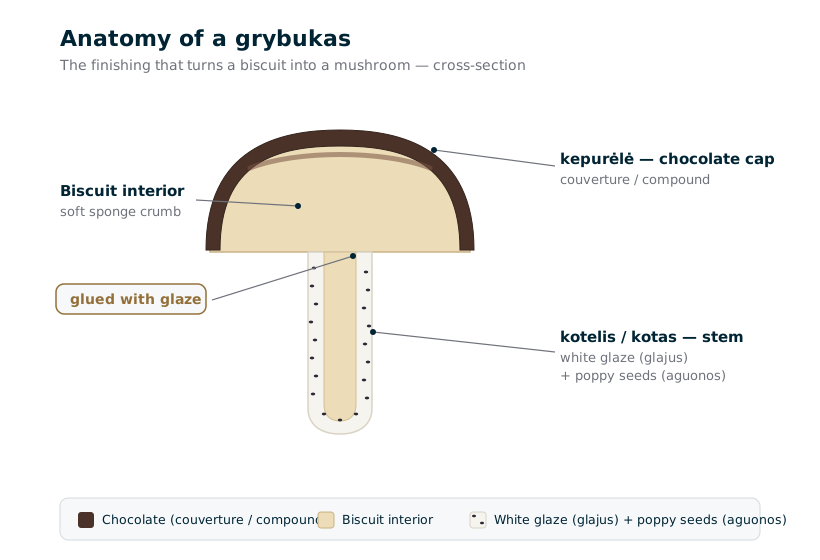 Labelled cutaway diagram of a grybukas mushroom cookie showing chocolate cap and poppy-seed stem
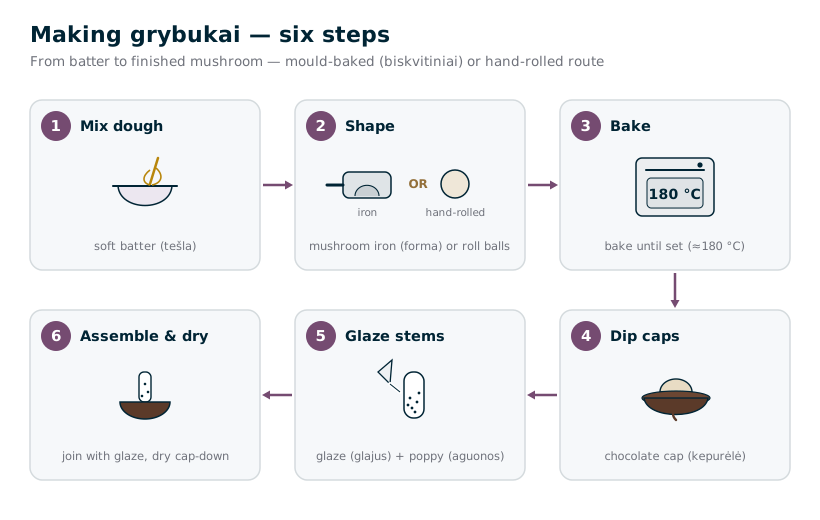 Six-step process diagram for making Lithuanian grybukai mushroom cookies
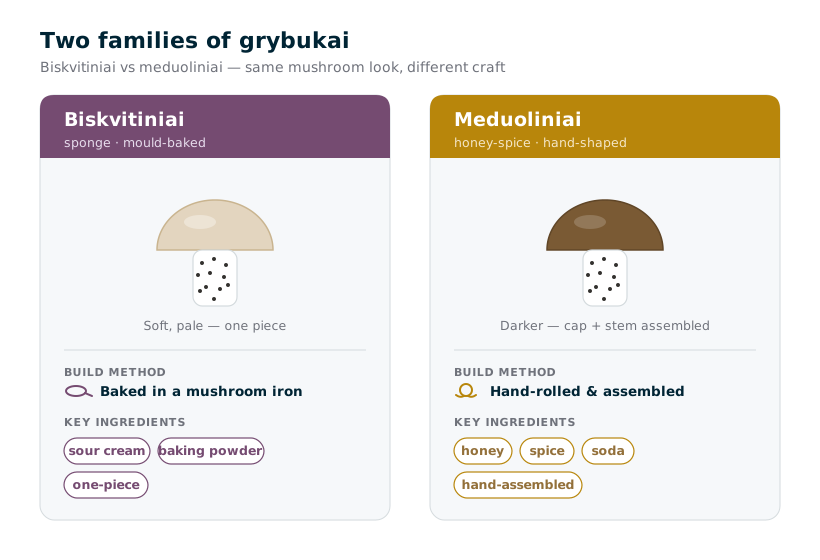 Comparison illustration of biskvitiniai versus meduoliniai grybukai
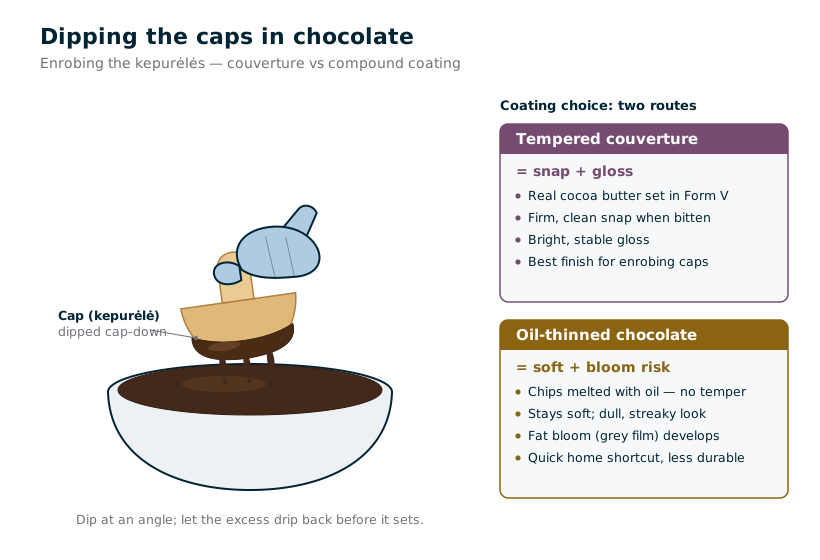 Dipping grybukai caps into melted chocolate coating
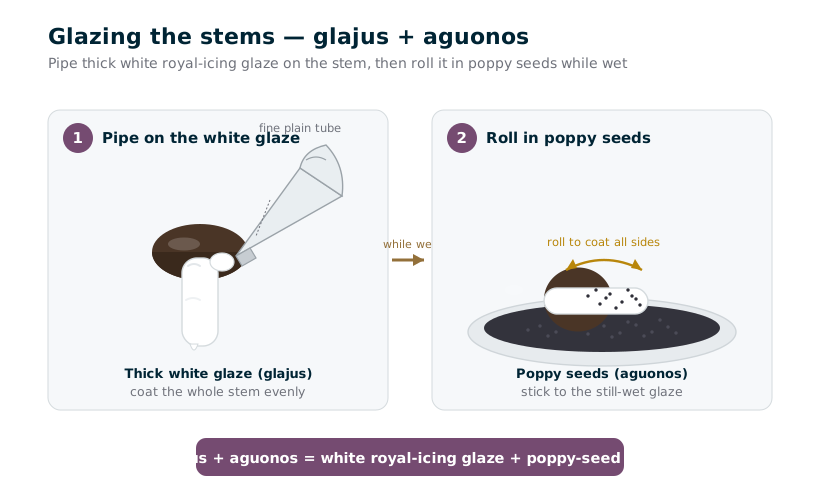 Applying white royal-icing glaze to grybukai stems and coating in poppy seeds
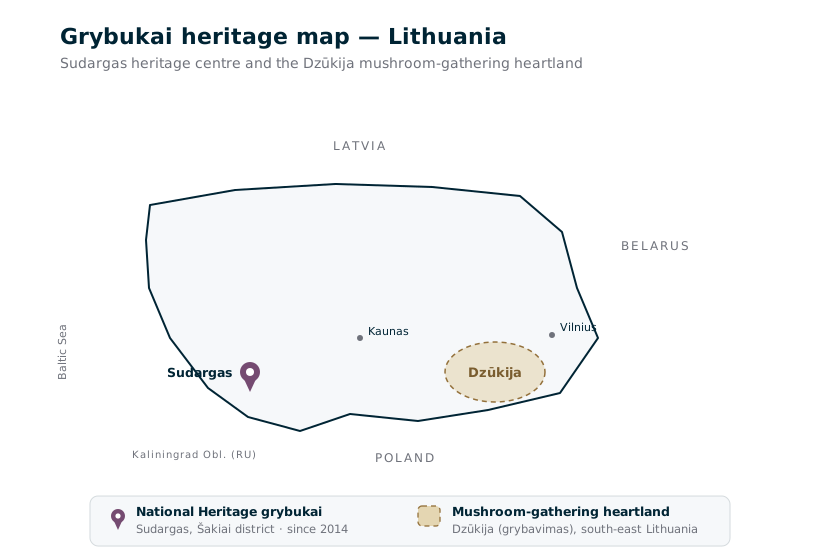 Map of Lithuania marking Sudargas and Dzūkija for the grybukai and mushroom-gathering traditions
Biskvitiniai grybukai (sponge, mould-baked) — representative formula
| Ingredient | Baker's % | Weight |
|---|---|---|
| Wheat flour (cake/plain) | 100 | 350 |
| Sugar | 57 | 200 |
| Sour cream 30% (grietinė) | 57 | 200 |
| Butter, soft | 43 | 150 |
| Eggs (2 large) | 31 | 110 |
| Baking powder | 1.4 | 5 |
| Vanilla sugar | 2.3 | 8 |
| Salt | 0.3 | 1 |
Yield: Home batch ~350 g flour; batter is medium-stiff and mouldable. Bake in an oiled mushroom iron ~180°C, a few min per side, until golden.
Meduoliniai grybukai (honey-spice, hand-shaped) — representative formula
| Ingredient | Baker's % | Weight |
|---|---|---|
| Wheat flour | 100 | 475 |
| Honey | 21 | 100 |
| Margarine or butter | 21 | 100 |
| Sugar | 21 | 100 |
| Egg (1) | 12 | 55 |
| Baking soda (slaked in sour cream) | 1.1 | 5 |
| Gingerbread spice (meduolių prieskoniai) | 1.1 | 5 |
Yield: Firm, rollable dough. Roll into even balls, bake ~180°C ~12 min; assemble caps + stems with glaze on day 2.
Beata Nicholson mould-baked honey grybukai (cake-like)
| Ingredient | Baker's % | Weight |
|---|---|---|
| Wheat flour | 100 | 400 |
| Moist dark brown sugar | 75 | 300 |
| Butter | 50 | 200 |
| Sour cream 30% | 50 | 200 |
| Eggs (3 whole) | 41 | 165 |
| Egg yolks (2 extra) | 9 | 36 |
| Baking powder | 1.3 | 5 |
| Gingerbread spice (or cinnamon + cloves/nutmeg/cardamom) | 1.5 | 6 |
Yield: Whip butter+sugar, add yolks + sour cream, fold in stiff whites, then sifted flour+baking powder+spice. Spoon into oiled iron, bake 3–4 min/batch. Dip caps in chocolate; glaze stems.
White stem glaze (glajus / royal icing)
| Ingredient | Baker's % | Weight |
|---|---|---|
| Icing sugar | 100 | 300 |
| Egg white (1) — pasteurised for sale | 11 | 33 |
| Lemon juice | 1.7 | 5 |
Yield: Beat to a thick, glossy, pipeable paste. Coat stems, then roll in poppy seeds while wet. USE PASTEURISED egg white / albumen for sale (food-safety flag).
Chocolate cap coating
| Ingredient | Baker's % | Weight |
|---|---|---|
| Dark chocolate / couverture / compound | 100 | 100 |
| Neutral oil (home only; breaks temper) | 5 | 5 |
Yield: Home: melt 100 g dark chocolate with ~1 tsp neutral oil over a bain-marie and dip. Bakery: temper couverture to Form V (no oil) OR use compound coating (melt 50–55°C, apply 40–45°C).
Flat cut-out festive meduoliai (gingerbread) — representative formula
| Ingredient | Baker's % | Weight |
|---|---|---|
| Wheat flour | 100 | 375 |
| Honey | 40 | 150 |
| Butter | 29 | 110 |
| Brown sugar | 27 | 100 |
| Egg (1 large) | 15 | 55 |
| Cinnamon | 1.1 | 4 |
| Ground ginger | 0.8 | 3 |
| Ground cloves | 0.4 | 1.5 |
| Baking powder | 1.9 | 7 |
| Salt | 0.8 | 3 |
Yield: Roll, cut, bake; decorate with white royal-icing glaze piped from a fine plain tube. Traditional spice blend in the comparison table.
| Attribute | Biskvitiniai (sponge) | Meduoliniai (honey-spice / gingerbread) |
|---|---|---|
| Dough character | Soft, cake-like sponge; sour cream + butter + eggs | Firm, rollable honey-and-spice (gingerbread) dough |
| Leavening | Baking powder | Baking soda slaked in sour cream (soda nugesinta grietine) |
| Build method | One piece — cap + stem baked together in the mushroom iron (grybukų forma) | Multi-piece — caps and stems hand-rolled, baked, then assembled |
| Equipment | Hinged mushroom iron / keptuvė (or silicone mould) | None special; hands + baking tray |
| Bake | ~180°C, ~10–15 min (3–4 min/batch on a thin electric iron) | ~180°C, ~12 min until browned; assemble on day 2 |
| Eat / shelf | Tender, melt-in-mouth; shorter | Chewier, spiced; keeps longer |
| Heritage note | Popular home style; fast | Style behind the Sudargas National Heritage grybukai |
| Option | Tempering? | Set / snap | Bloom risk | Notes | Catalogue example |
|---|---|---|---|---|---|
| Tempered dark couverture (54–72%) | Yes — to Form V | Crisp snap, high gloss | Low if held/stored right | Real cocoa butter; contains soya lecithin, may contain milk; not vegan | Barima Dark Couverture 72%; Callebaut 811 54.5%; Zeelandia Arabesque 58% |
| Compound (couverture-style) coating | No | Firm, matte-to-glossy | Fat bloom may appear on storage | Palm-kernel fat + cocoa powder; melt 50–55°C, apply 40–45°C; contains milk; not vegan | Puratos Carat Cover Dark U2; Zeelandia Satina (white) |
| Home method: couverture + ~5% oil | No (temper broken) | Soft, no clean snap | High — will bloom | Easy and glossy at home; not for a shelf-stable line | any couverture + rapeseed/sunflower oil |
| Spice | Traditional blend (1991 'Lietuviški patiekalai') | Common modern grybukai blend (Beata) |
|---|---|---|
| Cinnamon | 2–3 tsp | 1 tsp |
| Allspice | 2–3 tsp | — |
| Cloves | 1–1½ tsp | 1/3 tsp |
| Nutmeg | — | 1/3 tsp |
| Cardamom | — | 1/3 tsp |
| Ginger | ½ tsp | — |
| Grated orange peel | 1–1½ tsp | — |
| Fault | Likely cause | Fix |
|---|---|---|
| Chocolate caps bloom / dull, speckled ('taškiukai') | Coating temperature swung; storage too warm | Temper couverture to Form V or use compound coating; hold steady temperature; store cool and dry |
| Chocolate won't set / stays soft | Too much oil added to couverture — temper broken | Use compound coating, or temper and stop thinning with oil |
| Grybukai hard / dry | Dough too stiff or over-baked | Keep dough medium-mouldable (not dry); pull while still pale-gold |
| Glaze runs off stem / never dries | Glaze too thin | Beat in more icing sugar to a thick, standing, glossy paste; poppy seeds help it grip |
| Soapy / metallic aftertaste (honey doughs) | Too much bicarbonate of soda, or not slaked | Reduce soda; slake it in sour cream (acid) before mixing |
| Cap and stem won't stay joined (hand-shaped) | Glaze too thin or not dried; join too small | Use thick glaze as glue; press a proper dimple in the cap; dry cap-side down ~24 h |
| Poppy seeds won't stick to stem | Glaze already skinned/dried | Roll stems in poppy seeds immediately while glaze is wet |
- Dry cocoa solids:
- min 72%
- Total fat:
- min 43%
- Moisture:
- max 1%
- Energy:
- 580 kcal/100g
- Emulsifier:
- E322 soya lecithin
- Allergens:
- soya; may contain milk
- Diet:
- vegetarian, not vegan
- Storage:
- 10–20°C, RH max 70%
- Shelf life:
- 24 months
- Total fat:
- 37–40%
- Fat base:
- fully hydrogenated palm-kernel
- Cocoa powder:
- 18% (fat-reduced)
- Melt temp:
- 50–55°C
- Apply temp:
- 40–45°C
- Temper:
- not required
- Allergens:
- milk (whey)
- Diet:
- not vegan; ovo-lacto/lacto veg + celiac suitable
- Storage:
- 15–20°C, RH max 60%
- Shelf life:
- 12 months
- Note:
- fat bloom may appear on storage without affecting function
- Purity:
- min 99.3% NaHCO3
- Salt equivalent:
- 68.42 g/100g
- Allergens:
- none as ingredient (gluten cross-contact in storage)
- Shelf life:
- 24 months
- Note:
- slake in sour cream (acid) to activate; dose sparingly
- Protein:
- min 80%
- Reconstitution:
- 1:9 with water
- Equivalence:
- 1 kg ≈ 316 fresh egg whites
- Allergens:
- egg; may contain yeast
- Shelf life:
- 24 months
- Carbohydrate:
- 99.2 g/100g
- Anti caking:
- tricalcium phosphate E341(iii)
- SO2:
- max 6 mg/kg
- Allergens:
- none declared
- Certification:
- kosher (pareve), halal
- Storage:
- 10–20°C, RH <55%
- Origin:
- Poland
- Water:
- max 20%
- Reducing sugars:
- min 60%
- Sucrose melezitose:
- max 5%
- HMF:
- max 4 mg/100g
- Energy:
- ~330 kcal/100g
- Carbohydrate:
- 70 g/100g
- Allergens:
- none listed
- Shelf life:
- 36 months
- Infant advisory:
- not for infants under 12 months in any form incl. baked goods — C. botulinum spores can survive baking (infant-botulism risk)
- Cinnamon origin:
- Indonesia
- Cinnamon moisture:
- max 16%
- Cinnamon traces:
- celery, mustard, SO2
- Ginger:
- 100% ginger, India
- Ginger moisture:
- max 12%
- Ginger volatile oil:
- min 1.5%
- Ginger sulphites:
- naturally occurring up to ~30 ppm
- Ginger diet:
- vegan, kosher, halal
- Coumarin flag:
- Indonesian cinnamon is Cassia (high coumarin); EU Reg (EC) 1334/2008 Annex III limits coumarin to 15 mg/kg in fine bakery ware / 50 mg/kg seasonal-traditional labelled as containing cinnamon — consider Ceylon (Cinnamomum verum) for high-cinnamon meduoliai
- Sulphite flag:
- SO2/sulphites must be declared when >10 mg/kg in the finished product; ginger's ~30 ppm dilutes below threshold at ~1% dough inclusion — confirm on the baked cookie
- Use ratio:
- 1000 g mix: 500 g oil: 500 g eggs
- Bake:
- 180°C, 40–50 min
- Raising agents:
- E450, E500
- Allergens:
- wheat, milk; may contain rye/barley/oat/egg/soya/sesame
- Water content:
- <16.5%
- Shelf life:
- 180 days
- Use:
- roll glazed stems while wet
- Regulatory flag:
- poppy seeds carry opium alkaloids; EU Reg (EU) 2023/915 sets 1.5 mg/kg (morphine + 0.2×codeine) for bakery products containing poppy seeds and 20 mg/kg for poppy seeds sold to the consumer (in force since 1 Jul 2022) — source low-alkaloid / washed-and-heat-treated seed and verify GB/FSA compliance
- Allergens:
- declare poppy seed as an ingredient