
Flours
Types, specs, milling and storage
9 articles · 43 diagrams · avg 18 min read
Articles in this section
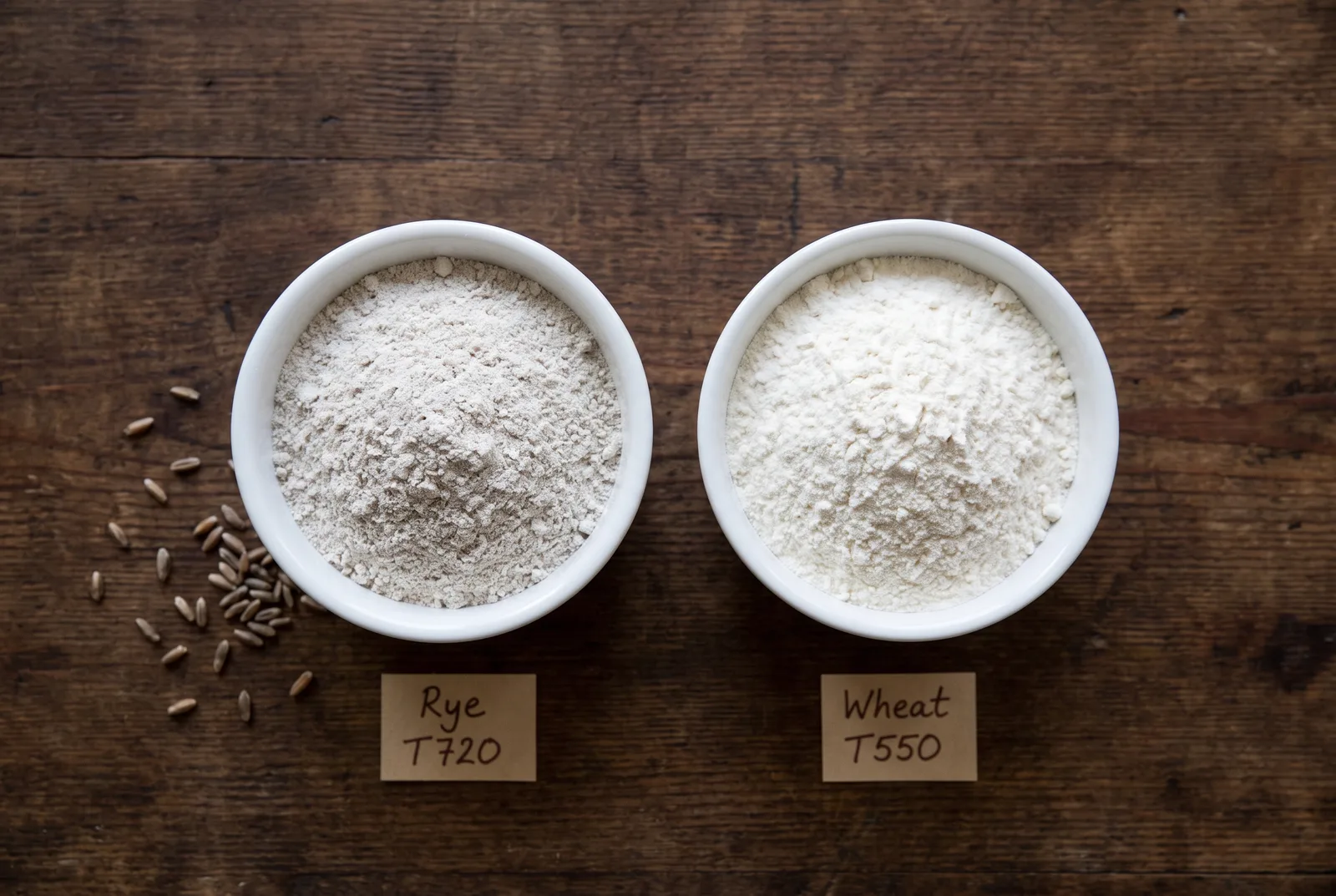
Rye, spelt, emmer and heritage wheats: baking behaviour and blending rules
Rye, spelt, emmer, einkorn and barley behave nothing like modern common wheat in the bakery. Rye has no gluten — only a pentosan gel that demands sourdough acidification. Spelt gluten shatters under overmixing. Emmer and einkorn need a strong-wheat scaffold to hold their gas. This article explains the science behind each grain's behaviour, gives spec-sheet data from the Domson catalogue for every relevant product, and provides practical blending ratios, fermentation targets and fault-diagnosis tables you can use immediately in production.
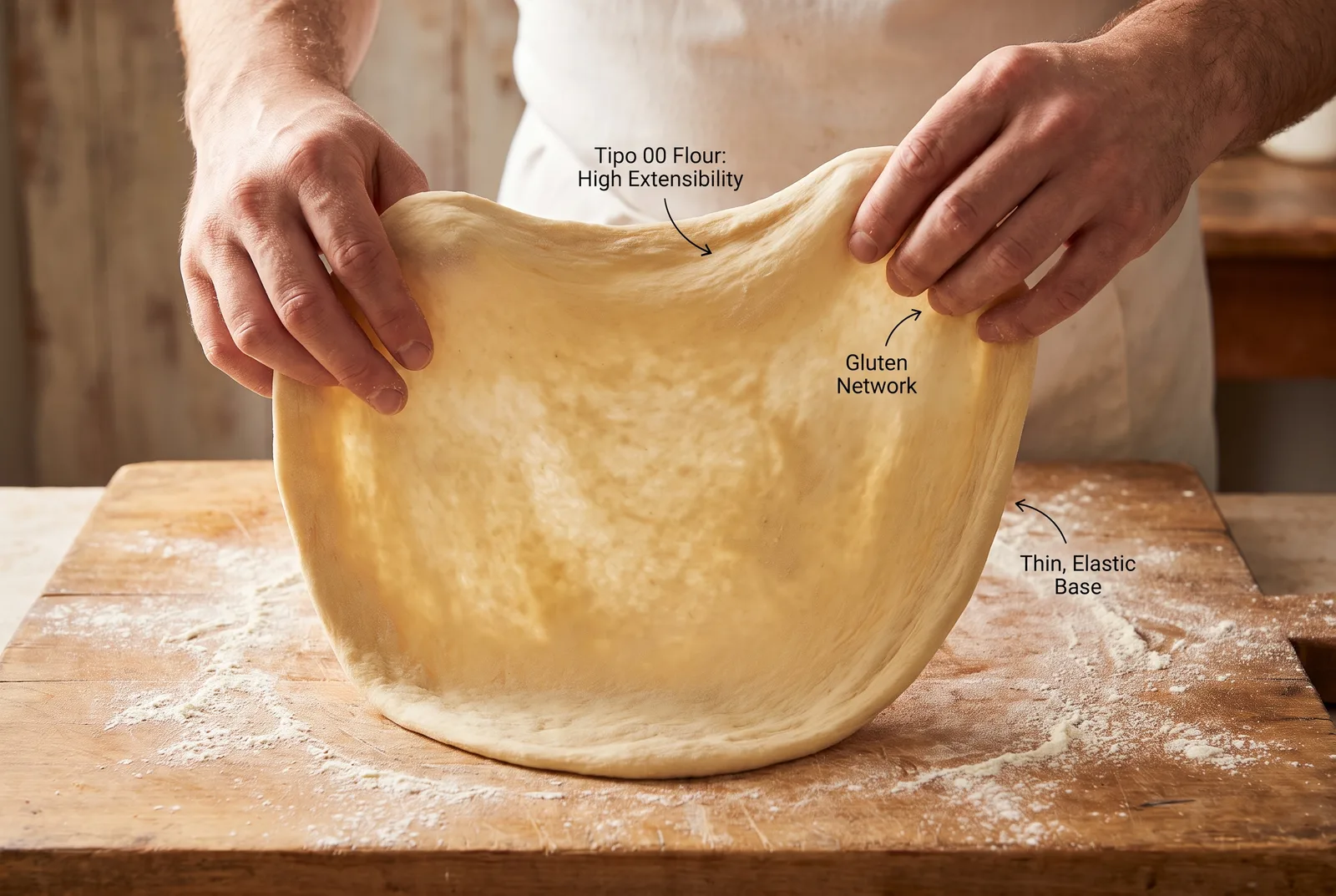
Flour type numbers decoded: Polish T-codes, French T45–T150, German 550, Italian 00
Every flour bag carries a type number — T550, Type 550, tipo 00, T55 — but these labels come from four different national systems that measure the same underlying property (ash content) and encode it in slightly different ways. This article explains the logic behind each system, shows how they align on a common ash scale, and maps the alignment directly to the flour products in the Domson catalogue with confirmed spec-sheet data.
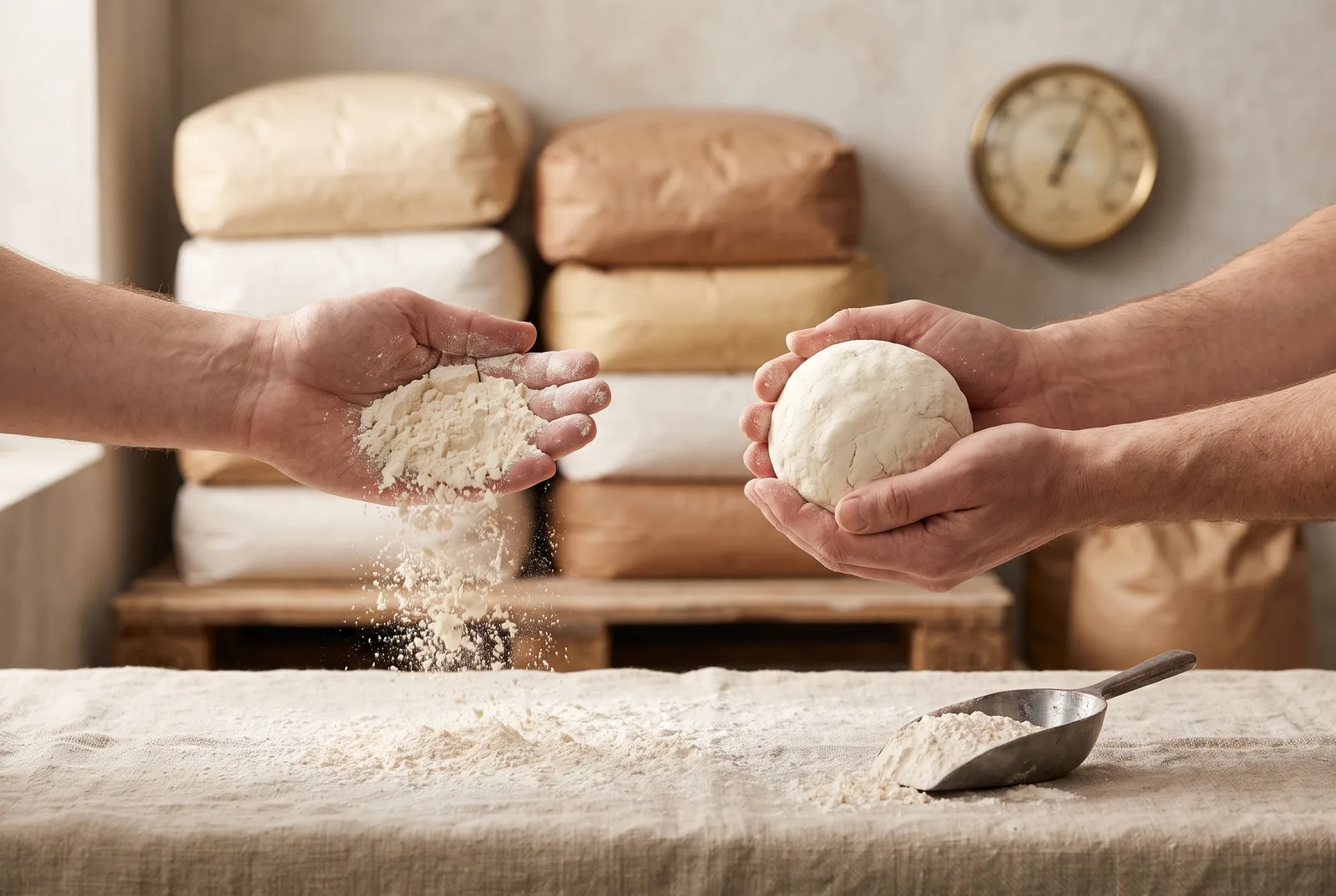
Flour storage, conditioning and shelf life: how temperature, moisture and time degrade quality
The most expensive storage mistake a bakery makes is not the flour that goes mouldy — it is the flour that deteriorates invisibly. Moisture uptake, lipid oxidation and enzyme-driven quality drift all happen inside a sealed sack. This article explains the mechanisms of flour degradation, the specific storage conditions stated on real supplier spec sheets, why oat flour needs a tighter moisture limit than wheat, how freshly milled flour must be conditioned before use, and what to look for in a practical FIFO stock rotation system.
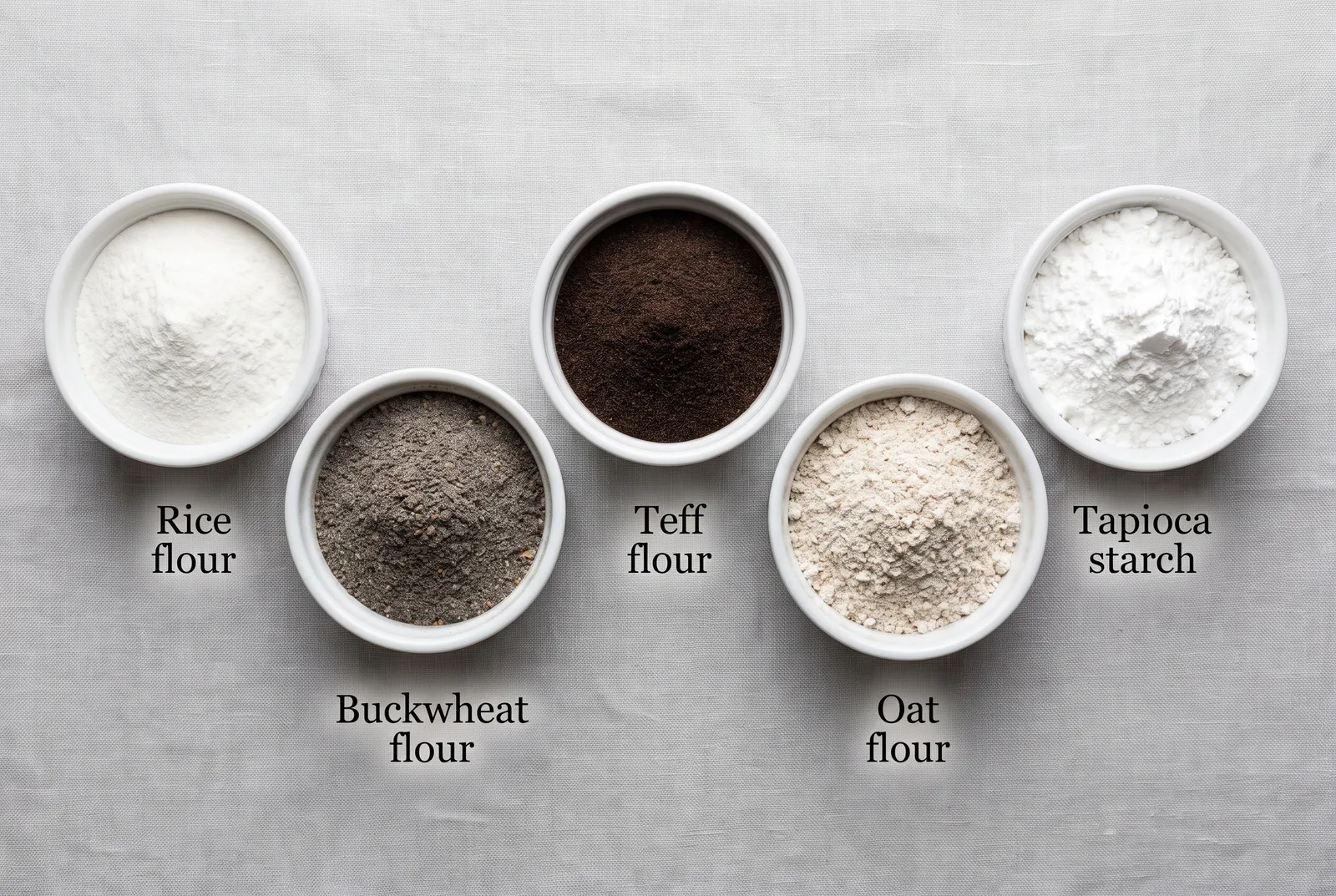
Gluten-free flour systems: rice, oat, buckwheat, teff and blend design principles
Gluten-free baking is not simply wheat-flour baking with one ingredient removed — it is a completely different structural engineering problem. This article explains how each principal GF base flour (rice, oat, buckwheat, teff, tapioca, potato starch) behaves in the oven and why none of them works well in isolation. It then maps the available binders (xanthan gum, psyllium, HPMC) and explains how professional bakers combine these components into practical blends, with real spec-sheet data from the Domson catalogue (Doves Farm Foods, IREKS, Agrol) as the authoritative baseline.

Reading the flour spec sheet: ash content, Hagberg falling number, Zeleny, farinograph and alveograph
Every flour spec sheet contains a set of technical numbers — ash content, falling number, wet gluten, protein, water absorption, Zeleny index — that tell you far more than a name ever can. This article explains what each parameter actually measures, what the numbers mean for your production, and how to cross-read the spec sheets of the real flours in the Domson catalogue.
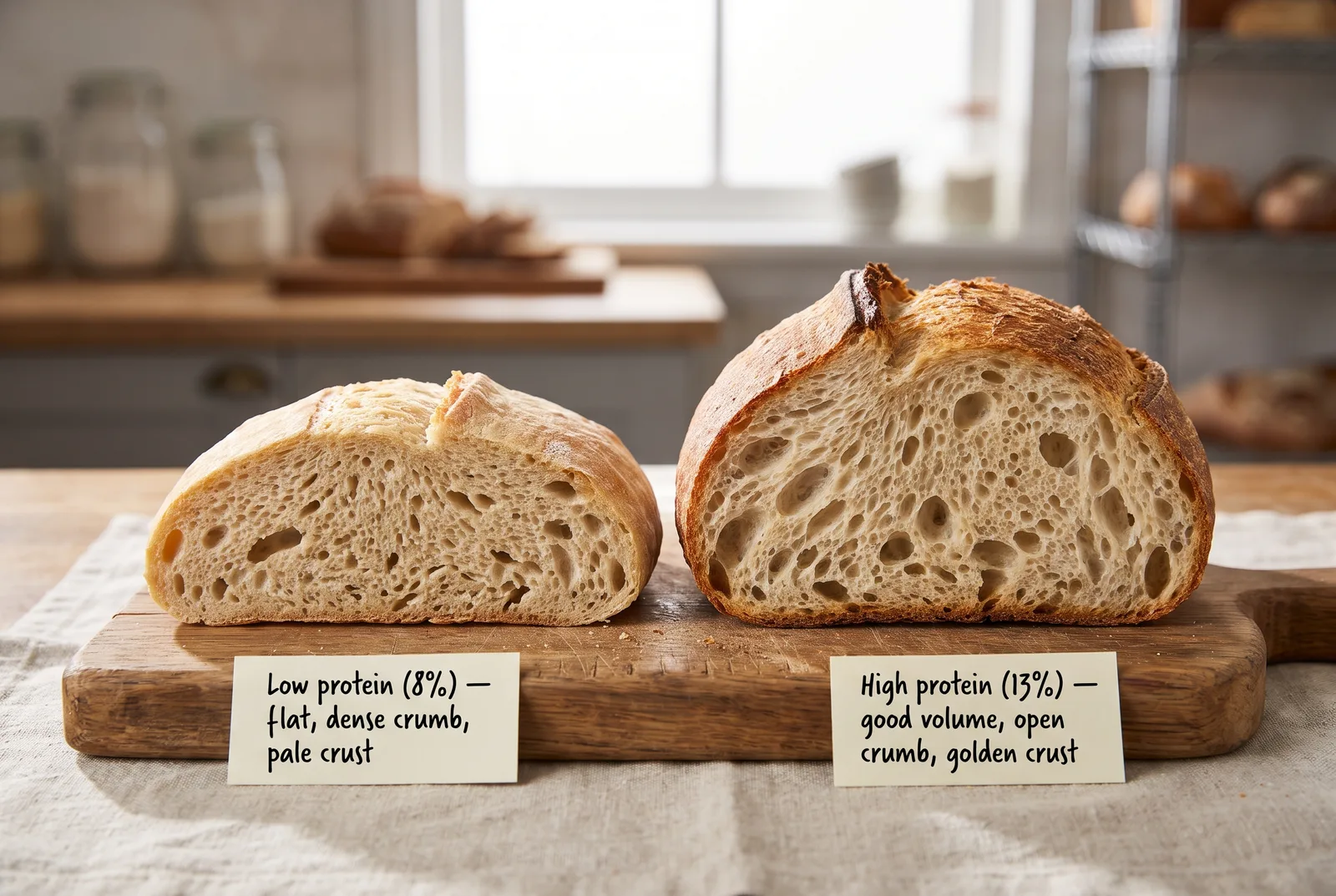
Protein content, gluten quality and flour strength: what the numbers mean for your dough
Protein percentage is the number on every flour label, but it tells only half the story. This article explains how protein quantity, gluten quality (wet gluten, gluten index, gliadin/glutenin balance), and flour strength indicators (water absorption, alveograph W, farinograph stability) interact to determine what a flour will actually do in your bakery — and how to read those numbers across the Domson catalogue, from a pastry flour at 8% protein to a strong white bread flour at 13% and a vital wheat gluten concentrate at 75%.
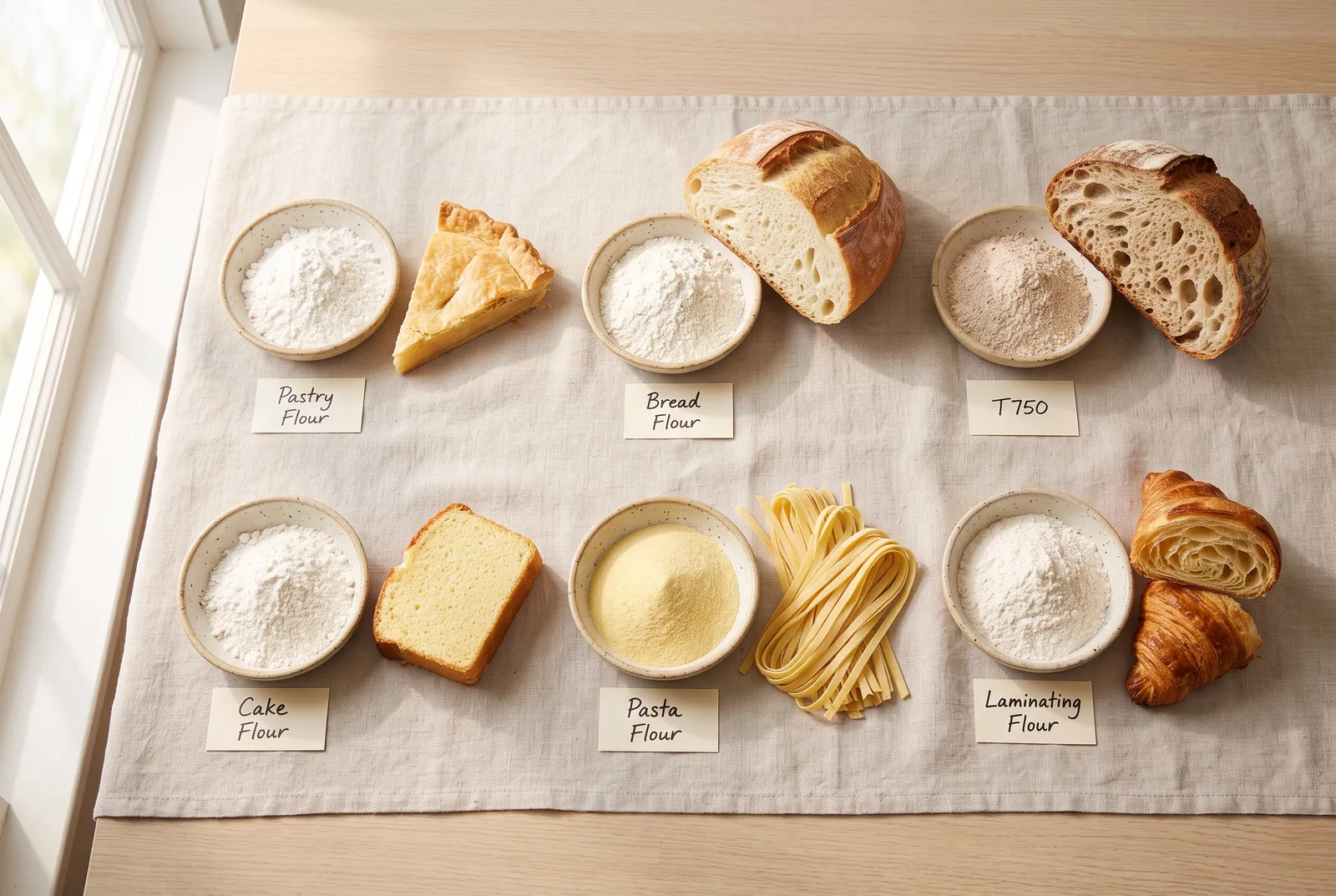
Choosing the right wheat flour: bread, pastry, cake, pizza, pasta and laminated doughs
A practical field guide for professional bakers: how to match the right wheat flour to every application from fine pastry and sponge cake through white bread, sourdough, pizza, pasta and laminated viennoiserie. Built on first-party spec sheets from 19 products in the Domson catalogue across five millers (Wągrowiec Mill, GoodMills Polska, Matthews Cotswold Flour, Whitworth Bros, Allied Mills / ADM Milling) plus the Polish T-type classification system and UK standards. Includes full comparison tables, a fault guide, formula notes, and allergen declarations for every product covered.
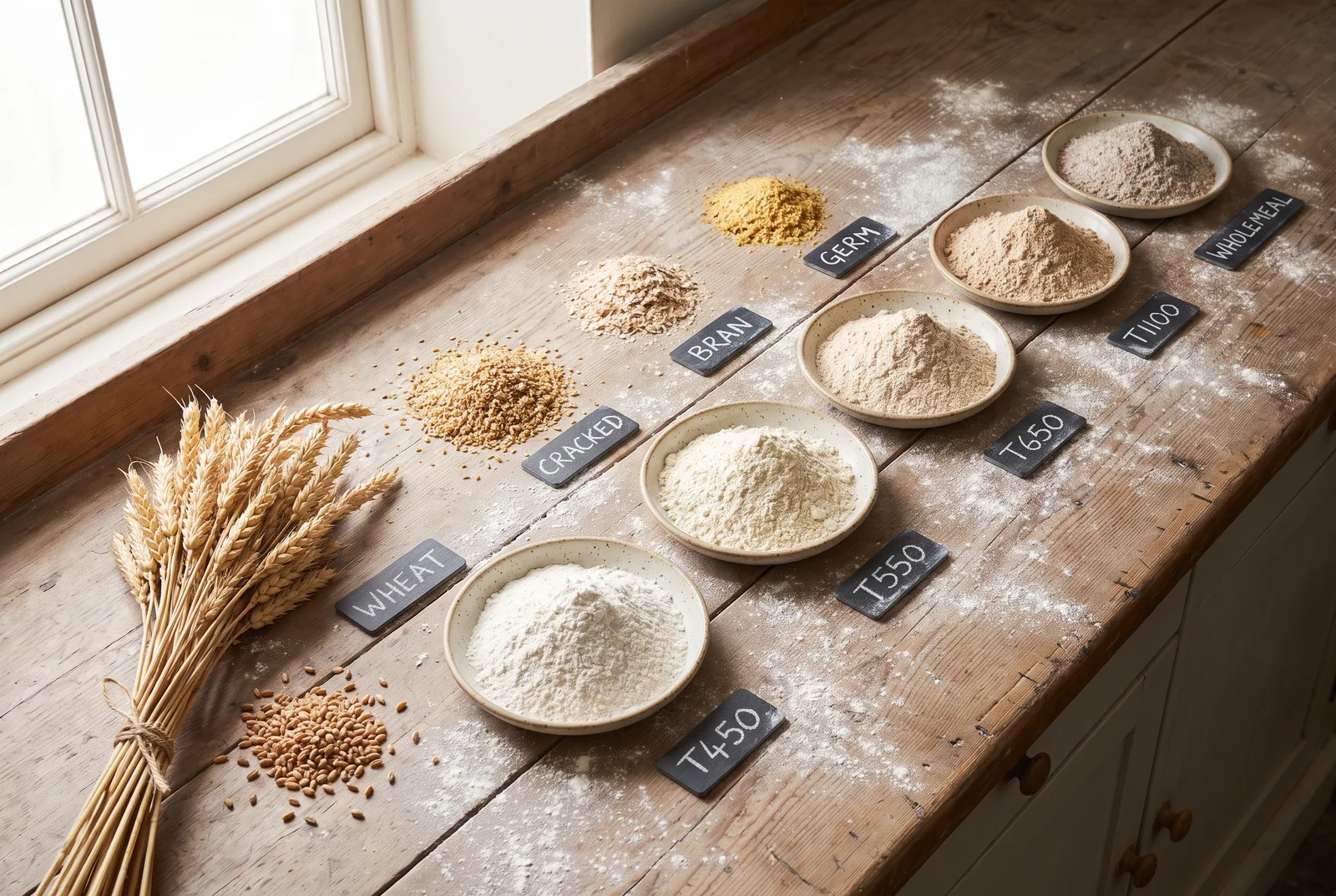
From grain to bag: how wheat is milled and what extraction rate means
Every flour bag begins as a living grain of wheat. This article explains the anatomy of that grain — endosperm, bran and germ — and follows the journey through tempering, break rolls, sifting and reduction rolls to finished flour. You will understand what extraction rate actually measures, why the T-type number on a flour bag encodes its ash content, and how to choose the right type number for each product in your bakery. Spec-sheet data from thirteen Domson catalogue flours is used throughout as a concrete reference.
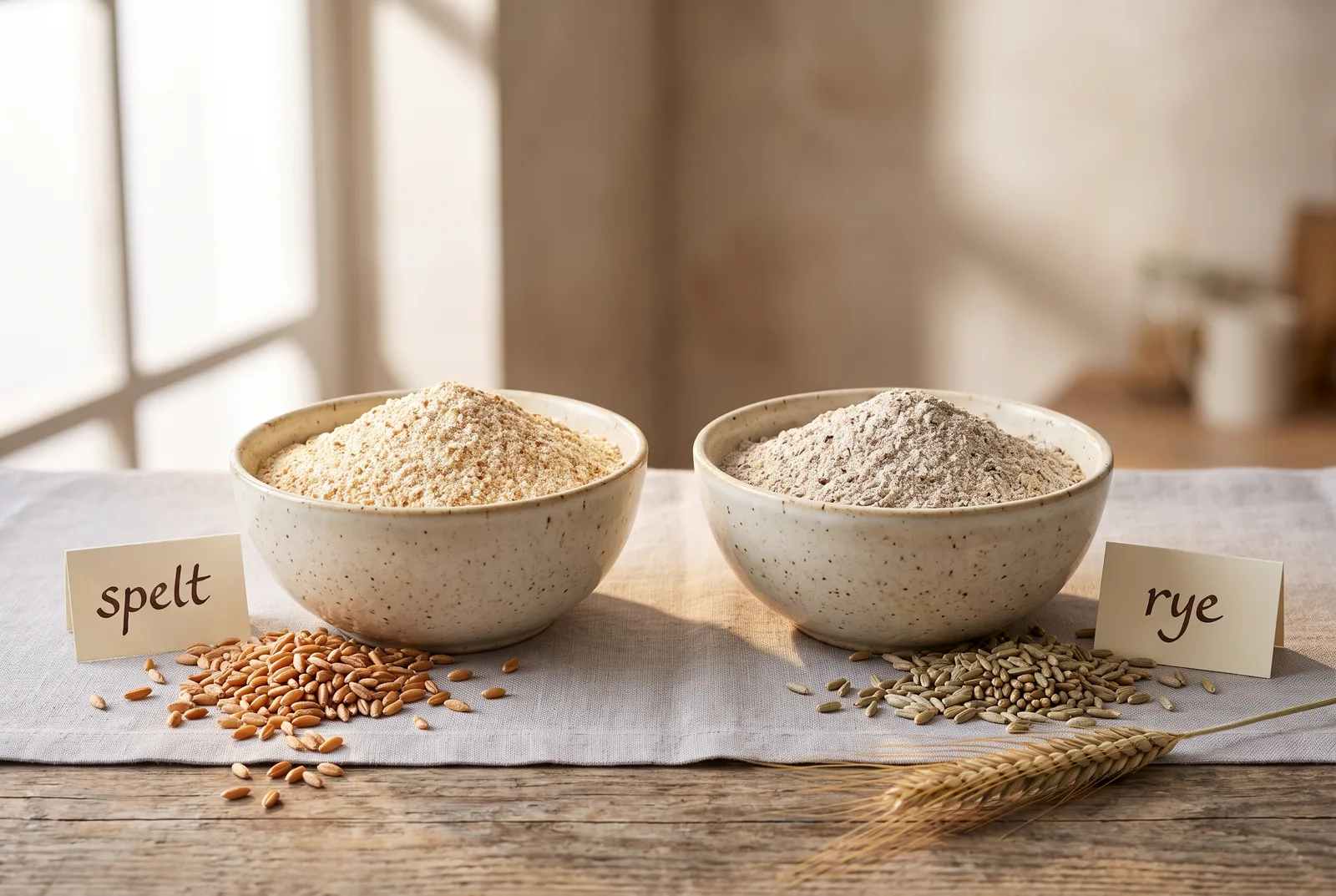
Wholemeal and high-extraction flours: nutrition, flavour and the bran interference problem
Moving up the extraction scale beyond white flour introduces bran, germ oils and dietary fibre that transform a loaf's nutrition and character — but also introduce a set of baking challenges that catch out bakers who treat wholemeal flour like a direct swap for white. This dossier covers the science of bran interference with gluten networks, the full rye flour ladder from T720 to T2000, the nutritional data from real supplier spec sheets, and the practical toolkit for getting high-extraction and wholemeal breads to perform reliably in a professional bakery.