
Turkish wheat flour grades: choosing the right un for ekmek, pide, baklava and börek
A working baker's guide to Turkish flour (un). Turkey buys flour by the job, not just by a type number: alongside the Türk Gıda Kodeksi bread-flour classes (ekmeklik un Tip 550/650/850, graded by ash), millers sell a family of "special-purpose" flours — baklavalık, böreklik, yufkalık, simitlik and kadayıflık un — that span almost the entire protein and gluten-strength spectrum. This article explains what each grade must deliver (protein, yaş gluten/wet gluten, gluten index, sedimentation, extraction), why baklava needs the strongest flour on the bench and kadayıf the weakest, how irmik (durum semolina) fits the sweets, and exactly which Domson UK catalogue flours a Turkish bakery or patisserie can order as substitutes. Every regional and numeric attribution is cited to Turkish-language academic, regulatory and miller sources; supplier facts come from first-party datasheets.
Why Turkey buys flour "by the job"
Turkey is one of the world's highest per-capita wheat consumers, and bread (ekmek) is the backbone of the diet, followed by biscuits, simit and a wide range of bakery products. That volume, and the sheer diversity of what Turkish ovens produce, is why the Turkish flour trade thinks less about a single "type number" and more about the finished product. A miller does not just sell you a Tip 550; they sell you baklavalık un (baklava flour), böreklik un (börek flour), yufkalık un (yufka-sheet flour), simitlik un (simit flour) or kadayıflık un (kadayıf flour). Between them, these grades stretch across almost the entire protein and gluten-strength spectrum — from the powerful, ultra-extensible flour that lets a baklava usta roll a sheet you can read newsprint through, down to the soft, low-protein flour whose batter must flow through a kadayıf nozzle without a strand snapping.
This guide is the practical companion to the rest of the B2-turkish set: the products themselves are covered in Baklava production: 40-layer phyllo, clarified butter, pistachio grades and sugar-syrup control, Börek mastery: yufka types, layering, fillings and commercial production, Yufka, lavaş, bazlama and gözleme: unleavened and sac-baked flatbreads in professional production, Simit and Ramazan pidesi: leavening, molasses dipping, sesame coating and oven technique and the Turkey's bread map: from somun ekmek to Vakfıkebir and regional flatbreads. Here we stay on the flour: what each grade must deliver, how to read a Turkish spec, and which Domson UK-stock flours substitute for each. The universal science behind the numbers lives in the Pillar A flour articles — start with Flour type numbers decoded: Polish T-codes, French T45–T150, German 550, Italian 00, Protein content, gluten quality and flour strength: what the numbers mean for your dough and Reading the flour spec sheet: ash content, Hagberg falling number, Zeleny, farinograph and alveograph, and see From grain to bag: how wheat is milled and what extraction rate means for how milling and extraction work.
The legal layer: Türk Gıda Kodeksi bread-flour classes
For everyday bread there is a legal classification. The Türk Gıda Kodeksi Buğday Unu Tebliği (Turkish Food Codex Wheat Flour Communiqué) grades bread-making flour (ekmeklik un) by ash content on a dry-matter basis, exactly like the Polish "T" numbers and German numbers explained in Flour type numbers decoded: Polish T-codes, French T45–T150, German 550, Italian 00:
- Tip 550 — max ash 0.55% (dm)
- Tip 650 — max ash 0.65% (dm)
- Tip 850 — max ash 0.85% (dm)
The Codex also sets baseline quality limits: maximum acidity 0.07% (dm, as sulphuric acid), and a milling-fineness requirement that the flour pass a 212-micron (No. 70) sieve. (Note: the "70" in "No. 70 sieve" is the sieve's mesh number, not a 70% pass rate — the primary Tebliğ sets a high minimum pass-through, on the order of 98%; confirm the exact figure against the primary text before quoting it, as secondary write-ups sometimes misread the "70" as a percentage.) Above these bread classes sits tam buğday unu (wholemeal flour), milled from the whole grain with bran and germ retained — see Wholemeal and high-extraction flours: nutrition, flavour and the bran interference problem.
The key point for anyone reading a Turkish spec: the ash-based type number tells you the extraction/randıman band and colour, not the strength. A Tip 550 can be weak or strong depending on the wheat. That is why the special-purpose names exist.
Special-purpose flour (özel amaçlı un): defined by the miller, not the law
The Codex lumps baklava, börek, biscuit, cake, pastry, yufka, pizza and hamburger flours together under one heading — özel amaçlı buğday unu — and sets no per-product specification. In practice, the working targets for baklavalık, böreklik, yufkalık, simitlik and kadayıflık un are set by individual mills and refined by experience. The figures below are the miller-and-academic consensus, drawn chiefly from a Turkish review of special-purpose flours and corroborated by miller product data.
Two Turkish spec words you must be comfortable with (both explained in Protein content, gluten quality and flour strength: what the numbers mean for your dough and Reading the flour spec sheet: ash content, Hagberg falling number, Zeleny, farinograph and alveograph):
- Yaş gluten / kuru gluten — wet gluten / dry gluten %: how much gluten the flour holds.
- Gluten indeksi — gluten index %: how strong that gluten is (the fraction retained on a Glutomatic sieve after centrifuging). Turkish sweet-pastry flour is judged as much on gluten index as on protein .
Baklavalık un — the strongest flour on the bench
Baklava is the most demanding job a Turkish flour ever faces: a tray is built to around 40 phyllo layers, roughly nine of them the top sheets (yüzlük hamur) in the academic account — though layer-counting conventions vary between sources, and the official Antep Baklavası geographical-indication recipe accounts the top sheets differently — and a Gaziantep master rolls each yufka to under 0.1 mm. To survive that, the flour must combine high protein with genuinely strong, extensible gluten. Millers prefer wheat with gluten above 31-32%, gluten index above 70% and sedimentation above 35-36 mL, and the ideal flour targets protein ≥13%, wet gluten ~35%, gluten index ~90%, average Zeleny sedimentation ~38 mL, a delayed-sedimentation rise of at least 10 units, and a maximum resistance to extension of 700-800 BU.
It is milled at low extraction (düşük randıman) — the whitest, purest first-pass flour — predominantly from hard wheats: imported hard wheats such as Australian hard and American Dark Northern Spring, plus the south-eastern Anatolian durum variety Zenit. Durum's hardness is prized because it lends the baked pastry its crispness, and a slightly coarser particle size actually helps the finished baklava draw syrup. The heritage confirms it: authentic Antep baklava is made from hard durum wheat grown on the Harran plain, chosen for the high protein and strong gluten network that alone allow a sub-0.1 mm sheet. A commercial example, Söke Özel Amaçlı Baklavalık Un, is specified at max ash 0.55% (dm) and min protein 12% (dm), with wheat flour plus ascorbic acid (E300) as an oxidant to build dough strength. The figure below shows the layer structure; see Baklava production: 40-layer phyllo, clarified butter, pistachio grades and sugar-syrup control for the full method.
Böreklik un — strong, but tamed for handling
Börek flour sits just below baklava flour. The wheat blend uses less imported wheat and brings in high-gluten soft wheats, giving a flour strong enough to hold thin sheets and lift out of boiling water (as in su böreği) without tearing, but not so bull-strong that a hand-stretched sheet fights back with "sıkma" (snap-back). Böreklik un is essentially never sold un-improved: mills add enzymes — hemicellulase, glucose oxidase, lipase and alpha-amylase — plus ascorbic acid, to control browning and handling. Söke Böreklik ve Boyozluk Un is specified at max ash 0.55% (dm), min protein 12.5% (dm). Detail in Börek mastery: yufka types, layering, fillings and commercial production.
Yufkalık un — soft dough, strong gluten
Yufka and lavaş need a dough that is soft but strong: extensible, low in resistance, so it opens thin without drying or tiring the arm. The wheat should carry ≥14.5% protein and ≥34% gluten; the flour itself should be protein 12.5-13.0%, wet gluten 30-35%, sedimentation 35-37 mL. A survey of commercial yufkalık un found averages of ash 0.531% (dm), protein 12.47% (dm), wet gluten 31.8%, dry gluten 11.2%, gluten index 90.9%, falling number 342.7 s and water absorption 61.7%. Crucially, alpha-amylase is avoided in yufka flour because it softens the dough too much. The finished sheet is regulated by TS 10443: diameter 40-70 cm, thickness ≤1.2 mm, moisture ≤43%, salt ≤2.5% (dm), ash (excl. salt) ≤0.65% (dm) . More in Yufka, lavaş, bazlama and gözleme: unleavened and sac-baked flatbreads in professional production.
Simitlik un — the later mill passages
Simit flour is where Turkish milling gets clever about which part of the mill the flour comes from. Where baklava and yufka flour take the whitest, highest-gluten first passages, simitlik un is drawn from later passages that carry more bran, ash and protein — giving colour and flavour to the ring. Target protein is 12.5-13.0% with an average sedimentation of ~30 mL, and the baker wants a soft, easily worked dough that browns fast (helped by the pekmez/grape-molasses dip) without a dark crumb. This first-vs-later-passage logic is the practical face of extraction/randıman — see From grain to bag: how wheat is milled and what extraction rate means. Simit and Ramazan pidesi are covered in Simit and Ramazan pidesi: leavening, molasses dipping, sesame coating and oven technique.
Kadayıflık un — the deliberately weak flour
Kadayıf is the mirror image of baklava. The batter must be a free-flowing slurry that runs through a perforated nozzle onto a hot rotating sac as unbroken fine threads, so the flour must be weak: recommended protein 8-10%, gluten at most ~22%, gluten index around 60%, water absorption ≤54% and farinograph stability ≤2 minutes. It is milled from soft, biscuit-class wheat at high yield, with open roll gaps and large sieves — no finer than 132 micron, versus 80 micron for baklava/börek/yufka flour — to keep starch damage low and the flour granular enough to flow. This is the clearest illustration of the randıman rule: raising extraction lifts ash, protein, fibre and water absorption while lowering gluten quality, dough development and stability (note that added bran raises total protein but depresses sedimentation and gluten strength) — good for kadayıf, wrong for phyllo.
Pide, bread and pidelik un
For Ramazan pidesi and everyday pide, aim for a medium-protein, balanced-gluten flour with good water retention to keep the crumb soft; finely sifted flour gives a more homogeneous dough. A higher-protein bread flour makes the crumb more elastic and open, so a Tip 550-class ekmeklik un or a dedicated pidelik un (e.g. Kaptanlar's Kırmızı Pidelik Un) is the usual choice. See Simit and Ramazan pidesi: leavening, molasses dipping, sesame coating and oven technique and Turkey's bread map: from somun ekmek to Vakfıkebir and regional flatbreads.
İrmik — durum semolina for the sweets
Not everything is a flour. İrmik (semolina) is durum wheat milled coarse and grainy rather than to a fine powder, and it is the base of syrup sweets such as irmik helvası, revani and İzmir şambali; coarse dessert grades run coarser than fine flour — roughly 300-1000 micron depending on the grade. (The upper end of that range rests on a single trade source; the coarse durum semolina stocked below sits finer, mostly 355-425 µm.) It also connects to Tahin helvası and un helvası: sesame paste, soapwort stabilisers and sugar aeration.
Buying it in the UK: Domson catalogue substitutes
A Turkish bakery or patisserie in Britain will rarely find a bag literally labelled "baklavalık un." The practical move is to match on protein, gluten strength and grade. The table below lays this out; the protein spread is shown in. All figures below are first-party supplier datasheet values.
- Baklava / yufka (very strong). Reach for the strongest whites: Carr's Centurion Canadian Very Strong or Allied Mills Coniston Strong White — Coniston runs protein 12.5-14.5%, Hagberg falling number ≥250 s, water absorption 58-61%, ash ~0.8%. These give the extensible, high-protein gluten a sub-0.1 mm sheet needs. (Coniston is not halal- or kosher-certified — see the allergen note.)
- Börek / simit (strong).Carr's Titan Strong Bakers Flour is a natural fit: protein 12.7-13.3%, water absorption 57-62%, with 2.5% added vital wheat gluten and a typical 14.2 g protein/100 g. Also Carr's Topspin, Allied Mills Pennine and Matthews Windrush. To push a merely-strong flour up to baklava strength, add vital wheat gluten (see Protein content, gluten quality and flour strength: what the numbers mean for your dough).
- Everyday bread / pide (Tip 550-class).Domson White Strong Wheat Flour 25 kg is a Polish Type 550 with wet gluten 28-32%, gluten index 75-99, falling number ≥220 s, ash 0.51-0.58% (dm) — a clean ekmeklik-un equivalent — alongside ADM Domson White Strong / Domson PN.
- Pide / pizza (medium, extensible).Carr's Verace Pizza Flour — protein 11.7-12.2%, water absorption 59-61%, starch damage ~30, with fungal alpha-amylase and ascorbic acid — behaves like a good pidelik un for an open, soft crumb; ROMEL Italian Tipo 00 is the alternative.
- Soft pastry (poğaça, tender bakes; the kadayıf-weakness end).Whitworth Golden Jewel Pastry Flour is soft at protein 7.5-9.5% and is both halal- and kosher-certified; Carr's Starlight Pastry is another. (Note: kadayıf's flow behaviour also depends on granulation and low starch damage, not protein alone.)
- İrmik (semolina).Allied Mills Durum Wheat Semolina — 100% durum wheat (may contain 3% common wheat), protein ≥11% (dm), ash ≤0.8% (dm), 40-60% retained on 425 micron — for revani, şambali, irmik helvası and for dusting phyllo while rolling; Eurostar Extra Coarse Semolina for a coarser grind.
- Tam buğday / kepekli.Carr's Bakers Wholemeal, ADM Domson Brown, Doves Farm Organic Strong Wholemeal; and for whole-wheat flatbreads, Carr's Lion Atta Medium Chapatti Flour (brown, protein 9-11.2%, fibre 5.7 g/100 g).
Reading a Turkish flour spec — quick checklist
- Ash / type — Tip 550/650/850 tells you extraction band and colour, not strength.
- Protein + gluten index together — high protein with a weak gluten index will still fail baklava; aim protein ≥13% and gluten index ~90 for phyllo.
- Sedimentation (Zeleny) — a fast strength/quality read; ~38 mL for baklava, ~30 mL for simit.
- Falling number — Hagberg; too low means over-active amylase and slack, sticky sheets (see Reading the flour spec sheet: ash content, Hagberg falling number, Zeleny, farinograph and alveograph).
- Extraction/randıman & granulation — first-pass low-ash flour for phyllo; higher-yield, coarser, large- sieve flour for kadayıf and simit.
- Improvers — böreklik un normally carries enzymes + ascorbic acid; yufka flour avoids alpha-amylase .
Food safety, allergens and certification
Every flour in this article contains gluten (wheat) and is unsuitable for coeliacs; flour is a raw ingredient that must be cooked or baked before eating — never taste raw dough or batter — and supplier datasheets flag cross-contamination risk with other gluten-containing cereals (e.g. barley) and with soya handled in the same supply chain. Halal certification differs by product: Golden Jewel Pastry Flour is halal-certified, whereas Carr's Titan and Allied Mills Coniston are not halal- or kosher-certified at the specs read — a material point for the largely Muslim Turkish trade, so confirm current certification before advising customers. Note too that although the flours themselves contain none, the finished Turkish products built on them introduce further named allergens: simit is coated in sesame, and baklava and many syrup sweets carry tree nuts (pistachio, walnut) — both sesame and tree nuts are declarable allergens under UK/EU food-information law (Reg. 1169/2011), so any customer-facing recipe or product must carry the appropriate allergen declaration. A final process-safety point: the sugar syrup used across these sweets is worked at ~106.5-108°C and is a serious burn hazard — handle with care.
Figures
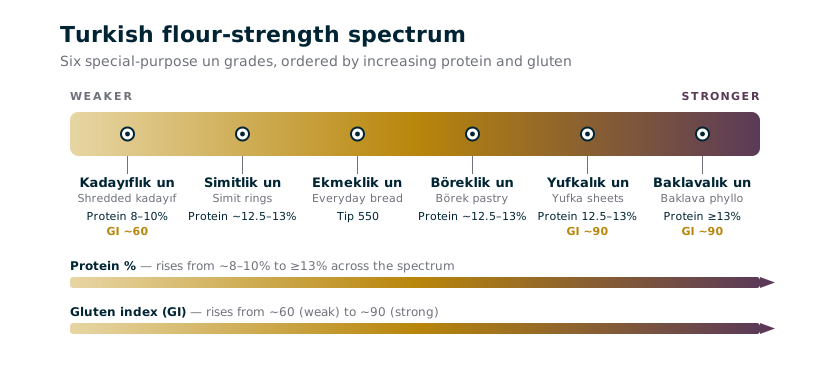 Horizontal spectrum bar placing kadayıflık, simitlik, ekmeklik, böreklik, yufkalık and baklavalık un in order of increasing protein and gluten index.
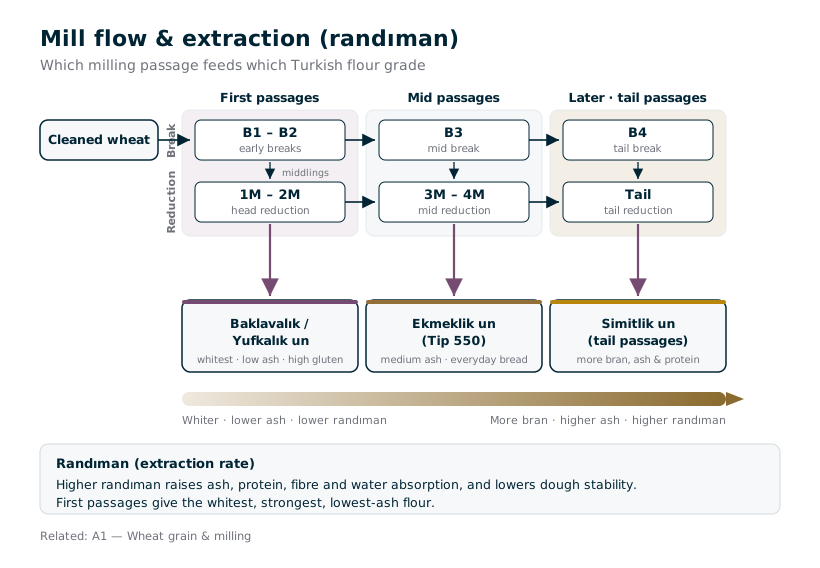 Schematic of a roller mill break and reduction passages, with first (whitest, lowest ash) passages routed to baklava and yufka flour and later passages routed to simit and higher-ash bread flour.
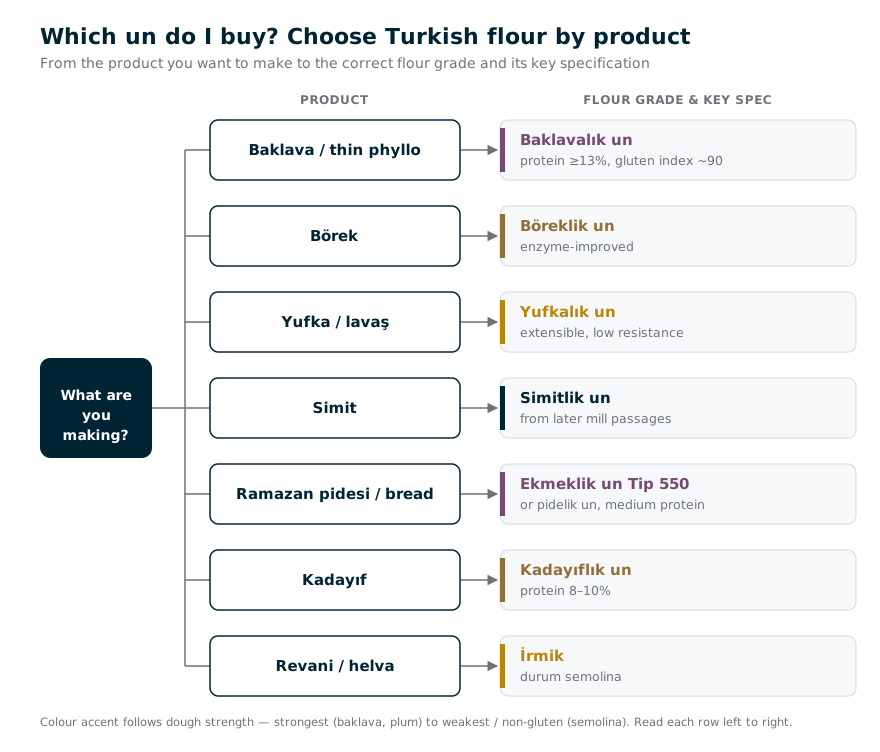 Flowchart mapping the product a baker wants to make to the correct Turkish flour grade and its key specification.
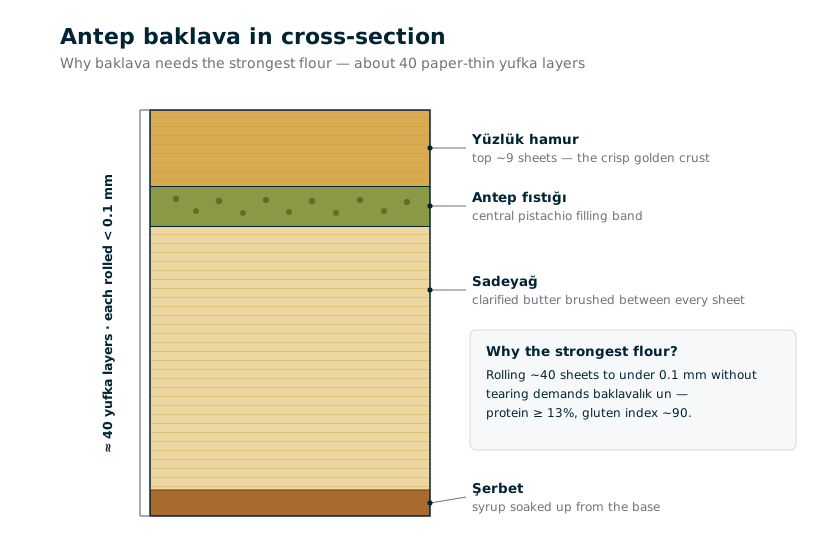 Labelled cross-section of a baklava square showing about 40 stacked yufka layers rolled to under 0.1 mm, roughly nine as top sheets, with clarified butter between layers and a pistachio band.
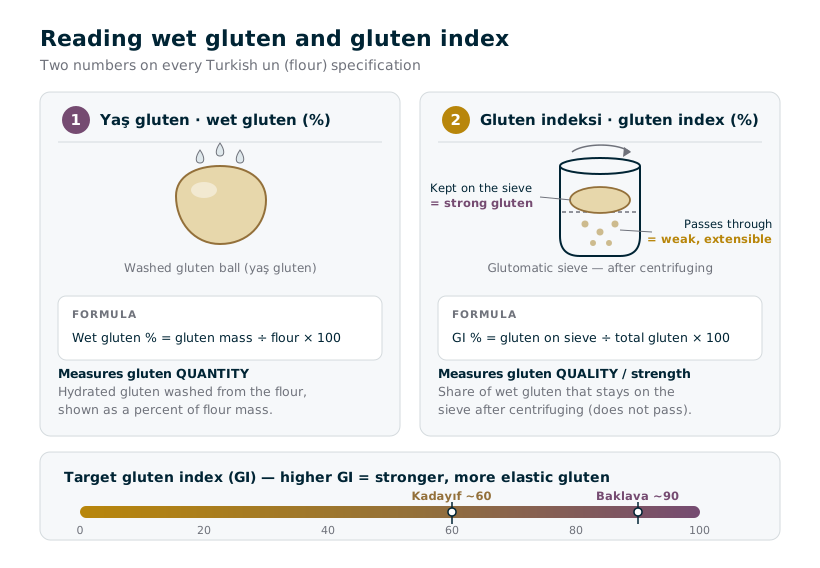 Explainer graphic showing a washed wet-gluten ball and a Glutomatic sieve, with wet gluten percentage and gluten index (retained gluten) defined for reading a Turkish un specification.
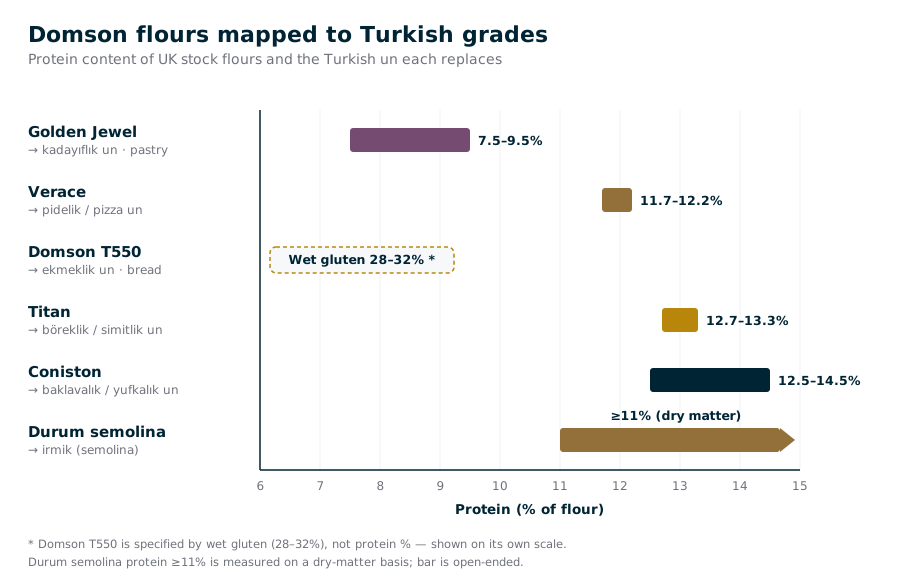 Bar chart comparing the protein content of Domson UK stock flours (Golden Jewel pastry, Verace pizza, Titan strong, Coniston very strong, durum semolina) against the Turkish grade each substitutes for.
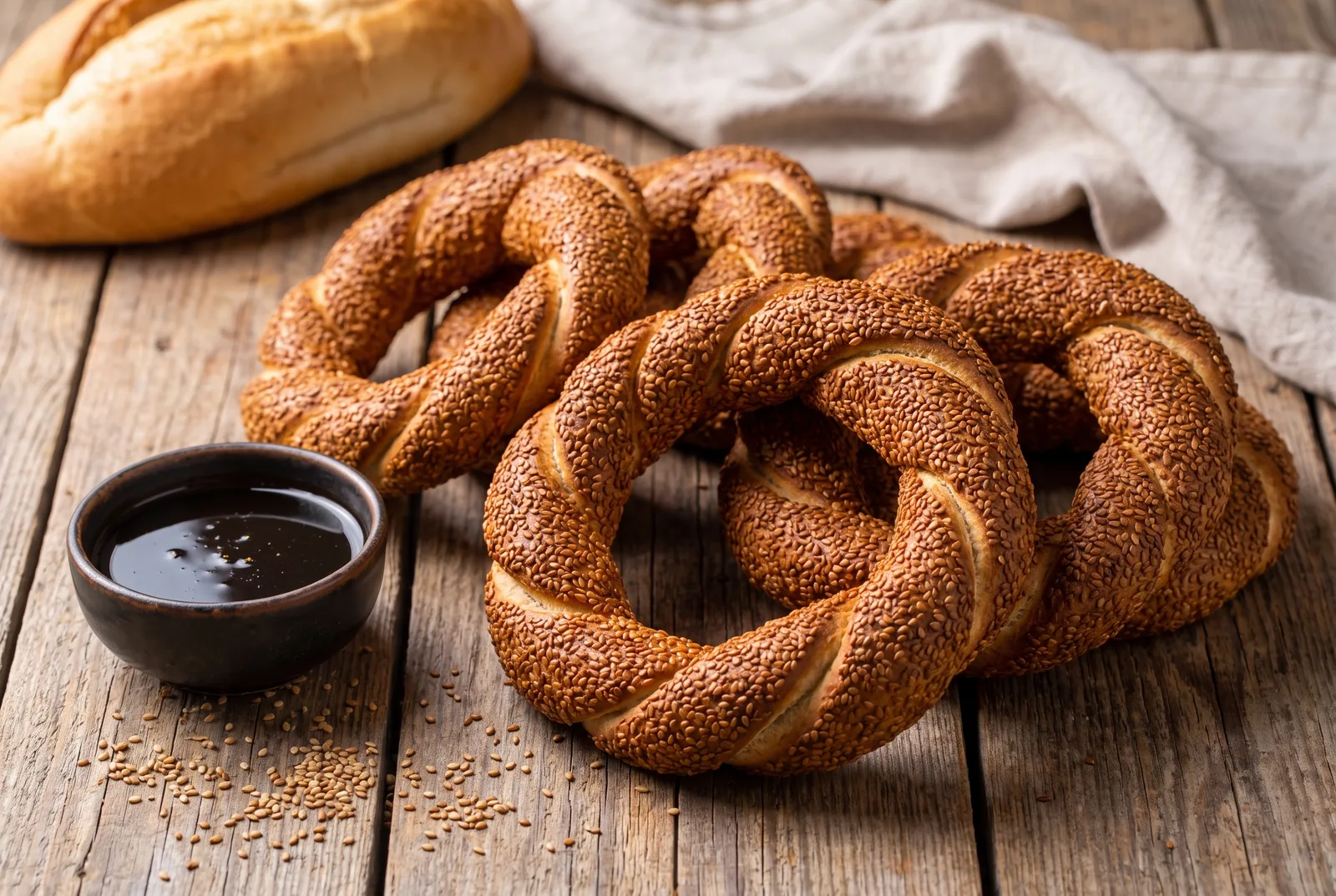 Ring-shaped simit breads with a burnished crust fully coated in toasted sesame seeds.
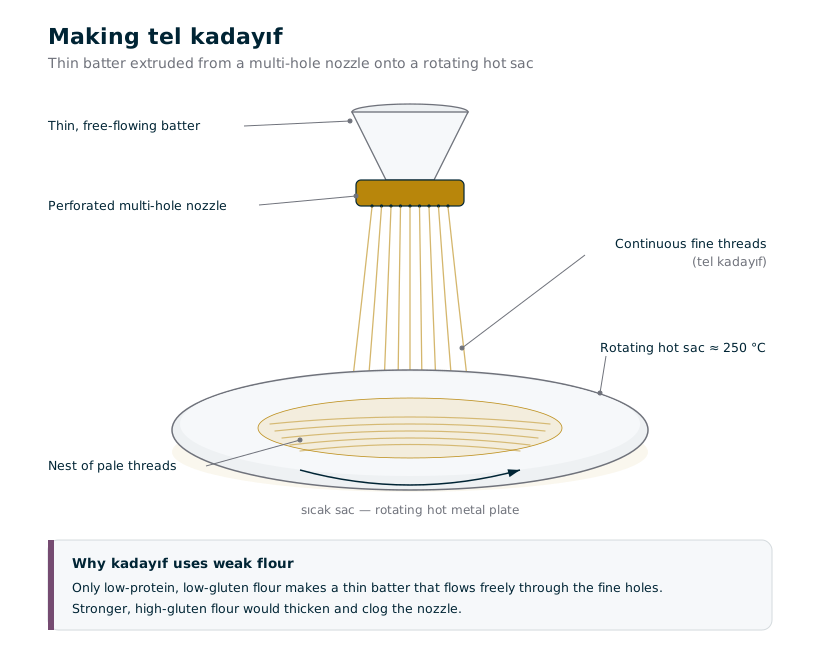 Fine kadayıf strands poured from a perforated nozzle onto a rotating hot metal sac plate, forming a nest of pale threads.
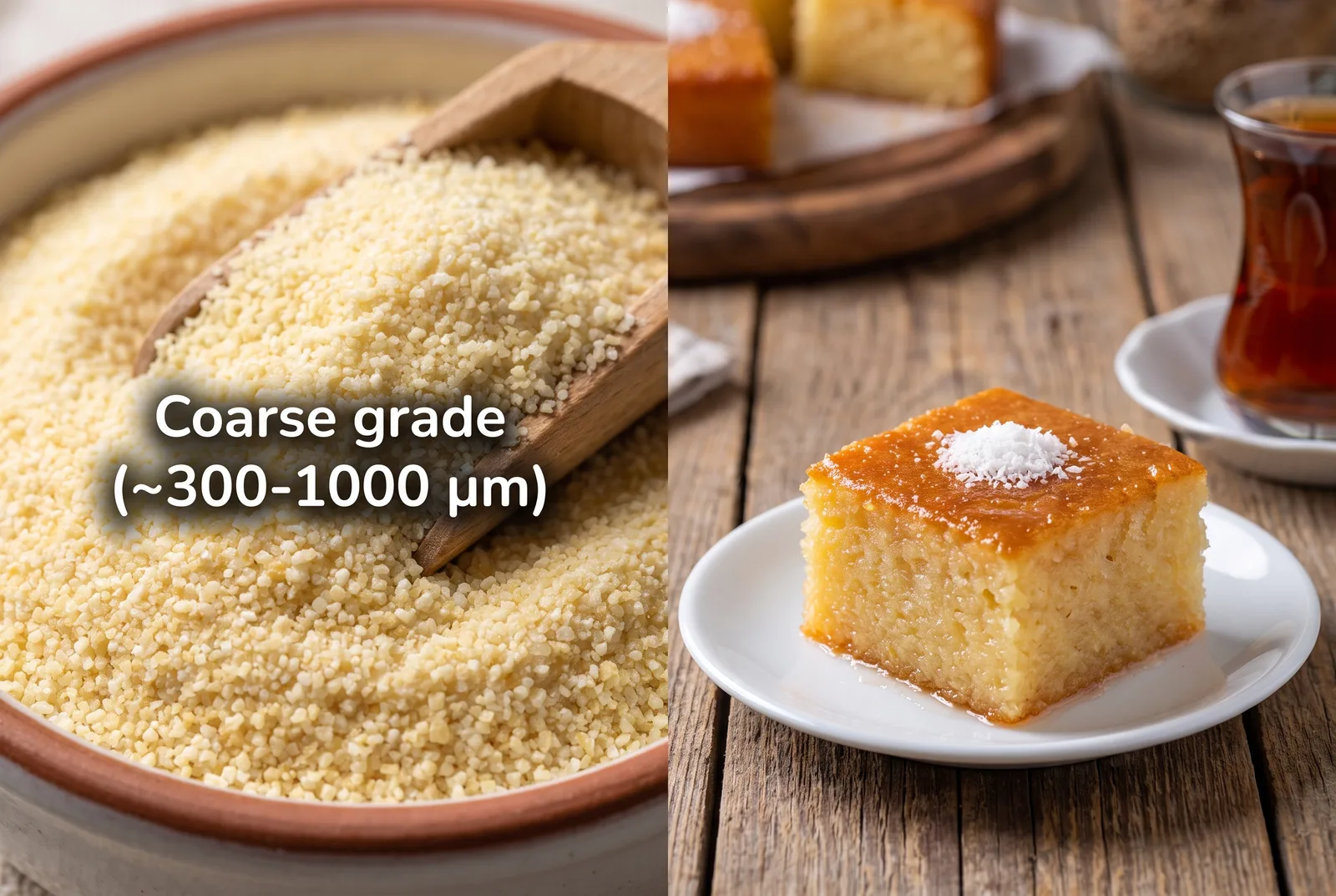 Close-up of coarse creamy-yellow durum semolina beside a syrup-soaked revani sponge slice.
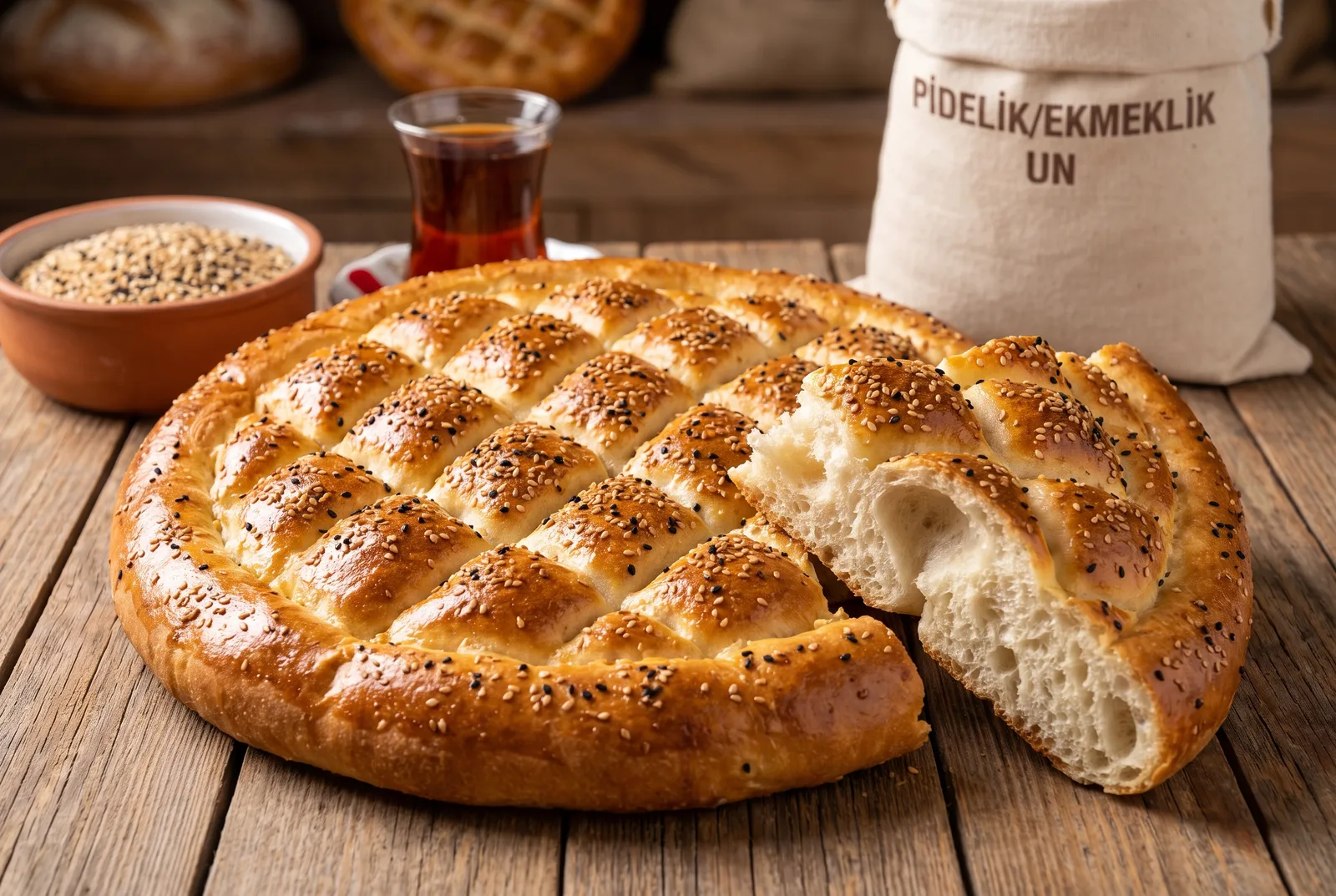 Round flat Ramazan pidesi with a diamond lattice scored top, sesame and nigella seeds, and a soft open crumb.
Mersin kazan simidi dough (baker's %)
| Ingredient | Baker's % | Weight |
|---|---|---|
| Flour (simitlik un) | 100 | |
| Water | 62.5 | |
| Salt | 3.5 | |
| Improver/additive | 3.5 | |
| Yeast | 1 |
- Ferment ~30 min; shape rings, dip in dilute grape molasses (pekmez) and coat in sesame; bake at 220-230°C for ~15 min in a stone oven.
Yield: Browns fast; simit flour is drawn from later mill passages for colour and flavour.
Cited representative simit formula. Source: c11 (Şenol study). Uses simitlik un.
Baklava hard dough (sert hamur) — qualitative
| Ingredient | Baker's % | Weight |
|---|---|---|
| Baklavalık un (protein ≥13%, gluten index ~90) | ||
| Water | ||
| Salt | ||
| Egg | ||
| Nişasta (starch) for dusting while rolling |
- Knead a stiff, low-hydration egg dough; rest ~15 min; divide into bezeler; roll and stretch each sheet to <0.1 mm, dusting with starch; layer with clarified butter (sadeyağ); one tray should be rolled out within ~8 min so the sheets do not dry.
The academic source gives ingredients and yields but not a full hydration table, so only cited quantities are shown; do not treat the ratios as exact. Sources: c5, c6.
| Turkish name | English / use | Protein % | Wet gluten % | Gluten index % | Sedimentation (mL) | Character & milling notes |
|---|---|---|---|---|---|---|
| Baklavalık un | Baklava & fine phyllo (yufka) | ≥13 | ~35 (wheat 31-32+) | ~90 (wheat >70) | ~38 (>35-36) | Strongest grade; hard/durum wheat, low extraction, coarser particle for syrup uptake, max extension resistance 700-800 BU |
| Böreklik un | Börek (su böreği, tepsi, sigara) | ~12.5-13 | high | high | 35-37 | Slightly below baklava; less imported wheat + high-gluten soft wheat; enzyme-improved + ascorbic acid |
| Yufkalık un | Yufka / lavaş sheets | 12.5-13.0 (survey 12.47) | 30-35 (survey 31.8) | ~90 (survey 90.9) | 35-37 | Soft but strong; extensible, low extension resistance; hemicellulase used, alpha-amylase avoided |
| Simitlik un | Simit (sesame bread ring) | 12.5-13.0 | — | — | ~30 | Later mill passages; higher bran/ash/protein; soft workable dough that browns fast |
| Pidelik / ekmeklik un | Ramazan pidesi & bread | medium (~11-13) | balanced | — | — | Balanced gluten; high water retention keeps crumb soft; finely sifted for homogeneous dough |
| Kadayıflık un | Tel kadayıf strands | 8-10 | ≤~22 | ~60 | 15.6-23.9 | Weakest grade; soft biscuit-class wheat, high yield, open rolls, large sieve (≥132 µm), low starch damage |
| Tam buğday unu | Wholemeal (kepekli) breads | varies (high) | — | — | — | Whole grain milled with bran + germ; highest ash/fibre |
| İrmik | Semolina sweets (revani, helva) | durum ≥11 (dm) | — | — | — | Coarse durum meal, ~300-1000 µm depending on grade (upper figure single-source; catalogue coarse semolina is finer, mostly 355-425 µm), granular, creamy-yellow |
Turkey has no legal per-product flour standard; these figures are the miller/academic consensus targets. Wet gluten = yaş gluten; gluten index = gluten indeksi; sedimentation = Zeleny. Sources: c3, c4, c8, c9, c11, c12.
| Class | Max ash % (dry matter) | Typical use |
|---|---|---|
| Tip 550 | 0.55 | White bread, pide, simit, most bakery |
| Tip 650 | 0.65 | Slightly darker everyday bread |
| Tip 850 | 0.85 | Darker/rustic bread, higher extraction |
| Tam buğday unu | whole-grain (bran + germ retained) | Wholemeal loaves |
Ekmeklik un classification from the Turkish Food Codex Wheat Flour Communiqué. Sources: c1, c2.
| Turkish grade needed | Domson catalogue product | Protein (spec) | Why it fits |
|---|---|---|---|
| Baklavalık / yufkalık un (very strong) | Carr's Centurion Canadian Very Strong; Allied Mills Coniston Strong White | Coniston 12.5-14.5% | Very high, extensible gluten for sub-0.1 mm phyllo |
| Böreklik / simitlik un (strong) | Carr's Titan Strong Bakers; Carr's Topspin; Allied Mills Pennine; Matthews Windrush; Domson White Strong | Titan 12.7-13.3% | Strong dough that holds shape and browns; Titan carries 2.5% added gluten |
| Ekmeklik un Tip 550 equivalent | Domson White Strong Wheat Flour 25 kg (T550); ADM Domson PN / Domson White Strong (UK) | T550 wet gluten 28-32%, gluten index 75-99 | General bread and pide |
| Pidelik / pizza un (medium, extensible) | Carr's Verace Pizza Flour; ROMEL Italian Tipo 00 Pizza Flour | Verace 11.7-12.2% | Medium protein, high water absorption, enzyme-supported for open, soft crumb |
| Soft pastry un (poğaça, tender bakes, kadayıf-type) | Whitworth Golden Jewel Pastry Flour; Carr's Starlight Pastry Flour | Golden Jewel 7.5-9.5% | Low protein for tender, non-elastic dough |
| İrmik (semolina) | Allied Mills Durum Wheat Semolina 16 kg; Eurostar Extra Coarse Semolina | Durum ≥11% (dm) | Coarse durum for revani, şambali, irmik helvası, dusting phyllo |
| Tam buğday / kepekli un | Carr's Bakers Wholemeal; ADM Domson Brown; Doves Farm Organic Strong Wholemeal; Lion Atta (chapatti) | Lion Atta 9-11.2% | Wholemeal flatbreads and mixed-grain loaves |
Practical substitutes a Turkish baker/patisserie in the UK can order. Specs are from first-party supplier datasheets where cited. Sources: c14-c20.
| Product | Fault | Likely flour cause | Fix |
|---|---|---|---|
| Baklava / yufka | Sheet tears or arm tires before it reaches <0.1 mm | Flour too weak — low protein / low gluten index | Use baklavalık un: protein ≥13%, gluten index ~90, high extension |
| Baklava | No crunch / stays doughy, poor syrup uptake | Sheets rolled too thick or flour particle too fine | Coarser hard-/durum-wheat flour; roll thinner |
| Börek (hand-stretched) | Dough springs back and 'sıkma' (snap-back) when pulled | Flour too strong for hand work | Use enzyme-improved böreklik un (slightly weaker than baklava) |
| Su böreği | Sheet tears when lifted from boiling water | Flour too weak | Move up to a stronger böreklik / baklavalık un |
| Kadayıf | Strands break, clog the extrusion nozzles, or slurry too viscous | Flour too strong / too high protein / too fine | Low-protein (8-10%) high-yield kadayıflık un, large sieve, low starch damage |
| Simit | Crumb too dark or won't brown | Wrong mill passage / no browning enzyme | Later-passage simitlik un; add amylase/browning improver |
| Ramazan pidesi | Crumb tough and dense | Flour too strong or over-developed | Medium-protein pidelik/ekmeklik un with good water retention; do not over-knead |
Diagnostic guide linking a defect to flour choice. Sources: c4, c8, c9, c12.